



When a bin greets you with a sour lift of air or a cloud of tiny flies rising from fresh scraps, it feels like the whole system shifted overnight.
Most composting problems begin quietly, hidden under a layer that still looks harmless. That moment when the scent sharpens or the surface turns slightly dull is often the turning point between a pile that works for you and one that becomes a chore.
The reward for catching those changes early is a bin that runs clean, calm, and predictable, turning kitchen waste into garden fuel without surprises. Once you spot what others overlook, composting starts to feel far more controlled.
Key Takeaways
- Spot the first compost signals before odors erupt
- Notice scent changes that forecast deeper imbalance
- Bring life back when the pile shows its first slowdown
- Break habits that invite flies and rodents toward fresh scraps
- Keep a simple rhythm that stops small shifts from becoming trouble
Table of Contents
The Early Signs Your Compost Is Drifting Off Balance
When a compost pile starts to lose warmth or shows patches of matted scraps, you can usually sense the shift before any harsh smell develops. These small signals often appear a week or two before real trouble, so reading them early saves a lot of effort later. Most gardeners learn to trust surface texture, mild scent, and heat retention long before turning the heap.
Heat and activity loss
A stable pile holds a gentle rise in temperature when you place your hand near the top layer, even during cool mornings. When that warmth fades to the same level as the surrounding air, microbial activity is slowing. A five or ten degree drop across several days usually means the pile is no longer breaking material down at a useful pace. If you have a compost thermometer on hand, readings stuck below the mid-80s Fahrenheit often point to reduced biological movement.
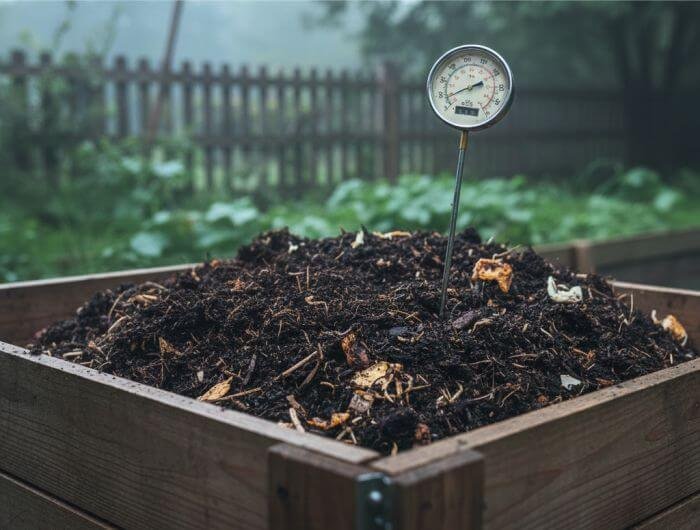
I often notice that when heat fades without rain or cold weather involved, the pile has compacted somewhere below the surface and airflow has tightened.
Texture and compaction patterns
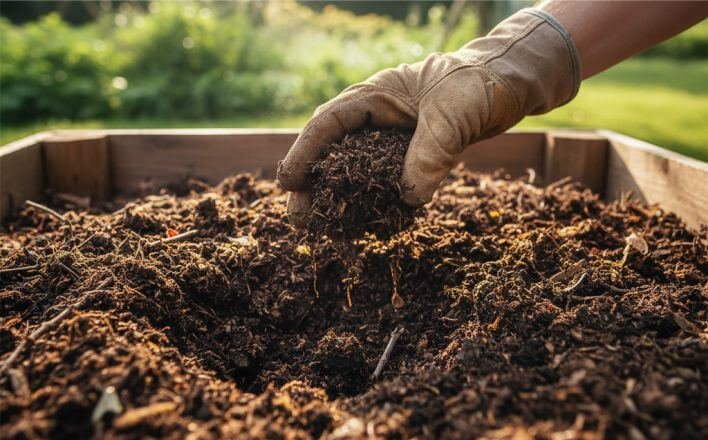
Texture shifts are easy to see. A balanced heap has layers that separate when you lift a small handful; the mix feels springy and breaks apart with light pressure. Early compaction shows up as firm patches that hold their shape instead of crumbling. You may also spot clumps of food scraps pressed together, which suggests the material is settling instead of staying open. Any section that feels noticeably heavier than the rest usually indicates moisture collecting where it should not.
These patterns matter because reduced structure limits contact between microbes and fresh material, slowing progress long before you smell anything.
Odour hints before real smell problems
Before any strong ammonia or rotten scent appears, there is often a mild sour note when you open the lid. This early odour is faint but distinct enough to notice. It signals that certain pockets are shifting toward anaerobic conditions. The smell tends to linger close to the surface and disappears once the lid is closed again. When that light odour repeats for two or three days, the pile is moving toward a condition that will stall decomposition.
A small scent change is easier to catch than a full problem, so recognising it early keeps the bin within reach of simple adjustments later.
The first signs of imbalance are always more subtle than the problems that follow. Once you learn to read heat, texture, and mild scent cues together, you can anticipate shifts long before they create a mess.
Fixing Bad Compost Smells Without Effort Wasted
A sudden hit of ammonia or a sour, swamp-like odor usually means the pile has drifted far enough off balance that microbes are working under poor conditions. Smells change fast, especially after warm weather or a fresh load of scraps. Once each odor is linked to a clear cause, the correction becomes simple and targeted.
Ammonia and sharp nitrogen smells
An ammonia sting often appears after too many fresh greens land in the bin at once. Warm afternoons intensify it because higher temperatures drive nitrogen release. The surface may look damp, and fresh scraps may appear glossy. The correction is to fold in dry, carbon-rich matter so the mix firms up and the surface moisture drops. A light addition often reduces the odor within a day.
Sour or rotten anaerobic smells
A swamp-like or rotten scent indicates anaerobic pockets where air cannot move through the material. These areas often feel slick and look darker than the rest of the pile. Moisture tends to gather in low spots, especially after compaction. Breaking up those areas and adding firmer material improves airflow so aerobic microbes can resume their work.
What healthy compost should smell like
Healthy compost keeps an earthy smell. If fresh scraps keep their raw scent, the structure or airflow has slipped. Any shift toward sourness, even a mild one, means certain pockets need attention.
| Odor type | Visual cue | Likely cause | Corrective action |
|---|---|---|---|
| Ammonia | Glossy greens, moist surface | Excess nitrogen | Add dry browns to balance the mix |
| Sour or rotten | Dark, slick patches | Anaerobic pockets | Break clumps and open the structure |
| Mild sour hint | Slight surface shift | Early imbalance | Light carbon addition and mixing |
Smell changes are reliable early warnings. Matching odor with texture and surface cues helps you correct the pile quickly without disrupting more than you need to.
Managing Moisture To Stop Slimy Piles and Slowdowns
A compost heap shifts fast when water collects in the wrong places. Slimy patches, dark clumps, or a pile that feels heavy even on a dry day all point to moisture getting ahead of the structure. Once water settles into the mass, airflow drops and microbes lose the conditions they need. Moisture is one of the easiest elements to read by sight and touch, so early checks help prevent bigger stalls.
Restoring structure to an over-wet pile
When a pile holds too much water, the surface often darkens and scraps begin to mat together. The material feels heavier than usual, and any handful taken from the center clings instead of breaking apart. Adding coarse, dry matter improves structure quickly because it absorbs excess water and creates space for air to move. Light mixing works better than deep turning here because it spreads carbon without compressing the lower layers. One or two rounds of correction usually bring the texture back into a workable range.
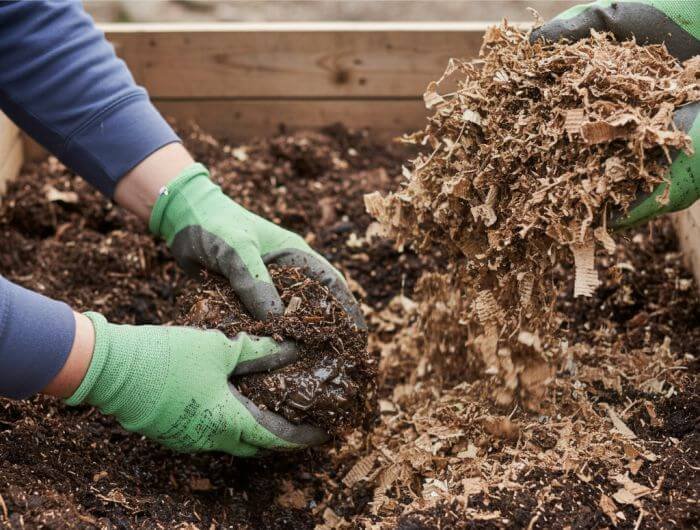
A working rule of thumb is that a handful should hold its shape briefly but crumble with a touch. Anything wetter than that slows the microbial cycle.
Keeping rain and runoff out
Rain is one of the fastest ways to tip a pile into trouble. If the bin sits near a gutter line or a slope, water can enter even when the lid stays closed. A cover that sheds water and a location with a slight rise keep the pile from soaking through during long storms. Side vents help release humidity so the interior does not stay saturated after rainfall. The goal is to prevent water from lingering in the middle layers, where heat usually forms.
Rehydrating inactive, dry compost
Dry compost often looks pale at the edges, and larger pieces stay intact longer than expected. The surface may feel dusty, and the interior shows no trace of warmth. Reintroducing water works best in small amounts spread across several passes so the core does not flood. A slow pour that moistens the surface without forming puddles helps microbes return at a controlled pace. Once the core holds a slight warmth again, the balance is usually back on track.
Moisture shifts leave clear visual clues. When you match surface color, weight, and feel to the right correction, the pile returns to a productive rhythm without much intervention.
Keeping Flies and Rodents Away From Kitchen Scraps in the Pile
Fresh scraps can draw attention fast when they sit exposed on the surface. Fruit flies gather within hours during warm months, and rodents investigate any bin that leaks scent or gives them an easy entry point. Most pest issues come from how scraps are added rather than the compost itself, so small adjustments usually stop the activity before it grows.
Fruit flies and houseflies
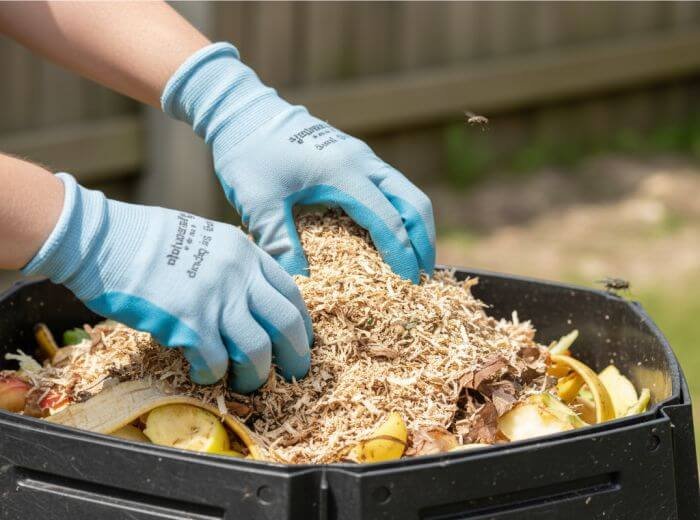
Flies respond to exposed material, especially fruit skins and soft vegetables. When these scraps rest on top, the surface stays sweet enough to attract insects even if the rest of the pile is balanced. Covering each batch with a thin layer of dry matter works well because it masks scent and keeps flies from reaching fresh scraps. Pressing the cover gently into place helps anchor it so wind does not blow it aside.
Rodent deterrence
Rodents probe any bin with loose lids or gaps that let scent escape. A hinged top that sits tight against the rim and side walls with small vent holes reduces interest. Placing the bin on level ground where the base cannot shift also matters, since a tilt creates openings along the lower edge. If the site experiences regular rodent pressure, a raised platform built from two or three bricks reduces access without changing air movement around the pile.
Pro tip – Freeze fruit and vegetable scraps in small batches when you cannot bury them right away. Frozen pieces lose most of their scent during thawing, so they attract far fewer pests once added.
Scrap handling methods
Scrap size influences how quickly pests find the pile. Smaller pieces blend into the mix faster, and their scent fades sooner. Burying new material a few inches below the surface also reduces attention because flies and rodents rely on easy access. A loose, textured cover layer helps scatter moisture and keeps the top surface dry enough to remain uninteresting to pests.
Flies and other pests fade away once fresh scraps are buried out of sight. When the surface stays dry and covered, insects and rodents lose their cues and move on quickly.
Why Compost Sometimes Stops Breaking Down and How To Restart It
A pile that stops changing usually looks the same every time you open the lid. Scraps hold their shape, the core feels cool, and the surface shows no sign of movement. When breakdown stalls, the cause often comes from how the material is arranged or how easily microbes can reach new inputs. Reading the signals helps you restart activity without rebuilding the heap.
Temperature plateaus and microbial inactivity
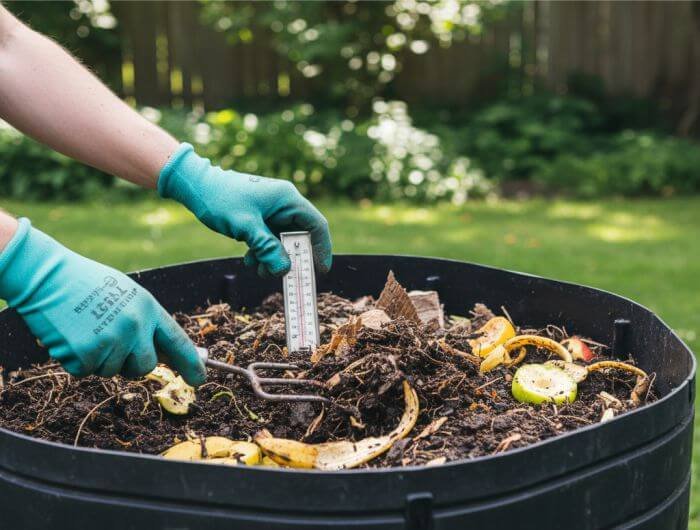
A working pile keeps a mild rise in temperature toward the center. When the core stays close to outdoor air levels for several days, microbes are slowing or resting. A compost thermometer makes the pattern clearer, but you can sense the drop even without one by checking the core during morning hours. If the center shows no warmth at all, the material is not cycling.
Cool piles form when microbes lack the conditions they need. Adding fresh greens alone rarely sparks heat. What helps more is creating pockets where oxygen and fuel reach each other. Folding in small amounts of new material while loosening the surrounding mix gives microbes space to recover.
Particle size and physical layout
Large scraps break down slowly because microbes reach only the surface. When too many big pieces gather in one area, the pile behaves as though the material is aging rather than decomposing. Cutting or tearing scraps before adding them works well because it increases surface area without changing the overall mix. Layers also matter. A pile built from wide, flat bands tends to settle into sheets that resist airflow.
If-then rule:
If the pile holds many firm chunks after several weeks, then reduce particle size for the next batches so the structure stays open.
Rebalancing input materials
A stalled heap often signals that the mix lacks enough variety for microbes to stay active. Dry material gathers at the edges and moves inward slowly, while fresh inputs sit untouched. Shifting the distribution helps more than adding volume. Moving a portion of dry matter into the core gives microbes access to both texture and fuel. This pattern shortens the restart time because the center becomes workable again.
A paused pile does not mean the system failed. It only means the arrangement no longer supports heat and steady movement. Once the interior gains structure and mixed inputs, the compost returns to its usual pace.
A Simple Routine That Prevents Most Compost Problems Before They Start
A compost pile tells you a lot through surface texture, scent, and temperature, and a quick weekly look keeps most issues from taking hold. The small checks take less than a minute, yet they often reveal changes long before odors, pests, or slowdowns appear. A simple rhythm reduces the amount of correction needed later and keeps the material cycling at a reliable pace.
Weekly sensory checks
A healthy pile shows gentle warmth near the center, loose texture along the upper layers, and an earthy scent when the lid opens. A shift in any of these signals is usually the first hint that something is changing. Run your hand across the surface to feel for weight differences, since heavy spots often point to moisture settling. Lift a small section from the top and watch how it breaks apart. Material that clings or feels unusually dense suggests the structure is tightening.
A short weekly pass identifies minor deviations early, when one small adjustment can guide the pile back into rhythm.
Seasonal shifts in compost behavior
Seasonal patterns influence how the pile holds heat and moisture. During warm months, scraps break down faster, and the mix tends to relax, so airflow becomes more important. Cooler seasons slow microbial activity, and the core often needs more time to regain warmth after turning. In wet months, watch for darkened patches forming near the walls of the bin where water often settles. Small position changes or a temporary cover help the pile avoid moisture accumulation when storms are frequent.
These seasonal checks help the heap stay productive through changing conditions without large interventions.
Smart scrap routines
Scrap handling habits shape how predictable the pile feels over time. Smaller pieces blend faster, lose scent quicker, and reduce surface clutter. Burying new material under a few inches of existing compost keeps attention from insects and helps the mass stay orderly. Rotating scrap placement around the pile prevents one area from becoming overloaded. Routines keep balance in place so the pile does not drift into cycles of odor or pest problems.
The pile holds its balance when you notice small shifts before they grow. The simple habits make each week easier and reduce the need for major corrections later.
Conclusion
A compost pile becomes easier to manage once you set a simple pattern for reading changes. A quick heat check every 3-4 days during warm months shows whether the core is cycling or drifting. If the center stays cool for two mornings in a row, lighten the structure first before adding fresh inputs. The if-then habit prevents slowdowns from turning into full stalls. Small, regular checks matter more than large interventions later.
A seasonal reset also keeps the system predictable. At the start of each season, scrape the top layer aside, loosen one section of the core, and spread fresh dry matter across the upper third. The three-step reset takes less than ten minutes and restores airflow where it matters most. When you maintain a light cadence like this, the material breaks down with far fewer surprises.
- Check core warmth twice weekly
- Break one compacted patch during seasonal resets
- Keep fresh scraps buried as routine
- Add dry cover anytime surface darkens
- Shift bin placement before long rain spells
FAQ
What ruins compost the fastest?
High moisture paired with compaction is the quickest way to disrupt a pile. When water settles into the center for more than 2-3 days, airflow collapses and microbes slow down. You can spot the shift when the core feels cool and surface layers clump instead of crumbling. Breaking tight patches and adding textured, dry matter usually restores movement before odors appear.
Why does my compost smell bad all of a sudden?
A sudden sour or ammonia scent forms when fresh scraps sit exposed or when the interior loses air pockets. Warm weather makes the change sharper because gases move faster through wet material. If the surface darkens and feels slick, open the compacted area and add a light layer of dry inputs. Odors often drop within a day once airflow returns.
Why are there flies in my compost bin?
Flies gather when fruit skins or soft scraps sit near the top, especially during warm spells. Once they reach the surface, they return until the scent weakens. Burying new scraps 2-3 inches below the top layer and covering them with dry matter reduces attention quickly. A tight lid with small vents also limits access without trapping moisture.
Can you save a compost pile that stopped breaking down?
Yes. A stalled pile usually lacks structure or contact between fresh material and oxygen. If the core stays cool for several mornings, loosen a section of the interior and blend in smaller pieces of new material. This creates pockets where microbes regain access. Heat often returns within a few days once the interior layout shifts.
What happens if the compost gets too dry?
Dry compost slows to a crawl because microbes cannot move through the material. You will notice pale edges and intact scraps after several weeks. Rehydration works best with small, spaced pours that moisten only the surface at first. When the core starts to hold mild warmth again, the balance is coming back.
How often should you check a backyard compost bin?
A weekly glance is enough for most gardens. Run your hand across the surface to feel for heavy spots, lift a small handful to see how it breaks apart, and check for a mild rise in warmth near the center. These quick signals show whether the material is cycling or drifting off balance.
Can you add kitchen scraps every day without causing issues?
Daily additions work fine if each batch is small and buried under existing compost. If scraps pile up in one spot, the surface stays damp and may draw pests. Rotating the placement each day keeps the mix even and avoids cold pockets where material sits untouched.
What happens if rain gets into the compost bin?
Rainwater pushes the pile toward compaction by weighing down the upper layers. You will see darker patches and feel extra weight near the sides. A cover that sheds water and a raised position help avoid saturation. If rain already entered, open the surface lightly and blend in dry material to restore structure.