

Can community gardens solve our food security problems, or are they just a small help?
The world’s population is growing fast, making more food needed. By 2050, we must produce 70-100% more food. But, with more people living in cities and less land for farming, finding enough food is a big challenge. Could community gardens help solve this problem?
In the United States, more people are growing their own food in cities. By 2013, 42 million households were doing this. These gardens give people fresh, healthy food and help local food systems. They also help cities use less commercial food.
Studies show gardeners eat more fresh veggies. This is great for health. In areas with little access to healthy food, gardens are a big help. They offer a way to eat better and avoid health problems.
Key Takeaways
- Community gardens can significantly enhance local food systems.
- Urban farming can help meet the rising global food demand.
- Community gardens increase fresh vegetable consumption.
- They offer a sustainable means to reduce reliance on commercial food systems.
- Community gardens are a solution to food deserts, providing access to nutritious produce.
Table of Contents
The Role of Community Gardens in Food Security
Community gardens are key in making sure everyone has access to healthy food. They offer fresh produce and help many families grow their own food.
Increasing Access to Fresh and Nutritious Produce
Community gardens help families a lot. A 2009 study showed big changes. Before, only 18.2% of adults ate veggies often. But after, it jumped to 84.8%.
Children’s veggie eating also went up. From 24% to 64%. This shows how gardens help people eat better.
Urban gardens also help the whole community. In Missouri, 173 schools and gardens teach about healthy eating. This helps fight hunger.
In North Carolina, Master Gardener volunteers gave out over 20,000 seeds. This makes sure more people can get fresh food.
Reducing Dependence on Commercial Food Systems
Community gardens help families not rely on expensive food stores. Before gardening, 31.2% worried about running out of food. But after, only 3.1% did.
One garden in Georgia gave out over 3,000 pounds of food. This saved families around $10,000 in just three months.
These gardens make people feel more self-sufficient. In Colorado, people gave away over 175,000 pounds of food. Oklahoma also started 105 gardens and gave out 4,200 plants. This shows how communities can help each other.
In short, community gardens are very important. They give people fresh food and help them not need expensive stores. They make communities stronger and more independent.
Sustainable Food Production in Community Gardens
Community gardens are key in making food production sustainable. They use organic gardening and crop rotation. These methods keep the soil healthy and provide food for local areas.
Organic Growing Practices for Long-Term Yield
Organic gardening in community gardens keeps the soil fertile. It also lowers the harm to the environment. Natural fertilizers and avoiding harmful chemicals are used.
In New York City, gardeners grow food in 44% of their spaces. They can get about 4 pounds of food a week. This saves them around $16 a week compared to buying organic.
Also, 48% of gardeners grow food as their main reason for gardening.
Seasonal and Local Food Production Strategies
Growing food that’s in season and local is vital. It makes farming more productive and cuts down on carbon emissions. Community gardens in California’s Central Coast give fresh food to cities.
Crop rotation is also important. It stops soil from getting worn out and keeps pests away. This way, gardens can grow healthy food every year.
Addressing Food Deserts with Community Gardening
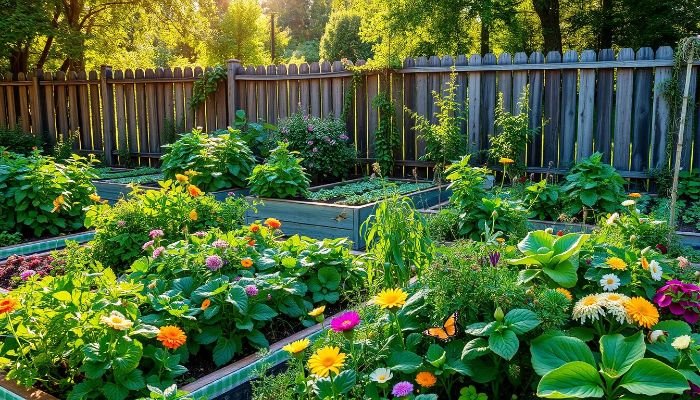
Community gardening is a key solution to fight food deserts in the U.S. Over 6,500 areas lack access to healthy food, affecting up to 53.6 million people. These gardens help bring fresh food to those who need it most.
Bringing Fresh Produce to Underserved Areas
In cities and towns, many people are far from where they can buy fresh food. About 17.4% of Americans face this problem. Community gardens help by growing food right in these areas.
These gardens give people fresh fruits and veggies. They also help people eat healthier. Studies show gardeners eat more fruits and veggies, which is good for everyone’s health.
Reducing Barriers to Healthy Food Access
Money problems, lack of transportation, and few grocery stores make food hard to get. In poor areas, getting good food is tough. Community gardens offer a way to solve this.
They work with many groups to make sure food is always available. They also get help from government and private groups. This support helps gardens grow and stay open.
In short, community gardens are a strong way to fight food deserts. They help grow food and make healthy food more accessible. Working together, we can make sure everyone has access to good food.
Economic Benefits of Community Gardening
Community gardening does more than grow fresh food; it can improve emotional well-being and deliver big economic wins to local areas. With over 38 million Americans struggling to find food in 2020, gardens offer a cheap and lasting fix.
Lowering Grocery Costs for Families
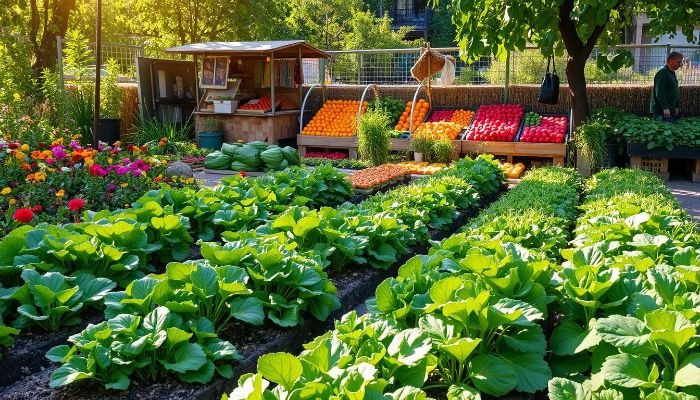
One key benefit is saving money on food. Families in garden projects cut their grocery bills a lot. Home gardeners save $92 a month, and gardeners save $84 on average.
This means families can spend less on food and more on other things. It helps them stay financially stable.
Creating Opportunities for Local Food Markets
Community gardens also boost the local economy. They help start and grow local markets. For example, Sylhet Farm in 2021 gave out about 600 lbs of fresh food for cheap.
By selling to local markets, gardens make food cheaper and more available. This helps both shoppers and small businesses. In 2023, Sylhet Farm rented out 114 plots, showing its big role in local food.
These gardens also add variety to local markets. They grow common veggies and special ethnic foods like chayote and goji berries. This makes local food more interesting and helps people connect with their heritage.
In short, community gardens are a big win for the economy. They save families money and help local markets thrive. This strengthens local economies and helps communities grow stronger.
Organizing Community Efforts for Maximum Impact
Getting people involved in community gardens is key, and a good grasp of the basics of forming a local gardening project can help ensure maximum impact. A good plan that includes garden care and partnerships helps a lot. It makes sure everyone has enough food.
Volunteer Involvement and Garden Management
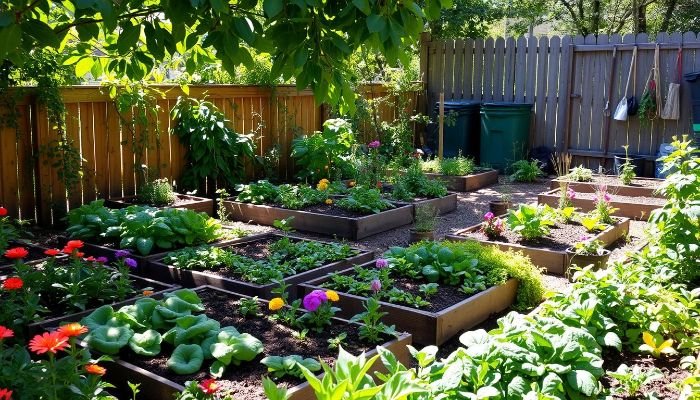
Volunteers are crucial for garden success, and cultivating collaborative efforts in local gardening helps everyone pool their skills to make the garden thrive. This also makes everyone feel closer.
Volunteers help in many ways, like planting and teaching others. Good garden management keeps the garden working well. It uses plans, training, and leaders to stay organized.
Partnering with Local Organizations and Food Banks
Working with local groups and food banks helps a lot. They offer money, knowledge, and more hands to help. This way, the garden’s food goes to those who need it most.
Teaming up with schools and health centers boosts the garden’s effect. It helps teach about food, brings people together, and supports the garden. This teamwork increases community spirit and cooperation.
Community gardens are important for food and community health. They work best when people, garden care, and partnerships come together.
Growing Resilient and Self-Sufficient Communities
To make communities strong, we need a plan for food and self-sufficiency. Community gardens help build local food networks. This makes communities stronger.
Building Local Food Networks
Local food networks are key for strong communities. By growing food locally, people need less from outside. This helps them not be affected by high food prices.
The COVID-19 pandemic showed how weak global food chains are. It caused food problems right away. But, local food networks can help keep food coming, even in tough times.
Nearly 1.3 billion tons of food are wasted globally each year, reflecting a significant inefficiency in existing food systems. Building resilient local food networks can support food resilience and reduce waste by promoting local consumption.
Small and mid-sized farms are also important. They help the local economy and create jobs. The USDA sees the value in local food efforts for food security.
Encouraging Long-Term Food Sustainability
For food to last, we need green practices and community help. Sustainable farms cut down on pollution and help the planet. Investing in new farming tech improves soil and water use.
These steps help communities be more self-sufficient. They can handle economic and environmental changes better. USDA’s actions, like more SNAP benefits, show the value of strong local food systems.
Overcoming Challenges in Community Food Production
Community gardens are key in solving food security issues. They face big challenges in managing resources and adapting to climate changes. Small-scale farmers, mostly women, need the right tools and knowledge for sustainable farming.
Learning how to manage resources and adapt to climate changes can greatly help. This can lead to better yields and more consistent harvests.
Managing Resources for Consistent Harvests
Managing resources well is vital for a community garden’s success. In cities like Baltimore, finding affordable water for irrigation is hard. Using rainwater collection systems, like the RRIPER program, can help save water and support green farming.
Also, using no-till methods can be very beneficial. Studies show that plants grow better with no-till than with traditional tillage.
Adapting to Climate and Environmental Changes
Climate change affects food security a lot, causing extreme weather that harms harvests. Farmers in cities like Los Angeles and Detroit face high land costs and polluted soil, so methods to identify and mitigate soil toxins are vital to ensure safe urban farming. Groups like Oxfam help by promoting farming methods that are good for the environment and can handle climate change.
By using climate-resilient practices and working together, community gardens can fight climate change’s effects. This helps keep food stable for those who need it most.
FAQ
How do community gardens enhance food security?
Community gardens help by giving people fresh, healthy food. They cut down on commercial food needs. They also support green farming ways.
What role do community gardens play in local food systems?
They are key in local food systems. They offer fresh produce and support local farming. They help people grow their own food.
How can community gardens contribute to sustainable agriculture?
They help by using organic methods and rotating crops. They focus on local, seasonal food. This keeps farming sustainable for a long time.
How do community gardens address food deserts?
They bring fresh food to areas without it. This helps people eat healthier. It makes communities healthier too.
What are the economic benefits of community gardening?
Gardening can save money on groceries. It also helps local food markets grow. It offers cheap food options that help local economies.
How can volunteer involvement and garden management improve community gardens?
Volunteers and good management make gardens better. They create a community feeling. They keep gardens running well and help with food security.
How can partnering with local organizations and food banks benefit community gardens?
Working with local groups and food banks helps a lot. They bring more resources and help get food to those who need it. This boosts food security.
How do community gardens build resilient and self-sufficient communities?
They create local food networks. They help food last longer and support self-sufficiency. They make communities stronger and more independent.
What are some challenges in community food production, and how can they be overcome?
Managing resources and adapting to weather changes are big challenges. But, good planning and green farming can solve these problems. This keeps food production steady and sustainable.