



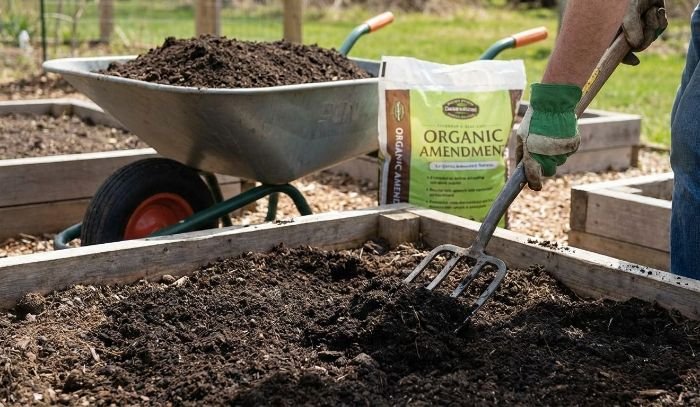
When soil management for gardens gets ignored, plants can stall even with regular watering, feeding, and weeding. A bed that looks fine can still act wrong – puddles after rain, crusting in dry spells, roots that stay shallow, and growth that never quite takes off.
Problems like patchy germination, yellowing leaves, and sudden wilting often trace back to how soil holds air, water, and nutrients over time. The goal here is clearer decisions and fewer wasted inputs, by learning what soil is doing, what changes help most, and what habits keep improvements in place.
Key takeaways:
- Read soil behaviour after rain before adding anything.
- Prepare soil at the right moisture for lasting gains.
- Improve tired beds by layering, not burying problems.
- Protect structure by reducing traffic and heavy disturbance.
- Track progress by root depth, drainage, and workability.
Table of Contents
Soil Vitality and Garden Soil Health – Why Beds Lose Momentum
Beds can look dark and crumbly yet still grow weak plants. Yellowing leaves, slow growth, and patchy moisture often show up after a few weeks, when roots hit a limit and water stops moving in a useful way. Soil vitality matters because structure, air exchange, and nutrient movement work together, and one weak link can cap results for a whole season.
What soil vitality actually refers to
Soil vitality describes how well a bed manages three jobs at once – holding water without drowning roots, holding air without drying out fast, and releasing nutrients at a rate plants can use. Good garden soil health shows up when water soaks in within 30-60 seconds on a moderate surface, and a trowel slice shows pores and aggregates instead of dense slabs. Poor vitality often means one condition dominates: water sits on top after a normal watering, or soil turns powdery and repels moisture, or both depending on weather. Plant performance follows because roots need oxygen to keep nutrient uptake running, and compacted or sealed surfaces cut oxygen flow even when fertilizer gets added.
Common garden symptoms tied to low vitality
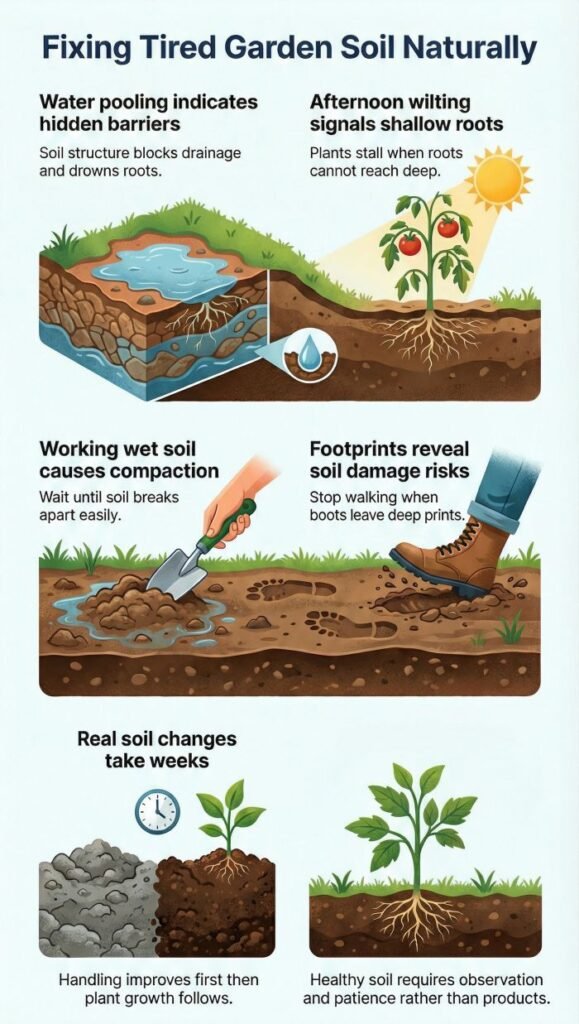
Soil problems usually show up as plant problems first. Roots often stall in the top 3-5 inches, then plants lean on frequent watering and quick feeds. Growth looks acceptable early, then leaf colour fades, flowering drops, and heat stress hits faster on warm afternoons.
I often notice that beds with short roots also show the same seasonal pattern – spring growth starts fine, then summer brings repeated wilting and slow recovery after watering because water stays near the surface instead of moving through the root zone.
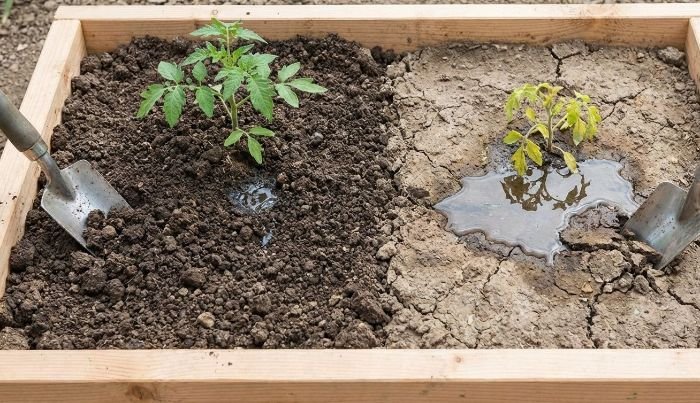
Corrective decisions start with reading the failure signal. Surface crusting points to structure breakdown and poor infiltration. Standing water after a normal soak points to compaction or a buried layer that blocks drainage. A bed that dries hard within a day after watering often has low organic content and weak aggregation, which reduces water storage and forces constant irrigation.
Short roots, slow infiltration, and mid-season stagnation form a linked pattern, and the pattern guides what to fix first.
Soil Preparation Garden Work – Early Choices That Limit Later Results
Soil can look workable in March and still lock up by June. Early bed work determines how deep roots can push, how fast water moves, and how long nutrients stay available without constant correction.
What preparation changes beneath the surface
Preparation changes pore space and contact points between particles, so water and air move through the profile instead of pooling near the top.
A practical check starts with a spade slice. A good bed breaks into rough crumbs with visible gaps and fractures, and roots can follow those pathways. A tired bed breaks into plates or smears into a smooth face, which blocks oxygen exchange and slows root growth. Plant performance follows because roots need air and moisture at the same time, and dense soil holds water in a way roots cannot use.
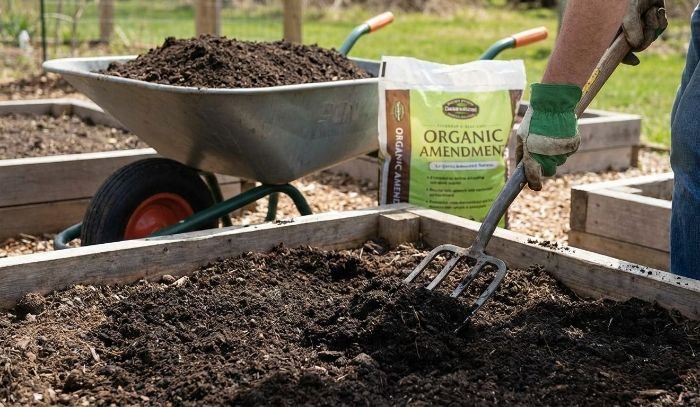
Pro tip – Run a watering can over a 1 sq ft patch after bed prep. If water sits longer than 1 minute, keep improving structure before planting.
Timing errors that reduce soil response
Working soil at the wrong moisture leaves problems that last all season. Wet soil compacts under a boot or rake, and dry soil shatters into dust that later seals into a crust after irrigation or rain.
Timing works best when soil forms a loose ball in hand, then breaks with a light tap. If soil squeezes into a ribbon, wait. If soil falls apart before any ball forms, add moisture first, then work shallow. A light cultivation depth, around 2-4 inches, usually protects existing structure while still opening the surface for planting.
When preparation outweighs later inputs
Better feeding and watering cannot fix a bed where roots stop early. Structure limits root volume, therefore plants lose access to stored moisture and nutrients even when fertilizer gets applied.
Effort pays off most when problems stack. If water infiltration stays slow, prioritize structure work. If roots stop shallow, reduce compaction and open channels before adding amendments. If seedlings struggle after a few warm days, check whether soil dries fast at the surface and stays damp below, since that pattern often breaks germination and early rooting.
- Prioritize structure when water lingers after a normal soak
- Prioritize moisture timing when soil smears on a tool
- Prioritize root depth when plants wilt by mid-afternoon
Early preparation sets physical limits, and later inputs mostly work inside those limits.
Improve Garden Soil in Place – Fix Layers Without Rebuilding Beds
A bed with years of top-ups can still puddle after watering, then crack hard a few days later. Layering, compaction, and buried debris often create invisible barriers that block roots and trap water in the wrong zone.
How soil evolves through surface improvement
Soil changes gradually when new material gets added to the surface and worked in by rainfall, irrigation, and routine bed work. Expect slow blending, not instant transformation, because fine particles settle downward while larger pieces stay near the top.
A simple field check uses a narrow spade cut after a good soak. Look for a change in color or texture at a clear line. A sharp line after 8-12 weeks often means poor mixing or a tight layer that prevents movement, so water and roots stay above the boundary.
Structural risks of simply adding soil
Adding soil to garden beds can create a perched water table when a lighter layer sits on top of a tighter one. Water moves slowly across the boundary, so the top layer stays saturated while the lower layer stays dry and dense. Seedlings struggle because roots grow in a wet zone with low oxygen, then hit a compact layer and stall.
Layer separation also shows up as a shear plane. A trowel slides easily between layers, and the top portion lifts like a mat. Beds can look raised and improved, yet plant growth stays shallow because roots follow the loose upper band and stop at the interface.
When top-ups happen year after year, grade changes matter. More than 2-3 inches added at once can bury crowns of perennials, cover irrigation emitters, and push mulch into contact with stems. Maintenance effort rises because watering needs change and weed seeds arrive with new material.
Situations where adding soil makes sense
New soil works best when the existing bed already drains well and the goal is increased depth for rooting. A good target is a 1-2 inch lift, followed by light incorporation into the upper few inches so water does not stall at a boundary.
A blend works better than a single product when problems stack. Mix topsoil with finished compost and a coarse amendment when drainage is slow, because particle variety reduces sealing and improves air space.
A full replacement becomes more efficient when a spade hits rubble, a plastic layer, or a construction hardpan within the first foot, since shallow improvements will keep running into the same barrier.
Soil improves in place with patience and clean layering, and most failures come from stacking loose material over a tight layer without checking how water behaves after the first few irrigations.
Soil Maintenance Habits – Small Moves That Keep Beds Productive
A bed can feel easy to dig in April, then turn hard and cloddy by midsummer. Daily choices determine whether soil stays open and workable, or slides back toward compaction and surface sealing.
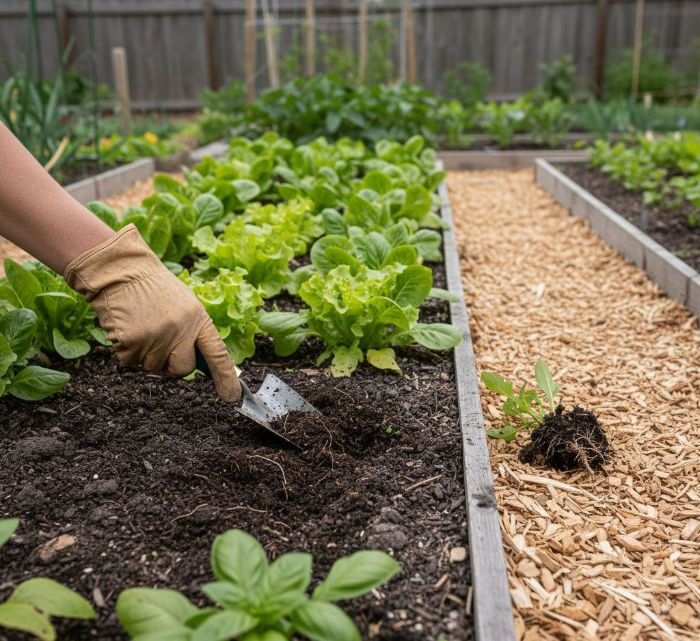
Habits that quietly improve soil condition
Good soil health practices show up as predictable workability. A hoe slices cleanly, weeds pull with roots attached, and irrigation soaks in without puddles.
Soil responds because repeated light inputs protect pore space and keep the surface from forming a crust. A useful cadence is a quick check every 2-3 weeks during the growing season. Push a hand trowel in after watering. The goal is consistent resistance, not sudden hard layers. If the trowel hits a firm band at the same depth each time, traffic or shallow cultivation often causes a compacted zone.
I often notice that beds with a narrow walking path stay loose longer, and weed pressure drops by late season because fewer disturbed spots expose buried seed.
Habits that undo soil gains
Soil slips backward when pressure and disturbance repeat in the same place. Foot traffic on damp ground compresses the surface, and frequent aggressive raking breaks aggregates into fines that settle and seal. Heavy watering on a bare surface can drive particles into a thin crust, so seedlings struggle to push through and water runs off instead of soaking down.
A simple rule helps decisions. If boots leave prints deeper than a quarter inch, work stops until the surface dries. If a bed needs repeated watering to keep plants upright, check whether surface sealing blocks infiltration before increasing irrigation volume. Reduced effort comes from protecting structure, since fixing compaction takes more time than preventing it.
Soil maintenance works best when small habits stay consistent, because correction work often costs a weekend and results still take time to show.
Soil Structure – The Limit That Controls Root Reach and Uptake
A bed can look dark and rich, then a spade hits a hard band and the whole story changes. Soil structure determines whether roots spread deep and wide, or stay trapped near the surface where heat and drying move faster.
What structure allows roots to do
Roots perform best when soil holds stable aggregates with connected pores, because oxygen and water can share the same space without shutting each other out. In a workable bed, a spade cut breaks into chunks the size of walnuts and golf balls, and the broken face shows cracks and channels instead of a smooth smear. Those channels matter because roots follow existing openings with less resistance, therefore plants maintain uptake during warm afternoons and after heavy watering.
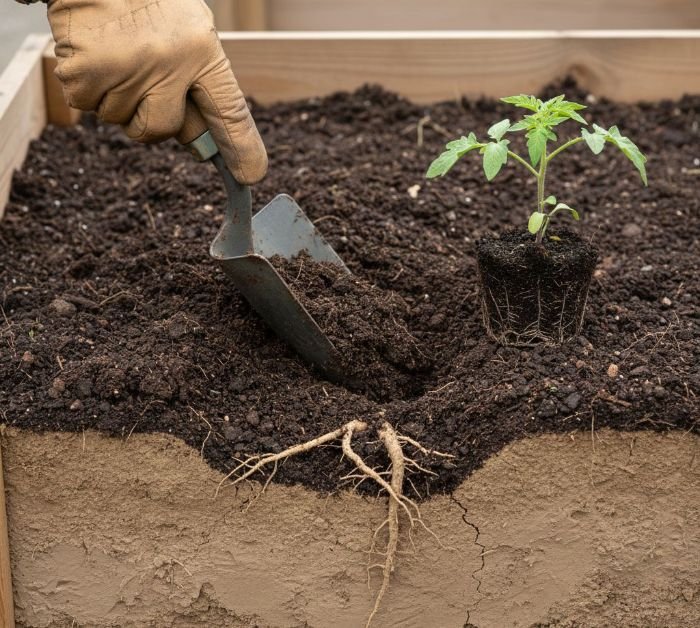
Root deformation is the giveaway when structure fails. A bed with tight soil often produces roots that turn sideways, thicken, or fork sharply at one depth. Vegetable seedlings may form a flat root plate rather than a deeper profile, and drought stress arrives early because the root zone stays shallow.
Pro tip – Check a spade slice at two depths, around 4 inches and around 10 inches. If the top breaks rough and the deeper slice comes out as a single slab, plan work around the weak depth instead of adding more inputs.
How gardeners misread structure
Many gardeners judge soil by color, surface crumb, or how easy the top inch feels. A fluffy surface can hide a compacted layer below, and a raised bed can still develop a tight zone from repeated foot pressure along the edge.
A quick read comes from the tool face. If a trowel leaves a shiny, polished cut, moisture and pressure are turning soil into a smear, and pore space collapses. If the cut face stays dull and fractured, structure is holding. Garden soil improvement starts faster when decisions follow physical signals, since fertilizers and watering cannot push roots through a dense barrier.
Soil structure sets the ceiling for root access, and most soil problems turn into plant problems when structure gets ignored.
Soil Management Over Time – Real Timelines and Reliable Feedback
Soil improvement rarely shows up the week after a change. Beds tend to respond in stages, and early signals can look small, like easier digging or fewer dry crusts, before plant growth catches up.
Why soil changes lag behind effort
Soil shifts slowly because physical structure, organic inputs, and rooting patterns change on different clocks. A surface layer can loosen within a few watering cycles, yet deeper conditions may take an entire season of rooting and rainfall to reshape. Gardeners often expect rapid change after a single weekend of work, then add more products when results look flat.
A better rule uses time windows. Look for handling changes within 3-6 weeks, then look for rooting changes later in the season. If conditions stay unchanged after 6-8 weeks, the original constraint often remains in place, like repeated traffic, poor drainage, or a dense layer below the worked zone.
How gardeners know management is working
The strongest signal is reduced intervention. A bed that needs less frequent watering without midday wilt usually gained rooting depth or improved infiltration. Weeding can also shift. Weed seedlings often pull easier when soil stays open, and weed pressure can drop later in the season when disturbance decreases.
Use a repeatable check instead of random spot reads. Take a spade slice in the same area once per month during the growing season. Watch for three changes: easier entry, fewer hard plates in the profile, and roots that travel downward rather than turning sideways at one depth. Plant growth then stays more consistent during warm spells because roots access moisture stored deeper in the bed.
Long term soil health builds when feedback guides choices, since soil management works best as a cycle of small adjustments, observation, and patience.
Conclusion
Long-term soil work pays off fastest when checks stay simple and regular. A monthly spade cut in the same spot tells more than any product label. If a blade enters easily for the first 6 inches and then stops hard, effort belongs at that depth before adding anything new. When water soaks in within a minute after normal irrigation and the surface dries evenly over 24-48 hours, soil management stays on track without extra inputs.
Confidence grows when decisions follow clear signals. If beds need watering every day during mild weather, root depth or structure still limits uptake. If weeds pull cleanly with roots attached and plants hold posture through warm afternoons, adjustments can slow down. A short routine works well: observe, adjust once, then wait a full growth cycle before changing direction again.
- Check one reference spot every month
- Stop work when soil smears on tools
- Adjust one variable per season
- Track water soak time after irrigation
- Reduce inputs when plant stress drops
FAQ
Can you improve garden soil without digging every season?
Yes, but progress depends on restraint. Light surface work combined with seasonal root growth reshapes the profile over time. If a spade still hits resistance below 8-10 inches after one full growing season, deeper limits remain and occasional targeted loosening becomes necessary.
What happens if soil stays wet for hours after normal watering?
Prolonged surface moisture usually signals a blocked layer below. Roots lose oxygen within a few hours in saturated zones, which slows uptake and invites disease pressure. The fix starts with checking depth resistance and reducing traffic, not adding more organic material right away.
How long should changes take before results show up?
Handling and drainage changes often appear within 3-6 weeks. Root depth and plant resilience usually follow later, often mid to late season. If no change shows after two months, the original constraint likely remains untouched.
Can you rely on color to judge garden soil health?
Dark color alone misleads. Many beds look rich yet seal or compact easily. A better read comes from how a tool enters and exits soil and whether roots pass through or turn sideways at one depth.
When does adding new soil help instead of hurt?
Adding soil helps when the existing bed already drains well and needs more rooting volume. A lift greater than 2-3 inches risks creating a barrier unless blending occurs soon after placement.
How often should soil checks happen during the season?
A monthly check in the same spot works well. Look for easier entry, fewer hard plates, and deeper root paths. More frequent checking rarely changes decisions and often leads to overcorrection.
Can you overmanage soil maintenance?
Yes. Frequent raking, repeated cultivation, and constant input changes break aggregation and raise labor costs. When plants hold posture through warm afternoons and watering frequency drops, adjustments can slow or pause without loss.