




Have you ever thought about the dangers in your home’s air? Wondered if plants could help? Indoor spaces are often filled with harmful chemicals. This makes indoor plants very important for clean air.
Studies, like NASA’s, show that some plants can remove toxins. These include formaldehyde, benzene, and ammonia. You find these in many homes. Plants not only clean the air but also make your home look and feel better.
But how do you add plants to your home for the best health benefits? It’s a great question.
Key Takeaways
- Indoor plants like Bamboo Palm, Banana, and Boston Fern improve air quality significantly.
- Healthy houseplants can efficiently remove toxins from the air, including formaldehyde and benzene.
- Nasa recommends one healthy plant per 100 square feet for optimal air purification.
- Plants can increase humidity, which is beneficial for respiratory health.
- Some plants emit oxygen at night, enhancing air quality during sleep.
- A combination of plants and air purifiers can create a comprehensive indoor air quality strategy.
Table of Contents
Why Living Plants are Great for Home Design
Adding indoor plants to your home makes it look better and feel healthier. Top indoor plants for improving air quality not only bring a lively, natural vibe indoors but also help remove harmful chemicals from your home’s air. They instantly make a space feel welcoming and cozy.
Aesthetic Benefits of Indoor Plants
Indoor plants are a big plus for any home. They add natural beauty and fit many styles, from modern to traditional. They can:
- Add color and texture to a room.
- Create a sense of depth and dimension.
- Draw attention to architectural features.
Being around plants makes a space calm and creative. Beyond their air-purifying properties, the psychological benefits of keeping indoor plants can boost mood and create a welcoming, cozy ambiance.
Health Benefits – Air Quality and Well-Being
Indoor plants also make the air cleaner. They remove harmful chemicals like formaldehyde and benzene. A study by the World Economic Forum found they can reduce air pollution by up to 20%.
Having plants around also boosts our health. Incorporating living plants ties in with biophilic design, which promotes better focus and reduced stress through nature-inspired elements. They even lower blood pressure. So, plants are not just pretty; they’re good for us too.
How Plants Improve Indoor Air Quality
Plants are key to better indoor air. They take in carbon dioxide and give out oxygen. They do more than just make oxygen.
Plants clean the air by removing pollutants. This makes homes healthier. Indoor air can be more polluted than outside air.
The Science Behind Plants and Air Purification
Studies show plants can clean the air. They remove harmful chemicals like formaldehyde and benzene. These chemicals come from synthetic materials in homes.
The air gets cleaner with more plants. But, it takes a lot of plants to make a big difference. This shows how important plants are in our homes.
Common Pollutants that Plants Can Absorb
Household items can pollute the air. Cleaning supplies and fresheners release harmful chemicals. Plants like chrysanthemums and spider plants can clean this air.
These plants help remove allergens and irritants. This makes homes healthier and improves work and life.
Best Types of Plants for Air Purification
Choosing the right air-purifying plants can make your indoor air cleaner and look better. For example, basic care for Philodendrons ensures these hardy air-cleaners thrive, making them ideal for beginners seeking healthier indoor air.
Low-Maintenance Plants for Beginners
For newbies to indoor gardening, easy-to-care plants are a smart choice. These plants can handle different conditions and need little care. Here are some good ones:
- Snake Plant – It’s good at cleaning the air and can handle low light and not much water.
- Pothos – This plant can grow in both low and bright light, making it easy to care for.
- Black Leaf Dragon Tree – It’s a beautiful plant that cleans the air with little effort.
High-Efficiency Plants for Cleaner Air
If you want to really clean the air in your home, choose high-efficiency plants. They can take out lots of bad stuff from the air. Here are some top picks:
- Peace Lily – This plant gets rid of toxins like formaldehyde and benzene, and it’s pretty too.
- Rubber Plant – It’s great at fighting formaldehyde and does well in medium to bright light.
- Areca Palm – Perfect for big spaces, it’s known for removing many air pollutants.
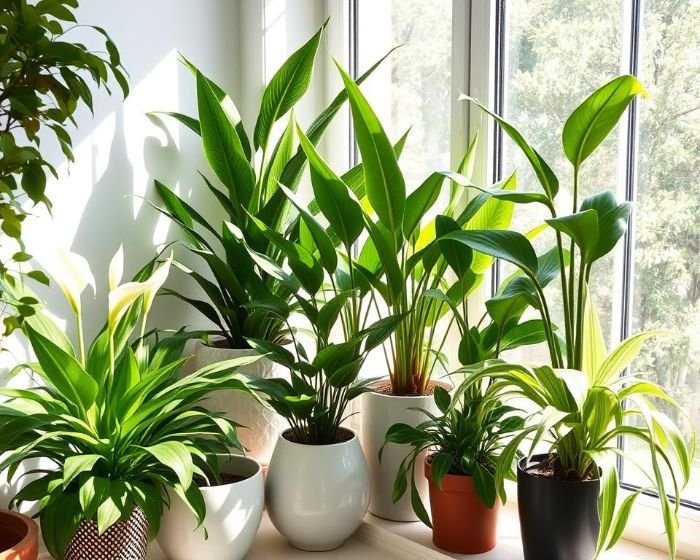
Studies show these plants not only clean the air but also help reduce stress and boost creativity. Picking plants that fit your life and space can make them work even better. Adding a few of these plants will help make your home healthier.
Incorporating Plants into Different Areas of the Home
Placing living plants in different home areas can make your home look better and feel healthier. Each room has its own special needs for plants. Knowing these needs can make your home environment even better.
Living Room – Making a Green Focal Point
In the living room, big leafy plants like monstera or rubber plants make great statement pieces. They not only look good but also clean the air. Plants like snake plants are easy to care for and still look great.
Bedroom – Creating a Calming, Clean Space
The bedroom is a great place for plants like lavender or peace lilies. They help make the room calm. Plants like aloe vera are also good because they clean the air. They help make your bedroom a peaceful place to sleep.
Kitchen – Adding Freshness and Functionality
Kitchens are perfect for plants like herbs. They add freshness to your food and clean the air. Herbs like basil or mint are easy to use and make your kitchen lively. Make sure they get enough light to grow well.

Design Ideas for Displaying Indoor Plants
Creative design is key to showing off indoor plants. Using different methods makes spaces look better and work better. Try vertical gardens, hanging planters, and surface displays to make any room lively.
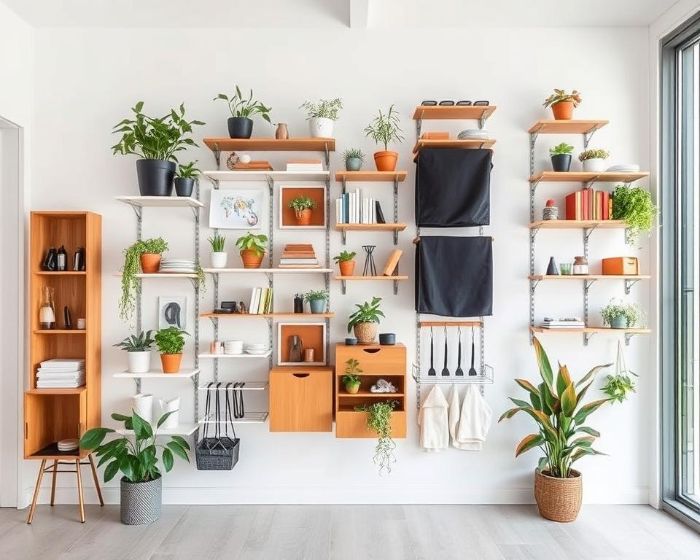
Vertical Gardens and Plant Walls
Vertical gardens are great for small spaces. They turn walls into green spaces. This makes a room look amazing and improves air quality.
Adding vertical gardens brings life to small areas.
Hanging Planters and Ceiling-Mounted Designs
Hanging planters make indoor gardening exciting. They make rooms look bigger by using space above. They’re perfect for plants that grow down.
They keep plants easy to see and healthy.
Tabletop and Shelf Plants for Small Spaces
Tabletop and shelf plants are great for small spots. They brighten up work areas, dining rooms, or bedrooms. Grouping plants by color or style looks good.
Caring for Indoor Plants to Maximize Air Quality Benefits
It’s important to take good care of indoor plants. This helps them grow well and improve the air we breathe. Knowing how to water and light them right is key. This keeps them healthy and boosts their air quality benefits.

Watering and Light Requirements
Each plant needs different amounts of water and light. For example, the Peace Lily tells you when it’s thirsty by drooping. Dracaenas like it warm and bright, but not too direct.
Snake Plants and Spider Plants are easy-going. They do well in moderate light and water. Getting these conditions right helps your plants live long and work well.
Preventing Common Plant Issues (Pests, Overwatering)
Watch your plants for pests and too much water. Too much water can rot the roots. Pests can harm leaves and make plants sick.
Use pots that let water drain well and keep the right humidity. This stops problems before they start. Taking care of your plants this way keeps them healthy and air-purifying.
Tips for Choosing the Right Plants for Your Home
Choosing the right indoor plants is all about knowing your home’s environment. This includes light, humidity, space, and if you have pets. By understanding these, you can pick plants that make your home better and cleaner. For example, Dracaena and Pothos can handle different light levels. But Philodendron and Ficus need more sunlight to grow well.
Considering Space, Light, and Humidity Levels
Before picking plants, check your home’s conditions. Small plants are great for small spaces like windowsills. But bigger plants can be eye-catching in living areas. It’s also key to match a plant’s light needs with its spot.
Humidity matters too, especially in dry places like Montana. Plants that help keep air moist or humidifiers can help your plants stay healthy.
Finding the Perfect Balance Between Style and Function
It’s important to enjoy your plants and get their benefits. If you have pets, choose plants that are safe for them. Succulents are easy to care for and look good. Living walls can turn any room into a green paradise.
By mixing looks with usefulness, you can make your home welcoming and fresh. It will look great and clean the air too.
FAQ
What are the best indoor plants for improving air quality?
The top plants for clean air are spider plants, peace lilies, snake plants, and rubber plants. They remove pollutants like formaldehyde, benzene, and xylene.
How do living plants purify the air?
Plants clean the air through photosynthesis. They take in carbon dioxide and release oxygen. They also filter pollutants through their leaves.
Their roots and soil help break down harmful substances. This makes the air cleaner.Can indoor plants help reduce stress and improve mood?
Yes, plants can make you feel less stressed and happier. They create a calm space. This is good for your mind at home or work.
How do I care for indoor plants?
To care for plants, know their water and light needs. Don’t overwater and watch for pests. Place them where they get the right light.
What should I consider when selecting indoor plants?
Think about space, light, and humidity when picking plants. Choose plants that look good and clean the air. Make sure they fit well in your home.
Are low-maintenance indoor plants effective for air purification?
Yes, easy-to-care-for plants like snake plants and pothos are great for air. They need little care but clean the air well. They work in many light conditions.