






Did you know smart TVs are in 87% of U.S. homes? They can change how we watch TV. Smart TVs let you make your own viewing experience, from kids to grandparents.
By changing the TV settings, linking accounts, and finding AI suggestions, you get a better TV experience. This is as good as old TV. The market is growing fast, and knowing how to use these features is key.
Key Takeaways
- Smart TVs are now in 87% of U.S. households, indicating extensive market penetration.
- Accessibility and inclusivity are key considerations when customizing smart TV interfaces.
- AI-driven recommendations enhance personalized viewing by aligning with user preferences.
- Design principles for smart TV interfaces focus on simplicity and clarity for better user experience.
- Voice control features, like Alexa and Google Assistant, increase the appeal of smart TV functionalities.
- Parental controls are essential for safe viewing, especially in family environments.
Table of Contents
Setting Up Your Smart TV for the First Time
Starting with your smart TV is easy. First, connect it to your home Wi-Fi. A strong connection is key for good streaming. You’ll follow on-screen steps to pick your network and enter your password.
Most people choose wireless for ease, but some prefer wired for better speed. This choice can change how you watch.
Initial Configuration and Wi-Fi Setup
Begin by making sure your Wi-Fi works. You might see tests for your remote. Here’s what to do:
- Turn on the smart TV and choose your country.
- Pick your Wi-Fi and enter your password.
- Let the TV connect and update itself.
Wired connections are stable, but wireless is more common. Still, too many devices can cause problems. Fixing Wi-Fi issues regularly helps.
Linking Your Streaming Accounts and Apps
After Wi-Fi, link your streaming accounts. This lets you watch Netflix, Amazon Prime, and Hulu easily. The app store makes adding apps simple.
About 80% of users find their favorite apps already there. Just follow the on-screen instructions to set up your accounts.
Customizing Your Smart TV Interface
Customizing your smart TV interface can make watching TV much better. You can control how your content looks. This lets you manage apps on your home screen for easy access.
Organizing Apps for Quick Access
Organizing apps is key to a better smart TV experience. You can put your favorite apps like Netflix or Hulu first. This makes it easier to find what you want to watch.
Try making folders for different genres or for family members. It makes your TV even more personal.
Setting Up User Profiles for Family Members
User profiles are great for family viewing. Each person can have their own watch history and preferences. It makes watching TV more fun and personal for everyone.
Enhancing Picture and Sound Quality
Improving picture and sound quality makes watching shows better. It changes how we enjoy content. By tweaking settings, you can get a theater-like feel at home.
Adjusting Picture Settings for Optimal Viewing
Start by tweaking picture settings for your room’s light and distance. For better picture quality, try these:
- Set sharpness between five to ten percent for a balanced image.
- Avoid the Motion Smoothing feature, as it can cause judder and degrade visual quality.
- Disable Vivid mode, which often over-saturates colors and excessively brightens images.
- Adjust contrast settings to improve detail and depth while reducing eyestrain.

Look into preset picture modes like Standard, Dynamic, Gaming, Sports, Movie, and Filmmaker mode. Each is made for different viewing needs. They help ensure you get the best visual experience.
Configuring Audio Settings for Surround Sound
Sound quality is key to a great viewing experience. To improve sound, consider these options:
- Invest in quality sound bars, like the Sonos Playbar or Vizio S3821w, which significantly enhance sound quality compared to most built-in TV speakers.
- Utilize surround sound settings to create a more immersive audio experience through virtual sound processing features.
- Consider models with powered subwoofers for excellent bass response, enhancing your audio experience even further.
Watching high-definition content, like UHD and HDR, will make these changes even better. It will give you a top-notch viewing experience.
Exploring Personalized Content Recommendations
Personalized content recommendations have changed how we watch TV on Smart TVs. They use smart algorithms to understand what we like. This makes finding new shows and movies easier and more fun.
How AI-Driven Recommendations Work
AI-driven suggestions learn from what we watch. Every time we choose something, it helps the algorithm get better. It keeps getting smarter as we watch more.
It looks at what we’ve watched before and what we like. It also checks out what’s popular and what others like. This makes our TV experience more personal and exciting.
Managing Your Watch History for Better Suggestions
Keeping your watch history up to date is key. It helps the AI give you better suggestions. Here’s how to make the most of it:
- Clear your watch history now and then to get new ideas.
- Watch different types of shows to get more varied suggestions.
- Use “thumbs up” or ratings on streaming sites to help the AI.
By following these tips, you can make your TV experience even better. It will be more about what you really want to see.
Leveraging Voice Control and Smart Assistants
Voice control technology changes how we use smart TVs. It makes things easier and hands-free. Smart helpers like Google Assistant and Alexa make finding shows and controlling playback simple.
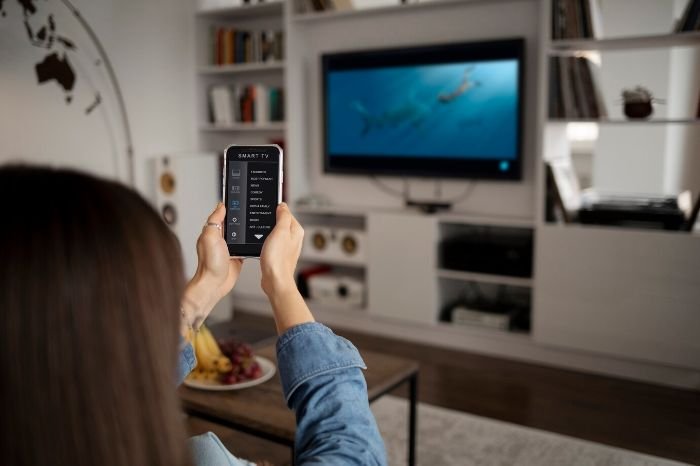
Setting Up Voice Commands with Google Assistant or Alexa
Connecting smart assistants to your TV opens up many features. First, link your devices to your TV:
- Go to the settings menu on your TV
- Pick your favorite smart assistant
- Follow the steps on the screen to connect
Once set up, try using voice commands. You can search for shows or get movie suggestions. This way, watching TV is quicker and more fun.
Using Voice Control to Find and Play Content Easily
Voice control makes finding shows easy. You don’t need a remote anymore. Many TVs work with different assistants, so you can pick what you like best.
With voice commands, you can:
- Turn the TV on or off
- Change channels and adjust volume
- Play, pause, or rewind shows
Smart assistants do more than just basic tasks. They give you info and show recommendations. Brands like LG, Sony, Samsung, and Panasonic make sure you get the most out of voice control.
Smart TV Settings for Privacy and Security
Protecting your personal data is key in today’s digital world. Smart TVs collect data for personalized content. It’s important to adjust privacy settings for better security. Looking into app permissions and data sharing can help.

Adjusting Privacy Settings for a Safer Experience
Smart TVs from Samsung, LG, and Vizio have strong privacy settings. It’s good to check these settings often. This can help keep your data safe from unauthorized sharing. Here are some steps to take:
- Disable Automatic Content Recognition (ACR) to limit the information collected about your viewing habits.
- Review and restrict app permissions, ensuring apps have access only to necessary data.
- Turn off any features that allow data collection, such as voice recognition and targeted ads.
Managing App Permissions and Data Sharing
It’s crucial to understand app permissions. Many apps ask for personal data that’s not needed. This can lead to unwanted data sharing. To improve security, check app permissions often. Here are some tips:
- Revoke unnecessary permissions to limit data sharing, such as camera or microphone access.
- Verify which apps are collecting data and how it is used, especially those that partner with third-party advertisers.
- Be cautious of apps that require extensive personal information for functionality.
Tips for the Best Streaming Experience
Choosing the right internet speed is key for a great streaming experience. For 4K streaming, you need at least 15 Mbps. But, many homes do better with plans of 100 Mbps or more.
In big homes, a mesh Wi-Fi system like the TP-Link Deco W7200 helps with signal issues. For even more speed, consider a 1Gbps fiber internet service. It’s fast and often priced well.
Direct Ethernet connections are the fastest for streaming. They work best when many people are using the internet at once.
Choosing the Right Internet Speed for Seamless Streaming
Knowing how video quality uses internet is important. HD content uses 0.9 GB to 3 GB per hour. 4K video uses about 7.2 GB per hour.
With many streaming services, having enough internet speed is key. It stops buffering and pixelation. This is especially true for families with many subscriptions.
Managing Screen Time and Parental Controls
Managing screen time is also crucial for a good viewing experience. Parental controls help keep content suitable for kids. They also help create a healthy media environment.
Watching how much time is spent on streaming is important. It helps with responsible viewing. This is especially true in homes where streaming is common.
Balance entertainment with daily routines. It helps keep your home peaceful. It also promotes healthier habits.
FAQ
How do I set up my smart TV for the first time?
First, connect your smart TV to Wi-Fi. Follow the on-screen steps. Then, link your streaming accounts like Netflix and Amazon Prime. Download their apps from your TV’s app store for easy access.
What are the best practices for customizing my smart TV interface?
Organize your apps on the home screen by how often you use them. Create unique profiles for family members. This way, everyone gets their own watch history and recommendations.
How can I enhance the picture and sound quality on my smart TV?
Adjust the picture settings like brightness and color. This makes your viewing better. For sound, tweak the audio settings. You can also use external speakers for a better sound experience.
How do personalized content recommendations work on smart TVs?
Smart TVs use AI to suggest content based on what you watch. Keeping your watch history up to date helps improve these suggestions. This makes your viewing more enjoyable.
What voice control features are available with smart TVs?
You can use voice commands with Google Assistant or Alexa. This lets you search, access apps, and control playback just by speaking. It makes using your TV easier and faster.
How can I ensure privacy and security while using my smart TV?
Change your smart TV’s privacy settings to keep your info safe. Also, regularly check app permissions to see what data they access. This keeps your device secure and trustworthy.
What tips can help me achieve the best streaming experience on my smart TV?
Make sure you have the right internet speed for smooth streaming. Also, use parental controls to manage screen time. These steps can make your smart TV experience better.