




How can a simple plot of land become a lively center for community and connection?
Community gardens are more than just green spaces. They are key places where people from different walks of life come together. Here, they grow plants and build friendships. These gardens offer a chance to relax and do something meaningful at the same time.
By working together in the garden, people strengthen their bonds. This creates a strong base for trust, support, and teamwork.
Research shows that social connections are vital for community gardens to thrive. The Cherry Street Community Garden in Midtown is a great example. It shows how these spaces help communities grow stronger.
From lowering crime to making people happier, community gardens are powerful. They help neighborhoods become more resilient and better places to live.
Key Takeaways
- Community gardens are key spots for building social networks.
- Getting involved in gardening helps people connect and feel part of a community.
- Gardens bring together financial and non-financial help through social connections.
- Places like the Cherry Street Community Garden help build trust and friendships.
- More social interaction in gardens makes neighborhoods stronger and improves life quality.
Table of Contents
The Role of Community Gardens in Social Connection
The foundations of community gardening date back decades, underscoring how these shared green spaces spark both cooperation and community pride. They started in the 1970s to lift community spirits and promote self-reliance. These spaces helped tackle joblessness and hunger before food aid programs existed.
Since the 2000s, community gardens have grown in number. They play a big role in strengthening social bonds and reducing stress.
Creating Shared Spaces for Interaction
Community gardens are great at bringing people together. They are places where families and individuals work together to grow food. This teamwork builds strong relationships and a sense of community.
Implementing mindful gardening routines helps community gardeners elevate self-confidence and reduce stress in shared growing spaces.
Encouraging Collaboration and Teamwork
Community gardens also foster teamwork and cooperation. They require everyone to work together, from planting to harvesting. This teamwork goes beyond gardening, helping with other community projects and events.
In essence, community gardens grow more than just food. They grow a spirit of teamwork and support that strengthens the community.
Strengthening Neighborhood Ties Through Gardening
Community gardens help neighborhoods come together. They are more than just places to grow plants. They build trust and support among people.
Over one million households in the U.S. are part of community gardens. These spaces are key for unity and local engagement.
Building Trust and Mutual Support
Gardening builds trust and support among people. By working together, neighbors learn to rely on each other. This creates a safe and trusting community.
Research shows strong neighborhoods have better health and lower risks. Community gardens are crucial for a healthy community.

Enhancing Local Engagement and Participation
Community gardens encourage people to get involved in improving their neighborhoods. This boosts local pride and ties. For example, property values near gardens in New York went up by 9.4% in five years.
These gardens also improve physical and mental health. In Seattle, the P-Patch Program gives food banks 7 to 10 tons of produce each year. This shows the community’s dedication to helping each other.
By focusing on neighborhood connections and trust, community gardens are vital. They help make neighborhoods strong and supportive.
Inclusive and Diverse Community Spaces
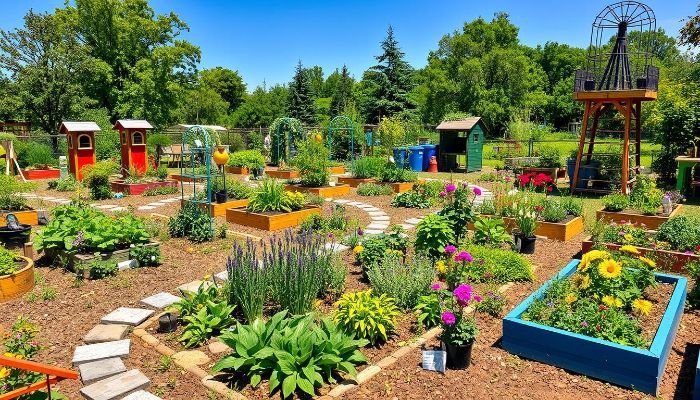
Community gardens are symbols of diversity and inclusivity. They welcome people of all ages, races, and backgrounds. These spaces help people from different cultures come together, sharing their stories and traditions.
By creating a fun and safe children’s garden, you expand the inclusive spirit of community gardens, inviting families and children of diverse backgrounds to learn and bond.
Welcoming People of All Ages and Backgrounds
Community gardens are places where everyone feels welcome. They bring people together, regardless of age or background. This helps people learn from each other, like older gardeners teaching younger ones.
Studies show that diverse teams make better decisions. They consider more viewpoints. This helps everyone understand each other better.
Bridging Cultural and Social Gaps
Community gardens help bridge cultural and social gaps. They are places where people share their traditions and practices. This promotes diversity and unity among community members.
By gardening together, people from different backgrounds connect. They learn to understand and respect each other. Research shows diversity leads to better outcomes, both economically and socially.
These gardens make people feel they belong. They reduce feelings of loneliness. They also increase participation, like online communities that value inclusivity see more engagement.
Community Gardens as Platforms for Skill Sharing
Community gardens are more than just places to grow plants. They are learning centers where people share gardening skills. These spaces help grow both plants and minds, creating a place for everyone to learn together.
Exchanging Gardening Knowledge and Techniques
Gardeners from all walks of life meet in these spaces. They share their gardening knowledge. This includes everything from how to prepare soil to advanced irrigation methods.
They dive deep into horticulture, learning how to garden sustainably. This helps everyone grow their skills and protect the environment.

Hosting Educational Workshops and Events
Community gardens also host workshops and events. These cover topics like organic gardening, composting, and pest control. Participants get to try things out and learn more.
These chances to learn are key for ongoing education. They help build a culture of learning and growing skills for life.
Volunteerism and Leadership Opportunities
Community gardens are great for volunteerism and leadership opportunities. People take on different roles, like managing the garden or planning events. This helps them grow and improve the garden’s impact.
Encouraging Active Participation
Being active in volunteer work boosts community leadership. Studies show that those who volunteered before were more likely to do so again. This helps build a stronger community.
Developing Leadership and Organizational Skills
Community gardens are perfect for leadership development. Members learn important skills by doing different tasks. This attracts young adults who are busy but want to help.
Volunteering does more than just help the garden. It also makes people more likely to vote. And it increases volunteerism among those involved in community groups.
Overcoming Social Barriers Through Gardening
Community gardens are key in bringing people together. They offer a place where everyone can feel welcome. Here, people can fight loneliness and find support.
Gardening together makes everyone feel like they belong. It’s a way to connect with others and feel part of a community.
Reducing Social Isolation and Loneliness
Studies show that gardening helps fight loneliness. A 12-month study found that 66 people felt less lonely. They had no gardening experience before.
These gardens are places where people can share and connect. They help build strong relationships.
Creating a Sense of Belonging and Purpose
Gardening in community gardens gives people a sense of purpose. People from all walks of life work together. This strengthens their bonds and sense of community.
Gardening also boosts mental health. It makes people feel connected to their surroundings and others. This helps them feel like they belong and fight loneliness.
Long-Term Social Benefits of Community Gardens
Community gardens are key to building strong, lasting communities. They offer benefits that go beyond just meeting neighbors. These gardens help people work together and share, creating a sense of belonging and support.
By gardening together, people form strong bonds. These bonds help keep neighborhoods close and stable. It’s a way to build lasting relationships and a sense of community.
Fostering Ongoing Relationships
Community gardens are places where people grow plants and friendships. They encourage neighbors to talk and work together. This leads to deeper, more trusting relationships.
Studies show that gardeners feel more connected to their community. They report better social cohesion and a stronger sense of belonging. This ongoing connection is vital for facing challenges together.
Strengthening Community Resilience and Support Systems
Community gardens make neighborhoods stronger. By working together, people build support systems. These systems help during tough times, like economic downturns or natural disasters.
These gardens also improve neighborhoods in many ways. They boost property values, lower crime rates, and enhance health. The Chicago Park District’s support for community gardens shows their value in building resilient neighborhoods.
FAQ
How do community gardens foster social networks?
Community gardens are key spots for building social networks. They are places where people from different backgrounds meet. Here, they share stories and form strong bonds.
What roles do community gardens play in social connection?
Community gardens make cities look better and are places for people to meet. They help people get involved in their community.
Why are shared spaces important in community gardens?
Shared spaces in community gardens are vital. They are where people come together to garden. This builds strong friendships and teamwork.
How do community gardens encourage collaboration and teamwork?
Community gardens need teamwork to grow. This teamwork builds trust and strengthens the community through gardening.
How do community gardens strengthen neighborhood ties?
Working together in community gardens builds trust. It also makes people feel they can make a difference in their neighborhood.
In what ways do community gardens build trust and mutual support?
Gardening projects do more than grow food. They build trust and support among gardeners. This helps create a strong community.
Are community gardens inclusive and diverse?
Yes, community gardens welcome everyone. They are places where people of all ages, races, and backgrounds come together. This makes the community richer.
Do community gardens offer platforms for skill sharing?
Yes, community gardens are places where people share gardening skills. They are important for learning and growing.
What long-term social benefits do community gardens offer?
Community gardens build lasting relationships. They help neighborhoods stay strong through tough times.
How do community gardens contribute to sustainable communities?
Community gardens build strong, lasting communities. They help communities stay strong and resilient over time.