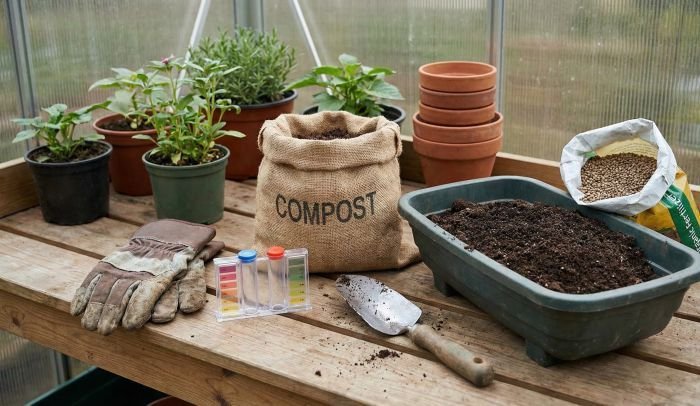





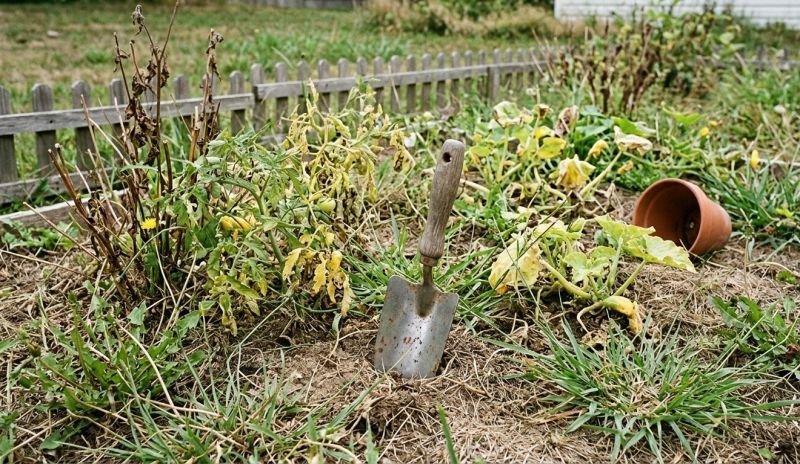
Seasonal garden care is the rhythm that keeps a garden productive through every climate shift – and when it falls out of sync, the results show fast.
A wilted tomato at noon, a lawn that never fully greened up, or perennials that returned half as strong as last year – these are rarely bad luck. They follow from skipped months. A garden does not forgive a missed window the way a houseplant might. Once weed pressure builds in May, once soil hardens through June without organic matter, once tender plants face a hard freeze unprotected – recovery costs more than prevention ever would have.
A year-round maintenance calendar does not require daily effort. It requires knowing which tasks carry weight at each seasonal turn and acting before problems form. Follow the framework in this article and your garden rewards you with stronger plants, less intervention, and a predictable growing cycle from January through December.
Key takeaways
- Skip spring soil prep and weed pressure doubles by June
- Time seed starting by weeks before last frost, not by month name
- Deep, infrequent watering builds roots that survive summer heat
- Fall soil work is what determines how strong next spring looks
- Frost protection applied before hard freezes prevents most cold-season plant loss
Table of Contents
A Practical Framework for Year Round Garden Care
Picture a homeowner pulling weeds in early April, wondering why every bed is already overrun. The answer is usually November – the month nothing got done. A structured year round garden care plan does not start in spring; it starts the moment growth slows in autumn.
Why timing shapes plant performance
Soil temperature, day length, and moisture availability shift across every season. Most plants do not respond to calendar dates – they respond to soil temperature and light. Grass roots grow most actively when soil sits between 50 and 65 degrees Fahrenheit. Cool-season vegetables germinate reliably above 40 degrees but stall below it. Pruning cuts close faster when made before sap flow accelerates in late winter than after leaves have emerged.
Recognizing these biological triggers – rather than defaulting to fixed dates – is what separates a garden that performs from one that constantly needs rescue.
Adapting a garden maintenance calendar to your zone
A garden maintenance calendar built around frost dates works across U.S. zones more reliably than one built around month names. Find your average last spring frost and first fall frost – both are available through the USDA plant hardiness zone map and most cooperative extension services. From those two anchors, work backward for planting windows and forward for harvest and protection deadlines.
Zone 5 gardeners starting tomatoes on the same March date as Zone 9 gardeners will produce leggy transplants that struggle all season. Zone 9 gardeners mulching in November for frost protection are two weeks late for what Zone 5 needs by mid-October. The timing logic is universal; the calendar dates shift.
Planning by plant category, not just month
Lawns, perennials, annuals, vegetables, and woody shrubs follow different seasonal rhythms even when they share a bed. A lawn benefits from aeration in fall, while most perennials prefer spring division. Shrubs like forsythia bloom on old wood and require pruning immediately after flowering; shrubs like butterfly bush bloom on new wood and get cut back in early spring. Vegetable gardens cycle faster than ornamental beds and require succession awareness across months.
Building a garden maintenance calendar by plant category – rather than a single unified list – prevents the common mistake of treating every plant as if it needs the same care at the same time.
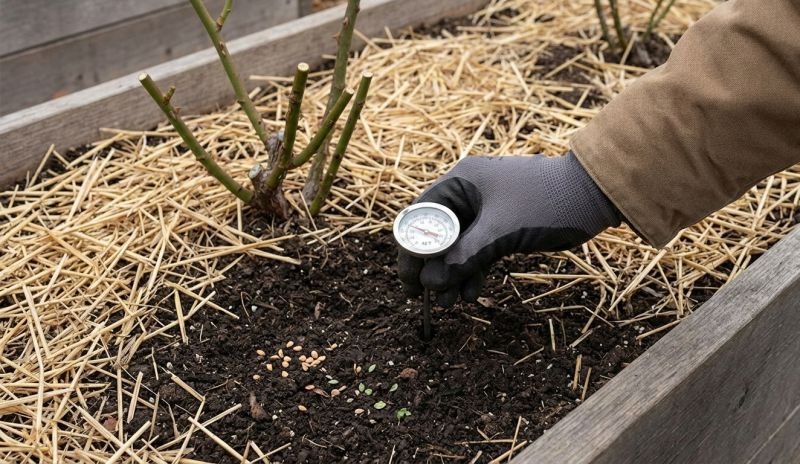
I often notice that gardeners who rely only on calendar dates miss early soil signals and fall behind before growth begins. A soil thermometer costs less than most pruners and changes how accurately you time almost every seasonal task.
Seasonal focus by quarter
| Quarter | Primary Focus | Supporting Tasks |
| Jan – Mar | Pruning, seed starting, tool prep | Soil testing, plan updates, late dormant feeding |
| Apr – May | Transplanting, mulching, pest monitoring | Hardening off seedlings, setting supports, weed prevention |
| Jun – Aug | Irrigation, harvest, heat stress control | Deadheading, mid-season pruning, succession planting |
| Sep – Oct | Soil renewal, fall crops, lawn aeration | Perennial division, leaf mulching, bulb planting |
| Nov – Dec | Frost protection, container storage, tool clean | Winter watering for evergreens, planning next year |
This garden maintenance calendar framework organizes the entire year around frost dates and soil temperature triggers rather than fixed month names. Use it as a visual reference to align planning, planting, irrigation, and fall recovery within a single structured system.
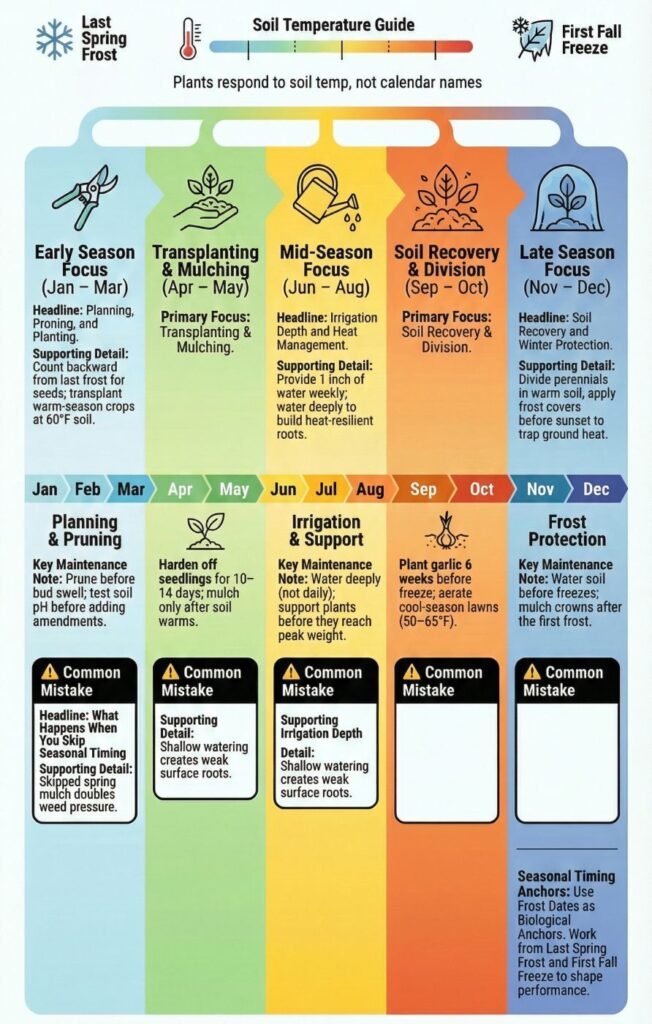
January Through March – Planning, Pruning, and Early Preparation
Bare beds look inactive through late winter, but what happens underground and in the planning notebook during these months determines how strong the spring flush will be. Compacted soil, tool rust, and missed seed-start windows are all accumulating quietly even when nothing appears to be growing.
What to do in the garden in January
January is the highest-value planning month of the year. Pull last season’s notes – what failed, what overcrowded, what produced. Sketch bed layouts before catalogs start arriving and preference distorts memory. Order seeds early, particularly for varieties with limited supply.
Inspect and clean tools before they are needed. Sharpen pruners and hoe blades, oil moving parts, replace cracked handles. A blunt hoe drags through the season; a sharp one cuts weed seedlings in a single pass. Check cold storage for any tender bulbs or tubers and remove any that show rot before it spreads.
When to start seeds indoors
When to start seeds indoors depends on your last frost date, not on the month. Count backward from that date using each crop’s recommended lead time. Tomatoes typically need six to eight weeks indoors before transplanting; peppers need eight to ten weeks. Timing this way produces stocky, ready-to-transplant seedlings rather than overgrown plants hardened into root-bound stress.
Indoor light intensity is the limiting factor most gardeners underestimate. A south-facing window in February provides roughly four hours of usable light in most northern zones. Seedlings grown in low light stretch toward the source, producing weak stems that struggle outdoors. A basic LED grow light placed two to four inches above seedling trays corrects this.
Pruning dormant trees and shrubs
Late February and early March – before bud swell – are the best windows for pruning most deciduous trees and summer-blooming shrubs. The plant’s energy is still stored in roots, structure is fully visible without foliage, and healing begins quickly once sap flow starts.
Spring-blooming shrubs are the exception. Forsythia, lilac, and spirea bloom on last year’s wood. Pruning them in late winter removes the current season’s flowers. Wait until blooming finishes, then prune immediately after to allow new flowering wood to develop before next winter.
Late winter task snapshot
- Test soil pH and amend before spring planting – lime or sulfur needs weeks to activate
- Order or purchase seeds before popular varieties sell out
- Set up grow lights and seed-starting trays before the last-frost countdown begins
- Cut back ornamental grasses and dead perennial stalks before new growth emerges
- Apply dormant oil spray to fruit trees and rose canes while temperatures stay below 45 degrees Fahrenheit
Insider Tip: Base seed starting on weeks before last frost rather than calendar month. Write your local last-frost date on the inside of your potting shed door and work backward for every crop. A six-week lead time means different calendar dates in Vermont versus Virginia.
April and May – Planting Windows and Early Growth Control
A short delay in mulching or transplanting in spring does not just push the schedule back. Weed seeds germinate in soil above 50 degrees, and bare soil after mid-April in most U.S. zones gives weeds a compounding head start that can double labor by early summer.
Transplanting seedlings outdoors safely
Hardening off is the step most transplant failures skip. Move seedlings outdoors for two to three hours in indirect light, increasing exposure by about an hour per day over ten to fourteen days before planting. The transition toughens cell walls and reduces transplant shock. A week of hardening in a cold frame – a low, vented box with a clear lid – works faster than open-air hardening because temperature swings are moderated.
Soil temperature at the planting depth matters more than air temperature. Wait until soil four inches deep reads at least 60 degrees for warm-season crops like tomatoes, peppers, and squash. Cool-season crops – lettuce, kale, brassicas – go in as soon as soil can be worked and is above 40 degrees. Setting transplants out when soil is too cold stresses roots and delays establishment even if air temperatures look acceptable.
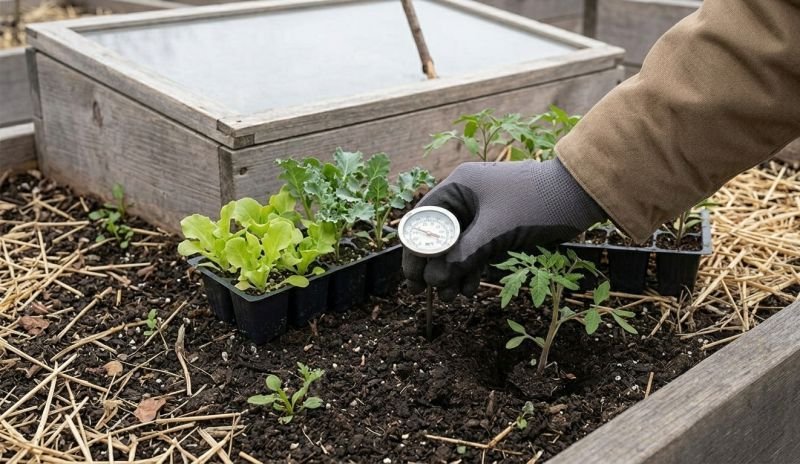
Mulching tips for garden beds
Apply two to three inches of organic mulch once soil has warmed – not before. Mulching over cold soil insulates the cold in, delaying root growth and slowing establishment. Shredded bark, wood chips, and straw are all effective mulching materials for garden beds; the right choice depends on what you have access to and the plant type.
Keep mulch an inch away from stems and crowns. Mulch piled against stems traps moisture and creates conditions favorable to fungal rot and rodent nesting. Around trees, pull mulch back from the trunk flare rather than forming the ‘volcano’ shape seen in many landscapes. Volcano mulching suffocates surface roots and conceals bark damage until it is severe.
The payoff is visible within weeks. Soil moisture is retained more effectively – uncovered soil in warm weather loses water at a rate two to three times higher than mulched soil at the same depth. Weed germination drops sharply when light is blocked consistently.
June Through August – Managing Heat, Growth, and Harvest
Ever noticed leaves wilting at noon even after morning watering? That midday wilt often is not a water shortage – it is a root system that never developed the depth to buffer heat. Summer garden maintenance is largely about building resilience before the hottest weeks arrive.
Summer watering plants efficiently
Water deeply and infrequently to encourage roots to follow moisture downward. For most vegetable beds and garden borders, one inch of water per week – applied in one or two sessions rather than daily – produces deeper root development than shallow daily watering. Measure output with a rain gauge or empty tuna can placed under the spray zone.
Water in the morning when possible. Foliage dries during the day, reducing fungal pressure. Evening watering leaves surfaces wet overnight, which creates favorable conditions for powdery mildew, black spot, and other foliar diseases. Drip irrigation and soaker hoses deliver water directly to the root zone and cut fungal risk further by keeping foliage dry entirely.
I often see that shallow daily watering creates surface roots that fail under extended heat waves. Roots follow moisture – train them downward by watering less often but more deeply, and the plant builds the buffer that keeps it upright when temperatures spike past 95 degrees.
Mid-season pruning and structural support
Tomatoes, cucumbers, and squash produce faster and more cleanly when trained to supports and pruned for airflow. Remove tomato suckers – the shoots that emerge between main stem and branch – from indeterminate varieties throughout summer to direct energy toward fruit already set. Pinch basil flower heads as they form to extend leaf production by four to six weeks.
Check stakes, cages, and trellises in late June before plants reach full weight. A support that worked for a seedling in May may fail under a loaded tomato plant in August. Tie main stems loosely with soft ties or strips of fabric – tight ties cut into stems under summer weight.
Harvesting guide by month
June brings the first harvests from overwintered garlic, spring lettuce, snap peas, and strawberries in most zones. Pick frequently – leaving ripe fruit on the plant signals it to slow production. A zucchini left three days too long becomes a marrow and stops the plant from setting new fruit.
July and August shift harvest focus to tomatoes, beans, peppers, corn, and summer squash. Check fruiting crops daily during peak heat. Heat above 95 degrees Fahrenheit causes tomato pollen to become non-viable, pausing fruit set even on healthy plants. New fruit production resumes when temperatures drop below 90, so do not abandon plants that stall in a heat wave.
Heat stress indicators
- Leaf curl inward (along the midrib) – usually a heat response, not drought, in the morning
- Blossom drop on tomatoes and peppers during heat waves above 95 degrees Fahrenheit
- Yellowing lower leaves on heavy-producing plants – often a magnesium draw-down, not disease
- Wilting that does not recover by evening – check soil moisture at six inches, not at the surface
September and October – Soil Recovery and Fall Reset
Root growth in many perennials and woody plants continues well after visible top growth slows. Fall soil work – feeding, aerating, amending – reaches an active system, not a dormant one. Work done in September and October directly shapes how strong next spring’s growth will be.
Planting fall crops and dividing perennials
Garlic, spinach, kale, arugula, and many root crops go into the ground in September for fall and early winter harvest. In warmer zones, these same crops extend into November. Garlic planted six weeks before hard freeze establishes roots before dormancy and is ready to harvest the following July.
Perennials that have outgrown their space or declined in vigor benefit from fall division. Dig the clump, divide it into sections with a clean spade or knife, and replant at the same depth with compost worked into the backfill. Daylilies, hostas, coneflowers, and ornamental grasses all respond well to fall division and recover by the following spring with noticeably improved flowering.
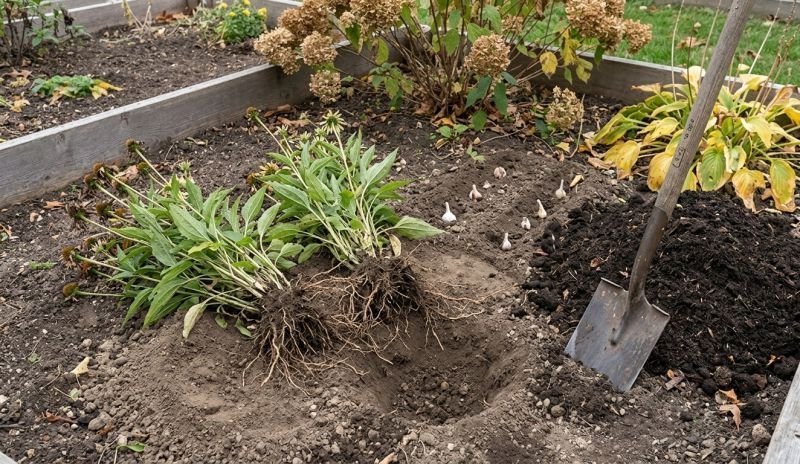
Autumn leaf mulching and organic matter
Fallen leaves are free organic matter. Shredded leaves decompose faster than whole ones and work as mulch without matting. A mow-and-collect pass over fallen leaves produces a shredded material that layers two inches thick over beds – adding insulation, feeding soil organisms, and suppressing winter weed germination.
Worked into vegetable beds after harvest, shredded leaves decompose over winter and improve soil structure by spring. Clay soils become easier to work; sandy soils retain moisture better. The single most cost-effective soil improvement in most gardens is leaves – redirecting them from the curb into the garden.
Lawn care in early fall
Early fall is the highest-impact window for lawn care in most of the U.S. Cool-season grasses – fescue, bluegrass, and ryegrass – are actively growing as soil temperatures drop into the 50-to-65-degree range. Aerate to relieve compaction, overseed thin areas, and apply a fall lawn fertilizer with a higher potassium ratio to strengthen roots before dormancy.
Avoid high-nitrogen fertilizers on lawns after mid-October in cool climates. Late nitrogen pushes tender top growth that does not harden before frost, increasing susceptibility to winter injury and spring disease. A fertilizer marketed as ‘winterizer’ typically carries the correct ratio for this timing.
November and December – Winter Protection and Structural Maintenance
An overnight freeze dropping twenty degrees faster than forecast will damage tender plants that looked fine yesterday. The gardeners who lose the fewest plants are not the ones who react fastest – they are the ones who finished protection work before the first hard freeze arrived.
How to protect plants from frost
Light frost protection – covering plants with frost cloth, old bedsheets, or row cover fabric – works by trapping ground heat under the cover rather than by insulating against cold from above. The cover needs to reach the ground and be held down at the edges to hold warmth. Plastic alone is less effective because it does not trap radiant heat and can damage leaves it touches on very cold nights.
For semi-hardy perennials and marginally hardy shrubs, a four-inch layer of dry mulch applied over the crown after the ground has begun to freeze protects root systems from freeze-thaw cycles that heave plants out of soil. Apply after first frost, not before – premature mulching keeps soil warm enough to delay hardening and can encourage late growth that winter will kill.
Frost risk checklist
- Know your first average freeze date and set a calendar reminder two weeks before it
- Bring in container plants before overnight temperatures fall below 40 degrees Fahrenheit
- Water soil deeply before a predicted freeze – moist soil holds heat better than dry soil
- Cover tender plants by late afternoon on freeze-warning days, not after sunset
- Remove covers by mid-morning on sunny days to prevent heat buildup underneath
Winter monitoring and watering
Broadleaf and needled evergreens continue losing moisture through foliage in winter, particularly during windy or sunny periods. In zones with frozen ground and low precipitation, this moisture is not replaced from roots and results in winter burn – brown, desiccated foliage most visible in late winter. Water evergreens deeply in late autumn before ground freeze and during thaws when soil is accessible.
Container plants stored indoors or in unheated garages need occasional watering throughout winter. Soil in containers dries faster than ground soil, and roots of dormant plants still require some moisture to survive. Check containers monthly – soil at the center of the pot should feel lightly damp, not bone dry.
Conclusion
A garden that performs year after year is built on accumulated small decisions – the soil test done in March, the mulch applied before weeds germinated, the watering depth that reached roots rather than just wetting the surface. None of those actions are complicated. What separates consistent gardens from struggling ones is timing: acting on the right task at the right seasonal window rather than responding to problems after they have already compounded. If you work from a two-anchor calendar – last spring frost and first fall freeze – most seasonal tasks organize themselves around those dates, regardless of your zone.
One place gardeners lose ground quickly is the transition from summer to fall. The harvest is finished, energy drops, and the garden gets ignored through September. That gap is when soil improvement, perennial division, lawn aeration, and fall planting all need to happen. If fall work feels like effort for next year rather than this season, remember that spring recovery from a neglected fall is slow and frustrating. Do the fall work while the soil is still warm and roots are still active. You will notice the difference by April.
FAQ
What to do in the garden in January?
January is a planning and preparation month. Order seeds before popular varieties sell out, review last season’s layout and results, sharpen and clean tools, and test soil if you did not do so in fall. In warmer zones, January also allows pruning of dormant fruit trees and overwintering cool-season crops for harvesting. In colder zones, indoor seed-starting trays and grow lights should be set up and ready so planting can begin on schedule.
When to start seeds indoors?
Count backward from your local last spring frost date. Tomatoes need six to eight weeks indoors before transplanting; peppers need eight to ten weeks; onions and leeks need ten to twelve weeks. Starting too early produces overgrown, root-bound seedlings that struggle to establish. Starting too late gives plants an undersized root system going into outdoor conditions. Find your last frost date through your state’s cooperative extension service and use it as your anchor point.
Can you mulch too early in spring?
Yes. Applying mulch before soil has warmed in spring insulates cold in rather than blocking it out, slowing root activity and delaying establishment of newly planted transplants. Wait until soil at four inches deep has reached at least 50 degrees before mulching warm-season beds. Cool-season beds can be mulched earlier. As a practical rule, mulch goes down after transplants are in the ground and have been watered in – not before planting begins.
What happens if you skip fall garden cleanup?
Skipping fall cleanup carries several direct costs the following season. Diseased plant debris left in place over winter harbors fungal spores and insect eggs that reinfect new growth in spring. Weeds that set seed before cleanup germinate prolifically in spring. Soil that did not receive organic matter additions enters spring compacted and low in biology. Perennials that were not divided before dormancy continue declining and may not flower. None of these problems are catastrophic, but each adds recovery work in the busiest planting season.
When is the best time to divide perennials?
Most perennials can be divided in either spring or fall. Fall division – September through early October – allows roots to establish in warm soil before dormancy and often produces stronger flowering the following year. Spring division works when fall was missed and is best done as new shoots emerge but before they reach six inches tall. Hostas, daylilies, coneflowers, and black-eyed Susans all divide well in either season. Bearded iris divides best in late summer, about six weeks after flowering ends.
Can you fertilize lawn in fall?
Fall is one of the most effective times to fertilize cool-season lawns. Apply a fertilizer with higher potassium content – marketed as a winterizer – in early to mid-fall to strengthen root systems before dormancy. Avoid high-nitrogen applications after mid-October in cold climates; late nitrogen forces top growth that does not harden before frost and increases the risk of winter injury. Warm-season grasses like zoysia and bermuda do not benefit from fall feeding and should not be fertilized after growth slows.
What happens if you water plants at night in summer?
Evening watering leaves foliage wet overnight, which creates conditions favorable to fungal diseases including powdery mildew, black spot on roses, and early blight on tomatoes. Soil-level moisture is not the issue – the problem is wet leaves in low-airflow, cool nighttime conditions. Morning watering allows foliage to dry during the day and is consistently lower risk. If evening watering is unavoidable, use drip irrigation or soaker hoses to deliver water to the root zone and keep foliage dry entirely.