



Soil organic matter is the fraction of soil made from decaying plant residues, stable humus, and microbial biomass. It drives fertility by improving structure, water storage, nutrient exchange, and root habitat. Productive garden soils often test between 3% and 6% organic matter by weight. Sandy beds perform well near 2-4%. Clay-based beds respond better near 4-6%. Levels rise when gardeners add stable inputs, keep soil covered year‑round, and limit disturbance that burns off carbon. Progress is steady rather than instant, so plans that measure, amend, and protect the surface outperform one‑time fixes.
Key Takeaways:
- Organic matter is key for making soil healthy and good for growing plants.
- It makes the soil structure better, keeps water in the soil, helps plants get food, and prevents soil from washing away.
- Organic matter helps good microbes in the soil live and makes plants’ roots grow well.
- Knowing about the importance and types of organic matter helps manage soil health well.
- Using organic matter, gardeners and farmers can create a great place for plants to grow.
Table of Contents
What Organic Matter Really Is in Garden Soil
Soil organic matter is not a single ingredient but a constantly changing fraction of living and decayed materials. It forms the engine that drives fertility, determining how nutrients, air, and water move through the soil profile. A gardener who understands its composition and how it interacts with the mineral fraction of soil can make far more accurate management decisions than one who treats it simply as a “fertility booster.”
Definition and Key Components
Organic matter in soil can be separated into three main categories.
- Living organisms include bacteria, fungi, earthworms, nematodes, and countless microfauna. Their activity is what breaks down plant residues into simpler compounds.
- Fresh residues consist of leaves, stems, roots, and other recent inputs that are only partially decomposed. They supply food for soil organisms and are the entry point for nutrient cycling.
- Humus is the stable fraction created after decomposition is complete. It binds tightly with soil minerals, resists further breakdown, and acts as a long-term reservoir for water and nutrients.
Each category plays a distinct role. The living fraction is dynamic and drives biological activity. The residue fraction feeds the cycle and affects short-term nutrient availability. The humus fraction provides durability, stability, and resilience in the soil ecosystem.
How Organic Matter Interacts With Soil Structure
The influence of organic matter extends well beyond nutrition. It directly shapes the physical and chemical properties of soil.
- Aggregation – As microbes decompose residues, they produce sticky substances that bind soil particles into stable aggregates. This structure improves aeration and prevents compaction.
- Chemical balance – Organic matter contains charged sites that attract and hold onto nutrients such as calcium, potassium, and magnesium. This process, called cation exchange, prevents leaching and increases nutrient availability to plants.
- Texture moderation – While it cannot change the mineral classification of a soil (sand, silt, clay), organic matter moderates extremes. In sandy soils it improves water-holding capacity. In clay soils it opens pore spaces for drainage and root penetration.
The result is a soil environment that becomes more predictable and manageable. When organic matter levels are stable, a garden requires fewer corrective interventions, because water, nutrients, and air naturally balance within the root zone.
Understanding what organic matter consists of, and how it shapes soil physics and chemistry, sets the stage for grasping its direct role in fertility.
How Organic Matter Improves Soil Fertility
Organic matter raises fertility by changing how water moves, how nutrients are stored and released, and how soil life functions. Gains accumulate when the stable humus fraction increases and when fresh inputs feed microbes without creating nutrient lock‑ups.
Water retention and drainage balance
Stable aggregates form when microbes process residues and bind particles into crumbs. That structure adds large pores for airflow and small pores for capillary water storage. Sandy beds hold moisture longer once humus increases, so irrigation intervals can lengthen. Clay‑heavy sites accept water faster and shed less runoff when aggregation improves.
Gardeners can track progress with a simple field check – time how quickly a refill in a pre‑wetted 12‑inch test hole drops, and note whether surface crusting declines after steady compost use. A two to three‑inch mulch layer cuts evaporation at the surface and protects the forming aggregates from raindrop impact.
Nutrient cycling and availability
Organic matter stores cations on charged sites and reduces leaching, which is vital in sandy profiles with low native holding capacity. As microbes mineralize residues, nitrogen, phosphorus, and sulfur move from organic forms into plant‑available ions. Fresh, high‑carbon inputs can temporarily tie up nitrogen as microbes build biomass; that pattern fades once residues drop toward a C:N near 25:1.
Finished compost with a C:N near 12:1 to 20:1 releases nutrients steadily without sharp salts. Humic substances chelate iron and zinc in alkaline soils, which improves uptake when pH runs high.
Where tests show low phosphorus or potassium, organic matter helps hold added nutrients in the root zone instead of flushing away with deep watering.
Soil biology and root health
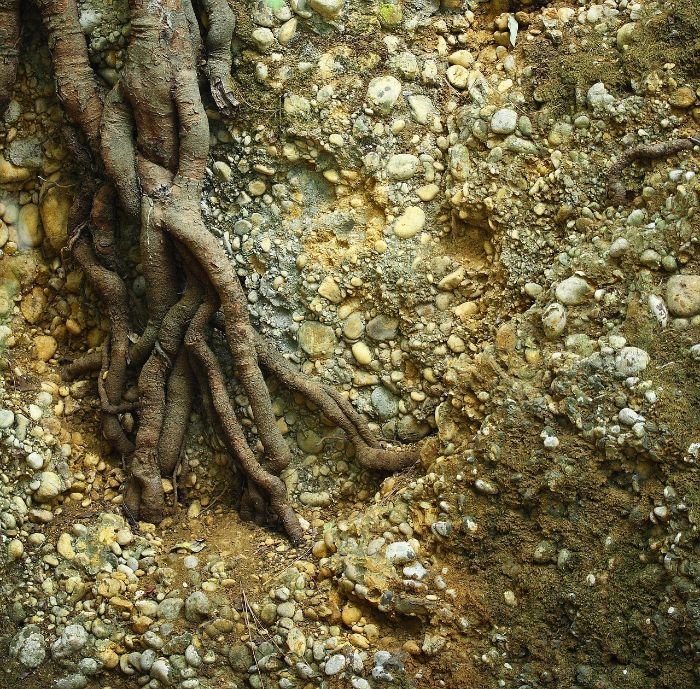
Soil organisms require a stable food source and a habitat with oxygen and moisture. Organic matter supplies both. Bacteria and fungi transform residues into metabolites that glue particles together and open pathways for roots. Mycorrhizal fungi extend the effective root system and access phosphorus pools that roots alone cannot tap. Earthworms fragment residues and move carbon deeper, which increases contact between humus and mineral particles. Reduced tillage preserves fungal networks, while consistent surface cover keeps temperatures moderate for enzyme activity.
The result is faster root exploration, fewer stress symptoms during hot spells, and better recovery after drought.
Once the mechanisms are clear, the next step is practical – select inputs and routines that raise organic matter year after year without creating nutrient imbalances or salt buildup.
Proven Ways to Add Organic Matter to Your Garden
Soil organic matter rises through steady inputs, surface protection, and limited disturbance. Results improve when materials are mature, salts stay low, and application rates match soil texture. Expect gradual gains rather than instant jumps. Most home gardens add between 0.1% and 0.3% organic matter per year under consistent management.
Compost and vermicompost
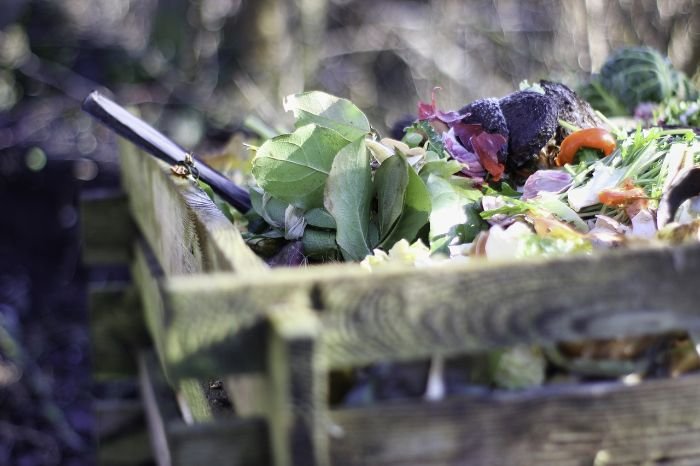
Finished compost supplies stable carbon, improves aggregation, and carries a balanced set of nutrients. Aim for compost with a carbon‑to‑nitrogen ratio between 12:1 and 20:1 and an electrical conductivity below about 4 mS/cm.
Apply one to two inches across beds once per year and blend only into the top six to eight inches during initial renovation. Shift to surface topdressing in following seasons to protect soil structure. For lawns, topdress one‑quarter to one‑half inch after core aeration and water it in.
Vermicompost functions as a concentrated soil conditioner rather than a bulk source of organic matter. Use a thin layer of one‑quarter to one‑half inch as a topdress around ornamentals or one to two cups per planting hole for transplants. Avoid heavy vermicompost layers in containers, since salts can build up in closed mixes. Where compost tests high in salts, leach beds with a slow, deep irrigation before planting.
Manure, leaf mold, and on‑site recycling
Well‑composted manure adds nutrients and humus but requires attention to salt load. Poultry manure carries higher salts than herbivore manures. Favor manure compost that has been thermally processed and cured. Limit surface additions to one‑half to one inch per year and retest salinity if plants show leaf tip burn.
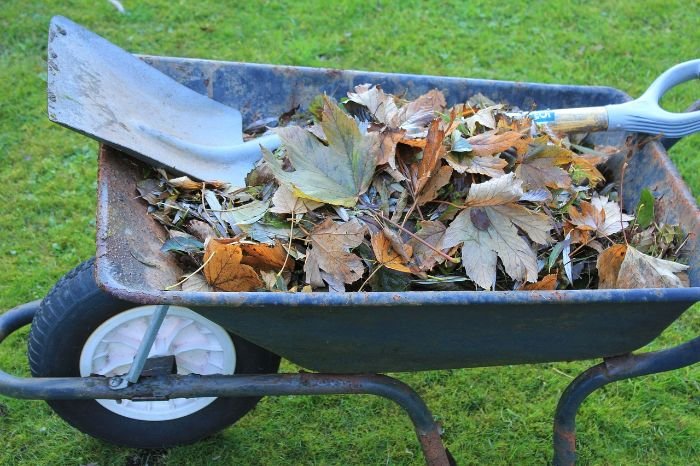
Leaf mold increases water holding in sandy beds and opens pore space in clay. Spread one to two inches as a surface layer or blend lightly into the top few inches where soil is compacted. Shred leaves with a mower before use to speed breakdown.
On‑site recycling converts trimmings and soft residues into mulch. Chop prunings to small pieces and return them to beds as a thin layer that does not mat. Keep diseased material and seedy weeds out of the loop. Use wood chips as a surface mulch only. Do not till chips into beds, since buried high‑carbon material can tie up nitrogen. Maintain a clear stem collar of three to six inches around trunks and crowns to prevent rot.
Cover crops and mulching techniques
Cover crops build organic matter through roots and residue. Winter rye sets deep roots that improve infiltration. Crimson clover and field peas supply nitrogen along with biomass. Buckwheat covers bare summer ground quickly and suppresses weeds. Terminate covers at early flowering, then crimp or cut and leave residues on the surface as mulch. Lightly incorporate only where soil is compacted and drainage is poor.
Mulch locks in gains by shielding soil from heat and raindrop impact. Use two to three inches of shredded bark, wood chips, or coarse leaf mulch around perennials and shrubs. Straw suits annual beds that turn over each season. Place drip lines or soaker hoses on the soil surface before mulching so water reaches the root zone. Refresh mulch annually as it settles. In compacted areas, pair mulch with occasional broadfork loosening to keep pores open without flipping layers.
Quick application guide
| Input | Typical C:N | Salinity risk | Annual addition for beds | Notes |
|---|---|---|---|---|
| Finished compost | 12-20:1 | Low to moderate | 1-2 in surface topdress | Blend into top 6-8 in only during initial renovation |
| Vermicompost | ~10-15:1 | Moderate in containers | ¼-½ in topdress | Use sparingly; avoid buildup in pots |
| Composted manure | Variable, often 10-20:1 | Moderate to high (poultry higher) | ½-1 in | Confirm cure and EC; leach if salts test high |
| Leaf mold | High, variable | Low | 1-2 in | Shred leaves; improves moisture retention |
| Wood‑chip mulch | Very high | Low | 2-3 in surface only | Do not till in; maintain clear collar at stems |
| Straw mulch | High | Low | 2-3 in | Suits annual beds; replenish as it breaks down |
| Cover crops (biomass) | Variable | Low | Terminate at early bloom | Crimp or cut; leave as surface mulch |
Once the right inputs and rates are in place, maintenance becomes the lever that keeps organic matter rising.
Mistakes to Avoid When Managing Organic Matter
Organic matter lifts fertility only when materials, rates, and handling fit the soil. Missteps tend to create salt stress, nitrogen lock‑up, perched water in planting holes, or a steady loss of carbon from over‑tillage. Preventing a few common errors protects gains and keeps nutrients available to roots.

Over‑amending in the planting hole
Filling a planting hole with rich mix while leaving native soil untouched creates a sharp boundary that traps water. Roots circle the improved pocket and drainage slows at the interface. Backfill with the soil you removed so texture stays uniform. Improve the entire bed to a consistent depth of 6-8 inches with one to two inches of finished compost rather than building a “bathtub” in a single hole. On clay, keep holes wide and shallow, then mulch the surface to protect structure.
Problem inputs and rates
Unfinished compost and raw manure can carry high ammonium, excess salts, and viable pathogens. Finished compost should fall near a C:N of 12:1-20:1 and an electrical conductivity under about 4 mS/cm. Limit composted manure to a surface layer of one‑half to one inch per year and leach beds if foliage shows tip burn. High‑carbon materials such as fresh wood chips belong on the surface as mulch, not tilled into beds. When using biochar, pre‑charge it with compost extract or dilute fertilizer; uncharged biochar can tie up nutrients during the first season. Apply vermicompost sparingly as a concentrated conditioner: one‑quarter to one‑half inch as a topdress or one to two cups per planting hole.
Practices that burn off gains
Repeated deep tillage exposes fresh surfaces to oxygen and accelerates decomposition, which lowers organic matter over time. Switch to shallow incorporation during initial renovation, then use a garden fork or broadfork to loosen without flipping layers. Keep soil covered year‑round. Mulch at two to three inches reduces surface evaporation and shields aggregates from raindrop impact. Terminate cover crops at early bloom and leave residues on the surface so carbon enters the profile gradually. Monitor pH and salinity when amendments are frequent. In alkaline soils, plan small sulfur adjustments and periodic checks; in saline sites, schedule occasional deep irrigations to flush accumulated salts from the root zone.
With errors out of the system, organic matter can build steadily and keep doing the quiet work that supports roots.
Long‑Term Benefits of Building Organic Matter
Raising soil organic matter delivers compounding gains that persist across seasons. Water moves more predictably, nutrients stay in the root zone longer, and structure resists compaction. The result is steadier growth with fewer corrective inputs.
Water balance and drought resilience
Humus adds stable pore spaces that store capillary water while keeping large pores open for air. Sandy beds hold moisture longer once organic matter rises, so irrigation can shift toward deeper, less frequent sessions without stress. Clay‑heavy soils accept water faster and shed less runoff when aggregate stability improves. Gardeners can track gains by timing percolation in a pre‑wetted test hole, checking moisture with a probe at 6-8 inches after irrigation, and watching for fewer surface crusts after summer storms. Longer intervals between waterings, with equal or better plant turgor at dawn, signal that storage at depth has improved.
Nutrient efficiency and pH buffering
Organic matter carries charged sites that hold calcium, potassium, magnesium, and ammonium against leaching. That holding capacity improves nutrient availability in low‑CEC sands and evens out feeding across weather swings. As residues mineralize, nitrogen, phosphorus, and sulfur release gradually rather than in spikes. Humic substances also form complexes with iron and zinc in alkaline soils, which supports uptake where high pH limits availability. Over time, soil tests often show more stable nutrient levels between applications. That stability allows lighter, well‑timed feedings instead of heavy single doses that surge and fade.

Structure, biology, and long‑term stability
Stable aggregates resist compaction from foot traffic and irrigation, which preserves pore continuity for roots and microbes. Mycorrhizal networks expand the functional root zone and improve access to immobile nutrients such as phosphorus. Earthworms incorporate residues and increase contact between humus and mineral particles. Surface cover protects that structure from heat and raindrop impact, so gains accumulate rather than reset each season. With structure intact, transplant recovery speeds up, roots explore deeper layers, and pruning, watering, and feeding all require less intervention.
Conclusion
Soil organic matter rewards a gardener who treats it as a managed asset rather than a one‑time amendment. Progress follows a simple flywheel – measure, add stable inputs, protect the surface, and disturb less. Results compound because structure, moisture, and nutrient availability improve together.
Set clear benchmarks and revisit them on a schedule. Aim for a percolation rate near 1-2 inches per hour, organic matter within the texture‑specific range, electrical conductivity in a safe band, and pH near the crop’s target. Run a lab test once a year in late summer or early fall, then adjust rates rather than guessing. Keep records of inputs, depths, and dates so decisions improve season by season.
Build a steady cadence instead of chasing quick fixes. Topdress one to two inches of finished compost annually, keep a 2-3 inch organic mulch in place, and rotate a cover crop where beds sit idle. Incorporate only during initial renovation, then switch to loosening without flipping layers. In saline or alkaline sites, pair small, repeatable adjustments with periodic checks so corrections hold.
Evaluate success by outcomes that matter in a garden – deeper rooting, longer watering intervals without wilt at dawn, fewer crusts after rain, and lighter fertilizer use with equal or better growth. When those signals align, organic matter is rising and fertility is stabilizing. Keep the cadence steady, and soil will carry more of the work while plants deliver reliable performance year after year.
FAQ
How fast can soil organic matter increase in a home garden?
Most gardens gain about 0.1-0.3% organic matter per year under steady management. One or two inches of finished compost each year adds carbon, but only a portion becomes stable humus. Cover crops and continuous mulch lift the long‑term rate. Warm, wet climates decompose residues faster, so consistent inputs matter more in those regions.
What is the best organic matter for soil?
The most effective organic matter depends on soil type and crop needs. Compost improves overall fertility and microbial balance. Well-rotted manure boosts nitrogen for heavy feeders like corn. Leaf mold enhances water retention in sandy beds, while biochar improves long-term carbon stability. Matching the material to site conditions produces the strongest gains.
What is an example of an organic soil?
Organic soils occur where plant residues accumulate faster than they decompose. Peatlands are a classic example, with soils dominated by partially decayed mosses. Muck soils in drained wetlands also contain very high organic content, often exceeding 20%. Both differ sharply from mineral soils, which contain far less organic matter.
Which soil is rich in organic matter?
Prairie soils and forest loams typically hold the highest organic fractions. Their long history of dense vegetation and slow decomposition builds stable humus. Garden beds that receive regular compost and cover crop residues can also reach organic matter levels comparable to natural loams.
How to find organic matter in soil?
The most accurate method is a laboratory soil test, which measures organic matter as a percentage of total weight. Farmers and gardeners often aim for 3–6%. A simple field indicator is soil color and structure: darker soils with crumbly aggregates usually contain higher organic matter than pale, compacted soils.
Is peat moss organic matter?
Yes. Peat moss is a form of partially decomposed plant residue harvested from bogs. It increases water retention and acidity when incorporated into soil. However, because peat regenerates very slowly, many gardeners now favor compost or coconut coir as more sustainable alternatives.
Should I add gypsum to my soil?
Gypsum is not a source of organic matter. It is a mineral amendment that supplies calcium and sulfur and can improve structure in sodic soils. In most garden settings it does not replace the role of compost or manure. It is only useful when a soil test confirms sodium issues or calcium deficiency.
What is the most common organic matter?
Compost is the most widely used form in gardens. It results from controlled decomposition of food scraps, yard waste, and plant residues. Its balanced nutrient profile and stable humus fraction make it both accessible and effective for improving soil fertility.