



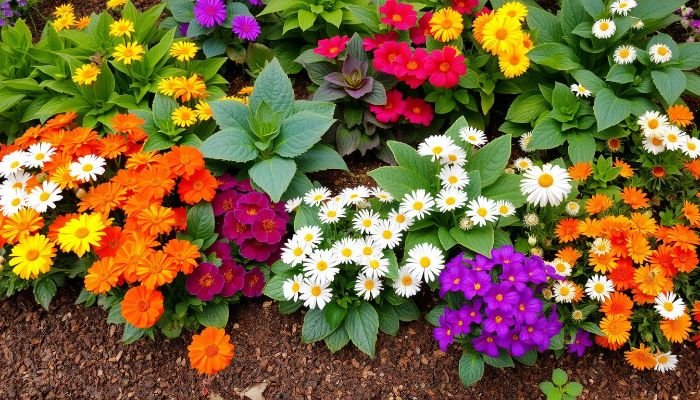
Ever thought if your garden plants are friends or foes? Knowing the difference between annuals and perennials is key. Annuals are the bright stars that bloom once and then need to be replanted. Perennials, on the other hand, stick around for more than two years.
By understanding their roles, gardeners can make their gardens more peaceful. This means more flowers and a stronger garden. Plants like marigolds and peonies show how different types can live well together.
Key Takeaways
- Annuals complete their life cycle within a single growing season, while perennials live for over two years.
- Annuals require replanting each year, unlike perennials, which regrow every season.
- Annuals bloom continuously during the growing period, whereas perennials have specific bloom times.
- Perennials may have higher initial costs but are more cost-effective in the long run.
- Combining both plant types can enhance visual impact and garden structure.
Table of Contents
Key Differences Between Annuals and Perennials
Knowing the differences between annuals and perennials is key for gardeners, especially when implementing foundational companion planting concepts. These plants have unique growth cycles and care needs. This knowledge helps gardeners choose the right plants and care for them well.
Growth Cycles and Lifespan
Annuals live for just one growing season. They grow, bloom, and die before winter. They need to be replanted every year for fresh colors.
Perennials live for three years or more. They come back every year. Even when it’s cold, they can grow back in spring.
Maintenance and Care Requirements
Annuals need more care than perennials. They need to be replanted, watered, and fed often. Tools like Miracle-Gro® Shake ‘n Feed® help them grow well.
Perennials need less care once they’re established. They need less water and care. They’re a good choice for saving money in the long run.
Benefits of Annuals in Companion Planting
Annual plants bring big benefits to gardens. They grow, bloom, and die in one season. This makes them great for adding color and beauty to your garden.
Pest Control Advantages
Annuals help control pests in gardens. Plants like marigolds and zinnias attract good bugs. These bugs eat the bad bugs that harm plants.
This means you can often reduce chemical treatments so your garden stays healthy and vibrant.
Seasonal Flexibility
Annuals let you change your garden with the seasons. You can try new plants every year. This keeps your garden looking fresh and interesting.
It also helps you deal with weather changes. You can make your garden look better and stay healthy.
Benefits of Perennials in Companion Planting
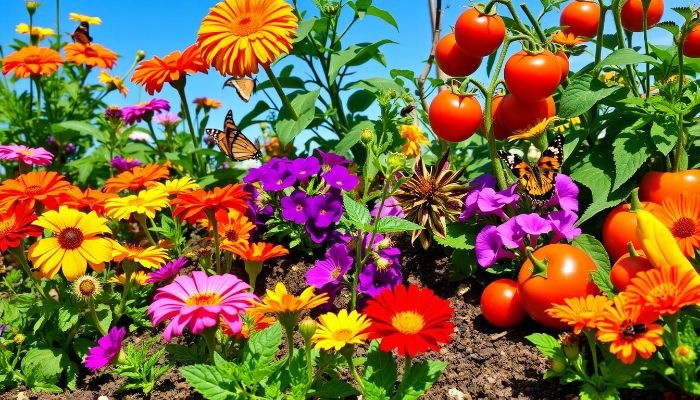
Perennials are key in companion planting; deciding between short-term blooms and long-term staples can transform a garden’s look and sustainability. They help keep the soil healthy by stopping erosion and keeping nutrients in.
Long-Term Garden Stability
Perennials live a long time, up to 20 years with care. This makes gardens stable and less changed by seasons. They bloom at different times, keeping gardens beautiful and helping local wildlife.
Soil Enrichment
Perennials make soil better with their deep roots. They help the soil hold water and improve its structure. They need less water, which saves water.
Mulch around them keeps the soil moist and weeds away. Fertilizing and dividing them regularly keeps them strong. This makes the soil better for all plants.
Combining Annuals and Perennials for Maximum Impact
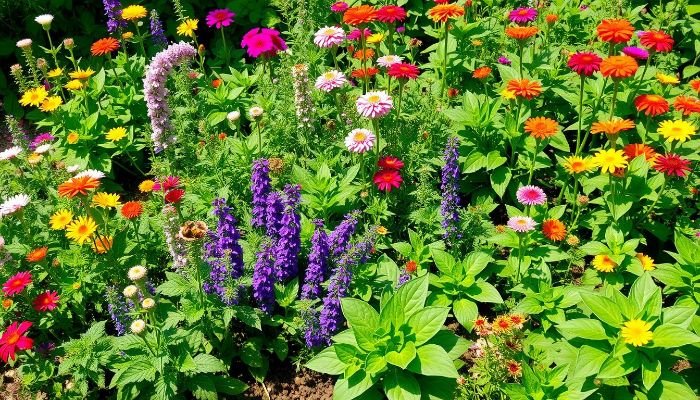
Putting annuals and perennials together makes your garden lively and full of life. It’s all about using space well and planting at the right times. This way, your garden can be its best all year round.
Space Optimization Techniques
Knowing how each plant grows is key to a good mix. Tall perennials can be the background for shorter annuals. This makes your garden look even better.
Plant annuals like petunias and marigolds in front of perennials. This fills in gaps and keeps your garden colorful all season.
- Use containers to mix plants in small spaces. It’s a great way to get creative.
- Put annuals in perennial borders to brighten up dull spots as summer goes on.
- Plant annuals deep to help them grow fast and keep the soil healthy.
Seasonal Planting Strategies
Planting at the right times keeps your garden interesting all year. Early bloomers like peonies and lupines can be paired with cool-season annuals. This fills the gap until summer flowers come out.
When summer flowers start to fade, add fall annuals like chrysanthemums or ornamental kale. This keeps your garden looking good into the fall.
- Use quick-blooming annuals to fill in gaps until perennials grow. This keeps your garden colorful all season.
- Change up your annuals every year. This keeps the soil healthy and pests away.
By carefully choosing which plants to mix – and avoiding common mistakes in pairing species – you can make your garden more diverse and beautiful. It will change and grow with the seasons.
Best Annuals for Companion Planting
Annual plants are key in companion planting. They help control pests and improve soil. By picking the right annuals, gardens become vibrant and support plant health.
Annuals for Pest Repellence
Marigolds are top for keeping pests away, like nematodes. They help veggies grow better by fighting off pests. Other plants that keep pests away include:
- Petunias – These colorful blooms attract good bugs and keep pests away.
- Calendula – Its bright orange flowers fight off aphids and other pests.
- Cosmos – They draw in pollinators and keep pests away.
Annuals for Soil Improvement
Some annuals make the soil better, improving its structure and nutrients. Buckwheat is great because it attracts good bugs and makes the soil better when tilled. Other good choices are:
- Zinnias – They add beauty and support healthy soil.
- Sunflowers – Their deep roots help loosen soil, improving drainage and air.
- Geraniums – They add color and make the soil richer with their leaves.
Best Perennials for Companion Planting
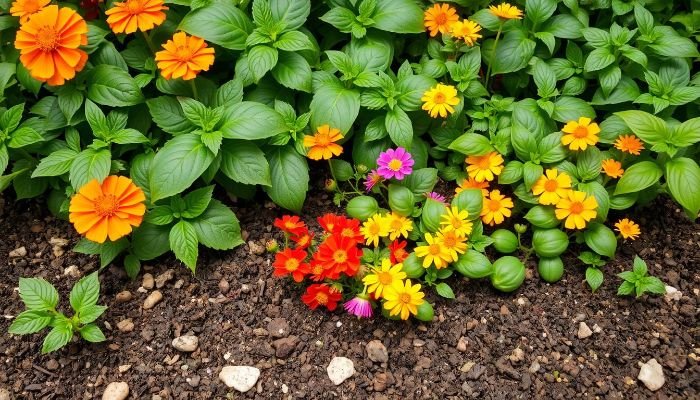
Choosing the right perennials for your garden can make it healthier and more productive. These plants add beauty and structure. They also attract pollinators and improve soil health.
For example, coneflowers and bee balm attract butterflies and bees. This is key for a diverse ecosystem. It helps your garden grow stronger and more vibrant.
Perennials That Attract Pollinators
Perennials like Echinacea (Coneflowers) and Black-Eyed Susans attract pollinators. They are beautiful and draw in bees and butterflies. Lobelia and catmint are also great, attracting hummingbirds and butterflies.
By adding these plants, you help pollinators and increase biodiversity. This keeps your garden balanced and healthy.
Perennials That Enhance Soil Health
Many perennials also boost soil health. Plants like comfrey and borage have deep roots. They help soil stay in place and make nutrients available.
Perennials like Hellebores and Butterfly Milkweed can even thrive in poor soil, but improving conditions with smart soil preparation techniques benefits both annuals and perennials. They are hardy and adaptable. Choosing the right perennials makes your garden sustainable and supports plant and soil health.