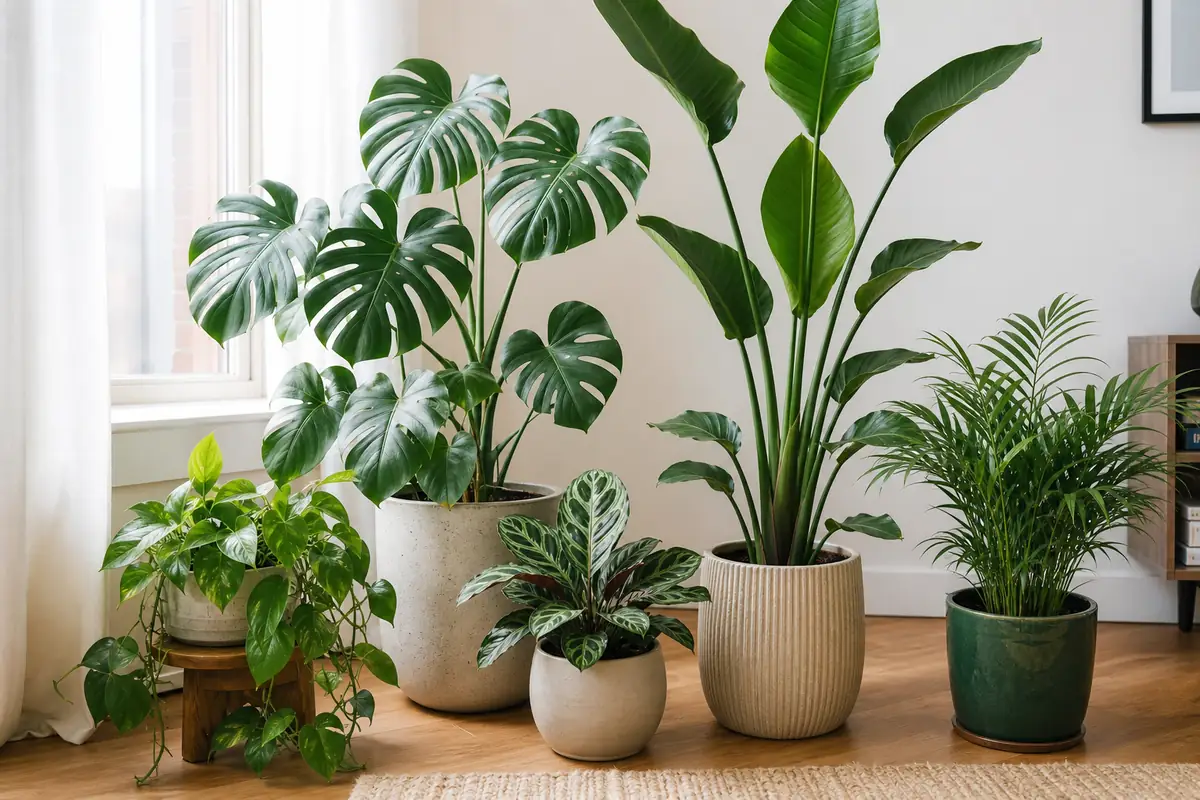
Tropical house plants vary from forgiving foliage plants to demanding humidity lovers, so the right choice depends on light, temperature, space, and care tolerance. A glossy leaf in a nursery aisle can hide a plant that needs brighter light than your room gives, higher humidity than winter air holds, or more floor space than the pot suggests. The useful decision starts with the room first: where the plant will sit, how far it is from a window, how dry the air gets during heating season, and whether pets can reach the leaves. Once those limits are clear, the tropical look becomes easier to match before a plant slowly thins, browns, or leans toward the glass.
Fast Tropical Plant Selector
Key Takeaways
- Match plant size to the finished room footprint.
- Measure light before buying dramatic large foliage.
- Avoid watering all tropical plants on one schedule.
- Check humidity monthly during heating and cooling seasons.
- Verify pet safety by species, not common name.
Table of Contents
Tropical House Plants: Compare Indoor Fit Before Appearance
A tropical label describes origin or look more than indoor tolerance. Some plants come from shaded forest floors and handle filtered room light. Others grow as large understory climbers, palms, or canopy-edge plants that stretch when they sit too far from a window. Thick leaves, fleshy stems, and slower growth usually tolerate ordinary homes better than thin leaves that crisp when air gets dry.
The first pass should separate plants by what the room can provide. A bright window can hold a different plant than a shelf across the room. A bathroom with a window can support different foliage than a dry office under vents. Mature size matters too, because a plant that looks compact in a 6-inch nursery pot may become a 5-foot floor plant with leaves that brush walls, curtains, and walkways.
| Indoor fit | Good examples | Light need | Humidity tolerance | Main caution |
|---|---|---|---|---|
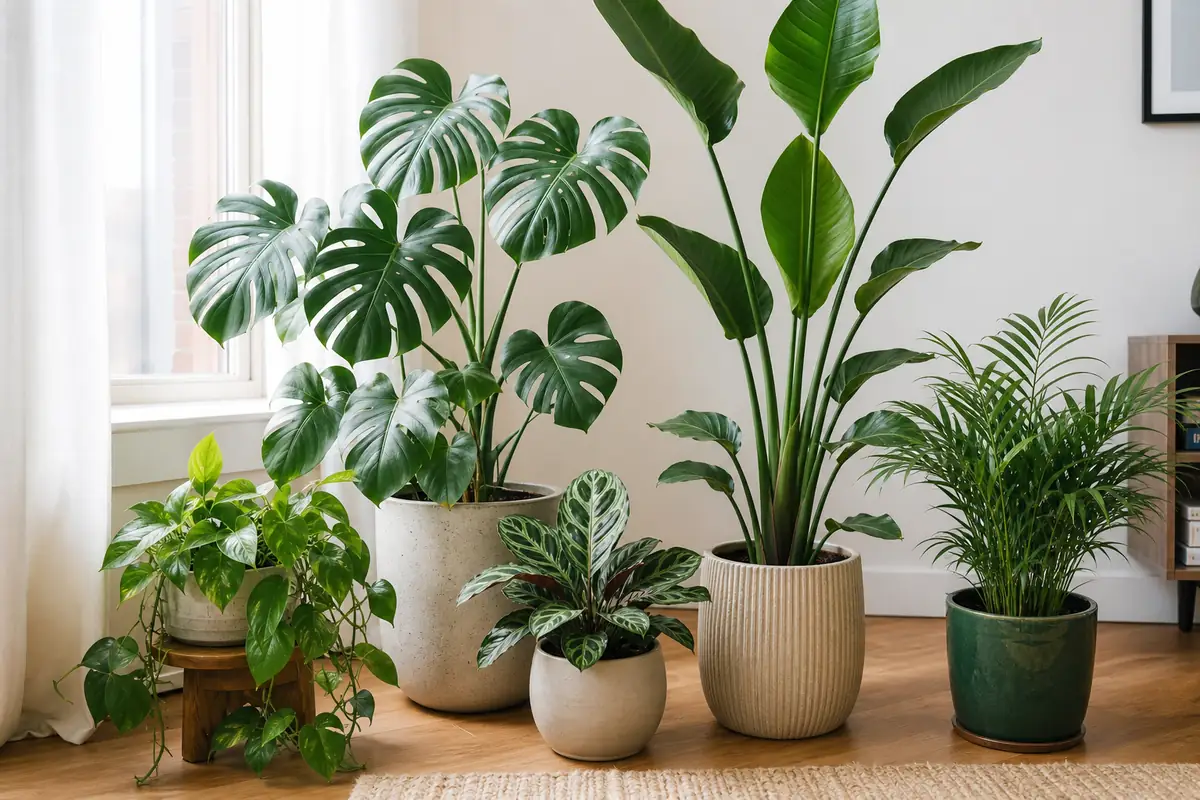
| Forgiving tropical look | Pothos, heartleaf philodendron, dracaena | Low to bright indirect | Average home | Many are unsafe for pets if chewed |
| Large-leaf statement | Monstera, bird of paradise, large philodendron | Bright indirect | Average to moderate | Needs space before the leaves look mature |
| Compact patterned foliage | Calathea, peperomia, bromeliad | Medium to bright indirect | Moderate to high by type | Thin leaves show dry air and mineral stress fast |
| Flowering tropical accent | Peace lily, anthurium, bromeliad | Medium to bright indirect | Moderate | Blooming drops when light is too weak |
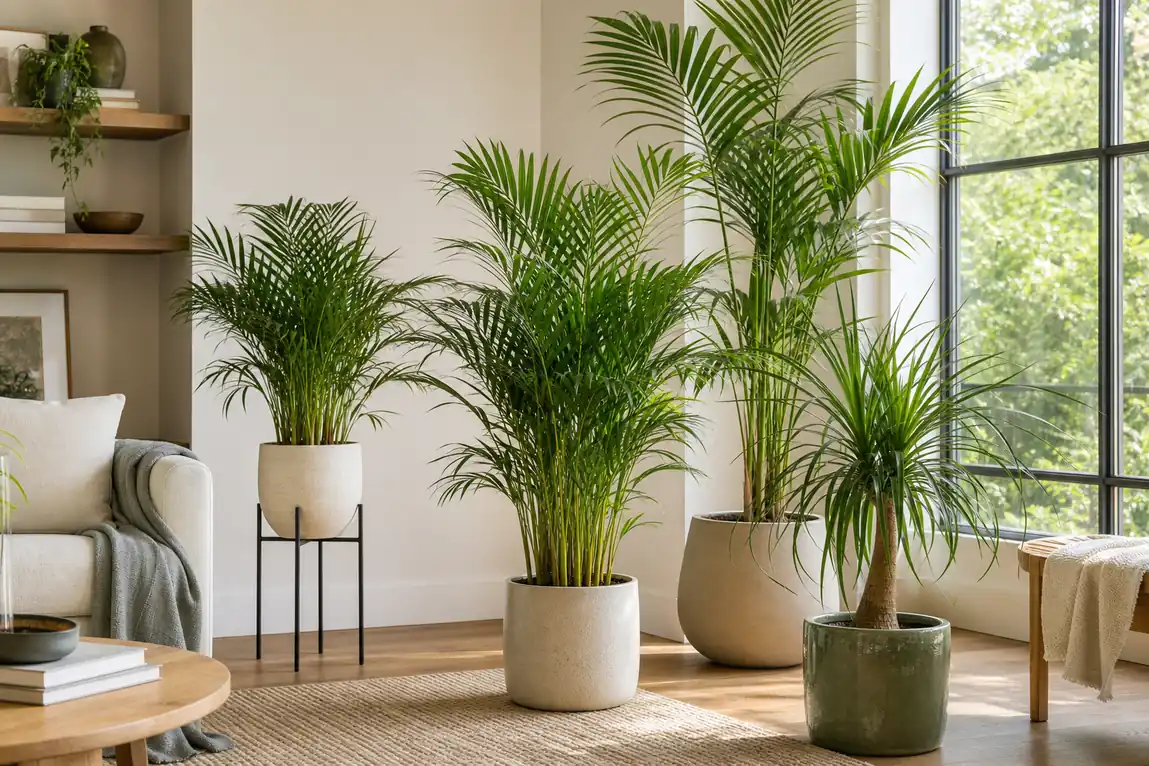
| Indoor palm texture | Parlor palm, areca palm, lady palm | Medium to bright indirect | Average to moderate | Dry tips increase near heat vents |
What Tropical Means Indoors
Tropical origin often means the plant evolved in frost-free climates. It does not mean swampy potting mix or permanent shade. Many indoor failures start when the word tropical gets translated into constant watering. Roots still need oxygen. When a dense potting mix stays wet, fine roots die back, leaves yellow, and the plant can look thirsty as the lower pot remains damp.
Temperature is the second hidden limit. Most common tropical houseplants grow best in the same range people find comfortable, and they react badly to cold glass, winter drafts, and sudden moves from outdoor summer warmth into a heated room. A leaf that was built in bright patio light can scorch, yellow, or drop after a move indoors because the plant has to rebuild its light economy. University of Georgia gradual acclimation guidance reduces that shock after seasonal moves.
Different habitats also create different habits. Pothos and many philodendrons climb or trail through filtered light. Bromeliads often hold water differently from ordinary potted foliage. Monstera can start small, then produce larger split leaves only when light, support, and root space improve. A single tropical care schedule misses those differences.
Choose By Usable Light
Usable light indoors drops quickly as distance from the window increases. A plant 6 feet from a bright window may receive only a fraction of the light that reaches the sill, especially through screens, overhangs, trees, or tinted glass. The University of Minnesota indoor plant lighting resource separates low, medium, and high indoor light by the plant response the room can actually support, which is more useful than guessing from how bright the room feels to human eyes.
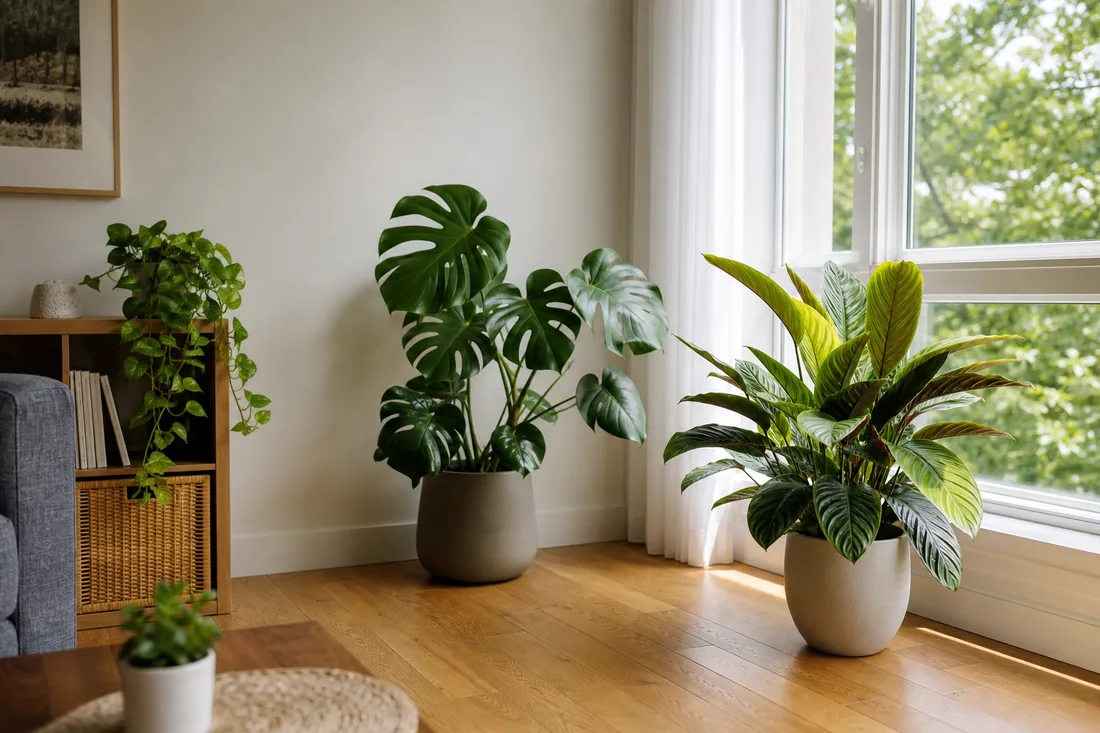
Forgiving plants, such as pothos and some dracaenas, can survive in lower light with slower growth and weaker variegation. Monstera, bird of paradise, ficus, and many variegated tropical plants need brighter indirect light to hold their shape. If new leaves become smaller, stems stretch toward the window, or the plant leans one direction within two weeks, the room is asking for a lower-light species or a stronger placement.
The safest test is growth, not the tag. Put the plant where you want it, then watch the next two leaves. A healthy placement gives leaves that are similar in size, color, and spacing to the older growth. Weak light creates longer internodes, duller color, and a plant that drinks slowly because photosynthesis is too low to use water quickly.
Plants For Lower Light
Pothos, heartleaf philodendron, ZZ plant, snake plant, and some dracaenas handle lower light better than most dramatic tropical foliage. They still perform better near a window than in a dark corner. Low light should mean enough brightness to read comfortably during the day, not a windowless room.
Plants For Bright Indirect Light
Monstera, bird of paradise, fiddle leaf fig, alocasia, anthurium, and many variegated philodendrons belong closer to the brightest indirect light you can provide. Direct hot afternoon sun can scorch leaves through glass. Weak light makes these plants grow thin and uneven. If the goal is big leaves, bright indirect light usually matters before fertilizer.
Humidity Tolerance Vs Humidity Dependence
Average indoor humidity often drops during winter heat and summer air conditioning. Tougher tropical house plants adapt by growing a little slower or browning a few older tips. Thin-leaved humidity lovers react faster: leaf edges crisp, new leaves tear as they unfurl, and patterned foliage loses the smooth texture that made it attractive in the store.
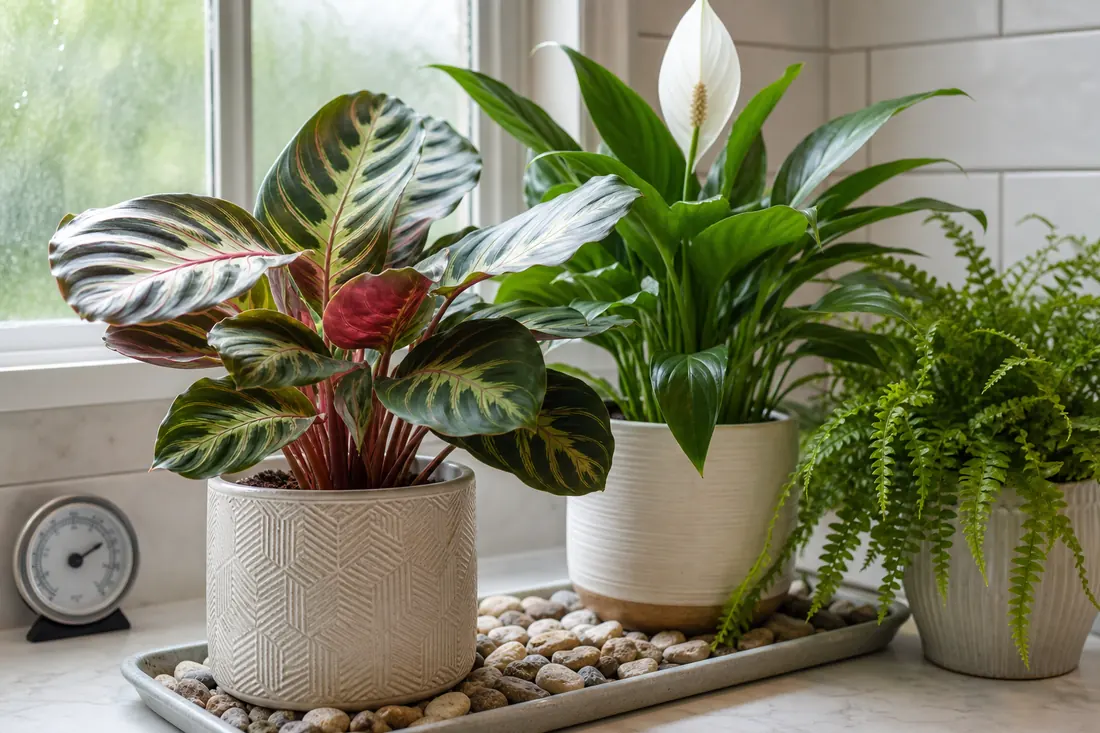
Iowa State University houseplant humidity guidance points to grouping plants, using trays carefully, and managing air conditions with leaf misting treated as only a brief aid. Misting wets leaf surfaces briefly, then evaporates. In a dry room, that short pulse rarely changes the root-zone or room humidity long enough to help a demanding calathea.
A humidifier can help when the plant group is worth the maintenance. Place it near the plants, keep air moving, and avoid wet leaves sitting overnight. A stale, wet corner can trade crisp edges for fungal problems. The goal is moist air around the plant, not a damp wall, soggy pot, or tray that keeps the bottom of the container submerged.
Match Mature Size And Growth Habit To The Room
Small nursery plants make size mistakes easy. A young monstera can sit on a table for months, then start throwing leaves that need a pole and a clear wall. Bird of paradise and ficus can turn a bright corner into a ceiling-height plant. Palms add soft texture, and fronds need enough width that they do not scrape walls or dry out against curtains.
For a broad selection view, best indoor plant choices can help separate easy room fits from higher-care statement plants. If leaf scale is the main goal, large leaf house plants deserve a separate decision because big leaves need space, light, and cleaning access. Trailing plants work better when the pot can be watered safely, and indoor vining plants need support or pruning before they become tangled.
| Growth habit | Best room use | Good choices | Watch first |
|---|---|---|---|
| Trailing vine | Shelves, hanging planters, bookcases | Pothos, heartleaf philodendron, scindapsus | Watering access and pet reach |
| Climbing foliage | Bright wall, plant pole, corner support | Monstera, climbing philodendron | Support before stems sprawl |
| Floor plant | Bright open corner | Bird of paradise, ficus, large palm | Ceiling height and leaf spread |
| Compact foliage | Desk, plant stand, bathroom sill | Peperomia, bromeliad, small calathea | Humidity and pot drainage |
| Bloom accent | Medium-bright table or windowside spot | Peace lily, anthurium, bromeliad | Lower light reduces flowering |
Temperature, Drafts, And Seasonal Indoor Stress
Tropical house plants often fail first at the edge of the room. A windowsill can be bright during the day and cold at night. A hallway can receive warm air from a vent in winter and dry, chilled air in summer. Leaves nearest the stress point usually show the first signal: papery brown margins, sudden yellowing, or one-sided drop.
Most common indoor tropicals prefer stable household temperatures, with fewer swings than a porch or patio. Keep foliage away from glass during cold spells, avoid placing thin-leaved plants under supply vents, and rotate large plants only when the whole plant needs balanced light. Constant turning can slow a plant that is trying to orient its leaves to the strongest source.
Outdoor summer moves need restraint. A plant moved from indoor shade to patio sun can scorch in one afternoon. Move it first to bright shade, then increase light gradually if the species can handle it. Before bringing it back indoors, inspect leaf undersides, pot rims, and soil surfaces for pests. A clean leaf should feel firm and cool, not dusty, sticky, or speckled.
Watering And Substrate By Plant Type
Watering by calendar creates more tropical plant problems than underwatering does. A plant in bright light with warm roots may dry quickly. The same species in a darker corner can sit wet for days. Pot size, soil texture, drainage holes, root density, and season all change the answer.
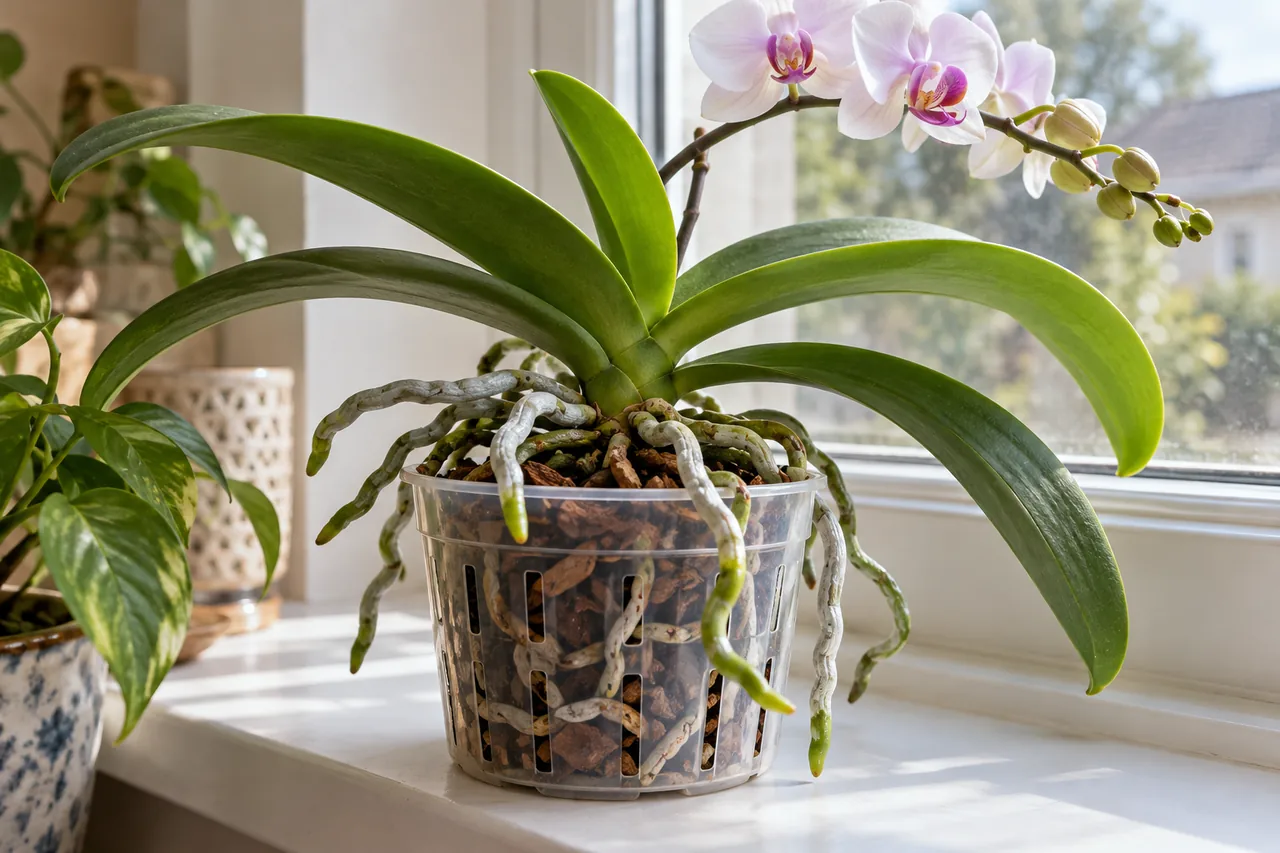
Use pot weight and finger-depth moisture before watering. Aroids such as monstera, pothos, and philodendron usually prefer an airy mix that drains fast enough to keep oxygen around roots. Peace lilies tolerate more even moisture. The lower pot should still avoid sour, stagnant conditions. Bromeliads and some epiphytes may need a different watering pattern from ordinary soil-grown foliage.
Mineral buildup is a quiet cause of brown tips, especially on thin-leaved tropicals. If white crust forms on the pot rim or soil surface, flush the mix occasionally with room-temperature water and let it drain fully. If your tap water is very hard, sensitive plants may respond better to filtered, rain, or distilled water. A leaf edge that feels dry and brittle after new growth opens often points to air, salt, or water-quality stress more than one missed watering.
Pet Safety And Irritating Sap
Pet safety cannot be judged by the word tropical. Pothos, philodendron, peace lily, monstera, dieffenbachia, and many alocasia types contain irritating compounds that can cause mouth pain, drooling, vomiting, or worse when chewed. Monstera deliciosa toxicity and Philodendron toxicity are real handling and ingestion concerns where pets or children chew leaves.
Non-toxic does not mean mess-free. A cat can still knock over a palm, dig potting mix, or nibble leaves until the plant looks ragged. The safest setup puts risky plants out of reach and uses verified safer choices where animals sleep, climb, or play. The ASPCA toxic and non-toxic plant database is the better check before buying, since common names overlap. For cat-specific rooms, cat safe house plants should lead the decision before leaf shape or color.
Human irritation also matters. Milky sap, calcium oxalate crystals, and dusty potting mix can bother skin, eyes, or airways in sensitive people. Wear gloves when pruning known irritants, wipe broad leaves with a damp cloth before dust builds, and remove moldy potting mix instead of hiding it under decorative stones.
Final Tropical Plant Selector
For the easiest tropical look, start with pothos, heartleaf philodendron, dracaena, parlor palm, or peace lily in a bright room with ordinary household humidity. These plants still need correct watering, and they forgive small shifts better than calathea, alocasia, anthurium, and many variegated collector plants.
For drama, buy for future size. Monstera needs a support plan, and a bright room will reveal whether the leaves can mature. Monstera plant care depends on light, root air, and support before split leaves become reliable. For an upright bloom-and-foliage route, peace lily care gives a cleaner fit when the room has medium light and you can manage even moisture.
Patterned leaves come with a humidity tradeoff before the prettiest plant reaches the cart. Goeppertia foliage traits explain why many calathea-type plants are grown for foliage more than forgiveness: the leaves are the feature, and thin decorative foliage exposes stress quickly. A plant stand near bright filtered light and away from vents gives that foliage a better chance than a dark shelf.
In a humid bathroom, separate plant comfort from room moisture control. Plants may enjoy the humidity. They will not replace ventilation or dehumidifying. bathroom plants that absorb moisture need the same honest limit: they tolerate humid air as fans and airflow reduce condensation.
Conclusion
Choose tropical house plants by the room they must survive, then by the look you want. Weak light points toward tolerant vines or dracaena. Low humidity pushes thin-leaved plants into higher-care territory. Pet-access rooms need species verification before the pot comes home.
The right plant shows the decision was sound within the next few growth cycles: new leaves open cleanly, stems stay compact, the pot dries at a predictable pace, and the foliage keeps its color without crispy edges or a slow lean toward the glass.
Frequently Asked Questions
Can tropical house plants trigger allergies?
They can bother sensitive people through pollen, fragrance, sap, dust on broad leaves, or moldy potting mix. Choose low-fragrance foliage plants, wipe leaves every few weeks, and remove moldy soil surfaces instead of assuming the plant itself is the only cause.
Do tropical house plants need misting?
Misting gives a brief surface wetting, not lasting room humidity. Humidity-sensitive plants usually respond better to grouped plants, a clean humidifier, stable moisture, and airflow that keeps leaves from staying wet overnight.
Can tropical house plants grow outside in summer?
Many can spend summer outside in warm shade after gradual acclimation. Move them to bright shade first, avoid direct midday sun, and inspect for pests before bringing them indoors again.
Do tropical house plants need special soil?
They need soil matched to root behavior. Aroids usually prefer airy, fast-draining mixes. Moisture-tolerant plants need more even dampness with a lower pot that still drains cleanly.