
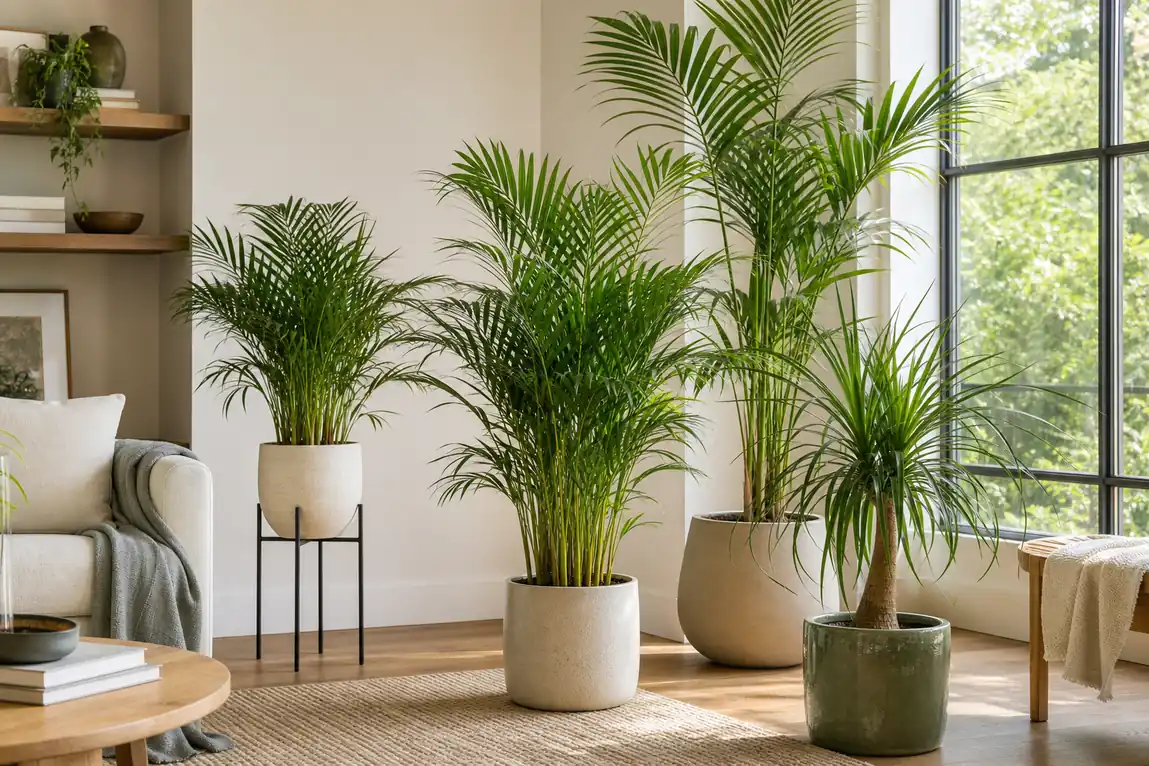
Indoor palm plants differ sharply in usable light, mature size, humidity tolerance, and sensitivity to watering mistakes. A palm tag at the nursery does not tell you whether the plant will stay compact, tolerate a dim room, survive dry winter air, or remain safe around pets. Some true palms adapt well to ordinary homes. Some need brighter filtered light than a room seems to offer. A few plants sold with palm in the common name are not true palms at all, and one of the most common examples, sago palm, carries serious toxicity risk. Start with the room, then match the plant to the light, ceiling height, traffic path, watering style, and pet access.
Start With The Room
Key Takeaways
- Choose indoor palm plants by room light before leaf texture.
- Retail pot size is not mature indoor size.
- True palms and palm-like plants can have very different risks.
- Brown tips often come from dry air, salts, water stress, or mites.
- Sago palm is a cycad, not a safe ordinary indoor palm.
Table of Contents
Indoor Palm Plants: Compare the Main Choices Before Buying
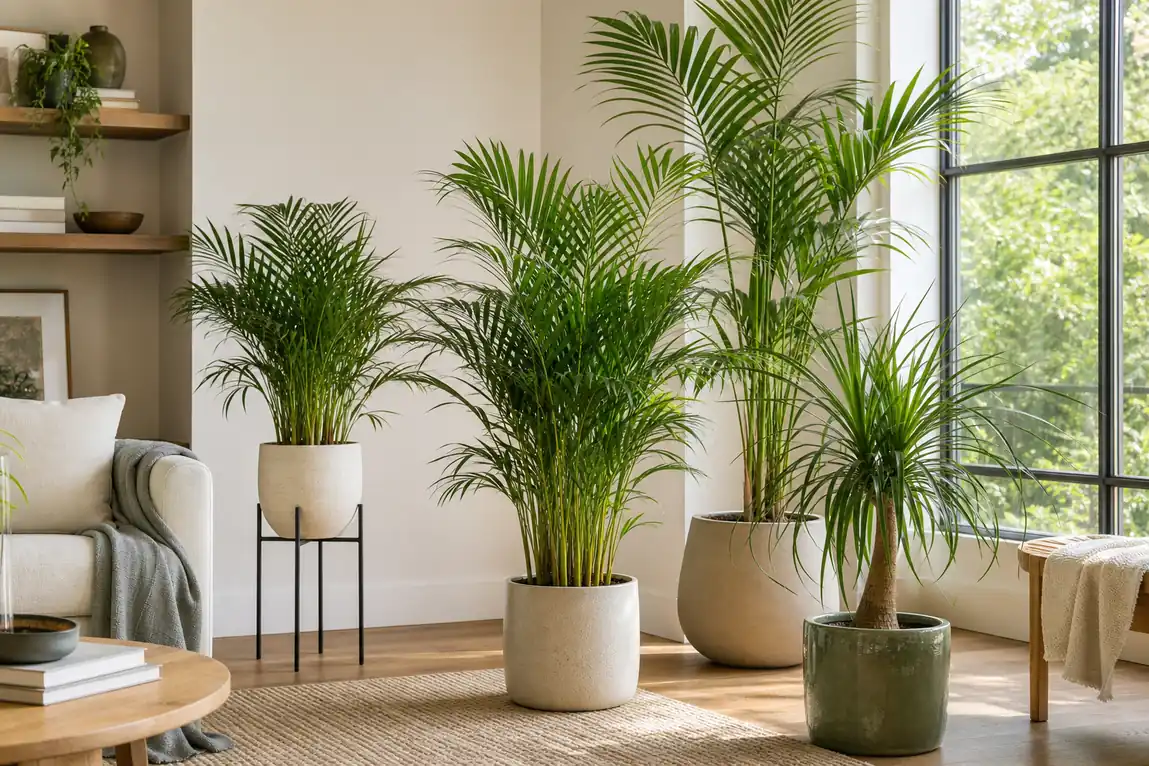
The best indoor palm plants are usually the ones that match the room’s limits without constant rescue care. A parlor palm can live in a modestly bright office corner. An areca palm looks fuller in stronger indirect light and higher humidity. A kentia palm grows slowly and costs more, yet it handles homes better than many tall statement palms. A majesty palm often looks beautiful in stores and then declines indoors when light, humidity, and root conditions fall short.
Common names add confusion. Ponytail palm is not a true palm; it behaves more like a drought-tolerant succulent houseplant with a swollen trunk. Sago palm is also not a true palm. It is a cycad with severe poisoning risk for pets and children. Buy by the botanical name when the choice affects safety, size, or care.
| Plant sold as a palm | True palm? | Best indoor light | Typical indoor size | Difficulty | Pet safety note |
|---|---|---|---|---|---|
| Parlor palm | Yes | Low to medium, brighter is better | 2 to 4 feet | Easy | ASPCA lists parlor palm as non-toxic to cats and dogs |
| Areca palm | Yes | Bright indirect | 4 to 7 feet | Moderate | ASPCA lists areca palm as non-toxic to cats and dogs |
| Kentia palm | Yes | Medium to bright indirect | 5 to 10 feet indoors | Moderate | Generally used as a pet-safer palm, still verify the label |
| Lady palm | Yes | Low to bright indirect | 3 to 6 feet | Easy to moderate | Confirm species before buying |
| Ponytail palm | No | Bright light | 2 to 4 feet indoors | Easy if kept dry | Often treated as pet-safer; still check the exact plant |
| Majesty palm | Yes | Very bright indirect | 5 to 10 feet | Difficult indoors | Usually pet-safer, with higher care demands |
| Sago palm | No | Bright filtered light | 2 to 5 feet | Moderate | Highly toxic; avoid where pets or children can reach it |
Match Each Palm to Usable Indoor Light
Human eyes adjust to dim rooms, and palms do not. A room can feel bright at noon and still give a plant low usable light if the window faces north, sits under an overhang, or is several feet from the pot. The University of Minnesota indoor plant lighting resource separates low, medium, and high light by plant performance, which is the better standard for palm placement.
Parlor palm is the classic lower-light choice because it tolerates filtered indoor conditions and slow growth. The NC State parlor palm profile notes bright indirect light, tolerance of low light, well-drained soil, and protection from drafts. Low-light tolerance means survival and acceptable appearance, not fast growth or a dense tropical canopy.
Areca palm, kentia palm, and majesty palm need a brighter setup. Areca palm usually looks best close to an east, west, or lightly filtered south window. NC State describes areca palm indoor conditions as bright, warm, humid, and well drained. A majesty palm often struggles in the same spot that keeps a parlor palm presentable.
Scorch risk still matters. Direct afternoon sun through glass can bleach or brown leaflets, especially after a palm has been grown under softer nursery light. Move a new palm into brighter light gradually. If the newest fronds are shorter, paler, or leaning hard toward the window, the plant is asking for more usable light. If the sun-facing leaflets show pale patches or dry streaks, pull the pot back or filter the window.
Mature Height, Width, and Frond Clearance
Most palm buying mistakes start with nursery scale. A palm in a 10-inch pot may already need a floor plan, and fronds take more horizontal space than the root ball suggests. Measure the height of the ceiling, the width of the walkway, and the swing of curtains or doors before choosing a tall palm. A frond that brushes a wall or vent dries faster at the tips and breaks sooner.
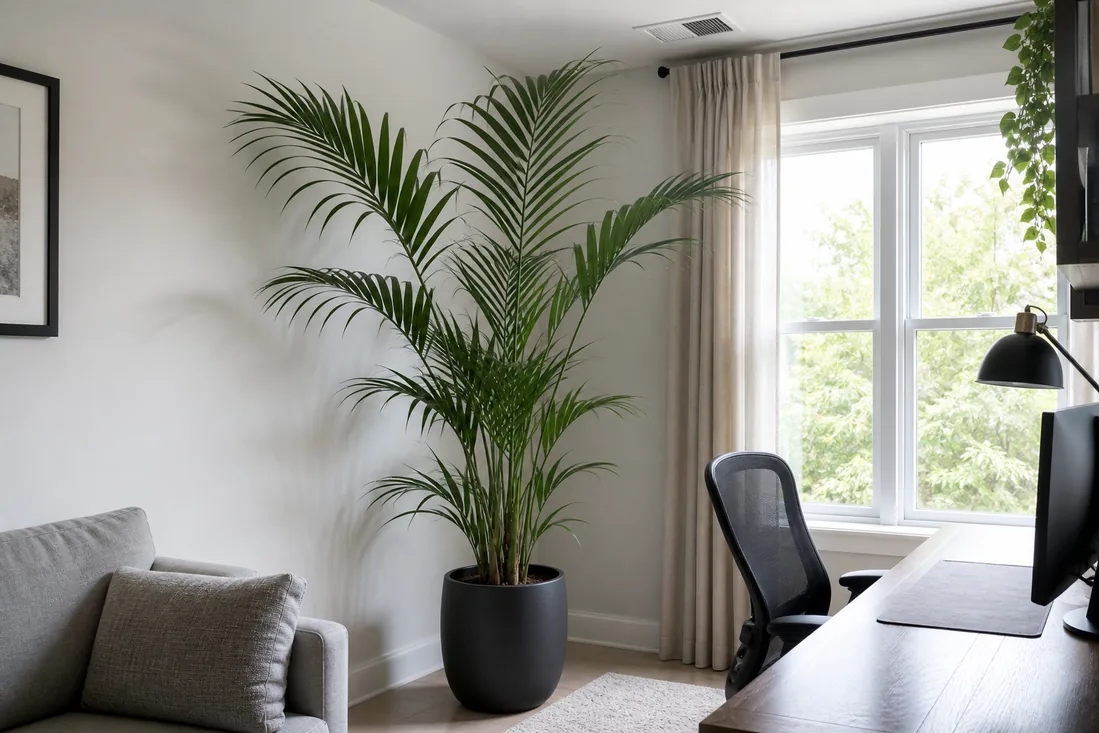
Parlor palm and lady palm suit apartments, bedrooms, and smaller offices because they grow slowly and keep a softer outline. Kentia palm makes a calmer tall specimen for open rooms. Areca palm is fuller and wider, so it needs floor space around the pot. Majesty palm often demands the most room because it wants bright light and sends arching fronds into traffic paths.
If the goal is a bold indoor plant with large foliage, compare palms with large leaf house plants before buying. Palms create fine texture and movement. Broad-leaf houseplants create a stronger leaf surface and often need different cleaning, light, and support. For a desk or work corner, best plants for an office can be a better starting filter than choosing a palm by appearance alone.
Watering and Root-Aeration Differences
Indoor palms fail from two opposite patterns that look similar above the soil. Repeated drying can crisp tips, yellow old fronds, and slow new spear growth. Chronic wetness can also yellow leaves because roots lose oxygen and stop taking up water. The top inch of mix may look dry as the lower pot remains wet, so a finger test alone is often too shallow for a floor-size palm.
Use pot weight, drainage, and root density together. A healthy palm in bright light may drink quickly. A palm in lower light uses water more slowly and needs a wider interval between thorough waterings. Water until the mix is evenly moist, let excess drain away, and do not leave the pot standing in runoff. Cachepots are useful for looks, and they can hide a wet bottom that damages roots.
Soil texture matters because many palms have fine roots packed into nursery mixes that stay wet after the plant moves indoors. A mix with bark, perlite, or other coarse material keeps more air in the root zone. If water runs straight down the sides, the root ball may be hydrophobic and need slower soaking. If the pot smells sour or the base stays wet for a week, improve drainage before adding more fertilizer.
For a broader watering framework, use a houseplant care chart to compare light, water use, pot size, and seasonal changes. Palms still need individual checks because their fronds can lag behind root stress. By the time the leaves show a clear problem, the lower root ball may have been too dry or too wet for days.
Humidity, Salts, and Brown Tips
Brown tips are common on indoor palms, and they are not all the same problem. A few dry tips on older fronds can be cosmetic in a heated or air-conditioned home. Spreading tip burn across new fronds points to a stronger stress pattern: dry air, repeated drought, wet roots, mineral buildup, fertilizer burn, or pests feeding on the leaflets.
Iowa State’s houseplant care guidance treats humidity, water, and general indoor conditions as linked factors. Palms with thin leaflets lose moisture along a large edge area. Air from vents, dry winter rooms, and hot window glass can tip the balance even when the pot is watered correctly.
Salts collect when fertilizer, hard tap water, or softened water leaves minerals in the potting mix. White crust on the soil surface, a ring on the pot, or worsening brown tips after feeding are warning signs. Flush the pot with room-temperature water occasionally, let it drain fully, and reduce fertilizer during low-light months. A palm growing slowly in winter cannot use the same feeding schedule as a plant in active summer growth.
Why Is My Indoor Palm Turning Brown?
| Brown pattern | Likely cause | First check |
|---|---|---|
| Only oldest lower fronds brown | Normal aging or past stress | Look for firm new growth at the center |
| Dry tips on many leaflets | Dry air, mineral salts, or repeated drought | Check humidity, water quality, and crust on soil |
| Yellowing plus brown tips | Wet roots or poor drainage | Lift the pot, smell the mix, and check runoff |
| Speckled leaves with fine webbing | Spider mites | Inspect undersides with a white card or magnifier |
| Central spear damaged or brown | Growth point injury or rot | Check crown firmness and avoid watering into it |
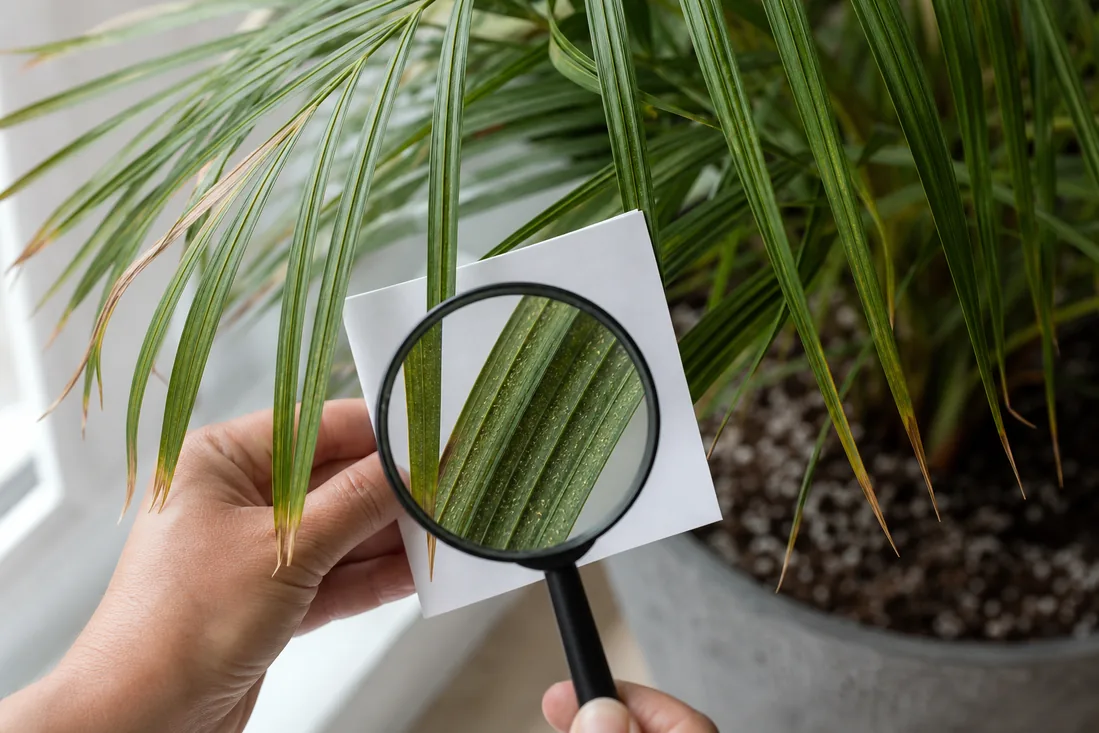
Pet Safety and Palm-Like Plants to Avoid Confusing
Pet safety is the place where common names can become dangerous. Parlor palm and areca palm are often chosen for pet-access rooms because the ASPCA lists parlor palm and areca palm as non-toxic to dogs and cats. That does not make every plant sold with palm in the name safe.
Sago palm is the clearest warning. It is a cycad, not a true palm, and NC State rates Cycas revoluta with high-severity poison characteristics. The ASPCA’s sago palm safety warning states that the entire plant is toxic, with seeds carrying special danger. If pets or children can reach a plant, do not treat sago as an ordinary indoor palm.
Internal plant labels can be unclear, so confirm the botanical name before checkout. A safer room choice should still account for digging, chewing, pot tipping, and pesticide residues from the store. For rooms where cats have full access, cat safe house plants give a tighter safety filter before size or style enters the choice. For cycad identification, the sago palm cycad basics page is the better route than treating it as part of indoor palm care.
Pest and Purchase Inspection
Palms can arrive with problems hidden inside dense fronds. Spider mites, scale, mealybugs, and whiteflies all become harder to control after a large palm joins the room. NC State lists spider mites and mealybugs as possible parlor palm pests, and areca palm can also attract scale, whiteflies, and spider mites. Inspect before purchase under bright light, not in a dim store aisle.
Run a hand gently along the pot and frond bases. Sticky residue can point to sap-feeding insects. Fine webbing between leaflets can point to mites. Brown, tan, or white bumps that do not brush off easily may be scale. Look at the undersides of fronds, the youngest spear, the pot rim, and the drainage holes. A palm with a firm central spear and clean new growth is a better bet than one with a perfect outer canopy and a weak crown.
Root condition matters as much as leaf color. A crowded nursery pot may be stable for display and still dry too fast at home. A pot with sour, compacted mix may stay wet around the lower roots. If roots circle tightly at the surface and water sheds down the sides, plan a careful repot after acclimation. Do not repot a stressed palm on the same day it moves into a new light environment unless the pot is clearly failing.
Quarantine new palms away from other houseplants for two to three weeks. Wipe the leaves, keep them away from heat vents, and watch for speckling or sticky patches. A large palm has many leaflets, so a small pest problem can spread before it becomes obvious from across the room.
Final Palm Selector by Room
A lower-light apartment points toward parlor palm or lady palm. Put the plant as close to usable daylight as the layout allows, and expect slower growth. These palms are chosen for tolerance, not for fast height. A small parlor palm on a stand often looks better for longer than a dramatic palm placed too far from a window.
A bright living room can carry kentia palm or areca palm if the ceiling and walkway can handle the mature spread. Kentia palm suits a calmer, architectural corner. Areca palm gives a fuller, feathery screen and needs more humidity attention. Leave frond clearance around curtains, vents, and seating.
Office rooms usually favor parlor palm, lady palm, or a small ponytail palm over majesty palm. Office air often runs dry, and weekend watering gaps create stress. A plant with slower growth and moderate water use will survive the schedule better. The office choice also needs a saucer plan because hidden runoff can damage floors or furniture.
Pet-access rooms need species verification before the plant comes home. Parlor palm and areca palm are stronger candidates than sago palm. If the label says palm and the plant has stiff, cycad-like fronds, pause and identify it. A single unsafe lookalike can undo a careful houseplant setup.
Beginners should choose the palm that fits the worst month in the room, not the best day. Winter light, heating vents, and dry air are the real test in many homes. A palm that handles those limits will give cleaner growth than a large specimen that needs constant correction.
Conclusion
Indoor palm plants work best when the room chooses the plant. Parlor palm, lady palm, and kentia palm suit many homes because they tolerate indoor conditions better than high-demand statement palms. Areca palm can look fuller in brighter rooms with better humidity. Majesty palm needs more light and care than many buyers expect.
Make the final choice from five checks: usable light, mature spread, drainage, air dryness, and pet access. If any one of those checks fails, pick a smaller or tougher palm before buying a plant that will spend the next season browning, leaning, or dropping fronds.