


Types of orchids differ in more than flower color. A moth orchid with broad leaves, a slipper orchid with a pouch-shaped flower, and a Vanda with hanging roots have different growth habits and different demands on your home. Begin with the flowers and foliage to recognize the likely group. Then compare the plant label with your window light, room temperature, and ability to manage its roots.
Phalaenopsis is often a practical first choice for a bright, filtered window. A Cattleya needs stronger light, and a standard Cymbidium needs cool conditions to flower well. Large Vandas usually demand more light and humidity than an ordinary room offers. The seven groups below include cultivated hybrids as well as species, so a familiar-looking bloom is a starting clue. Keep the nursery tag: its name can narrow the care requirements far more reliably than a guess based on petals alone.
Match the plant to the room
- Bright filtered window: start your comparison with Phalaenopsis or a suitable Paphiopedilum hybrid.
- Brighter growing position: compare Cattleya and Oncidium, checking the named plant’s light needs.
- Bright room with cooler nights: consider a compact Cymbidium if its flowering temperatures are achievable.
- Strong light, humidity, and space for exposed roots: investigate Vanda culture before choosing one.
Dendrobium care varies widely. Get the hybrid or species name before choosing its winter routine.
Key Takeaways
- Identify the flower shape and foliage before guessing an orchid group.
- Keep the nursery tag to distinguish species from cultivated hybrids.
- Match light and night temperatures before choosing a flowering plant.
- Adjust root moisture to the orchid and its growing medium.
- Choose a manageable plant size before committing to exposed-root culture.
Table of Contents
Types of Orchids Compared by Shape and Growing Conditions
Use flower structure and the whole plant together. A pink bloom can belong to several unrelated-looking orchid groups. The central lip, arrangement of flowers, leaves, and thickened stems give you more useful clues. The American Orchid Society separates these groups into individual culture sheets because their light and root-moisture needs differ.
| Group | Visible clue | Home-growing difference |
|---|---|---|
| Phalaenopsis | Broad basal leaves; rounded moth-like flowers | Filtered light; water near dryness, avoiding prolonged drought |
| Cattleya | Thickened stems; large showy lips in many hybrids | Brighter light; drained medium dries between waterings |
| Oncidium alliance | Airy sprays; dancing-lady flower forms | Light and drying vary with leaf and root thickness |
| Dendrobium | Segmented canes; flower position varies | Named type determines seasonal care |
| Paphiopedilum | Slipper-shaped flower pouch; fans of leaves | Softer light; moist, aerated root medium |
| Cymbidium | Long strap leaves; substantial flower spikes | Bright conditions and cool flowering temperatures |
| Vanda | Two-ranked leaves; long exposed roots in many plants | Typical large forms need strong light, humidity, and space |
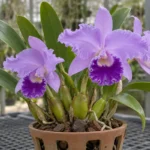
The pictures show representative flower and plant forms, not seven identified wild species. A hybrid can combine traits from several parents, and related groups may be sold under familiar older names. Use the visual match to decide which name on a label to investigate, then keep the exact plant name with its care notes.
Phalaenopsis Stores Water in Broad Leaves
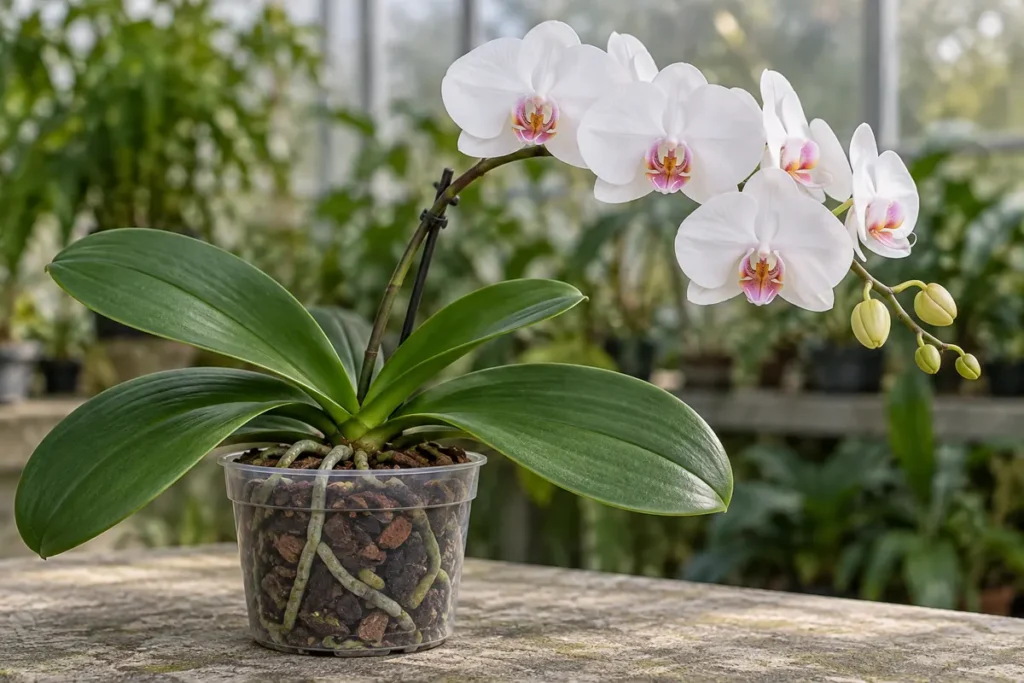
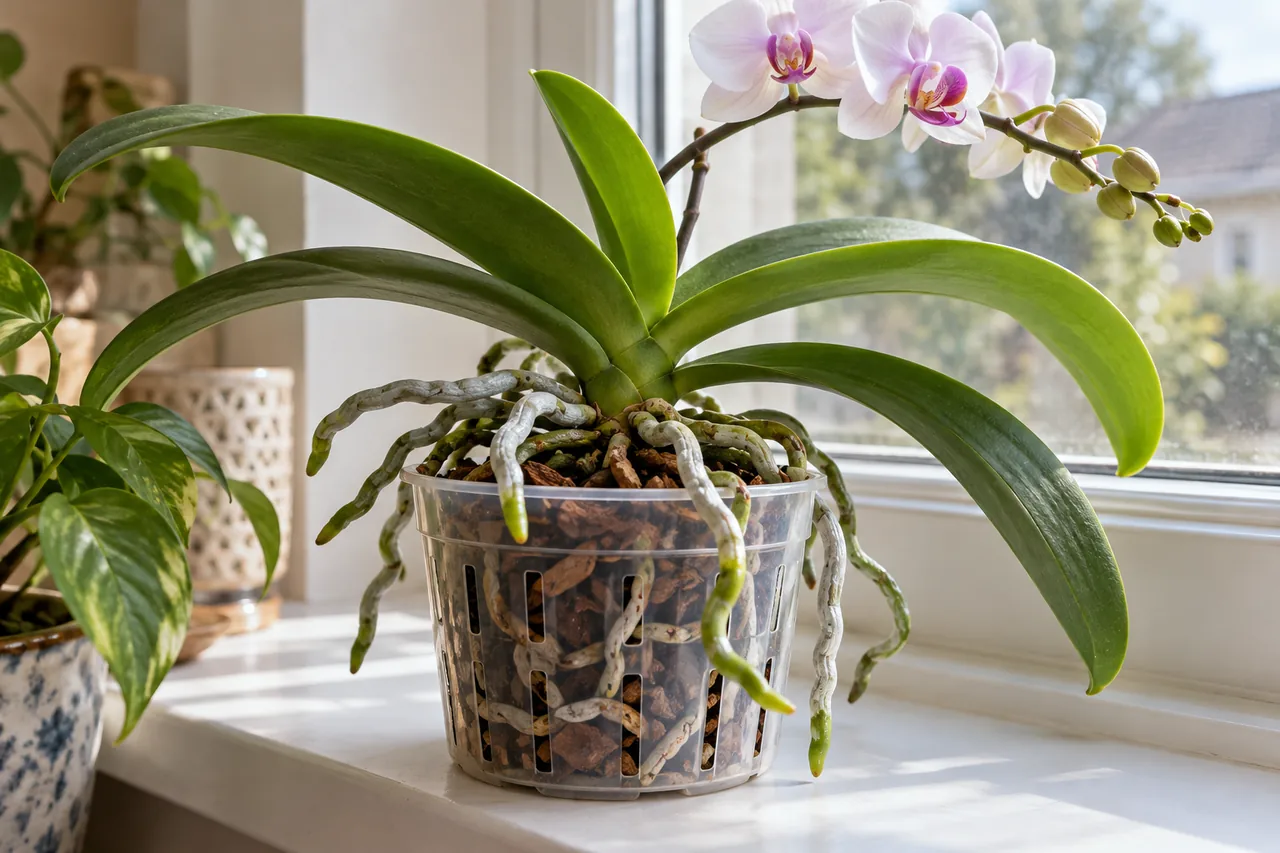
Moth orchids commonly have broad, smooth leaves clustered at the base and an arching flower spike. Many store-bought hybrids carry rounded petals and a smaller central lip. The leaves feel thick and firm on a healthy plant. Those leaves hold reserves, but Phalaenopsis lacks the substantial pseudobulbs visible in several other orchid groups.
A bright east-facing window or suitably shaded south or west window can fit its light needs. The Phalaenopsis light and watering requirements distinguish nearly dry medium from complete drying. Water thoroughly, drain, and check the medium before the next watering. Avoid leaving water collected in the crown between the leaves.
A transparent pot can make some roots and parts of the medium easier to inspect. It does not show every wet pocket in the center. Bark and moss also retain moisture differently. Touching one dry piece of bark at the top cannot establish that the whole root zone is ready for another soak.
Aerial roots alone do not establish that a Phalaenopsis needs a larger pot. Firm exposed roots, crowded roots inside the pot, and deteriorated medium are different findings. Orchid roots growing outside the pot need that closer inspection before cutting or repotting. Keep the choice of orchid group separate from a decision to remove roots.
Cattleya and Oncidium Carry Different Flower Sprays and Reserves
Cattleya: showy flowers above thickened stems
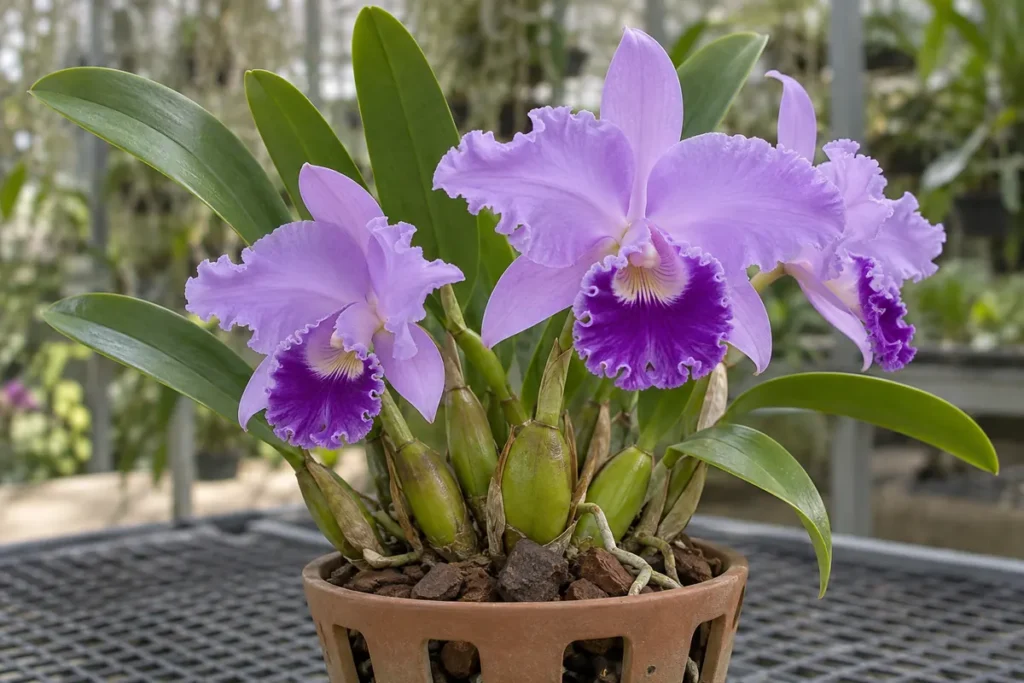
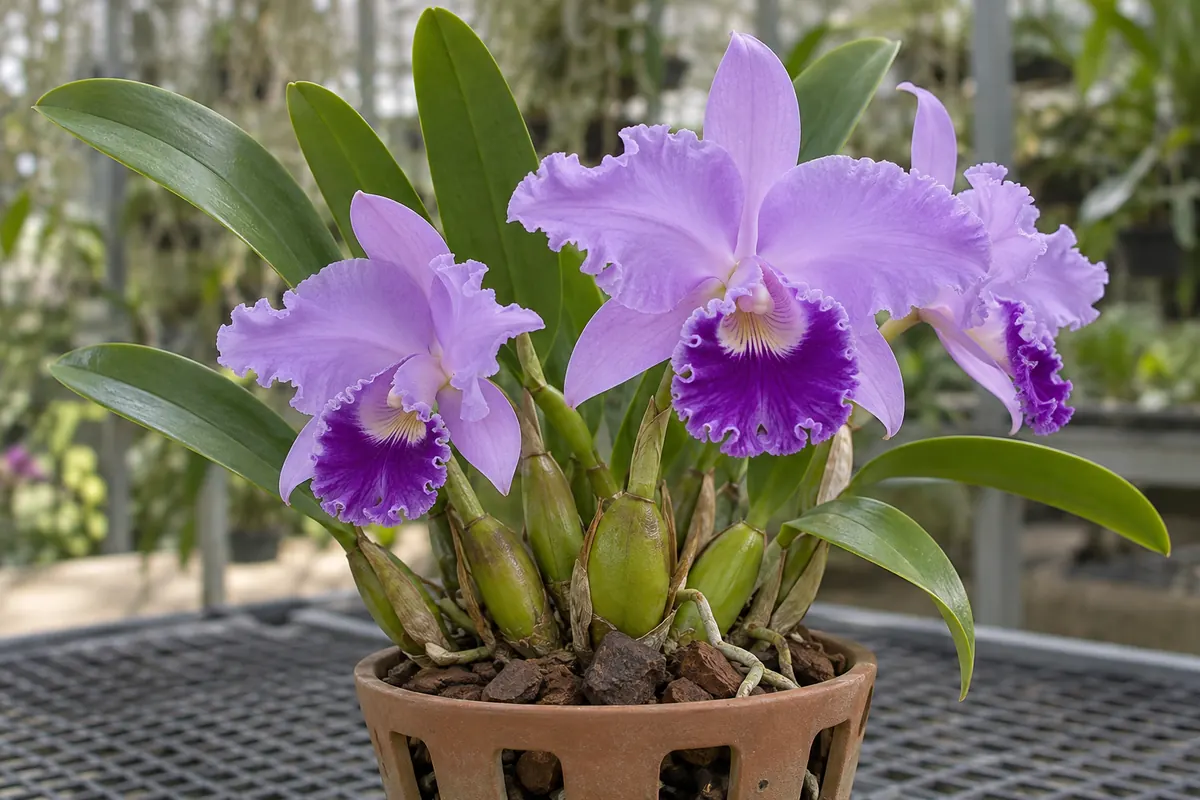
Many Cattleya hybrids carry large flowers with broad petals and a frilled lip. The thickened stems below the leaves are pseudobulbs, which store reserves. Flower size alone is an incomplete identification, so look for those stems and the leaves rising from them. A miniature hybrid may occupy much less room than a large corsage type.
Cattleya generally needs a brighter position than a moth orchid. The American Orchid Society’s culture guidance also describes a quicker wet-dry root cycle: the medium dries between waterings, then receives water when it reaches dryness. A cool, shaded room may keep the plant alive without giving it the light needed for good flowering. Move a plant into stronger light gradually and watch for heat damage.
Oncidium alliance: branching sprays and variable leaves
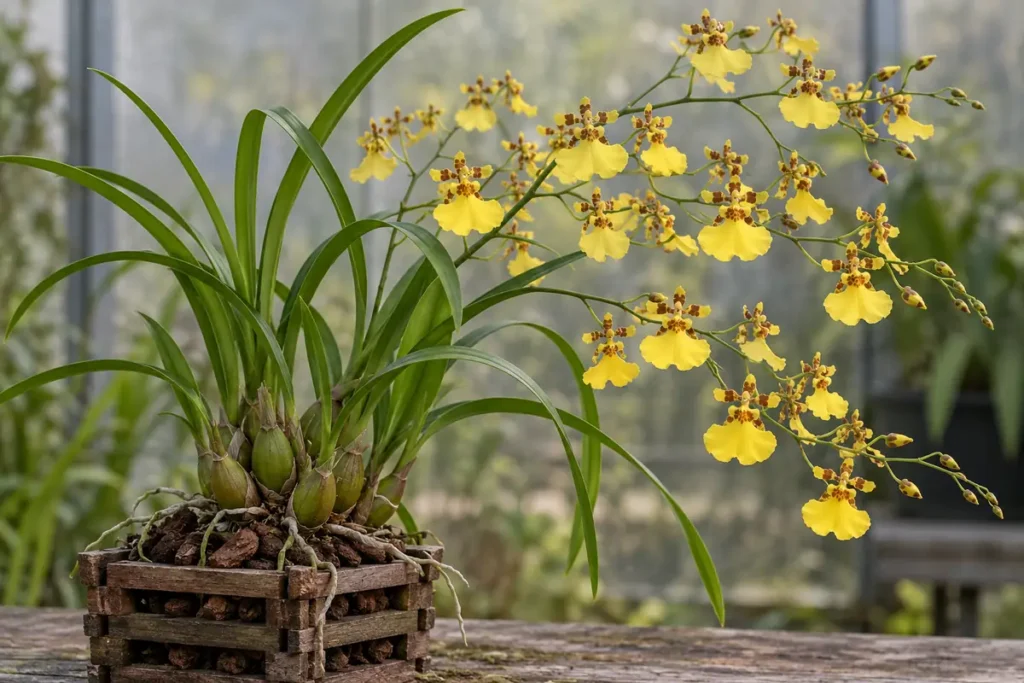
A familiar Oncidium flower has a broad lower lip that resembles a skirt, with smaller upper flower parts. Many hybrids carry numerous blooms on a fine branching spray. Yellow with brown markings is common in familiar dancing-lady forms; other hybrids look different. The branching habit is more useful than assuming every yellow orchid is an Oncidium.
Thin-leaved and thin-rooted plants can need more frequent moisture than fleshy-leaved forms. The American Orchid Society describes lightly moist, breathable medium for indoor Oncidiums and emphasizes variation across the group. A leaf that develops accordion-like folds can be associated with insufficient water during growth. Check the actual plant and medium before copying a Cattleya drying routine.
Dendrobium Canes and Paphiopedilum Slippers Reveal Different Habits
Dendrobium: segmented canes with several flowering patterns
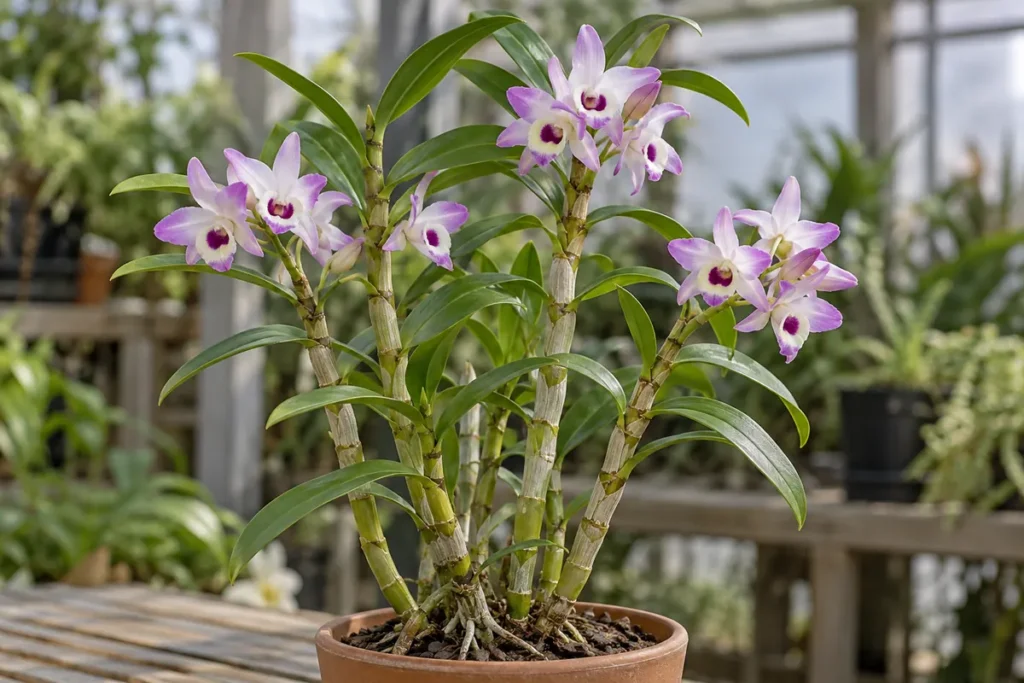
Dendrobium often has cane-like, segmented stems. Some familiar nobile-type hybrids flower along the cane; other types produce flower sprays from its upper portion. Older and younger canes can look different on the same plant. That structure distinguishes a cane orchid from a moth orchid’s low leaf rosette.
The genus covers plants with very different seasonal requirements. A dry winter rest suitable for one named type can harm another. Identify the hybrid or species before withholding water or lowering temperatures for flowering. Iowa State University’s indoor orchid group comparison includes Dendrobium among common home orchids; the group name alone still leaves important care questions unresolved.
Paphiopedilum: a pouch-shaped lip above a leaf fan
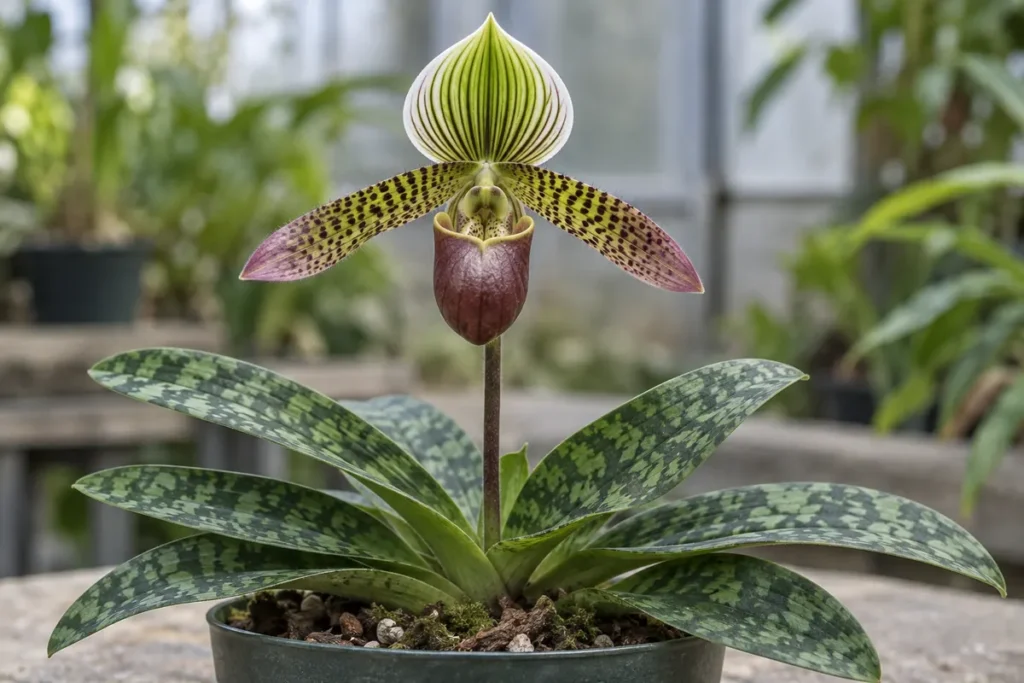
The pouch-shaped lower lip gives slipper orchids their familiar name. A Paphiopedilum often has leaves arranged in fans, sometimes with pale and dark mottling. Green-leaved types and multiflowered forms add more variation. The pouch gives a strong visual clue, but several orchid genera have slipper-shaped flowers, so retain the label.
Paphiopedilum generally suits softer light than a typical Cattleya. Its root medium should stay moist enough for growth without becoming sodden. The American Orchid Society distinguishes warmer-preferring mottled-leaf types from cooler-preferring green-leaf types. Terrestrial habit does not mean a dense scoop of garden soil is appropriate for every cultivated slipper orchid.
Cymbidium Needs Cool Flowering Signals; Vanda Has Exposed Roots
Cymbidium: strap leaves and a cool-season flower requirement
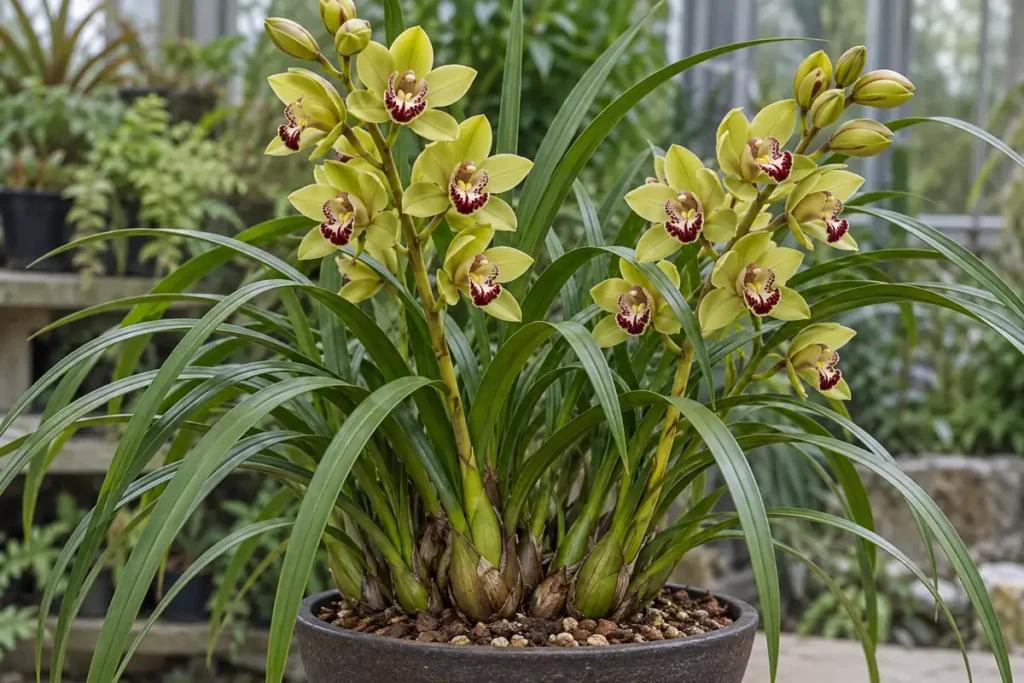
Cymbidium makes a clump of long, narrow leaves with pseudobulbs at the base. Many hybrids carry substantial sprays of waxy-looking flowers. A large plant can take much more space than its nursery display suggests. Miniatures are more manageable for a home window or bright enclosed porch.
Flowering needs both useful light and suitable temperature signals. The American Orchid Society describes cool fall and winter conditions for standard Cymbidiums, with miniature hybrids tolerating somewhat warmer flowering conditions. A warm room can produce a large leafy clump without flowers. Check the named hybrid’s requirements against night temperatures you can actually maintain without exposing it to damaging cold.
Vanda: strong light and roots that dry in open air
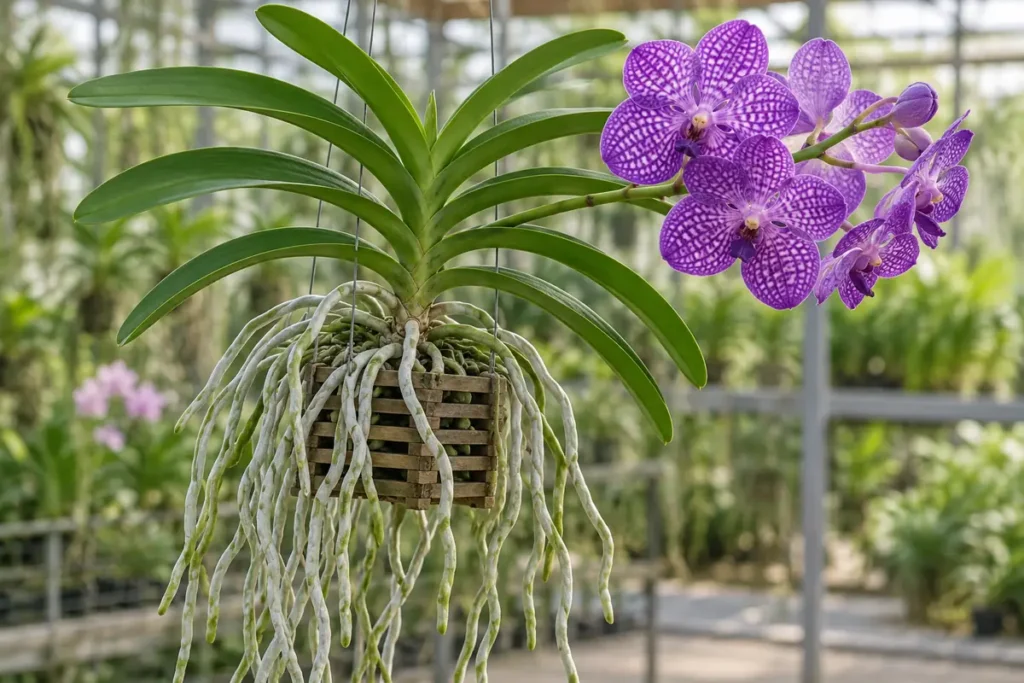
Typical large Vandas have an upright stem, leaves arranged on opposite sides, and long aerial roots. A hanging basket can leave much of the root system exposed. The silvery roots feel firm when healthy; misting the surrounding air is not equivalent to properly wetting that whole root system.
Large standard Vandas are demanding candidates for ordinary indoor rooms. The American Orchid Society points to insufficient indoor light, low humidity, and plant size as common limitations. Smaller vandaceous relatives and hybrids can differ. Investigate the exact plant before buying, including where its hanging roots will fit and how you will water them without soaking furnishings.
Genus, Species, and Hybrid Names Narrow the Identification
Phalaenopsis is a genus name. A species name adds another word that identifies a particular natural species. A cultivated hybrid may have a registered hybrid name and a separate cultivar name. Related hybrid groups can also appear under alliance names or older trade names. These labels describe different levels of identity.
A flower photograph rarely reveals every parent of a complex hybrid. Two plants can share a purple lip and rounded petals without requiring identical care. Keep a photograph of the plant tag, the leaves, and the flowers together. If the tag is missing, ask an orchid society or knowledgeable grower for help using the whole plant.
Look for the growth habit as well as the bloom. Basal leaf rosettes, pseudobulbs, segmented canes, and strap leaves narrow the possibilities. A shiny flower or an unusual color should not persuade you to assign a scientific species name. The plant’s appearance can guide identification without settling it completely.
Choose by Light, Temperature, Space, and Root Drying
Start with the room you already have. Observe how much sun reaches the proposed spot, how warm it becomes in the afternoon, and how much it cools at night. The conditions suited to different tropical house plants vary even within one room. A shelf set back from a window may receive much less useful light than the sill.
Next, check how you will accommodate the mature plant. A compact moth orchid and a broad Cymbidium clump need different shelf space. Hanging Vanda roots need free air and access for watering. Choose an indoor plant whose normal growth fits the position, with enough clearance for flower spikes and drainage.
Finally, learn the pot’s drying behavior. Bark, moss, pot size, airflow, and room heat change the time between waterings. Keep a simple record of what you actually find in the medium. General houseplant moisture checks help establish that habit; the orchid’s named type determines how far its medium should dry.
A healthy green plant without new flowers calls for a review of light and seasonal requirements before repeated fertilizer additions. A soft root system in wet medium calls for a root and drainage assessment. Those are different problems. Recognizing the orchid group helps you choose the next check without treating every plant as a weekly-watered decoration.
Conclusion
Choose an orchid by flower form, leaf habit, and the conditions its roots need. Phalaenopsis and suitable slipper hybrids often fit filtered indoor light. Brighter, cooler, or more humid growing spaces open other choices. Keep the exact label and match its culture to the room before deciding how to water or encourage another bloom.