


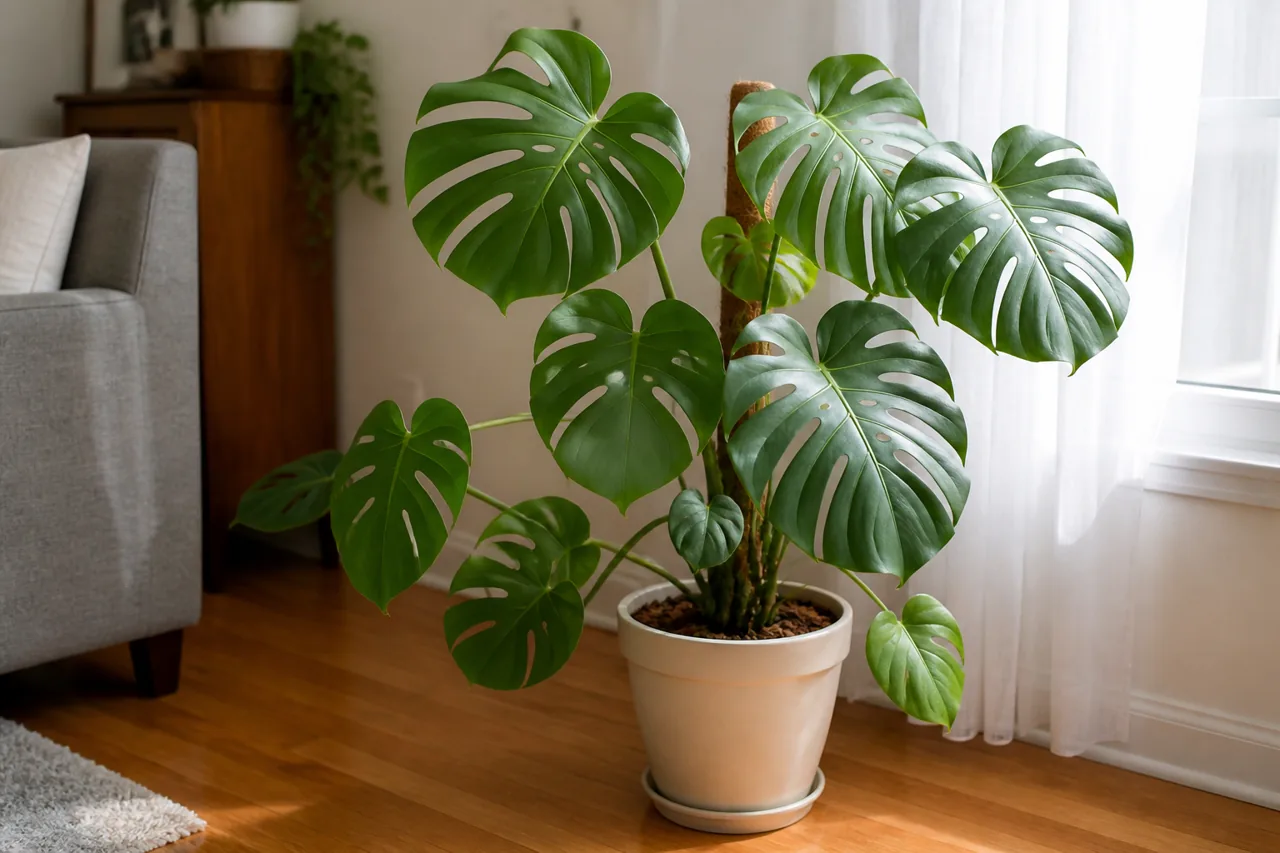
Monstera plant care works best when light, water, soil, and support are treated as one system, not separate chores. A Monstera deliciosa can survive in average indoor conditions. The broad, fenestrated leaves people want need enough bright indirect light, oxygen around the roots, and a place to climb.
The usual problems are not mysterious. Small un-split leaves, yellowing, floppy stems, brown scorch marks, and slow growth all point back to the same care decisions: where the plant sits, how long the potting mix stays wet, whether the roots can breathe, and whether the vine has support as it matures.
Monstera Care At A Glance
Give a Monstera bright indirect light, water after the upper mix dries, use a chunky aroid mix, keep it warm, and add a moss pole once the vine starts leaning.
Key Takeaways
- Bright indirect light is the main driver of strong growth and larger split leaves.
- Water by dry-down, pot weight, and drainage, not a fixed weekly schedule.
- Chunky, airy potting mix protects Monstera roots from staying wet too long.
- A moss pole helps the plant climb and keeps mature stems from bending outward.
- Yellow leaves, brown tips, and small leaves should be read by pattern before changing care.
Table of Contents
Monstera Plant Care Starts With Bright Indirect Light
Light is the first care decision because it sets the plant’s growth budget. As a climbing houseplant, Monstera deliciosa grows best with moderate brightness and protection from direct sun. Indoors, that usually means a bright window with the harshest sun filtered by distance, a sheer curtain, or another plant.
A healthy Monstera can tolerate lower light for a time. The tradeoff is slower growth, longer gaps between leaves, and new leaves that stay smaller or come in without splits. Fenestration comes from maturity, energy, and stable growing conditions, not from extra fertilizer alone.
Good placements include a spot a few feet from a bright south or west window, close to an east window, or in a room where you can read without turning on a lamp during the day. Rotate the pot every week or two if all the growth leans in one direction.
| Light Situation | What The Plant Does | Best Correction |
|---|---|---|
| Direct midday sun on leaves | Tan scorch patches, curled edges, dry spots | Move back from the glass or filter the window |
| Dim corner | Small leaves, long stems, few or no splits | Move closer to the brightest safe window |
| One-sided window light | Plant leans and leaves face one direction | Rotate the pot and add support |
Watering Monstera Depends On Root Air, Not A Calendar
Monstera watering should start with the potting mix, not the weekday. The safest rhythm is to feel the mix about 1 to 2 inches down, lift the pot to judge weight, and water only when the upper layer has dried. For indoor pots, checking the potting medium by touch and watering until excess drains keeps moisture tied to the root zone instead of the calendar.
When you water, take the plant to a sink or use a saucer you can empty. Pour until water moves through the drainage holes. Let the pot drain for several minutes. A small splash that only wets the top layer encourages shallow roots and leaves dry pockets deeper in the pot.
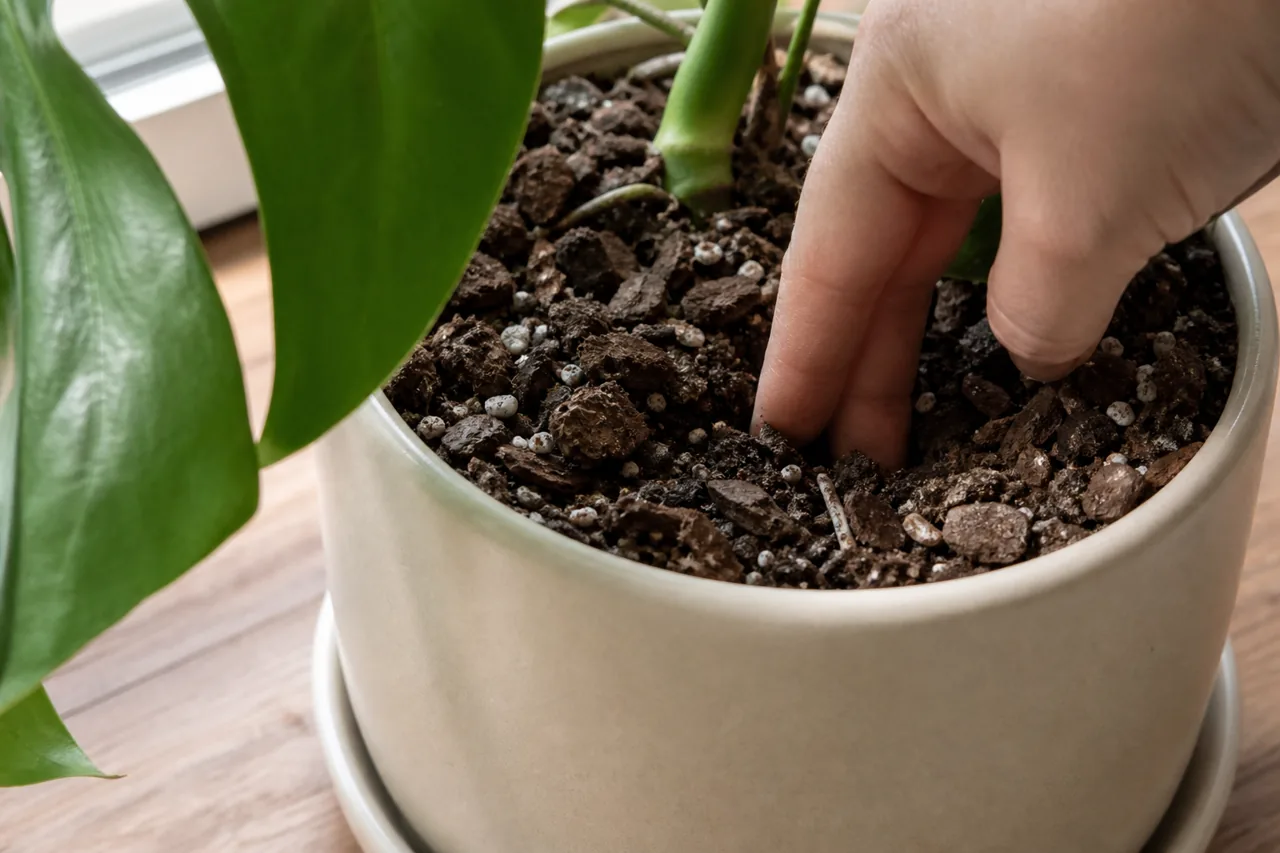
Season changes matter. A Monstera in active summer growth may need water much sooner than the same plant in a cooler winter room. Large leaves lose more water, terracotta dries faster than glazed ceramic, and a root-bound plant can dry down quickly because roots fill the pot.
Chunky Soil And Drainage Keep The Roots Working
Monstera roots are thick and need oxygen. A dense, peat-heavy mix can stay wet around the root ball long after the top looks dry. That is why many Monstera problems start after a plant is moved from nursery soil into a decorative pot with poor drainage.
A good mix is loose enough to let water pass through without collapsing. Use an aroid-style blend made from indoor potting mix, orchid bark, perlite, and a small amount of compost or coco coir. The exact recipe matters less than the texture: it should hold some moisture and still leave air pockets around the roots.
Repot when roots circle tightly, water races through without soaking, the plant dries out almost immediately, or the stem weight keeps tipping the pot. Spring and early summer are the easiest times because new roots form faster in warm, bright conditions.
Do not size up too far. Moving from a cramped pot to a much larger pot leaves a large wet ring of unused mix around the root ball. Choose a pot only 1 to 2 inches wider than the current root mass.
A Monstera Moss Pole Changes Leaf Size And Plant Shape
Monstera deliciosa is a climbing plant, not a compact tabletop plant. Its climbing foliage habit matters indoors. Without support, a mature vine sprawls sideways, twists toward light, and becomes hard to keep upright.
A moss pole is useful because it gives the stem a vertical route. A coir pole, cedar plank, or sturdy trellis can also work. Tie the main stem loosely with soft plant tape or cotton ties. Do not tie the petiole, which is the small stalk that holds each leaf blade, because it needs room to move toward light.
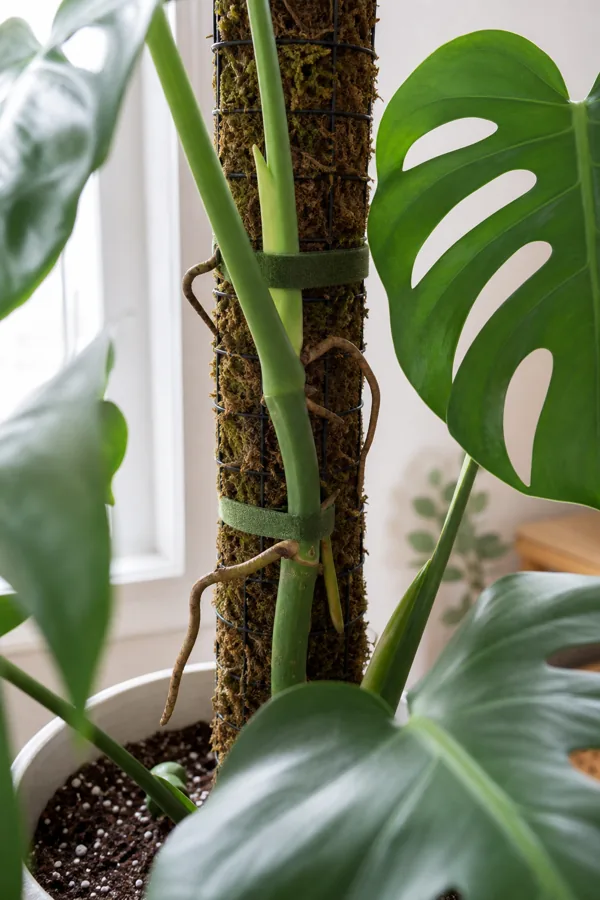
Start support before the plant becomes heavy. Once a stem has hardened in a sideways position, forcing it upright can crack the vine. Add the pole near the back of the pot, settle it deep enough to stay firm, and guide new growth as it appears.
Fenestration Comes From Maturity, Light, And Stable Growth
Fenestration is the name for the splits and holes in mature Monstera leaves. Young plants often make solid heart-shaped leaves first. As the plant gains size and grows in brighter conditions, newer leaves can become larger and more divided.
If your Monstera has no splits, read the newest leaves first. Old leaves will not cut themselves open after they harden. The next leaves tell you whether the plant has enough energy now.
Low light is the most common reason a mature plant keeps making small, solid leaves. A lack of support can also limit size because the plant has no stable vertical structure. Feeding can help during active growth. Fertilizer cannot compensate for dim placement or soggy roots.
Placement Decides Sun, Drafts, Pets, And Room Fit
The best place for a Monstera is bright, warm, and roomy. Aim for a spot away from cold drafts, heat vents, and doorways that brush the leaves. Most homes that suit people also suit Monsteras, as long as the plant is not pressed against cold glass in winter or scorched by direct afternoon sun in summer.
Room fit matters because a healthy Monstera gets wide. Give it space before it blocks a walkway or forces leaves against a wall. Large foliage plants are often used in biophilic design because they make a room feel greener. A crowded corner can create broken leaves and poor air movement.
Monstera is not a safe chew plant for pets. Swiss cheese plant is listed as toxic to dogs and cats. Keep it where pets and small children cannot bite the leaves or stems.
Common Monstera Mistakes Show Up In The Leaves First
Leaf symptoms are useful only when you read the pattern. One old yellow leaf near the base can be normal aging. Several yellow leaves after a wet week point toward watering and drainage. Brown, crispy patches on the sun-facing side suggest light damage. Pale new growth with long stems points toward low light.
If yellowing is the main problem, use a more detailed diagnostic path for Monstera yellow leaves before changing every part of care at once.
| Visible Sign | Likely Cause | First Correction |
|---|---|---|
| Yellow leaves and wet mix | Watering too often, heavy soil, or standing water | Let the mix dry more, empty the saucer, check drainage holes |
| Brown dry patches | Direct sun scorch or severe dry-down | Filter the light and check root-zone moisture |
| Small solid leaves on a mature plant | Low light or lack of climbing support | Move brighter and add a pole |
| Drooping after watering | Roots staying wet without enough air | Inspect mix texture and pot drainage |
| Brown tips | Dry air, salt buildup, inconsistent watering | Water deeply, flush occasionally, keep away from vents |
Misting is often overrated. A short burst of water on the leaves raises humidity for only a brief time and can leave spots. If the room is very dry, use a humidifier, group plants, or place the Monstera away from forced-air vents. For broader evidence on indoor greenery and home environments, see these indoor plant benefits statistics.
Feeding And Cleaning Keep Growth Consistent
Feed Monstera during active growth, usually spring through early fall. Use a balanced houseplant fertilizer at a diluted rate every four to six weeks, or follow the label at the low end. Skip feeding when the plant is not producing new growth, especially in winter.
Clean dust from the leaves with a damp cloth so the plant can use the light it receives. This also gives you a chance to inspect the undersides of leaves and petioles for pests. If you see sticky residue, webbing, or small moving specks, isolate the plant and treat the pest before it spreads to nearby houseplants.
Most common green Monsteras need the same core care. Collector forms and variegated plants still need the same root and light discipline, with slower growth and higher scorch risk. Those market patterns are tracked separately in our rare houseplant trends report.
Prune lightly to remove damaged leaves or control size. Cut near a node if you want to propagate a stem section. Do not remove aerial roots just because they look untidy. They are part of the plant’s climbing habit and can be guided toward a pole or tucked into the potting mix.
Conclusion
Monstera care is easiest when the plant gets enough light to grow, enough air around the roots to avoid rot, and enough support to climb as it matures. If you fix only one thing first, fix placement: brighter indirect light improves leaf size, watering rhythm, and the chance of future fenestration.
After placement, use the pot as your guide. Let the upper mix dry, water deeply, drain fully, and keep the roots in a loose mix. That routine gives Monstera deliciosa the conditions it needs to become the bold, split-leaf houseplant people expect when they bring one home.
Frequently Asked Questions
How do you care for Monstera indoors?
Care for Monstera indoors by giving it bright indirect light, watering after the upper mix dries, using chunky well-drained soil, and adding support as the plant matures. Keep it warm, dust the leaves, and adjust watering when seasonal growth slows.
Do Monstera plants need a lot of sun?
Monstera plants need bright light, not harsh direct sun. A bright room, east window, or filtered south or west exposure is usually better than a dim corner or a window where midday sun hits the leaves directly.
What should you not do with Monstera?
Do not leave Monstera sitting in water, place it in strong direct sun, repot it into a much larger pot, tie the leaf petioles to a pole, or expect misting to solve dry-room stress. Do not let pets chew it because the plant is toxic if ingested.
Where is the best place to put a Monstera?
The best place for a Monstera is a bright, warm spot with indirect light and enough space for wide leaves. Keep it away from cold drafts, heat vents, tight walkways, and windows that scorch leaves in direct afternoon sun.
How often should you water a Monstera?
Water a Monstera when the top 1 to 2 inches of potting mix feel dry. In summer that may be weekly for some plants, and in winter it may take much longer. Pot size, light, temperature, and soil texture change the interval.
Does a Monstera need a moss pole?
A Monstera does not need a moss pole to stay alive. Support helps the plant climb, keeps the stem upright, and encourages a stronger mature shape. Add support before the vine becomes heavy and difficult to train.