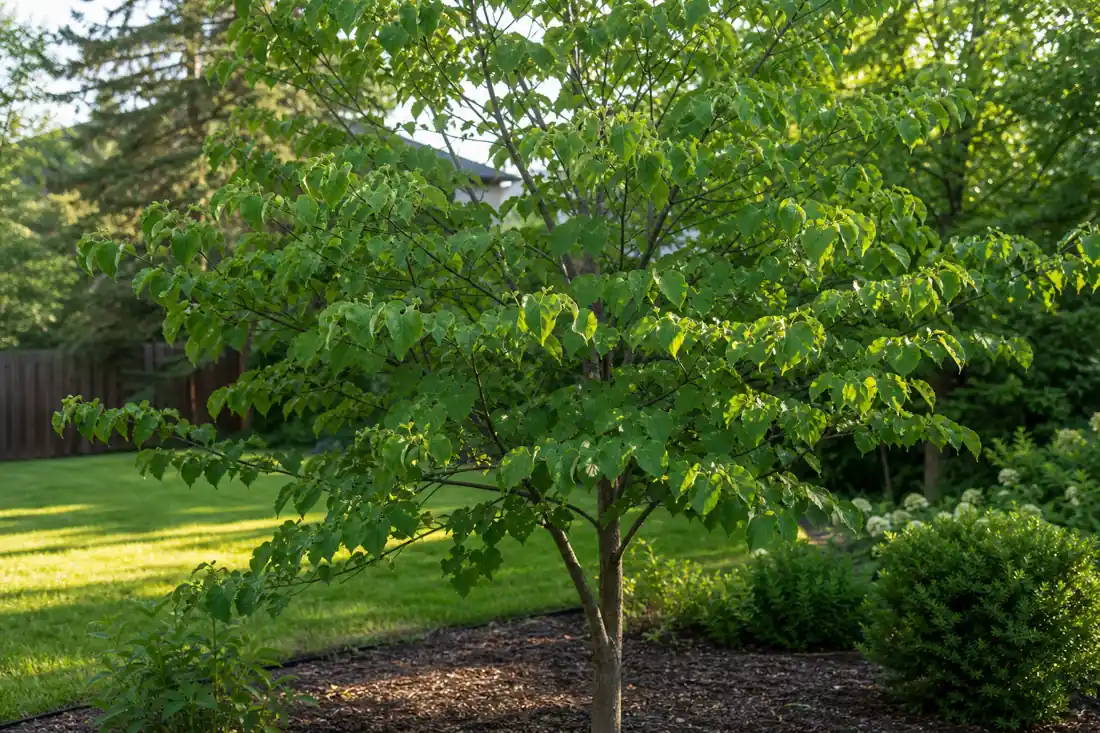
Redbud leaves curling usually means the tree is protecting water, reacting to root stress, or showing a smaller clue that needs one close look. The same curled heart-shaped leaf can come from a hot afternoon, a dry young root ball, saturated soil, aphids, leafrollers, herbicide drift, or a vascular disease. The pattern matters more than the curl alone: one branch, the whole canopy, new growth, old leaves, soft wilt, crisp edges, or leaves that stay folded after the evening cools.
Start with the conditions around the tree before reaching for a spray. A redbud that curls only during hot afternoons and relaxes overnight is behaving very differently from one with yellowing, branch dieback, or one-sided wilt.
Redbud Curl Diagnosis In 60 Seconds
Look at timing, soil, and distribution before naming the cause. A hot-day curl that relaxes by morning points to heat or drought. Curl that stays through cool weather, spreads down one side, or comes with yellowing and dieback needs a deeper check.
Key Takeaways
- Check afternoon timing before treating curled redbud leaves.
- Probe soil depth before judging surface dryness.
- Inspect undersides for aphids, leafrollers, and tied leaves.
- Avoid pruning heavily until the cause is clear.
- Call an arborist for one-sided wilt or branch dieback.
Table of Contents
Redbud Leaves Curling: Check Heat and Soil Moisture First
A redbud leaf curl diagnosis starts with the day the symptom appears. Eastern redbud, Cercis canadensis, has thin, heart-shaped leaves that respond visibly to heat and water movement. In hot weather, the leaf blade can fold, cup, or hang slightly to reduce exposed surface area. That can look alarming on a young tree because every leaf moves at once.
Check the tree early in the morning, in late afternoon, and after a deep watering. Morning recovery is a good sign. Persistent curl through a cool night is a stronger warning. A dry leaf edge that feels papery points toward drought. A soft curled leaf on wet soil points toward root oxygen stress. Curled leaves with sticky residue, webbing, or tied edges move the diagnosis toward insects.
| What you see | Most likely direction | First useful check |
|---|---|---|
| Curl appears during hot afternoons and eases by morning | Normal heat response or mild drought stress | Soil moisture 4-6 inches deep |
| Curl stays all day with dry, crisp margins | Drought, transplant stress, or root competition | Root-zone water reach and mulch ring |
| Curl stays all day with wet soil and drooping leaves | Overwatering, poor drainage, or root stress | Drainage, trunk flare, soil smell |
| Only new growth is twisted or strapped | Herbicide or chemical injury | Recent lawn, bed, or driveway spraying |
| One branch wilts, yellows, or dies back | Possible vascular wilt or branch injury | Branch pattern and arborist inspection |
Generic plant leaves curling diagnosis works as a starting point. Redbud adds two tree-specific checks: the root zone is wider than the trunk area, and branch distribution matters. A tomato or houseplant can change quickly after a watering correction. A planted redbud may take one to two weeks to show whether the stress has stopped.
Normal Heat or Drought Response
Heat curl is common on redbuds during hot, dry, windy weather, especially on young trees, newly planted trees, and trees sitting in reflected heat from pavement. Leaves may fold slightly along the midrib, curl at the edge, or hang with less tension. The leaf usually stays green. The tree often looks better after the sun drops.
A hot-weather redbud curl can be a water-conservation response, a pattern documented in an Ask Extension redbud leaf-curl answer. The practical test is recovery. Leaves that relax overnight and keep producing new growth point toward stress reduction before disease treatment. Deep watering, wider mulch, and less turf competition near the root zone usually matter more than leaf sprays.
Water young redbuds slowly enough to wet the root zone beyond the planting hole. A newly planted tree often has a small nursery root ball surrounded by different native soil. Water can run around that ball or sit in the amended pocket. Probe with a screwdriver, soil knife, or narrow trowel after watering. Moist soil should feel cool and hold together lightly. Bone-dry soil falls away as dust. Saturated soil smells sour and smears.
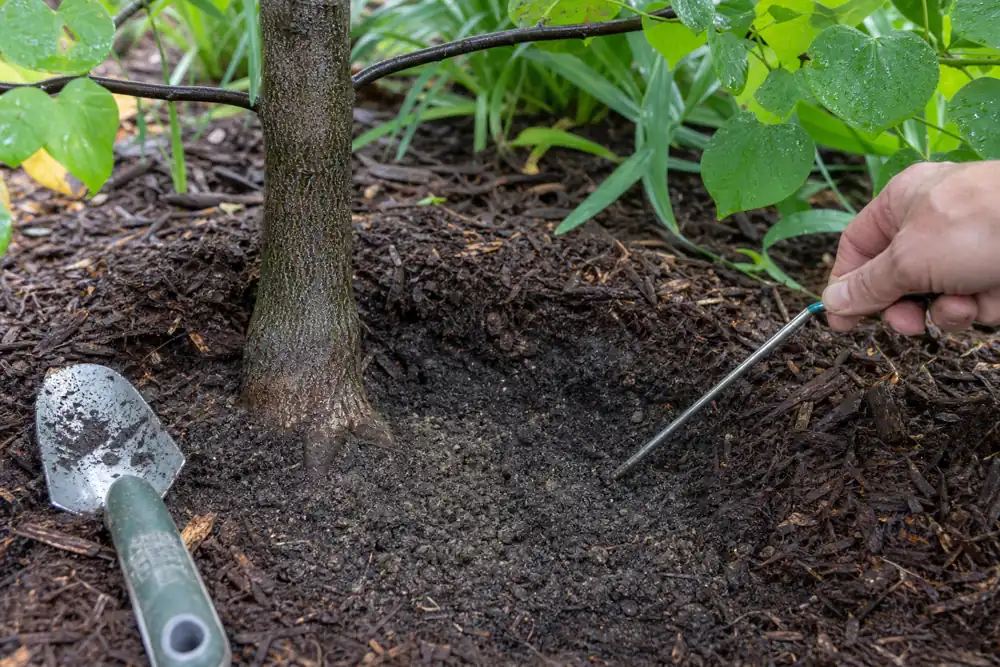
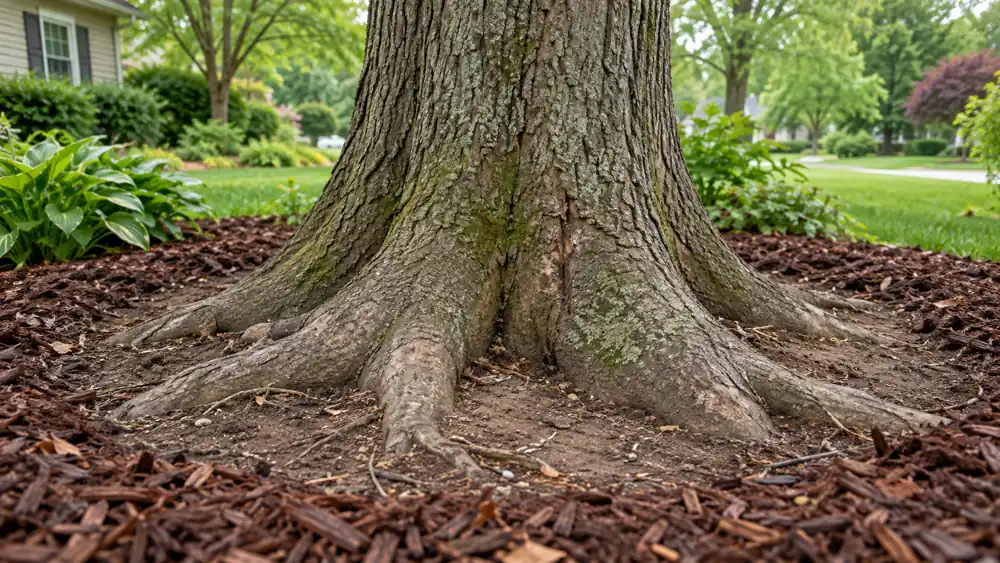
Mulch helps when it is placed correctly. Keep a broad 2-3 inch layer over the root zone and pull it several inches away from the trunk flare. A mulch volcano against bark holds moisture where the trunk should breathe. Bare, hot soil around a young redbud dries faster and forces shallow roots to work in the hottest layer.
Grass competition can make the same stress worse. Turf roots occupy the upper soil layer and take irrigation before a young redbud has a wide root system. A clean mulch circle reduces that competition and makes soil-moisture checks more accurate.
Overwatering, Poor Drainage, and Root Stress
Overwatered redbud trees often look thirsty because stressed roots cannot move water well. Leaves may curl, droop, yellow, or drop even when the soil feels wet. The difference is texture: drought-stressed leaves often turn dry and crisp at the edges; waterlogged-root leaves stay softer, duller, and limp. A tree planted too deep may show the same pattern because the trunk flare and upper roots sit in low-oxygen soil.
Root stress often follows a rhythm: frequent light watering, compacted clay, a low spot in the lawn, or a planting hole that acts like a bowl after storms. The surface may dry first, so the tree receives more water before the deeper zone has breathed. That keeps fine roots short of oxygen. Curling then appears above ground as a water movement problem.
Pull mulch back and find the trunk flare. If the trunk enters the soil like a telephone pole, the tree may be too deep or buried by mulch. Check whether water stands after rain. Container-grown redbuds waiting to be planted need different handling; poor pot drainage can damage roots before the tree ever reaches the yard.
Correct waterlogged conditions gradually. Stop frequent shallow irrigation, widen the mulch ring, and water only when the upper several inches have dried enough for air to return. Avoid fertilizer during active root stress. Fertilizer salts ask damaged roots to do more work before they have recovered.
Aphids, Leafrollers, and Other Pests
Pest curl usually shows a local pattern. One shoot, one branch tip, or a pocket of new leaves may look distorted with the rest of the tree still behaving normally. Turn curled leaves over. Aphids cluster on tender growth and leaf undersides. They leave sticky honeydew, shiny specks, and sometimes sooty mold. Leafrollers or leaffolders tie, fold, or web leaves into a shelter.
The redbud leaffolder is a named redbud pest; the redbud leaffolder description from NC State fits leaves that are folded, tied, or webbed. Open one damaged leaf gently. A rolled edge with webbing, frass, or a small caterpillar points away from watering and toward insect feeding.
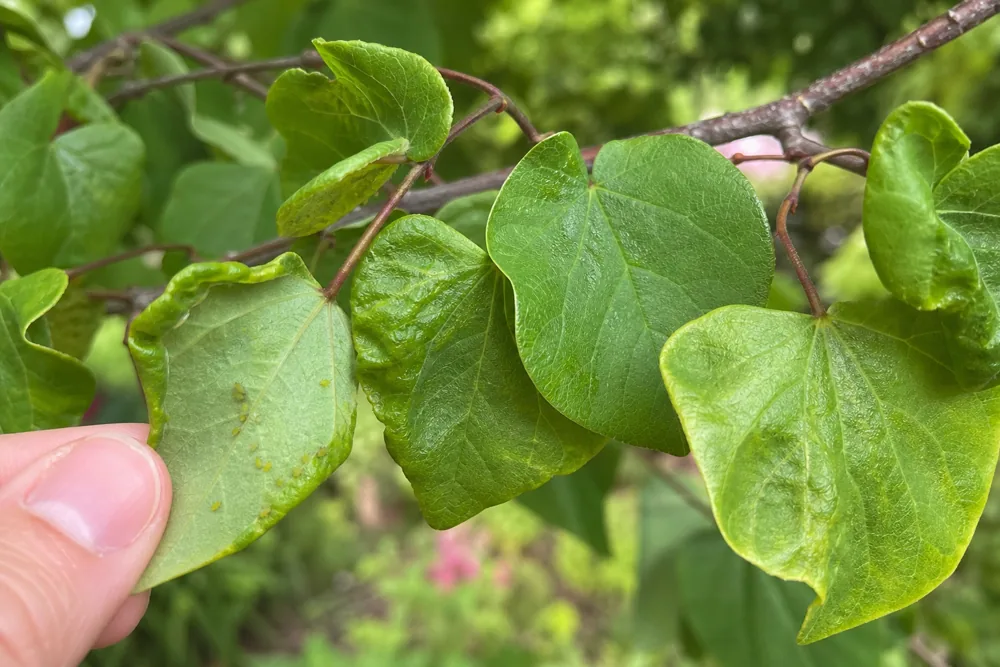
Light aphid pressure rarely justifies harsh treatment on a mature tree. A firm water spray on reachable leaves, time for natural predators, and removal of heavily folded leaves may be enough. Avoid broad insecticide use during bloom or when pollinators are active. Redbud flowers feed early-season insects, and unnecessary sprays can create a bigger ecological cost than the leaf curl itself.
Pest curl should not cause full-canopy drought behavior unless the infestation is heavy. If every leaf folds on a hot afternoon, start with heat and moisture. If only tender tips are puckered, sticky, or rolled, inspect insects first. A mixed problem can happen when a drought-stressed tree also becomes attractive to pests.
Herbicide or Chemical Injury
Herbicide injury often affects new growth first. Young leaves may twist, cup, narrow, thicken, strap, or grow unevenly. The shape can look odd compared with normal heat curl. Damage may appear after weed-and-feed use, lawn spraying, gravel-driveway herbicides, bed edging treatments, or drift from a nearby application during windy weather.
Tree roots can also take up chemicals from treated soil. Redbud roots often occupy a wider area than the visible canopy suggests, especially in irrigated lawns and garden beds. The injury pattern may line up with the side facing a treated lawn, driveway, fence line, or neighboring property. Leaves can remain distorted because the tissue formed during the exposure; new growth after the exposure ends is the cleaner test.
Curled, narrow, or distorted leaves after chemical exposure fit the symptom range described for herbicide damage to trees and shrubs. Water the tree normally, avoid more chemical exposure, and do not fertilize as a rescue move. Extra nitrogen can push tender growth during the same period the tree is sorting out damaged tissue.
Keep a simple record: spray date, product name, wind direction, temperature, and the side of the tree that changed first. That record matters if a professional needs to separate chemical injury from disease. It also prevents repeated exposure the following season.
Verticillium Wilt Warning Signs
Verticillium wilt deserves attention because redbuds are susceptible, and the symptom can begin on one branch or one side of the canopy. Leaves may curl, wilt, yellow, scorch, and hang on the branch. A single branch may decline with other branches still looking normal. Summer heat can make the symptom more visible because the vascular system is under higher demand.
Vascular wilt is different from a temporary hot-day fold. The curl does not relax after a cool night. Leaves may yellow or brown along with the curl, and branch tips may die back. The pattern often has a map: one limb, one scaffold branch, one side of the tree. General plant drooping diagnosis helps with water movement clues. Tree wilt adds branch-by-branch patterning and internal wood inspection.
The disease enters through roots and moves through the water-conducting tissue. Verticillium wilt of trees and shrubs can cause wilting, dieback, and discoloration inside affected wood. Homeowners should not rely on one curled leaf to diagnose it. Persistent one-sided wilt, branch death, and repeated decline after water correction are stronger evidence.
Yellowing can help separate normal heat response from decline. A green leaf that folds during heat is one clue. Curling paired with expanding yellowing leaves, weak branch tips, and poor recovery after irrigation deserves closer inspection.
When the Tree Needs an Arborist
Call an arborist when the pattern points beyond routine water or pest checks. A redbud with one-sided wilt, branch dieback, bark injury, soil grade changes, trenching damage, or repeated decline after correct watering needs a person on site. Photos help. A tree diagnosis often depends on root flare depth, soil texture, drainage, branch distribution, and nearby landscape work.
Bring a short history. Note planting date, recent drought, irrigation changes, mulch depth, herbicide or lawn treatments, construction near the roots, and whether the curl improves overnight. Cut a small dead twig only if the arborist asks for it. Random pruning can remove useful evidence and open extra wounds.
| Situation | Homeowner first step | When to escalate |
|---|---|---|
| Leaves curl only in afternoon heat | Check deep moisture, mulch wider, reduce turf competition | No recovery by morning for several days |
| Wet soil, droop, yellowing | Stop frequent watering, expose trunk flare, check drainage | Sour soil, soft bark, or continued decline |
| New growth twisted after spraying | Record product and timing, prevent repeat exposure | Progressive dieback or property-wide injury |
| Folded leaves with insects or webbing | Inspect undersides, remove limited folded leaves | Heavy defoliation on a young tree |
| One branch wilts or dies back | Photograph branch pattern and avoid heavy pruning | Arborist inspection soon |
Curled leaves can go back to a normal position when heat or mild drought is the cause and the tissue has not dried. Distorted herbicide growth, insect-tied leaves, scorched margins, and wilt-damaged leaves may stay marked. Judge recovery by new leaves, branch firmness, and whether the curl stops spreading.
Conclusion
Redbud leaves curling are a symptom, not a diagnosis by themselves. Hot afternoon curl that relaxes by morning usually points to heat and moisture management. Curl with wet soil sends you to drainage and root oxygen. Distorted new growth raises chemical injury concern, and one-sided wilt or dieback needs professional inspection.
Start with timing, soil depth, and branch distribution. A recovering redbud shows calmer new growth, leaves that regain tension after cool nights, and a root zone that stays moist without staying sour.