


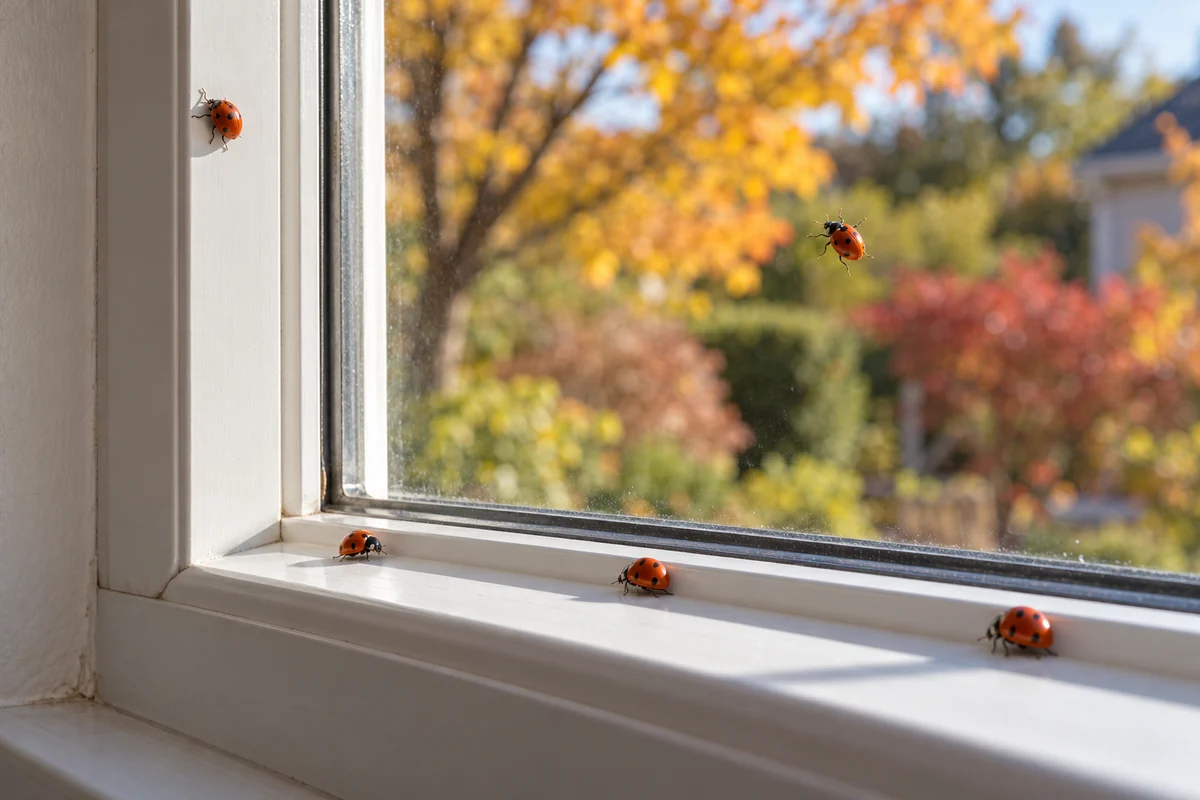
How to get rid of ladybugs indoors starts with collecting the beetles you can see, then closing the gaps that let them enter. Vacuum them gently without crushing them against walls or fabric, and remove the captured insects promptly. For a few individuals, a jar and card can work. Repeated fall clusters often involve multicolored Asian lady beetles seeking winter shelter, so the longer-term work belongs around windows, doors, siding and other entry points.
Finding another beetle at the window tomorrow does not mean the first cleanup failed. Adults already sheltered inside wall cavities may emerge later, particularly when sunshine warms the building. Indoor removal handles those exposed insects; exterior repairs help prevent a future wave. Identify the visitors before choosing a treatment. Lady beetles hunting aphids outdoors have a different role from beetles gathering inside a living room, and a garden-wide spray will not repair a window gap.
Match the action to where the beetles are
- A few inside: collect with a jar and card or vacuum; avoid pressing them into upholstery.
- Many at an indoor window: vacuum, empty promptly and inspect nearby openings. More adults may emerge from concealed spaces.
- Gathering outside in fall: inspect screens, frames, door sweeps and accessible gaps before more enter.
- Recurring large invasions: arrange an exclusion inspection. Consider professional exterior treatment only where warranted and correctly timed.
Skip the bug bomb. It does not close entry gaps or reliably reach sheltered beetles, and it introduces avoidable indoor pesticide exposure.
Key Takeaways
- Vacuum visible indoor beetles and remove the collection promptly.
- Avoid crushing beetles against walls, rugs or pale upholstery.
- Check identification using several features, including the shield behind the head.
- Repair accessible entry gaps before your area’s autumn beetle flights.
- Preserve working ventilation when screening or sealing building openings.
Table of Contents
Overwintering Adults Use Building Crevices as Shelter
Multicolored Asian lady beetles, Harmonia axyridis, leave their feeding areas in autumn and search for protected places. A gap behind siding or a window frame can lead into a sheltered cavity. Some adults then wander into occupied rooms, where you notice them on glass, walls and ceilings.
Sunlit building surfaces often attract clusters. South- and west-facing walls deserve attention, especially where you have already seen activity. Light-dark contrast around trim can also matter. Changing the entire house color is a poor substitute for repairing the actual openings around a frame.
These seasonal invaders do not reproduce inside the home or eat its wood, stored food or fabrics. Their nuisance comes from the gathering insects, occasional pinching bites and defensive secretions. Warm winter or early spring weather can activate adults that arrived in fall. A second appearance is not evidence of eggs hatching in the wall.
Start with identification, location and the scale of the problem. That is the same observation-first approach used in integrated pest management. A few visitors at a window and a recurring exterior aggregation call for different amounts of work.
A Pale Shield and Dark Mark Help More Than Spot Counting
Asian lady beetles can be tan, orange or red, with many spots or few visible spots. Look at the pale area immediately behind the head, called the pronotum. Many individuals have a dark M- or W-like marking there. It is a useful clue, not an infallible identification test.
The marking can be irregular or absent. Color and spot number alone are unreliable, and a blurry phone photograph may hide the very feature you need. Take a clear dorsal photograph if possible and compare the shape, shield and markings. Use local Extension identification help when the insect remains uncertain.
That variability is described in Ken Johnson’s Illinois Extension article on managing multicolored Asian lady beetles. It also explains why a tidy comparison based only on orange versus red bodies can mislead. A beetle being orange does not establish that it is an unwanted household invader.
Outdoors, lady beetles feed on aphids and other soft-bodied insects. Their presence on an aphid-covered shoot is not the same problem as adults collecting behind a curtain. Check the actual plant pest before choosing aphid control that preserves predators. Do not remove useful hunters merely because similar beetles have entered the house.
How to Get Rid of Ladybugs Indoors Without Crushing Them
For a single beetle on a smooth surface, place a jar over it and slide a stiff card beneath the opening. Move slowly so the rim does not crush the insect. For a larger group, use the vacuum hose rather than pressing or sweeping them across light-colored fabric.
Disturbed beetles can release yellowish defensive fluid with an acrid smell. It may stain rugs, curtains and upholstery. Gentle collection reduces the chance of smearing that fluid across a surface. Wear gloves if handling them; an occasional pinch is another reason to avoid picking up a cluster in bare fingers.
Use a removable hose catcher when appropriate
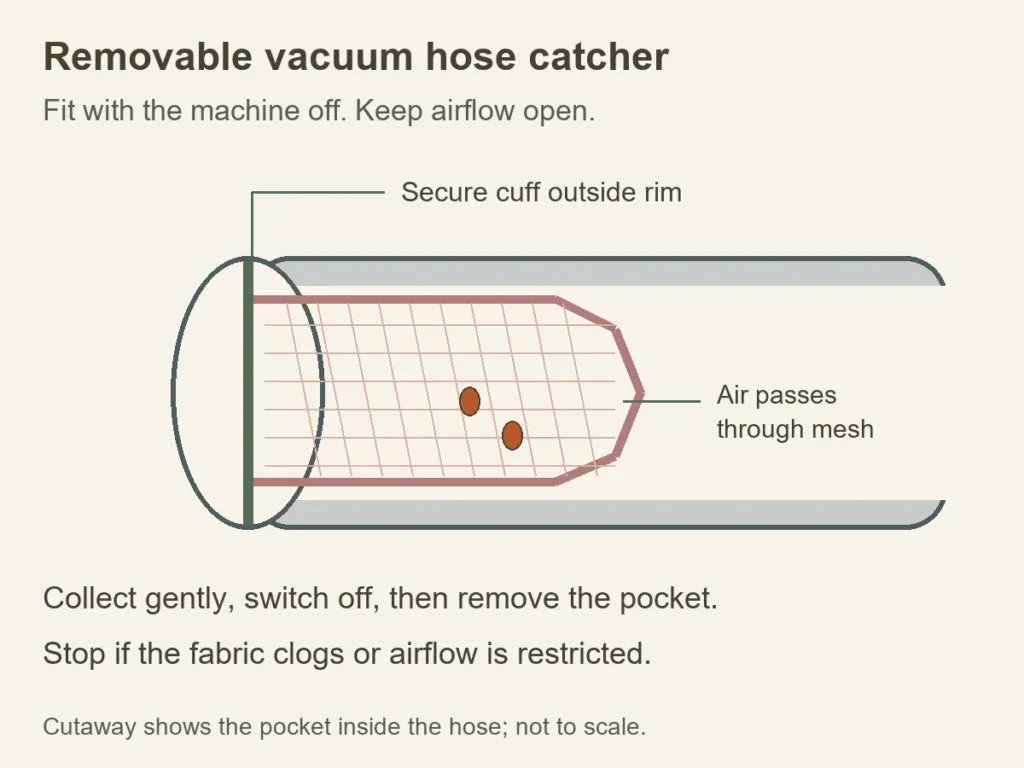
A stocking inserted into the end of a suitable vacuum hose can collect insects before they reach the machine’s bag or canister. Leave the open cuff outside the hose, fold it over the rim and secure it so the stocking cannot be sucked inside. Keep the fabric open enough for airflow and follow the vacuum manufacturer’s restrictions.
- Fit the catcher with the vacuum off. Leave the pocket inside the hose with its cuff secured outside.
- Collect gently. Hold the hose near the beetles without scraping them into the surface. Stop if airflow becomes restricted.
- Remove promptly. Switch off, keep the opening contained, then remove the catcher and its insects.
- Empty the machine if needed. Without a catcher, remove the vacuum’s collected beetles promptly so they do not escape or leave a persistent odor.
The New Hampshire Extension household removal guidance includes vacuuming or jar collection and prompt emptying. Outdoor release and disposal are separate choices; release in freezing weather does not guarantee survival. Follow suitable local advice and avoid moving insects long distances.
Reduce exposure during large cleanups
Large accumulations can be unpleasant to handle, and some people develop allergic reactions to lady beetles. Avoid handling insects or dusty remains if exposure causes symptoms; use another household member or a service for cleanup. Do not interpret a pest-control instruction as a guarantee that every person can safely tolerate the exposure.
Small Gaps Around Frames and Services Permit Entry
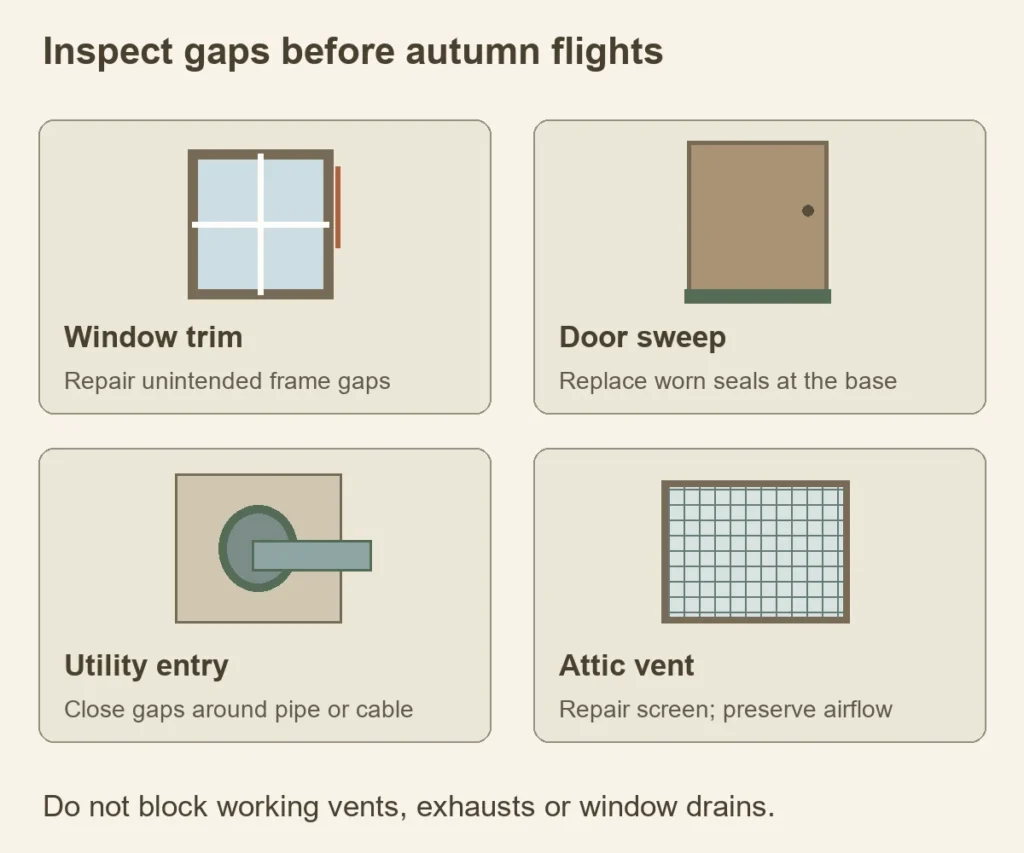
Start on the side of the building where beetles gather, then work around accessible doors and windows. Inspect the frame-to-wall joint, damaged screens, loose weatherstripping and worn door sweeps. Check utility penetrations and seasonal air-conditioner openings. A closed window can still have a gap around its outer frame.
Openings around one-eighth inch or even less can permit entry, as the University of Kentucky structural infestation fact sheet describes. Do not treat that measurement as a guaranteed safe cutoff. A visible seam deserves inspection even when it looks too small to matter.
- Window and door frames: repair unintended gaps with a sealant suited to the materials and movement.
- Screens: repair tears and ensure frames fit securely.
- Exterior doors: replace or adjust worn sweeps and weatherstripping.
- Pipes and cables: close unintended openings around penetrations using an appropriate repair method.
- Eaves, soffits and siding: have damaged joints and inaccessible openings inspected and repaired.
Keep designed drainage and ventilation functioning. Do not fill window weep holes, block combustion air or plug exhaust outlets. Attic vents need suitable screening that preserves airflow; appliance exhausts require the manufacturer’s approved arrangement. A building professional can distinguish an insect entry gap from an opening the structure needs.
Repairs Work Best Before the Local Autumn Flight
Do the exclusion work before adults start looking for winter shelter. Kentucky’s guidance describes September-November movement varying with location and weather, with much local activity in October. Other states have different windows. There is no single national date that makes every house ready in time.
Use the previous year’s observations and local Extension notices to set your repair schedule. A warm, sunny afternoon after cooler weather can bring a new wave to the siding. If adults are already clustering, repair accessible gaps now, with realistic expectations about insects that may have entered earlier.
Inspect after repairs as well. Watch where beetles gather and where they appear indoors. A note of the wall, window and weather is more useful than counting every insect without recording its location. Repeated activity at one opening helps focus the next inspection.
Indoor Sprays Do Not Solve Concealed Shelter or Open Gaps
A spray that hits an exposed beetle does not necessarily reach adults in wall cavities. Indoor treatments also leave the entry route unchanged. The Kentucky guidance on lady beetles in structures favors vacuuming indoors and preventive exclusion over foggers or routine room spraying.
Total-release foggers add a separate concern. The US Environmental Protection Agency’s fogger safety guidance describes fire, explosion and exposure hazards from improper use. They are a poor response to beetles that can continue emerging from concealed spaces. No indoor pesticide mixture or fogging recipe is needed for the collection and repair steps above.
For severe, recurring exterior invasions, a qualified pest professional may discuss a correctly timed exterior barrier treatment. That is a conditional prevention measure before entry, subject to the product label, location and non-target exposure. It does not replace repairs or guarantee that no beetles will enter. New Hampshire Extension discourages insecticides for the typical household nuisance; Kentucky describes exterior treatment for more difficult recurring cases.
Avoid extending that exterior option into a blanket garden treatment. Targeted organic garden pest control starts with the plant pest and preserves useful insects where possible. A beetle’s position on a living-room window does not justify spraying the surrounding landscape.
Do scents, traps or ladybug houses replace sealing?
A vinegar or scented-oil recipe does not repair an opening around a pipe. Do not rely on unverified repellents as a durable entry barrier. Ladybug houses may offer outdoor shelter, yet New Hampshire’s guidance makes clear that they do not keep beetles out of the home.
Light traps can capture some insects in suitable enclosed spaces, with limited usefulness against continued emergence elsewhere. Keep the main effort on removing exposed adults and repairing entry points. For outdoor problems, match natural pest-control methods to the pest and its location rather than assuming one remedy fits every insect.
Repeated Winter Sightings Can Come From Earlier Arrivals
| Situation | Priority now | Follow-up |
|---|---|---|
| A few beetles indoors | Gentle collection | Inspect nearby accessible gaps |
| Large outdoor fall cluster | Entry-point inspection and repair | Plan prevention before next local flight |
| Recurring warm-day winter sightings | Collect emerging adults | Investigate concealed shelter and repair needs |
Call for help when repeated large numbers overwhelm routine collection, entry points require unsafe access, or a building defect needs repair. Ask the service to explain the likely route, what will be repaired and what any proposed treatment can reach. A professional inspection is more useful when it addresses the structure as well as the insects.
Conclusion
Collect indoor beetles gently, empty the vacuum promptly and avoid staining surfaces by crushing them. Identify recurring fall visitors, inspect the places they gather and repair unintended entry gaps before the next local flight. Expect some sheltered adults to emerge later; keep removing those you see without turning a household exclusion problem into garden-wide insect control.