

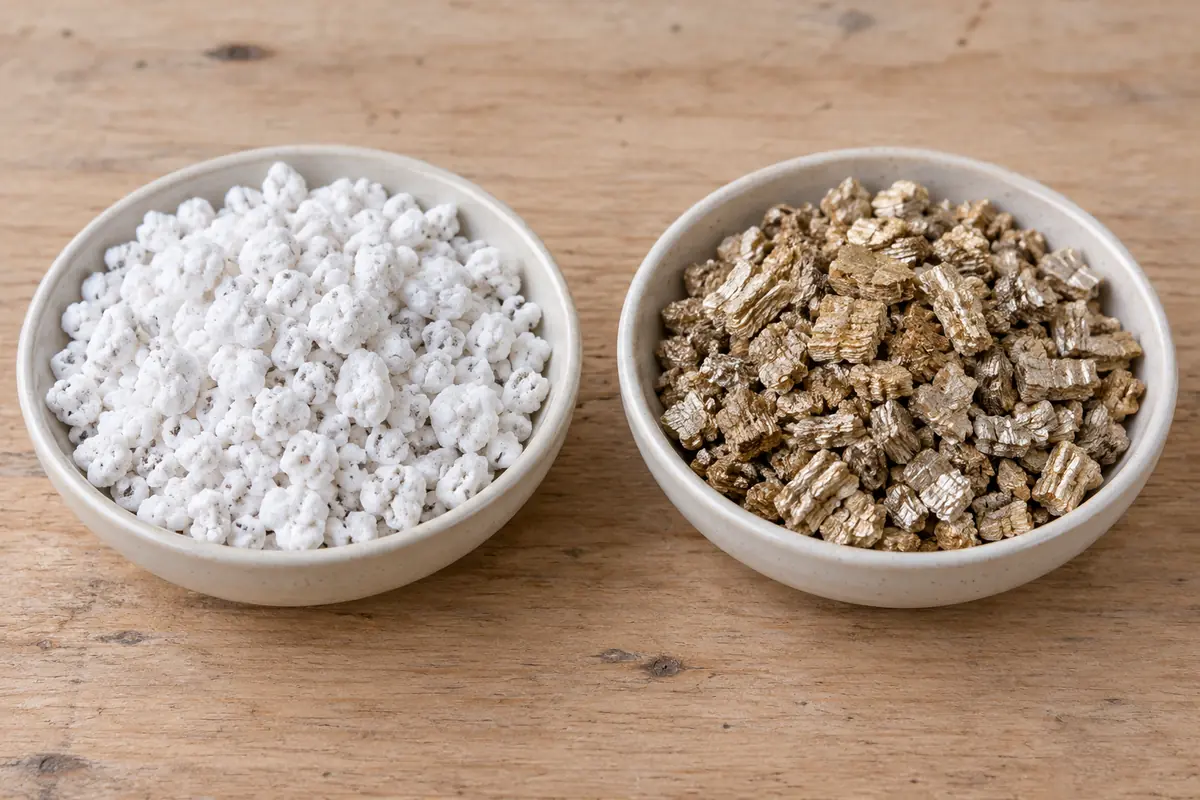
Perlite vs vermiculite comes down to the change your growing medium needs. Porous perlite generally improves air space and drainage; vermiculite holds more moisture and retains nutrient ions. Both can belong in a well-formulated mix. Neither creates a drainage outlet in a sealed pot, and neither supplies a complete feeding program. Start with the plant, the container and how the existing mix behaves after watering.
A white, porous handful of perlite and a soft, layered handful of vermiculite can look like interchangeable fillers on the shelf. Their usefulness changes with the job. A seed tray losing surface moisture is different from a houseplant sitting in dense, wet material. Before buying either bag, decide whether you need moisture storage, more air around roots, or a correction to the container itself. That observation prevents an ingredient change from making the original problem worse.
Choose by the problem you need to correct
- Mix stays wet and lacks air: consider perlite within a suitable mix, after checking drainage holes, pot size and watering.
- Seed surface dries too quickly: fine horticultural vermiculite can help retain moisture where the seed’s sowing instructions permit it.
- Both air and moisture need balancing: a formulated mix may use both materials.
- Pot has no outlet or sits in water: fix the container first. An additive cannot create an escape route.
Read the existing mix label. It may already contain one or both ingredients. More is not automatically better.
Key Takeaways
- Choose perlite when additional aeration and drainage suit the mix.
- Choose vermiculite when moisture retention is the limiting need.
- Check drain holes and pot size before adding ingredients.
- Match particle grade and texture to seeds, cuttings or plants.
- Dampen dusty materials and mix them in a ventilated place.
Table of Contents
Perlite vs Vermiculite: Structure Changes Their Main Use
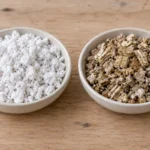
Horticultural perlite is expanded volcanic glass. Its pale, irregular granules are light and porous. Expanded vermiculite is a heated, mica-like mineral with layered particles, often tan, gold or gray. Products come in different grades, so a coarse bag and a fine bag of the same material can behave differently.
The practical distinction is relative. Perlite retains some water, even though it is commonly chosen for aeration and drainage. Vermiculite can hold air as well as water; it is not automatically a waterlogged material in every blend. The rest of the medium and its particle sizes help determine the result.
| Property | Perlite | Vermiculite |
|---|---|---|
| Typical appearance | White, porous, irregular granules | Layered tan, gold or gray particles |
| Main mixing role | Air space and drainage | Moisture and nutrient retention |
| Water behavior | Retains some water; drains readily in suitable systems | Greater moisture storage; can stay too wet in an unsuitable mix |
| Before adding more | Check whether the base mix and pot already drain adequately | Check whether the base already holds enough moisture |
Peat, coir and bark also change water storage and air space in the potting mixture, alongside the mineral ingredients. A label listing perlite does not tell you everything about the finished mixture.
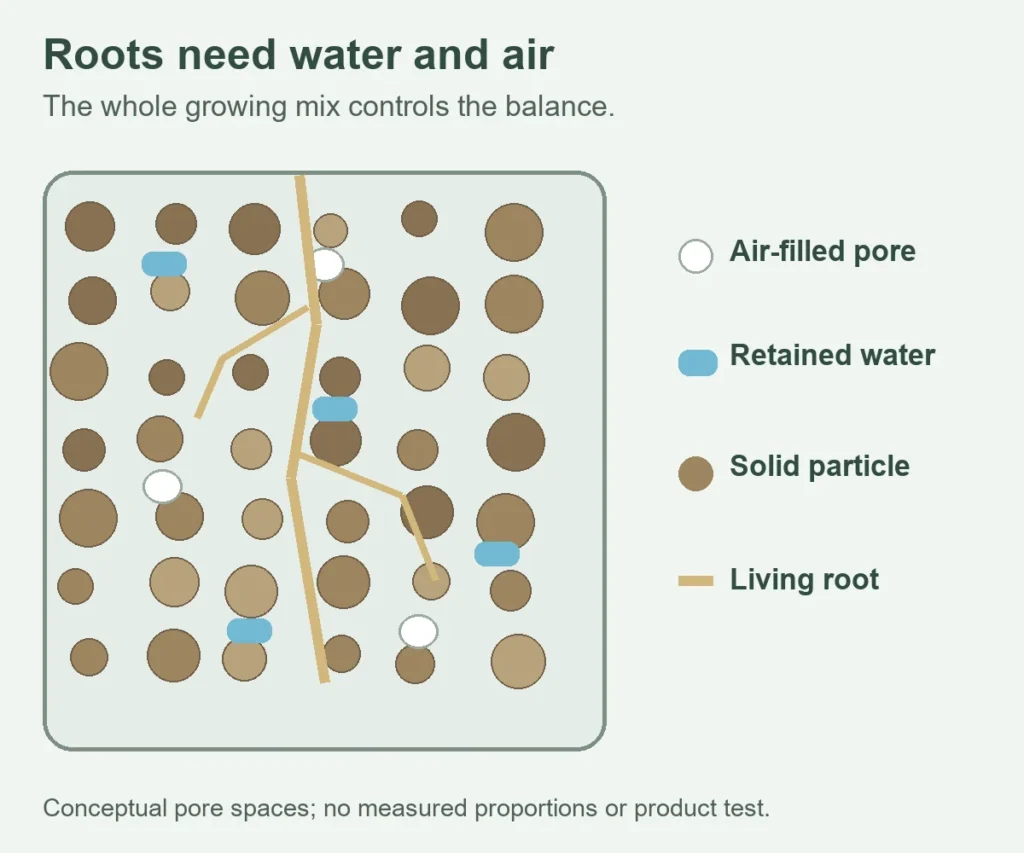
Roots Need Both Retained Moisture and Air-Filled Spaces
After watering, a usable growing medium retains moisture for roots as excess water leaves. Some pore spaces refill with air. In a persistently saturated medium, water occupies spaces that would otherwise carry air, and roots struggle to obtain oxygen. A wet pot is not necessarily giving the plant an adequate supply of both water and oxygen.
Perlite is often useful when a mix needs more open structure. Vermiculite is often useful when moisture is lost too quickly. The distinction does not make either ingredient a cure for every yellow leaf or drooping stem. Damaged roots, unsuitable light, frequent watering and container design can produce symptoms that an extra handful of granules will not resolve.
Observe the entire pot after a normal watering. Check whether water exits, whether the container remains unusually heavy, and whether the root zone is damp beneath a dry surface. Regular root-zone moisture checks help separate a surface impression from the condition around the roots.
The base matters as much as the additive. A fine, moisture-retentive blend has a different starting point from a coarse bark-based one. Container size, exposure and irrigation then change the drying pattern again. Choose the needed adjustment after observing the mix you actually have.
Seeds and Cuttings Need a Texture Suited to Their Stage
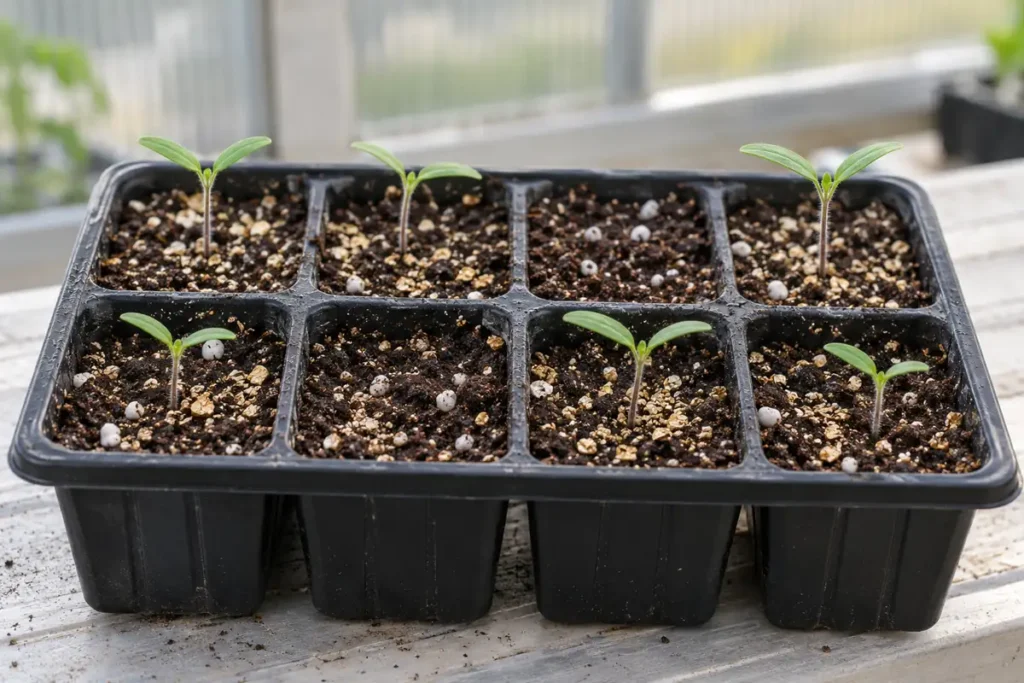
For seed starting, retain moisture without burying the seed
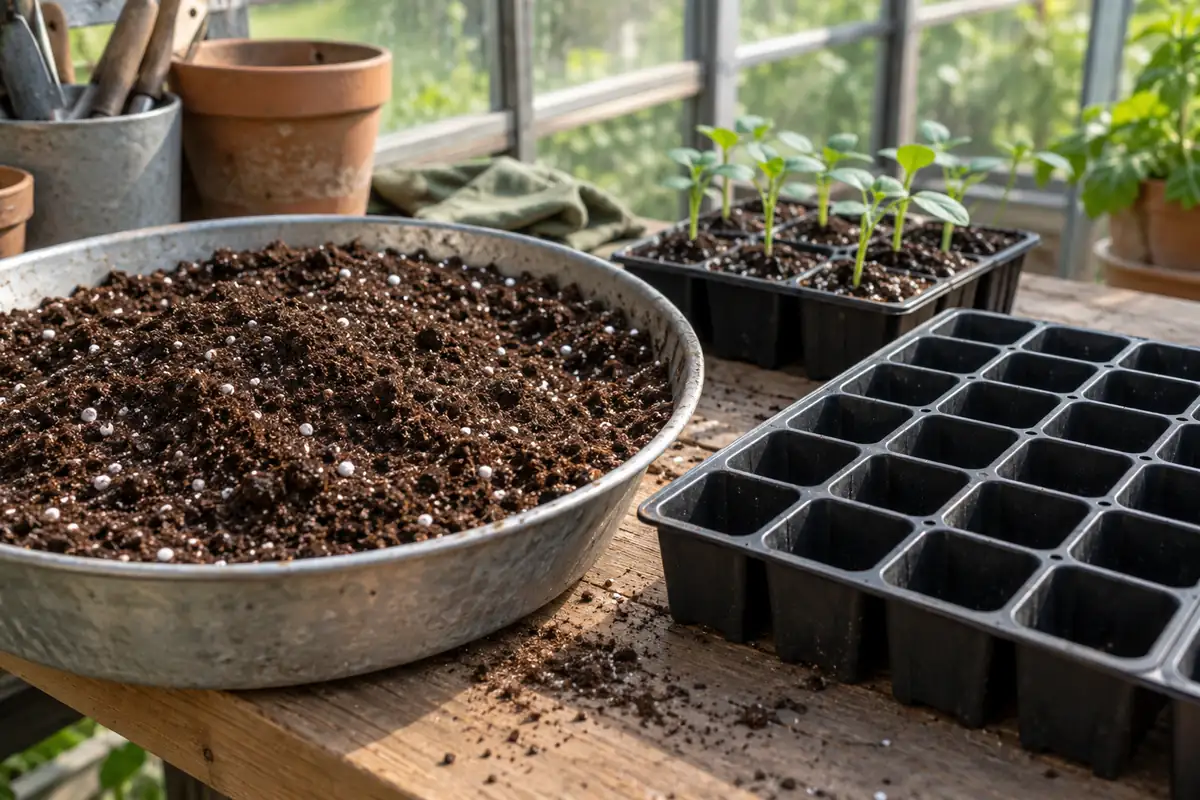
Small seeds need contact with a suitable, clean medium and moisture during germination. Fine vermiculite can help buffer surface drying in appropriate seed-starting systems. Follow the seed packet’s depth and light instructions; a thick covering can be wrong for a seed that must remain at the surface.
Perlite and vermiculite can appear together in commercial propagation blends. The University of Georgia’s Commercial Production of Vegetable Transplants describes finer-textured media for small cells, with both ingredients contributing useful properties. That short-term seedling task differs from keeping a large plant in the same container for years.
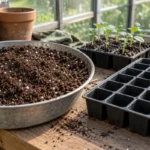
Choose a seed-starting product for its intended use before modifying it. A coarse potting mixture can leave uneven contact around a small seed, and continually adding water to compensate may saturate the lower cells. Particle size, tray depth and watering all belong in the decision.
For cuttings, balance stem moisture and oxygen
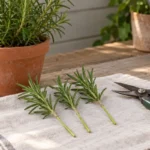
A rootless cutting needs a medium that supports it, stays appropriately moist and allows air around developing roots. Illinois Extension’s Houseplants: Propagation lists perlite, vermiculite and combinations among rooting media. The plant, cutting type and surrounding humidity change what works.
A cutting under a humid cover does not need the same watering as an established plant in an open pot. Check the base and medium before adding more water. No single perlite-to-vermiculite ratio can replace those stage-specific checks, and neither ingredient guarantees that a damaged cutting will root.
Plant Needs and Container Conditions Change the Better Choice
For plants that resent prolonged wetness, a suitable mix with added aeration is often preferable to increasing water storage. That makes perlite a common ingredient in dry-demanding plant mixes. It remains one component: fine, dense material around it can still stay wet, and a sealed outer container can still hold runoff.
For a fast-drying seed tray or moisture-demanding plant, vermiculite may be useful within a balanced formulation. First check whether the problem is an undersized container, very exposed location or missed watering. A small pot in hot wind may dry rapidly regardless of which mineral ingredient appears on its label.
Many ordinary houseplants already grow in mixes containing perlite, vermiculite or both. If roots are healthy and the drying pattern suits your routine, there may be no reason to alter it. The presence of white granules is not a warning, and a bag of vermiculite is not automatically an upgrade.
For a complete repotting formulation, account for the other ingredients in the container potting mix. Keep this ingredient decision tied to the actual plant and setting. Replacing a ready-mixed product with mostly one additive changes more than its appearance.
Combining or Substituting Requires Checking the Whole Mix
Both materials can be used together, as established propagation mixtures demonstrate. Their roles overlap enough that the choice is not always exclusive. A formulated blend can retain useful moisture and maintain air space at the same time. Adding each ingredient without considering the others does not automatically produce that balance.
Do not assume an equal-volume swap will preserve the old watering routine. Replacing perlite with vermiculite can change moisture storage; replacing vermiculite with perlite can change the drying pattern in the other direction. Product grade and the amount replaced matter. Observe the result before using the new blend for every plant.
Trial a small batch before repotting everything
Record the base mix and the measured amounts you change. Use the same type of draining pot and compare how each batch wets, drains and feels below the surface over time. Keep watering and exposure similar enough that the comparison tells you something useful.
This is a home observation, not a controlled performance test. One sunny afternoon or one different pot size can change the result. The useful outcome is finding a blend you can manage for that plant, without claiming that it proves a material universally superior.
Neither material is a complete fertilizer. Vermiculite’s nutrient-holding ability can help retain available ions; that does not establish a full feeding plan. Likewise, an ingredient’s listed pH does not tell you the finished mix’s pH. For a persistent chemistry problem, choose a test appropriate to the material and question, asking the laboratory whether it accepts container media.
Drainage Outlets and Failed Structure Need Their Own Repairs
Perlite does not put a hole in a decorative cachepot. Vermiculite does not stop roots sitting in the water held beneath an inner pot. Check the outlet and empty collected runoff before deciding the growing medium needs a new ingredient.
Persistently wet conditions may also reflect an oversized pot or a collapsed base mix. Scattering a dry additive across the surface leaves the original root zone largely unchanged. Correcting container drainage problems can require a suitable inner pot, corrected watering or repotting into an appropriate medium.
System design matters outside ordinary pots too. Loose, lightweight particles can move with flowing irrigation water. A material useful in a contained pot need not suit every flooding system. Use a medium specified for the growing system instead of extending a houseplant recommendation to an unfamiliar setup.
Choose Horticultural Grades and Keep Dust Down
Buy material labeled for horticultural use and check the grade. Coarse and fine products serve different purposes. Fine particles help with small-seed contact in a suitable blend; they are not interchangeable with coarse particles when structure is the goal. Packaging details are more dependable than judging a bag solely by a photograph.
Pour slowly and lightly dampen dusty material before mixing. Work outdoors or in a well-ventilated space, away from a fan blowing powder toward your face. Follow the product’s handling instructions, including any specified eye or respiratory protection. Store the bag closed to keep the unused material clean.
Understand the vermiculite safety distinction
Past contamination concerns around vermiculite deserve accurate handling advice. The US Environmental Protection Agency’s guidance for vermiculite in potting soil describes minimal consumer risk from the use it investigated, with precautions to keep the material damp, ventilate and avoid carrying dust indoors.
That assessment does not certify every current bag or turn unknown old insulation into a gardening supply. Use a horticultural product from an identifiable supplier and follow its instructions. Premixed potting media may generate less dust than handling pure dry vermiculite, as EPA also notes.
Perlite dust deserves care too. Oklahoma State’s Soilless Growing Mediums identifies eye and respiratory irritation as a handling concern. Choosing perlite instead of vermiculite does not remove the need to control dust.
Conclusion
Choose perlite when a suitable mix needs more aeration and drainage, and vermiculite when additional moisture retention fits the task. Check the base mix, grade and container first. Both can be useful together; neither fixes a sealed pot or replaces a feeding plan. Make small, recorded changes and judge the root zone before changing every container.