



Updated April 12, 2026
Tomato plant growth stages move through germination, seedling growth, transplant establishment, vegetative growth, flowering, fruit set, fruit enlargement, ripening, and harvest. Each stage has its own timing, visible cues, care priorities, and yield risks. Miss one handoff and the next stage slows with it.
Each tomato stage has visible progress cues, a usual timing range, common delays, and yield protection priorities. Tomatoes need closer stage tracking than general vegetable growth stages. Most vegetables move cleanly from one visible phase to the next, while tomatoes are harder to read because flowering, fruit set, enlargement, and ripening can all overlap on the same plant.
Across these stages, expect about five to ten days for germination, six to eight weeks for seedling production, three to seven days for transplant recovery, three to five weeks to reach flowering after transplant, several days for fruit set, two to four weeks for fruit enlargement, and one to three more weeks for ripening after fruit reaches full size.
Key Takeaways:
- Count maturity from transplant date, not sowing date
- Keep seedlings compact before chasing fast early growth
- Treat transplant recovery as its own yield checkpoint
- Protect flower clusters from heat, cold, and moisture swings
- Pick at breaker stage when cracking risk starts rising
Table of Contents
Tomato Plant Growth Stages Timeline – Timing, Cues, And Yield Risks
The total timeline is only a starting point. Stage timing gives the better yield diagnosis. University of Minnesota Extension recommends starting tomato seed five to six weeks before outdoor planting, and Oregon State Extension notes that many garden tomatoes reach harvest in about sixty to seventy-five days after transplant. Put those together and a tomato grown from seed commonly lands near three to four months from sowing to the first ripe fruit, with cherries at the short end and big late slicers farther out.
That total changes fast with weather. Cool nights slow vegetative growth and flowering. Hot nights damage pollen before fruit ever starts. A rough transplant can hold the plant in place for a week. When gardeners ask why one tomato is loaded and another is still thinking about it, the answer is usually hidden in one delayed stage, not in the whole season at once.
Pro Tip: Write four dates on a plant tag or in your phone – transplant day, first open flower, first fruit set, and first breaker fruit. The gap that stretches is the stage that cost yield.
| Stage | Typical timing | What it looks like | What protects yield | What cuts yield |
|---|---|---|---|---|
| Germination | Days five to ten after sowing | Seed coat splits and cotyledons rise | Warm evenly damp mix | Cold media and soggy trays |
| Seedling | Weeks one to six after emergence | True leaves stack close and stems thicken | Strong overhead light and timely pot-up | Leggy stretch and root-bound cells |
| Transplant establishment | Days three to seven after planting out | Morning leaf angle recovers and new top growth resumes | Deep planting, watering in, early support | Root disturbance and cold nights |
| Vegetative growth | Weeks two to four after transplant | Fast canopy expansion and thicker stems | Moderate feeding and clean support | Too much nitrogen and late staking |
| Flowering | About weeks three to five after transplant | Yellow trusses open in sequence | Good temperature window and even moisture | Hot nights, cold nights, blossom drop |
| Fruit set | Several days after successful pollination | Small green ovary swells behind the flower | Pollen viability and low stress | Aborted flowers and failed pollen |
| Fruit enlargement | Two to four weeks after set | Green fruit reaches full size and shoulder fill | Moisture stability and healthy leaf cover | Dry-wet swings and cracking pressure |
| Ripening and harvest | One to three weeks after full size | Breaker blush, color spread, slight softness | Timely picking and weather awareness | Waiting through rain, birds, and split skins |
At each checkpoint, compare expected growth with stalled growth: what should the plant be doing now, and what has it stopped doing? That is how you catch a stalled tomato before the calendar misleads you.
Germination And Tomato Seedling Stages – Build Structure Before Speed
The seedling phase decides how much margin you have later. Penn State Extension describes the best transplant as short, stocky, and close to pencil width at the stem. That is not cosmetic. A compact seedling carries a stronger stem, better early root balance, and a cleaner transition into the first fruiting truss.
What Healthy Germination Looks Like
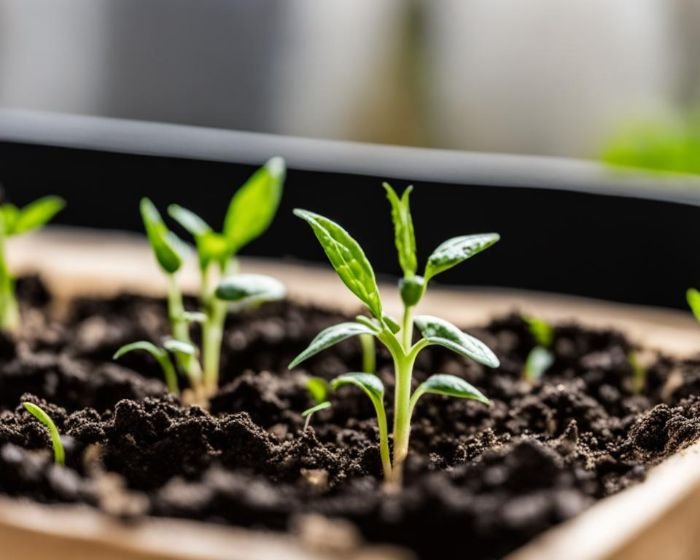
University of Minnesota recommends about seventy-five to eighty-five degrees F for germination, then cooler conditions near seventy once seedlings emerge. That shift is useful because warmth wakes the seed, and slightly cooler conditions after emergence slow stretch. In a healthy tray the seed coat lifts cleanly, cotyledons open flat, and emergence happens in a fairly tight window instead of dragging across many uneven days.
Run a fingertip across the tray surface. Evenly damp mix feels cool and granular, not shiny and swampy. If some cells are still bare long after the first sprouts opened, the tray likely ran too cool or too wet for clean germination.
What Healthy Seedling Growth Looks Like
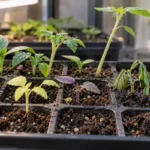
Once the tray is up, the seedling stage becomes a structure-building phase. The first true leaf arrives soon after emergence, internodes stay short under strong overhead light, and the stem thickens instead of stretching. Lift one cell when the second or third true leaf appears. The root ball should hold together with white roots along the outside, not a tight brown spiral matted against the wall.
What Delayed Seedling Development Looks Like
Normal seedling progression reads compact and upright. Delayed progression reads tall, thin, and late. If one flat sprouts over ten days instead of one week, the tray temperature was probably uneven. If stems lean and stretch, the light is too high or too weak. If the top looks green but stops adding leaf size, the roots have likely filled the cell and need more room.
What Protects Yield In This Stage
Keep the light close, pot up before roots circle hard, and do not rush soft seedlings outdoors just because the calendar says it is time. Weak seedlings spend their first outdoor weeks repairing structure. Sturdy seedlings begin building the first real canopy almost at once, which brings the first truss forward and gives the plant more useful time before summer stress closes in.
Transplant Stage – The First 3 To 7 Days Decide Whether Growth Restarts Or Stalls
Transplanting is not just the end of the seedling stage. It is its own checkpoint. A tomato that moves through transplant shock cleanly reaches flowering on schedule. One that sits still for a week gives that time back later, usually right when the first truss should be setting fruit.
What A Healthy Transplanted Tomato Looks Like After A Week
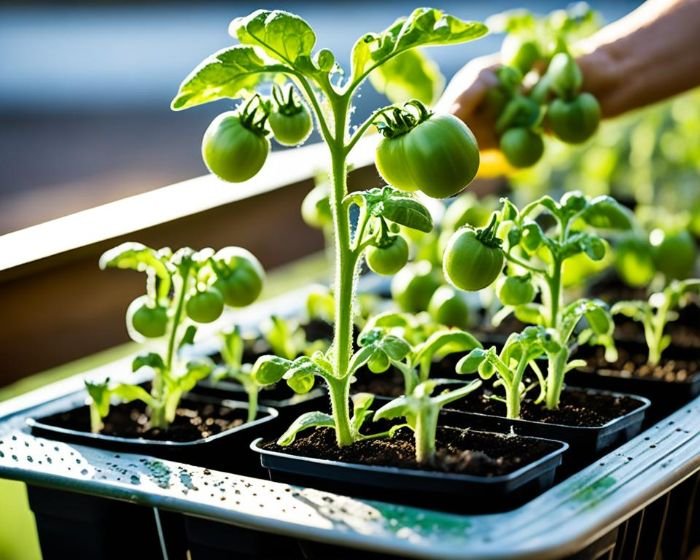
Penn State Extension recommends hardening plants off over about a week before planting out, and tomatoes-from-seedling guidance consistently points toward deep planting because buried stems form additional roots. A healthy transplant may droop the first afternoon, then stand better by the next morning. By day three to seven, the top growth should still look green and the newest leaves should begin expanding again.
Planting deep matters here. Tomato stems produce adventitious roots along buried tissue, so a deeper transplant turns more stem length into working root area. Watering in well matters too. The root ball needs close contact with the surrounding soil, not air gaps that dry the plug faster than the bed around it.
What A Stalled Transplant Looks Like
A transplant in trouble stays dull by morning, not just by late afternoon. The growing tip stops moving. Existing flower buds can yellow before they ever open. Leaf color may stay decent for a few days, which is why gardeners miss the stall. The top is living on stored reserves instead of expanding.
What Protects Yield In This Stage
Set cages or stakes at planting time, not later. Oregon State Extension ties support directly to higher yields because cleaner foliage and fruit stay off the soil. A support driven into the bed after roots spread can damage the root zone you just worked to establish. A transplant that loses a week here usually flowers later, sets the first truss later, and gives up part of the early harvest window in the process.
Vegetative Growth Stage – Build Leaf Area Without Delaying Bloom
The goal in the vegetative stage is not maximum leaf mass. It is enough canopy to power flowering, enough root reach to carry fruit later, and enough structure to keep the plant off the soil. This is where many tomatoes look impressive and still lose time.
What Healthy Vegetative Growth Looks Like
Healthy vegetative growth reads like forward motion. The stem thickens, the newest leaves open to normal size, and the plant adds height or side shoots at a predictable rhythm. Determinate tomatoes use this stage to build a shorter, tighter framework before a heavier burst of flowering. Indeterminate tomatoes stretch longer and need early training so later flowers and fruit do not collapse into a tangled canopy.
What Delays This Stage Or Turns It Unproductive
| Checkpoint | Healthy read | Delay or failure signal | Yield consequence |
|---|---|---|---|
| Stem growth | Stem thickens and holds itself upright | Stem stays thin or weak after transplant recovery | Later trusses carry less support and more breakage risk |
| New leaves | Newest leaves open flat and close to normal size | New leaves stay small, tight, or slow to unfold | Less working canopy for the first fruit clusters |
| First truss timing | Flower cluster appears on schedule for the variety | Leaf growth continues with little sign of bloom | Harvest starts later and early yield drops |
| Canopy color | Medium-green leaves with forward motion | Very dark lush leaves with little flowering | Energy stays in foliage instead of shifting to bloom |
This is the stage where vegetative growth becomes a problem instead of an asset. Too much nitrogen, delayed support, or a root system that never fully reconnected after transplant can keep the plant busy making leaves when it should be preparing to bloom. That delay rolls forward into fewer early clusters and a shorter productive window before summer stress starts interfering with fruit set.
What Protects Yield In This Stage
The highest-yield moves in this stage are not flashy. Install support early, keep lower foliage off the soil, and avoid overfeeding nitrogen just before the first truss opens. A plant should leave this stage with structure, not with excess leaf mass. If it keeps pushing foliage and not flowers, the stage has gone from productive to expensive.
Flowering Stage – When Tomatoes Start Blooming And Why Flowers Fail
Tomatoes start flowering once the plant has built enough leaf area and temperatures stay in range long enough for pollen to function. Penn State Extension notes that tomatoes are sensitive to cool night temperatures below about fifty-five degrees F, and that growth, pollination, and maturation all slow above about ninety. The flower stage looks delicate because it is.
Healthy Flower Progression Vs Failed Flowering
Healthy progression is easy to read once you know the sequence. A tight truss forms. Yellow flowers open one after another. Petals dry back. A small green ovary begins to swell behind the flower. Failed progression stops at the flower. The blossom dries, the joint yellows, and the flower drops with no fruit behind it.
University of Maryland Extension describes poor fruit set when tomatoes experience low night temperatures, very high day temperatures, or dry conditions during bloom. In practice that means the plant can look strong, carry plenty of flowers, and still miss an entire round of fruit if the weather breaks the pollen window.
What Protects Yield In The Flowering Stage
Keep irrigation even, avoid pushing more nitrogen, and do not assume every dropped blossom is a feeding problem. A light shake of the support or cage helps in still air because tomato flowers rely on vibration to release pollen. This is also the stage where extra pollinator activity around the bed can help overall garden movement, which is one reason some growers pair tomatoes with plants from nearby tomato companion planting layouts.
Compare flower progress with fruit swelling. A flowering plant with expanding new leaves and swelling ovaries is on schedule. A flowering plant with lush leaves and repeated blossom drop is not short on foliage. It is short on usable pollination conditions, and every failed cluster pushes later clusters into a hotter, riskier part of the season.
Fruit Set And Fruit Enlargement Stage – Where Tomatoes Either Load Up Or Stall
Fruit set starts right after successful pollination. Fruit enlargement begins once that tiny ovary keeps swelling instead of aborting. These are related stages, but they solve different questions. Fruit set asks whether the flower became a tomato. Fruit enlargement asks whether that tomato is sizing normally.
What Fruit Set Should Look Like
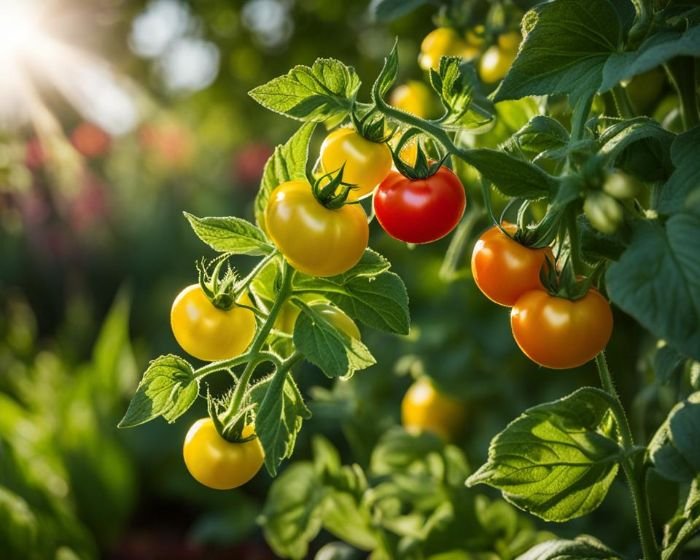
After flowering, the ovary behind the blossom should begin swelling within a few days under good conditions. The petals dry and fall away, and the tiny green fruit keeps growing. University of Maryland Extension notes that poor fruit set often follows heat, dry conditions, or cool nights at bloom. If flowers drop cleanly and the cluster stays bare, the issue happened during pollination. If pea-sized fruit appears and then stops enlarging, the issue came after set.
The most common reason tomatoes stall between flowering and fruit enlargement is not lack of blossom numbers. It is stress layered onto the plant at the exact point where it shifts energy from flowers into cell expansion. A cluster that fails here does not just lose fruit. It delays the timing of the next useful harvest wave.
What Slowed Fruit Enlargement Looks Like
Normal enlargement is visible. Fruit moves from tiny set to marble size, then into a fast sizing phase where the shoulders begin filling out. In warm stable weather, a fruit that stays tiny for more than about seven to ten days after set deserves a closer look. If the cluster remains small, the leaves lose surface area, or the plant keeps dropping flowers above it, the enlargement stage is lagging.
That lag matters because it compresses the rest of the schedule. Slow enlargement keeps fruit exposed on the plant longer, delays ripening, and holds the next stage back with it.
What Protects Yield In This Stage
Penn State Extension recommends a constant supply of moisture during the growing season and warns that excess water after fruit set can increase cracking. That is the key balance. Fruit enlargement needs continuity, not feast-or-famine irrigation. A light organic cover helps because mulching to conserve moisture softens the dry-wet swings that crack fruit and interrupt calcium movement into fast-growing tissue.
If fruit is setting but not sizing well, check three things before you blame fertilizer: has the plant kept enough healthy leaf area, has moisture stayed even, and has the bed avoided a temperature swing that slowed growth right after bloom? Fast sizing is not the goal. Even sizing is. The yield chain is direct here: poor leaf support or hard moisture swings slow enlargement, slow enlargement delays ripening, and delayed ripening exposes more fruit to cracking, pests, and weather loss.
When this phase keeps turning erratic, a simple habit of soil moisture monitoring does more than another bottle of bloom booster.
Ripening And Harvest Stage – Read Mature Green, Breaker, And Full Color Correctly
Ripening is the last visible stage, but it starts before the fruit looks ripe from across the garden. Penn State Extension’s breaker-stage tomato harvest explanation notes that once the first blush appears, ripening has started and the fruit will continue coloring off the vine.
What Healthy Ripening Looks Like
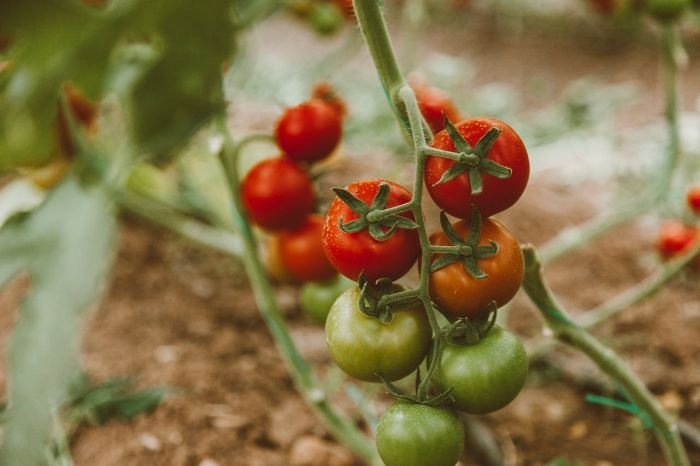
Healthy ripening follows a clean sequence. Fruit reaches full size, the shoulders fill out, the first blush appears, color spreads, and the fruit softens slightly as aroma builds at the stem scar. When trusses are moving on schedule, one cluster begins coloring as the next one is still sizing. That overlap is normal in tomatoes and it is one reason they are more complex to read than many vegetables that finish in one cleaner harvest phase.
What Delays Ripening
Delayed ripening looks different from delayed fruit set. The fruit is already full size, yet it stays hard and green through a stretch when color should be moving. Cool weather can slow pigment development. A thinned canopy can leave fruit overheated and uneven. A plant that keeps carrying more fruit than its leaf area can support will also slow the finish on later clusters. The yield effect is indirect but real: fruit that stays on the plant longer sits through more cracking pressure, bird damage, and disease exposure.
| Harvest checkpoint | What you see | Best use |
|---|---|---|
| Mature green | Fruit is full size, glossy, and the shoulders have filled out | Hold a little longer unless frost or damage risk is rising fast |
| Breaker | First blush shows at the blossom end or shoulder | Best balance of flavor retention and loss prevention |
| Fully ripe | Full color, slight give, strong tomato aroma at the stem scar | Pick now for fresh eating and keep the next truss moving |
When To Leave Fruit On The Vine And When To Pick Early
Leave fruit on the vine when it is still developing normally and weather risk is low. Pick at breaker stage when the fruit is already committed to ripening and rain, birds, cracking pressure, or rough handling risk is rising. Pick mature green only when frost, disease collapse, or sudden plant decline is likely to cost the crop if you wait. Delayed harvest stops being a quality gain once the extra days on the vine create more loss risk than flavor gain.
The yield angle here is loss control. Waiting for full color through heavy rain, birds, cracking pressure, or a cold snap is not patient gardening. It is gambling with finished fruit and reducing the odds that later trusses finish cleanly.
Conclusion
Tomato plant growth stages make more sense when you read them as checkpoints, not as a loose season-long progression. Seedlings should stay compact. Transplants should restart within a week. Vegetative growth should build structure and then get out of the way of bloom. Flowers should hand off to fruit set. Fruit should enlarge under even moisture. Ripening should move from full-size green to breaker to harvest before weather losses take over.
Let the plant’s current stage guide the next correction. If seedlings stretch, fix light before feeding. If transplants sit still beyond a week, check root contact and cold nights. If flowers drop, check temperature and moisture before adding fertilizer. If fruit sets and stays small, check leaf support and irrigation swings. If full-size fruit faces rain, pick at breaker. Track four dates this season – transplant, first flower, first set, first breaker – and the stage that stretches will tell you where yield was lost. When the sequence is working, stems stay firm, trusses swell in order, and ripe fruit carries that dense tomato smell at the stem scar the moment you twist it free.
FAQ
How long does it take tomatoes to grow from seed?
Most garden tomatoes take about ninety-five to one hundred forty days from sowing to the first ripe fruit. That total includes about five to ten days for germination, six to eight weeks for seedling production, and roughly sixty to seventy-five days after transplant for many common varieties. Cherry tomatoes lean earlier. Large late slicers lean later.
What stage comes after flowering in tomatoes?
Fruit set comes next. The flower dries back and the ovary behind it begins swelling into a tiny green tomato. After that comes fruit enlargement, where the tomato reaches full size before it starts ripening.
How long after flowering do tomatoes set fruit?
Under good conditions, the ovary usually starts swelling within several days after a flower is successfully pollinated. The exact timing shifts with variety and weather, but you should not have to wait weeks to know whether set happened. If the flower dries and drops with no swelling behind it, fruit set failed.
Why is my tomato plant growing leaves but no flowers?
Too much nitrogen, not enough mature canopy structure after transplant stress, or temperatures outside the productive range can all delay flowering. A plant with lush dark leaves and very little bloom is commonly being pushed too hard vegetatively. Check feeding first, then check whether cool nights or a recent transplant stall held the plant back.
Why is my tomato plant flowering but fruit is not sizing?
The break point is whether fruit actually set. If blossoms drop cleanly, the problem happened at pollination. If tiny fruits formed and then stopped enlarging, the problem came after set and usually points to moisture swings, heat stress, or reduced leaf support for the cluster. That distinction tells you where to correct the season.
What should a healthy transplanted tomato look like after one week?
By the end of the first week, the plant should be upright in the morning, still carry normal green color, and show some sign of renewed top growth. One rough afternoon right after planting is normal. A full week of dull leaves, no tip movement, and bud yellowing is not.
Can tomatoes ripen off the vine at mature green or only at breaker stage?
Breaker stage is the safer and more reliable pick point for full eating quality because ripening has clearly started. Mature green fruit can finish indoors if it is fully developed, though results are less predictable and flavor is more variable. If weather damage is closing in, mature green is still better than losing the fruit outright.
Why are my tomatoes staying green too long?
First check whether the fruit is truly mature green or still sizing. Full-size fruit that stays hard and green through cool weather is usually dealing with temperature-limited ripening, not failed fruit set. Heavy crop load, reduced leaf support, and a recent stress event can slow the finish as well. Small hard fruit is still enlarging, while full-size hard fruit is waiting to ripen.
How can I speed tomato growth without hurting yield?
Do not try to force growth late with more nitrogen. The safer route is earlier warmth, clean transplant recovery, strong support, and even moisture through flowering and fruit enlargement. In other words, remove the delays instead of trying to overdrive the plant after it has already lost time.