

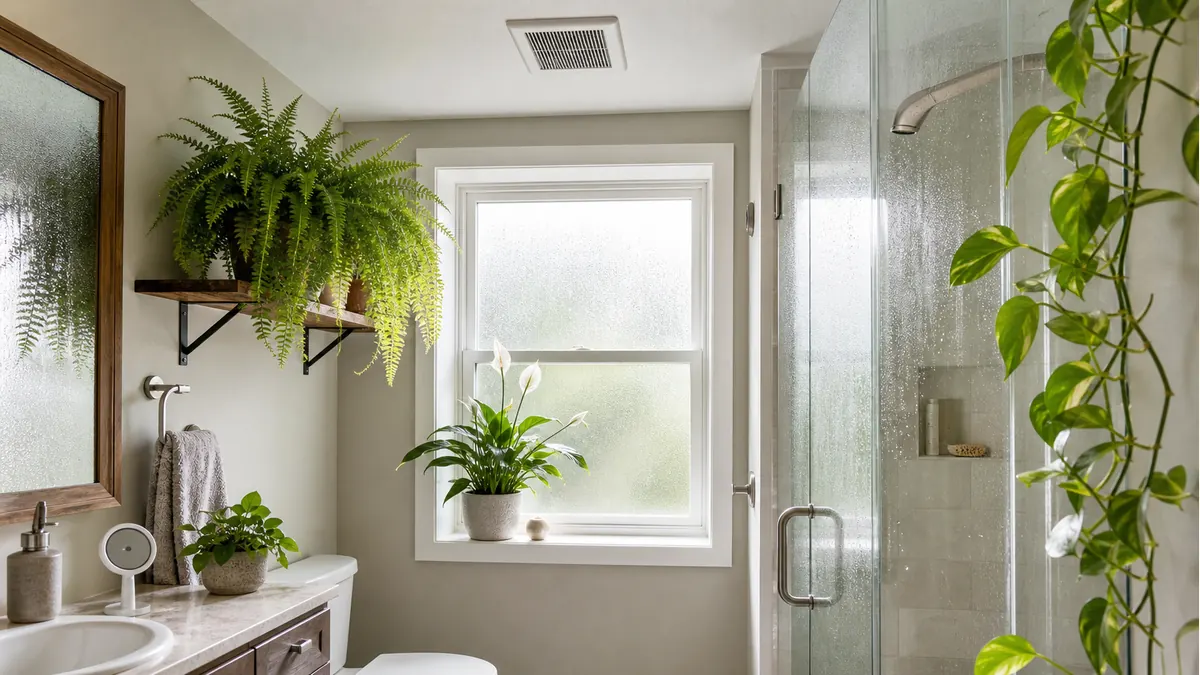
Bathroom plants that absorb moisture use small amounts of water vapor, but they cannot replace ventilation, a working exhaust fan, or a dehumidifier. A fern on a shelf may look right in steamy air, and wet shower glass may clear a little faster once the fan is running. The plant is not doing the building work. Its main job is to tolerate the room you create after showers, towels, splashes, and daily temperature swings.
The better plan is honest: choose plants that enjoy higher humidity, then reduce excess moisture with airflow, heat, drying time, and repairs. That gives you the green bathroom look without relying on a leaf to solve condensation, mold risk, or odor.
Bathroom Moisture Reality Check
Plants can tolerate humidity
Fern, pothos, peace lily, spider plant, and bird’s nest fern can suit bright, humid bathrooms.
Plants cannot dry the room
Leaves use tiny amounts of vapor compared with shower steam, wet towels, and damp surfaces.
Moisture control is mechanical
Run the fan, move air, dry surfaces, fix leaks, and use a dehumidifier when humidity stays high.
Key Takeaways
- Choose humidity-tolerant plants for decor, not dehumidification.
- Run ventilation after showers until mirrors and glass clear.
- Avoid placing pots where splash keeps soil wet.
- Check soil weekly for gnats, sour smell, or rot.
- Fix leaks and persistent condensation before adding plants.
Table of Contents
Bathroom Plants That Absorb Moisture Cannot Dehumidify a Room
Plants move water through roots, stems, and leaves. Some leaves can take in small amounts of water vapor through stomata or surface tissues, and many tropical plants respond well to humid air. That process is real. The scale is the problem.
A hot shower can leave water on glass, tile, mirrors, towels, grout, ceiling paint, and trim. A small houseplant does not remove that water load before it condenses or soaks into porous materials. The EPA’s home mold and moisture guide puts the control point in moisture removal and source repair, not decorative absorption.
The claim that one plant removes a dramatic percentage of airborne mold often comes from lab-style or viral summaries, not a normal bathroom with a shower, door, towels, fan, and mixed airflow. Mold risk drops when surfaces dry and leaks stop. A peace lily on the counter does not clean a damp wall cavity, a wet bath mat, or a ceiling with repeated condensation.
Room-scale plant claims need the same caution as plant air-cleaning claims. A PubMed-indexed review of potted-plant VOC studies found that chamber results do not translate cleanly into meaningful indoor air cleaning under normal building ventilation. Bathrooms have the same scale problem: a leaf can participate in moisture exchange, then the room still needs air exchange.
Humidity Tolerance Is Not the Same as Humidity Removal
Humidity tolerance means a plant can live with moist air around its leaves. Humidity removal means the plant takes enough water out of the room to change the room’s moisture level. Those are different claims.
Most houseplants take up water through roots, then release water vapor from leaves during transpiration. In a dry room, that can slightly raise local humidity near the plant. In a humid bathroom, the plant may lose water more slowly because the air is already moist. A plant that loves humidity is often better at surviving the bathroom than drying it.
Stomata respond to light, water status, temperature, and plant stress. In low light after a shower, many plants slow growth and water movement. A bathroom may feel tropical for 20 minutes and then sit dim and cool for the rest of the day. That on-off pattern favors tough, adaptable plants, not delicate claims about moisture engineering.
Choose Plants That Tolerate Bathroom Conditions
A good bathroom plant tolerates warm humidity, changing light, occasional drafts, and brief moisture spikes. It also has to fit the room. A plant that brushes the shower curtain, sits on a wet windowsill, or blocks a cabinet becomes harder to keep clean and dry.
Use the plant list as a comfort match, not a moisture solution. The indoor plant air quality discussion is the closest caution here: plants can be useful living decor without carrying room-cleaning promises.
| Plant | Best bathroom fit | Light needs | Watch-out |
|---|---|---|---|
| Boston fern | Bright humid bathroom with shelf space | Bright indirect light | Fronds drop when soil dries or airflow is poor |
| Bird’s nest fern | Compact humid shelf or counter | Medium to bright indirect light | Crown rot if water sits in the center |
| Pothos | Hanging or trailing spot away from splash | Low to bright indirect light | Toxic to pets if chewed |
| Peace lily | Bright bathroom counter or floor corner | Medium indirect light | Droops when dry; toxic to pets |
| Spider plant | Window shelf with airflow | Medium to bright indirect light | Brown tips in mineral-heavy water |
| Cast iron plant | Lower-light bathroom with drier soil | Low to medium indirect light | Slow growth; avoid soggy mix |
The North Carolina Extension Gardener Plant Toolbox lists Boston fern as a plant that prefers high humidity and bright indirect light, which explains why it looks natural in bathrooms with windows. The same tool lists peace lily as a common indoor plant with toxicity concerns, which matters when the pot sits at pet or child height.
Match the Plant to the Bathroom’s Light
Light decides whether a bathroom plant grows or slowly declines. Humidity cannot make up for darkness. A fern in a bright window can push fresh fronds. The same fern in a windowless powder room may yellow, thin out, and stay wet at the roots.
Bright bathrooms with an east or filtered south window can handle Boston fern, bird’s nest fern, peace lily, pothos, spider plant, and many philodendrons. Keep leaves out of direct hot sun through glass, especially if the room heats up after showers.
Dim bathrooms need tougher choices. Cast iron plant, pothos, snake plant, and some dracaenas may hold longer in lower light, though growth slows and watering must be reduced. A low-light label does not mean no-light survival.
No-window bathrooms need a real grow light or plant rotation. Leaving a plant in a sealed, dark, humid room is a short decline path: wet soil, weak stems, pale new growth, and pests. If a future no-window bathroom guide is not yet live, use this simple rule for now: if you cannot read comfortably without turning on a light, the plant needs artificial light on a timer.
General plant matching still helps once the moisture myth is removed. Use best indoor plant choices for light, space, and care tolerance, then apply the extra bathroom filter: splash, airflow, heat, and safe placement.
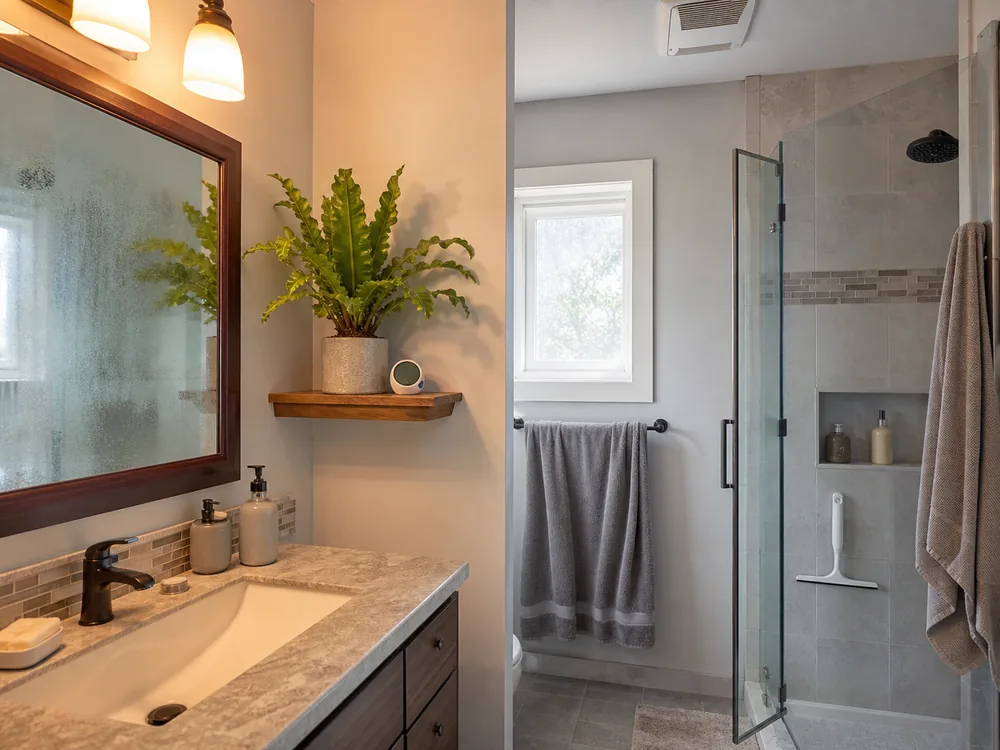
What Actually Reduces Condensation and Mold Risk
Condensation forms when humid air hits a cooler surface. Mirrors fog, glass beads with water, and ceiling paint feels slightly tacky. Those signs call for air movement and drying time, not another pot.
Run the exhaust fan during showers and after showers. ENERGY STAR’s ventilation fan guidance centers bathroom fans on moisture removal, odor removal, and indoor air quality. If the mirror stays wet for a long time after the fan runs, the fan may be weak, clogged, poorly ducted, or used for too short a period.
Open the door after bathing when privacy allows. Crack a window if outdoor conditions help. Squeegee shower glass, spread towels so they dry, and remove wet bath mats from the floor. Heat can help surfaces dry faster in cool bathrooms. A small dehumidifier can help in bathrooms that stay damp between showers, especially in basements or poorly ventilated rentals.
Leaks outrank all plant choices. A dripping supply line, loose toilet seal, failing grout, or wet wall cavity can keep feeding mold risk after the room air feels normal. Brown staining, soft trim, peeling paint, or a musty smell after cleaning needs repair, not a plant with a stronger reputation.
Signs the Bathroom Is Too Wet for the Plant and the Room
A bathroom can be humid and still healthy if surfaces dry between uses. Trouble starts when the room never resets. Persistent moisture shows up in both the building and the pot.
Watch the plant first. Soil that stays wet for a week, a sour pot smell, yellow lower leaves, soft stems, fungus gnats, algae on the soil surface, or white fuzz on the pot rim all point to too much moisture around roots. Edema can leave corky blisters or water-soaked marks when roots take up more water than leaves can release.
Watch the room at the same time. Condensation that remains on windows for hours, damp towels that smell musty, dark spotting on caulk, peeling paint above the shower, or swollen baseboards mean the bathroom has a drying problem. The EPA’s moisture guidance treats visible mold and repeated dampness as source-control problems. Plants should come after the room dries reliably.
Adjust the pot before blaming the plant. Move it away from splash, empty the saucer, use a pot with drainage, and let the top layer of mix dry before watering again. The houseplant care routine gives the broader pattern: light sets water use, drainage protects roots, and pests often follow stressed plants.
Safe Placement Around Showers, Toiletries, Pets, and Electricity
Bathrooms add hazards that living rooms do not. A plant can fall from a narrow shelf, get sprayed with cleaner, drip on toiletries, or sit too close to an outlet. Safe placement matters more than a lush photo.
Keep pots out of direct shower spray. Repeated splashing keeps potting mix wet and can leave mineral marks on leaves. Avoid placing plants directly above toothbrushes, towels, cosmetics, razors, or open medicine storage. Soil, insects, and drainage water do not belong over hygiene items.
Use stable shelves and secure hanging hardware. Damp walls, hollow anchors, and heavy ceramic pots are a bad combination. If a grow light is needed, use equipment rated for the location, keep cords away from sinks and tubs, and avoid improvised extension cords near water.
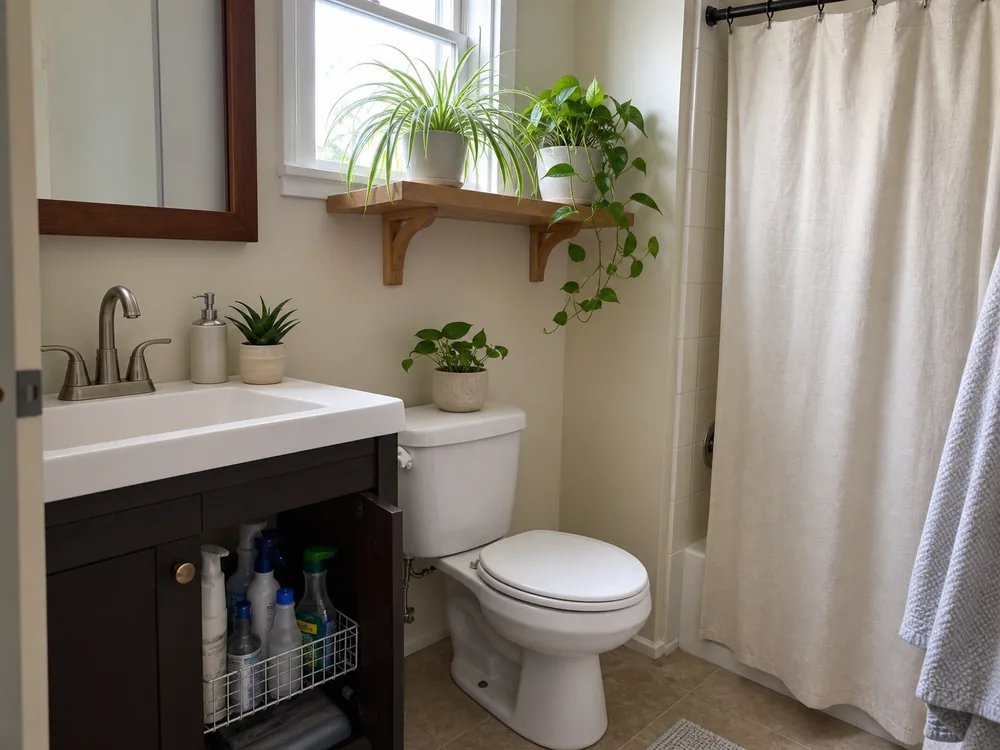
Pet safety is not optional in a small room. Pothos, peace lily, philodendron, dieffenbachia, and many common bathroom choices can irritate a pet’s mouth or stomach. The ASPCA’s toxic and non-toxic plant database should be checked by exact plant name. For cat homes, start with cat safe house plants and keep tempting trailing plants out of reach.
A Practical Bathroom Plan: Plant Plus Moisture Control
Start with the room, then pick the plant. Does the mirror clear within a reasonable time after the fan runs? Do towels dry before the next shower? Does the room smell clean after basic cleaning and airing? Those answers matter more than the plant name.
| Bathroom condition | Plant choice | Moisture action | Skip for now if |
|---|---|---|---|
| Bright window, brief steam | Boston fern, bird’s nest fern, spider plant | Run fan and dry towels separately | Soil stays wet all week |
| Medium light, small counter | Peace lily, pothos, compact fern | Keep pot above splash zone with drainage | Pets can chew leaves |
| Low light, cooler room | Cast iron plant, pothos, snake plant | Water less and increase airflow | New growth is pale or stretched |
| No window | Plant rotation or grow light | Use a timer and safe cord routing | No safe outlet or mounting point exists |
| Persistent condensation | Delay new plants | Fix ventilation, leaks, or dehumidification first | Paint, caulk, or trim stays damp |
Ask one practical question before buying: what will dry this room after the next shower? If the answer is only “the plant,” the plan is too weak. If the answer is fan, airflow, surface drying, leak repair, and then a humidity-tolerant plant, the bathroom has a better chance of staying both green and dry.
Odor claims deserve the same correction. Plants do not absorb toilet smell in any useful bathroom-maintenance sense. Odor needs cleaning, a working trap, plumbing repair when needed, and ventilation. A plant can make the room look fresher; it should not hide a sanitation or plumbing problem.
Conclusion
Bathroom plants that absorb moisture are best treated as humidity-tolerant decor, not moisture-control equipment. Choose fern, pothos, peace lily, spider plant, or cast iron plant only after the room has enough light, drainage, airflow, and a dry place for the pot.
If glass, mirrors, towels, and trim dry after each shower, the plant can live in the bathroom without carrying a false job. The success signal is simple: firm leaves, soil that dries on schedule, clear glass, and no sour smell when you open the door.