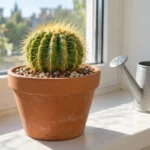


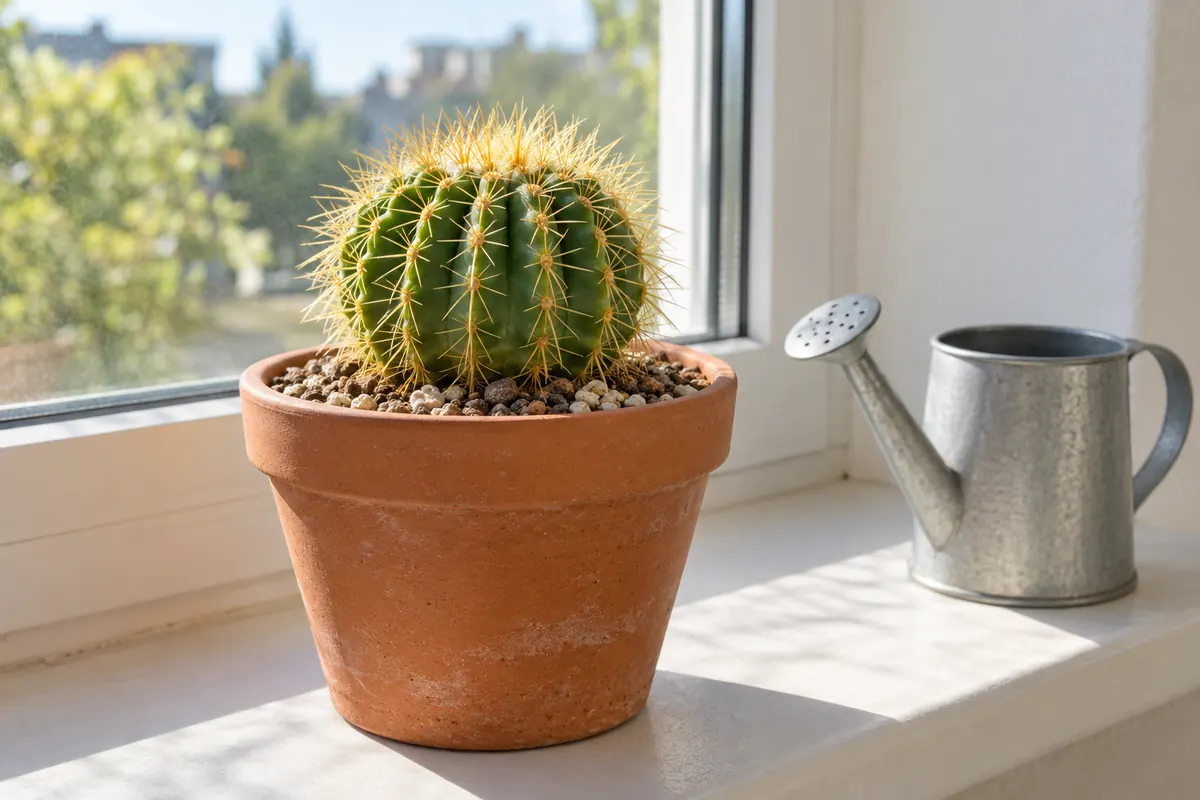
How often to water cactus plants depends on their type, the moisture around their roots, and how quickly the pot dries. For an established desert cactus, let the growing mix dry completely between thorough waterings. For a forest cactus such as a Christmas or Thanksgiving cactus, allow some drying without leaving the roots chronically dry. Both need a container that lets excess water escape.
Check the pot before reacting to the stem. A cactus can wrinkle when it is short of water, and damaged roots in wet mix can also leave the plant unable to take up moisture. Another drink is the wrong first response to a heavy, soggy pot. Identify the plant, feel below the surface where practical, and inspect the drainage. Those checks help you decide whether to water today, wait, or investigate a root problem.
Check before pouring
- Desert cactus, mix dry throughout: assess season and growth, then water thoroughly when needed and let it drain.
- Holiday cactus, upper mix drying: check deeper moisture and water before prolonged drought, keeping the roots aerated.
- Mix still wet: wait. Empty trapped water and check drainage.
- Wet mix with wilting or soft tissue: stop automatic watering and inspect the plant and roots.
A recurring reminder can prompt a moisture check. It should not force water into a pot that is still wet.
Key Takeaways
- Identify desert or forest cactus before choosing a watering routine.
- Check below the dry surface and compare the pot’s weight.
- Water established desert cacti thoroughly after the mix dries completely.
- Drain excess water and empty decorative outer pots after watering.
- Inspect wet roots before treating a wrinkled cactus as thirsty.
Table of Contents
How Often to Water Cactus Depends on Its Growing Habit
Cacti store water in fleshy tissues, but the family includes plants from different habitats. Many familiar spiny, ribbed indoor cacti are adapted to drier environments. Christmas and Thanksgiving cacti have flattened jointed stems and forest origins. A shared family name does not give those plants identical moisture requirements.
For desert-adapted indoor cacti, University of Minnesota Extension’s dry-down and thorough watering guidance uses complete drying between waterings. In its low-light winter context, watering is reduced to what prevents excessive shrinking and withering. That applies to the arid-growing plants under discussion, not every cactus sold as a houseplant.
Identify an unfamiliar plant from its label before borrowing a routine. A round spiny cactus, a flat holiday cactus, and an aloe can sit on the same store shelf. Aloe is a succulent from a different plant family. Grouping them together for display does not establish that they all need water on the same day.
Keep plants with different moisture needs in separate pots when you are learning their care. That lets each root zone dry at its own rate. A mixed dish containing a forest cactus and dry-loving plants leaves you trying to satisfy incompatible conditions with one watering.
Check the Root Zone Below the Dry Surface
The first dry layer is only part of the pot. A large container can have dusty mix at the top and damp mix farther down. Decorative gravel can also hide what is happening below it. Check exposed growing mix, not the surface stones, before deciding that the whole root system is dry.
Where the pot permits safe access, feel below the surface with a finger kept clear of spines. A light touch should distinguish crumbly dry mix from material that feels cool and damp. Avoid forcing fingers or a probe through dense roots. For an inaccessible spiny plant, use the pot’s weight and a carefully placed moisture probe as additional clues.
A watered pot is heavier than the same pot after drying. Compare its weight after water has drained with its weight before a later check. Oregon State University Extension includes pot weight and finger checks in its houseplant watering advice. Familiarity with one pot is more useful than comparing the weight of unrelated containers.
A moisture meter gives an approximate reading at its contact point. Drying around one shallow probe does not describe every root in a deep pot. University of Arizona’s indoor plant guidance emphasizes the mix, moisture checks, and drainage. Use the reading alongside your observations without assuming that one number is a universal cactus threshold.
| Finding | Next check | Watering decision |
|---|---|---|
| Dry top, heavy pot | Deeper moisture and trapped water | Wait if the root zone remains wet |
| Desert cactus, light pot, dry mix throughout | Active growth or cool resting conditions | Water when needed; drain thoroughly |
| Holiday cactus, upper mix drying | Remaining root-zone moisture | Avoid both saturation and prolonged drought |
| Wet mix and wilted stems | Drainage, roots, and soft tissue | Stop routine watering and investigate |
Use a houseplant moisture-check routine to organize observations across several pots. Record the cactus type and what you found before watering. The record should help you see changes in drying, not turn a previous interval into a permanent rule.
Wet Desert Cactus Roots Thoroughly and Let Them Drain
For an established desert cactus ready for water, wet the growing mix and allow excess water to leave through the holes. Take the inner pot to a sink or another place where drainage can escape. Keep the pour controlled so it reaches the mix without splashing the whole display.
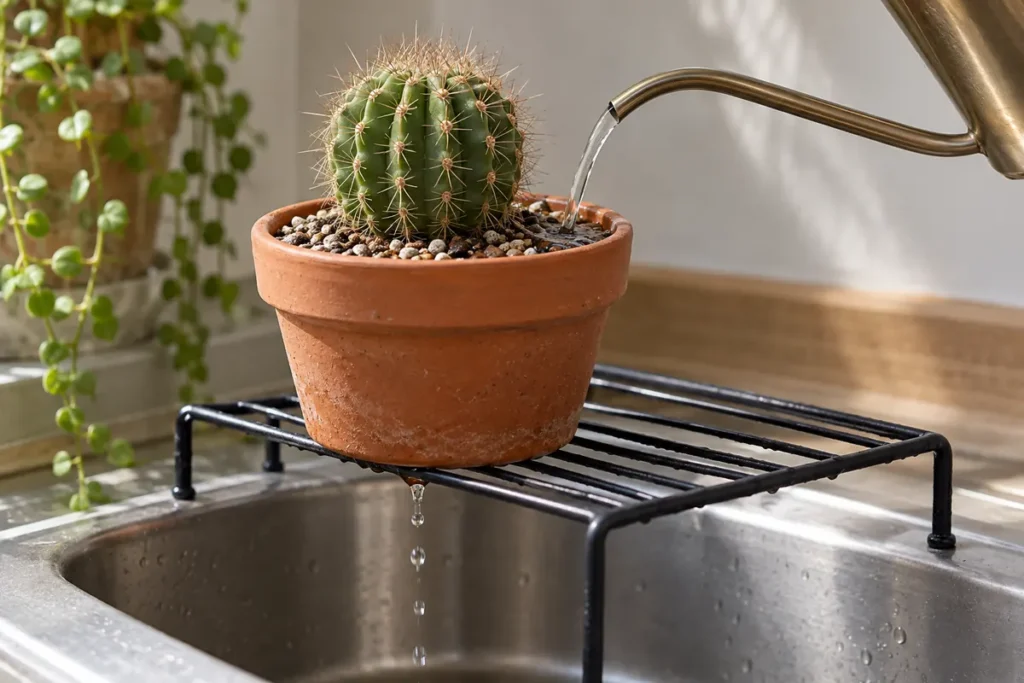
Repeated small splashes wet only parts of the root zone and make it harder to judge the whole pot. Deborah L. Brown’s Minnesota Extension guidance calls for thorough watering and warns that repeated shallow sprinkling can distort growth. After watering, discard the drainage water rather than returning the pot to a full saucer.
A decorative outer pot can conceal standing water. Lift the nursery pot out, drain it, and inspect the outer container before replacing it. If the inner pot’s holes are blocked, clear the obstruction safely or use a suitable drained container. Gravel under the mix cannot create an exit through a solid base.
Once watering is complete, begin the next dry-down. Do not add another splash simply because the surface looks pale the following day. Feel and compare the whole pot as conditions permit. A healthy root zone needs both access to water when appropriate and a way for excess water to leave.
Light, Heat, and Seasonal Growth Change the Drying Interval
More light and active growth can increase water use. Less light, cooler conditions, and reduced growth usually lengthen the interval for many desert cacti. A plant on a sunny summer sill may dry differently after it moves to a cool winter room. Check again after moving it rather than carrying the old interval unchanged.
A heated room is not automatically a summer growing environment. Short winter days can still limit growth even when the air feels warm. Judge the plant, the light, and the moisture together. In low-light resting conditions, use the species-appropriate reduced watering needed to prevent severe shrinkage without leaving the roots continuously wet.
Outdoor containers add rain, wind, and hotter sun to the calculation. University of Arizona landscape guidance includes approximate summer intervals for its local desert conditions. Those estimates do not prescribe watering for an indoor cactus in a northern state. Check whether rain has already wetted the pot and whether a sheltered container is drying at the same rate as an exposed one.
Adjust gradually after a move outdoors and protect a plant from sudden excessive sun. More heat can dry a pot quickly, and unacclimated tissue can suffer sun damage at the same time. Watering cannot undo unsuitable light exposure. Keep placement and root-zone moisture as separate checks.
Holiday Cactus Roots Need Moisture Without Saturation
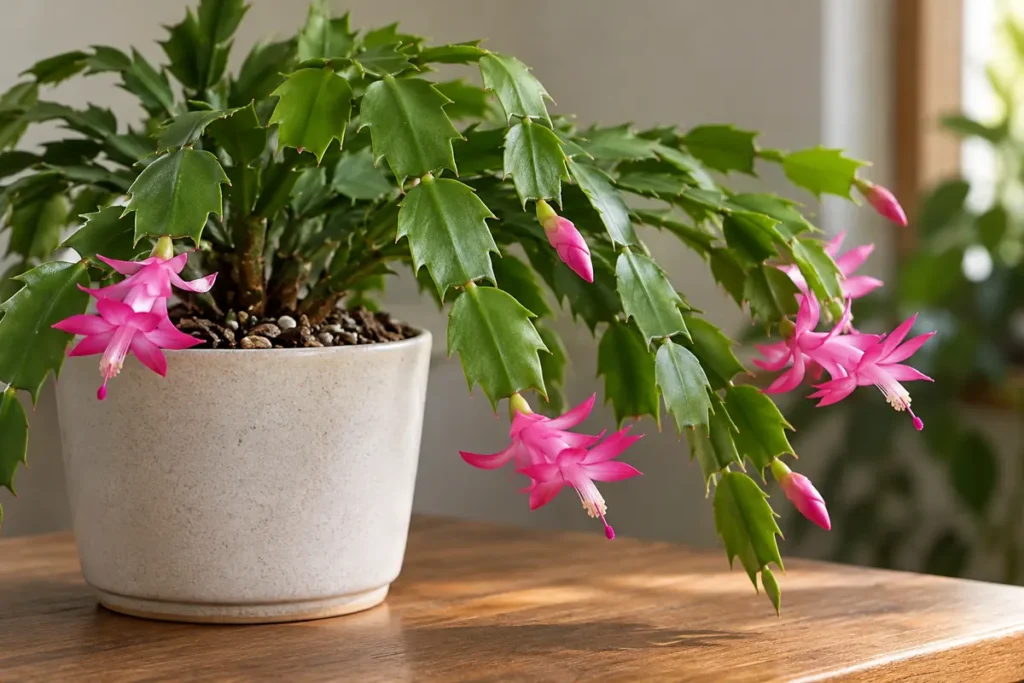
Christmas and Thanksgiving cacti grow as forest epiphytes in nature. Their flattened segments and arching branches look very different from a barrel cactus. University of Minnesota’s holiday cactus moisture and drainage guidance describes comparatively moist growing conditions for much of the year, with well-drained roots.
Let the mix begin to dry between waterings without imposing the prolonged dry treatment used for a resting desert cactus. Check the root zone, water when appropriate, and drain the pot. University of Wisconsin’s holiday cactus advice also ties watering to the plant’s forest habit and growing medium. Fast drainage is part of that habitat; permanently soggy soil is not.
Water use can decrease after flowering and during a rest period. Continue checking the pot. A fixed winter instruction to withhold every drop can leave a forest cactus badly shriveled. Equally, adding water to an already wet pot can damage roots and produce wilted segments.
Flowering has additional light and temperature requirements. When a healthy plant has no buds, assess its Christmas cactus flowering conditions separately from today’s moisture check. Extra watering is not a substitute for the seasonal conditions that trigger buds.
Separate Dry Shrinking from Wet-Root Stress
Wrinkling alone cannot tell you which way to change watering. Shrinking can occur with both too little water and excessive wetness, as the University of Arizona’s holiday cactus advice describes. Damaged roots can fail to supply the stems even when water remains in the pot. Check the medium before adding more.
If the mix is dry throughout and the tissue remains firm, consider the plant’s type and season. An actively growing, dry plant may need thorough watering. A resting desert cactus may need much less frequent intervention. Observe its condition after the appropriate watering without repeatedly soaking it to chase an immediate change in appearance.
If the pot is wet and heavy, stop routine watering. Remove trapped water and inspect drainage. Soft, darkened tissue or deteriorating roots require closer assessment; they do not prove one particular pathogen from a photograph. General signs of overwatering are prompts to investigate the root environment, not a guarantee that withholding water alone will repair the plant.
Seek help from a local extension office or experienced cactus grower if deterioration continues. Provide the plant label, a photograph, recent watering history, and what the growing mix feels like. A specific diagnosis is more useful than buying a treatment for every plant that appears wrinkled. No watering change can guarantee recovery of extensively damaged tissue.
Pot Size, Growing Mix, and Recent Root Injury Change Care
A large mass of growing mix can remain wet longer than the roots need. A small pot in warm, moving air may dry rapidly. Glazing, porous clay, surface coverings, and the mix itself also change water loss. Choose a container with suitable size and drainage before trying to solve every problem by changing the watering day.
Inspect drainage each time you notice unusually slow drying. The problem may be a blocked opening, standing water in a sleeve, or a dense mix. A single shallow splash avoids none of those causes. If repotting is needed, choose a mix and pot appropriate to the named cactus, and handle roots and spines safely.
A newly uprooted landscape cactus or a cutting with an unhealed wound is a separate case from an established potted plant. University of Arizona’s cactus transplant guidance includes delayed watering after root injury. Follow a species-appropriate transplant or propagation method; do not transfer the established-plant soak directly to freshly injured roots.
Keep a brief log of the checks that change care: moved location, cooler weather, rain, a different pot, fresh growth, or wet-root symptoms. A weekly reminder can be convenient. Check moisture before deciding whether to water. The purpose of the reminder is to look at the plant and its roots’ conditions before deciding.
Conclusion
Water according to cactus type and root-zone moisture. Let established desert cacti dry between thorough waterings, keep holiday cacti from prolonged drought, and drain both properly. When a cactus looks thirsty in wet mix, inspect the roots and container first. Season and placement change the interval, so keep checking as the growing conditions change.