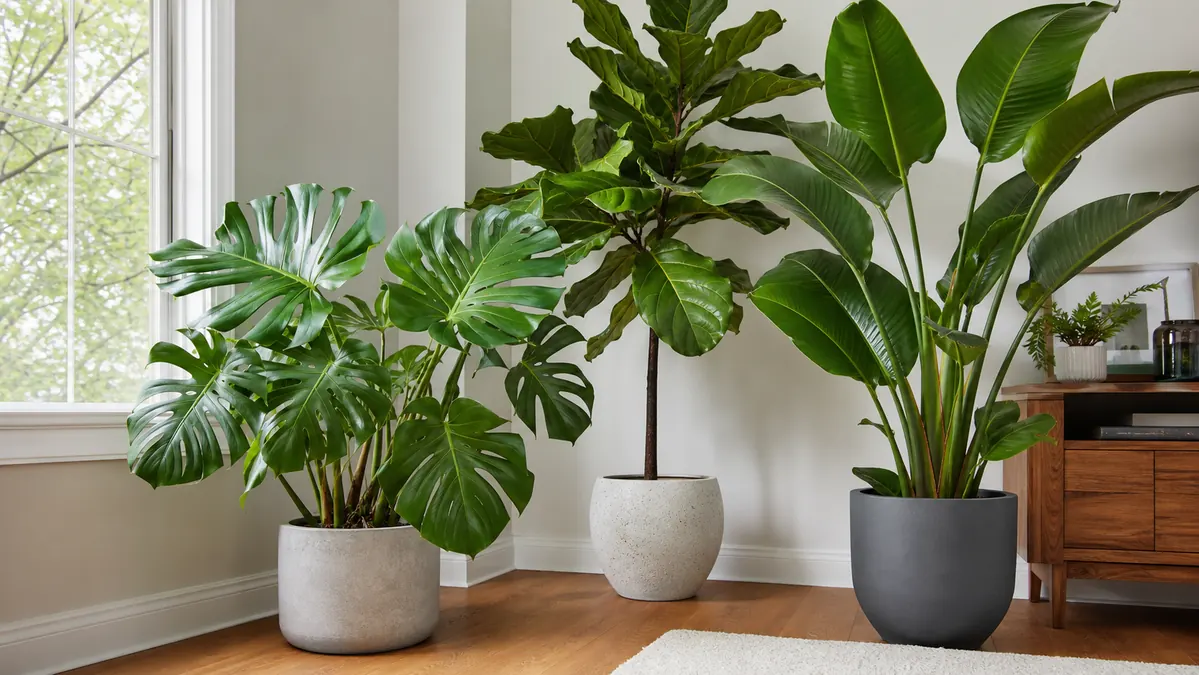
Large leaf house plants create a strong visual focal point, but their leaves stay large only when light, root space, humidity, and support are adequate. A plant can arrive with dramatic foliage and then make smaller, thinner leaves indoors if the room cannot support the next flush of growth. The leaf you already own will not enlarge much after care improves; the new leaves tell the truth about the conditions.
The best large-leaf choices are not all giant floor plants. Monstera, bird of paradise, fiddle leaf fig, rubber plant, philodendron, alocasia, anthurium, dieffenbachia, and cast iron plant all create bold foliage in different ways. Anthurium stays compact with broad leaves. Monstera climbs and needs support. Bird of paradise spreads into traffic space. Choose by leaf scale, mature footprint, and the distance from the window.
Large Leaf House Plants: Compare Leaf Scale, Light, and Footprint
Biggest leaf impact
Monstera, bird of paradise, fiddle leaf fig, and elephant ear need bright indirect light and enough floor space.
Compact bold foliage
Anthurium, alocasia, dieffenbachia, and some philodendrons give large leaves without filling the whole room.
Lower-light tolerance
Cast iron plant and some rubber plants handle less light, with slower growth and less dramatic new leaf size.
Support-driven leaves
Monstera and climbing philodendrons often make larger mature leaves when they climb with good light and root room.
Key Takeaways
- Large leaves and large plant size are different selection filters.
- New leaves shrink when light, roots, or support are inadequate.
- Climbing aroids need support if you want mature, larger foliage.
- Humidity and stable watering protect leaf edges and new unfurling leaves.
- Pet safety and pot stability matter more as leaf size and plant weight increase.
Table of Contents
Big Leaves Do Not Always Mean a Big Plant
Leaf size is the size of the blade. Footprint is the space the whole plant occupies. Those two measurements can be very different. An anthurium can have broad, glossy leaves in a small pot. A bird of paradise can have fewer leaves and still need a wide floor corner because each leaf rises on a long stalk.
Monstera shows the difference clearly. A young plant may sit on a table with modest leaves. In brighter light, with roots and support, it can produce larger split leaves and spread several feet across. The plant is chosen for leaf drama, then the room has to absorb the expanding stems, aerial roots, and leaning growth.
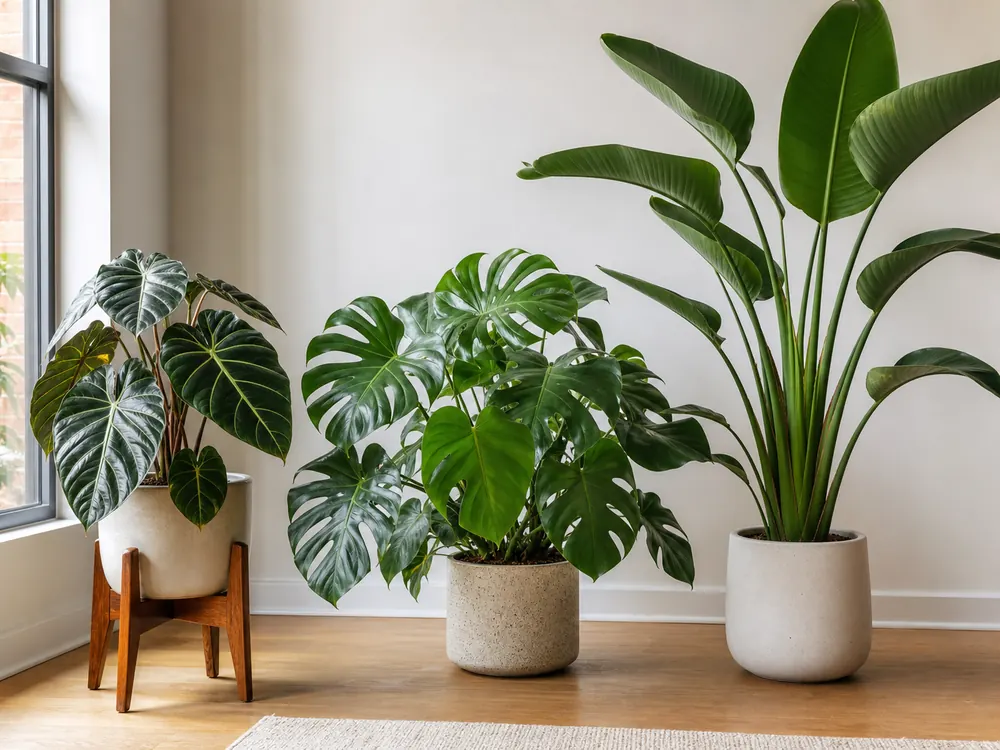
Large foliage also changes cleaning and traffic needs. A broad leaf catches dust, bumps into chairs, and tears when people brush past it. A plant that looks perfect in an empty corner may become frustrating near a doorway, desk chair, or play area. Measure the room where the plant will live, not the empty nursery pot.
If your real goal is a tall floor statement, that broader choice belongs with mature height, canopy width, and floor clearance. Leaf scale is a narrower decision: which plants give oversized foliage, how those leaves stay large, and what room constraints protect that foliage over time.
Choose by Light Level and Distance From the Window
Large leaves need energy. A plant can tolerate lower light and still reduce leaf size, slow new growth, or lose strong shape. Existing leaves may remain large for months, which can hide the problem. The next two or three leaves give the better signal.
Bright indirect light near a window is the best placement for monstera, fiddle leaf fig, bird of paradise, alocasia, anthurium, and many large philodendrons. Direct harsh sun can scorch tender leaves through hot glass. Dim rooms can make new leaves smaller, paler, thinner, or farther apart on the stem.
Distance from the window matters more than the room label. A plant six feet from a bright window may receive far less usable light than one beside the glass with a sheer curtain. The container sunlight guide helps translate exposure, distance, and reflected heat into real placement decisions.
Some bold foliage plants cope with moderate light better than others. Rubber plant, cast iron plant, and some dieffenbachia can hold a decent shape away from the brightest window. They still grow better with enough light to make firm new leaves. A plant sold as low light may survive; it may not keep producing the huge foliage that made you buy it.
| Light condition | Better choices | Leaf-size expectation | Placement warning |
|---|---|---|---|
| Bright indirect window | Monstera, bird of paradise, fiddle leaf fig, philodendron | Best chance for large new leaves | Keep leaves off hot glass |
| Medium interior light | Rubber plant, dieffenbachia, cast iron plant | Moderate growth, slower leaf expansion | Rotate if growth leans |
| Low natural light | Cast iron plant, some rubber plants | Survival more likely than dramatic growth | Expect slower replacement leaves |
| Artificial light only | Grow-light setup with compact specimens | Depends on fixture strength and distance | Room lighting is usually too weak |
Upright, Spreading, and Climbing Large-Leaf Forms
Large-leaf houseplants grow in three useful forms: upright, spreading, and climbing. Upright plants such as bird of paradise, rubber plant, fiddle leaf fig, and dieffenbachia use vertical space. They work well in corners, beside furniture, and near tall windows when the pot is stable.
Spreading plants use more horizontal space. Monstera can push leaves outward on long petioles. Alocasia and some philodendrons can create a wide leaf umbrella. These plants need breathing room around the pot, especially in rooms with chairs, kids, pets, or narrow paths.
Climbing forms behave differently once they have support. Monstera and many philodendrons can produce more mature leaves when they climb and receive good light. Unsupported vines may trail or sprawl with smaller juvenile leaves. The indoor vining plants guide goes deeper on poles, trellises, and trailing forms.
Philodendron selection deserves extra care because the genus includes compact, vining, self-heading, and tree-like forms. A philodendron plant profile places the group in a broad ornamental context, and the site’s philodendron varieties guide helps separate form before you buy a plant for leaf size alone.
Humidity, Watering, and Leaf Damage
Large leaves show damage loudly. Brown margins, torn edges, dry tips, dust, water spots, and mechanical bruising all stand out on oversized foliage. A small leaf can hide a bad week. A large leaf records it.
Humidity-sensitive plants such as alocasia, anthurium, calathea relatives, and some philodendrons may develop crispy edges in dry air. Bird of paradise and monstera tolerate average indoor humidity better, though new leaves can tear if they unfurl in very dry or drafty conditions. Keep plants away from heat vents, air conditioners, and tight corners with poor airflow.
Watering should match light and pot size. A large plant in bright light may dry faster than expected. A big decorative pot in a dim room can stay wet for too long. Roots need oxygen between waterings, and a heavy cachepot can hide wet soil near the bottom. The general houseplant care routine helps connect light, watering, repotting, and pest checks before each leaf mark becomes a separate problem.
Dust also reduces the look of large foliage. Wipe broad leaves gently with a damp cloth, supporting the underside with your hand. Avoid leaf-shine products that leave residue. Cleaning is not cosmetic only; it lets you see pests, damaged edges, and changes in new growth before the plant loses a whole leaf.
Large leaves usually do not repair neatly. A torn monstera or scorched bird of paradise leaf can keep working; the visible damage remains until a new leaf replaces the visual role.Support and Root Space That Preserve Large Foliage
Big foliage depends on root function and structure. A plant with cramped roots, weak support, or a top-heavy pot may keep old leaves and still produce smaller new ones. Repotting is not about making the plant huge overnight. It gives roots enough space, oxygen, and moisture balance to support the next leaves.
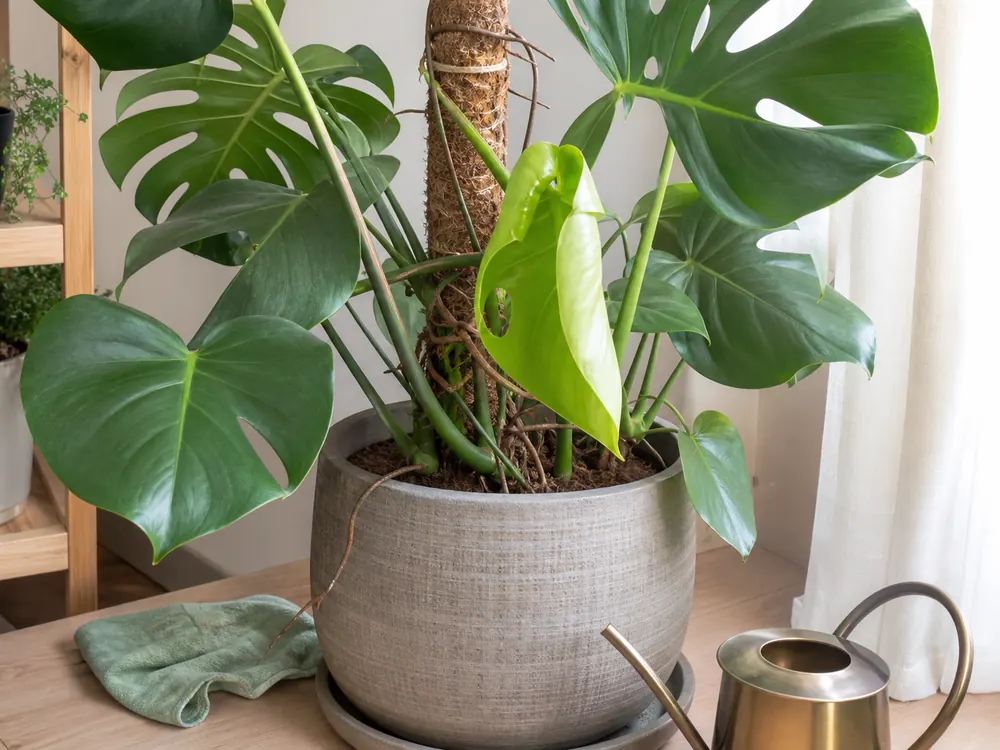
Climbing aroids often need a pole or board to mature indoors. A support gives stems something to attach to, keeps the plant from sprawling, and helps large leaves face the light. Tie stems loosely. Do not bind petioles or new leaf sheaths, since tight ties can scar or snap soft growth.
Pot stability is part of leaf care. A large bird of paradise, fiddle leaf fig, or mature monstera can become top-heavy. Use a pot with enough weight, a broad base, and drainage. Tall narrow planters look clean and may tip when a leaf mass leans toward the window. The pot drainage setup matters even more when a heavy plant is difficult to move after watering.
Repot only when the plant is actively growing or clearly root-bound. Signs include fast drying, roots circling the pot, stalled new growth, and a plant that lifts from the pot as one tight mass. Move up one pot size, refresh the mix, and keep the plant stable. Oversizing the pot can hold too much wet mix around roots and slow recovery.
Pet and Child Safety Around Oversized Foliage
Large leaves attract touching, chewing, and pulling. That raises the safety stakes in homes with cats, dogs, or children. Many popular bold foliage plants contain irritating sap or compounds that can bother mouths, skin, or stomachs if chewed. Pothos, philodendron, dieffenbachia, monstera, and many alocasias need careful placement.
The ASPCA toxic and non-toxic plant database is the right check before choosing any plant that pets can reach. If cats are part of the home, use cat safe house plants as the safer shortlist and treat dramatic aroids as display plants only when they can be kept out of reach.
Falling pots are another safety issue. Oversized foliage can pull a plant off balance as it leans toward light. Use stable planters, avoid narrow stands in traffic zones, and keep heavy plants away from beds, play mats, and low shelves. Large leaves need cleaning access too. If the top leaves are impossible to reach, dust, pests, and edge damage can go unnoticed for months.
Pet-safe large foliage options are more limited. Some palms may be safer than many aroids, though mature size, light, and spider mite risk still matter. Cast iron plant can be a practical choice for lower light and pet-aware rooms. Always verify the exact plant name, since common names can blur very different species.
Final Choices by Room Constraint
Start with the room problem, then choose the plant. Bright rooms with floor space can handle bird of paradise, fiddle leaf fig, or monstera. Smaller rooms may work better with anthurium, rubber plant, dieffenbachia, or a compact philodendron. Lower-light rooms need cast iron plant or a realistic grow-light plan.
| Room constraint | Best first choices | Why they fit | Watch-out |
|---|---|---|---|
| Compact footprint | Anthurium, alocasia, dieffenbachia | Broad leaves without a huge floor spread | Humidity and toxicity need attention |
| Dramatic floor plant | Bird of paradise, fiddle leaf fig, monstera | Large leaves create a strong focal point | Needs bright light and floor clearance |
| Lower-light room | Cast iron plant, rubber plant | Better tolerance of less intense light | New leaves may be slower or smaller |
| Support-driven leaf size | Monstera, climbing philodendron | Climbing can encourage more mature foliage | Pole, ties, and rotation become part of care |
| Easiest bold foliage | Rubber plant, cast iron plant, mature pothos on support | Less fragile than many thin-leaved tropicals | Still needs drainage and enough light |
For a broad room-by-room selection, use the site’s best indoor plant choices page. For this large-leaf decision, the better final question is narrower: will the next leaf be able to grow large in this exact light, pot, humidity, and support setup?
Monstera and fiddle leaf fig are common answers because they are recognizable and photogenic. Their care needs still differ. Monstera deliciosa is a climbing aroid with aerial roots and fenestrated mature leaves. Ficus lyrata grows as a woody fig with large, stiff leaves and a more tree-like habit. The room should decide which plant form makes sense.
Conclusion
Large leaf house plants work best when leaf scale, plant form, and room conditions line up. Monstera and climbing philodendrons need support and bright enough light for mature leaves. Bird of paradise and fiddle leaf fig need floor space and a stable pot. Anthurium, alocasia, dieffenbachia, rubber plant, and cast iron plant can bring bold foliage into smaller or more specific spaces.
Choose for the next leaf, not the largest leaf on the plant today. New foliage reflects light, roots, humidity, water, and support. When those conditions match the plant, oversized leaves stay a feature instead of a one-time nursery effect.