


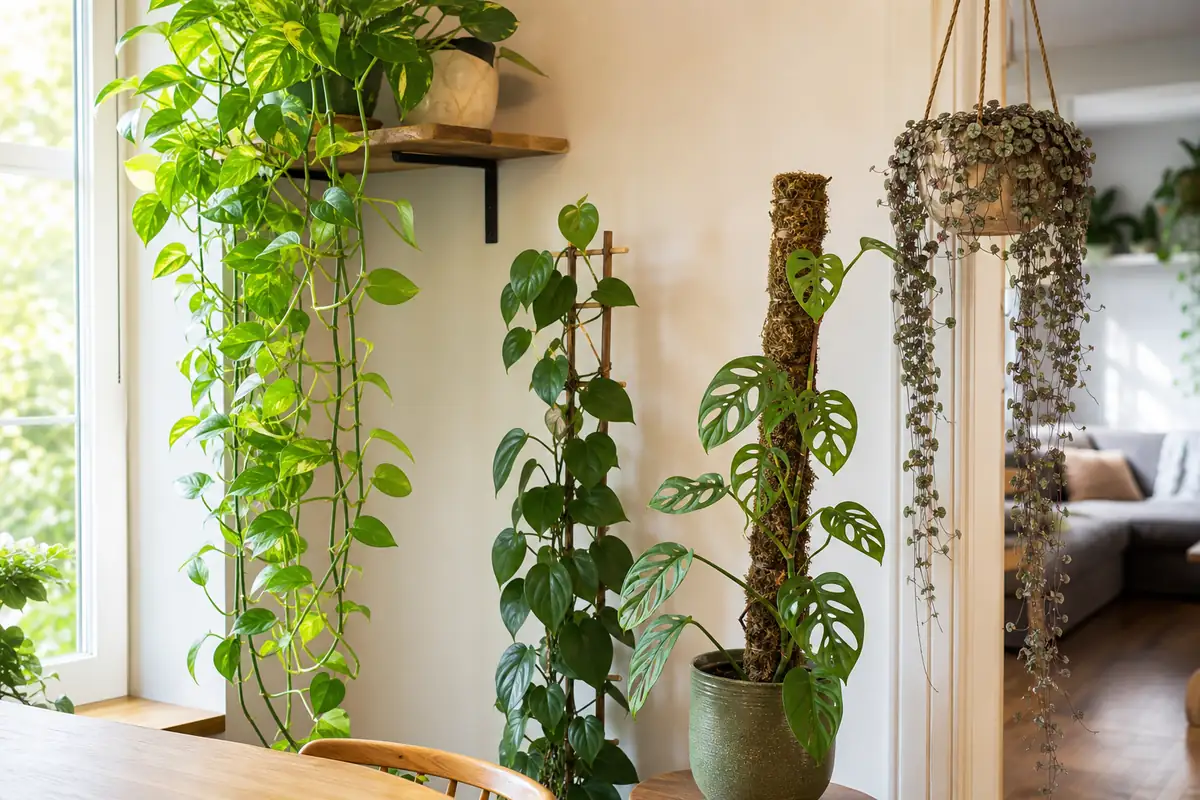
Indoor vining plants can climb a support or trail from a shelf, but the best choice depends on light, attachment habit, mature reach, and safety. The same pothos that looks soft from a bookcase can look sparse on a dark wall, and the same aroid that climbs a moss pole can outgrow a small pot faster than the room expects. Choose the growth habit before choosing the display.
Vines need a plan because they keep moving after the pot looks full. Stems stretch toward light, nodes search for support, and long growth changes how the plant drinks. A good indoor vine setup starts with the support, the watering access, and the final length you are willing to maintain.
Indoor Vining Plant Selector
Trailing shelf or bookcase
Pothos, heartleaf philodendron, and string of hearts work when stems can hang freely and stay within trimming reach.
Moss pole or coir pole
Monstera adansonii, pothos, and climbing philodendrons respond when nodes can press against a humid, textured support.
Small trellis or hoop
Heartleaf philodendron, hoya, and jasmine-like indoor vines need gentle ties because many stems do not grip hard surfaces alone.
Hanging display
String of hearts, hoya, pothos, and lipstick plant suit baskets when the pot drains well and can be watered without soaking furniture.
Key Takeaways
- Choose climbing or trailing growth before buying the plant.
- Bright indirect light keeps internodes shorter and leaves fuller.
- Aroids often grow larger leaves when trained upward on a support.
- Long vines need pruning, rotation, and accessible watering.
- Walls, pets, children, and falling pots change the safest display.
Table of Contents
Indoor Vining Plants: Choose Climbing or Trailing Growth First
A vine can be displayed two ways indoors. It can climb, with stems guided upward on a pole, trellis, hoop, or frame. It can also trail, with stems falling from a shelf, basket, mantel, or cabinet. The plant may be the same species, and the finished look and maintenance are different.
Climbing usually gives a more structured plant. Pothos, monstera adansonii, and many philodendrons can produce larger, more mature-looking leaves when their nodes stay close to a textured support and receive enough light. Trailing produces a softer curtain effect. Lower leaves may thin if the top of the plant receives most of the light.
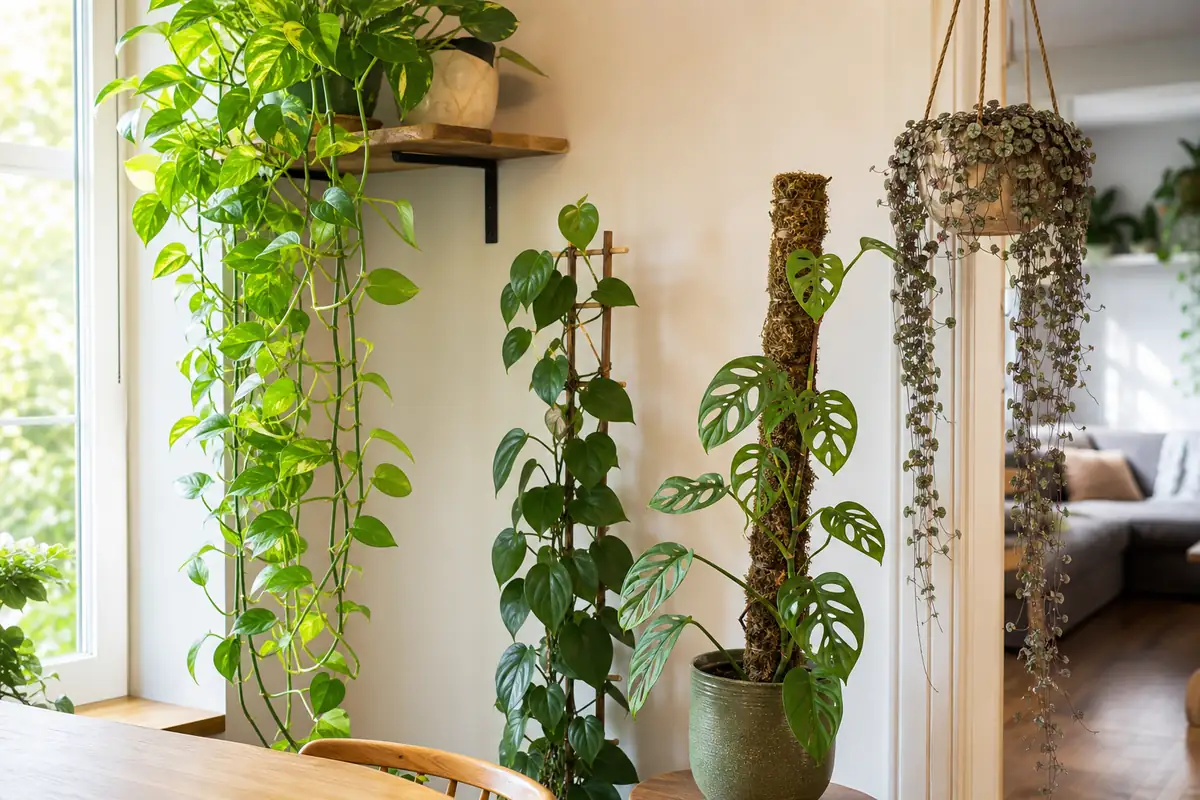
| Plant | Best display | Light need | Support need | Safety note |
|---|---|---|---|---|
| Pothos | Shelf trail or pole | Medium to bright indirect | Optional pole or shelf edge | Keep away from chewing pets |
| Heartleaf philodendron | Trellis, hoop, or trail | Medium to bright indirect | Soft ties help shape it | Sap can irritate mouths |
| Monstera adansonii | Moss pole or frame | Bright indirect | Textured support improves form | Needs space and pet caution |
| Hoya | Hoop, trellis, or basket | Bright indirect | Flexible support for long stems | Slow to reshape once woody |
| String of hearts | Hanging or high shelf | Bright indirect | No climbing support needed | Fine stems tangle easily |
For a first vining plant, pothos is usually the most forgiving starting point. The full pothos plant care routine helps keep the plant full, not reduced to a few bare strings.
How Indoor Vines Attach and Why the Support Matters
Indoor vines do not all attach the same way. Aerial-rooting aroids can press nodes against bark, coir, moss, or rough support. Twining stems curl around narrow supports. Tendril-forming vines need something thin enough to grasp. Scrambling stems lean and need ties. Non-attaching trailers simply hang and must be pruned before they tangle.
The support changes leaf size and stem spacing. A pothos or monstera allowed to climb may hold leaves closer together and build a stronger vertical line. The same plant left to trail may produce longer internodes, smaller leaves, and a looser curtain. That looser look can be beautiful when the hanging length receives enough light.
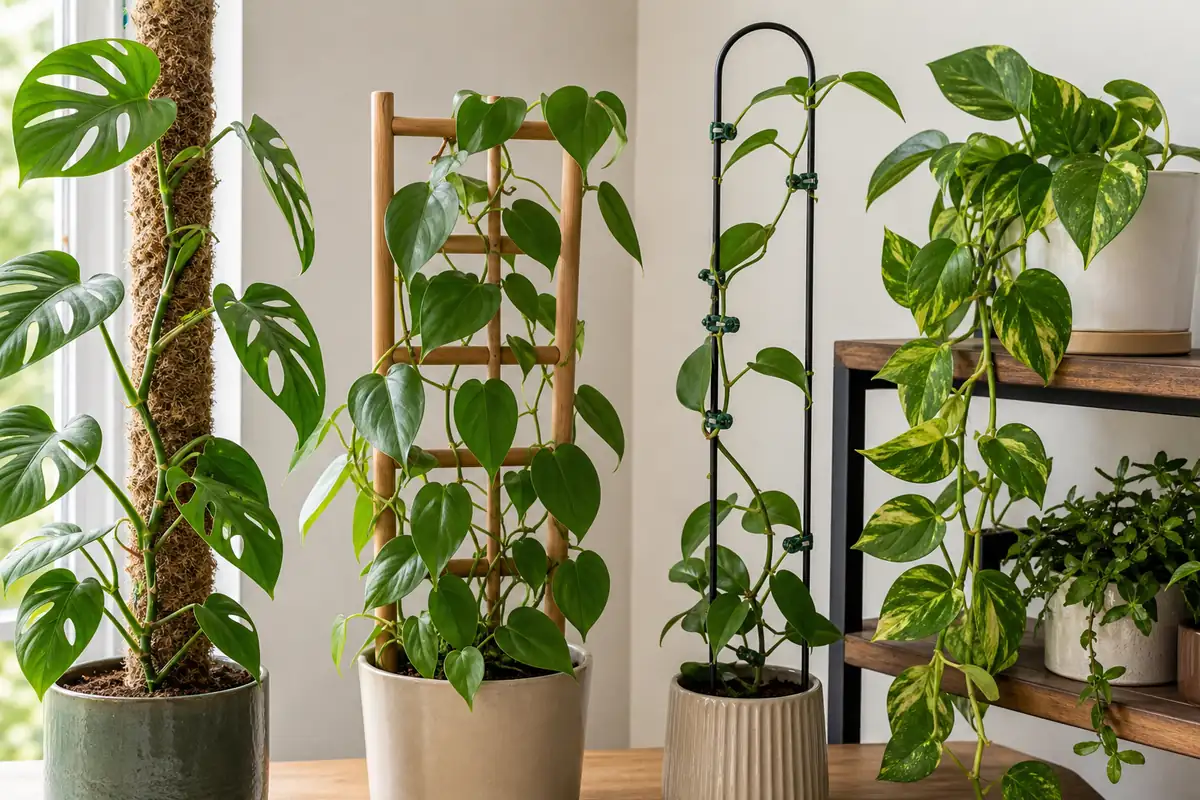
Supports should be removable. Moss poles, coir poles, bamboo ladders, wire hoops, and freestanding trellises let the plant move with the pot. Direct wall attachment creates problems: aerial roots can mark paint, watering can stain the surface, and pruning becomes awkward once the plant is fixed to the room instead of the container.
Outdoor vertical gardening uses stronger structures because wind, rain, and mature woody growth change the load. Indoor vines are lighter, and the same support logic applies in miniature. A freestanding frame is safer than a wall if you want the look of climbing plants without permanent marks.
Best Choices by Available Light
Light decides whether a vine stays full. In weak light, stems stretch between leaves because each node is searching for better exposure. Leaves may shrink, variegation can fade, and the plant may look green at the pot as the hanging section becomes thin.
Medium light suits pothos, heartleaf philodendron, and some hoyas if the plant is close enough to a window or bright room. Low-light tolerance does not mean strong growth in a dim corner. It means the plant can survive slower, with less water use and fewer new leaves.
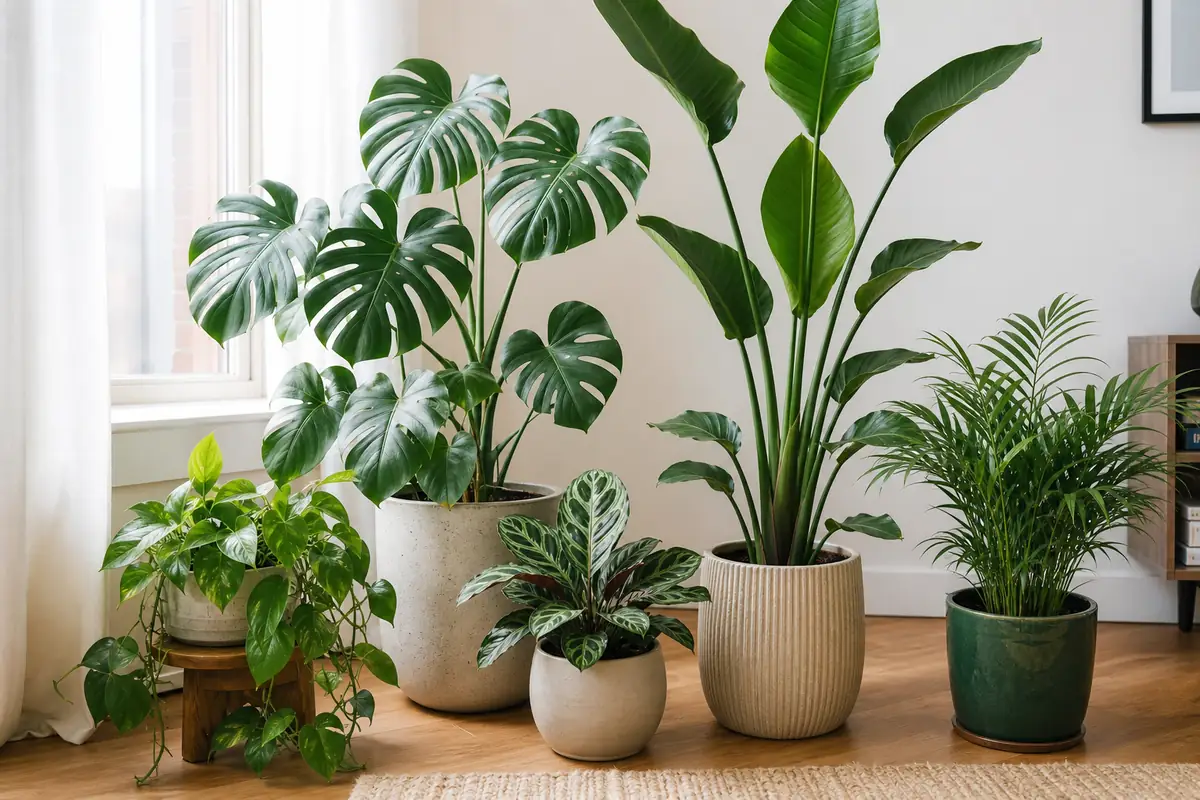
Bright indirect light gives the broadest options. Monstera adansonii, many philodendrons, pothos, hoya, lipstick plant, and string of hearts usually look better when they receive bright filtered light without hot afternoon sun on the leaves. Training an aroid upward makes the light requirement more visible because the top growth can shade lower leaves.
Direct sun is risky for many tropical vines unless the plant has been acclimated. A south or west window can scorch thin leaves, especially where glass concentrates heat. Sheer curtains, a side placement, or a few feet of distance often creates a better balance.
| Light condition | Better vine choices | Likely failure sign | Correction |
|---|---|---|---|
| Lower indoor light | Pothos, heartleaf philodendron | Long gaps between leaves | Move closer to brighter indirect light |
| Medium light | Pothos, philodendron, hoya | Slow drying and soft stems | Use smaller pots and check moisture first |
| Bright indirect light | Monstera adansonii, pothos, hoya, lipstick plant | Fast reach toward one side | Rotate and reset support growth |
| Direct sun window | Some hoyas after acclimation | Bleached or scorched leaves | Filter the light or pull the pot back |
Pothos is the most useful example because it can survive in lower light and look much better in brighter filtered light. A focused pothos light requirements check helps explain why a living vine may refuse to fill out.
Vines for Poles, Trellises, Shelves, and Hanging Displays
Display hardware should match the way the plant grows. Moss poles suit plants with nodes that benefit from contact. Flexible stems can be tied and guided across a trellis. Clean trailers belong on shelves where the stems can hang without catching on doors or chair backs. Hanging baskets work when watering access, drainage, and wet weight are manageable.
What indoor plant drapes down?
Pothos, heartleaf philodendron, string of hearts, hoya, lipstick plant, and spider plant can all drape down indoors. Draping describes the display, not one plant family. A pothos can drape from a shelf or climb a pole; a string of hearts mainly trails and does not become a true climbing plant on its own.
A pole fits the goal of larger leaves, upright shape, and vertical space beside a window. Trellises and hoops fit flexible stems that need a controlled outline. Shelves and baskets fit movement and softness. Keep the watering route visible because high baskets and tall supports are often neglected once the novelty fades.
Philodendrons vary widely in shape, leaf size, and growth speed. Some are compact, some climb readily, and some need more room than a small trellis provides. A plant-specific comparison such as choosing philodendron variety helps prevent a small decorative vine from becoming an awkward room problem.
Control Reach Without Creating Bare, Tangled Growth
Long vines need editing. Without pruning, the plant often becomes full at the pot and thin at the ends. Stems loop around furniture, catch on curtains, and shade their own lower leaves. A tidy vine is usually a managed vine, not an untouched one.
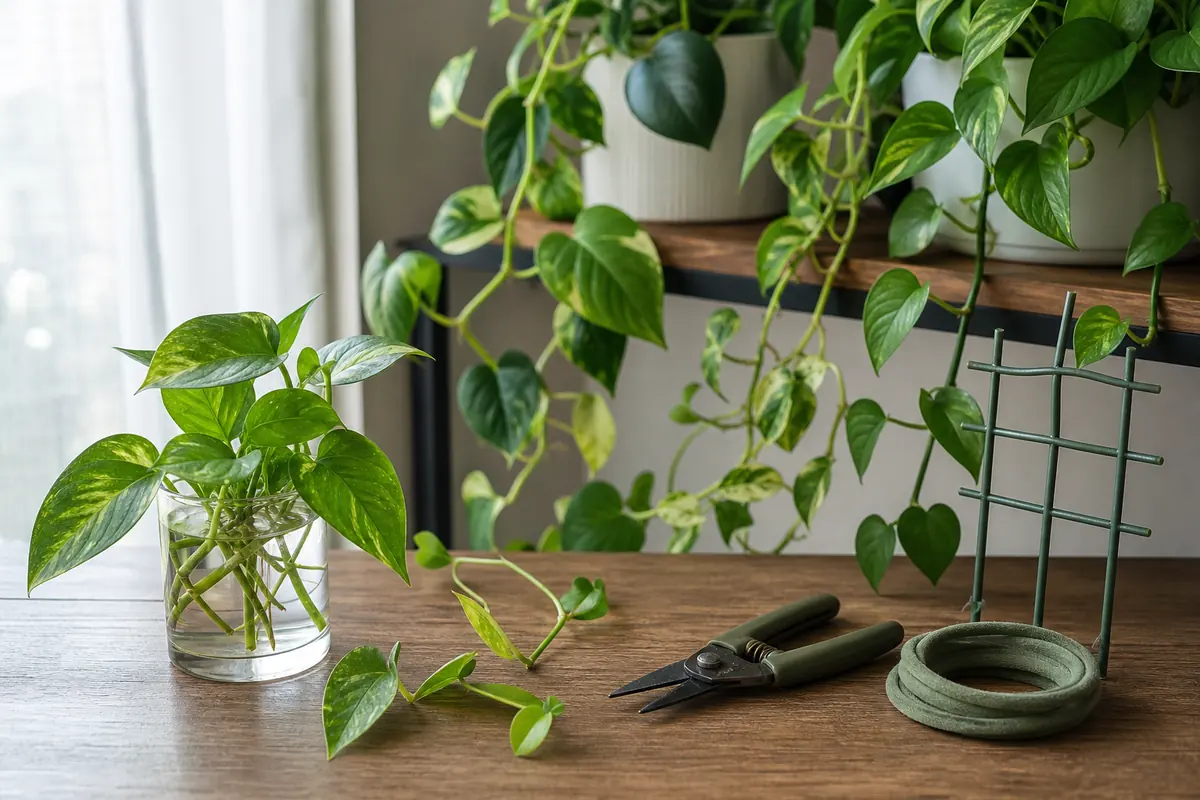
Pinch or prune just above a node to encourage branching. Use cuttings to refill the pot if the top looks thin. Rotate the plant so new growth does not lean toward one window. Reset the support when vines start circling the same pole without attaching or when a trellis becomes a knot of crossing stems.
Propagation can solve bare sections. It cannot replace light. Cuttings placed back into a dim pot may root and then stretch again. The fuller look lasts when the new stems receive enough light and the pot is not kept too wet for the amount of foliage it carries.
Moisture and Pot Size for Long Vines
A long vine can make a small root system look more mature than it is. Stems may travel several feet as roots occupy a modest nursery pot. Upsizing too quickly creates wet soil around a root ball that cannot use it, especially in medium or lower light.
Check moisture near the root ball, not at the edge of a large decorative pot. Long vines also dry unevenly because leaves near a window use water faster than shaded stems behind furniture. A plant on a pole may drink more during active upward growth, then slow after pruning or in winter.
Stable pots matter. A tall pole creates leverage, and a hanging basket carries wet weight after watering. Choose a container that drains fully, supports the hardware, and can be lifted or checked without twisting the vines. General houseplant care fundamentals apply more strongly when the plant is long, top-heavy, or hard to reach.
Repot by root condition, not vine length alone. A long pothos can stay comfortable in a modest pot if roots are healthy and water moves through the mix evenly. A compact-looking climber may need a reset sooner once the pole, roots, and pot lean as one unit. Weight, drainage, and support stability matter more than the visual length of the newest stem.
Check the pot after pruning or support changes. A vine that loses several long stems uses less water for a while, and a newly trained climber may dry faster near the window side. Adjust watering to the current leaf mass, not the plant’s former size.
Wall, Pet, and Child Safety
Indoor vines can damage rooms when the display is designed around the look alone. Aerial roots may mark painted walls. Damp poles and planters can stain shelves. Long stems can snag on blinds, cords, doors, and furniture. A heavy basket can fall if the ceiling hook is not rated for wet weight.
Pet and child safety changes the plant list. Pothos, philodendron, and monstera are common indoor vines, and they can irritate mouths when chewed. The ASPCA lists pothos and split-leaf philodendron among plants that need pet caution. Keep long stems above reach and avoid trailing vines in rooms where pets or children pull on hanging material.
Watering access is part of safety. If a plant is too high to water comfortably, it will be overfilled, ignored, or handled awkwardly. Use drip trays carefully, empty cachepots after watering, and avoid letting vines cover outlets, heaters, or humid walls.
A Final Vine Selection Matrix
The best final choice comes from the room, not the plant label. Pick the display first, then the light level, then the maintenance you can repeat.
| Room goal | Best starting choices | Use this support | Avoid if |
|---|---|---|---|
| Soft shelf trail | Pothos, heartleaf philodendron | Shelf edge or short clips on a removable frame | The shelf is dark or hard to trim |
| Vertical foliage column | Monstera adansonii, pothos | Moss pole or coir pole | The pot cannot support a tall pole |
| Defined decorative outline | Hoya, heartleaf philodendron | Hoop or small trellis with soft ties | You want fast coverage in low light |
| Hanging curtain effect | String of hearts, hoya, pothos | Basket with clear drainage access | Pets or children can pull the vines |
| Fast beginner vine | Pothos | Shelf, pole, or simple trellis | You cannot prune or rotate the plant |
Start with a forgiving vine and a support you can remove. Add more specialized climbers after you know how much light the room gives, how quickly the pot dries, and whether the vine stays within the length you can maintain.
Conclusion
Indoor vining plants look best when their support matches their biology. Climbers need contact, light, and room to mature. Trailers need reachable length, pruning, and safe placement. Choose the habit first, keep the support removable, and treat long growth as something to manage before it becomes bare, tangled, or unsafe. The right vine should make the room easier to maintain, not harder to water, trim, or protect.