


The best indoor plant is the one that matches your actual light, available space, care routine, and household safety needs. A plant that looks perfect in a ranked list can fail quickly when it is placed in the wrong window, watered on the wrong schedule, or set where pets can chew it. Start with the room first, then choose the plant.
Reliable houseplants become easier to compare when light, care tolerance, mature size, growth habit, and safety are weighed together. Narrow the conditions, build a short list, and then follow the care guide for the plant you choose.
Fast Indoor Plant Selector
Low light and irregular care
Choose ZZ plant, snake plant, or cast iron plant. Avoid high-light succulents and fussy humidity plants.
Bright indirect light and shelves
Try pothos, philodendron, peperomia, or small dracaena. Watch mature vine length and pet access.
Pet-aware home
Compare parlor palm, spider plant, peperomia, calathea, or fittonia, then verify the exact plant with a toxic plant database.
Large empty corner
Use monstera, rubber plant, dracaena, or a palm if light is adequate and the pot can drain freely.
Key Takeaways
- Match the plant to light before comparing looks.
- Choose drought-tolerant plants if watering is inconsistent.
- Check mature size before filling a shelf or corner.
- Verify pet safety by exact plant, not common name alone.
- Do not rely on houseplants to purify indoor air at room scale.
Table of Contents
Best Indoor Plant Choices Start With the Room
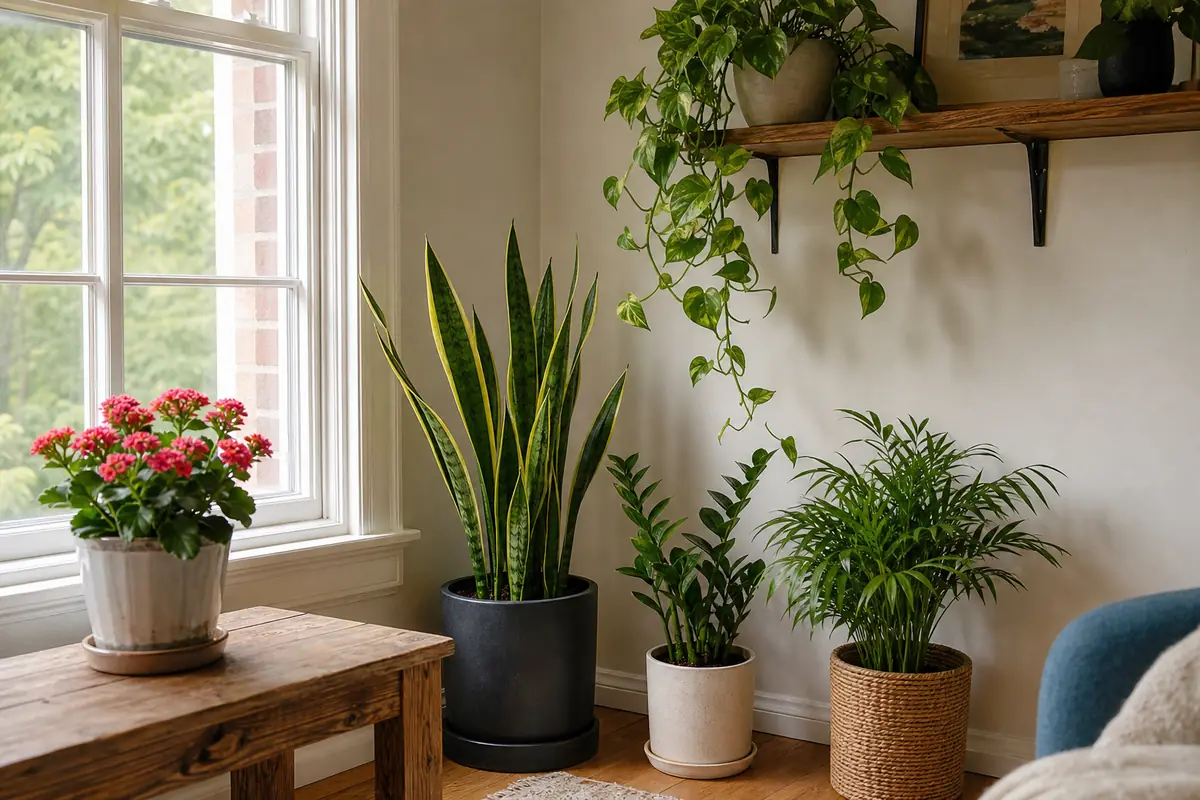
The room comes before the wish list. Most houseplant failures come from a mismatch, not from a bad plant. Snake plant tolerates a dim hallway better than jade plant. Calathea can look excellent in bright filtered light and decline in dry air with missed watering. Pothos often thrives on a shelf, although the same trailing habit creates a safety issue where pets or children can pull it down.
Begin with four practical questions:
- How much natural light reaches the spot for most of the day?
- How often will you realistically check soil moisture?
- How much width, height, and trailing length can the plant use as it matures?
- Do cats, dogs, or small children have access to the leaves, potting mix, or plant stand?
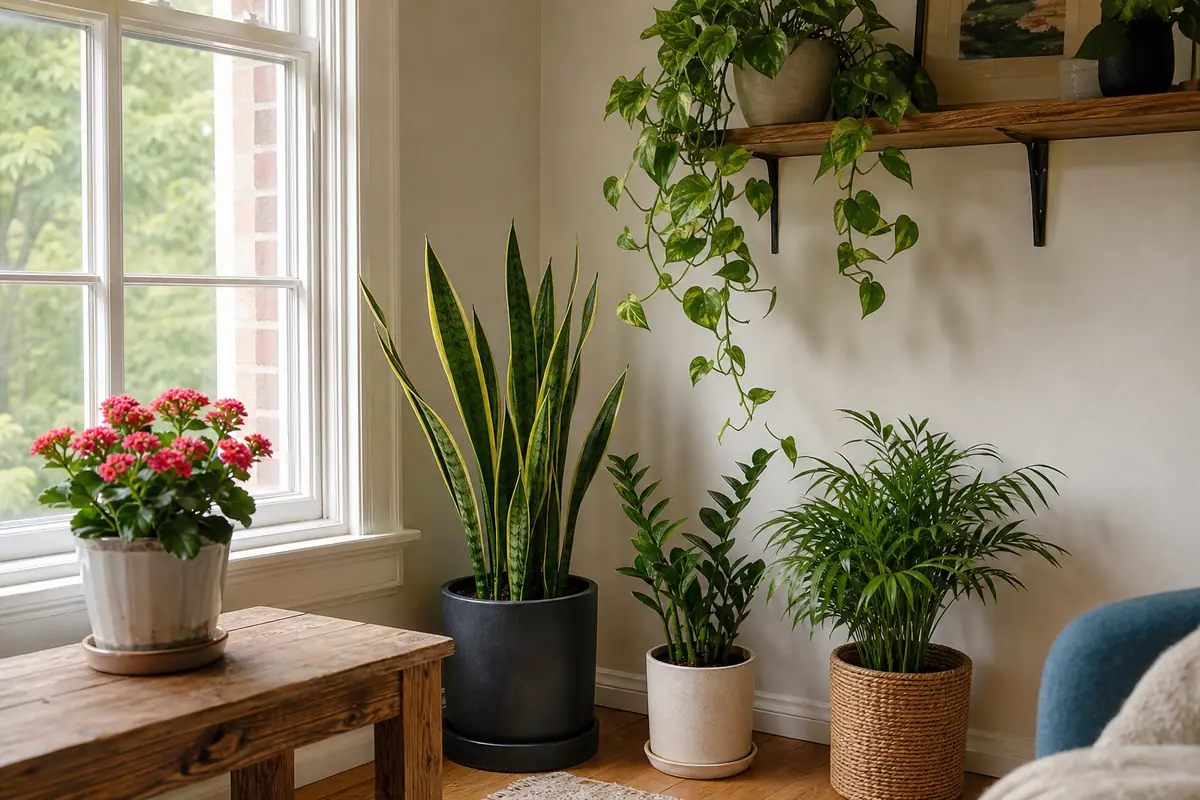
If you are new to houseplants, anchor the choice in forgiving plants before buying rare or high-maintenance types. Snake plant, ZZ plant, pothos, cast iron plant, and many dracaenas tolerate normal indoor mistakes better than most flowering plants, ferns, or thin-leaved tropicals. If you already have a routine, the best choice may be a plant that fits a specific role: a compact desk plant, a trailing shelf plant, a floor plant, or a pet-aware option.
For the watering and repotting basics behind any choice, use a general houseplant care routine first. A good selector gets the plant into the right room. Care keeps it there.
| Room condition | Good starting choices | Be careful with | Why it matters |
|---|---|---|---|
| Low natural light | ZZ plant, snake plant, cast iron plant | Succulents, cacti, flowering plants | Low light slows growth and drying |
| Bright indirect light | Pothos, philodendron, peperomia, dracaena | Plants that scorch in direct sun | Many foliage plants prefer this range |
| Sunny window | Jade plant, aloe, some succulents | Calathea, ferns, thin tropical leaves | Direct sun can burn shade leaves |
| Pet-accessible room | Parlor palm, spider plant, peperomia | Pothos, philodendron, monstera, peace lily | Some common plants are toxic if chewed |
Measure the Light Before Choosing
Indoor light is often weaker than it looks. A plant beside a clear east or south window receives a different amount of usable light than a plant six feet away, behind blinds, or across from a shaded building. The plant does not read the room as bright or dark. It responds to the amount of light landing on its leaves.
Use simple placement language when choosing. Direct sun means sunbeams hit the leaves for part of the day. Bright indirect light means the room is bright and the leaves are not sitting in harsh sun for hours. Medium light usually supports consistent foliage growth near a window or in a bright room. Low light means the plant can survive there, with slower growth and lower water use.
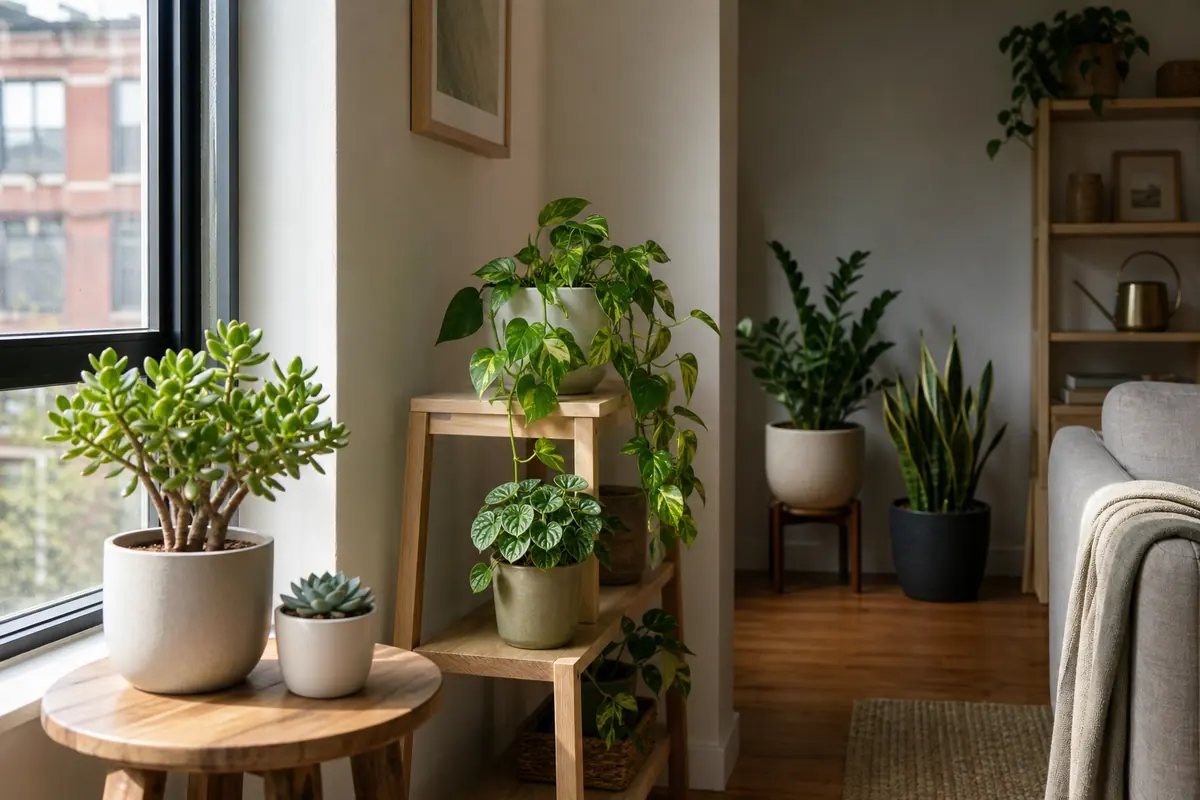
In very low light, ZZ plant and snake plant are common first choices because they store water and tolerate slow growth. Cast iron plant is another option for dimmer corners when you want a fuller leaf mass. Do not read “low light tolerant” as “no light.” If a room is too dark to read comfortably during the day without lamps, most houseplants will slowly weaken there unless you add a grow light.
Bright indirect light opens the list. Pothos, philodendron, peperomia, dracaena, monstera, rubber plant, anthurium, orchid, and many palms can work if their water and humidity needs fit your routine. This is the most flexible range for a mixed houseplant collection.
Direct sun belongs to plants that actually want stronger light. Jade plant, aloe, echeveria, and other succulents often need more light than a typical indoor shelf provides. Move them gradually when light changes, because leaves grown in shade can scorch when suddenly pushed into strong sun.
Best Choices by Care Tolerance
Care tolerance is the second filter. Some plants forgive missed watering because they store water in thick roots, rhizomes, stems, or leaves. Others collapse when the pot dries too far. A plant that needs frequent moisture can be easy for someone who checks plants twice a week. It becomes a poor fit for someone who travels often or waters only when leaves droop.
If watering is inconsistent, choose ZZ plant, snake plant, jade plant, cast iron plant, or some dracaenas. These plants usually prefer drying between waterings and can decline if you keep the soil wet. Their main risk is overwatering in a decorative pot without drainage.
With moderate care, pothos, heartleaf philodendron, monstera, rubber plant, peperomia, and parlor palm are reliable in the right light. They need drainage and soil checks without usually demanding a greenhouse routine. A trailing pothos is especially useful on shelves, bookcases, and hanging planters, and a full pothos plant care guide helps after you choose it.
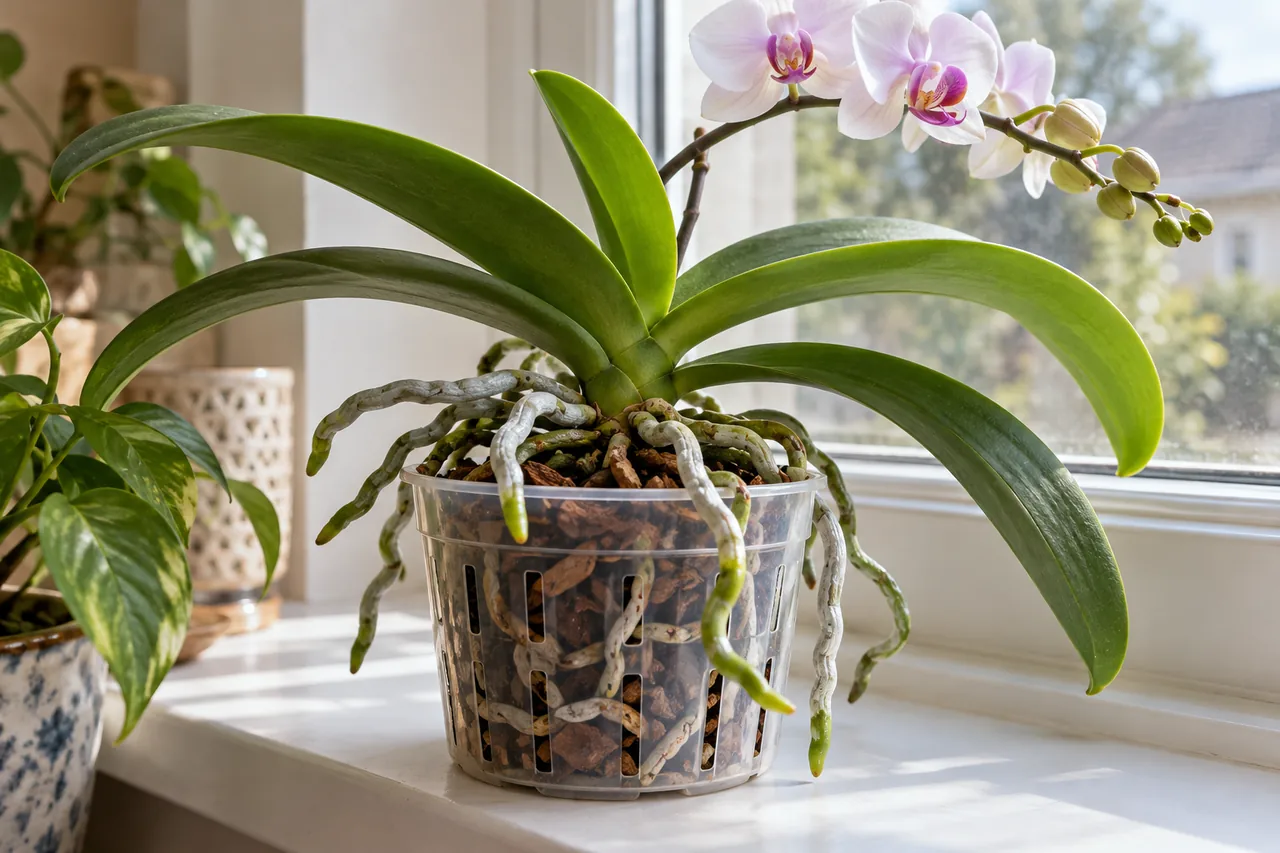
More attentive care suits calathea, fern, peace lily, orchid, and some flowering houseplants. These choices can be beautiful, although they react quickly to dry air, mineral buildup, cold drafts, or irregular watering. They are better as a deliberate choice than as a first plant for a neglected corner.
| Care style | Good choices | Main risk | Best owner fit |
|---|---|---|---|
| Forgetful watering | ZZ plant, snake plant, cast iron plant | Wet soil and oversized pots | Busy owners, offices, travelers |
| Weekly check-in | Pothos, philodendron, monstera, rubber plant | Letting vines or roots outgrow the space | Most homes with bright indirect light |
| Frequent attention | Calathea, fern, peace lily, orchid | Dry air, salts, missed watering | People who enjoy regular plant care |
| High-light dry care | Jade plant, aloe, succulents | Too little light indoors | Sunny windows and restrained watering |
Watering plans also matter when you leave home. A drought-tolerant plant gives you more room for travel. A moisture-sensitive plant may need a sitter or a setup from a watering plants during vacation plan.
Match Mature Size and Growth Habit to the Space
The plant you buy is not the plant you keep. A small nursery pot may become a wide floor plant, a tall cane, or a long trailing vine. Before choosing, picture the mature habit, not the shelf-size starter plant.
Narrow floor space suits snake plant and ZZ plant because they grow upright. They add height without sprawling into walkways. Dracaena can also work well as a vertical plant, and different varieties vary in height, cane structure, and leaf width. If you are comparing forms, a guide to choosing dracaena variety gives a better species-level choice.
For shelves and hanging planters, pothos and heartleaf philodendron are common because they trail, root easily, and tolerate normal home conditions. The same trait creates clutter if vines are allowed to tangle around cords, curtain rods, or pet-accessible furniture. Choose the shelf before you choose the vine.
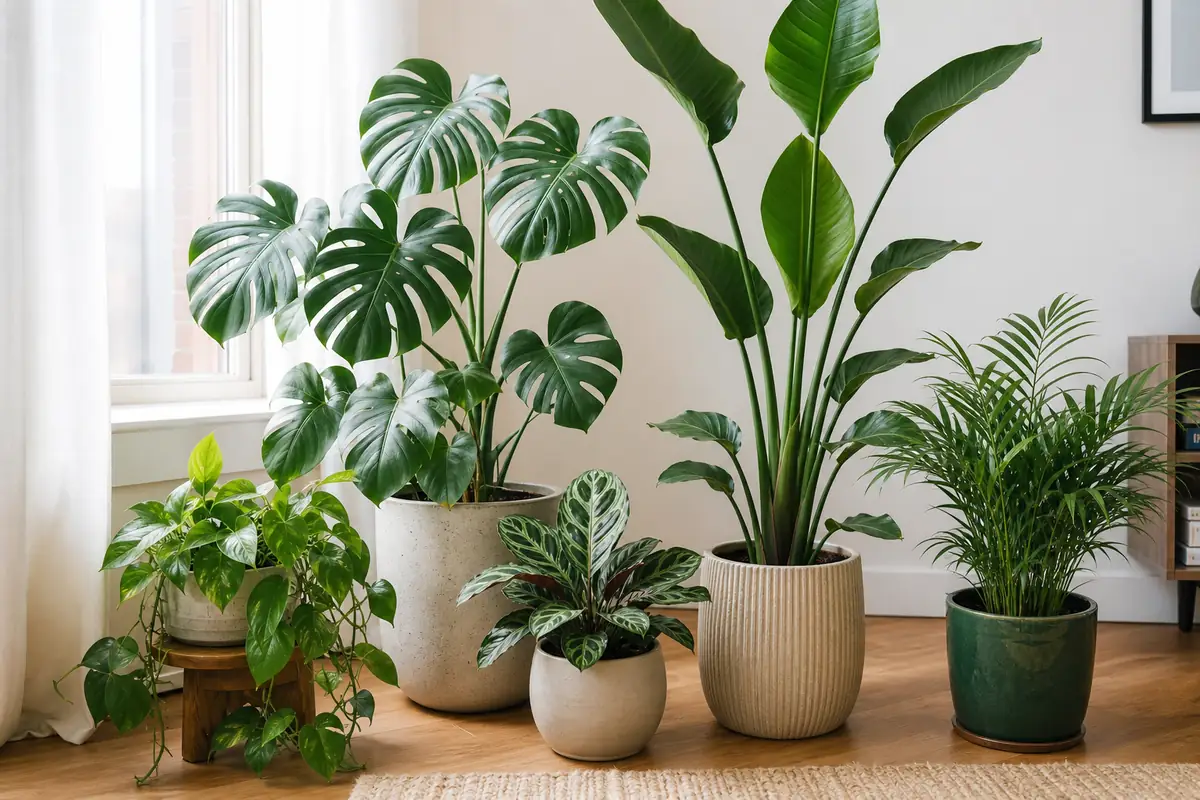
For a large bright corner, monstera, rubber plant, fiddle leaf fig, and some palms can make sense. The tradeoff is footprint. A young monstera can look compact, then push long stems and wide leaves that need support. Before buying one, read a focused monstera care guide so the mature plant does not surprise the room.
| Space | Best habit | Plant examples | Avoid when |
|---|---|---|---|
| Small desk | Compact rosette or mound | Peperomia, fittonia, small haworthia | The desk gets hot direct sun |
| Narrow floor corner | Upright growth | Snake plant, ZZ plant, dracaena | The corner is cold or completely dark |
| High shelf | Trailing vines | Pothos, heartleaf philodendron | Pets can reach trailing stems |
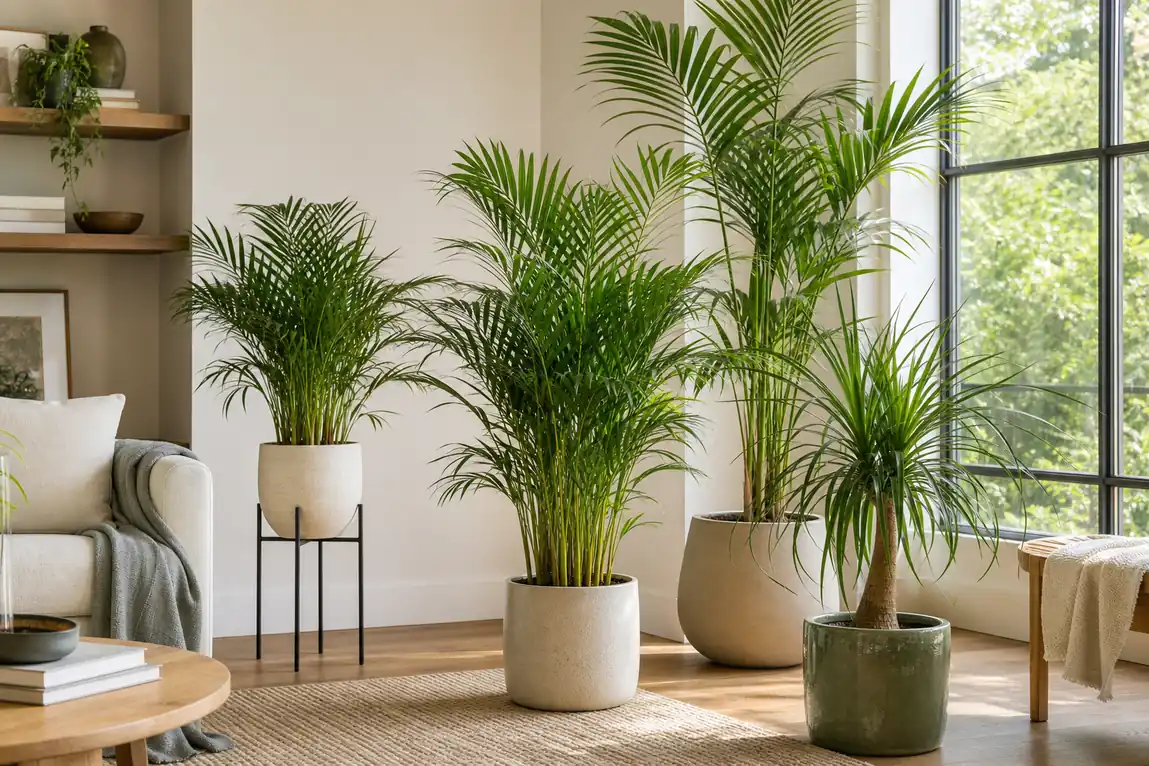
| Open bright corner | Large foliage | Monstera, rubber plant, palm | Walkways are tight or light is weak |
Choose Safely Around Cats, Dogs, and Children
Safety is not a decorative detail. Many popular houseplants can irritate mouths, cause stomach upset, or create more serious problems when chewed by pets. Pothos, philodendron, monstera, peace lily, snake plant, and many other common choices should be treated cautiously in pet-accessible rooms.
Use exact identification before deciding a plant is safe. Common names are messy, and different plants can share the same name. The ASPCA toxic and non-toxic plant list is a practical verification tool for cats and dogs, with correct plant ID as the starting point.
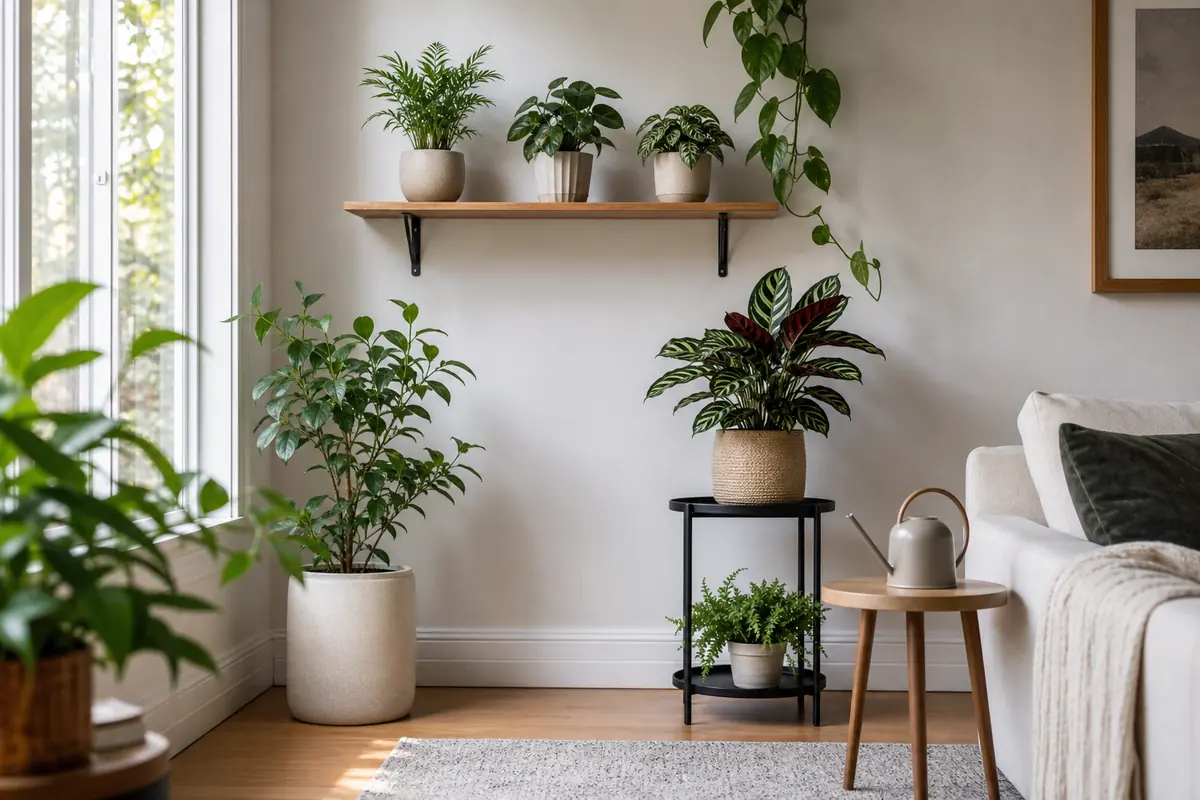
Pet-aware starting choices often include parlor palm, spider plant, peperomia, calathea, and fittonia. Still verify the exact plant you buy. Also think about placement. A non-toxic plant can cause a mess, choking concern, broken pot, or moldy soil problem if it is constantly disturbed.
For children, the concern is broader than toxicity. Heavy ceramic pots, unstable plant stands, decorative stones, fertilizer spikes, and trailing vines can be hazards. Put large floor plants in stable containers, keep plant food stored away, and avoid placing climbable stands near windows.
A Decision Matrix for the Final Shortlist
Once you have a few options, compare them against the same criteria. This prevents the common mistake of buying the most attractive plant and then trying to force the room to match it.
| Plant | Light fit | Care tolerance | Space fit | Safety note |
|---|---|---|---|---|
| Snake plant | Low to bright indirect | Very forgiving if not overwatered | Upright, narrow | Keep away from chewing pets |
| ZZ plant | Low to medium | Very drought tolerant | Upright mound | Keep out of reach if pets chew |
| Pothos | Medium to bright indirect | Forgiving | Trailing shelf or hanging plant | Not ideal where pets can reach vines |
| Parlor palm | Medium to bright indirect | Moderate | Compact palm form | Often used in pet-aware homes; verify ID |
| Peperomia | Medium to bright indirect | Moderate, compact | Desk or shelf | Often a good pet-aware starter; verify ID |
| Monstera | Bright indirect | Moderate | Large floor plant | Keep away from pets and small children |
| Calathea | Medium indirect | Less forgiving | Table or floor, depending type | Often chosen for pet-aware rooms; needs steadier care |
| Jade plant | Bright light to sun | Drought tolerant | Table or sunny sill | Use caution around pets |
For a first plant in a low-light office, ZZ plant is often the stronger choice than a succulent. For a bright shelf with no pet access, pothos is usually easier than a fern. For a pet-aware living room, a parlor palm or peperomia may be a better starting point than a dramatic monstera. The best decision is specific, not universal.
If air quality is the reason you want plants, separate the emotional benefit from the physics of the room. The best houseplants for air studies are often discussed in small chambers. Normal homes also have air exchange, furniture, cooking, cleaning products, and dust. For a fuller explanation, read top indoor plants air quality before buying plants for purification claims alone.
What Indoor Plants Cannot Reliably Do
Houseplants are useful and often oversold. They can make a room feel calmer, add humidity near their leaves, give you a care routine, and soften a hard interior. They cannot replace ventilation, a dehumidifier, an air purifier, pest control, or basic home safety.
Air-purifying claims need careful wording. Some plants can remove certain compounds in controlled studies. That does not mean one or two pots will clean a whole room in a measurable way. If indoor air quality is the goal, plants should be a small layer beside source control, ventilation, filtration, and cleaning habits.
Stress and mood claims also deserve caution. Studies on indoor plants and human response suggest possible benefits in some settings, including perceived comfort, attention, or stress markers. Plants are not a medical treatment. A plant routine may support a calmer home environment for some people. It should not be framed as a guaranteed way to lower cortisol, treat anxiety, or improve health.
The broader benefits of indoor plants are better understood as lifestyle support: a more pleasant room, a reason to observe light and seasons, and a low-stakes care habit. If that is your goal, the benefits are real enough without pretending the plant can do everything. The evidence details are covered in indoor plant benefits statistics.
Bring the Plant Home Without Creating an Immediate Problem
The first week decides more than most buyers expect. A plant leaves a nursery, rides in a car, enters different light, and may sit in a decorative cachepot that traps water. Give it a gentle transition rather than repotting, fertilizing, pruning, and moving it repeatedly on day one.
Inspect the plant before it joins the rest of your collection. Look under leaves, around stems, along new growth, and across the soil surface. Sticky residue, fine webbing, white cottony clusters, moving specks, or distorted new leaves can signal pests. Quarantine new plants for a short period if you already own houseplants.
Check the pot and drainage. A nursery pot inside a decorative cover pot can trap water around the roots unless it drains fully after each watering. Do not water on a calendar alone. Check the soil with a finger, wooden skewer, or moisture meter, then water according to the plant type and pot size.
Place the plant in the light range it was chosen for, then give it time. A few yellowing older leaves can happen after a move. New growth, firm stems, and even soil drying are better signs than perfection in the first week.
Conclusion
The best indoor plant is the plant your room can actually support. Match light first, then care rhythm, mature size, and household safety. A modest ZZ plant in the right low-light corner is a better choice than a dramatic plant that needs sun, humidity, or space you do not have.
FAQ
What is the easiest indoor plant to keep alive?
ZZ plant and snake plant are two of the easiest indoor plants for many homes because they tolerate lower light and missed watering better than most foliage plants. They need drainage and should not sit in wet soil.
Which plant purifies air the most?
No single houseplant reliably purifies a normal room by itself. Some plants show pollutant removal in controlled studies. Real homes need ventilation, source control, and filtration for meaningful air quality improvement.
Do plants lower cortisol?
Indoor plants may support a calmer room and some studies report stress-related benefits in specific settings. They should not be treated as a guaranteed cortisol-lowering method or medical intervention.
What indoor plant should I avoid as a beginner?
Avoid plants that need conditions you cannot provide. Calatheas, ferns, thin-leaved humidity plants, and high-light succulents can be frustrating when the room is dry, dim, or watered irregularly.