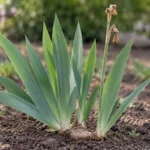
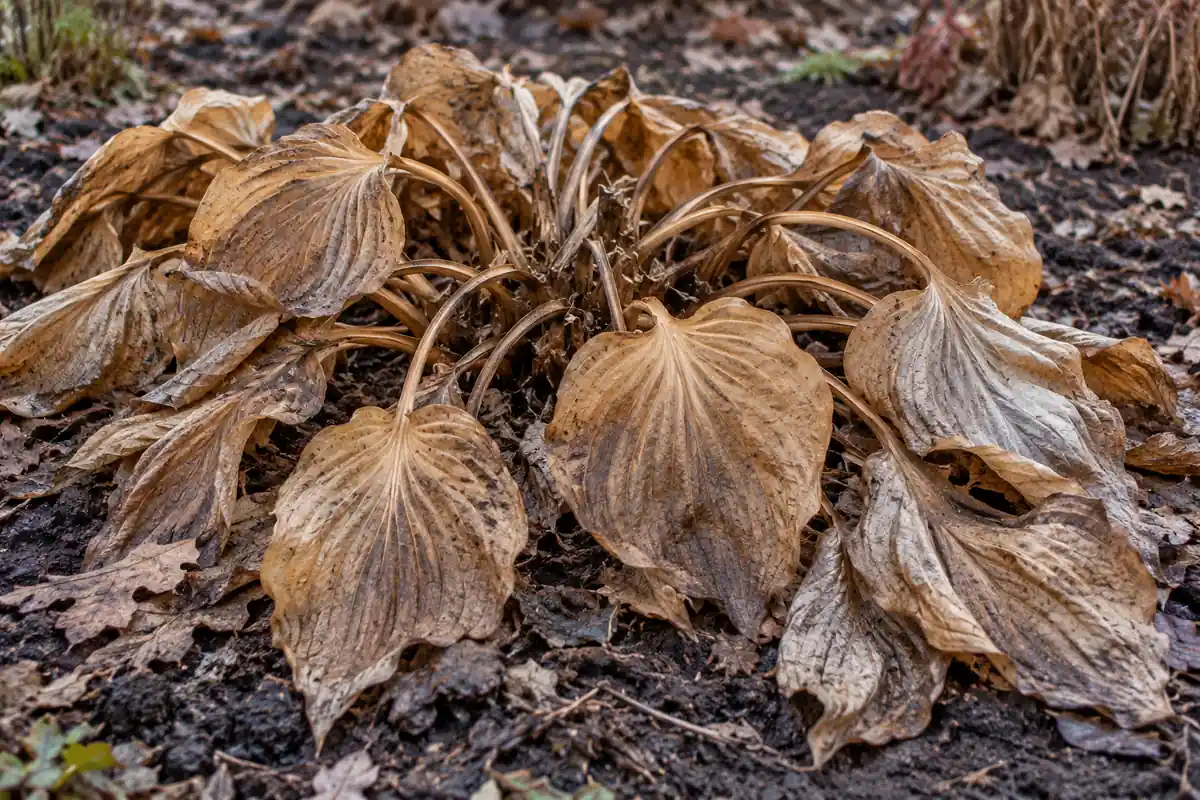
When to cut back hostas depends on the leaves: leave healthy green foliage in place, then remove the dying leaves and leaf stalks after autumn color fades or frost damages them. Clear the fallen material without cutting into the crown at soil level. A faded flower stalk can be removed earlier; it does not mean the whole leafy clump is ready for cutting.
Look across the plant before reaching for the pruners. Uniform seasonal yellowing followed by limp, collapsed leaves is different from a few scorched edges in August or leaf stalks turning mushy during warm weather. Those patterns change the next action. Ordinary fall cleanup removes dead material and some pest shelter. Premature browning needs inspection first, and no single October date fits every US garden. The condition of the foliage and its base is more useful than the month alone.
Check the leaf state before cutting
- Green and sturdy: keep the foliage. Remove a finished flower stalk separately if desired.
- Some yellow or brown leaves: inspect the pattern and bases. Remove dead material selectively; leave healthy leaves.
- Seasonally dead or frost-collapsed leaves: clear blades and leaf stalks near their bases without injuring the crown.
- Early collapse with soft brown bases: investigate disease. Treating it as routine autumn cleanup may miss the cause.
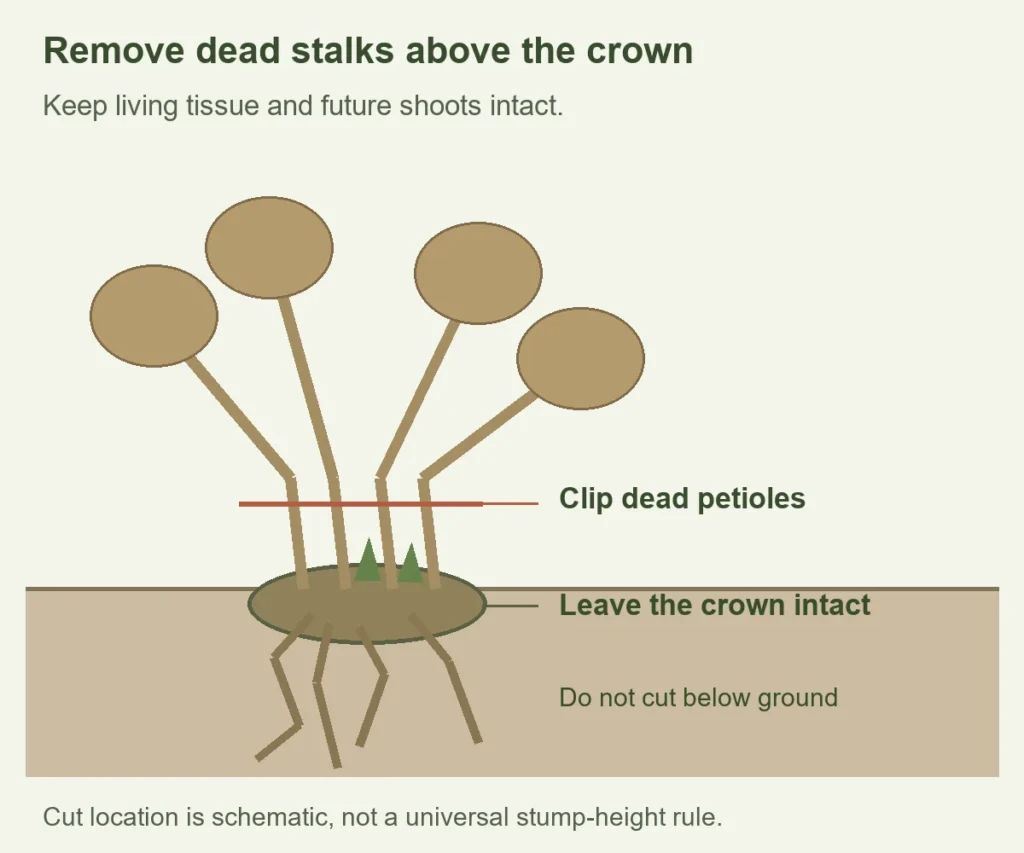
No fixed stump height is needed. Remove dead leaf stalks safely above the living crown; do not slice into the plant to meet an inch measurement.
Key Takeaways
- Leave healthy green hosta foliage until its seasonal decline.
- Remove dead leaves and stalks after fall color or frost damage.
- Keep pruning blades above the living crown and emerging buds.
- Clear soggy debris without promising complete control of slugs.
- Inspect premature collapse and soft stalk bases before routine trimming.
Table of Contents
When to Cut Back Hostas After Seasonal Leaf Decline
Hostas are herbaceous perennials: their aboveground leaves die back as the plant enters its dormant period. The crown and roots remain. Healthy green leaves are still functioning during the growing season, so cutting them off just because nearby flowers have finished removes living tissue.
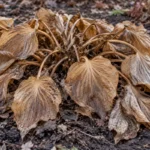
Autumn color often progresses from green to yellow before the leaves become soft and brown. Some clumps fade earlier than others. A damaging frost can speed the change, leaving broad blades limp and laid across the ground. Use those visible changes to decide which material has finished.
Removing foliage and petioles after fall color subsides is the timing described in Kelly Allsup’s Illinois Extension winter hosta care guidance. The petiole is the stalk connecting a leaf blade to the plant. A separate Illinois fall task list, by Brittnay Haag, identifies frost-damaged hosta leaves as cleanup material. These cues overlap; neither requires shearing green plants on one national date.
In a mild garden, keep evaluating the leaves if frost has not arrived. In a colder garden, inspect the plant after a freeze rather than assuming every leaf died equally. A partly green inner clump does not need to lose all its living foliage because a few outer leaves have collapsed.
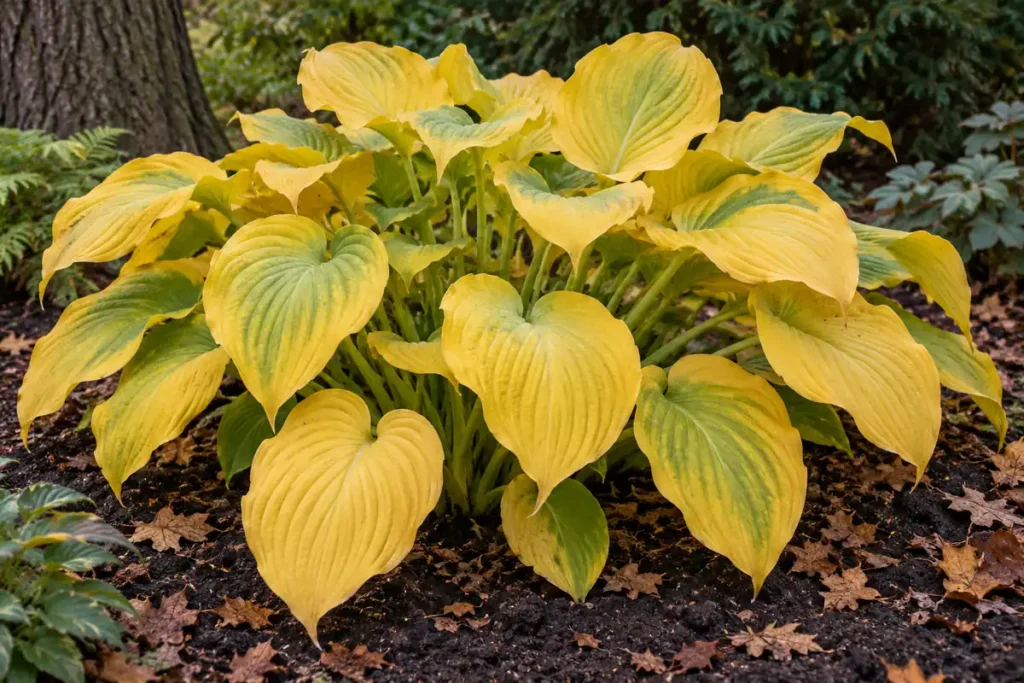
Dead Petioles Can Be Removed Without Cutting the Crown
The crown is the living base from which leaves and future shoots arise. It sits near the soil surface, partly obscured by the old stalks. Expose your view by gently moving loose dead leaves aside, without digging into the plant or dragging a blade blindly through the center.
Use clean, sharp hand pruners or garden scissors that can cut the stalk without crushing it. Suitable hand pruners for clean cuts make individual stalk removal easier than trying to mow through a crowded clump. A large tool that hides the base gives you less control.
- Separate the dead material. Check each section for remaining green tissue and unusual basal decay.
- Locate the stalk base. Keep blades clear of the crown and any visible buds.
- Clip resistant dead stalks. Cut near their bases, above living tissue. Do not force a fixed height through the crown.
- Lift loose foliage gently. Fully decayed material may release readily. If it resists, clip it instead of pulling hard.
- Collect the litter. Remove the cut leaves and wet mats resting over the crown, then clean the tools.
The finished bed does not need to look scraped bare. The aim is to remove spent hosta material without disturbing roots or growing points. Cutting below ground level adds injury without helping leaf cleanup. If the soil is frozen or access is unsafe, leave the work until you can see and reach the plant properly.
Wet Leaf Debris Shelters Slugs and Can Carry Disease
Collapsed leaves form a damp cover at the base of a hosta. Clearing that material removes one hiding place for slugs and reduces the debris left around the crown. Allsup’s winter care guidance specifically calls for removing soggy leaves there. This is a targeted cleanup task, not a requirement to clear every leaf and standing stem from the garden.
Slug eggs can survive in other protected places, including soil, mulch and debris, as the University of Minnesota’s Slugs in home gardens publication describes. Removing hosta foliage does not sterilize the bed or guarantee unmarked leaves next spring. Keep checking damp refuges and actual feeding damage during the growing season.
A few irregular holes in otherwise green foliage are not a reason to shear the entire clump. Check for slugs and slime trails, particularly in cool, damp conditions. The remaining green leaf tissue still has a job. Separate pest management from the ordinary end-of-season decision to remove dead leaves.
Separate healthy debris from suspect material
Healthy senescent leaves and foliage carrying a known disease require different handling. Keep suspect material out of an ordinary cold compost batch when disease guidance calls for disposal. Follow local waste rules and diagnostic advice for the particular problem. Do not spread symptomatic foliage across another bed as mulch.
Foliar nematodes are one reason leaf cleanup can matter. Yellow-to-brown bands between veins can develop on affected hostas, with symptoms often noticeable later in the season. A streak does not establish the diagnosis on its own. Removing affected debris can reduce one reservoir without proving that every nematode has been eliminated.
Early Browning Needs a Different Check From Fall Dieback
Brown margins after a hot, dry spell can reflect exposure or water stress. Hostas differ in their tolerance of sunlight, and an established planting can become more exposed after tree work. Compare the damaged side with the sheltered side and check moisture below the soil surface before deciding that the plant is entering dormancy.
Broad, bleached or papery areas on exposed leaves fit a different pattern from uniform autumn yellowing. Adjust the conditions after identifying the cause. A more suitable shade-garden position can matter more than repeated trimming if the plant regularly scorches in its current location.
| Pattern | First check | Next step |
|---|---|---|
| Uniform autumn yellowing and later collapse | Season, frost and remaining green leaves | Remove material once it has died back |
| Dry brown edges or bleached exposed areas | Sun, heat and root-zone moisture | Correct the growing condition; keep healthy foliage |
| Stripes between leaf veins | Pattern and progression; possible nematodes | Seek identification and handle debris separately |
| Premature collapse with mushy brown stalk bases | Basal decay and possible fungal signs | Arrange disease diagnosis before routine cleanup |
Soft bases are a warning, even if leaves pull free
Petiole rot can turn hosta leaves yellow, brown and limp before ordinary seasonal dieback. The stalk base may be soft, brown and mushy, sometimes with white fungal threads or small tan-to-reddish structures. Iowa State’s explanation of collapsing hosta leaves describes why this needs disease management beyond clipping the top.
Easy detachment alone does not prove a leaf is ready for harmless autumn removal. A rotted stalk can also pull away easily. Consider the season, condition of the base and progression through the clump. Avoid moving a suspect plant into another bed, and obtain local diagnostic advice before dividing it or treating it as routine litter.
Flower Stalks, Spring Cleanup and New Plants Need Separate Decisions
After flowering, keep the leaf canopy
A hosta flower spike rises above the leaves on its own stalk. Spent spikes can be removed at the base without removing the main foliage. Iowa State’s All About Hostas also permits removing unwanted flower spikes when they appear. Neither action requires cutting back the healthy leaf mound.
Follow the spike downward and make the cut with the surrounding leaves clear of the blades. A leaf that remains green beside a finished spike has not finished its season just because the flowers are gone. Keeping these two structures separate prevents a summer cleanup from becoming unnecessary defoliation.
If fall cleanup was missed
Remove accumulated dead material when the bed becomes accessible, preferably before new spring shoots expand through it. Move slowly around the pointed new growth. Old stalks may be easy to gather, yet a rake dragged hard through the center can catch tender shoots.
Spring tidying is still useful, without a promise that it reproduces every sanitation benefit of earlier removal. Inspect the crown and surrounding debris as you work. Do not cut emerging shoots to make the plant look evenly trimmed.
For recently transplanted hostas
New plants and late-season divisions may need winter protection in freezing climates. Illinois winter care guidance places protective mulch after the ground freezes to limit heaving. That is different from piling soggy hosta leaves over the crown during a wet autumn.
Choose suitable loose protection and remove it appropriately in spring so it does not trap wet material against the growing crown. Ordinary moisture-conserving mulch also needs sensible placement around plants. Leaf cleanup does not require digging up or dividing an established hosta.
An Early Cut Calls for Careful Aftercare, Not More Clipping
If healthy leaves were cut prematurely, stop trimming and leave any remaining green foliage. Check the crown and growing conditions. Keep moisture appropriate for the site, without leaving the root zone saturated or adding fertilizer to force an immediate replacement canopy.
Recovery depends on the plant’s condition, season and remaining reserves. Do not promise that every hosta will regrow a full set of leaves before winter. Watch the base, avoid disturbing the roots and reassess as new growth appears in the appropriate season.
Conclusion
Keep healthy green hosta leaves, remove spent flower stalks separately, and wait for seasonal leaf decline before full foliage cleanup. Clip dead stalks above the living crown and collect soggy debris. Investigate unusual early collapse or mushy bases first; those signs can call for a different response from ordinary fall maintenance.