

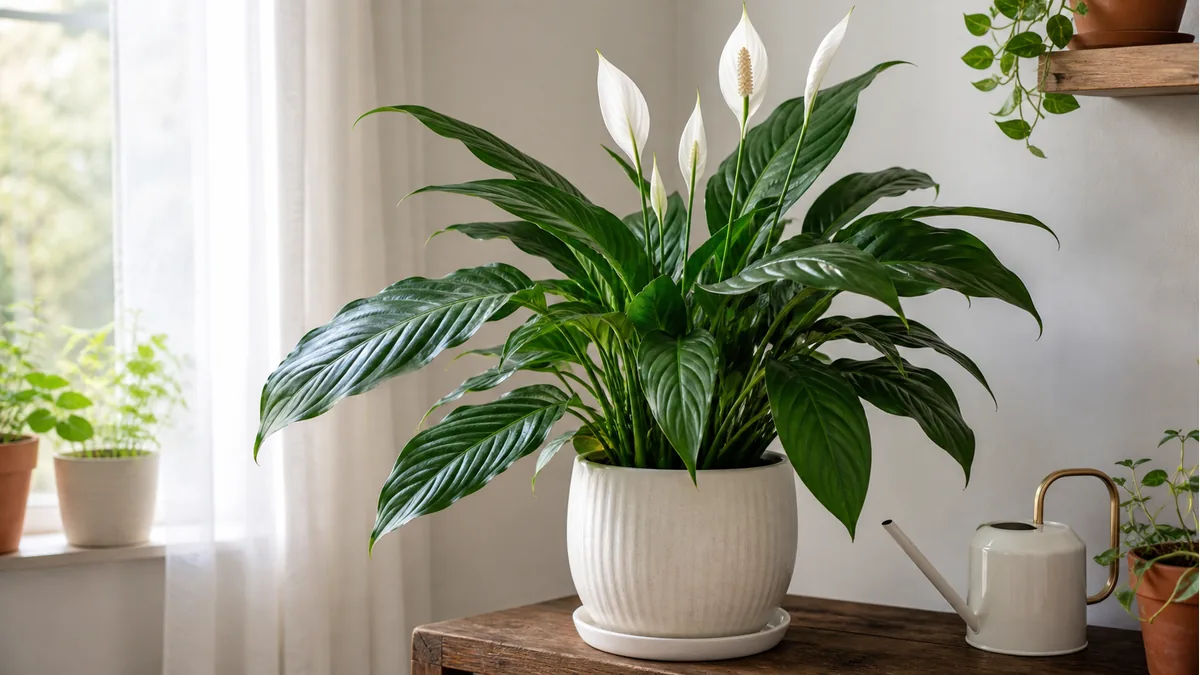
Peace lily grows best in warm conditions with bright indirect light, evenly moist but aerated soil, and enough light and maturity to bloom. The plant can tolerate lower light better than many flowering houseplants, which explains its reputation as a forgiving gift plant. That tolerance has limits. A peace lily kept too dark, too wet, or too close to pets can turn from elegant white spathes and glossy leaves into drooping stems, yellow leaves, brown tips, and a safety problem.
Think of peace lily care as a balance between forest-floor comfort and indoor root health. Give it soft light, warmth, air around the roots, and a watering rhythm that prevents collapse and soggy soil. The plant will tell you quickly when one of those conditions slips.
Peace Lily Care Snapshot
Best placement
Bright indirect light, warm rooms, and a spot away from cold drafts, hot vents, and pet access.
Watering rule
Water after the upper mix starts drying, then drain fully. Do not train the plant to collapse.
Blooming trigger
More bright indirect light, maturity, root health, and modest feeding matter more than secret additives.
Key Takeaways
- Place peace lily in bright indirect light for blooms.
- Water after checking soil, not after dramatic collapse.
- Use airy mix and drainage to protect roots.
- Remove spent spathes and damaged leaves at the base.
- Keep peace lily away from cats, dogs, and children.
Table of Contents
Peace Lily Care at a Glance
Peace lily is the common name for Spathiphyllum, a tropical aroid grown for dark leaves and white spathes. The white “flower” is a modified leaf called a spathe around a central spadix. That structure matters because old spathes naturally turn green, tan, or brown as they age. A fading spathe is not automatically a care failure.
| Care factor | Best range | What goes wrong |
|---|---|---|
| Light | Bright indirect light; medium light tolerated | Low light reduces blooming; direct sun scorches leaves |
| Water | Evenly moist, with partial drying at the top | Repeated wilting weakens roots; soggy soil causes rot |
| Soil | Airy indoor mix with drainage | Dense wet mix leads to sour smell and yellow leaves |
| Temperature | Warm indoor conditions, roughly 65-80 F | Cold drafts blacken or collapse tender tissue |
| Humidity | Average to moderately humid rooms | Dry air can worsen brown tips and slow unfurling |
| Feeding | Light feeding during active growth | Too much fertilizer can burn tips and salt the mix |
| Propagation | Division of mature clumps | Leaf cuttings do not make new peace lily plants |
| Safety | Keep away from chewing pets and children | Chewing can irritate mouth, tongue, and throat |
A Spathiphyllum plant profile lists peace lily in the Araceae family and flags calcium oxalate irritation. That is the care and safety frame to keep in mind: the plant is not a true lily, and it still deserves serious placement away from animals and children who chew leaves.
Some tags and databases use the botanical name first, and some shoppers type lily spathiphyllum when they mean the same plant. In ordinary care terms, the key identity point is simple: peace lily is a clumping aroid with leaves rising from crowns at the soil line. New leaves and spathes emerge from that crown, so damage at the base of the plant matters more than a single torn leaf.
Mature size depends on variety and growing conditions. Many gift-size plants stay tabletop scale for years, especially in modest light. Larger selections need a floor spot, more root volume, and enough clearance so leaves are not bent by walls, chair backs, or curtains. A plant that has room to spread is easier to water, clean, inspect, and divide later.
Peace Lily Light Determines Growth and Blooming
Peace lily survives in lower light, then blooms best in brighter filtered light. That difference explains most no-bloom complaints. A plant may sit green in a dim office for years and rarely send up white spathes. Move the same mature clump closer to bright indirect light, and the plant has a better energy budget for flowers.
Direct sun is the other error. Hot afternoon sun through glass can scorch the leaves, leaving pale patches, crispy edges, or bleached streaks. Place the plant near an east window, several feet back from a bright south or west window, or behind a sheer curtain. The leaves should look glossy and firm, not washed out or curled away from heat.
Grow lights help in dark apartments and offices. A full-spectrum fixture above the plant for a consistent daily interval is better than a decorative lamp across the room. If new leaves are smaller, stems lean hard toward the window, or blooms never form, the plant probably needs more usable light.
Low-light marketing also feeds air-cleaning and no-window myths. Peace lily can be part of an indoor plant collection, and room-scale air cleaning claims need caution. The indoor plant air quality discussion gives the same scale correction for NASA-style claims: plant biology is real, household impact is smaller than viral summaries imply.
A no-window room is a storage location, not a growth plan, unless a real grow light supplies the missing energy. Fluorescent office light can keep some leaves alive for a time. It rarely gives the plant the same bloom potential as a bright window or a properly placed grow light. If the room needs lamps all day for people to see comfortably, the plant needs artificial plant lighting too.
Water by Root-Zone Condition, Not Dramatic Drooping
Peace lily is famous for dramatic drooping. The leaves can fold and hang when the root zone gets too dry, then lift again after watering. That performance makes watering feel simple, and it can also train bad care. Waiting for collapse every time stresses roots and leaf tissue.
Check the potting mix first. Water when the top inch begins to dry and the pot feels lighter, with the lower root zone still holding a little moisture. Water thoroughly until excess drains from the bottom, then empty the saucer. Roots need oxygen after watering. A pot sitting in water loses that air space.
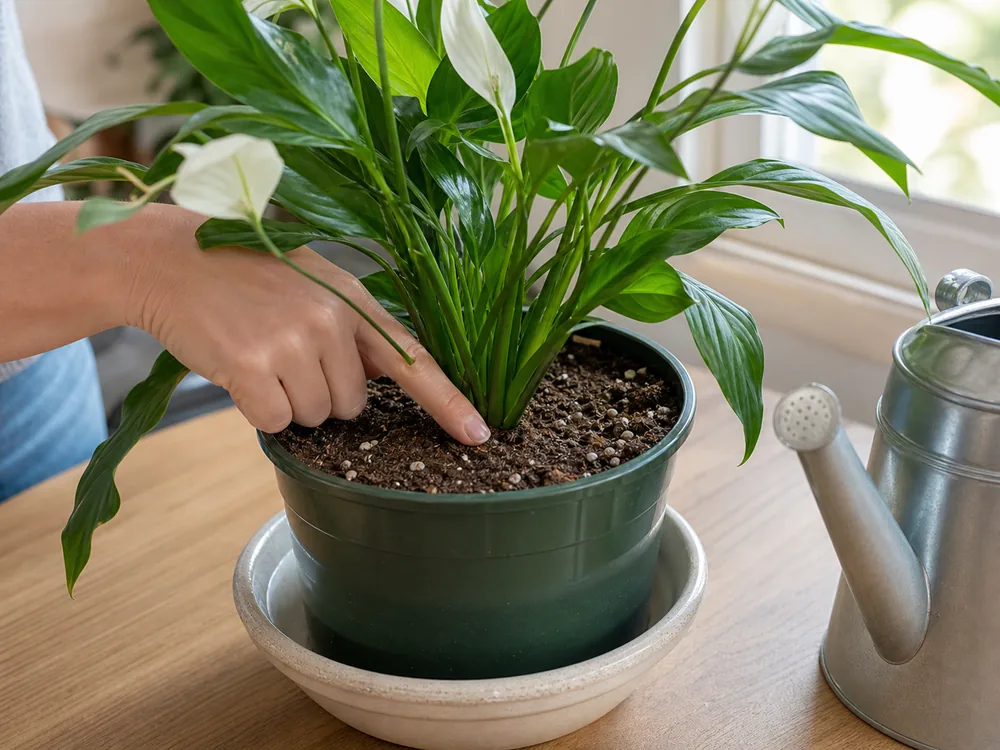
Repeated drooping can create a cycle of extremes: bone-dry mix, heavy watering, limp recovery, then another dry crash. Chronic wetness creates a different pattern. Yellow lower leaves, blackened bases, sour soil smell, fungus gnats, and a pot that stays heavy for days point toward root stress from low oxygen.
Water quality can affect leaf tips. Peace lily may show brown tips when salts, fluoride, or fertilizer residues build up in the mix. Flush the pot occasionally with clean water, let it drain fully, and avoid feeding a dry plant. If tap water is very hard, rainwater or filtered water can reduce tip burn.
Recovery after a dry droop should be visible within hours. Leaves lift, petioles firm, and the plant looks less collapsed by the next day. Slow recovery means the mix resisted wetting, roots were already damaged, or the room is stressing the plant in another way. In that case, soak the root ball once, drain it fully, then reset the schedule around soil feel instead of the calendar.
Soil, Pot, Repotting, and Peace Lily Division
Peace lily roots need moisture and air at the same time. Dense garden soil in a decorative pot usually fails that test indoors. Use an indoor potting mix that holds moisture without turning heavy and sour. Perlite, fine bark, or another aerating amendment can help if the mix stays wet too long.
The pot must have a drainage hole. Cachepots are fine only when the inner pot drains freely and standing water is removed. The broader houseplant care routine follows the same pattern: light sets water use, drainage protects roots, and repotting should correct a real root-zone problem.
Repot in spring or early summer when the plant is actively growing. Move up one pot size if roots circle tightly, water runs through too fast, the plant dries much faster than before, or the clump has pushed against the pot wall. A huge new pot can hold too much wet mix around the roots, especially in winter.
Transplant stress usually looks like temporary drooping, a few yellow older leaves, or slower growth for several weeks. Keep the plant warm, out of direct sun, and evenly moist during recovery. Do not fertilize immediately after major root disturbance. New leaves from the crown are the best sign that the division or repotting has settled.
The root-bound blooming myth needs a careful read. A slightly snug pot can flower well because the plant is mature and has a full crown. A severely cramped plant may wilt faster, shed older leaves, and stop improving. Repotting may pause blooms for a short time, then healthier roots support better long-term growth.
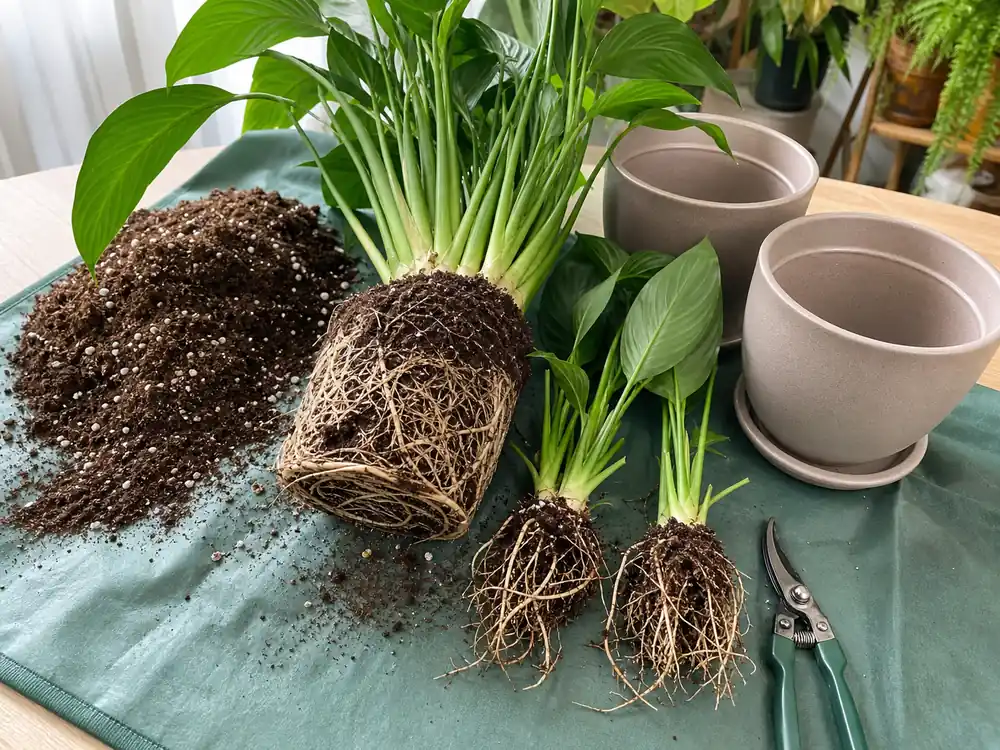
Propagation is by division, not leaf cuttings. Separate a mature clump only when each division has roots and several leaves. Pot divisions into fresh airy mix, water them in, and keep them in bright indirect light as they recover. Small divisions may droop for a few days as roots reconnect with the new mix.
Temperature and Humidity Without Bathroom Myths
Peace lily likes warm rooms. Cold windowsills, drafty doors, air conditioners, and winter transport can damage tender tissue. Black or water-soaked patches after a cold night are different from dry brown tips. Move the plant before diagnosing fertilizer or watering.
Average household humidity is often acceptable, though dry heat can worsen brown edges. Grouping plants, using a pebble tray that does not touch the pot bottom, or running a humidifier nearby can improve comfort around the leaves. Misting gives a brief wet surface and little lasting humidity change.
Bathrooms are often suggested for peace lily because the plant tolerates humidity. That does not make it a bathroom dehumidifier, mold control tool, or odor absorber. Moisture problems need ventilation, drying time, leak repair, and sometimes a dehumidifier. A peace lily may enjoy a bright bathroom; it cannot replace the room’s moisture control.
The EPA’s home mold and moisture guidance centers on fixing water problems and drying materials. For houseplants, the same practical line applies: enjoy the plant where it can grow, and do not ask it to solve building moisture.
How to Help a Peace Lily Bloom Again
Peace lily blooms when the plant has enough light, maturity, root health, and stored energy. The white spathes are not random decorations. They cost the plant resources. A plant that is recovering from root stress or living in dim light will usually choose leaves over flowers.
Start with light. Move the plant to brighter indirect exposure for several weeks and watch new growth. Mature plants respond better than small divisions. If the plant is young, newly divided, or recently repotted, leaf growth may come first.
Spent spathes should be cut at the base of the flower stalk when they turn green, tan, or brown. Do not pull them out of the crown. Removing old stalks keeps the plant tidy and stops it from wasting energy on aging tissue. It does not force instant reblooming.
Feed lightly during active growth. A balanced houseplant fertilizer at reduced strength is usually enough. Heavy feeding can burn root tips and leaf edges, especially if salts build up in the potting mix. A South Dakota State peace lily houseplant profile places the plant in low to medium light tolerance, which fits the common pattern: survival can happen in lower light, blooming needs more.
Fertilizer, Cleaning, and Routine Maintenance
Peace lily is not a heavy feeder indoors. Feed during active growth, then reduce or stop feeding when light is low and growth slows. Fertilizer should follow healthy roots and active leaves. It should not be used to push a stressed plant into recovery.
Flush the potting mix occasionally if you fertilize or use mineral-heavy water. Run water through the pot until it drains freely, then let the pot empty. This reduces salt buildup that can crisp leaf tips. Never leave the pot soaking in the flushed water.
Clean leaves with a damp cloth, supporting each leaf from beneath. Dust dulls the shine and can hide mites, scale, or early yellowing. Avoid leaf-shine sprays. Peace lily leaves already have a natural gloss when they are clean and well hydrated.
Prune old leaves and spent spathes at the base with clean scissors. Yellow leaves will not turn green again. Brown tips can be trimmed along the natural leaf shape if the damage bothers you. The trimmed edge may still dry slightly. Rotate the pot every week or two so the crown grows evenly toward the light.
Common Peace Lily Problems: A Routing Guide
Common peace lily problems usually start with water, light, roots, temperature, or pests. Start with the visible pattern, then check the root zone before applying a fix. A leaf symptom above the soil often begins with conditions below the soil.
| Sign | Likely first check | Safe first move |
|---|---|---|
| Dramatic droop | Dry mix or damaged roots | Check soil depth before watering |
| Yellow lower leaves | Chronic wetness, age, or low light | Check drainage and root smell |
| Brown tips | Salt buildup, dry air, uneven watering | Flush mix and stabilize watering |
| Black soft tissue | Cold damage or root rot | Move from drafts and inspect roots |
| No flowers | Low light, youth, or root stress | Increase bright indirect light |
| Sticky leaves | Scale, aphids, or mealybugs | Inspect stems and leaf undersides |
| Fungus gnats | Mix staying wet too long | Let upper mix dry and improve airflow |
The disadvantages of the peace lily are practical. It is toxic when chewed, it droops dramatically, it reacts to overwatering and salts, it may refuse to bloom in low light, and it does not deliver meaningful room-scale air cleaning or moisture control. Those limits do not make it a bad plant. They make placement and expectations more important.
If the whole plant collapses after a single dry spell and recovers quickly, watering timing was probably the issue. If the plant droops with a wet pot, roots may be damaged. Wet droop is more serious than dry droop because roots cannot take up water when rot or low oxygen has injured them.
Pests often hide before the plant looks badly infested. Scale can sit along midribs and stems like small brown bumps. Mealybugs gather as white cottony patches in leaf joints. Spider mites leave pale stippling and fine webbing, especially in warm dry rooms. Isolate a suspicious plant, wipe leaves, and inspect every few days until new damage stops.
Peace Lily Safety for Cats, Dogs, People, and Varieties
Peace lily is separate from true lilies such as Easter lily and Asiatic lily. That distinction matters because true lilies can be extremely dangerous to cats. Peace lily still contains insoluble calcium oxalate crystals that can irritate the mouth, lips, tongue, throat, and stomach when chewed.
Keep the plant out of reach of cats, dogs, and children who mouth leaves. Hanging placement is not always safe for cats that climb or bite trailing leaves from shelves. The ASPCA toxic and non-toxic plant database and the Pet Poison Helpline Mauna Loa peace lily entry treat peace lily exposure as irritation risk, not a harmless nibble.
If a pet or child chews the plant, remove plant pieces from reach and contact a veterinarian, poison-control service, or medical professional for case-specific advice. Do not try home treatment from a plant article. Symptoms, amount eaten, animal size, and the exact plant all matter.
For pet households, choose safer plants first. The cat safe house plants list is a better starting point when leaves are likely to be chewed. If the main goal is a low-maintenance indoor plant and not a peace lily specifically, best indoor plant choices can help match light, space, and care tolerance.
Peace lily varieties range from compact tabletop plants to larger floor plants. Common types may mature around 1-3 feet tall indoors. Larger selections such as ‘Sensation’ can become much broader. Variegated types usually need brighter indirect light to hold clean patterning. Choose mature size before pot color. A crowded corner creates torn leaves, blocked airflow, and more pet access problems.
Conclusion
Peace lily is a strong indoor plant when its care stays simple and consistent: bright indirect light, warm temperatures, an airy moist root zone, light feeding, and safe placement. Low light may keep the leaves alive. Better filtered light is the usual path to repeat blooms.
Use the plant’s signals early. Firm glossy leaves, a pot that dries on schedule, clean white spathes, and new crowns from the base show that the balance is working. Droop, yellowing, brown tips, or no flowers mean one condition has slipped and should be checked before the plant declines further.