

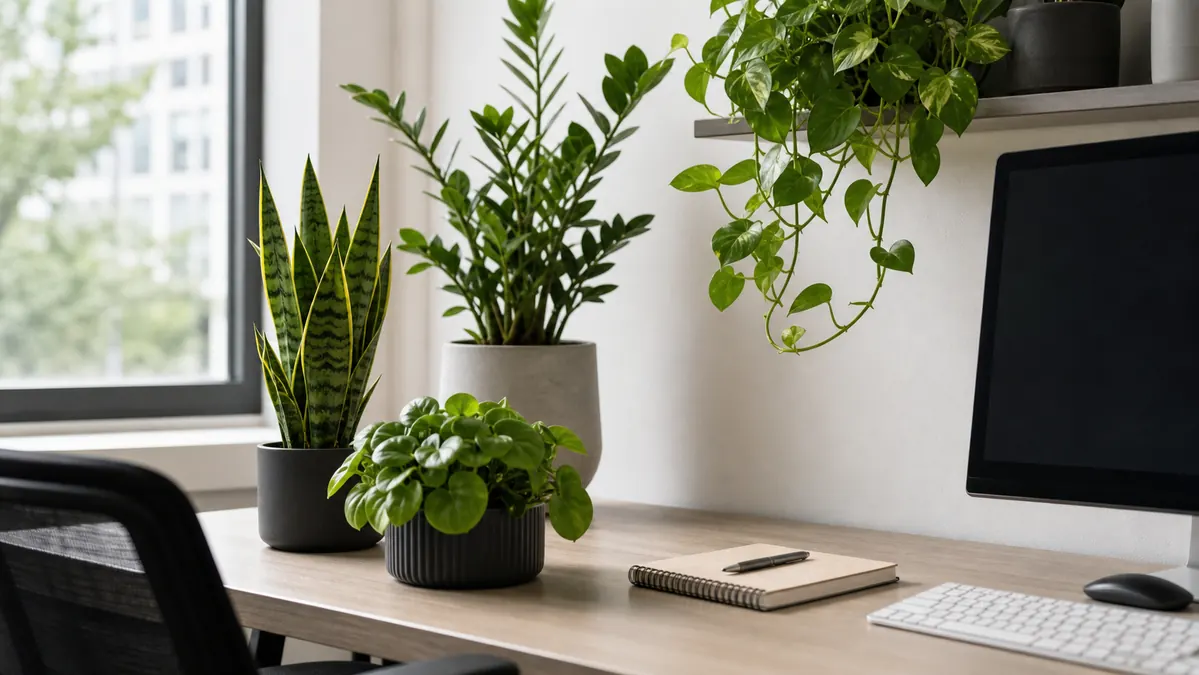
The best plants for an office tolerate the workspace’s real light, weekend watering gaps, HVAC drafts, and available desk or floor space. A plant that looks easy in a nursery can fail on a cubicle wall with no window, an air vent above it, and three coworkers watering it on different days. Office plant choice starts with the room, not the plant list.
The safest office shortlist is practical: ZZ plant, snake plant, pothos, aglaonema, peperomia, parlor palm, dracaena, spider plant, and cast iron plant. Each one still needs a matching spot. Low maintenance means the plant can handle office mistakes; it still needs usable light, drainage, and enough space on the desk.
Best Plants for an Office Start With the Light Source
Window within a few feet
Use snake plant, pothos, peperomia, spider plant, dracaena, or parlor palm. Rotate the pot if growth leans.
Bright interior office
Use ZZ plant, aglaonema, cast iron plant, pothos, or snake plant. Expect slower growth than a window spot.
Fluorescent or LED only
Choose tough plants and add a timered grow light when the desk is far from a window.
Dark room or closed office
Use a plant rotation or artificial light plan. Room light for people is often too weak for long-term growth.
Key Takeaways
- Office plants should be chosen by light source, pot footprint, and watering responsibility.
- ZZ plant and snake plant are strong choices for low-care offices with modest light.
- Pothos works well on shelves or file cabinets, and its vines need room and trimming.
- Windowless offices need measured artificial light or a rotation plan.
- Air-cleaning and stress claims should stay modest; ventilation and workplace health measures still do the real work.
Table of Contents
Desk, Cubicle, and Floor Plants Need Different Footprints
A desk plant has to fit the work surface after the keyboard, monitor, notebook, coffee cup, and elbow room are counted. Peperomia, haworthia, small snake plant, compact pothos, and small ZZ plants make better desk choices than broad palms or trailing vines that reach into cords. Choose a heavy pot with a stable base so one bumped corner does not put soil into a keyboard.
Cubicles need plants that tolerate side light and limited air movement. Upright plants work better than sprawling plants in narrow space. Snake plant and ZZ plant stay tidy. Aglaonema can add color in medium light. Pothos works when it has a shelf or cabinet edge, and it needs trimming before vines cross into walkways or shared equipment.
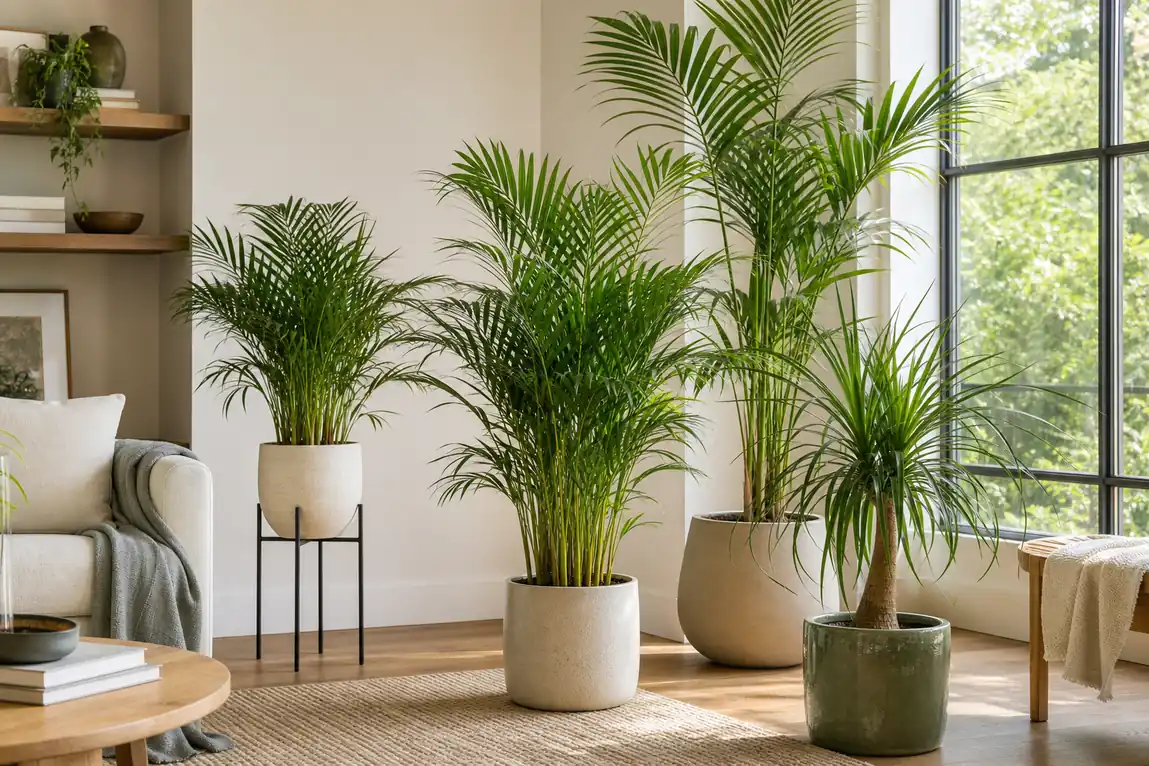
Floor plants need clearance and height. A dracaena, parlor palm, cast iron plant, or larger snake plant can soften a private office or reception corner, and the mature width matters as much as the label height. Leaves should stay clear of chairs, file drawers, and HVAC blasts. The broader best indoor plant selection guide is useful when the office choice also needs to fit home light, pets, or a second room later.
| Placement | Best fits | Avoid first | Why it matters |
|---|---|---|---|
| Small desk | Peperomia, haworthia, small snake plant | Large trailing vines | Stable pots and compact leaves reduce spills |
| Cubicle shelf | Pothos, ZZ plant, aglaonema | Top-heavy floor plants | Side light and limited space favor slow growth |
| Reception corner | Parlor palm, dracaena, cast iron plant | Spiny or scent-heavy plants | Public areas need durable, low-conflict plants |
| Private office window | Snake plant, pothos, spider plant, peperomia | Plants pressed against cold glass | Light is useful only when temperature stays stable |
Choose for Weekends, Holidays, and Shared Watering
Office plants fail most often from irregular care. A plant may go dry over a long weekend, then get soaked by three helpful people on Monday. ZZ plant, snake plant, cast iron plant, and haworthia tolerate missed watering better than peace lily, fittonia, or many ferns. That makes them better for desks where nobody checks soil on a fixed schedule.
Drought tolerance means the plant has storage tissue, tough leaves, or slower water use. It still needs a full watering when the root zone dries, followed by drainage. A decorative cachepot with no drainage hole can turn a low-care plant into a root-rot case.
Shared watering needs one named owner. Put the plant on a tray, keep a small watering can nearby, and agree that only one person waters after checking the soil. The general houseplant care routine helps keep watering, light, repotting, and pest checks from becoming scattered office habits.
Plants with dramatic wilt can create false alarms. Peace lily may droop when dry and recover after watering, and repeated wilt stresses the plant and makes brown tips more likely. A calmer office choice changes slowly enough for the caregiver to check moisture before the plant looks distressed.
HVAC, Dry Air, and Temperature Swings
Office HVAC changes plant behavior. Air conditioning dries leaf surfaces and potting mix. Heating vents can brown tips. Cold windows can chill foliage in winter. A plant that handles home conditions may struggle when a vent blows across its leaves for eight hours each workday.
Keep plants out of direct vent paths. Move them a few feet from cold glass, hot equipment, and exterior doors. Dracaena, peace lily, and palms may show brown tips faster in dry moving air. Snake plant, ZZ plant, pothos, and cast iron plant tolerate dry offices better when their roots are not waterlogged.
Humidity-sensitive plants are poor first choices for busy offices. Calathea, maidenhair fern, fittonia, and many thin-leaved tropical plants may look appealing in photos, and they often need steadier moisture and humidity than an office can provide. They belong in a workspace only when someone has the interest and authority to manage light, water, and humidity carefully.
Indoor plant care depends on light, water, temperature, humidity, and pest monitoring, and a growing indoor plants with success resource treats those conditions as linked. In an office, the link is easy to see: dry air increases water demand, low light slows water use, and cold drafts can damage leaves even when watering is correct.
Windowless Offices Need a Lighting Plan
A windowless office is not the same as a low-light office. Low light still means some usable light reaches the plant. A closed interior room may provide enough light for a human to read and still give a plant too little energy to maintain healthy growth. Plants can decline slowly in that gap, which makes false success easy to miss.
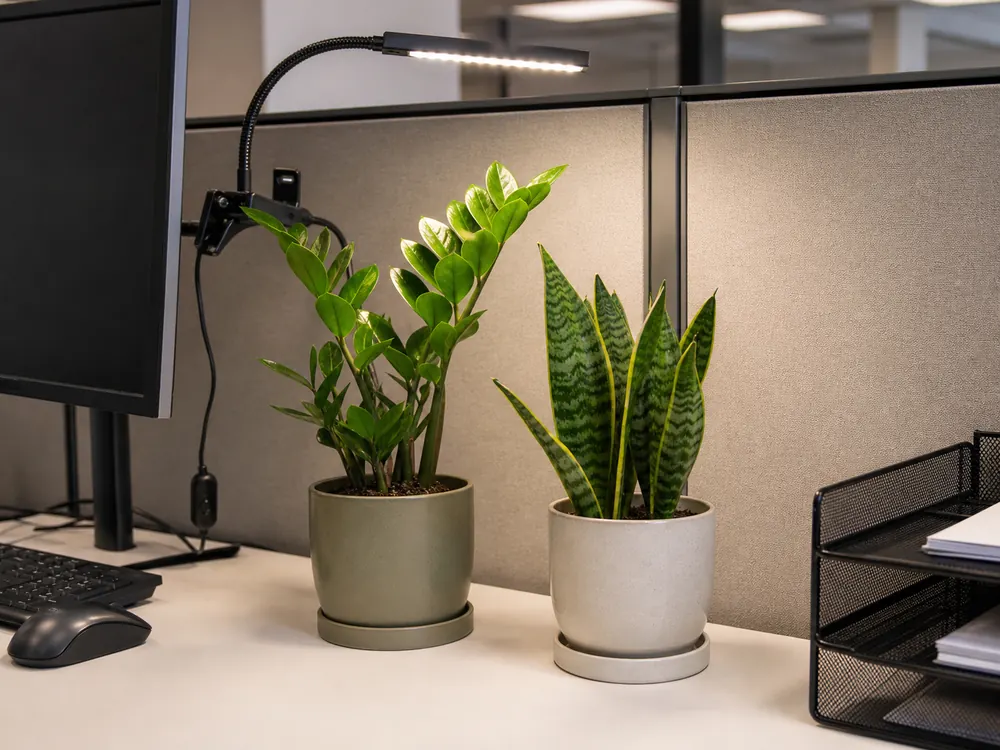
For a desk with no window, choose a tough plant and add a small full-spectrum grow light on a timer. Keep the light close enough to matter, often within a few feet depending on the fixture. A light across the room is often decorative more than useful. Set the timer so the plant receives a repeatable day length and the office does not depend on someone remembering a switch.
Plant rotation can work when a grow light is not allowed. Keep one plant in the office for a limited period, then rotate it back to a brighter location for recovery. This is better for facilities teams or reception areas than for a single gift plant that will be forgotten in a closed room.
Snake plant and ZZ plant are often recommended for windowless offices because they decline slowly in poor light. That is different from growing well. If new leaves become smaller, pale, stretched, or weak, the plant is spending reserves. The fix is better light, fewer expectations, or a rotation plan.
Safety and Workplace Practicalities
Office plant safety goes beyond care difficulty. A plant can be durable and still be a poor workplace choice because of pets, thorns, pollen, scent, sap, pests, or moldy soil. Reception areas, schools, pet-friendly offices, and shared coworking spaces need stricter choices than a private home office.
Many common office plants, including pothos, philodendron, dieffenbachia, peace lily, dracaena, snake plant, and ZZ plant, can irritate people or animals if chewed or handled carelessly. The ASPCA toxic and non-toxic plant database is the better check before placing a plant where cats, dogs, or office visitors may reach it. For cat-specific placement, cat safe house plants should guide the shortlist instead of relying on a generic office list.
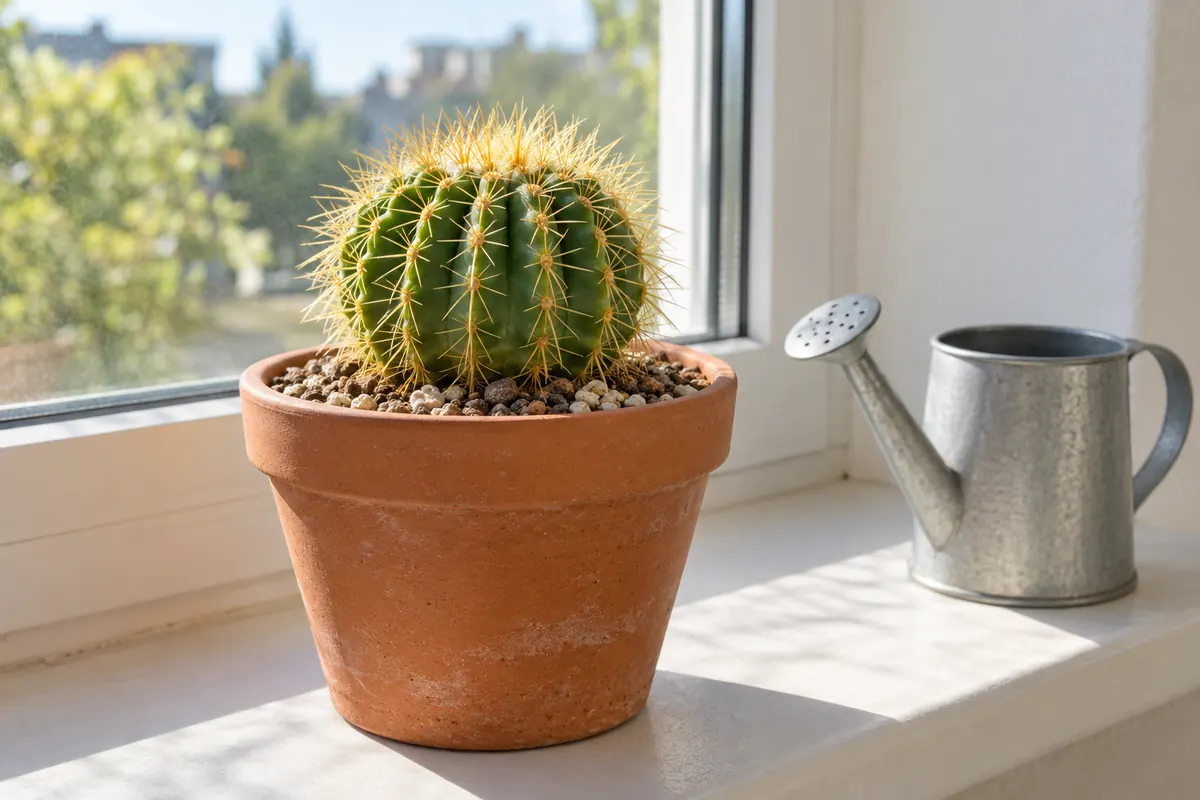
Avoid thorny, spiny, strongly scented, or pollen-heavy plants in shared work areas. Cacti may be fine on a private desk and poor in a hallway. Scented plants can bother coworkers even when the fragrance is pleasant to the owner. Flowering plants can add seasonal interest, and foliage plants are less disruptive and easier to keep presentable.
Air-cleaning claims need restraint. Small potted plants can improve how a room feels, and they may support a more pleasant workspace. Ventilation, filtration, moisture control, and source control still handle indoor pollutants in real buildings. The EPA’s indoor air quality guidance focuses on those practical levers.
Office Plant Decision Matrix
The best office plant is the one that fits the worst regular condition, not the best moment of the day. A room with one bright hour needs low to medium light choices. Weekend-empty desks need dry tolerance. Pet-friendly offices need verified safety before leaf shape or trend value.
| Plant | Best placement | Watering tolerance | Watch-outs |
|---|---|---|---|
| ZZ plant | Bright interior, cubicle, reception shelf | High dry tolerance | Slow growth; toxic if chewed |
| Snake plant | Desk, floor pot, private office | High dry tolerance | Needs drainage; toxic if chewed |
| Pothos | Shelf, file cabinet, bright interior | Moderate dry tolerance | Vines need trimming; toxic if chewed |
| Peperomia | Small desk, windowsill, shared table | Moderate dry tolerance | Small root system dislikes soggy mix |
| Parlor palm | Floor or reception corner | Moderate | Can brown in dry vents; grows wider over time |
| Cast iron plant | Low-light floor spot | Good dry tolerance | Slow; needs floor space |
| Spider plant | Desk, shelf, hanging spot with access | Moderate | Leaf tips brown with dry air or water salts |
| Aglaonema | Medium-light desk or cabinet | Moderate | Color fades in dim light; toxic if chewed |
Trailing plants need placement control. Pothos and philodendron can be excellent office plants, and the stems should stay clear of keyboards, power strips, shared walkways, and cleaning routes. If vining form is the main appeal, the indoor vining plants guide gives a better boundary for poles, shelves, and trailing setups.
Air-quality lists often include snake plant, pothos, peace lily, spider plant, and dracaena. Treat those lists as context, not a promise that one pot changes office air at building scale. Indoor plants for air quality need careful interpretation because chamber findings do not translate directly to real rooms.
First-Month Setup and Ownership
The first month decides whether an office plant becomes part of the workspace or turns into a neglected object. Start with a pot that drains, a saucer that protects the surface, and a tray if the plant sits near papers or equipment. Never let water collect inside a decorative pot where roots sit unseen.
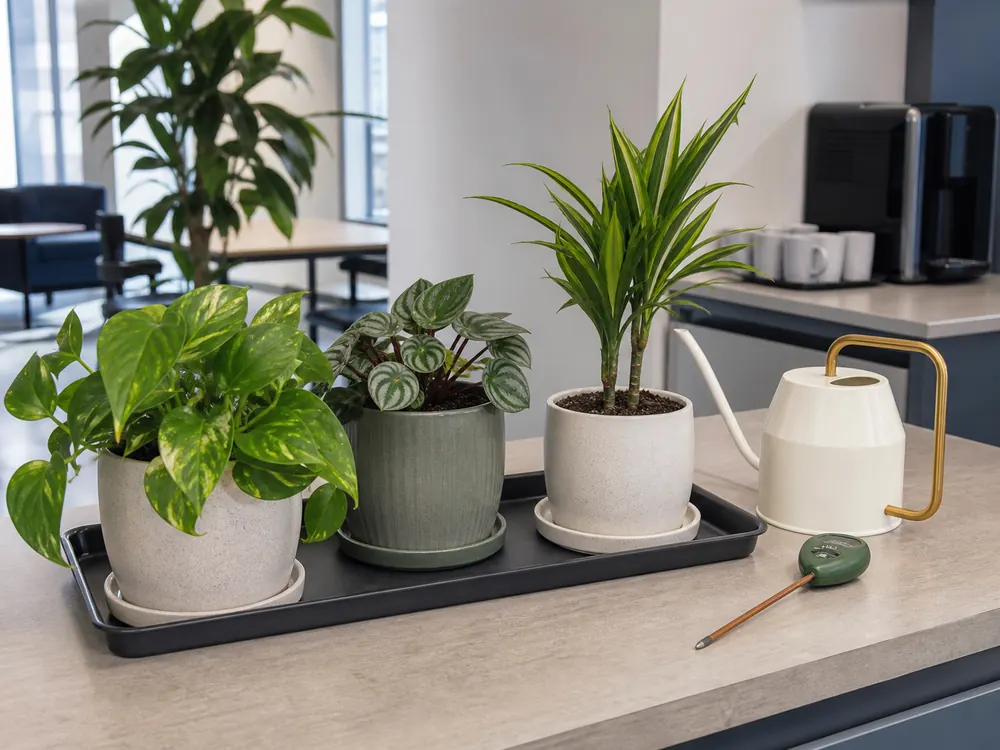
Name one caregiver. The caregiver checks soil before watering, turns the pot when growth leans, wipes dust from leaves, and isolates the plant if pests appear. A shared office can keep a simple calendar or sticky note near the watering can, and the plant should have one person responsible for the final watering decision.
Drainage protects both roots and office furniture. A plant in a sealed decorative container may look cleaner on day one and fail by month two. Use an inner nursery pot with drainage holes inside a cachepot, then remove extra water after watering. Pot drainage is especially important when plants sit on desks, cabinets, or reception counters.
Keep new office plants separate from existing plants for a week or two if possible. Check undersides of leaves, leaf joints, and soil surface for gnats, sticky residue, cottony patches, or webbing. Office pests spread quietly because plants are rarely inspected closely. A small quarantine step is easier than cleaning pests from every desk plant later.
Do Plants Lower Cortisol?
Some small studies suggest contact with indoor plants can reduce stress markers or improve perceived wellbeing, and one indoor plant interaction study reported lower physiological stress during a plant task than a computer task. That does not prove an office plant will lower cortisol for every person. Treat plants as a workspace comfort and attention break, not a medical intervention.
Conclusion
Best plants for an office choices come from matching the plant to the workspace’s real constraints. A ZZ plant or snake plant fits many low-care offices. Pothos fits shelves and cabinets. Peperomia fits small desks. Parlor palm, dracaena, and cast iron plant fit floor space when light and traffic allow them.
Choose light first, then footprint, watering responsibility, HVAC exposure, and safety. An office plant that fits those limits will stay cleaner, healthier, and easier to share than a trend plant placed where the room cannot support it.