

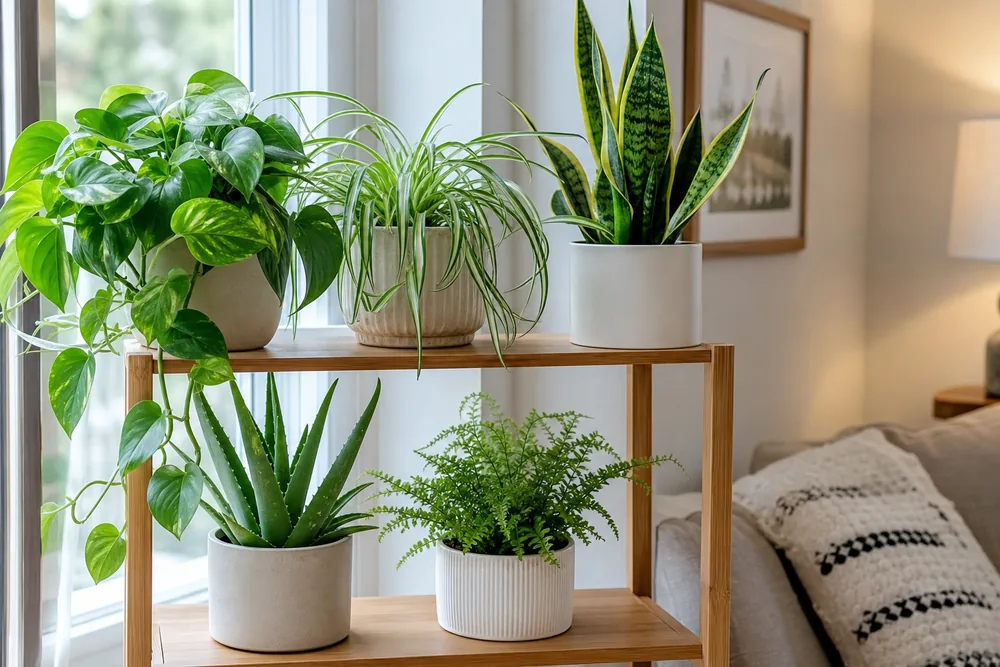
Houseplant care starts with matching light, water, and roots to the plant on the shelf before a fixed weekly routine. A plant can look fine for weeks as its pot stays too wet, its newest leaves stretch toward a window, or its roots press against stale mix that no longer drains cleanly. The first visible problem is often yellow leaves, brown tips, or a soft stem. The cause usually started below the leaf surface.
Good indoor plant care uses a repeatable check: read the light, feel the mix, lift the pot, empty standing water, and adjust for the season. Once those habits are in place, beginners can keep common houseplants alive without memorizing a separate rule for every plant tag.
Houseplant Care Chart
Most indoor plants stay healthier when the top layer dries before watering, the pot drains fully, and the plant sits in the brightest light it can tolerate without scorch.
| Plant Type | Light | Water Trigger | Main Mistake |
|---|---|---|---|
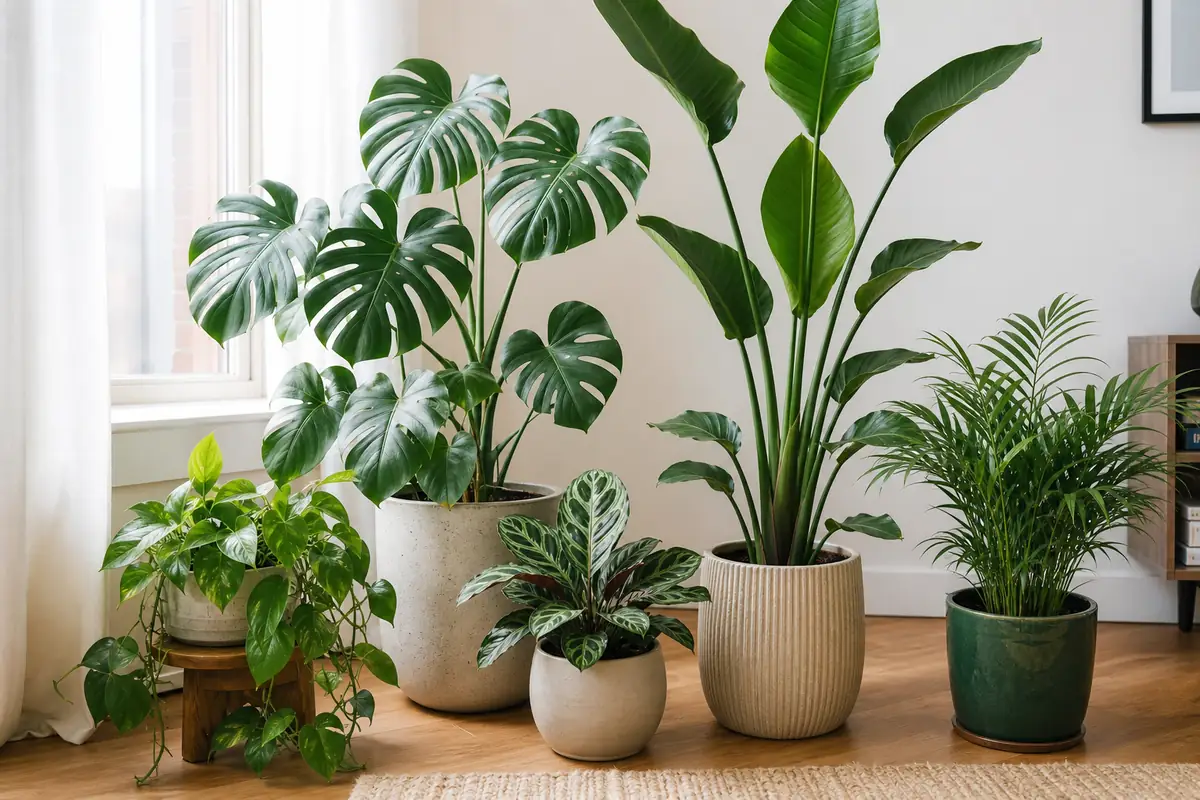
| Pothos, philodendron, monstera | Bright indirect | Top 1 to 2 inches dry | Watering on a calendar |
| Snake plant, ZZ plant, aloe | Bright light to moderate indoor light | Mix dry much deeper | Heavy soil and frequent watering |
| Ferns, calathea, peace lily | Bright filtered light | Surface starting to dry | Letting roots swing from dry to saturated |
| Spider plant, dracaena | Bright indirect to medium | Upper mix dry | Salt buildup, dry tips, and stale water |
Key Takeaways
- Match each plant to the brightest safe indoor light.
- Water by dry-down, pot weight, and drainage.
- Use loose potting mix that keeps roots oxygenated.
- Reduce feeding and watering when winter growth slows.
- Read yellow leaves by pattern before changing everything.
Table of Contents
Houseplant Care Chart For Common Indoor Plant Types
A useful houseplant care chart starts with plant behavior before plant popularity. Thick-leaved succulents store water and decline in wet soil. Thin-leaved tropical plants lose water faster and often react to dry air. Vining foliage plants sit in the middle: they tolerate missed water better than ferns, yet they still rot when a cachepot holds water around the roots.
Use this chart as a starting point, then adjust by room temperature, window exposure, pot size, and season.
| Plant Group | Best Light | Watering Cue | Humidity Need | Care Warning |
|---|---|---|---|---|
| Pothos, philodendron, monstera | Bright indirect light | Top 1 to 2 inches dry | Average to moderate | Low light slows growth, then wet mix lingers |
| Snake plant, ZZ plant, aloe | Bright light, some direct sun for aloe | Mix dry several inches down | Low to average | Large pots and rich mix hold too much water |
| Spider plant, dracaena | Bright indirect to medium | Upper mix dry, pot lighter | Average | Salt buildup and water quality can brown tips |
| Ferns and calathea | Bright filtered light | Surface just starting to dry | Moderate to high | Dry air and missed water cause crisp margins |
| Peace lily and similar foliage plants | Medium to bright indirect | Leaves just soften, mix slightly dry | Average to moderate | Repeated wilt weakens older leaves |
| Orchids and bromeliads | Bright filtered light | Root medium drying, roots still firm | Moderate with air movement | Dense potting soil smothers epiphytic roots |
The chart gives a first move; your room sets the permanent schedule. A spider plant in a 4-inch terracotta pot may dry faster than a pothos in a plastic nursery pot. A fern near a heat vent may need humidity correction before more fertilizer. For species-specific examples, spider plant care and aloe vera care show how the same care rules change once leaf texture and root storage change.
Light Levels Decide How Much Water A Houseplant Can Use
Light drives the whole indoor plant care routine. Leaves use light to make sugars, and roots can only use water and nutrients at the pace the top of the plant can support. A plant in weak light often stays wet longer because it is transpiring less water through its leaves.
Indoor light is much weaker than outdoor light, even beside a window. The University of Georgia indoor plant light ranges separate low light at 25 to 75 foot-candles, medium light at 75 to 200 foot-candles, high light above 200 foot-candles without direct sun, and sunny areas with at least 4 hours of direct sun. Those categories explain why a plant can survive in a north room yet grow slowly.
East windows are gentle because they give morning sun and cooler temperatures. South and west windows give stronger light and more heat, so leaves may need distance from the glass or a sheer curtain. North windows suit fewer plants for long-term growth, especially variegated foliage that loses color when light stays low.
Read the plant before moving it. Long gaps between leaves, smaller new leaves, and pale new growth point toward low light. Bleached patches, crisp sun-facing edges, or leaves tilted away from the glass point toward too much direct sun.
Observation: A plant that keeps drying fast in bright light may be using water well. A plant that stays wet for ten days in a dim corner is often giving a light warning before it gives a root warning.
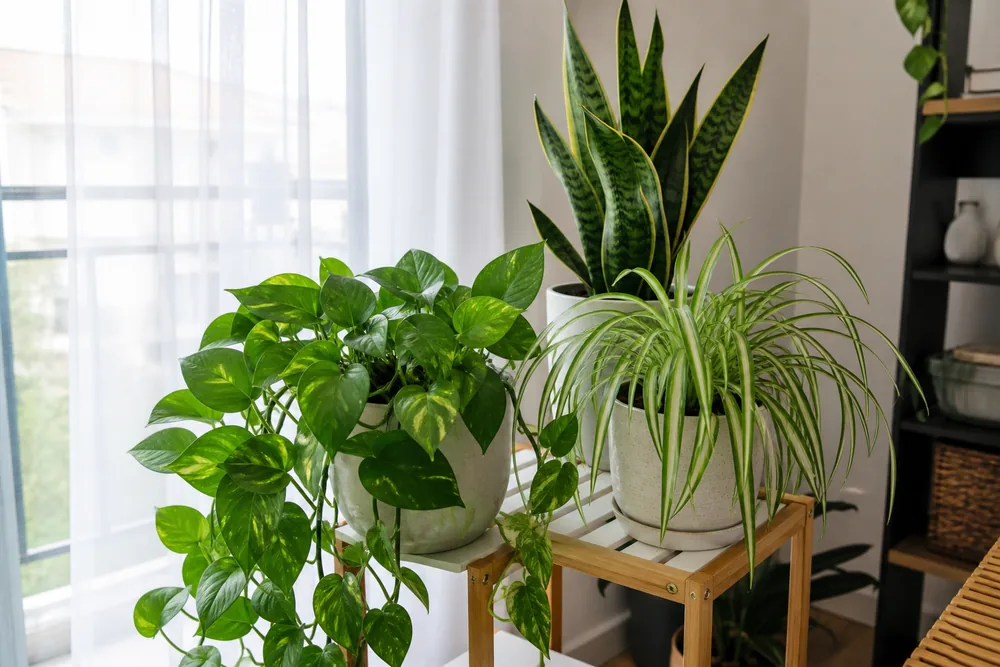
Houseplant Watering Works By Dry-Down, Drainage, And Pot Weight
How often should houseplants be watered? Water when the root zone has used enough moisture for air to return to the mix. That may be every few days for a small fern in warm light, every week or two for a pothos, or much less often for a snake plant in winter.
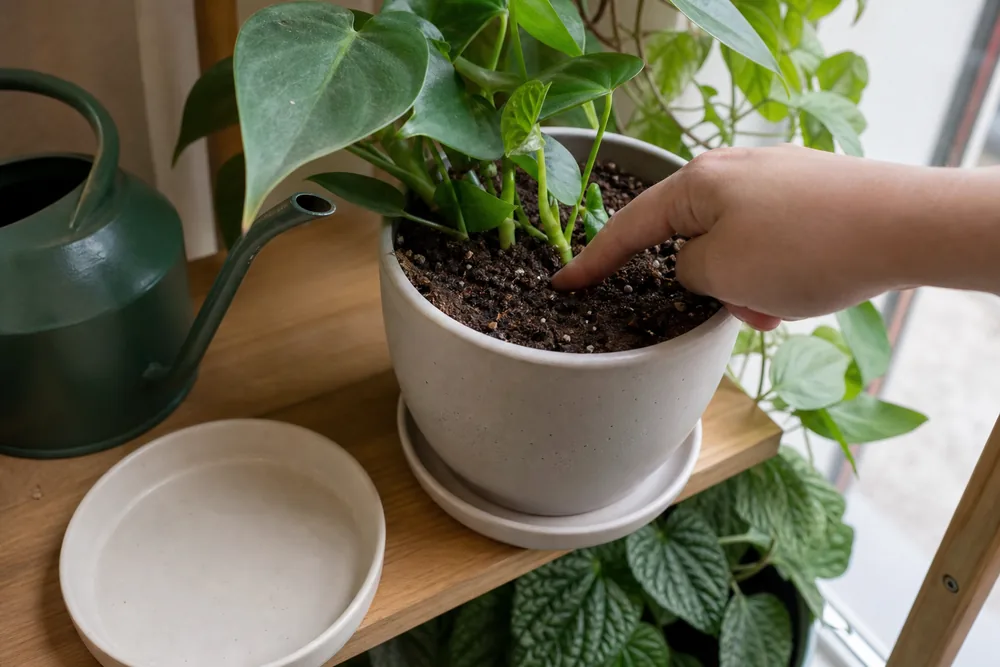
Finger testing still works better than calendar watering. Push a finger about an inch into the mix for foliage plants, deeper for succulents and large pots. Lift the pot after a full watering, then lift it again as it dries. The weight change becomes a reliable cue once you know the pot.
Water deeply enough that the whole root ball moistens and water drains from the bottom. Empty the saucer after drainage. Standing water blocks oxygen and can leave dissolved fertilizer salts behind as the pot dries. UGA’s indoor plant watering guidance connects watering frequency to plant size, container volume, soil moisture, and light intensity, then recommends feeling the mix below the surface before watering again.
The most common mistake with houseplants is overwatering in low light. The leaf problem may look like thirst from across the room. A wet pot, soft stem base, sour smell, or yellow lower leaves points toward root oxygen loss. Broader overwatering signs often start below the soil line before the canopy looks dramatic.
Pro Tip: Keep one bamboo skewer in a deep pot for the first month after repotting. Pull it before watering; a cool, dark stain on the lower half means the bottom of the pot still holds moisture.
Soil And Pots Decide How Long Roots Stay Wet
Potting mix forms the root environment and holds a plant upright. Roots need moisture, open pore space, and enough structure to keep air moving after water drains. A dense mix can suffocate roots even when the top inch looks dry.
Most foliage plants do well in a loose indoor mix with peat or coir, bark, and perlite. Succulents and cacti need a faster-draining, more aerated mix. Ferns need more organic matter plus good aeration and drainage; UGA’s indoor plant growing mix guidance separates those root-zone needs by plant group.
Pot size changes everything. When the root ball is small and the pot is several sizes larger, roots sit inside a wet ring of unused mix. That extra volume stays damp, especially in winter. Step up one pot size when roots circle tightly, water runs through too fast, or roots emerge from drainage holes.
Drainage holes matter more than decorative shape. A cachepot can work if the nursery pot lifts out for watering and drains in a sink. A sealed container turns every watering into a standing-water test, and the plant usually loses that test once the room cools or light drops.
Humidity, Temperature, And Winter Slowdowns Change The Routine
Most common houseplants come from warm, humid growing conditions. Homes run drier and darker than greenhouses. Indoor plants can tolerate that gap when watering and feeding slow down with growth.
UGA lists 70 to 80 degrees F during the day and 65 to 70 degrees F at night as a good temperature range for indoor plants. Relative humidity below 20 percent counts as low, 40 to 50 percent is medium, and above 50 percent is high. Many homes sit near the low end during heated winter weather, so thin leaves lose water faster from their edges.
Humidity trays can help a little if water evaporates from a broad surface below the pot. Grouping plants raises humidity slightly around the foliage. A room humidifier helps more than occasional misting, because misting disappears quickly and can wet fuzzy leaves long enough to invite spotting.
Winter changes the whole care pattern. Light falls, growth slows, and plants use less water. Keep tropical plants away from cold glass, exterior doors, and heat vents. A plant that needed weekly water in June may need half that in January.
Feeding And Repotting Should Follow Active Growth
Fertilizer helps when a plant has enough light and root space to turn nutrients into new leaves. It becomes a problem when the plant sits in low light, cold mix, or a pot already loaded with salts.
Excess fertilizer dissolves into the soil water and can burn roots as salts build. The warning sign is often a white crust on the surface or rim, followed by brown tips and slower growth. Flush the mix with plain water when salts appear, then let the pot drain fully.
Feed lightly during spring and summer growth. Pause or reduce feeding in winter unless the plant is still actively growing under strong light. If new growth is pale and the plant has enough light, a light feeding may help. If new leaves are small and the spaces between leaves are long, the plant usually needs better light before more nutrients.
Repot when the plant is top-heavy, roots crowd the pot, water runs straight through, or roots fill the drainage holes. Move up in 1-inch increments when possible. A much larger pot gives the roots more wet mix than they can use, creating the same overly wet condition that causes many watering problems.
Yellow Leaves, Pests, And Weak Growth Need Pattern Reading
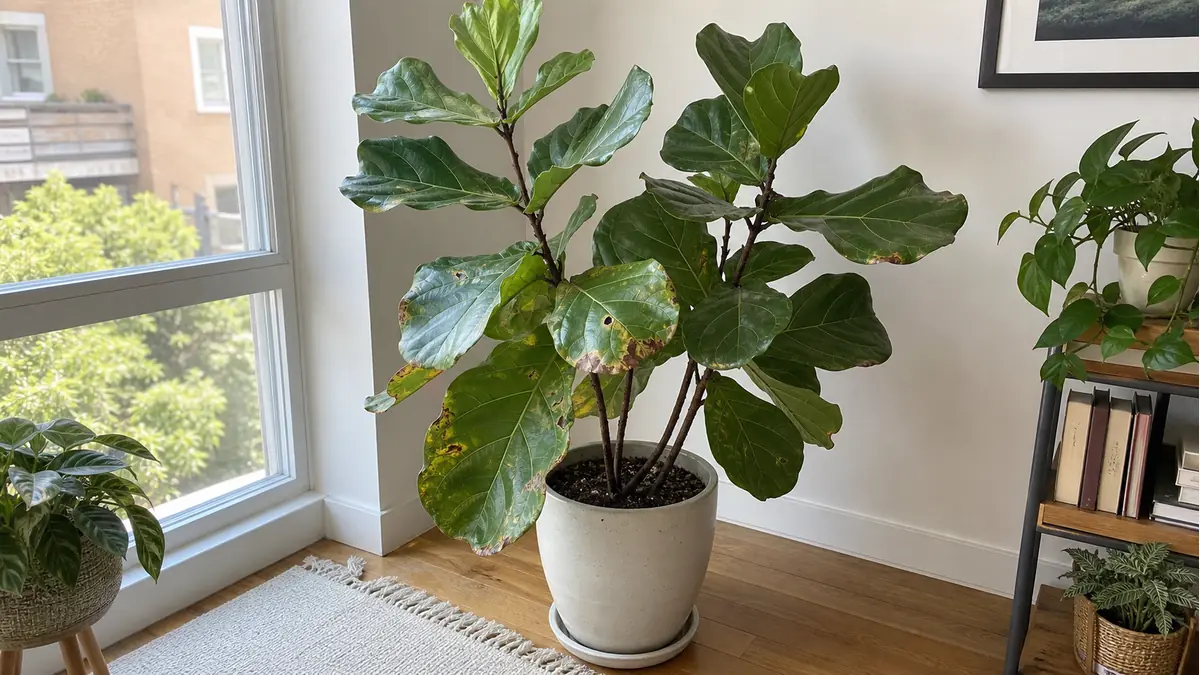
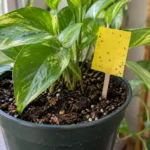
How do you fix yellow leaves on plants? Start with the pattern. One yellow lower leaf can be normal aging. Several yellow lower leaves in wet mix point toward overwatering. Pale new growth in weak light points toward low energy. Yellowing with sticky residue, webbing, or cottony patches points toward pests.
The correction changes with the pattern. Wet mix needs dry-down, drainage, and possibly root inspection. Low-light stretching needs a brighter placement. Pest problems need isolation and leaf-by-leaf inspection, especially along stems and leaf undersides.
Low light and overwatering create favorable conditions for soil-borne disease indoors, and UGA identifies them as the most common stress causes in interior plant settings. That is why the first fix is rarely a spray or fertilizer. The room condition usually has to change.
For houseplants that yellow in a clear pattern, a plant-specific diagnosis can save time. Pothos yellow leaves show how the same color change can mean age, low light, wet roots, or shock depending on where the leaf sits on the vine.
A Simple Weekly Indoor Plant Care Routine
A care routine should be short enough to repeat. Once a week, walk the room with your hand and eyes before you reach for water.
- Touch the top inch of mix and lift each questionable pot.
- Check saucers and cachepots for standing water.
- Look at the newest leaves for size, color, and spacing.
- Inspect leaf undersides for webbing, scale, or sticky residue.
- Rotate plants that lean toward the window.
Adjust the routine before trips. Plants in bright windows, small pots, or dry winter rooms need planning earlier than large plants in moderate light. A separate vacation watering setup can keep plants stable without leaving every pot sitting in water.
Conclusion
Houseplant care becomes repeatable when every decision starts with light, dry-down, drainage, and active growth. If the plant is growing, adjust water and feed to support it. If it is stalled, yellowing, or staying wet, correct the room condition before adding more inputs.
Use the chart as a first check, then let each pot teach you its rhythm. Healthy indoor plants feel firm, drain cleanly, and show new leaves that match the plant’s normal size and color.
Frequently Asked Questions
How do I take care of indoor plants?
Place each plant in the brightest safe light, water when the root zone has partly dried, use a draining potting mix, empty saucers, and reduce watering and feeding when growth slows in winter.
How often should houseplants be watered?
Most foliage houseplants need water when the top 1 to 2 inches of mix feel dry. Succulents need a deeper dry-down. Light, pot size, temperature, and season change the interval.
What is the most common mistake with houseplants?
Overwatering in low light causes the most trouble. The pot stays wet longer than the roots can tolerate, oxygen drops, and yellow leaves or soft stems appear after the root zone has already declined.
How do you fix yellow leaves on plants?
Check moisture first, then light and pests. Yellow lower leaves in wet mix need dry-down and drainage correction. Pale new growth usually needs brighter light before fertilizer.