



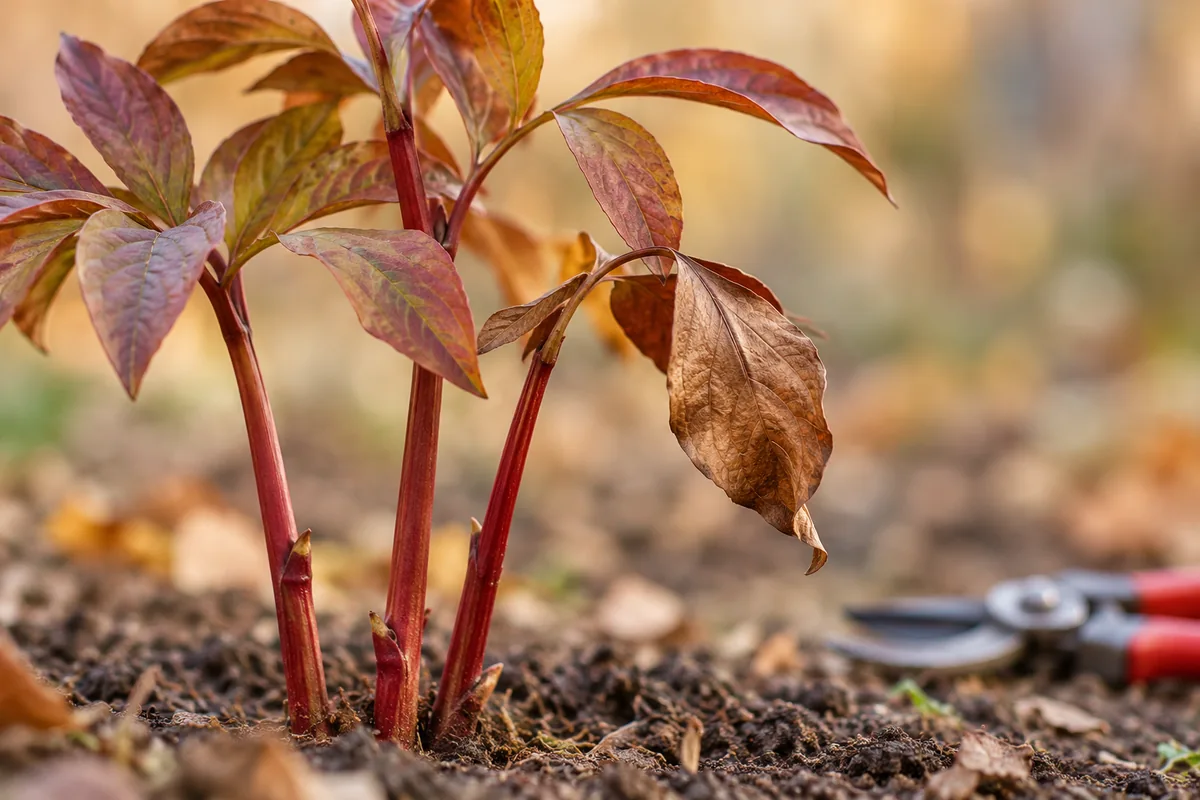
When to cut back peonies depends on the type and the condition of the foliage. Cut ordinary herbaceous peonies close to soil level after their leaves and stems die back in fall, often following a hard freeze. Keep healthy green leaves after flowering. Tree peonies retain woody branches above ground, and Itoh peonies need a check for living buds on their low woody stems before you choose a cut.
Start by looking at the base, not the faded flowers. Soft annual stalks, persistent bark-covered branches and a partly woody base call for different treatment. A green, flexible leaf still contributes to the plant; a dry brown leaf that crumbles has finished that work. Local frost timing helps you judge the season, but it does not make every peony in the border ready for the same haircut.
Check the type before cutting
| Peony type | When | What stays |
|---|---|---|
| Herbaceous | After fall dieback; hard freeze is a useful cue in cold climates | The crown and buds below the dead annual stalks |
| Tree | Clear dead leaves in fall; assess dead wood separately | Living woody branches and their buds |
| Itoh | After foliage dies, inspect the lower stems | Any viable buds on a living low woody base |
A spent flower can be removed after blooming. Healthy green foliage remains until seasonal dieback or a specific disease problem requires action.
Key Takeaways
- Identify your peony type before shortening any woody stems.
- Keep healthy green foliage after the flowers have faded.
- Cut dead herbaceous stems near the soil without injuring buds.
- Inspect Itoh stem bases before choosing a final cutting height.
- Collect old foliage and remove suspect disease debris from the bed.
Table of Contents
When to Cut Back Peonies as Foliage Dies in Fall
Healthy leaves continue making food after the flowers finish. Removing the whole canopy in early summer takes away that growing capacity. Wait for the annual foliage to decline naturally before routine herbaceous cutback, and check that most of the leafy growth has actually finished.
A hard freeze is a useful trigger in a cold-winter garden. Cutting near ground level after freeze-damaged foliage is the recommendation in Iowa State University Extension’s peony foliage cutback guidance. Late October or early November is its Iowa example. Those months describe that region, not a deadline for every US garden.
Look across the clump. A few brown leaf edges after a light frost do not necessarily mean the remaining canopy has died. If many leaves are still green and functional, leave them unless damage or disease gives you a reason to remove affected tissue. Judge different plants individually rather than cutting the entire border in one pass.
Brown foliage can change the timing before a hard freeze
Mostly brown, dried or badly diseased foliage may warrant cleanup earlier. In the American Peony Society’s winter 2024 bulletin, Jill Stevens distinguishes healthy green foliage from growth that has already declined through drought, frost or fungal spotting. The useful observation is what remains alive and functional on that plant.
Do not equate every early yellow leaf with normal dormancy. Check whether browning follows a dry period, is concentrated around lesions or is spreading through collapsing shoots. If the decline is sudden, widespread or repeated, seek a diagnosis. Autumn cleanup removes debris; it does not explain every cause of early leaf loss.
In a mild climate, use local conditions and the plant’s own seasonal decline. A fixed month-by-hardiness-zone chart cannot tell you whether the foliage in front of you has finished. Photograph the clump and keep its label if you need help identifying an unusual growth pattern.
Remove Spent Flowers Without Stripping Working Leaves
Deadheading and fall cutback happen at different stages. After blooming, you can remove the faded flower and its developing seed structure if you are not saving seed. Keep healthy leaves attached to the plant so they can continue supporting growth and stored reserves.
Follow the flower stalk downward until you can see the remaining leaves and new growth. Make a controlled cut that removes the spent flower without taking an unnecessary length of leafy stem. Do not use the disappearance of the petals as a signal to shear the clump to ground level.
On a tree peony, flowered shoots can be shortened just above new growth in summer. This is a light, targeted cut on a woody shrub. It is not the same operation as removing the dead annual stalks of an herbaceous peony in fall.
Deadheading also does not promise another flush of peony flowers that season. The immediate purpose is to remove the spent bloom or unwanted seed structure. Preserve the foliage and let the plant complete its growing cycle. Repeatedly trimming more leaves because no new flowers appear removes useful growth without supplying the conditions for a new flowering cycle.
Cut Dead Annual Stems Close to the Soil
Common herbaceous peonies send up new annual stalks from the crown and die back toward the ground for winter. Once that foliage has finished, use clean, sharp pruners to remove the dead stems close to soil level. You are clearing above-ground growth, not digging out the plant.
- Move loose leaves aside enough to see where each stalk meets the crown area.
- Check for buds and any new shoots before placing the blades.
- Cut the dead stalk near the soil without slicing into the crown.
- Collect each cutting in the container as you work.
- Collect fallen peony leaves and remaining loose debris from the clump.
A clean cut is easier to control than pulling or twisting a tough stalk out by force. If dry stems bend and crack above the base, hold them gently and cut the remaining portion where you can see it. Keep fingers and blades clear of the crown. Stop if you cannot distinguish old stalks from living buds.
Apply the same clean-cut pruning technique used elsewhere in the garden: sharp blades, a visible cut position and no unnecessary tearing. There is no need to leave a tall bundle of dead stalks simply to mark the spot. Use a label or another marker placed clear of the crown.
Ordinary fall cleanup does not require lifting or dividing the roots. Short stem handles help with handling a dug clump in University of Minnesota Extension’s peony division instructions. That is a different job. Do not transfer a stem length used for handling divisions to the annual cleanup of an undisturbed plant.
Keep Tree Peony Branches and Their Living Buds
Tree peonies retain a woody framework above ground through winter. Bark-covered branches with firm buds are living structure, even after the leaves fall. Cutting the whole plant to soil level removes that framework and the buds it carries.
Clear fallen leaves and remove dead leaf stalks gently. Some detach readily after frost. If a leaf stalk resists, use pruners where you can see the attachment and protect the nearby bud. Avoid pulling a leaf stalk down the branch and stripping bark with it.
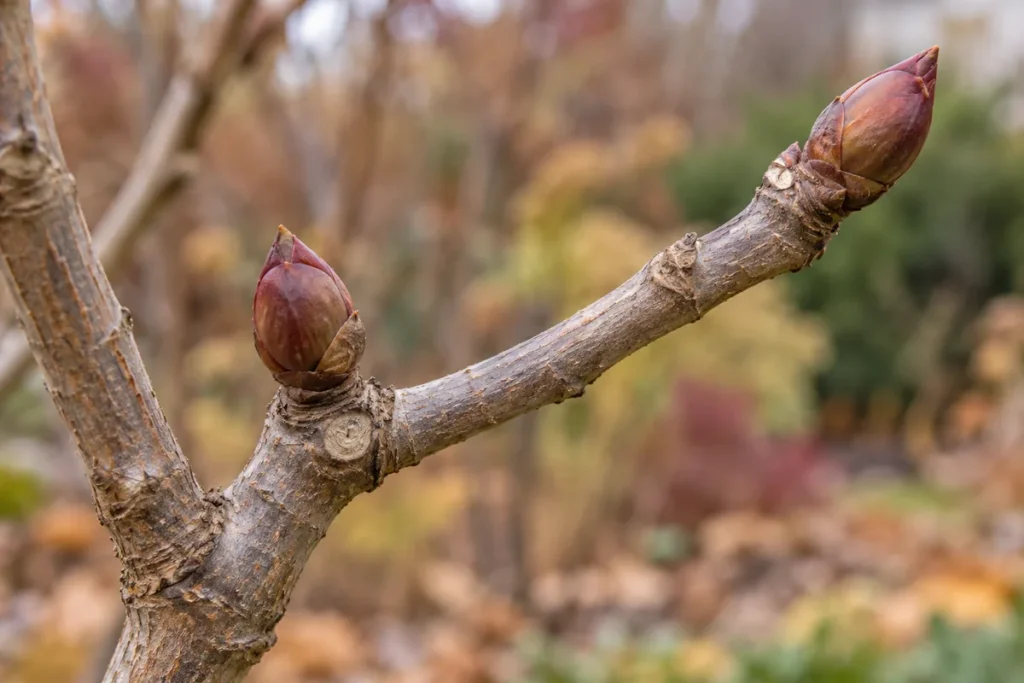
Minimal pruning is the normal starting point for a tree peony. Dead shoots can be assessed in late winter and cut back to a healthy bud, as described by the Royal Horticultural Society. A bare branch in autumn is not enough evidence that it is dead.
Reducing an old, leggy tree peony is a separate renovation decision. Some established plants can benefit from selective work after leaf fall, depending on their growth habit. Do not turn that option into an annual instruction to shorten every branch. Match pruning timing to flowering and growth, and identify the plant before making a large permanent cut.
Inspect Itoh Woody Bases Before Setting the Cut Height
Itoh, or intersectional, peonies combine characteristics of herbaceous and woody peonies. Their leafy tops die back, and some retain a short woody base that can carry buds. That lower stem is the part to inspect before applying a ground-level cut across the whole clump.
Find the change from dead leafy stalk to firm woody tissue. Look along that lower framework for buds. Where viable stem buds are present, keep them and remove the dead upper growth above them. Use the named cultivar’s guidance when it is available, especially if its habit is unfamiliar.
About 4 inches appears in the American Peony Society bulletin as an example of a low woody framework, with cuts kept above side buds. Ground-level removal appears in RHS guidance for herbaceous and intersectional peonies. A fixed stump measurement hides the difference between a surviving bud-bearing base and completely dead growth.
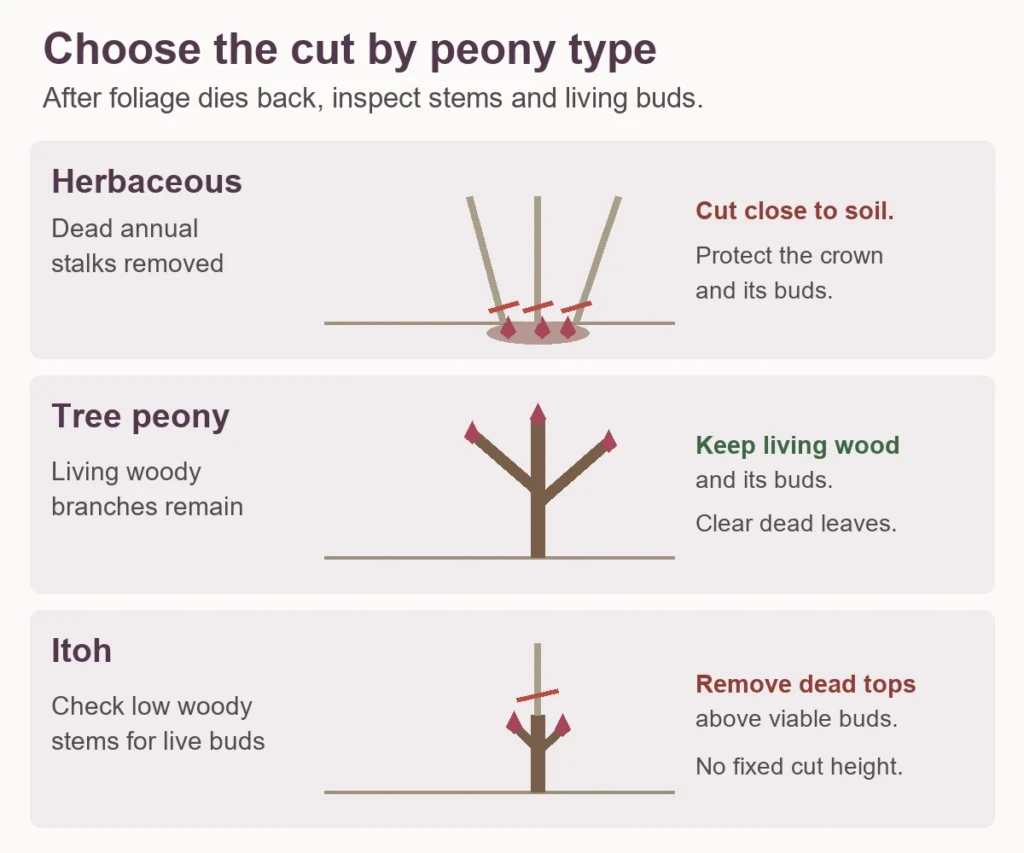
Fully dead soft stalks can be removed close to the ground. A living woody portion with buds needs a more selective cut. If you are uncertain whether the lower growth is alive, avoid shearing through it simply to match another plant’s height. Check the label, ask the supplier or consult a local peony specialist with a clear photograph.
The appearance of one spent flower will not reliably identify these groups. A label reading intersectional or Itoh is useful evidence; the persistent stem structure is another. Until you know which group you have, clearing loose dead leaves is a smaller commitment than cutting firm woody branches.
Remove Disease Debris and Clean Tools Between Suspect Plants
Old peony leaves and stems can carry material associated with fungal disease into the next season. Collecting them removes one potential reservoir beside the emerging shoots. It does not make the bed disease-proof or guarantee a larger flower display.
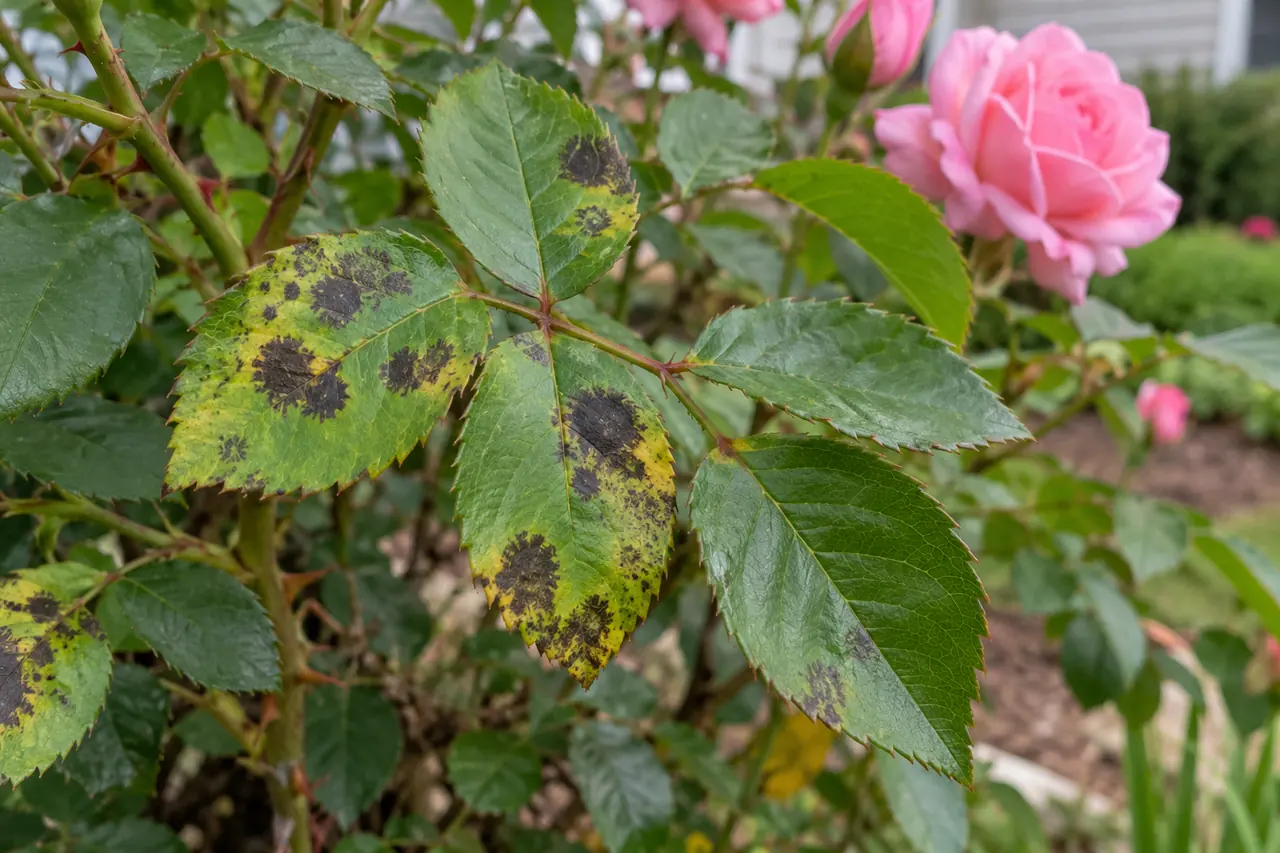
Look for the pattern before deciding that every brown leaf is infected. Seasonal dry leaves feel papery and may crumble at the edges. Spreading spots, blackened soft tissue or a plant declining well before its neighbors need a closer assessment. Wet, collapsing tissue is a different finding from firm bare wood with a healthy bud.
Early curling leaves and damaged new growth also deserve diagnosis before a full cutback. Check soil moisture and recent weather, inspect the foliage and note how fast symptoms develop. Avoid deciding that a particular fungus is present from a generic photograph of a brown leaf.
Keep a debris container beside the plant as you cut. Remove diseased material from the planting area and follow local disposal rules. Minnesota Extension and the American Peony Society advise against putting peony tops into a home compost pile. Municipal green-waste systems vary, so check what your local service accepts.
Remove plant residue from blades before moving to another clump, especially after cutting suspect diseased tissue. Use a tool-compatible disinfectant according to its directions, including the dilution, contact time and material precautions. Keep the blades clean as you move through the bed.
Pruners should close cleanly through the stalk rather than crush or shred it. If the blades drag and leave torn fibers, clean and maintain them before continuing. Sharp tools give you more control around a crowded crown and make it easier to leave nearby buds untouched.
Protect Remaining Leaves After an Early Cut or Missed Cleanup
If you have already cut healthy herbaceous foliage too early, stop taking more. Preserve the leaves that remain and maintain appropriate growing conditions. Adding a large dose of fertilizer does not replace the lost leaf area or guarantee next year’s bloom.
Do not dig up the clump solely because the cutting date was wrong. Watch its next growth cycle and assess the whole plant, including site conditions and any disease history. One poorly timed cut does not supply enough information to predict whether it will flower, decline or recover fully.
If fall cleanup was missed, remove old dead herbaceous material carefully before new spring shoots expand. Look closely at the soil surface first. Small firm buds and emerging shoots can be hidden beneath loose brown litter, and a hurried sweep of the pruners can damage them.
Work one stem at a time when new growth is already present. Lift loose leaves gently, cut old material where you can see the blades and keep the new shoots clear. Tree peony wood still receives its own assessment; missed fall cleanup does not turn living branches into annual stalks.
Conclusion
Identify the peony, check whether its leaves have finished, and choose the cut from the living structure you need to keep. Dead herbaceous stalks can go close to soil level. Tree branches stay, and Itoh bases need inspection for viable buds. Collect the debris, protect the crown and let healthy green foliage finish its work before routine fall cleanup.