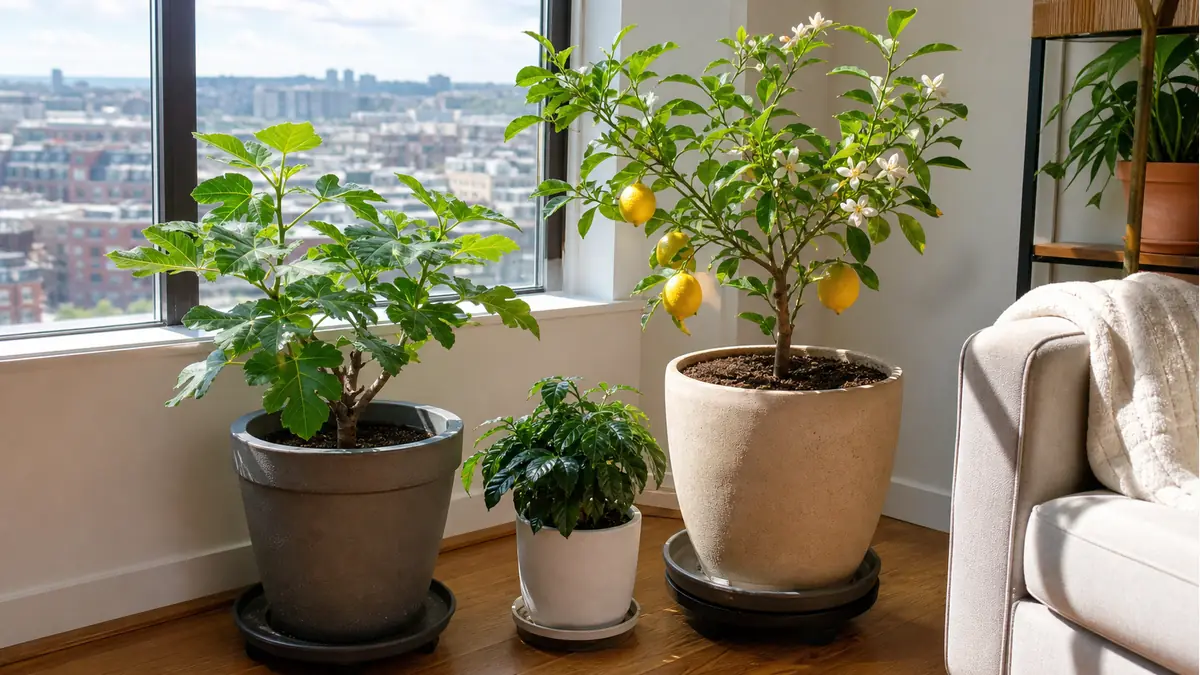
Indoor fruit trees can produce indoors, but only when the variety, rootstock, light, pollination, container, and seasonal care support flowering and fruit set. A lemon blossom can scent a whole room, and a ripe fig from a pot feels like a small victory. Keeping a fruit tree alive as decor is the easy part. Fruiting asks for enough energy to flower, hold fruit, and recover inside a building.
The strongest indoor candidates are usually dwarf citrus, compact figs, calamondin, kumquat, and a few specialty plants grown by patient gardeners with very bright windows or grow lights. Apple, peach, plum, cherry, mango, and avocado can grow as potted plants for a time. They are much less reliable as indoor harvest trees.
Indoor Fruit Tree Feasibility Matrix
Most realistic
Meyer lemon, calamondin, kumquat, and compact fig can fruit with strong light, hand pollination, and root room.
Possible with patience
Dwarf pomegranate, coffee, olive, and banana are often more ornamental indoors than productive.
Poor indoor bets
Apple, peach, pear, plum, cherry, mango, and seed-grown avocado need more space, chilling, or outdoor conditions.
Key Takeaways
- Choose grafted dwarf plants over seed-grown novelty trees.
- Give fruiting plants six or more hours of strong light.
- Hand-pollinate indoor flowers when insects cannot reach them.
- Expect small harvests, flower drop, and seasonal setbacks.
- Check weekly for scale, mites, sticky leaves, and gnats.
Table of Contents
Indoor Fruit Trees Need More Than a Small Pot
A fruit tree in a pot still has fruit-tree biology. It needs enough leaf area to make carbohydrates, enough root volume to supply water and minerals, and enough seasonal rhythm to form flowers. A small pot may keep the plant short. It does not automatically make the plant productive.
Can you grow fruit trees in your house? Yes, if the plant is chosen for container culture and the room supplies bright light, stable temperatures, hand pollination when needed, and drainage. A south-facing window may work for a compact citrus if winter light stays strong. A dim living room can keep leaves alive for a while and still fail at flowering.
The easiest mistake is buying a tree labeled “dwarf” and treating that word as a full care plan. Dwarfing changes mature size or vigor. It does not remove the need for light, root space, nutrition, pruning, and realistic harvest expectations. Outdoor dwarf fruit trees and indoor fruit trees overlap in size language, then diverge in growing conditions. The dwarf fruit trees for small gardens guide owns outdoor spacing, climate, and compact-yard decisions.
Indoor fruiting works best when you treat the plant as a small crop, not a decorative houseplant with bonus fruit. The crop mindset changes the room: light is measured by exposure, containers are chosen for root health, and flowers receive pollination help before they drop.
Compare the Best Candidates by Light, Size, and Yield
The best indoor fruit tree is the one that can flower in your light and ripen a modest crop before pests, dry air, or winter decline interrupt the cycle. Citrus leads because many kinds are self-fertile, evergreen, fragrant, and naturally suited to container culture when grafted on smaller rootstocks.
| Plant | Indoor fruiting outlook | Light need | Pollination | Reality check |
|---|---|---|---|---|
| Meyer lemon | High for a bright room | 6-8 hours strong light | Often self-fertile; hand pollination helps | Small harvests; flowers and fruit may share the tree |
| Calamondin or kumquat | High to moderate | 6-8 hours strong light | Usually self-fertile | Fruit is tart; ornamental value is high |
| Compact fig | Moderate with summer outdoor time | Very bright light | Common figs do not need a separate pollinizer | Can drop leaves indoors after a move |
| Dwarf pomegranate | Moderate to low indoors | Very bright light | Self-fruitful types may still need help | Flowers may outnumber mature fruit |
| Olive | Low indoors for harvest | Full sun level light | Some are self-fertile; cross-pollination can help | Often grown more for silvery foliage |
| Coffee | Low to moderate with patience | Bright indirect light | Self-fertile flowers | Beans take patience and warm stable care |
| Banana | Low indoors for edible fruit | Very high light | Varies by type | Usually foliage-first and space-hungry |
The North Carolina Extension Gardener Plant Toolbox describes Meyer lemon as a compact citrus hybrid, which explains why it appears so often in indoor fruiting lists. The same database frames common fig as a fruiting plant with strong sun needs and a deciduous habit. Those two facts matter indoors: citrus can stay leafy and active, and fig may rest or sulk when conditions shift.
Pomegranate, olive, and coffee can be rewarding indoor plants, and they rarely behave like dependable countertop orchards. Pomegranate can flower in containers and still abort fruit under weak light. Olive prefers full sun and often needs outdoor-level light to set a useful crop. Coffee plant can flower and produce berries with maturity, warmth, and patience; the harvest is usually a curiosity.
Six to Eight Hours of Strong Light Is a Real Constraint
Fruit is expensive for a plant to make. Leaves have to capture enough light to support flowers, developing fruit, roots, and new growth at the same time. A plant that survives on a north-facing shelf may never have the energy budget to bloom.
Six to eight hours of strong light is the practical starting point for citrus, fig, pomegranate, olive, and other serious fruiting candidates. Direct window sun changes by season, building angle, screen, roof overhang, and nearby trees. Winter light through glass can fall sharply even in a room that feels bright to human eyes.
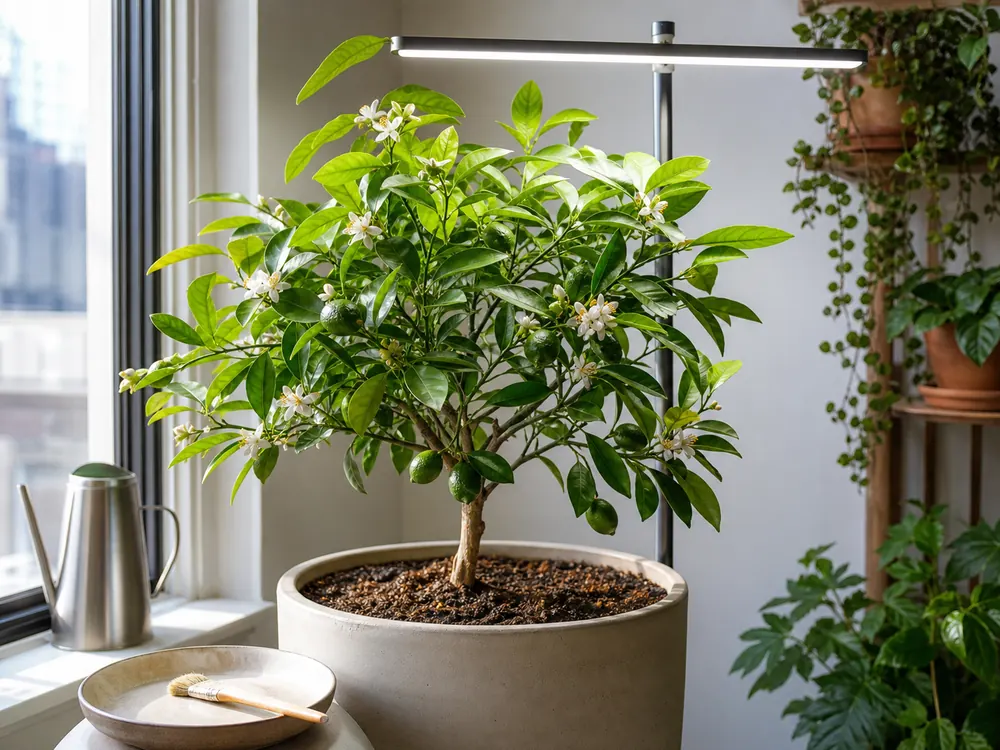
Grow lights can fill the gap if they are strong enough and close enough to the canopy. A decorative lamp across the room will not do the same work as a full-spectrum fixture placed over leaves for a long daily interval. Watch the plant response: pale new leaves, long internodes, flower drop, and fruit drop all point toward an energy shortage.
Heat also matters. A sunny window can cook leaves on a clear afternoon and then chill roots at night. Move leaves back from cold glass in winter. Rotate the pot so the canopy does not lean hard toward one side, and keep the grow light close enough to be useful without scorching tender flushes.
Rootstock, Cultivar, and Container Decide Mature Size
Are there any fruit trees that can stay in pots? Yes. Citrus, figs, pomegranate, olive, coffee, and some specialty tropicals can stay in containers when the cultivar, rootstock, pruning, and container volume match the goal. A potted tree still needs a real root system.
Rootstock matters most for grafted trees. A dwarf citrus may stay manageable because the rootstock limits vigor. The fruiting top still has its own needs: light, water, nutrients, and enough canopy to support fruit. A seed-grown lemon or avocado may be fun to grow, then take many years to flower and grow too large before it produces anything edible.
Container size sets the margin for mistakes. A tiny decorative pot dries fast, tips easily, and holds too little root volume for a crop. An oversized pot can stay wet around roots after a winter watering. Pick a container with drainage holes, a stable base, and enough weight to hold a leafy tree that leans toward the window.
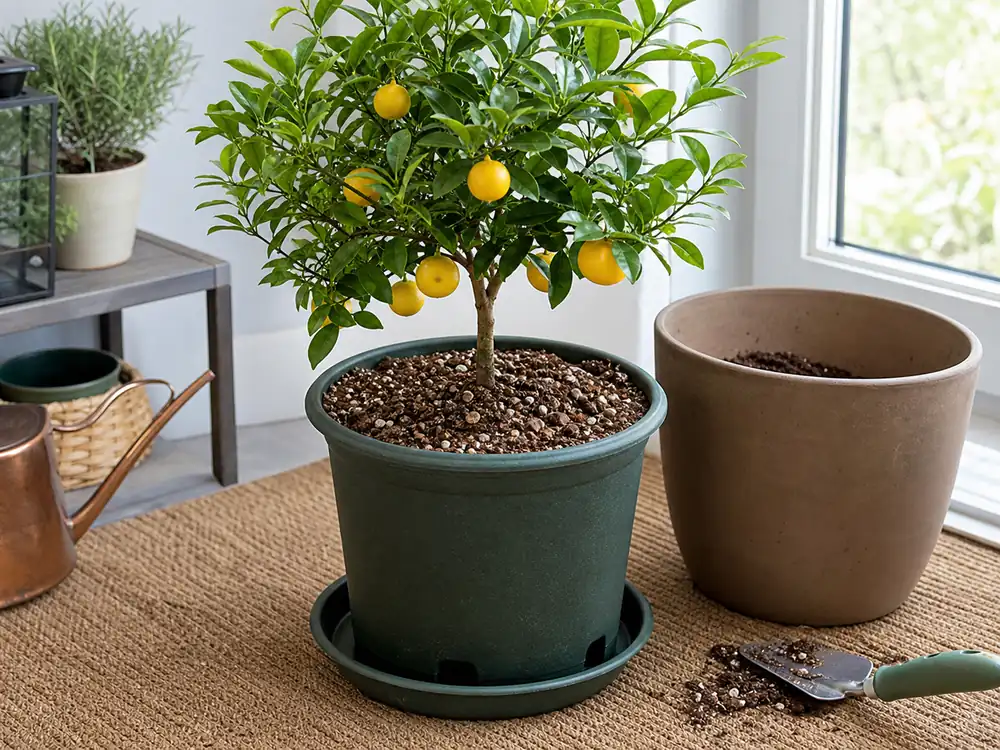
Repot when the root ball is tight, water runs through too fast, or new growth stalls during the growing season. Move up one pot size, refresh the mix, and keep the graft union above the soil line on grafted citrus. The pot drainage setup matters more for fruit trees than for many foliage plants because wet roots can trigger leaf drop, fungus gnats, and nutrient stress just as flowers form.
Pollination and Flowering Indoors
Indoor flowering is only half the promise. Fruit set depends on viable flowers, compatible pollen, enough energy, and stable conditions after pollination. Insects may never reach an apartment lemon tree, so the gardener often becomes the pollinator.
Many common indoor citrus choices are self-fertile, which means one plant can set fruit. Hand pollination still improves the odds indoors. Use a small dry brush or cotton swab to move pollen among open flowers in the morning. The flowers should smell fresh and feel dry, not damp or sticky from misting.
Fig pollination depends on type. Many common figs grown for home gardens do not require a separate pollinator for fruit. Other fig types have more complex requirements and should be avoided unless the nursery clearly names the cultivar and fruiting habit. This is one reason cultivar names matter more than a generic “fig tree” label.
Flower drop is common indoors. Dry heat, sudden cold, low light, underwatering, overwatering, and moving the tree during bloom can all cause flowers or tiny fruit to fall. One dropped bloom is normal. A whole flush of dropped flowers is a message from the plant’s environment.
Seasonal Moves, Chilling, and Indoor-Outdoor Transitions
Some indoor fruit trees perform better when they spend warm months outside and winter inside. Outdoor summer light is far stronger than most windows. It can build the energy reserve that supports flowering later.
Acclimation prevents damage. Move plants outdoors into shade first, then gradually increase morning sun over 7-10 days. Reverse the process in fall before nights become too cold for the species. A sudden move from indoor shade to summer sun can burn leaves in one afternoon.
Citrus often handles indoor wintering better than apples, peaches, cherries, and plums because it does not need the same cold dormancy pattern to satisfy chilling requirements. Temperate orchard trees need winter cues, pruning systems, and outdoor sun. They are better handled as outdoor container or garden trees, not year-round houseplants.
Figs may drop leaves when moved indoors or when light falls. That can be normal dormancy, not failure. The challenge is keeping the plant cool enough to rest or bright enough to grow, with less water during leafless periods. Wet soil around a resting fig is a common rot path.
Seasonal movement also brings pests. Inspect leaf undersides, stems, and pot rims before a plant comes back inside. Scale and spider mites can multiply quickly once the plant is indoors without rain, wind, or predators.
Realistic Time to Fruit and Harvest Size
Fruit-tree timelines depend on plant age at purchase. Grafted citrus bought with flower buds may fruit the first year if it keeps enough leaves and roots healthy. Seed-grown citrus can take many years and may never match the parent fruit. Small fig cuttings may need several growing seasons before a meaningful harvest.
Nursery age matters more than pot height. A short, grafted Meyer lemon with a thick stem may be closer to fruiting than a tall seedling with soft growth. Ask for cultivar, rootstock when available, and whether the plant has fruited before. Retail tags that say “indoor fruit tree” without cultivar detail are weaker buying signals.
Harvest size should stay modest. A bright indoor citrus might ripen a handful of lemons, calamondins, or kumquats. A fig might give a few fruits after summer outdoors. Coffee might produce berries after several years, then only enough beans for novelty value. Indoor bananas and avocados are usually grown for foliage or experimentation, not dependable bowls of fruit.
Thin fruit when a young tree sets too much. A small tree carrying too many fruits can stall, drop leaves, or exhaust itself. Keeping fewer fruit often gives better size and protects the plant for the next growth cycle. The goal is a living tree with repeat harvest potential, not one overloaded season.
Pests and Problems That Follow Fruit Trees Indoors
Fruit trees invite the same pests as other houseplants, with extra stress because flowers and fruit demand energy. Scale insects hide on stems and leaf veins. Spider mites leave pale stippling and fine webbing in dry air. Fungus gnats show up when potting mix stays wet. Aphids may gather on tender new growth and flower stems.
Sticky honeydew is one of the clearest indoor fruit-tree warning signs. Check the leaves, floor, windowsill, and nearby furniture for a tacky film. That shine often points to scale, aphids, or mealybugs feeding above it. Treat early before the canopy becomes hard to clean.
Nutrient stress shows up as yellowing leaves, weak flushes, small fruit, and heavy drop. Citrus in containers often needs a fertilizer program matched to active growth, not random feeding after decline starts. Water quality can also leave salts in the mix, especially when the pot never gets a thorough flush.
The houseplant care routine covers the base pattern that fruit trees still follow: light drives water use, drainage protects roots, and pest checks have to happen before damage becomes obvious. Fruit trees simply make every weak point louder.
Final Indoor Fruit Tree Selector
Start with the room, not the wish list. Bright south or west windows with space for a 3- to 6-foot plant can justify Meyer lemon, calamondin, kumquat, or compact fig. Medium-light rooms with no grow light should stay with foliage plants or a non-fruiting coffee plant. Dim rooms should not be sold a harvest promise.
| Your goal | Best first choice | Equipment needed | Avoid |
|---|---|---|---|
| Most realistic edible harvest | Meyer lemon, calamondin, kumquat | Strong window or grow light, drainage, hand pollination | Low-light citrus claims |
| Seasonal patio plus indoor wintering | Compact fig or citrus | Outdoor acclimation plan, wheeled pot, pest checks | Sudden moves from shade to hot sun |
| Flowering ornamental with possible fruit | Dwarf pomegranate, coffee, olive | Very bright light and patience | Expecting grocery-store harvests |
| Pet-aware home | Verify exact species first | Elevated placement or separate plant room | Toxic leaves, seeds, sap, or chewed fruit |
| Beginner apartment setup | Small grafted citrus from a reputable nursery | Bright window, stable pot, saucer, pest routine | Seed-grown avocado as a harvest tree |
Pet risk can decide the final choice. Citrus oils, fig sap, coffee beans, and many ornamental fruits or seeds can create problems when pets chew plants. Verify the exact plant in the ASPCA toxic and non-toxic plant database before placing any fruiting plant within reach. For homes with cats, the cat safe house plants list is a better starting point when harvest is less important than safety.
Indoor fruit trees also need to fit the rest of the houseplant collection. The best indoor plant choices guide can help filter light, space, and care level before you commit to a tree that needs crop-level attention.
Conclusion
Indoor fruit trees are realistic when the plant is compact, grafted or cultivar-specific, brightly lit, well drained, and pollinated at the right moment. Citrus and compact figs give the best starting point. Pomegranate, olive, coffee, banana, and avocado are better treated as experiments unless the room and equipment are unusually strong.
Choose the tree for the next flower and the next season, not the fruit photo on the tag. A healthy indoor harvest starts with glossy leaves, firm new growth, a stable pot, and flowers that stay on the branch long enough to become fruit.