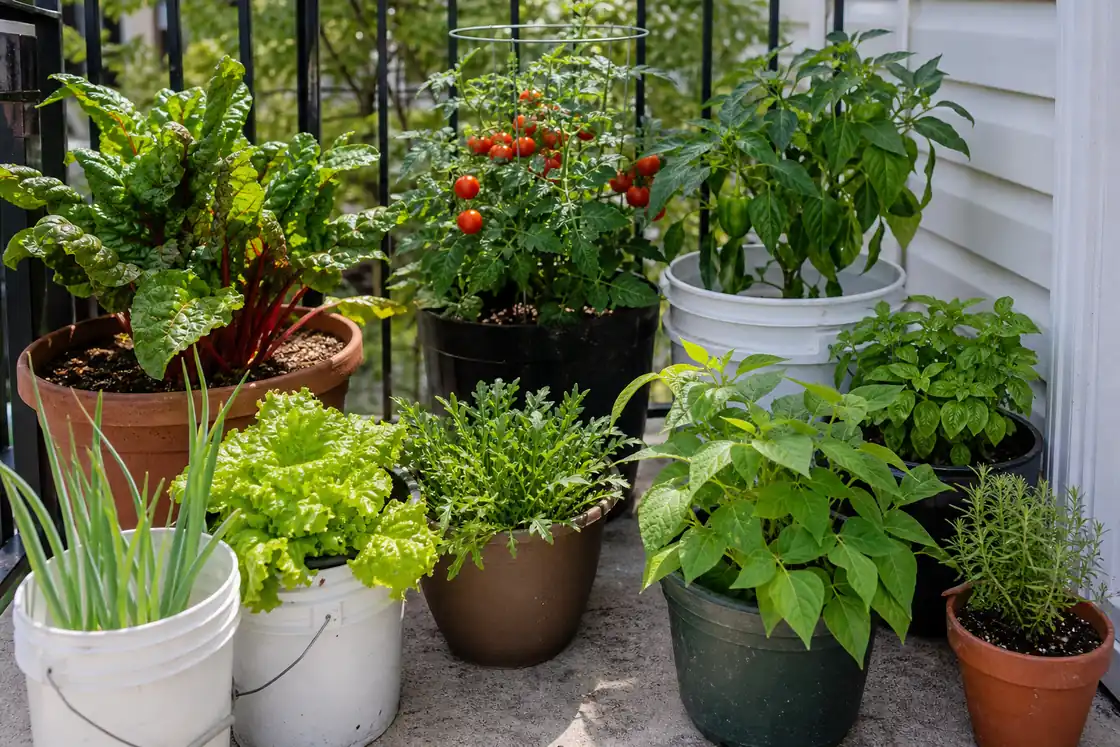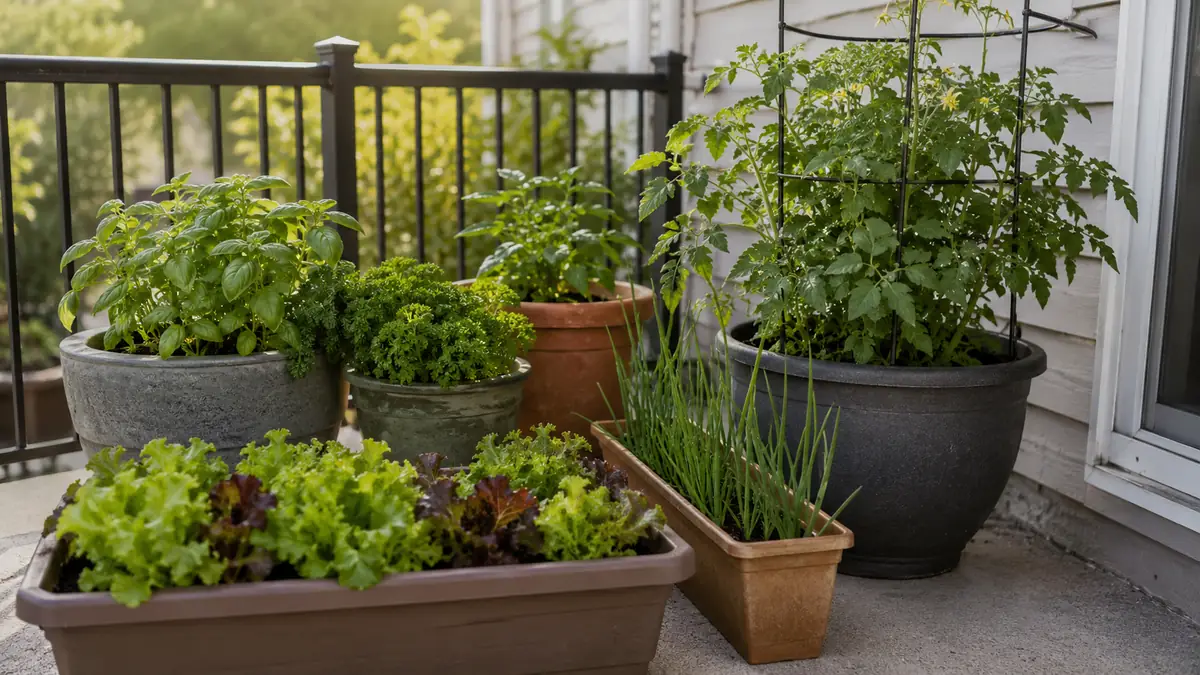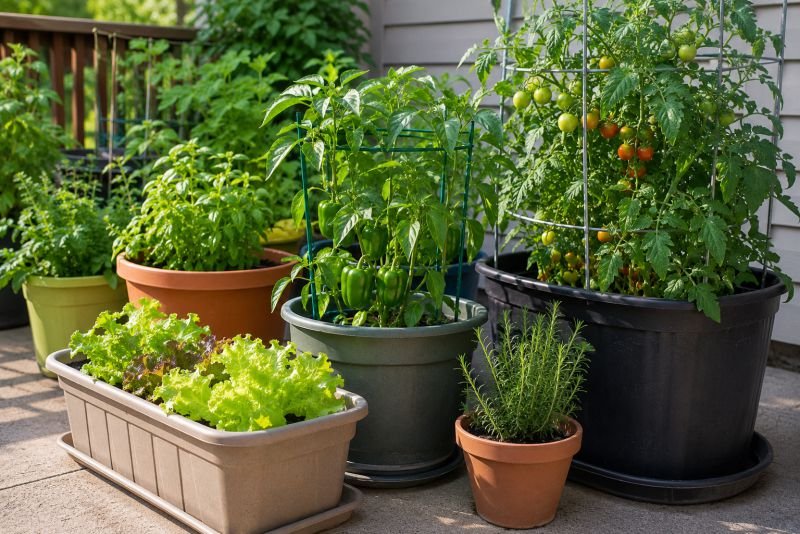
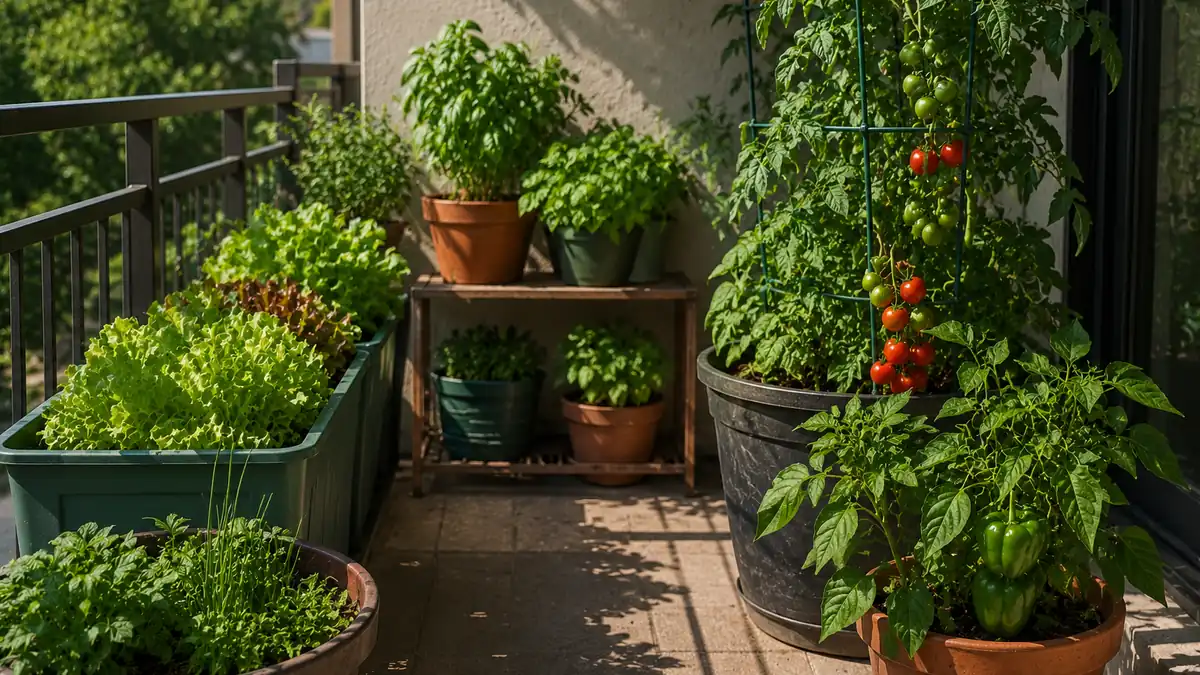
Container garden placement decides how quickly a pot dries, how hot the root zone gets, and whether the plant can hold itself upright after wind reaches the leaves. A tomato that looks strong in morning sun can curl by midafternoon on hot paving. A lettuce box that grows cleanly near an east wall may turn bitter and limp on a west-facing balcony.
The right place is rarely the brightest spot by default. Containers need enough light for the crop, enough protection from hard heat, enough airflow to keep leaves dry, and enough access for watering before stress builds. The pot sits above ground, so sun, wind, pavement, railing heat, and wall reflection change the root zone faster than they would in a garden bed.
If the crop list is still flexible, a container vegetable choice by size, light, and space should happen before placement becomes a rescue job. Once the crop is chosen, the container position decides whether that plant can stay watered, supported, and cool enough to keep growing.
Key Takeaways
- Morning sun is safer than hard afternoon exposure for many container crops.
- Wind increases water loss and can loosen tall supports inside the pot.
- Dark pots, metal railings, walls, and paving can heat the root zone quickly.
- The best placement keeps watering, drainage, harvest, and support within reach.
- Watering changes by sun, heat, wind, pot material, and container size.
Table of Contents
Start With the Crop, Then Read the Place
A container spot should be chosen around the crop’s light demand and stress pattern. Leafy greens need enough light for fresh growth, but they often perform better when afternoon heat is softened. Fruiting crops such as tomatoes, peppers, cucumbers, and eggplant need stronger sun, yet they also need a pot large enough to buffer water and support the plant under that exposure.
The same patio can hold several microclimates. A corner near a wall may trap heat. A railing may expose leaves to constant wind. A concrete slab may warm the lower pot before the leaves show stress. A shaded doorway may stay cool but leave peppers short on light for fruit set.
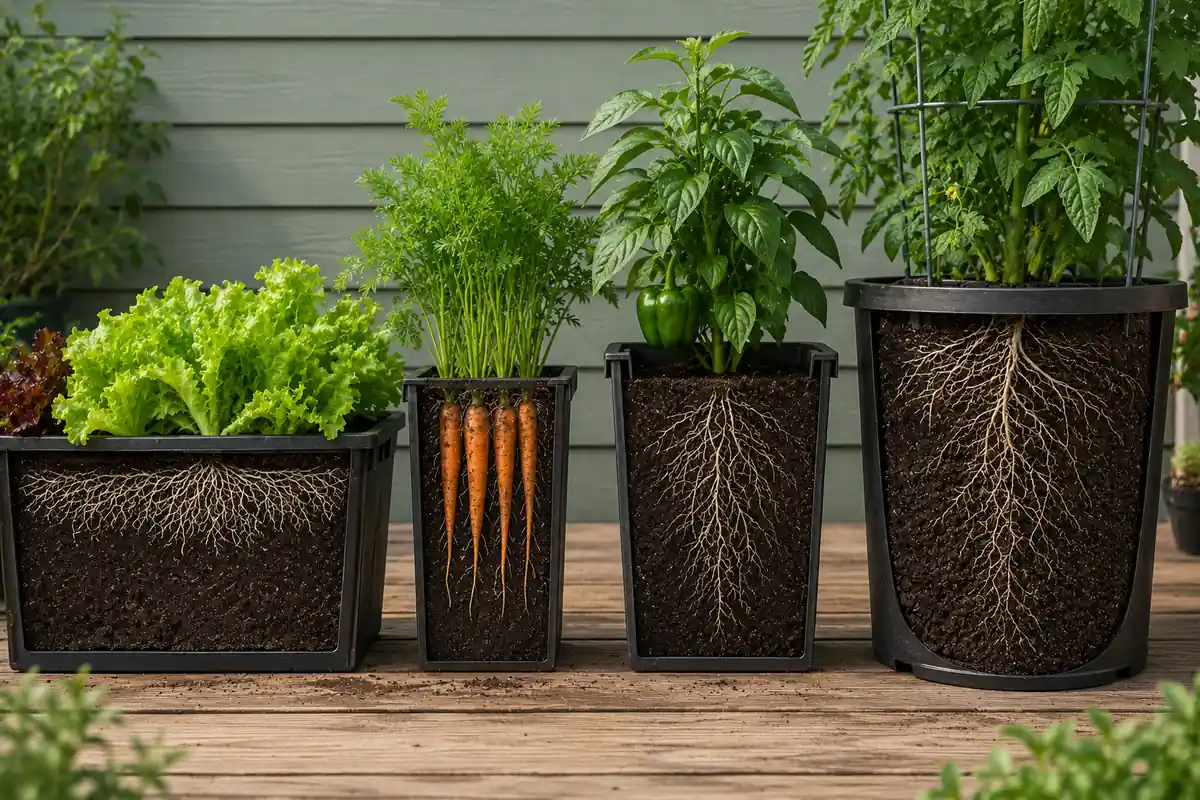
Placement should come after crop fit, container size, and root depth have been checked. A crop that needs deeper roots should not be forced into a shallow rail planter, and a heavy fruiting crop should not sit where the pot cannot hold enough water through heat. A container depth by vegetable root type check helps prevent shallow placement decisions from limiting the crop below the surface.
Map Sun Before You Move Containers Into Place
Sun exposure should be measured where the container will sit, not from the general label of the yard, balcony, or patio. A space can receive clean morning sun, broken midday light, and harsh reflected heat later in the day. That pattern changes which crops belong there.
Watch the spot across one clear day before planting. Note when direct sun reaches the pot, when shade arrives, and whether heat lingers after the sun moves. The plant responds to the whole pattern, including wall reflection, pavement heat, and the number of bright hours.
| Sun pattern | Best container fit | Good crop choices | Placement risk | Adjustment before planting |
|---|---|---|---|---|
| Morning sun, afternoon shade | Cooler placement for shallow or leafy crops | Lettuce, spinach, parsley, cilantro, chives | Weak fruit set for high-light fruiting crops | Keep greens and herbs in this zone before tomatoes or peppers. |
| Midday to afternoon sun | High-light zone with stronger heat pressure | Peppers, compact tomatoes, eggplant, basil | Fast dry-down and warm root zone | Use larger containers, pale pots, mulch, and easy watering access. |
| All-day exposed sun | Only for crops with enough root volume and water buffer | Large tomatoes, peppers, cucumbers in stable pots | Daily watering pressure, leaf curl, hot pot walls | Protect roots from pavement heat and avoid tiny dark pots. |
| Bright shade with little direct sun | Low-stress leaf and herb zone | Parsley, chives, mint in a contained pot, leafy greens in cool weather | Slow growth or weak fruiting | Skip heavy fruiting crops unless the light improves. |
| Reflected sun from wall or paving | Heat-amplified site even if direct sun hours look moderate | Heat-tolerant herbs, peppers with a larger pot | Roots dry while leaves still look normal | Lift pots off hot surfaces and water from the root zone, not the leaves. |
Heat Turns a Good Light Spot Into a Root-Zone Problem
Light feeds the crop, but heat can turn the same location into a stress point. Containers warm from the side, the top, and the surface below. Dark plastic on concrete can make the root zone heat faster than the leaves show, especially when wind is pulling moisture at the same time.
Heat stress often appears as a timing pattern. Leaves look normal in the morning, then curl, dull, or sag during the hottest part of the day. If the plant recovers by evening, the root zone may be running out of usable moisture during peak heat rather than staying dry all day.
Move heat-sensitive crops toward morning sun when possible. If the crop needs full sun, keep the container larger, lighter in color, mulched, and easy to reach with water. A plant in a strong light zone also needs a root zone that can stay functional during the hottest hours.
Wind Changes Watering, Support, and Container Safety
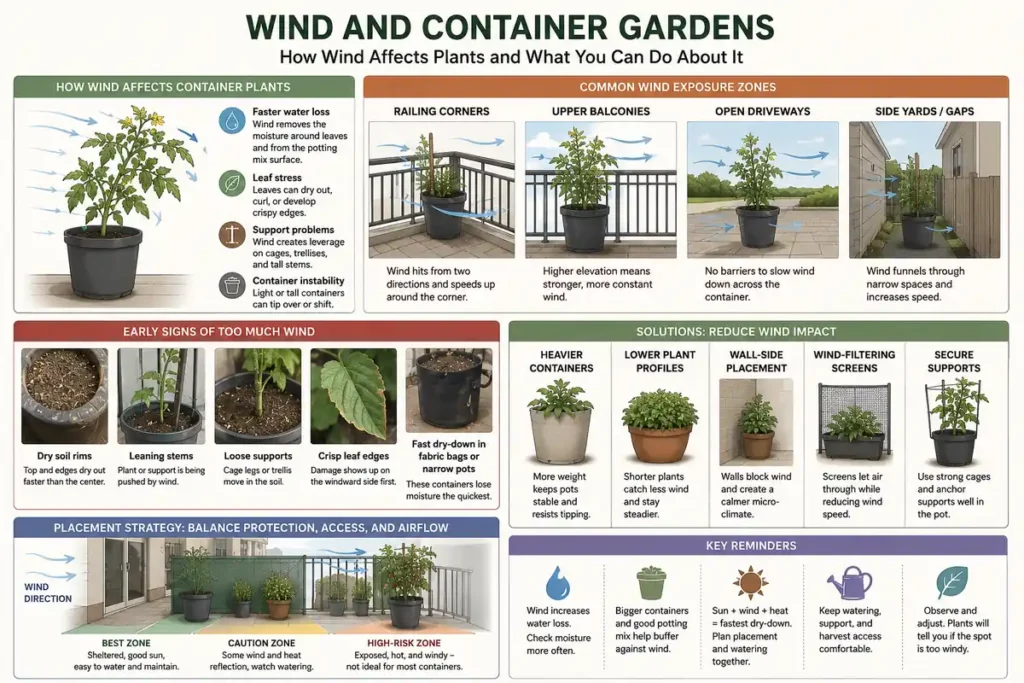
Wind dries leaves and potting mix even when the temperature feels mild. It also turns cages, trellises, and tall stems into leverage against the container. A cucumber or tomato may have enough sun in a windy spot, then fail because the support shifts or the pot dries before the next watering check.
Railing corners, upper balconies, open driveways, and side yards can expose containers to constant air movement. The first signs are often dry rims, leaning stems, loose cage legs, or leaves with crisp edges on the windward side. Small fabric bags and narrow plastic pots dry fastest in those locations.
Use heavier containers, lower plant profiles, wall-side placement, or wind-filtering screens when the crop needs support. For balcony and patio setups, placement also has to respect access, load, drainage, and movement space. A container garden on balconies and small patios needs enough wind protection without blocking a walkway or trapping heat against a wall.
Container Watering and Heat Adjustment Chart
Placement changes watering more than a fixed weekly schedule can handle. The same crop may need a light morning check in an east-facing corner, then a deeper soak and afternoon stress check on hot paving. Pot material, wind, container size, and crop load all change how fast the root zone loses usable moisture.
| Placement condition | What changes in the pot | Morning check | Watering adjustment | Heat or wind adjustment | Best pot material response | Failure sign to watch |
|---|---|---|---|---|---|---|
| Morning sun with afternoon shade | Cooler roots and slower dry-down | Feel the top inch and lift smaller pots | Water when the upper mix dries but lower mix still feels lightly moist | Keep greens here during warm spells | Plastic, glazed ceramic, or fabric can work if drainage stays open | Slow growth from too little light for fruiting crops |
| Hot afternoon sun | Pot wall and surface heat rise quickly | Check before heat builds, not after leaves sag | Water deeply in the morning so the full root zone starts moist | Use mulch, pale pots, and afternoon protection for sensitive crops | Avoid small dark plastic pots on paving | Leaf curl, dry rim gaps, bitter greens, flower drop |
| All-day exposed sun | Water demand stays high for longer | Lift the pot and check several points in the mix | Use larger containers and expect more frequent checks in heat | Move shallow crops or protect the pot wall | Light-colored large containers buffer heat better | Daily dry-down, pale crust, stalled new growth |
| Windy balcony or open side yard | Leaves transpire faster and pot edges dry unevenly | Check the windward side and the center of the pot | Water slowly so dry edges rewet instead of shedding water | Lower the profile, add support early, or move behind a wind filter | Heavier pots resist tipping; fabric may need closer checks | Crisp leaf edges, leaning cage, dry side gaps |
| Against a warm wall | Reflected heat can warm the lower root zone | Check the side nearest the wall for dry heat | Water the root zone evenly and rotate movable pots | Pull the pot slightly forward for airflow | Insulated or larger pots handle wall heat better | One-sided wilting or hot mix near the wall |
| On concrete, stone, or decking | Heat rises from below and drainage may stain or pool | Check pot weight and lower drainage path | Water until the mix rewets evenly, then let drainage clear | Lift pots on feet or stands where safe | Thick ceramic or pale plastic reduces fast heat swings | Hot bottom layer, sour lower mix, runoff without rewetting |
| Under an overhang | Rain misses the pot and light may be weaker | Do not assume rainfall watered the root zone | Water by soil moisture, not by weather report | Move fruiting crops forward if light is too weak | Any pot works if drainage and access are clear | Dry root ball after rain, stretched growth, weak flowering |
Use the chart beside the container as a placement check. If the pot is light by morning, the plant needs a larger water buffer, a cooler location, or a crop that fits the site better. If the lower mix stays wet while the surface dries, drainage and mix structure need attention before adding more water.
Pot Material Changes the Same Location
Container material changes how placement feels to roots. Fabric breathes and cools the edge of the root zone, but it loses moisture fast in wind. Dark plastic warms quickly on pavement. Terracotta dries through the wall. Glazed ceramic holds moisture longer but can stay heavy and cool in spring.
Material should be matched to exposure. A sunny, windy balcony is harder on small fabric pots than a sheltered morning-sun patio. A dark plastic pot may work under light shade and become stressful against a west wall. A heavy ceramic planter may protect roots from fast heat swings but becomes harder to move once wet.
If the container type is still undecided, choosing garden planters for healthy plant growth helps connect material, drainage, weight, and plant habit before placement becomes the limiting factor.
Place High-Demand Crops Where Support and Water Are Easy
Fruiting crops need the easiest access because their stress builds quickly. Tomatoes, peppers, cucumbers, and eggplant should sit where water can reach the whole surface, support can be installed before stems lean, and harvest does not require moving other containers out of the way.
The crop’s container size also changes placement. A large tomato pot may be too heavy for a shelf or narrow balcony corner. A compact pepper can sit closer to a wall if airflow remains open. A cucumber needs room for the trellis and a path for watering behind the leaves.
After the location is chosen, a container pot size by crop check can set the practical volume, support, and spacing. Placement decides the exposure; pot size decides whether the crop has enough buffer to handle that exposure.
Use Layout to Reduce Heat and Watering Strain
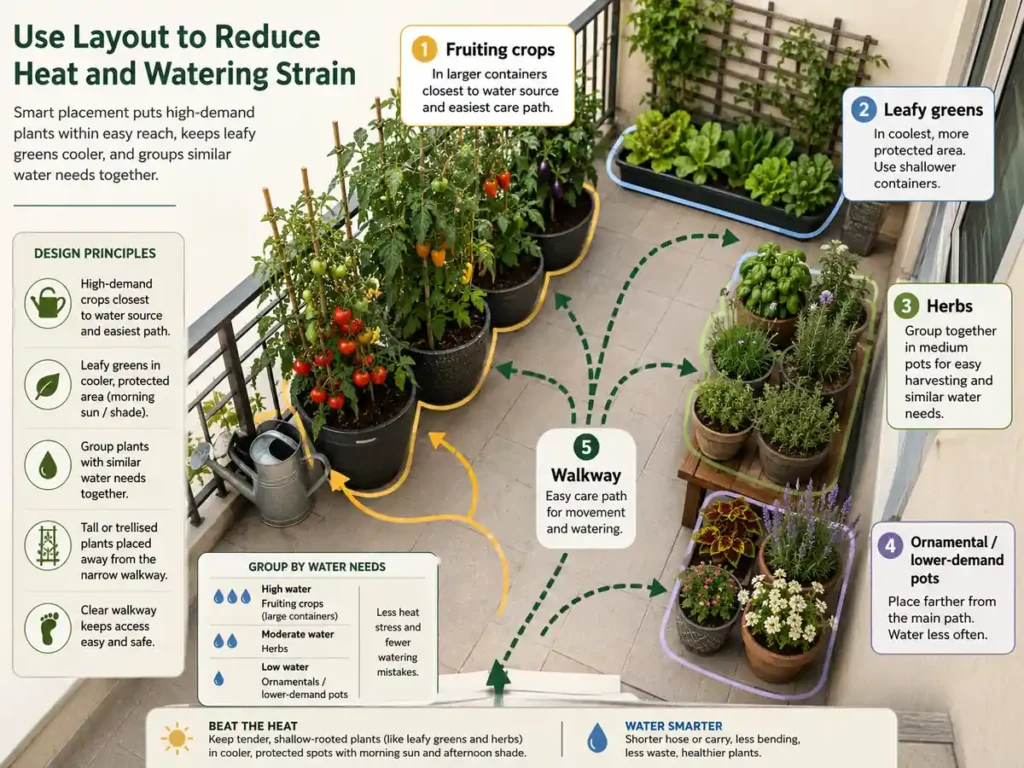
Container layout should make care easier while still keeping the patio orderly. Keep thirsty or fruiting crops where the watering can reaches them first. Put shallow greens in cooler or more protected areas. Keep tall supported crops away from narrow walkways where cages, leaves, or tie points can be bumped.
Grouping similar water needs also reduces mistakes. Herbs with herbs, leafy greens with leafy greens, and fruiting crops in larger separate containers are easier to read than a scattered mix of pots with different dry-down speeds. When one pot needs water every morning and another stays moist for two days, placement should make that difference visible.
For larger patios and yard edges, container garden design and layout can guide sightlines, movement, and grouping. Keep the production crops in the easiest care path, then use ornamental or lower-demand containers where access is less direct.
When Placement Should Change the Crop List
Sometimes the site should choose the crop. Four hours of morning sun and afternoon shade favor herbs, greens, and smaller leafy harvests. Full afternoon sun on concrete favors crops with larger containers and stronger water buffers. A windy railing may be better for low herbs than for a tall tomato cage.
Changing the crop list is often safer than forcing a difficult plant into a hostile spot. If the only sunny area is windy and hot, compact peppers may be easier than cucumbers. If the only protected area is bright shade, parsley, chives, leafy greens, or mint in a contained pot may fit better than fruiting crops.
Plant lists help only after the real site has been checked. A container plant list should be filtered through exposure, pot size, and watering access before the crop goes into place.
Final Placement Check Before Planting
Before planting, set the empty container where it will live and walk around it. Can water reach the back side? Will drainage clear without sitting under the pot? Can the crop be harvested without stepping over other containers? Will a cage, stake, or trellis still fit after the plant grows?
Then check the spot during the warmest part of the day. Touch the pot wall, the paving below, and the surface of the mix if it is already filled. If the location feels hot before the plant is even growing, choose a larger container, move the pot into morning sun, or select a crop that handles the exposure with less stress.
A simple first-month rhythm from container gardening for beginners can keep the placement honest after planting. Morning checks, pot weight, leaf response, and dry-down speed show whether the site fits the crop or the crop needs a cooler, calmer, easier-to-water location.
Conclusion
Container garden placement works when sun, heat, wind, pot material, and watering access are treated as one growing condition. Bright light can help fruiting crops, but the same exposure can overheat shallow pots. Wind can cool leaves, but it can also dry the root zone and loosen support. A protected corner can save greens from heat while leaving tomatoes short on fruiting light.
Place each container where the crop can get the light it needs without losing moisture faster than the root zone can recover. Then adjust pot size, material, support, and watering around that real site instead of correcting stress after the plant has already started to struggle.
FAQ
Where is the best place to put a container garden?
The best place gives the crop enough light, protects the pot from harsh heat or wind, drains cleanly, and stays easy to water. Leafy greens often prefer morning sun and afternoon shade, while tomatoes, peppers, cucumbers, and eggplant need stronger sun plus larger containers.
Is morning sun or afternoon sun better for container vegetables?
Morning sun is easier on many container vegetables because the root zone warms more slowly and dries less harshly. Fruiting crops may need longer sun, but they also need enough pot volume and watering access to handle afternoon heat.
How does wind affect container plants?
Wind pulls moisture from leaves and potting mix, dries exposed pot edges, and can loosen cages or trellises. In windy spots, use heavier containers, install support early, check the windward side of the pot, and avoid placing tall crops where they can tip.
Should container gardens sit on concrete?
Containers can sit on concrete, but concrete stores heat and can warm the bottom of the pot. Use pot feet, stands, larger containers, pale materials, and careful watering so the lower root zone does not heat, sour, or dry unevenly.
How often should I water containers in hot sun?
Water by pot weight, soil moisture, and leaf response rather than a fixed schedule. Containers in hot sun may need morning watering and closer checks during heat, especially if the pot is small, dark, fabric-sided, or exposed to wind.
Can I move container vegetables after planting?
Yes, if the container is still safe to move and the plant is not tied into a fixed support. Move stressed crops gradually when possible. A shift from harsh afternoon sun to morning sun can help greens, herbs, and heat-stressed fruiting crops recover.