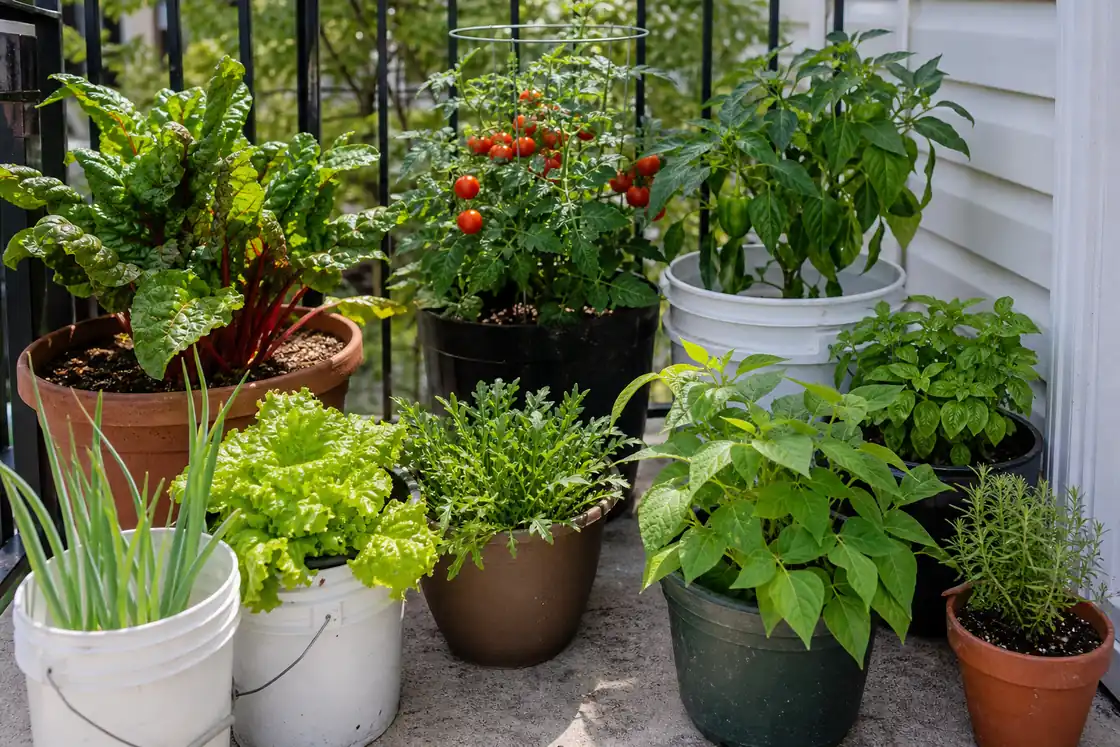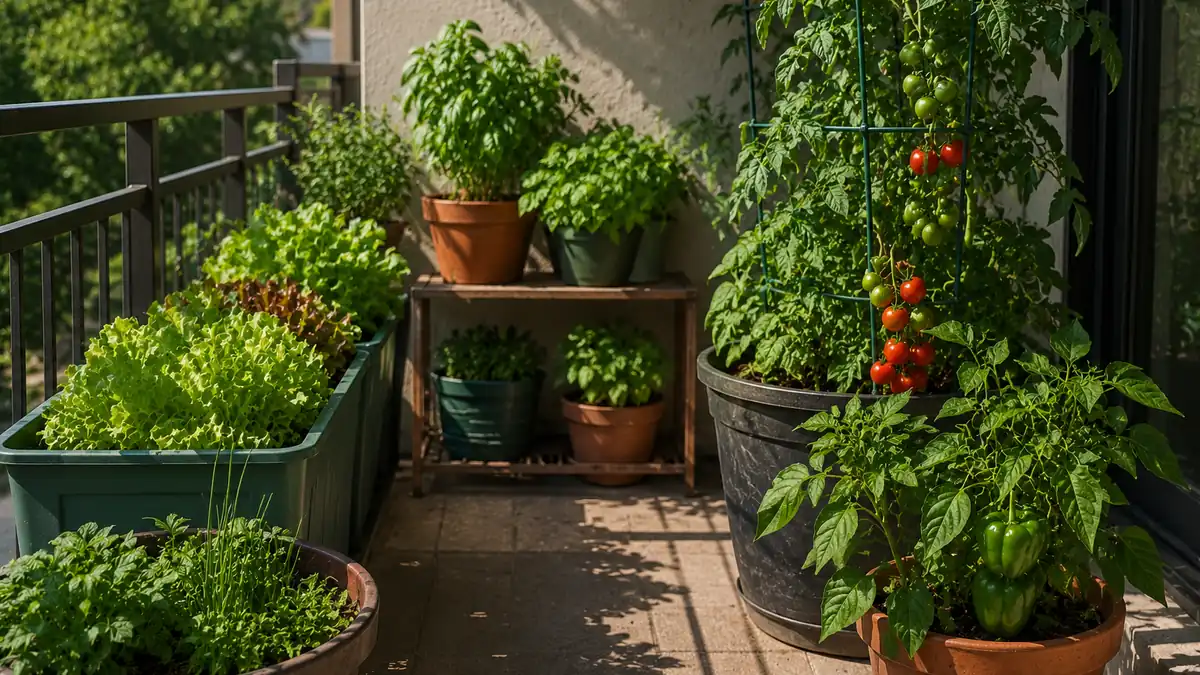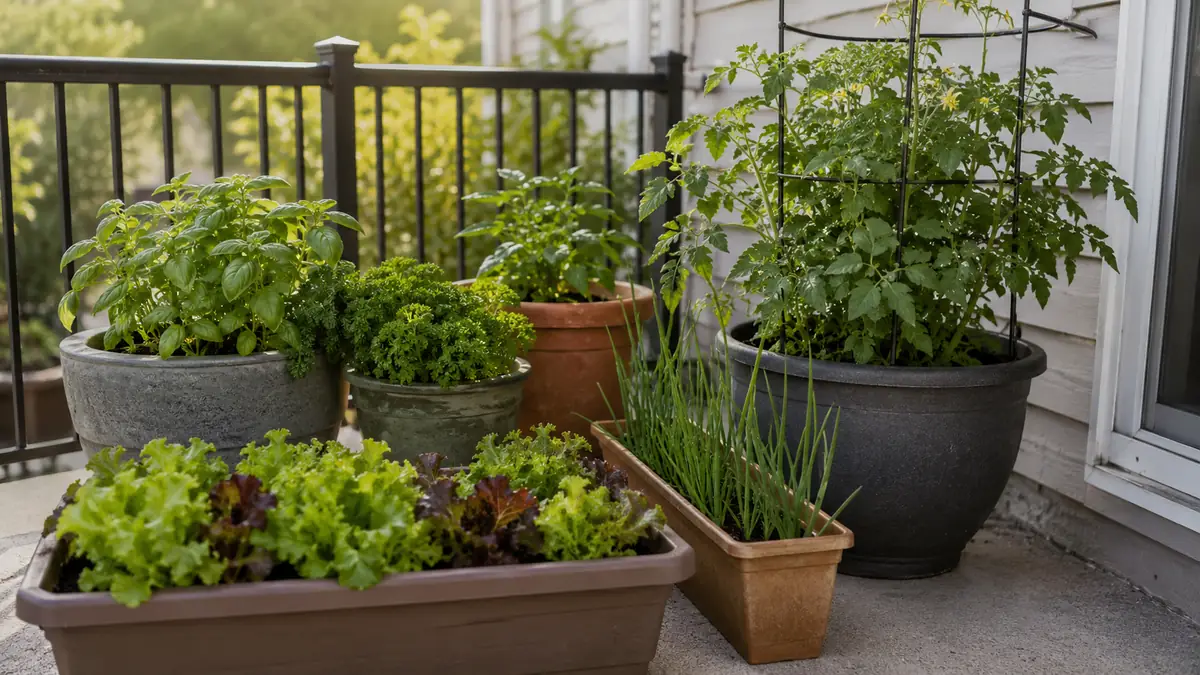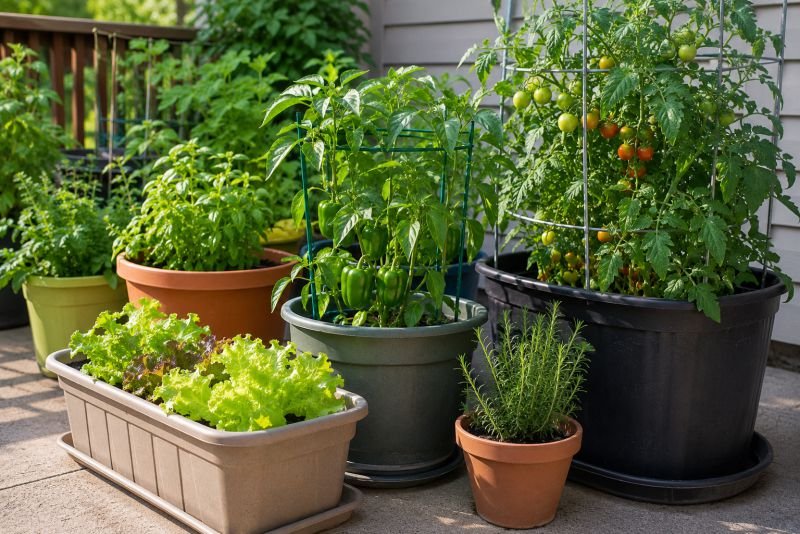
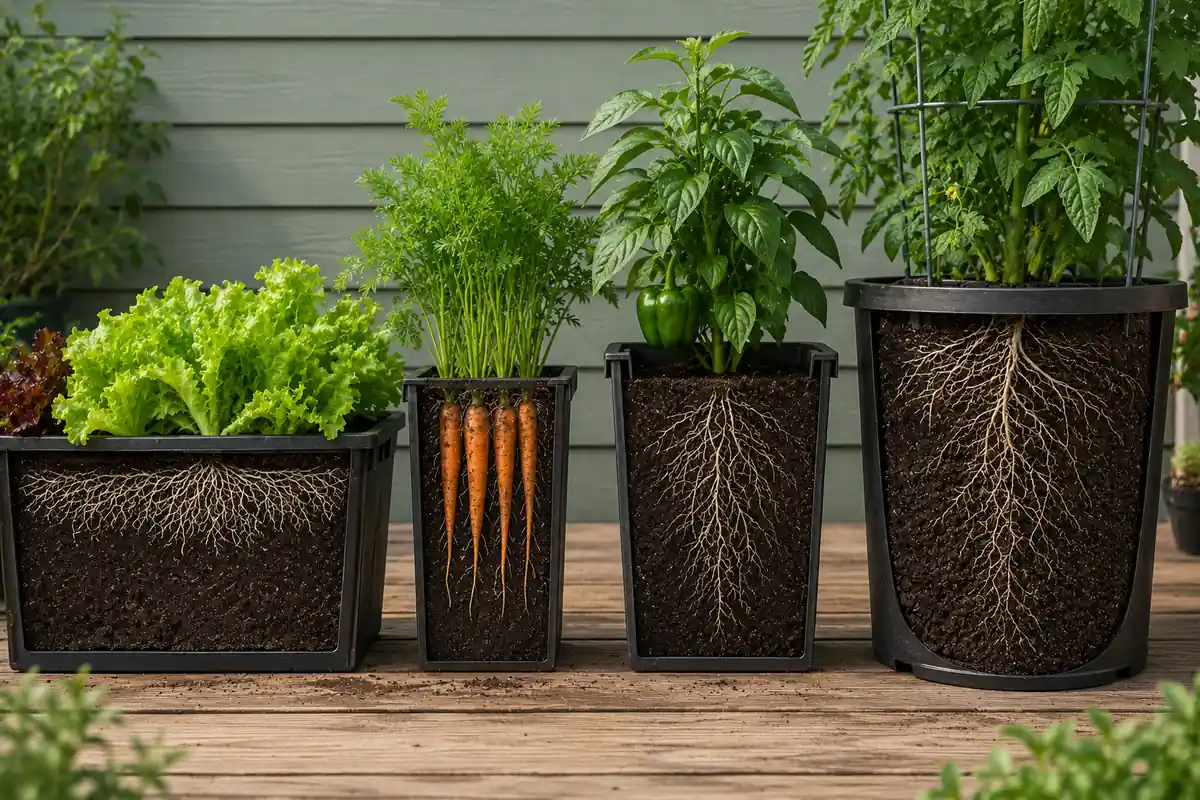
Container depth changes how a vegetable behaves long before the plant looks crowded above the rim. A lettuce box can keep producing with shallow roots and regular cutting, while a carrot in the same depth may hit the base, fork sideways, and finish short. A pepper may still stand upright in a shallow pot, then stall when the warm root zone cannot hold enough moisture for flowers and fruit.
Depth is the part of container sizing that is easiest to miss because the top of the plant looks more urgent. Leaves, stems, and flowers show first. Roots decide whether that growth can keep going after heat, watering, harvest, and fertilizer begin pressing on the same limited volume of mix.
If the crop list is still open, a container vegetable choice by size, light, and space should come before buying deep pots. Once the crop is chosen, depth decides whether roots can spread, anchor, feed, and finish without being forced into a hot, crowded layer at the bottom.
Key Takeaways
- Leafy greens usually need broad shallow depth more than a tall pot.
- Root crops need clean vertical room before they need extra width.
- Fruiting crops need depth as part of volume, support, and water buffer.
- Container shape can make the same gallon size behave very differently.
- Depth fails fastest when mix compacts, drains poorly, or heats from the sides.
Table of Contents
Why Root Type Changes Container Depth
A container has a bottom. That sounds obvious until a crop tries to finish a root, anchor a cage, or pull water through a full canopy inside a pot that ends too soon. In garden soil, roots can often move around harder pockets or follow moisture lower. In a container, the wall and base turn depth into a fixed limit.
Root type tells you which limit matters most. Leaf crops use shallow fibrous roots to keep leaves supplied. Herbs need enough depth for repeated cutting and drainage. Root vegetables need straight, clean room for the edible part. Fruiting vegetables need a deeper root zone because the plant is feeding leaves, flowers, support tissue, and fruit at the same time.
Container size and root system should be matched before planting because a restricted root zone weakens growth even when the top of the plant still looks alive. Plant size, root system, depth, volume, and drainage all belong in the same container vegetable size decision.
Container Depth Chart by Vegetable Root Type
The chart below shows practical container depth, not the full biological root depth a vegetable may reach in unrestricted garden soil. “Minimum usable depth” means the vertical depth of growing mix available inside the container, while “better depth” provides additional root room and a larger moisture buffer. A pot with a false bottom, thick drainage layer, compacted mix, or persistently wet lower layer provides less usable depth than its outside height suggests.
| Root type | Common crops | Minimum usable depth | Better depth when space allows | Best container shape | Failure sign | Main mistake to avoid |
|---|---|---|---|---|---|---|
| Shallow leafy roots | Lettuce, arugula, baby spinach, mustard greens | 6 inches | 8 inches | Wide shallow box or trough | Wilting, bitter leaves, fast bolting | Using a tiny narrow pot that dries from every side. |
| Shallow quick roots | Radish, green onion, baby greens | 6 to 8 inches | 8 to 10 inches | Wide trough with even spacing | Thin roots, pithy texture, uneven swelling | Crowding seedlings in a shallow strip. |
| Fibrous herb roots | Basil, parsley, cilantro, chives | 6 to 8 inches | 8 to 10 inches | Medium herb pot or grouped planter | Slow regrowth, yellow lower leaves, dry rim gap | Treating repeated harvest herbs like temporary seedlings. |
| Medium leafy roots | Swiss chard, dwarf kale, bok choy | 8 to 10 inches | 10 to 12 inches | Deeper trough or medium pot | Small leaves, midday droop, tough older growth | Giving broad leafy plants only salad-box depth. |
| Short storage roots | Round carrot, salad turnip, beet | 8 to 10 inches | 10 to 12 inches | Deep box with loose mix | Forking, crowded shoulders, small roots | Letting compacted mix act like a hard bottom. |
| Long taproots | Standard carrots, parsnips, longer daikon types | 12 inches | 14 to 18 inches | Tall deep box or grow bag | Stubby roots, bends, forks, split tips | Planting long-rooted varieties in a decorative shallow pot. |
| Fruiting fibrous roots | Peppers, bush beans, eggplant | 10 to 12 inches | 12 to 16 inches | Stable pot with enough width for water buffer | Flower drop, daily dry-down, loose stems | Judging depth by transplant size instead of mature load. |
| Heavy fruiting roots | Tomatoes, compact cucumbers | 12 inches | 16 to 18 inches or more | Large stable container with support room | Leaning cage, leaf curl, fruit split after dry spells | Choosing depth without enough volume or support base. |
| Tuber-forming roots | Potatoes | 12 inches | 16 inches or more | Grow bag or deep container with room to fill | Crowded tubers, dry bag edges, no room for hilling | Using a rigid shallow pot that leaves no tuber room. |
Shallow-Rooted Leaf Crops Need Width and Even Moisture
Lettuce, arugula, baby spinach, and mustard greens can grow in shallow containers because the crop is harvested as leaves rather than as a heavy fruiting plant or a long storage root. The better container is often wide instead of tall. Width gives the surface room for spacing, cutting, and more even moisture across the planting strip.
Depth still matters. A tray that holds only a few inches of mix heats fast and dries before roots can recover. Once the rim pulls away from the mix, water may run down the side and leave the center dry. Leaves then wilt in the afternoon, turn bitter, or bolt before the crop gives enough harvest.
For small-space crops, match leafy greens to the container before adding higher-demand plants beside them. The crop-selection logic in best container vegetables by size, light, and space helps separate shallow greens from fruiting crops that need more root room and stronger light.
Herbs and Alliums Need Enough Depth for Regrowth
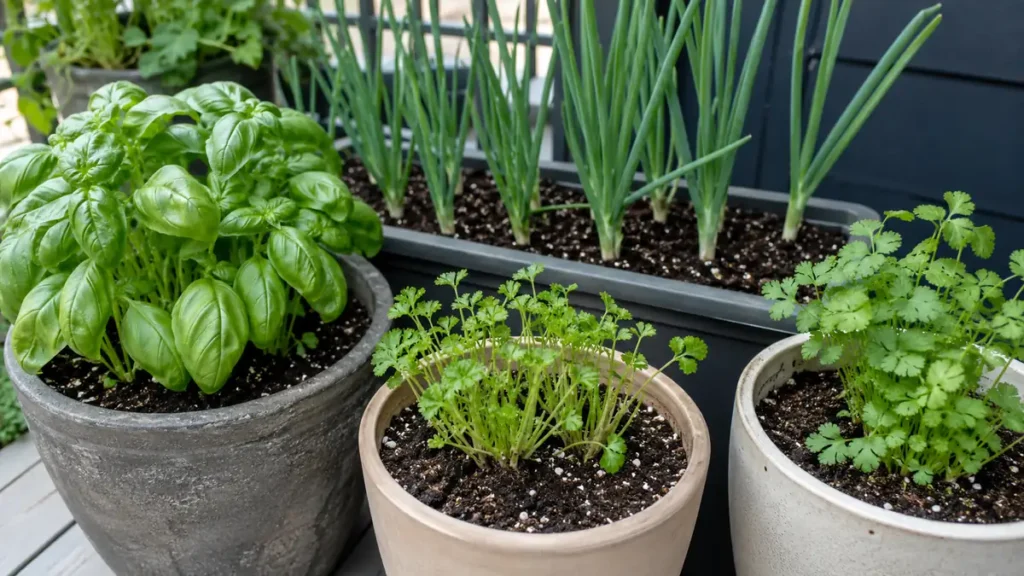
Herbs are often sold in small pots, but a kitchen-size nursery pot is not the same as a season-long container. Basil, parsley, cilantro, and chives need enough depth to keep new growth moving after repeated cutting. If the root zone dries hard after every harvest, the plant spends its energy recovering instead of branching.
Alliums such as green onions stay narrow above the surface, yet they still need a container that holds moisture evenly along the row. A shallow strip can work when it is wide enough, watered evenly, and not packed with too many plants. A cramped pot gives thin stems and fast dry-down because every plant is drawing from the same small reserve.
The potting mix decides whether the available depth is usable. A heavy mix compacts and removes air from the lower layer, while a light container blend lets roots use more of the pot. If herbs slow down after watering or the top dries while the lower layer stays sour, the issue may belong with potting soil for container gardening before a deeper pot fixes it.
Root Vegetables Need Clean Vertical Room
Root vegetables show depth mistakes inside the part you harvest. A carrot bends when the root tip reaches a hard base or compacted pocket. A beet may grow leaves while the root stays small. A radish can turn pithy when shallow mix dries during swelling.
Short-rooted varieties are safer for containers because they finish before depth becomes the main failure point. Round carrots, baby carrots, salad turnips, radishes, and beets can work in boxes when the mix is loose, the spacing is correct, and the container has enough usable depth for the edible root.
Longer carrots, parsnips, and large daikon types need a deeper setup. The container should be filled with loose mix from top to bottom, without stones, bark chunks, buried drainage shards, or a dense layer near the base. If the root tip meets a barrier, the crop may still grow leaves while the harvest becomes forked or short.
| Root crop | Safer container depth | Spacing or thinning check | Depth-related failure | Best adjustment |
|---|---|---|---|---|
| Radish | 6 to 8 inches | Thin to about 2 inches apart | Pithy roots or thin bulbs | Use a shallow trough with even moisture. |
| Round carrot | 8 to 10 inches | Thin to variety spacing | Small shoulders or crowding | Choose short varieties and loose mix. |
| Standard carrot | 12 inches or deeper | Thin early before roots touch | Forking, bending, or short roots | Use a deeper box and remove compacted pockets. |
| Beet | 8 to 10 inches | Thin for root size and leaf harvest spacing | Leafy tops with undersized roots | Give each root shoulder room to swell. |
| Salad turnip | 8 to 10 inches | Thin before roots crowd | Flat or misshapen roots | Keep moisture even while roots expand. |
Fruiting Vegetables Need Depth Plus Volume
Tomatoes, peppers, eggplant, bush beans, and compact cucumbers need depth for anchoring and root function, but depth alone does not carry the crop. These plants also need enough total mix to buffer water, enough width for support hardware, and enough container weight to stay upright after leaves and fruit develop.
A tall narrow pot can look deep while still failing a fruiting crop. The roots may reach downward, yet the plant dries quickly because the total volume is small. A cage or stake can also make the pot unstable once wind catches the canopy.
When the crop is already chosen, a container pot size by crop check belongs after the depth check. Depth tells you whether roots have enough vertical room. Pot size tells you whether the plant has enough volume, support, spacing, and water buffer for the mature crop.
Container Shape Changes Usable Root Depth
The same outside height can give different root depth. A tapered pot narrows sharply near the base. A self-watering planter may reserve the bottom for a reservoir. A decorative cachepot may hide a smaller inner pot. A grow bag may slump lower after watering and reduce the usable wall height.
Measure the growing space inside the container, not the product height on the label. Usable depth starts at the soil surface after watering and settling, then ends where roots hit the base, reservoir platform, dense drainage layer, or any lower zone that stays wet and low in oxygen.
Planter material changes how that depth behaves in heat and wind. Dark plastic warms the wall quickly. Fabric bags breathe and dry faster. Ceramic holds weight but can keep a cold lower layer in spring. If the container itself is still undecided, choosing garden planters for healthy plant growth helps connect material, drainage, weight, and root depth before the crop goes in.
Balconies and Patios Add Depth Limits
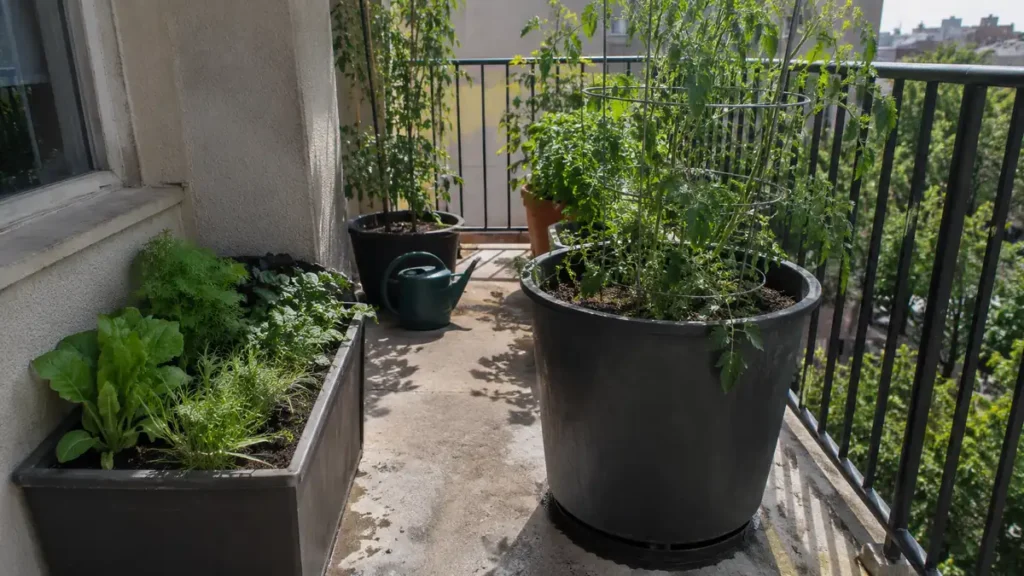
Depth decisions change on balconies and small patios because the container must also fit weight, wind, access, and heat. A deep wet planter is heavier than it looks. A tall container can catch wind when the plant grows above the railing. A narrow walkway can make a deep pot hard to water from the back side.
For upper floors, depth should be chosen with the container’s final wet weight in mind. Soil volume, water, plant mass, and support hardware all add load. If the crop needs a deep or heavy setup and the space cannot handle that safely, choose a shallower crop instead of forcing a deep-root vegetable into a weak container.
Small-space placement can also change moisture behavior. Containers on pavement, near walls, or against metal railings heat from more than one side. The depth may be technically adequate, while the lower root zone still warms and dries faster than expected. A container setup for balconies and small patio spaces needs depth, weight, drainage, and access working together.
Mix, Drainage, and Watering Decide Whether Depth Works
A deep container is only useful when roots can breathe through the depth. If the lower layer stays wet, sour, or compacted, the plant may use only the upper half of the pot. The outside depth looks generous, but the living root zone is shallow.
Drainage holes, pot feet, mix texture, and watering rhythm all affect usable depth. A fine, heavy mix can settle into a dense lower layer. A container with blocked holes can hold water below the roots. A saucer that stays full turns the base into a low-oxygen zone even when the top looks dry.
Water should move through the full root zone without washing straight down a dry side gap. If water races down the rim and leaves the center dry, the plant may act shallow-rooted in a deep pot. If water pools after a normal soak, fix drainage before blaming the crop’s depth needs.
When a Deeper Pot Is the Wrong Fix
A deeper pot cannot solve every container problem. Weak light, harsh wind, a poor crop choice, dense mix, and crowded seedlings can all mimic depth stress. A pepper in weak sun may drop flowers even in a deep container. A lettuce box in full afternoon heat may bolt because the exposure is too harsh, not because the roots needed a taller pot.
Use depth as one filter in the crop’s real growing conditions. A shaded space favors leafy crops and herbs before fruiting vegetables. A hot, windy space favors crops that can handle a larger water buffer or pots placed where morning light and afternoon protection work better.
Depth should stay tied to root behavior instead of trying to answer every container decision at once. Light, space, care load, container volume, support, and spacing still matter because they solve different failures. Use depth to decide whether the crop has enough usable vertical room, then check size, support, and placement before planting.
Final Container Depth Check Before Planting
Before planting, fill the container with moist mix and let it settle. Measure from the settled surface to the true bottom of the root zone. Do not count the height above the soil line, decorative outer shell, reservoir space, or drainage material as root depth.
Then match the crop to the depth. Leafy greens can use a broad shallow container. Herbs need enough depth for repeated harvest. Root crops need clean vertical room. Fruiting crops need depth plus volume, support, and a reliable water buffer.
Finally, check how the pot will be reached. A deep container that cannot be watered evenly, rotated safely, or drained cleanly will still stress the plant. The right depth is the one roots can actually use from the first watering through the hardest week of heat, harvest, and mature growth.
Conclusion
Container depth by vegetable root type keeps the pot matched to the part of the plant doing the work below the surface. Shallow greens need broad, even moisture. Herbs need enough depth for regrowth. Root vegetables need clean vertical room. Fruiting crops need depth as part of a larger system of volume, support, and water buffer.
Choose depth from the crop’s root behavior, then check container size, mix, drainage, and placement before planting. A pot that gives roots usable room below the surface makes the rest of container care easier to read above the rim.
FAQ
How deep should a container be for most vegetables?
Many leafy vegetables and herbs can grow in 6 to 10 inches of usable depth. Root crops and fruiting vegetables usually need more. Carrots, tomatoes, cucumbers, eggplant, and potatoes need deeper containers because roots, harvest load, and water demand continue increasing after the seedling stage.
What vegetables can grow in shallow containers?
Lettuce, arugula, baby spinach, radishes, green onions, chives, and some herbs can grow in shallow containers when the pot is wide enough and the mix stays evenly moist. Very shallow trays dry fast, so the container still needs enough root room to buffer heat and watering.
Do tomatoes need deep containers?
Tomatoes need both depth and volume. A depth of at least 12 inches is a practical lower limit for many container tomatoes, while larger plants need deeper and wider containers that can hold water, roots, cage legs, and mature fruit weight.
How deep should containers be for carrots?
Short or round carrots can work in 8 to 10 inches of usable depth. Standard long carrots need about 12 inches or more, with loose mix from top to bottom. If the container is shallow or compacted, the roots may fork, bend, or stop short.
Does a deeper container always mean better growth?
No. A deeper container helps only when the plant can use the full root zone. Poor drainage, dense mix, weak light, or an oversized cold pot can still slow growth. Match depth to the crop first, then make sure the mix drains, holds moisture evenly, and fits the growing space.
Can I put several vegetables in one deep container?
Yes, when the crops have similar depth, light, and moisture needs. Leafy greens can share a broad box. Herbs can share a deeper planter if spacing stays open. Mixing a tomato with shallow greens often creates water and shade competition once the tomato grows.