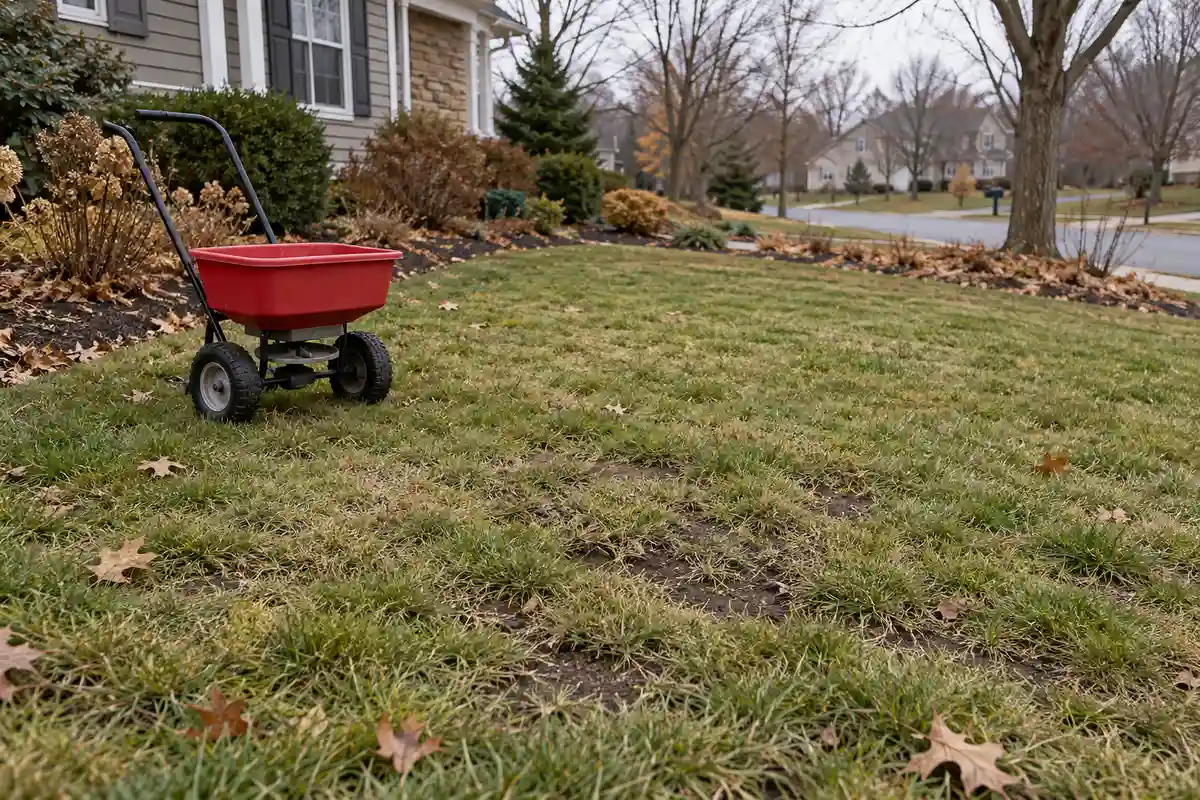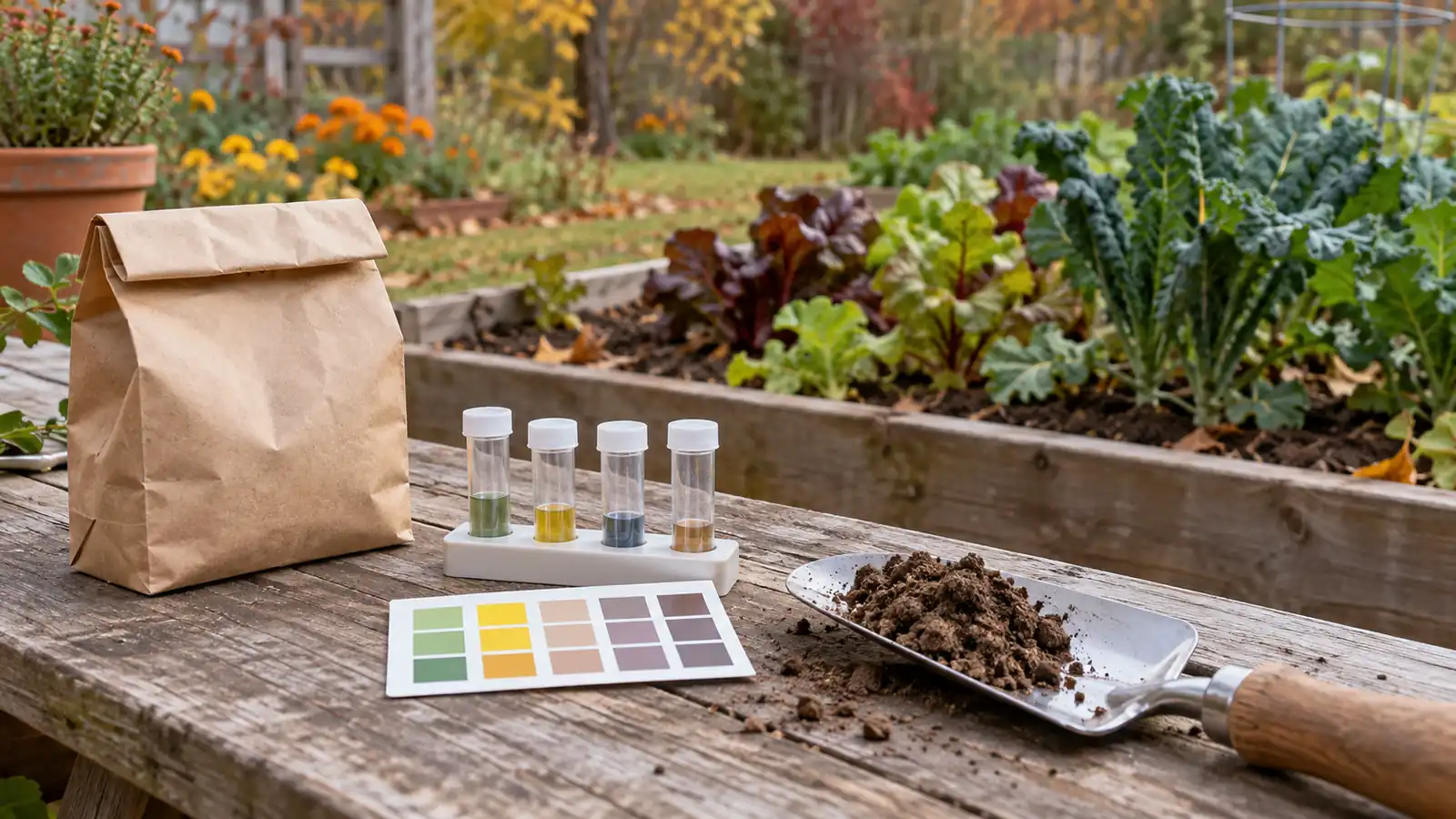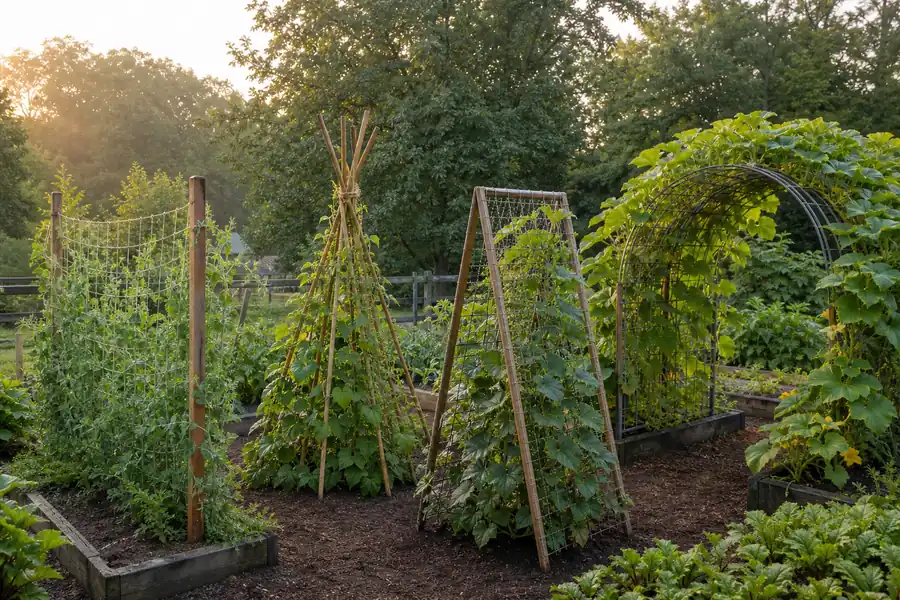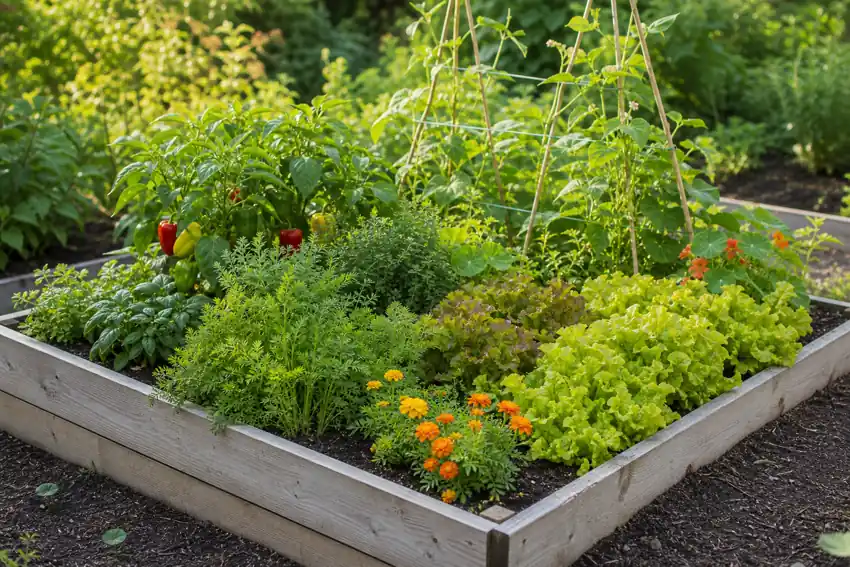



Garden soil usually tells you what went wrong before it tells you what to add. Water may sit on top after rain, seedlings may stall with pale leaves, or the surface may bake into a hard crust between waterings. Compost and organic matter can help, but they work best when the soil problem is read first.
Darker color alone does not prove better root conditions. Better garden soil has air spaces for roots, enough moisture buffer to carry plants through warm days, and enough biological activity for nutrients to move through the root zone. That happens through repeated soil-building moves, not one heavy amendment dump.
For most garden beds, compost is the practical starting material. Organic matter is the wider category that includes compost, leaf mold, aged plant residues, cover crop roots, and other once-living material that changes how soil behaves. A healthy plan uses compost where it fits, soil testing where chemistry is uncertain, and restraint where the bed already has a nutrient or drainage problem.
Table of Contents
Quick Soil Improvement Decision Table
Compost is finished organic matter that can be added to beds. Organic matter is the wider soil-building category. Amendments include compost, lime, sulfur, fertilizer, leaf mold, cover crop residue, and other materials that change soil behavior. Start with the bed’s visible failure before choosing which job needs to happen first.
| If the bed shows | First check | First move | Avoid |
|---|---|---|---|
| Crusty surface, hard clods, or seedlings that stall | Structure, compaction, and whether the soil was worked wet. | Add finished compost after loosening the root zone at the right moisture. | Covering compacted soil with compost while the lower layer stays tight. |
| Fast dry-down in loose or sandy soil | Moisture buffer, mulch cover, and watering depth. | Add compost or leaf-based organic matter, then protect the surface. | Using short surface watering as the only correction. |
| Pale growth, weak fruiting, or repeated crop stress | Soil test, pH, drainage, and root health. | Test before adding fertilizer, lime, sulfur, or manure-heavy compost. | Treating every weak plant as a compost shortage. |
| Sticky clay, ponding water, or sour wet smell | Drainage, compaction, and timing. | Wait until the soil crumbles, then improve structure gradually. | Working wet clay or burying the problem under a thick layer. |
| Bed is already productive but needs seasonal renewal | Previous compost history and crop demand. | Use a light annual compost layer and keep roots or mulch in the system. | Adding rich material every season without checking nutrient buildup. |
Read the Soil Before Adding Anything
Before compost goes into the bed, look at how the soil fails. A crusted surface points toward weak aggregation and low surface protection. Sticky clods point toward clay that has been worked too wet or compacted. Soil that dries fast after watering may need more moisture-holding organic matter, but it may also need mulch, better timing, or a crop that fits the site.
If the main failure is hard layers, surface sealing, puddling, or roots stopping shallow, fix garden soil structure before treating compost as the whole answer.
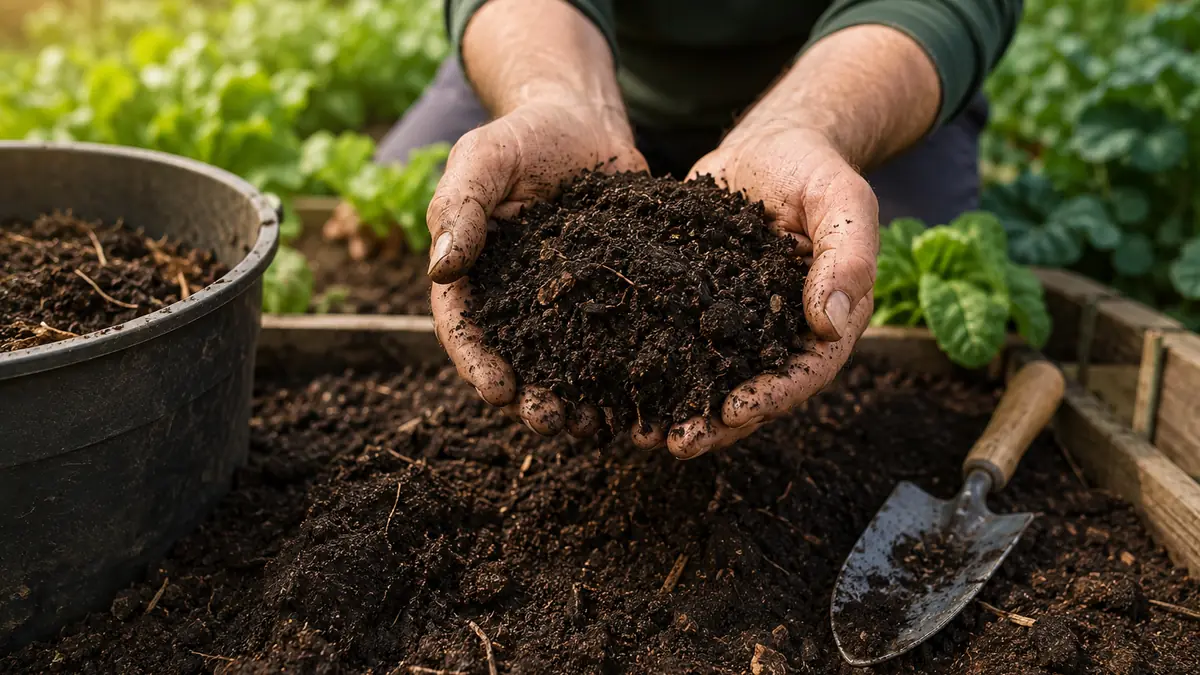
A quick hand check gives more useful direction than color alone. Squeeze a damp handful. If it forms a tight ribbon and smears, treat the bed gently and avoid working it wet. If it falls apart instantly and water disappears too fast, the soil needs more moisture buffer. If it smells sour or stays cold and wet, drainage and compaction need attention before adding more rich material.
Long-term soil health improvement starts with root access, water movement, and organic inputs working together. Compost is part of that system; it should not be used to hide compaction, drainage failure, or untested pH problems.
How Compost and Organic Matter Change Garden Soil
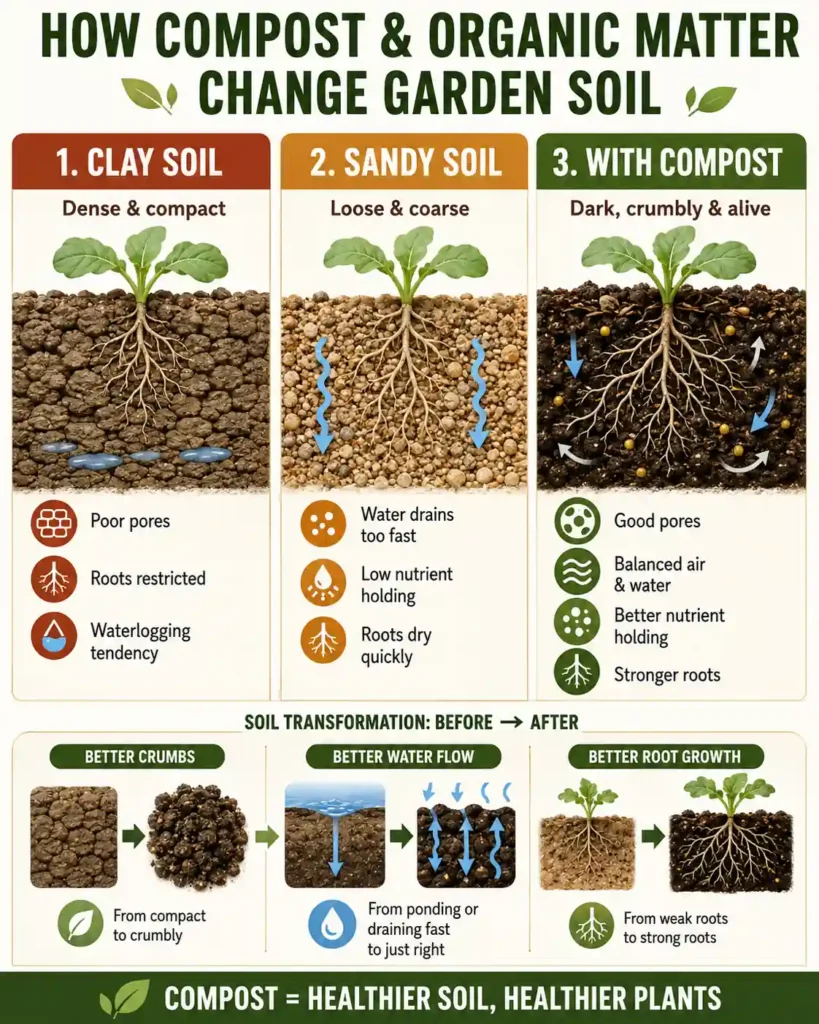
Organic matter changes soil by helping mineral particles hold together in small crumbs. Those crumbs leave pore spaces where air and water can move. Roots need that balance. Soil that has only water and no air can suffocate roots. Soil that drains instantly can leave roots thirsty even when the surface was watered that morning.
In clay soil, organic matter helps loosen the way particles pack together, but it does not turn clay into loam overnight. In sandy soil, organic matter gives water and nutrients more places to cling. In both cases, the effect is strongest when compost is worked into the active root zone and protected afterward with mulch, living roots, or repeated additions.
Organic matter changes soil structure, water movement, and nutrient behavior by changing how the mineral soil holds together. That is why compost can improve the bed environment while specific amendments still need to match the problem in the soil.
Compost, Organic Matter, and Amendments Are Not the Same Job
Compost is finished or nearly finished decomposed organic material. Organic matter is the broader soil-building input. Amendments include materials that change physical condition, pH, nutrient supply, or biological activity. Mixing those roles together is how a bed ends up with too much nitrogen, too much phosphorus, or a texture problem that compost alone cannot fix.
| Material or move | Main role in garden soil | Best fit | Watch point |
|---|---|---|---|
| Finished compost | Adds stable organic matter, improves crumb structure, and feeds soil life slowly. | Annual vegetable beds, tired planting areas, and beds with weak surface structure. | Too much compost can raise nutrient levels beyond what the crop needs. |
| Leaf mold or aged leaves | Improves moisture behavior and surface protection with a lower nutrient push. | Sandy soil, mulched beds, and beds that dry too quickly after watering. | Fresh thick layers can mat if water cannot move through them. |
| Cover crop residues | Adds roots and plant residue that build structure over time. | Resting beds, seasonal garden areas, and soil that needs repeated root activity. | Residue needs time to break down before small-seeded crops are planted. |
| Fertilizer | Supplies specific nutrients when the plant or soil test shows a need. | Known nutrient shortage, heavy-feeding crops, or soil-test-guided correction. | Fertilizer does not fix compaction, crusting, or poor drainage. |
| Lime, sulfur, or pH correction | Changes soil chemistry when a test shows the pH is out of range. | Soils with a confirmed pH problem for the intended crop. | Symptoms alone are a poor reason to change pH. |
If a plant looks hungry, connect the symptom to soil moisture, root health, and crop stage before adding nutrients. A nutrient correction depends on fertilizer basics for gardeners, while compost has the separate job of improving the soil environment around the roots.
How to Prepare Garden Soil Before Planting
Soil preparation should create a bed that roots can enter easily. If weeds, old roots, compaction, and surface crust remain, compost may sit in the top layer while the crop struggles below it. Good preparation starts with access and timing, then moves to amendment choice.
Prepare the bed in sequence: clear the bed, test moisture, loosen only when the soil is workable, add the right amount of finished organic matter, blend it into the active root zone, water it in, and let the bed settle before planting fine seeds. Soil that is worked too wet can lose structure before the crop even starts.
Clearing, loosening, and preparing soil before planting should protect structure first, then make room for amendments. Compost works better when roots can enter the bed instead of stopping at a compacted layer.
| Step | What to do | What the step protects | Warning sign |
|---|---|---|---|
| 1. Clear the bed | Remove weeds, old stems, diseased debris, and large roots that block planting. | Root access and disease prevention. | Fresh weed roots keep regrowing through the new planting area. |
| 2. Check moisture | Work the soil when it crumbles under pressure rather than smearing. | Soil structure and air space. | A shiny smear on the tool means the bed is too wet. |
| 3. Loosen the root zone | Use a fork or broad tool to open compacted soil without pulverizing it. | Drainage, root movement, and air exchange. | Water ponds or roots turn sideways at the same depth. |
| 4. Add compost or organic matter | Spread a measured layer and blend it where feeder roots will grow. | Moisture buffer, crumb structure, and biological activity. | Raw pockets or thick clumps stay separate from the soil. |
| 5. Water and settle | Moisten the bed, let large air gaps settle, and rake the seedbed level. | Seed contact and transplant stability. | Seeds wash into low spots or transplants sink after watering. |
For established beds, preparation may be lighter. A bed with good tilth may need a surface layer of mature compost and mulch rather than deep mixing. A new or compacted bed usually needs more careful loosening before amendments can help.
How Much Compost or Organic Matter to Add
Compost amount should follow soil condition, crop demand, and source quality. For a practical starting point, 1 inch of compost per year can help maintain garden productivity, while 2 to 4 inches may be incorporated into new beds with high clay or thin topsoil. Those numbers are working ranges, not permission to add rich material every time a plant looks weak.
Use the depth range as a measurement layer, then let soil tests and plant response decide whether the bed needs more. For high-stakes corrections, nutrient amendments, lime, sulfur, manure-based compost, or soil with past fertilizer problems, a test should guide the rate.
| Situation | Conservative working range | What changes the amount | Proof check before adding more |
|---|---|---|---|
| Established vegetable bed with decent structure | About 1 inch of finished compost for seasonal maintenance. | Crop demand, previous compost history, and soil test nutrient levels. | Soil crumbles, drains, and supports normal leaf color without a nutrient push. |
| New bed with low organic matter behavior | Up to 2 to 4 inches incorporated for the first improvement pass, then lighter annual additions. | Texture, drainage, existing fertility, and whether the soil compacts after rain. | Water enters the soil, roots move downward, and the surface crust softens. |
| Sandy soil that dries quickly | Compost within the 1 to 2 inch range, plus mulch or leaf-based organic matter to slow dry-down. | Heat, wind, irrigation access, and crop water demand. | Moisture reaches and remains in the active root zone. |
| Clay soil with sticky clods | Compost within the 2 to 4 inch range only when the soil is dry enough to crumble. | Compaction level, drainage, and whether the bed was walked on wet. | Clods begin to break into smaller crumbs without smearing. |
| Known nutrient or pH problem | Follow soil-test instructions for fertilizer, lime, sulfur, or targeted amendments. | Lab result, crop family, and local soil conditions. | The test gives a rate or confirms that no correction is needed. |
Finished compost is safer than fresh manure or unfinished organic material near planting time. If the material still heats, smells sharp, or contains recognizable food scraps, it belongs in a composting process rather than the crop root zone. A basic composting process helps separate mature soil-building material from inputs that still need time.
When Compost Is Enough, and When to Test First
Compost is often enough when the bed drains, roots enter the soil, crops grow with normal color, and the main problem is weak texture or low organic matter behavior. It is less likely to solve a bed that has nutrient imbalance, pH trouble, salt buildup, herbicide residue, or chronic waterlogging.
Test first when leaves yellow in a pattern that does not match watering stress, when growth stays weak across several crops, when a bed has received years of fertilizer or manure, or when a pH-sensitive crop keeps failing. Compost can improve the root environment while the test identifies chemistry that compost should not be asked to fix.
If a bed has been overfed, adding more organic inputs can make recovery slower. A correction path for overfertilized garden soil starts with stopping the excess source and reading plant stress before adding another amendment.
How Clay and Sandy Soil Respond Differently
Clay and sand can both improve with organic matter, but they fail in different ways. Clay soil tends to hold water tightly and lose air space when compacted. Sandy soil tends to release water quickly and let nutrients move beyond the root zone. Compost helps both, yet the supporting moves differ.
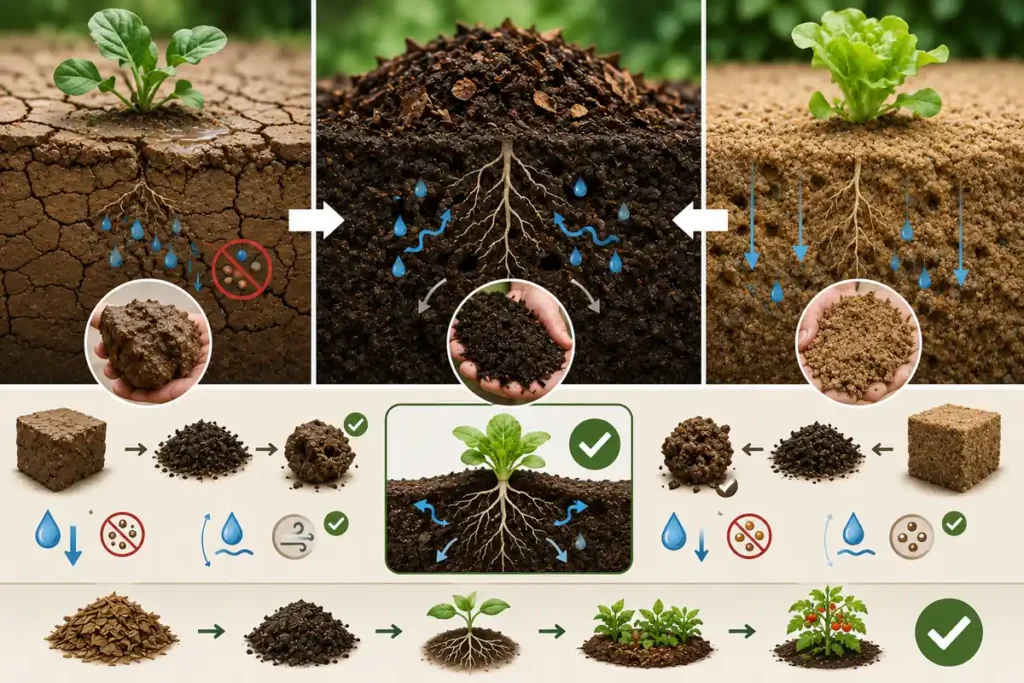
Clay needs patience with timing. Work it when it is too wet and the structure can smear into dense layers. Add compost when the soil can crumble, keep feet and equipment out of wet beds, and protect the surface with mulch or plants. Raised beds can help where wet feet or poor drainage keep returning; raised bed gardening changes root-zone height and drainage behavior when the native soil stays difficult.
Sandy soil needs moisture retention and repeated organic inputs. Compost, leaf mold, mulch, and living roots help slow dry-down, but they still break down over time. That soil often benefits from smaller, repeated additions instead of one large annual correction.
Both soil types also need restraint. Soil building should support the living bed, not bury it under disconnected inputs. Practices tied to sustainable gardening practices keep organic matter cycling through mulch, roots, compost, and plant residue rather than turning amendment shopping into the whole plan.
Soil Amendment Decision Chart
Match the first amendment move to the visible failure sign. Compost is a common answer for weak structure, but it cannot correct every soil problem. The chart below keeps the first move tied to what the bed is showing.
| What the bed shows | Likely first check | Best first move | Avoid |
|---|---|---|---|
| Surface crusts after rain and seedlings struggle to emerge | Surface structure and splash compaction. | Add finished compost, protect with mulch, and avoid bare soil between crops. | Breaking the crust repeatedly without adding cover or organic matter. |
| Water sits on top or the bed stays cold and wet | Drainage, compaction, and whether the bed is worked too wet. | Open the root zone carefully, improve structure over time, and consider raised planting where drainage stays poor. | Adding a thick compost layer to hide waterlogging. |
| Soil dries hard and crops wilt quickly after watering | Texture, mulch cover, and root-zone moisture. | Add compost or leaf-based organic matter, mulch the surface, and water deeply enough for roots. | Short surface watering that never reaches the active root zone. |
| Leaves are pale but the soil is moist and roots look weak | Root health, drainage, pH, and nutrient availability. | Check soil conditions and test before adding fertilizer. | Feeding repeatedly without knowing whether roots can take up nutrients. |
| Plants grow leaves but produce poorly | Nitrogen history, crop spacing, light, and soil test results. | Review compost and fertilizer history, then correct based on test and crop need. | Adding rich compost every time growth looks uneven. |
| New bed has mixed fill, debris, or unknown soil history | Texture, drainage, pH, contaminants, and nutrient baseline. | Test the soil, remove debris, improve structure gradually, and use clean compost. | Planting heavy feeders before the bed has a baseline. |
Prepare the Bed for Planting After Amending
After compost or organic matter is added, the bed still needs a planting finish. Rake large clumps aside, settle the soil with water, and check that the seed or transplant depth will stay level after the first irrigation. A bed that sinks around transplants was not settled enough.
Small seeds need a finer top layer than transplants. Root crops need fewer clods and stones where the edible root will expand. Heavy feeders need a bed that can hold moisture without staying soggy. The final preparation should match the crop, soil texture, and amendment together.
For vegetable beds, soil management for garden beds stays active after planting through mulch, crop rotation, compost timing, and keeping the root zone from compacting during the season.
Soil Improvement Checklist Before Planting
Before planting, run the bed through a short final check. This prevents a compost layer from covering a problem that still needs correction.
- The soil crumbles when damp instead of smearing into a ribbon.
- Water enters the bed and does not sit on the surface for long.
- Compost is finished, earthy, and free of sharp heat or sour smell.
- Large roots, weeds, and diseased debris have been removed.
- The planting layer is level enough for seed contact or transplant stability.
- Nutrient or pH corrections are based on a test when symptoms are unclear.
- Clay soil was not worked while sticky and wet.
- Sandy soil has mulch or organic cover to slow moisture loss.
- Fresh manure, raw kitchen scraps, and unfinished compost are kept out of the planting zone.
- The bed has a plan for future organic matter through mulch, cover crops, compost, or plant residue.
Conclusion
Improving garden soil with compost and organic matter starts with the bed in front of you. Crusting, compaction, fast dry-down, sour wet soil, and uneven plant color each point to a different correction. Compost is often the best first soil-building material, but it works best when drainage, structure, moisture, and nutrient risk are read together.
A strong bed is built in layers of judgment: read the soil, prepare it at the right moisture, add finished organic matter, keep measurements conservative, test when chemistry is unclear, and protect the surface after planting. That approach gives roots a better place to work before the next fertilizer or amendment decision is even needed.
FAQ
Can I add compost directly before planting?
Yes, finished compost can usually be added before planting when it is mature, earthy, and cool. Blend it into the active root zone or use a light surface layer depending on the bed. Avoid raw compost, fresh manure, or material that still heats.
Is compost the same as organic matter?
No. Compost is one form of organic matter. Organic matter also includes leaf mold, decomposed plant residue, cover crop roots, mulch as it breaks down, and other once-living material that changes soil structure and moisture behavior.
Can too much compost hurt garden soil?
Yes. Repeated heavy compost additions can raise nutrient levels beyond what the crop needs, especially when the compost is manure-based or rich. If a bed has had years of compost, fertilizer, or manure, test before adding more.
Should I till compost into the soil?
New or compacted beds may need gentle loosening and blending so roots can move through the amended layer. Established beds with good structure may need only light incorporation, a surface compost layer, or mulch. Avoid working soil when it is wet enough to smear.
What is the best organic matter for clay soil?
Finished compost, leaf mold, and plant-based residues can help clay form better crumbs over time. Timing matters: clay should be amended when it can crumble, not when it is sticky. Compost helps structure, but drainage and compaction still need attention.
What is the best organic matter for sandy soil?
Finished compost, leaf mold, mulch, and repeated plant residue help sandy soil hold moisture longer. Sandy beds usually respond better to repeated additions and surface protection than to one large amendment layer.
Do I need a soil test before adding compost?
A soil test is most useful when plant symptoms are unclear, pH-sensitive crops keep failing, or the bed has received years of fertilizer, manure, or compost. For basic structure improvement, finished compost can often be used carefully, but chemistry corrections should be test-guided.