




Updated April 10, 2026
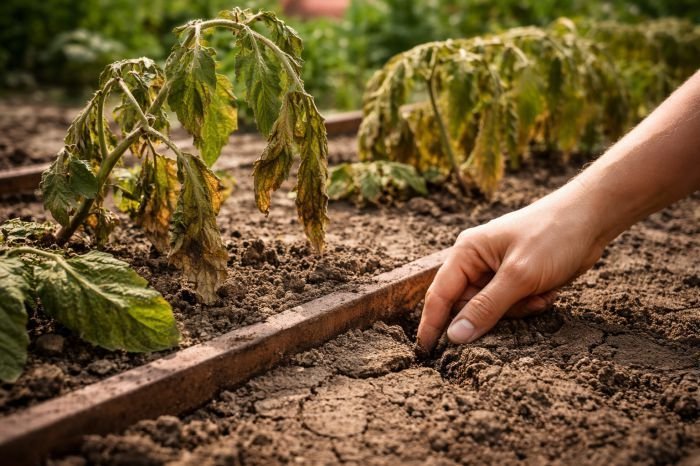
Signs of underwatering in garden plants show up before the full-body wilt that gets most of the attention. The first clues are quieter: leaf shine goes flat, margins pull inward, the soil feels dry and warm below the surface, and the newest growth comes in smaller than the last flush. Pinch a browned edge and it gives a dry paper crinkle. Lift a thirsty container and it feels oddly hollow.
Catch those cues early and you correct a dry root zone before flowers abort, leaves scorch, and growth stalls for the week. Miss them through a hot spell and the plant shifts from expansion to survival, driven by falling turgor pressure, faster water loss through the canopy, and drought signaling through abscisic acid. Diagnosis depends on timing, texture, root-zone depth, and recovery by the next morning.
Signs of underwatering in garden plants include dull leaf color, slight morning droop, curled margins, dry soil 3 to 4 inches down, potting mix pulling from container walls, slowed new growth, and blossom drop. Plants that stay limp by sunrise have usually been short on root-zone moisture for at least 24 hours.
Key Takeaways:
- Probe root-zone moisture 3 to 4 inches down, not the crust
- Treat afternoon wilt that resets by dusk as heat first
- Expect crisp margins and dull color 24 to 48 hours early
- Compare leaf texture before watering; papery leaves beat hasty watering
- Watch two undersized flushes in a row; damage compounds quietly
Table of Contents
Early Signs Of Underwatering – What Appears Before Full Wilt
Full wilt is late. By the time the whole canopy hangs, the plant has already spent hours conserving water, closing stomata, and slowing new tissue expansion. A 2022 review published in the International Journal of Molecular Sciences describes abscisic acid as a central drought signal that tightens stomata and reduces transpiration as soil dries. Gardeners see the surface version of that chemistry first in sheen, angle, and growth rate.
The First Cues Are Small
The earliest pattern is usually a cluster of small changes, not one dramatic collapse:
- Leaf color turns dull or gray-green before the whole plant droops
- Margins curl inward by morning, not only in late heat
- Soil feels dry and warm 3 to 4 inches down
- Potting mix shrinks from the container wall and drains unevenly
- New leaves emerge smaller, tighter, or stall mid-expansion
- Buds, blossoms, or tiny fruit abort before lower leaves crisp
Run your thumb across a healthy leaf and it pushes back with a slight spring. A dry leaf reads thinner and flatter. The surface can still look green at this stage, which is why so many gardeners miss it. What changed first in your plant: the shine, the angle, or the size of the newest leaf? That question gets you to the answer faster than waiting for collapse.
On fast annuals, the newest leaf is the better witness than the oldest one. Basil tips turn smaller and slightly cupped before the lower leaves brown. Zinnias and cosmos keep their older foliage through early stress; the newest growth arrives tighter, shorter, and less glossy. On cucumbers and squash, the first clue is often not color at all – the leaf blade loses its firm, lifted plane and starts reading like thin cloth stretched over the veins.

Morning Recovery Separates Heat From Drought
Research from the University of Maryland Extension notes that short periods of wilt do not damage plants on their own. Timing is the tell. A plant that flags in the late afternoon and stands back up after sunset may simply be losing water through the leaves faster than roots can replace it in peak heat. A plant that begins the day soft, curled, and dull has moved past temporary heat response and into root-zone shortage.
Make the comparison at the same hour two mornings in a row. If the plant rises cleanly by dawn, the root zone still has enough water for nighttime recovery. If petioles hang lower the second morning, or leaf edges stay curled before the sun reaches them, the plant is no longer just reacting to heat load. Turgor pressure failed to rebuild overnight, which means the water column from root to leaf did not catch up during low transpiration.
Underwatering Symptoms By Plant Part – Leaves, Soil, Stems, Flowers
Different tissues signal water shortage at different speeds. Leaf edges sit at the far end of the hydraulic path, so they crisp early. Young tips stop extending once cell expansion loses pressure. Flowers and tiny fruit abort because reproduction is expensive when the plant is short on water. Reading the plant by part keeps you from overreacting to one symptom in isolation.
| Plant part | What you see | What it usually means |
|---|---|---|
| Leaves | Dull color, inward curl, crisp tips, thinner feel | Water loss is outpacing uptake and turgor is falling |
| Soil and root zone | Dry, warm profile 3 to 4 inches down, cracks, dusty crumbs, pot wall gap | The working root zone is depleted or the mix has gone hydrophobic |
| Stems and petioles | Young tips stop stretching, leaf stalks angle down, stems lose snap | Cell expansion has slowed and new growth is being rationed |
| Flowers and fruit | Bud drop, blossom browning, poor fruit set, misshapen small fruit | The plant is shedding high-cost tissue to conserve water |
Leaf Texture Beats Leaf Posture
Pinch the edge of a damaged leaf between two fingers. Dry stress gives a faint crackle and a brittle edge. Overly wet tissue compresses with no sound and feels cool or slick. Press the soil at depth and notice the temperature as well as the texture. Moist soil carries that cool, dark-earth feel. Dry soil reads gritty, lighter in color, and genuinely warm.
Leaf posture alone misleads because petioles droop under heat, root damage, transplant shock, and saturated soil. Texture narrows the diagnosis. A droughted leaf loses internal water pressure, so the blade bends with less resistance and the edge dries first. A waterlogged leaf may hang just as low. The tissue stays thicker, cooler, and softer because the problem is oxygen starvation around the roots, not a dry leaf surface. Use both hands: one on the leaf edge, one in the soil profile.
Buds Drop Before The Canopy Fails
Flowering plants tell on themselves early. Tomatoes, peppers, petunias, hydrangeas, and basil all shed reproductive growth quickly under water shortage because the plant protects the core canopy first. If buds are dropping across an otherwise green plant, do not assume nutrition or pollination first. Confirm moisture at root depth.
Tomato blossoms dry at the joint before they fall. Pepper flowers turn pale, detach cleanly, and leave a bare node. Hydrangea buds brown at the outer bracts when the leaves still look passable from a distance. In each case, the plant is cutting a water-expensive sink before it sacrifices established leaves. Ethylene and abscisic acid both rise under drought stress, and that hormonal shift favors survival tissue over blooms and tiny fruit. A plant that drops flowers during one hot afternoon and holds leaf firmness by morning is still in the warning zone. A plant that drops flowers and wakes up dull has crossed it.
Underwatered Vs Overwatered Plants – Texture Solves The Lookalike Problem
A drooping plant does not automatically need water. Drought and waterlogging both produce limp growth because the leaves are no longer being supplied correctly. The difference sits in texture, weight, smell, and timing. That overlap sits at the center of identifying signs of overwatering in plants, where the same posture comes from saturated, oxygen-poor roots.
Run the comparison in a fixed order: leaf edge, pot weight or soil profile, root-zone smell, then next-morning recovery. Changing that order leads gardeners toward whichever symptom looks most dramatic. Crisp edges matter only if the root zone is dry. Yellow leaves matter only after you know whether the soil is heavy or depleted.
Crisp Tissue Versus Soft Tissue
Dry stress feels crisp. Leaf margins brown to a thin, papery edge. Lower foliage can yellow, though the tissue stays dry and light. The pot or root ball feels light for its size, and the soil breaks apart into warm crumbs. Waterlogging feels soft. Yellow leaves read fleshy or limp, the soil stays heavy and cool, and the root zone may smell sour or stagnant. Roots from a droughted plant are dry and wiry. Roots from an overwatered plant darken, soften, and smear.
University of Maryland Extension notes that a plant can wilt on a hot day and restore turgor by evening when soil moisture is ample. This distinction prevents many watering mistakes. Temporary afternoon wilt in heat says the canopy lost water faster than roots could supply it for a few hours. Morning limpness after a cool night is the stronger drought clue.
One splash of water can fool you. A peat-heavy or coir-heavy mix that dried hard may shed water down the pot wall and leave the center dry. The top looks wet for an hour and the plant still wilts the next day. Diagnosis based on surface darkening alone fails constantly.
Container Plants And Garden Beds – The Same Missed Watering Reads Differently
Containers shout. Garden beds whisper. A pot dries from the rim inward, loses moisture from every side, and heats quickly in sun and wind. A bed holds more reserve, so the surface may look acceptable even when the feeder-root zone is drying below. That is why patio basil can look stressed a full day before the same basil planted in the ground says anything visible.

Containers Dry From The Edges First
Container clues are physical and easy to confirm. The pot feels lighter than usual. The mix pulls from the wall. Water beads on top, then races down the gap without soaking the center. Leaves on fast growers like coleus, calibrachoa, basil, impatiens, and tomatoes lose shine first, then edges curl, then the whole top droops. Raised beds sit between pots and in-ground beds. Their edges dry fast, especially along wood or metal walls.
Fabric pots add another clue: the sidewall feels warm and dry, and fine roots along the outer edge stop feeding first. Terracotta gives a different read. It cools by evaporation when moisture is present, then turns light and warm once the mix is depleted. Hanging baskets are the fastest to crash because wind reaches the whole root ball. A basket that still looks green at breakfast can feel feather-light by late afternoon after one windy day.
I often notice that patio tomatoes and basil show smaller tip growth and blossom drop a day before the same cultivar planted in the ground looks thirsty. The container root zone heats faster, so hydraulic stress arrives sooner even when both plants were watered on the same date.
Garden Beds Hide Stress Longer
In-ground plants register drought more slowly, though the signs can be subtler and more damaging for that reason. New leaves come in short. Flower buds brown at the base. Marginal scorch appears on the sunniest side of the plant. The canopy still looks acceptable from ten feet away. Repeated dry-down in that setting pushes the problem toward underwatering and soil health, where shrinking aggregates and tighter surface structure make rewetting less even.
Check bed plants from the growing tip backward. Established leaves have more stored structure and can mask stress for days. The newest two leaves, the active flower cluster, and the top inch of stem tell the truth sooner. In clay soil, the surface may crack with deeper layers still holding water. In sandy soil, the surface may look ordinary after the entire feeder-root band has drained. A narrow trowel slot near the drip line gives a cleaner read than looking directly beside the stem.
Repeated Underwatering – The Damage That Keeps Compounding
One missed watering causes stress. Repeated cycles rewrite the plant’s shape. Research from Montana State University Extension lists chlorosis, leaf scorch, wilting, reduced growth, fewer and smaller leaves, shorter growth between leaf buds, premature drop, and greater pest vulnerability as drought stress symptoms. Those are not cosmetic changes. They are the record of a plant spending its energy budget on survival.
Two Growth Flushes Tell The Story
Look at the newest flush over two growth cycles. If internodes shorten, leaves emerge smaller, and side shoots stop pushing, the plant is no longer just thirsty on a hot afternoon. It has shifted into conservation mode. Photosynthesis drops once stomata stay closed for long stretches. Flower formation slows. Fruit set thins. Spider mites, aphids, and other sap feeders find easier targets because drought-stressed plants lose some of the physical and chemical defenses that depend on active growth.
Measure the newest internode with your fingers if you do not want a ruler in the garden. On a healthy tomato or pepper, the next stretch of stem should be close to the previous one under similar light and temperature. When two new nodes stack closer together, and the leaf size drops at the same time, the plant is leaving a record of water stress in its architecture. The old leaf edge may look worse; the new growth tells you whether the shortage is ongoing.
Roots Follow Moisture, Not Toughness
Research from the University of Nebraska-Lincoln’s UNL Water makes a point many gardeners still get wrong: roots do not grow deeper simply because the soil above them is dry. Roots proliferate where moisture and oxygen are already available. Repeated shallow wetting followed by long dry gaps leaves a shallow working root system, not a tougher plant. That pattern contributes to the effects of underwatering on garden plants and plant growth, including reduced canopy expansion, weaker flowering, and uneven recovery.
The root-zone clue is uneven recovery. A plant with active roots through the profile firms up across the canopy after a proper soak. A plant with a shallow root plate perks only at the top or only on the watered side, then droops again the next day. That uneven response means the water did not reach a broad working root system, or that the root system stopped exploring deeper layers during earlier dry cycles.
Damage also lingers after the plant perks back up. Aborted flowers do not reopen. Leaves that emerged undersized stay undersized. Scorched margins remain dead tissue. Recovery can be good. Lost time in the season is still lost time.
Confirm The Problem Fast – Probe The Root Zone, Not The Surface
Start with a skewer, chopstick, or your index finger. Push it 3 to 4 inches into the soil in a pot, or 4 to 6 inches into a bed near the feeder-root zone. Leave it for a minute, then pull it out and touch the lower end. Cool with a soil smear means moisture is still present. Dry and warm means the root zone is depleted. If the surface looks dusty and the skewer returns cool, what exactly are you reacting to: root stress or surface appearance?
Test Two Points Before Watering
Pro Tip: Use two test points on large containers or raised beds – one near the edge and one halfway to the stem. Edge readings dry out first and reveal channeling or hydrophobic mix long before the center fully fails.
Lift the pot next. Experienced gardeners diagnose thirst by weight faster than by color. A dry container reads surprisingly light, especially with terracotta, fabric pots, hanging baskets, and peat-heavy mixes. In beds, slice a narrow slot with a trowel and inspect the soil profile. Dry at the surface is normal in summer. Dry several inches down is the meaningful read.
Then check the plant at sunrise the next morning. A deep, even soak should restore turgor if dryness was the main issue and the roots are still functional. If water raced down the wall, pooled briefly, or left the center dry, the plant has moved from diagnosis into triage. At that stage, solutions for reviving underwatered plants depend on slow repeated rewetting rather than one heavy drench.
Conclusion
Underwatering announces itself first in timing, texture, and growth. Full wilt is the late clue, not the first one. Read dull color, inward curl, dry warmth at root depth, lighter container weight, blossom drop, and the next morning recovery pattern together. That combination tells the truth faster than any single symptom.
If the same plants keep reaching this stage together, the diagnosis is also telling you something about the planting design. One shared watering rhythm rarely fits thirsty annuals, woody shrubs, herbs, and drought-tolerant perennials at the same time. That is one reason the benefits of grouping plants by water needs become so obvious by midsummer.
FAQ
How do you know if a plant is underwatered?
Probe the soil at root depth and pair that reading with tissue texture. Underwatered plants usually have dry, warm soil several inches down, leaves that feel thinner or papery, and growth that has slowed over at least a few days. Morning droop is more diagnostic than a short afternoon slump. A plant that stays soft after a cool night is signaling root-zone shortage.
What do underwatered plants look like?
Most gardeners wait for dramatic wilt. The earlier look is duller leaf color, slight inward curl at the margin, smaller new leaves, blossom drop, and potting mix that has shrunk from the container wall. Crispy tips and browned edges arrive after that. In beds, the first visible clue may be weaker new growth, not a collapsed canopy.
How can you tell the difference between overwatering and underwatering?
Two cues solve most cases in under a minute: soil state and leaf texture. Dry, warm soil paired with crisp, light, or papery foliage points toward underwatering. Heavy, cool, sour-smelling soil paired with soft, yellow, or translucent growth points toward overwatering. If the plant only droops during peak heat and fully resets by evening, confirm moisture before diagnosing either problem.
Can a plant wilt in the afternoon and still have enough water?
Yes. Hot sun, dry air, and wind can pull water from leaves faster than roots can replace it for a few hours. University of Maryland Extension notes that plants can wilt during hot weather and restore turgor by evening if soil moisture is adequate. Persistent limpness the next morning is the stronger drought signal.
Do container plants show underwatering faster than plants in the ground?
If you are growing in containers, symptoms arrive faster because the root zone is smaller, warmer, and exposed on every side. Patio tomatoes, basil, hydrangeas, and annual flowers can move from fine to stressed in a single hot day. Plants in the ground hold more reserve, so they often show slower new growth, blossom drop, or marginal scorch before a full wilt signal appears.
What happens if a plant is repeatedly underwatered?
Water stress changes hormone signaling and leaf gas exchange within hours. Stomata close, growth slows, and the plant starts rationing water to its newest tissue and reproductive structures. Repeat that cycle across several weeks and you get smaller leaves, shorter internodes, weaker flower set, and more pest pressure. Recovery stays possible in many cases, though lost leaf size and aborted blooms from that period do not come back.