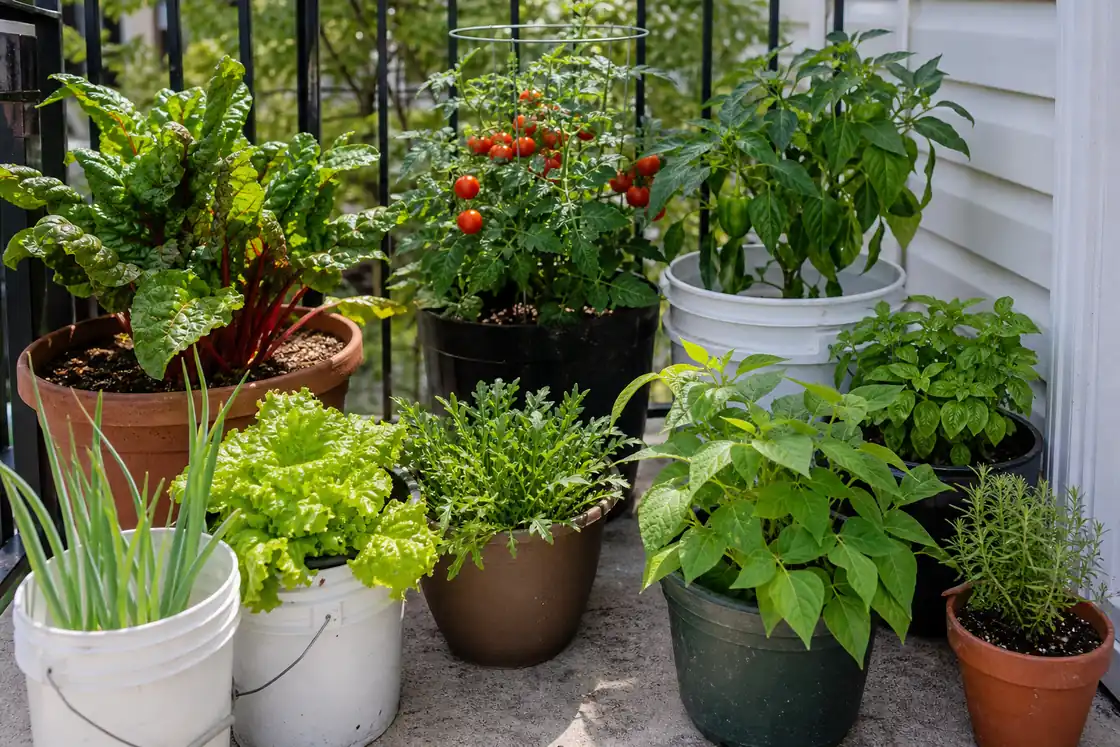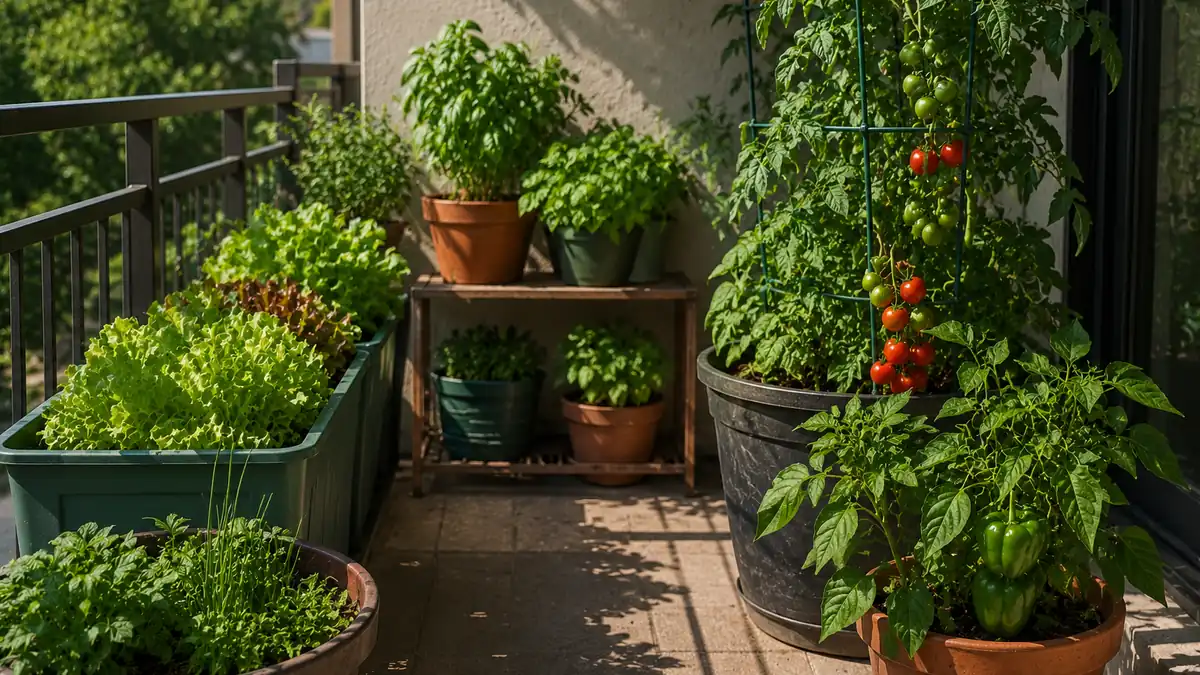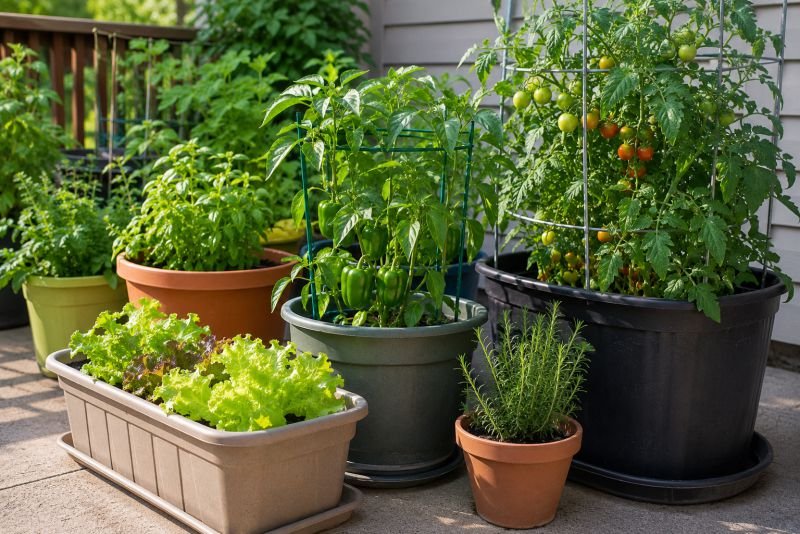
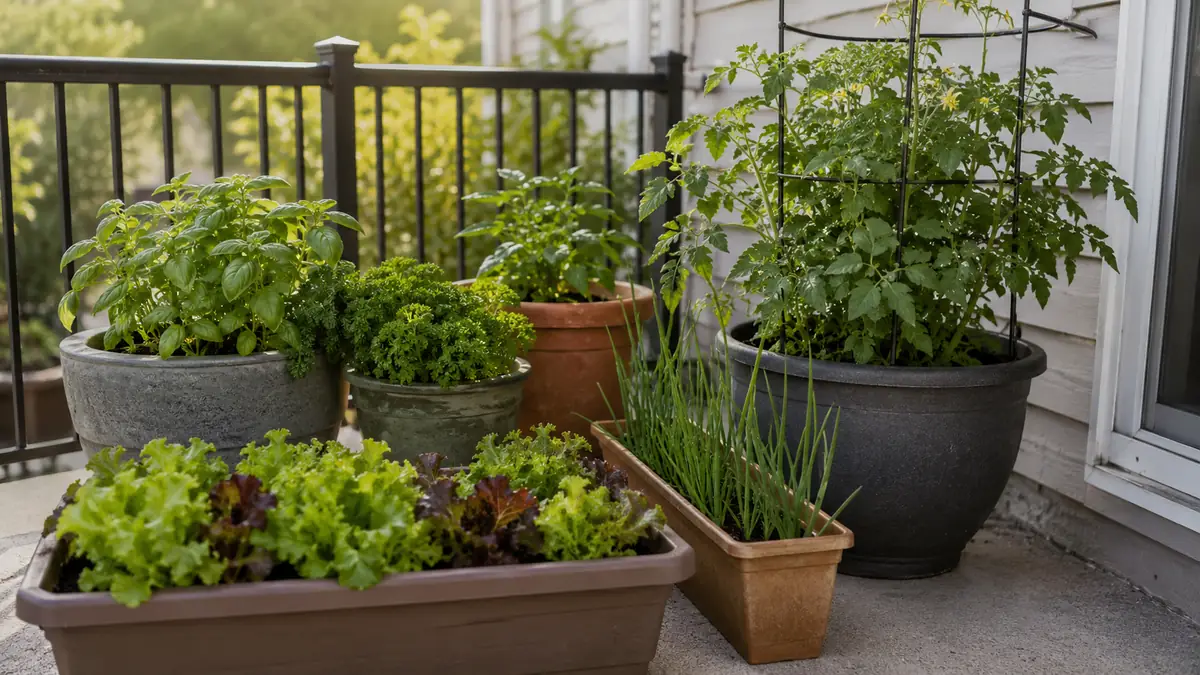
The best container vegetables are the ones that match the pot, the sunlight, and the space before the first seedling goes in. A lettuce box can stay productive on a cool railing. A tomato in the same spot may dry hard by lunch, lean into the walkway, and need more support than the balcony can comfortably hold.
Crop choice changes the whole container setup. Leaf crops ask for shallow moisture control. Herbs ask for drainage and regular cutting. Fruiting vegetables ask for more root volume, more sun, stronger support, and closer watering. A small-space garden works better when the plant list is chosen around those limits instead of corrected after the pots are full.
A first container garden is easier to keep alive when the crops fit the daily care rhythm in container gardening for beginners. Choose the crop list first, then match containers, potting mix, support, and watering to the plants that can actually perform in that space.
Key Takeaways
- Small containers favor leafy greens, herbs, radishes, and green onions.
- Fruiting crops need more sun, root volume, water buffer, and support.
- Partial-sun spaces work better with greens and herbs than tomatoes or peppers.
- Vertical crops save floor space only when the container can anchor the support.
- The best beginner crop is the one your space can water, support, and harvest without strain.
Table of Contents
Start With the Space, Then Choose the Vegetable
A container crop has to fit three limits at once: root room, light, and working space. Root room decides how long the pot can feed and cool the plant between waterings. Light decides whether leaves can keep growing after harvest or whether fruit can set. Working space decides whether the plant can be reached, turned, staked, and watered without crowding the path.
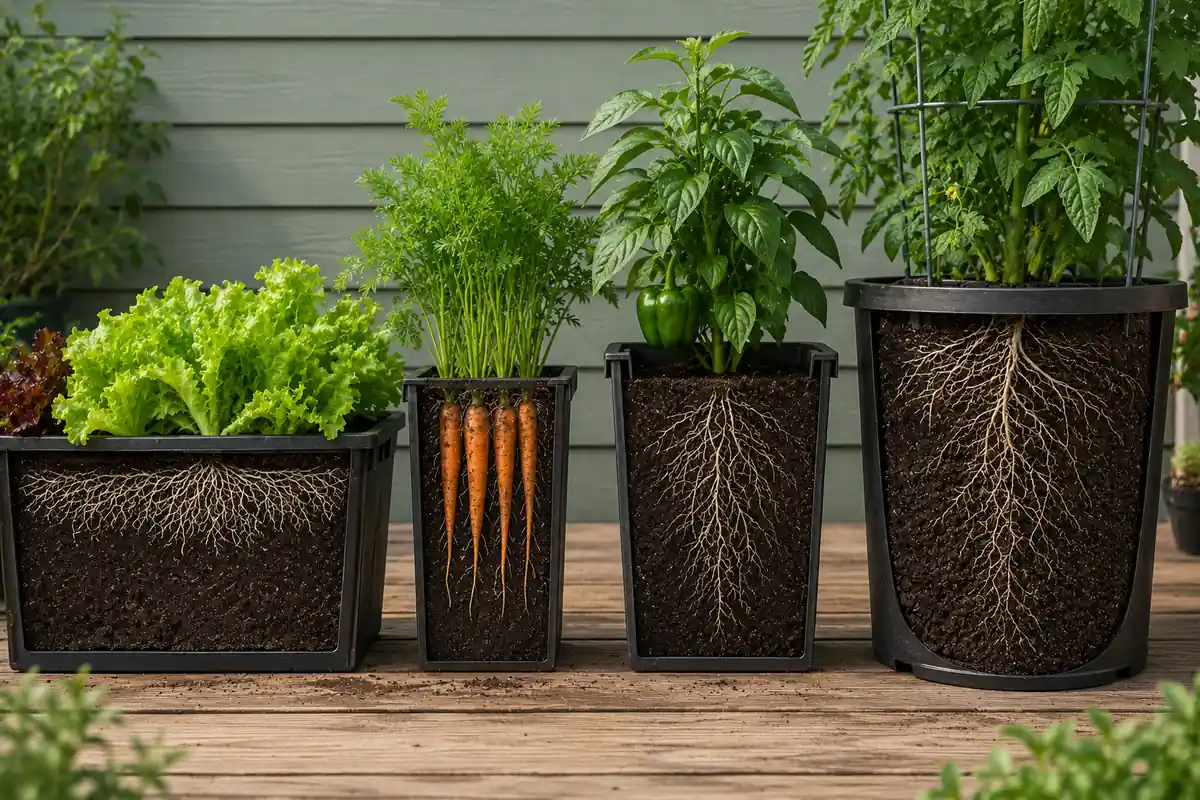
Small containers punish the wrong crop quickly. A pepper in a shallow decorative pot may hold its first leaves, then stall when warm weather pulls moisture faster than the roots can replace it. A lettuce crop in the same pot may give several clean cuts because its root system, harvest weight, and light demand stay lower.
That difference is why the crop list should come before the shopping list. The container works as the plant’s water reserve, root zone, heat buffer, and support base. Once the crop is chosen, a container pot size by crop check can set the practical volume, depth, support, and spacing.
Container Vegetable Selection Decision Matrix
Crop selection should start with the space, container volume, and care rhythm the plant will live with. The matrix below separates fast leafy crops, compact herbs, fruiting crops, and supported plants by container size, light fit, space habit, care load, and main failure point.
| Vegetable or herb | Minimum practical container | Best light fit | Space habit | Care load | Beginner fit | Best container role | Watch point |
|---|---|---|---|---|---|---|---|
| Lettuce | Wide shallow box or 2 to 3 gallon pot | Morning sun or bright partial sun | Low and compact | Low to medium | High | Quick salad crop for railings, shelves, and cool patios | Heat makes leaves bitter and thirsty. |
| Spinach | Wide shallow box or 2 to 3 gallon pot | Cool morning sun, afternoon shade in warm weather | Low and compact | Medium | High in cool seasons | Early or late-season greens in tight spaces | Warm roots push bolting and smaller leaves. |
| Arugula | Window box or 2 gallon pot | Morning sun or bright partial sun | Low and fast | Low | High | Fast cut-and-come-again crop | Dry heat turns flavor sharp quickly. |
| Radish | 6 to 8 inch deep trough or pot | 4 to 6 hours of sun | Low, quick, and narrow | Low | High | Fast root crop for shallow setups | Crowding and dry swings create woody roots. |
| Green onion | Window box, trough, or 1 to 2 gallon pot | Bright partial sun to full sun | Upright and narrow | Low | High | Edge crop for mixed containers | Small pots dry faster once roots fill the strip. |
| Basil | 1 to 3 gallon pot | Full sun with heat protection in harsh afternoons | Upright and bushy after pinching | Medium | High | Herb pot for frequent harvest | Cold roots and wet mix slow new leaves. |
| Parsley | 1 to 2 gallon pot | Morning sun or bright partial sun | Upright clump | Low to medium | High | Longer-running herb for partial-sun patios | Small pots need more even moisture in heat. |
| Chives | 1 gallon pot or mixed herb planter | Full sun to partial sun | Upright clump | Low | High | Low-risk herb for narrow shelves | Dense clumps need division when growth thins. |
| Swiss chard | 2 to 3 gallon pot or deep trough | Full sun in cool weather, afternoon shade in heat | Upright leafy plant | Medium | High | Leaf crop with more heat tolerance than spinach | Older leaves get tough when water swings hard. |
| Dwarf kale | 3 to 5 gallon pot | Full sun to bright partial sun | Upright and leafy | Medium | Medium-high | Cool-season leafy crop with repeat harvests | Heat and small root volume invite stress and pests. |
| Bush bean | 2 to 5 gallon pot or deep trough | Full sun | Bushy, moderate width | Medium | Medium-high | Compact fruiting crop without a tall trellis | Pods suffer when the pot dries during flowering. |
| Compact pepper | 3 to 5 gallon pot | Full sun | Upright, moderate width | Medium | Medium | Small-space fruiting crop for sunny patios | Fruit set drops when roots cycle from dry to soaked. |
| Patio or determinate tomato | 5 gallon pot or larger | Full sun | Wide and top-heavy | High | Medium | Main crop for a sunny, reachable container spot | Support and water buffer matter as much as the plant label. |
| Cherry tomato | 5 to 10 gallon pot | Full sun | Tall, wide, and supported | High | Medium | High-reward crop for gardeners who can water often | Small pots tip, dry fast, and struggle with fruit load. |
| Compact cucumber | 5 gallon pot or larger with support | Full sun | Climbing or trailing | High | Medium | Vertical crop for sunny corners with a strong trellis | Leaves wilt fast when support, water, or pot size is weak. |
| Eggplant | 5 gallon pot or larger | Full sun and warmth | Upright, broad leaves | High | Medium | Warm patio crop for larger containers | Cool roots and shallow pots slow flowering. |
| Short carrot | 10 to 12 inch deep container | Full sun to bright partial sun | Low foliage, root-depth dependent | Medium | Medium | Root crop for deeper boxes and loose mix | Compacted mix or shallow depth bends roots. |
Best Choices for Very Small Containers
Very small containers work best with crops that stay low, harvest quickly, or tolerate close cutting. Lettuce, arugula, radishes, green onions, chives, and parsley give the most forgiveness because the plant does not need to carry heavy fruit or anchor a cage.
These crops still need a real root zone. A decorative mug-sized pot may hold a seedling for a few days, then dry from every side at once. A wide box gives shallow-rooted crops a better moisture buffer because the roots can spread sideways and the surface can be watered evenly.
Small containers also fit the way new gardeners learn. The plant shows water stress quickly, harvest comes sooner, and the container can be moved out of hard afternoon heat before leaves collapse.
Best Vegetables for Partial Sun
Partial sun changes the crop list. Fruiting crops such as tomatoes, peppers, cucumbers, and eggplant usually need stronger light because flowers and fruit demand more energy than leaves. In a space with morning sun and afternoon shade, leafy crops and herbs are usually safer.
Lettuce, spinach, arugula, parsley, chives, Swiss chard, and green onions can still make useful growth when the light is bright but not full-day intense. The harvest style matters too. Baby leaves and cut herbs need less stored energy than a fruiting plant trying to set a full crop.
| Light condition | Better crop choices | Crops to avoid first | Why the choice changes |
|---|---|---|---|
| 3 to 4 hours of direct morning sun | Lettuce, parsley, chives, arugula, green onions | Tomatoes, peppers, cucumbers | Leaf harvest can continue with less light than fruit set. |
| 4 to 6 hours of sun | Spinach, Swiss chard, radish, basil, short carrots | Large tomatoes and eggplant | Moderate light can support compact crops when heat and water stay controlled. |
| 6 or more hours of direct sun | Peppers, patio tomatoes, bush beans, compact cucumbers | Heat-sensitive greens in midsummer exposure | Fruit crops gain enough energy, but the root zone dries faster. |
Best Vegetables When Floor Space Is Tight
A narrow balcony or patio does not need the smallest plants in every pot. It needs plants with a clean growth habit. Upright herbs, green onions, compact peppers, bush beans, and supported patio tomatoes use space more predictably than sprawling vines.
Vertical support can help when the crop already fits the container. A compact cucumber can climb if the pot is heavy enough, the trellis is stable, and the gardener can reach the back side for watering and harvest. A weak pot with a tall trellis becomes a tipping risk before it becomes a space saver.
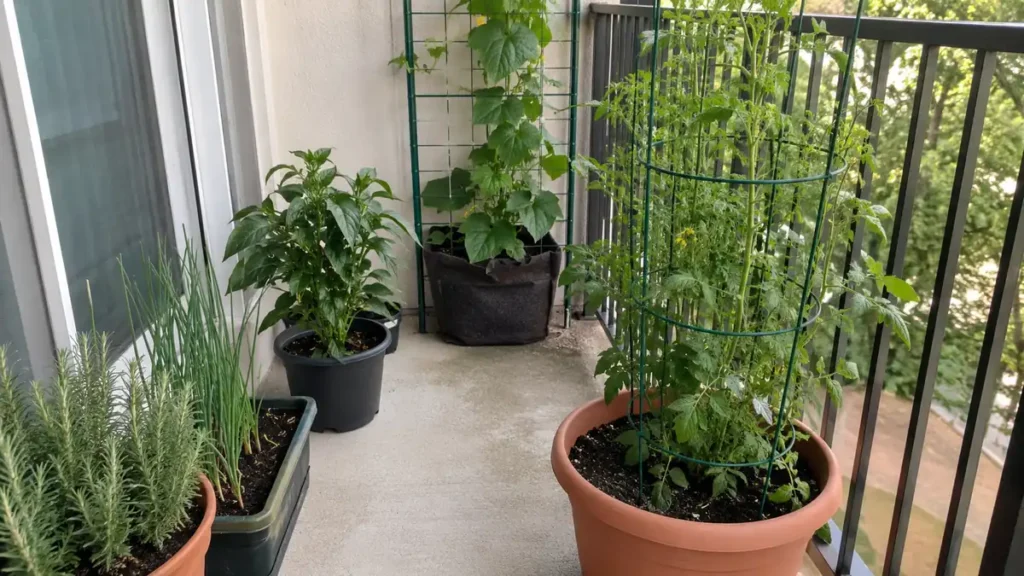
Trailing crops need more judgment. A plant that looks tidy in a nursery cell may cross a walkway by midsummer. If the space is used every day, choose upright crops first and keep trailing crops for corners, railings, or containers that can be turned without breaking stems.
Best Beginner Container Vegetables
Beginner crops should forgive a missed timing, show clear symptoms, and recover after small corrections. Leafy greens, green onions, herbs, radishes, bush beans, and compact peppers usually teach container care without demanding a perfect system from the first week.
Tomatoes are popular, but they are not the easiest first crop in a small container. They need a larger water buffer, stronger support, and full sun. A patio tomato can be a good first fruiting crop if the container is large, the support goes in early, and watering can happen before afternoon stress builds.
A useful starter set is one leafy crop, one herb, and one fruiting crop only if the space has enough sun. That mix teaches harvest timing, pruning or cutting, watering rhythm, and fruit-load care without turning the first setup into a daily rescue project.
Use Potting Mix and Water Demand to Narrow the List
A crop that likes a larger water buffer still struggles if the root zone sits in heavy yard soil. A lighter potting soil for container gardening keeps air and moisture closer to the roots, especially when the container has to dry and rewet several times in a warm week.
Water demand should influence crop choice as much as container size. Lettuce and herbs need regular moisture, but they do not pull water with the same force as a tomato carrying fruit. A sunny balcony with wind may handle herbs and peppers well, then push cucumbers or tomatoes into daily watering pressure.
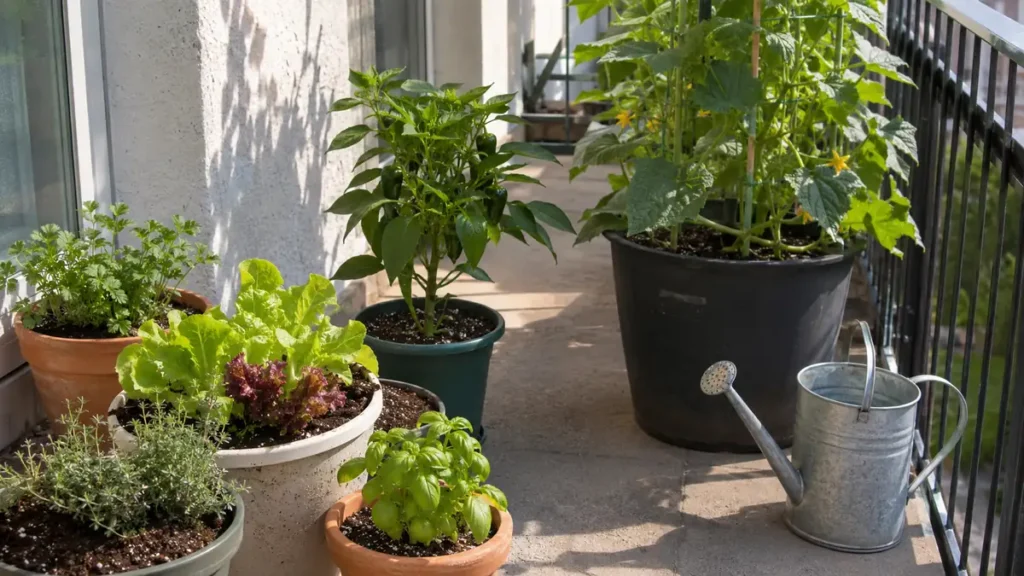
Choose the highest-water crops only where the pot can be reached easily. A crop that needs attention every hot morning does not belong behind furniture, under a hanging basket, or in a corner where the watering can misses the back half of the soil surface.
Vegetables to Skip in Small Containers
Some vegetables can grow in containers but make poor first choices for tight spaces. Full-size pumpkins, corn, large melons, standard sprawling squash, and long-season storage roots usually ask for more room, water, fertility, or support than a small patio can give cleanly.
A seed can sprout in a small pot while the mature plant still needs more root volume, feeding space, water, and room to finish cleanly. A squash vine that grows across a walkway may be healthy, yet still be the wrong crop for that container garden.
If a crop needs a large footprint, heavy feeding, deep moisture, or long support, treat it as a second-season experiment. Start with crops that show clear signals, fit the container, and leave room for watering and harvest.
Final Crop Selection Check Before Planting
Before planting, set each crop against the real space. How many hours of direct sun reach the pot? Can the container hold enough mix for the crop’s roots? Will support hardware fit before the plant gets tall? Can water reach the soil evenly? Can the crop be harvested without moving three other pots?
If two crops compete for the same best spot, give it to the one that needs the stronger light or larger water buffer. Put greens, herbs, and quick roots into the smaller or cooler spaces. That order keeps the highest-demand crops from carrying the weakest part of the setup.
The right vegetable list should make the garden easier to care for after planting. When crop size, light, and space fit each other, watering becomes more predictable, support goes in before stems lean, and the first harvest comes from a container that was matched to the plant from the start.
Conclusion
The best container vegetables are chosen by fit. Lettuce, herbs, radishes, green onions, and chard handle small or partial-sun spaces better than heavy fruiting crops. Peppers, tomatoes, cucumbers, beans, and eggplant can work well when the pot, light, support, and watering access are strong enough for their load.
Start with the space you actually have. Match crops to light, container volume, reach, and water demand, then build the garden around plants that can stay healthy in those limits.
FAQ
What vegetables grow best in containers for beginners?
Lettuce, arugula, radishes, green onions, parsley, chives, basil, Swiss chard, bush beans, and compact peppers are good beginner choices. They fit manageable containers and show clear care signals before the plant is badly stressed.
Which vegetables need the least space in containers?
Green onions, herbs, arugula, lettuce, radishes, and chives need the least floor space. Use wide shallow boxes for leafy crops and narrow pots or mixed planters for upright herbs and onions.
What vegetables can grow with only morning sun?
Lettuce, parsley, chives, arugula, spinach, green onions, and Swiss chard are better choices for morning sun than tomatoes or peppers. Fruiting crops usually need longer direct light to flower and set well.
Are tomatoes good for small container gardens?
Patio or determinate tomatoes can work in small container gardens when the pot is large enough, the site gets full sun, and support is installed early. Tiny pots and weak cages make tomatoes harder than most beginner crops.
Should I choose the pot size or the vegetable first?
Choose the vegetable first when possible. The crop tells you how much light, root room, support, and watering access the container must provide. If the pot already exists, choose crops that fit that container’s limits.
Can I grow several vegetables in one container?
Yes, if the crops have similar light, moisture, and root-depth needs. Herbs with herbs, leafy greens with leafy greens, or onions along the edge of a larger planter usually work better than mixing a heavy fruiting crop with shallow greens.