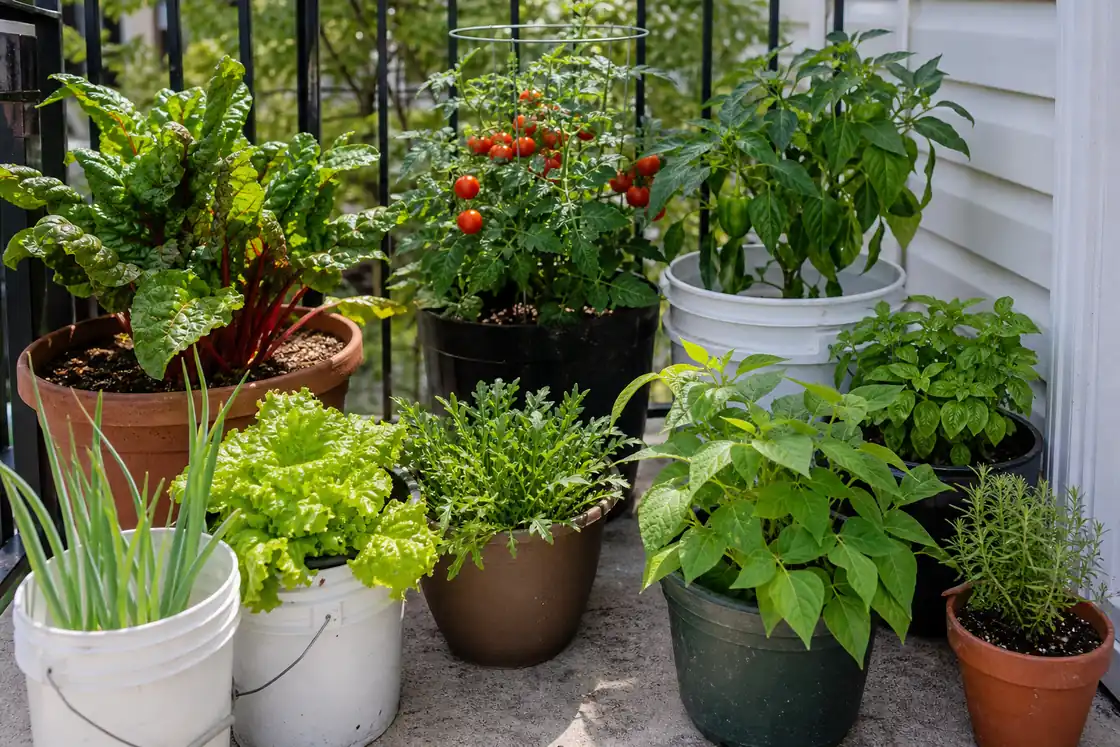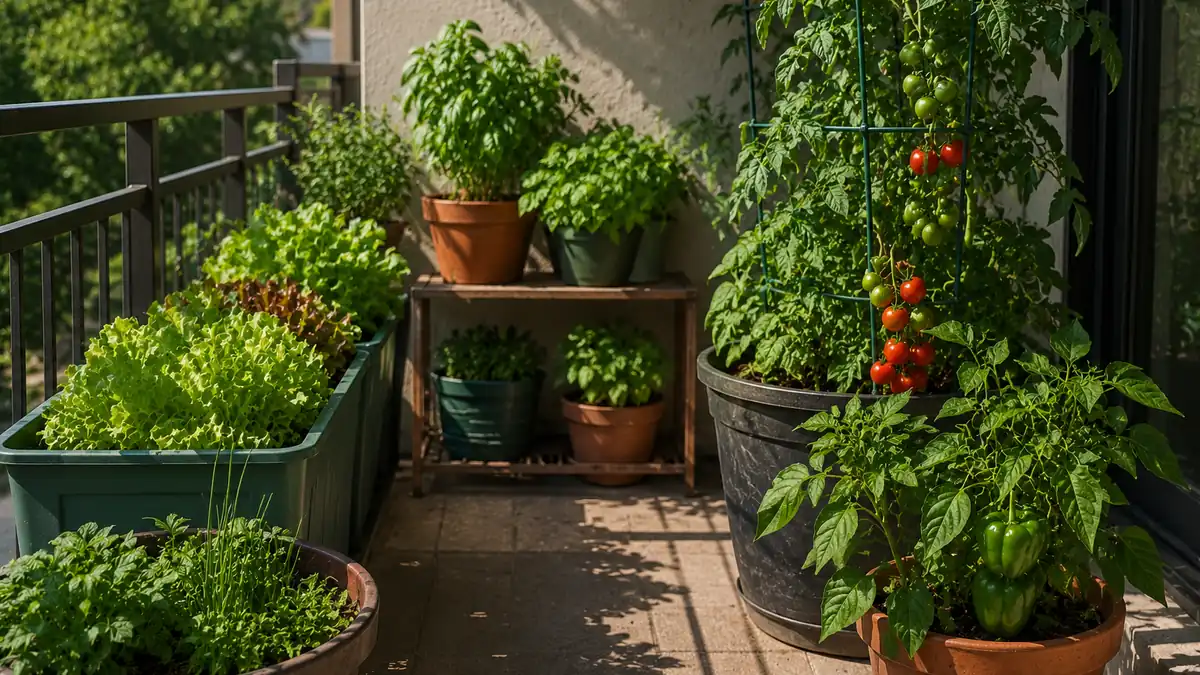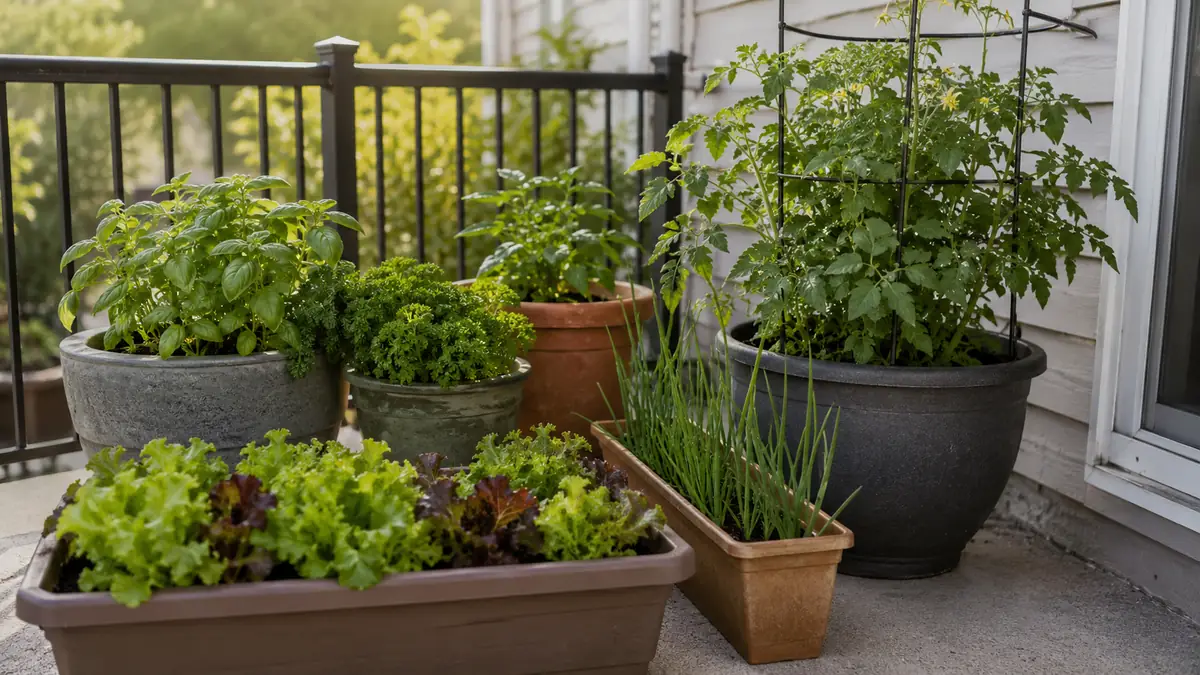
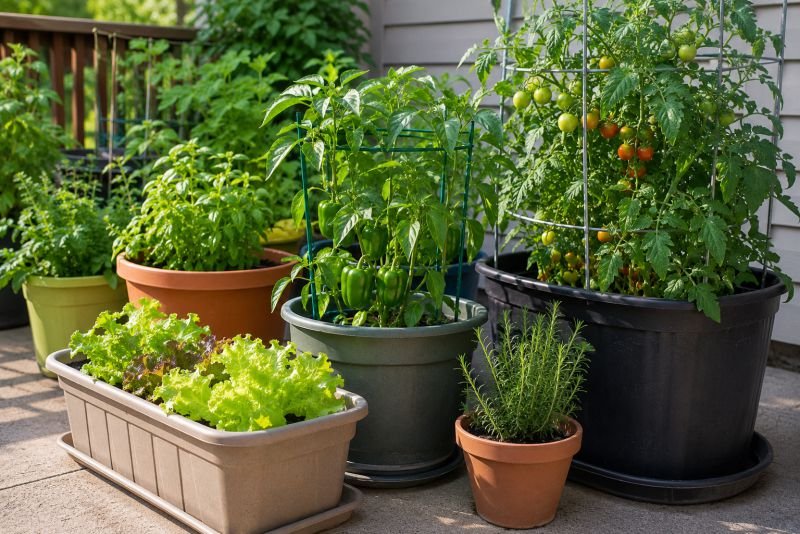
Container pot size by crop matters because roots, water, and plant weight change at different speeds once a vegetable starts growing in a pot. Lettuce finishes in a shallow box while a tomato turns the same box into a hot, dry root trap. A pepper that looked fine in spring stalls in July when the container cannot hold enough moisture through a full fruiting day.
The right pot is more than a larger bucket. It is root room, water buffer, drainage space, support clearance, and harvest access working together. A container that feels generous at transplanting becomes tight once roots fill the mix, leaves shade the rim, and fruit starts pulling water faster than the potting mix supplies it.
Most container vegetables fit by crop habit first: leafy crops need shallow moisture control, root crops need clean depth, herbs need fast drainage, and fruiting crops need volume plus support. Start with the crop group, then adjust for variety size, heat, wind, and your watering rhythm.
Key Takeaways
- Match pot size to roots, canopy, and harvest load
- Give tomatoes at least a five-gallon starting point
- Treat compact varieties as smaller plants, not tiny roots
- Check root-crop depth before buying the container
- Upgrade when support hardware crowds the root zone
Table of Contents
How Container Size Changes Vegetable Growth
A pot changes faster than a garden bed. The sides heat in direct sun, the mix dries from the top and the wall at the same time, and the root zone has no deeper soil to borrow from when a warm afternoon pulls water through the leaves.
Root pressure shows up before the plant looks dramatic. New leaves get smaller. The surface dries to a pale crust by noon. A pepper plant feels loose when the stem is moved because the whole root ball has become a tight, dry plug inside the pot. That is a size problem before it becomes a fertilizer problem.
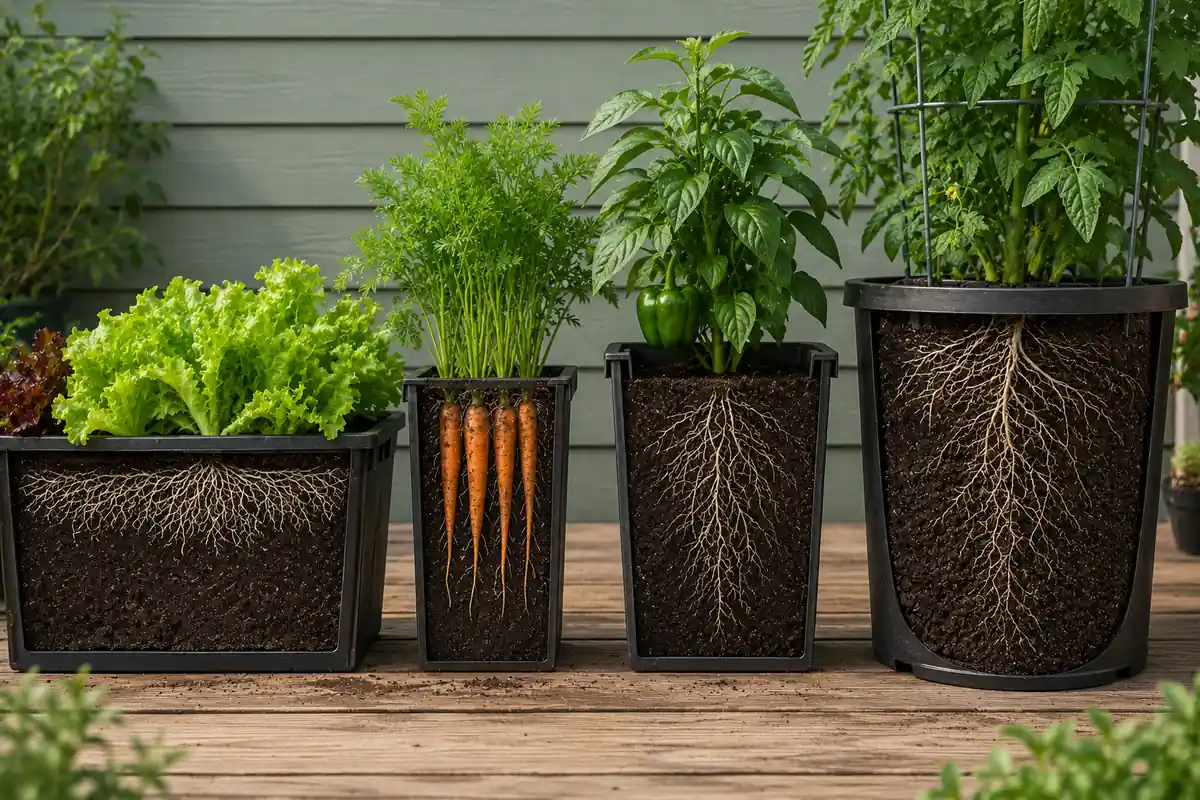
Vegetables also use container volume differently. Leaf crops use it as a short moisture buffer. Fruiting crops use it as a longer production runway. Root crops use it as straight, clean depth. Vining crops use it as an anchor for a plant that wants to lean, climb, and pull against the rim.
Container sizing works best when pot volume, drainage, and plant habit are judged together. A vegetable container has to fit the plant below the surface and the workload above it, while container type and size choices still need to support drainage, stability, and crop habit.
Container Pot Size Chart By Crop
The ranges below are working starting points for home containers, not fixed promises. A dwarf tomato, a patio cucumber, and a standard indeterminate tomato do not belong in the same pot just because the plant tag says vegetable. Heat, wind, pot material, support system, and watering rhythm all push the final choice.
Use the larger end of a range when the plant will carry fruit, grow through summer heat, sit on concrete, or need a cage. Use the smaller end only when the crop is naturally compact, harvested young, or planted in a wide container where roots have room to spread sideways.
| Crop | Minimum practical container | Usable depth | Plants per container or spacing | Support need | Resize trigger | Main mistake to avoid |
|---|---|---|---|---|---|---|
| Lettuce | 2 to 3 gallon pot, window box, or wide shallow planter | 6 to 8 inches | Several cut-and-come-again plants in a wide box, or 6 to 8 inches between heads | None | Leaves wilt before evening or turn bitter in heat | Using a tiny pot that dries before afternoon heat breaks. |
| Spinach | 2 to 3 gallon pot or broad trough | 6 to 8 inches | 3 to 5 inches for baby leaves, wider for full plants | None | Bolting, small leaves, or a dry surface by midday | Crowding full-size plants in a narrow pot. |
| Basil | 1 to 3 gallon pot | 6 to 10 inches | One strong plant per small pot, or wider spacing in a mixed herb planter | None unless stems grow tall and loose | Woody stems, yellow lower leaves, or a dry rim gap | Keeping several basil plants in one nursery-sized pot. |
| Parsley | 2 gallon pot or deeper herb container | 8 to 10 inches | One plant per small pot, or wider spacing in a trough | None | Slow regrowth after cutting | Treating parsley like a shallow microgreen. |
| Radish | 1 to 2 gallon pot or shallow trough | 6 inches | About 2 inches apart after thinning | None | Roots stay thin or turn pithy | Letting the mix dry hard while roots swell. |
| Carrot | Deep box or 3 gallon pot or larger | 10 to 12 inches for standard types | Thin to the variety spacing, with extra room for longer roots | None | Forking, stubby roots, or shoulder crowding | Planting long carrots in a shallow decorative pot. |
| Beet | 3 gallon pot or wide deep planter | 8 to 10 inches | 3 to 4 inches apart for roots, closer for baby greens | None | Small roots with large leaves | Treating beets as only a leafy crop. |
| Bush bean | 3 to 5 gallon pot or wide planter | 8 to 10 inches | One to three plants depending on planter width | Light stake only if stems lean | Pod set slows or plants flop after flowering | Planting too many seedlings for the water reserve. |
| Pepper | 3 to 5 gallon pot | 10 to 12 inches | One plant per pot | Small stake or cage once fruit forms | Flower drop, curled leaves, or daily dry-down | Leaving a full-size pepper in a small transplant pot. |
| Determinate tomato | 5 gallon pot or larger | 12 to 18 inches | One plant per pot | Cage or firm stake from planting | Pot tips, cage leans, or fruit splits after dry spells | Sizing by early plant height instead of mature fruit load. |
| Indeterminate tomato | 10 gallon pot or larger | 18 inches or deeper | One plant per pot | Tall cage, stake, or trellis anchored early | Daily wilting, unstable cage, or roots filling the pot wall | Using a light pot that cannot hold vine weight. |
| Cucumber | 5 gallon pot or larger for compact types | 12 inches or more | One compact plant per pot, or a wider planter for multiple plants | Trellis or cage for vining types | Midday wilt, loose trellis, or a dry top layer after watering | Letting trellis weight and roots fight for the same small pot. |
| Eggplant | 5 gallon pot or larger | 12 inches or more | One plant per pot | Stake when fruit starts to size | Leaf droop in heat, small fruit, or tipping | Treating eggplant like a small herb because the transplant is compact. |
| Potato | 10 gallon grow bag or larger | 12 to 16 inches of usable mix | One seed piece group per bag, with room to fill gradually | None, but the bag must stand firm | Crowded tubers, dry bag edges, or no room for fill | Using a rigid shallow pot that leaves no tuber space. |
Container dimensions, drainage, and care should follow the crop’s growth pattern, because leafy greens, fruiting crops, herbs, and root crops put different pressure on the same pot volume. A crop-specific container growing reference is most useful as a cross-check before treating one gallon range as universal.
Pro Tip: Lift the pot before watering on a mild morning, then lift it again near sunset after a warm day. A container that feels feather-light by evening is too small for that crop, that exposure, or your watering rhythm.
Why Tomatoes Need More Pot Than They Seem To Need
A tomato transplant sells the illusion that the plant is small. The root ball fits in one hand, the stem bends easily, and a little pot looks reasonable for a week or two. The real container demand arrives later, when the plant has leaves, flowers, fruit, and a cage all pulling on the same limited root space.
Determinate tomatoes stop shorter, but they still set a heavy crop over a tighter window. Indeterminate tomatoes keep extending stems, producing leaves, and asking the pot for more water as the season warms. The difference changes support height, container weight, and how quickly the mix dries after a full watering.
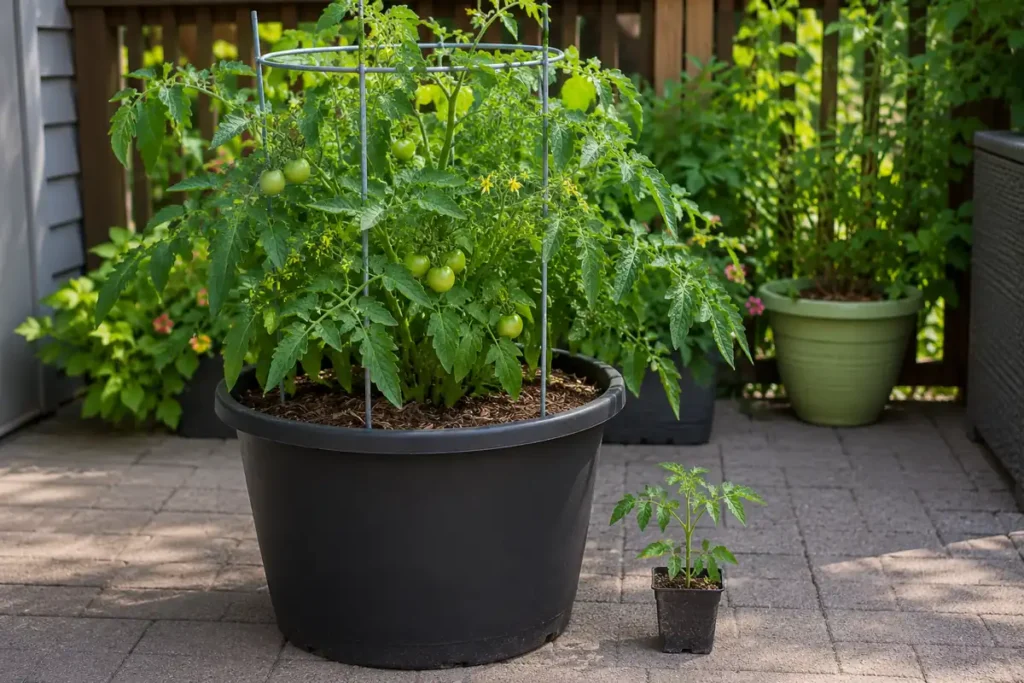
Push a finger into a small tomato pot on a hot afternoon. If the top inch is pale and the lower mix is warm instead of cool, roots are working inside a shrinking water reserve. Leaves still look normal at that moment. Blossom drop, split fruit, curled margins, and stalled new growth arrive later.
A tomato container should be chosen around mature load, not transplant size. A five-gallon pot is the lower practical starting point for many determinate and patio types. Larger, deeper, heavier containers are safer for full-size vines, hot patios, black plastic pots, and any setup that needs a tall cage.
Compact Varieties Help Only When The Root Zone Still Works
Compact does not mean rootless. A patio tomato, mini cucumber, dwarf pepper, or small basil still needs oxygen, drainage, and enough mix to buffer heat between waterings. The word compact describes the plant habit above the rim. The roots still have to live in the pot all day.
Small varieties earn their place when they reduce top growth, shorten the harvest window, or keep the support system lighter. They do not rescue a container that dries to a hard edge by midafternoon. A compact plant in a hot clay pot runs out of usable moisture faster than a larger plant in a pale fabric bag.
Use compact varieties when the growing space is the main limit. Keep the container large enough that the plant recovers between watering cycles. If a crop needs fruit support, do not let the word patio talk you into a pot too light to hold the plant upright.
I notice small-container failures at the rim first. The mix pulls away from the side, water runs down the gap, and the center root ball stays dry even after the surface looks wet.
Root Crops Need Depth Before Extra Width
Carrots, beets, turnips, and radishes read the container from below. A wide pot does not help a carrot if the root tip reaches a hard bottom, a dense layer, or a shallow tray before the edible root has finished extending. The crop deforms because the root had nowhere clean to go.
Short-rooted varieties fit containers better because the edible part finishes before depth becomes the failure point. Round carrots, baby carrots, salad turnips, and radishes give the gardener more margin in boxes and troughs. Standard long carrots need a deeper container and a mix without stones, chunks, or compacted pockets.
Depth decisions deserve their own check because root behavior differs from simple pot volume. If the crop choice turns on taproot length, storage-root shape, or soil depth, use a depth-first plan rather than forcing every detail into a crop-size chart. Long-rooted crops need a container depth by vegetable root type check before pot volume matters, because a shallow base stops the edible root even when the container looks wide enough.
Crop-Specific Container Notes
Container volume gives the first estimate, but crop behavior decides whether that estimate holds after roots, canopy, and harvest pressure increase. Two vegetables sometimes share the same container volume and fail for different reasons: one because the roots crowd, one because the support tips, and one because the harvest pattern keeps removing leaves faster than the plant regrows them.
| Crop | Container behavior | Best fit logic | Watch before sizing down |
|---|---|---|---|
| Lettuce | Shallow roots and tender leaves show water stress quickly. | Use a wide container that keeps the surface evenly moist through harvest. | Bitter leaves, limp edges, or bolting in warm weather. |
| Spinach | Fast leaf growth needs cool, even moisture more than deep volume. | Use a broad trough or shallow planter instead of a tiny upright pot. | Small leaves, early bolting, or a surface that dries before evening. |
| Basil | Repeated cutting works only when the root zone stays warm and evenly moist. | Give one plant enough room to branch instead of packing several stems together. | Woody stems, yellow lower leaves, or a dry gap around the rim. |
| Parsley | Regrowth after cutting depends on even root moisture. | Use a deeper herb container than a shallow seedling tray. | Slow regrowth, pale leaves, or stems that never thicken. |
| Radish | Small roots still need even moisture while swelling. | Use a shallow trough with enough surface area for correct thinning. | Thin roots, pithy texture, or crowded shoulders. |
| Carrot | Root length, mix texture, and straight depth decide success. | Match container depth to the carrot type before judging gallon size. | Forking, short roots, or roots hitting the bottom early. |
| Beet | Leaves and roots compete when plants are too close. | Use enough depth and spacing for the root, not just the greens. | Large leaves with undersized roots. |
| Bush bean | Flowering and pod fill increase water demand suddenly. | Choose a pot wide enough for a few plants without daily rescue watering. | Pod set slowing, stems leaning, or dry mix during flowering. |
| Pepper | Fruit set depends on even moisture and a warm root zone. | Give each plant its own pot and add a small support before fruit weight builds. | Flower drop, curled leaves, or small fruit after hot spells. |
| Determinate tomato | Compact top growth still carries a heavy fruit load. | Size the pot for cage stability and harvest weight, not early plant height. | Leaning cage, split fruit, or a root ball that dries daily. |
| Indeterminate tomato | Long vines need deeper root volume and stronger support. | Use a large container that anchors the trellis before the plant is full size. | Midday wilt, tipping, or roots packed tight against the pot wall. |
| Cucumber | Compact varieties still pull water fast once vines and fruit form. | Use a larger pot than the seedling suggests and anchor the support early. | Wilt by midday, loose trellis legs, or dry surface cracks. |
| Eggplant | Large leaves and heavy fruit increase heat and water stress. | Give one plant a stable pot and stake it before fruit bends the stem. | Leaf droop in heat, small fruit, or a pot that tips easily. |
| Potato | Tubers need loose volume, gradual fill, and an even water buffer. | Use a grow bag or deep container with enough room for tubers to expand. | Crowded tubers, dry bag edges, or no space left for fill. |
Think about the crop you want most. Is the problem really pot size, or is it light, heat, wind, or the wrong variety for the space? A large pot cannot fix a sun-starved pepper, and a compact cultivar cannot fix a container that never drains.
When One Larger Pot Beats Several Small Pots
Several small pots look flexible until watering begins. Each pot has more exposed wall, less stored moisture, and less room for root temperature to buffer. On a hot balcony, five small pots turn into five separate emergencies by late afternoon.
One larger container gives roots a wider moisture reserve. It also slows temperature swings, leaves room for mulch, and gives the gardener a better surface for even watering. The tradeoff is mobility. Once a large container is wet, planted, and caged, it becomes a placed object rather than a movable accessory.
Use one larger pot when crops share similar light and moisture needs. Lettuce fits with parsley. Basil fits with a compact pepper if harvest pressure stays reasonable. A tomato with shallow greens around the base turns into a competition for water, light, and air once the tomato canopy expands.
Mixed containers fail when the strongest plant takes the pot over. The first sign is not always wilting. It is uneven growth, one side drying faster, and smaller plants leaning away from shade. The pot is large enough for one crop and too crowded for the group.
Support, Spacing, And Water Buffer Change The Final Size
Support hardware uses container space even when it does not look like a root problem. A cage leg pushed into the mix cuts through the root zone. A trellis shifts weight toward one side. A tall stake turns wind into leverage against the pot.
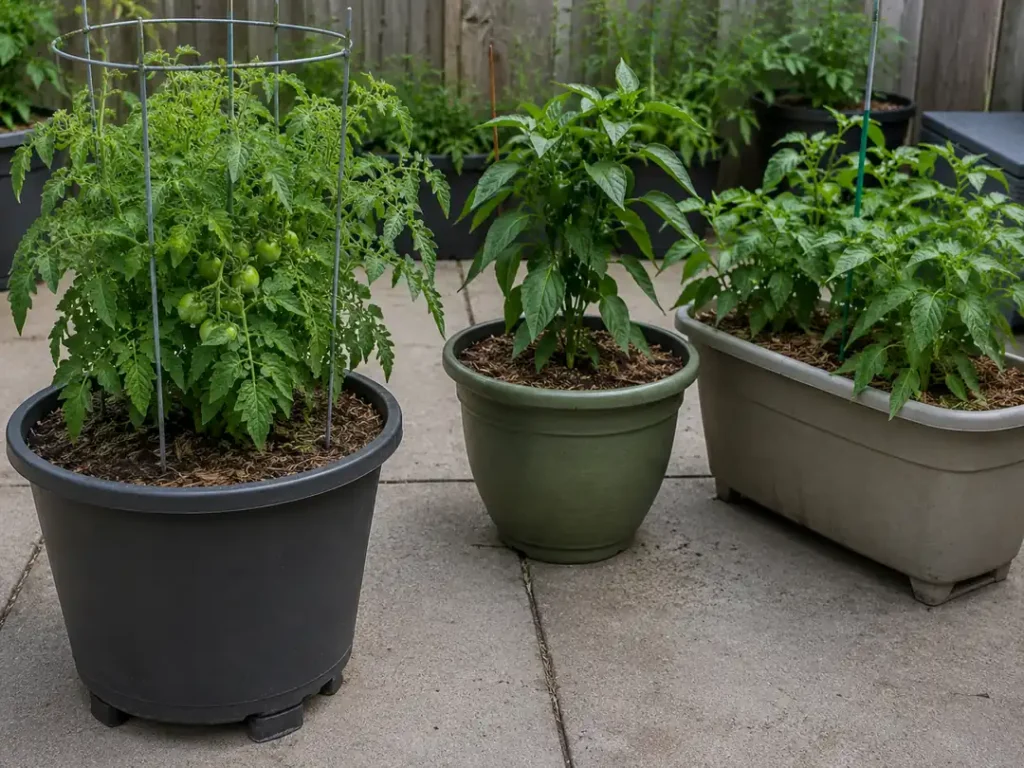
Spacing creates another pressure layer. A pepper planted alone in a five-gallon pot behaves differently from three peppers sharing a wide tub. The shared container holds more total mix, but each plant still needs light, air movement, and enough root room to feed its own fruit load.
Water buffer is the hidden size test. After a full watering, the container soil mix should stay evenly moist long enough for the plant to use it, not run dry before the next reasonable check. If a container needs rescue watering every warm afternoon, the plant has outgrown the pot, the exposure is too harsh, or the mix no longer holds water evenly.
The safest container choice is the one that still works after the plant reaches its hardest week: hot weather, full leaf canopy, active flowering, and fruit sizing. A pot that works only in spring has not really passed the crop test.
When Crop Selection Belongs Before Pot Size
Sometimes the pot is not the first decision. A small patio with four hours of sun has a crop-selection problem before it has a container-size problem. A windy balcony has a placement problem before it has a tomato problem. A deep pot still cannot make a heat-loving crop productive in weak light.
Choose the crop first when the growing space is tight, shaded, windy, or shared with furniture and foot traffic. Leafy greens, herbs, compact peppers, and patio tomatoes solve different limits. A crop-selection pass helps prevent buying a large container for a plant that never matched the site.
A container vegetables by size, light, and space decision should come before pot buying when sunlight, wind, and floor space limit the crop more than root volume. Once the crop is chosen, return to the container size chart and size the pot around roots, water buffer, and support.
Common Pot Size Mistakes That Weaken Container Vegetables
The most common mistake is buying the pot for the seedling instead of the mature plant. A young tomato, pepper, cucumber, or eggplant sits neatly in a small container for a short time. The problem arrives after the root system fills the mix and the plant starts building fruit.
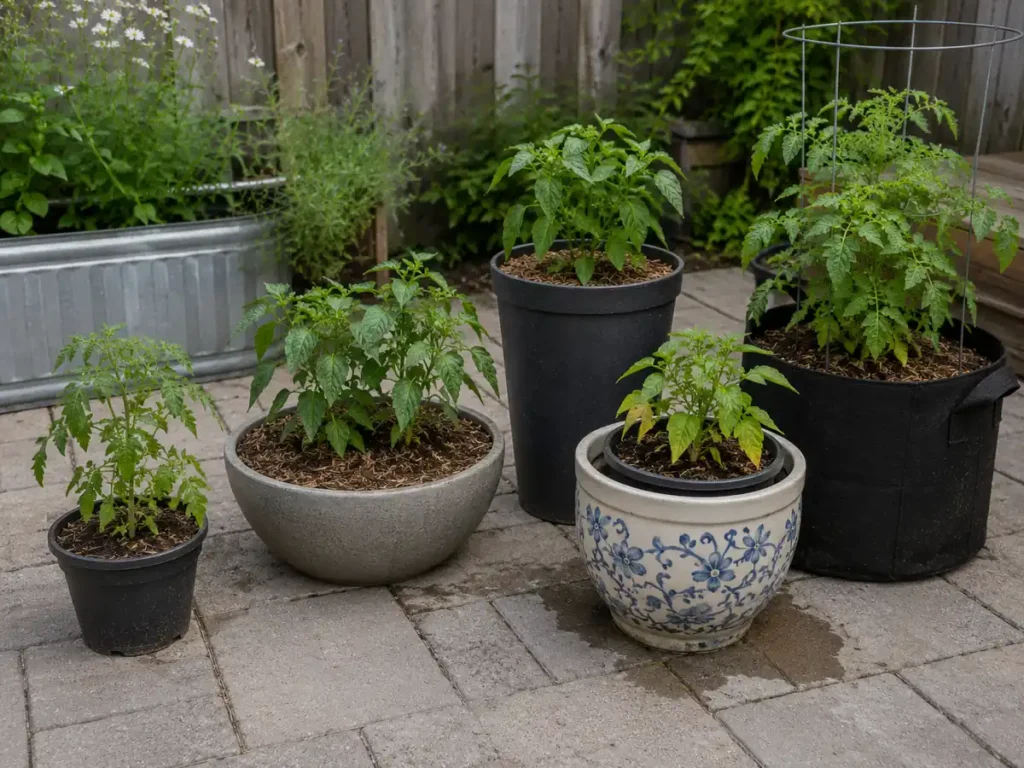
Another mistake is treating all gallon sizes as equal. A squat wide pot and a tall narrow pot hold similar volume, but roots experience them differently. Leaf crops benefit from surface width. Root crops need clean depth. Fruiting crops need enough width and depth to hold a stable, watered root ball.
Decorative cachepots create a quieter failure. Water collects inside the outer pot, the inner container drains into a trapped layer, and the lower roots sit in low-oxygen mix. The leaves yellow while the surface still looks dry enough to water again.
Fabric bags, plastic pots, ceramic planters, and grow bags also dry at different speeds. Fabric breathes and cools roots better, but it loses moisture quickly in wind. Dark plastic heats faster on exposed pavement. Thick ceramic holds weight and temperature differently. The crop does not care what looks tidy. Roots respond to oxygen, moisture, and heat.
Final Container Size Check Before Planting
Before planting, set the empty container where it will live and picture the mature plant, not the transplant. Where will the cage sit? Where will water drain? Is there open air around the leaves? Will the pot stay upright after the plant is wet, leafy, and carrying fruit?
Fill the container with moist mix and press the surface lightly. The pot should feel stable, not top-heavy. Water should move through without pooling on top for long, and the lower drainage path should clear instead of turning the bottom into a sealed basin. If water lingers after a normal soak, use a potted plant drainage check before blaming pot size alone.
After planting, watch the first two weeks for sizing signals. A container that dries evenly and supports new growth is working. A container that pulls away from the rim, tips in wind, dries hard by midday, or forces constant watering is already telling you that crop, pot, and site are mismatched.
The best container size is the one that still gives the crop room to behave like itself. Lettuce should stay tender instead of bolting from stress. Carrots should run straight instead of hitting a hard stop. Tomatoes should carry fruit without turning the root ball into a hot, thirsty knot.
Conclusion
Container pot size by crop works when the pot is chosen for the mature plant’s job. Leafy greens need broad, even moisture. Root crops need clean depth. Fruiting crops need water buffer, support space, and enough root volume to keep producing after the weather turns hot.
Choose the crop, read its growth habit, then size the container around roots, moisture, support, and exposure. The right pot feels boring on planting day because it looks a little generous. A few weeks later, extra root volume shows up as cooler mix, less midday leaf curl, and new growth continuing from the center of the plant.
FAQ
Is a smaller pot ever acceptable for vegetables?
Yes, when the crop is harvested young, naturally compact, or grown in a wide container that keeps moisture even. Lettuce, radishes, baby greens, and short herbs tolerate smaller containers better than tomatoes, cucumbers, peppers, eggplant, or potatoes. The warning sign is not the label size; it is a pot that dries hard, tips, or stops new growth.
Is container depth or width more important for vegetables?
Depth matters most for carrots, beets, potatoes, and other crops where the edible part or root system needs clean vertical room. Width matters more for leafy greens, herbs, and shared planters because surface area controls spacing, airflow, and moisture across the planting zone. Fruiting crops need both: enough depth for roots and enough width to hold water, support hardware, and plant weight.
What size pot is best for tomatoes in containers?
A determinate tomato needs at least a 5 gallon container, and an indeterminate tomato belongs in a 10 gallon container or larger. The support system matters as much as the gallon number. A tomato pot has to hold roots, water, cage legs, fruit load, and wind pressure without drying hard or tipping after the plant matures.
How many vegetable plants belong in one container?
The answer depends on mature size, not seedling size. One pepper, tomato, cucumber, or eggplant belongs in its own practical pot. Leafy greens and radishes share wide containers more comfortably when they are thinned to the spacing on the seed packet. If each plant competes for the same small water reserve, fewer plants in a wider container is the stronger choice.
Do fabric grow bags need larger sizes than plastic pots?
Fabric grow bags dry faster because air moves through the sides and cools the root zone. That airflow helps prevent soggy roots, but it also shrinks the watering buffer in heat and wind. For tomatoes, cucumbers, peppers, potatoes, and eggplant, choose the larger end of the size range when using fabric bags on exposed patios, balconies, or pavement.