

Last Updated April 25, 2026
The first signs of overwatering in plants appear in the soil, not the leaves – but most gardeners check the wrong place first. Wilting is the universal distress signal, and it looks the same whether a plant is drowning or parched. That overlap sends gardeners straight to the watering can when what they should be doing is pressing a finger into the soil.
Overwatering deprives roots of oxygen rather than water. Soil that stays saturated for more than 48-72 hours develops anaerobic conditions, and roots in that environment begin to decay even while surrounded by moisture. By the time leaves turn yellow or the stem base feels soft, damage below ground is already significant.
The signs worth learning fall into two categories: early signals in the soil that arrive before any leaf changes, and visible plant symptoms that reveal how far the damage has progressed. Knowing both turns a guessing problem into a diagnostic one.
Key Takeaways:
- Check soil moisture before reading any leaf symptom as a watering problem
- Yellow leaves plus wet soil signal root oxygen loss, not a nutrient deficiency
- A rotten soil smell confirms active root rot below the surface
- Fungus gnats at soil level reliably indicate persistent overwatering
- Never water a wilting plant before pressing a finger into the soil first
Table of Contents
Soil Moisture, Not Leaves – Where Overwatering Diagnosis Should Start
The paradox at the center of overwatering is mechanical: a plant drowning in water wilts for the same reason a plant dying of thirst does. When soil stays saturated, the air pockets between soil particles fill with water. Roots require oxygen to function, and without it they stop absorbing moisture even when surrounded by it. The plant registers this as drought stress and produces the same response – leaves droop, stomata close, growth halts.
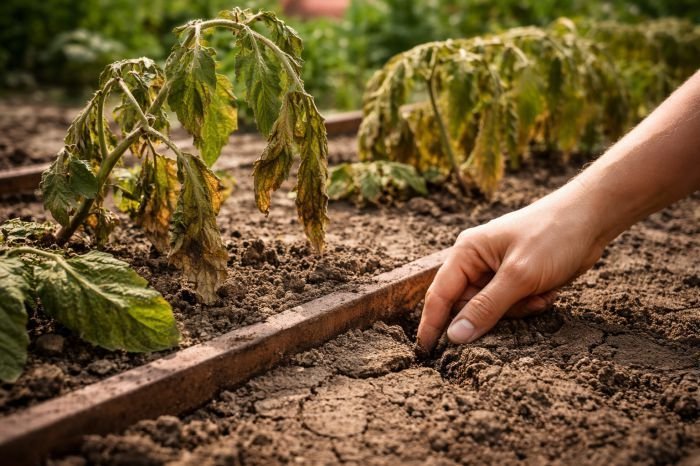
This is why the soil test changes the entire diagnostic equation. Press a finger into the soil to the second knuckle, about two inches down. Wet, cool, compacted soil combined with wilting or leaf discoloration points directly to overwatering. Dry soil that pulls away from the pot edges points to the opposite problem. Those two conditions look identical from a foot away; they require completely different responses.
How Quickly Soil Should Dry
The rate of soil drying carries its own information. In normal indoor conditions, the top inch of healthy, well-draining potting mix should feel dry within two to four days after a thorough watering. Soil that stays wet for five or six days after watering – or longer – indicates compaction, inadequate drainage, or a pot without drainage holes. Any of those conditions amplifies overwatering risk regardless of how carefully you water.
Moisture meters read conditions at the root zone rather than the surface, which matters because surface dryness can mislead. The top inch can feel dry while the bottom half of a pot stays saturated. Place the probe four to five inches deep and test away from the root ball rather than directly against it for an accurate reading. According to University of California Cooperative Extension guidelines on container irrigation, sustained high-moisture readings at root depth are a more reliable trigger for withholding water than any leaf symptom.
For gardeners who want a more systematic approach, soil moisture monitoring covers the tools and methods for tracking conditions across different pot sizes and plant types.
Leaf Symptoms of Overwatering – What Yellowing and Wilting Actually Indicate
Leaves are the last organ to show overwatering stress, not the first. By the time leaf color or texture changes, the root system has already been under oxygen deprivation for some time. That said, leaf symptoms still carry useful information – particularly about how far the damage has progressed and whether the plant still has a recovery window.
Yellowing That Starts at the Bottom
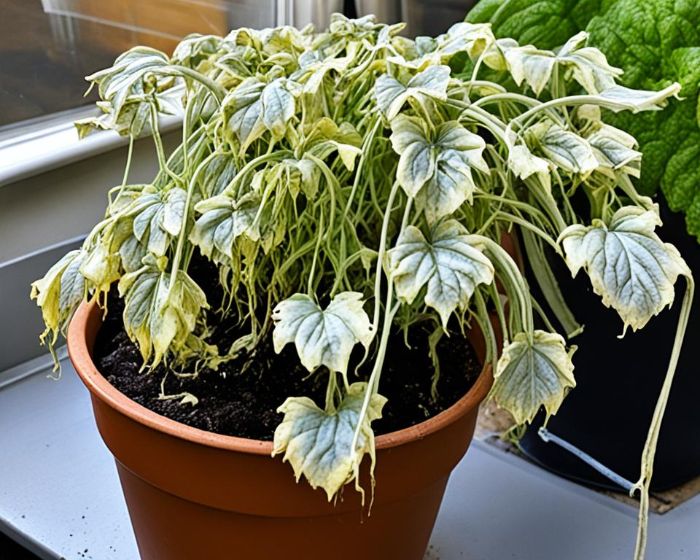
Yellow leaves are the symptom most gardeners notice first, but the pattern matters more than the color. Overwatering typically causes yellowing that begins with the lowest, oldest leaves and works upward over days or weeks. The yellowing spreads uniformly across the entire leaf rather than appearing at the margins or tips, and the affected leaves feel soft and slightly pliable rather than papery or brittle.
This pattern differs from nitrogen deficiency, which also produces yellowing but progresses more slowly and tends to affect leaves evenly across all canopy levels rather than moving from bottom to top. Overwatering yellow appears alongside dark, visibly wet soil and often affects multiple leaves within a short window – a cluster event rather than a gradual one.
I often notice that the first yellow leaves appear at the base of a plant while the top growth still looks entirely healthy. That window – before the upper canopy is affected – is when the problem is most reversible. A single yellow leaf at the base with wet soil is worth acting on immediately.
Wilting With Wet Soil – the Most Diagnostic Sign
Wilting on wet soil is the clearest single indicator of overwatering. It tells you the roots have lost the ability to move water upward, which points to oxygen deprivation or established root rot. A plant that droops and then perks up within an hour of watering is underwatered; a plant that stays limp despite wet soil around the roots has a different problem entirely.
The texture of the wilting adds one more layer of information. Overwatered plants produce soft, slightly translucent drooping – leaves feel pliable, almost damp-cloth-like. Underwatered leaves go dry and curl inward at the edges, with a papery or crisp texture. Pressing a leaf between two fingers takes two seconds and distinguishes between these conditions immediately.
Edema – The Early Warning Most Gardeners Miss
When water uptake exceeds the rate a plant can transpire it, pressure builds inside leaf cells until they burst. The result is small raised blisters or water-soaked patches on the undersides of leaves and occasionally on stems. This condition, called edema, is particularly common in succulents, pelargoniums, and fruiting vegetables kept in low-light conditions where transpiration runs slow.
Edema patches often look tan or white once the cells rupture and the surrounding tissue may yellow. North Carolina State Extension identifies edema as one of the more reliable early-stage indicators precisely because it appears before detectable root damage – which means finding it creates an opportunity to correct the watering pattern before any lasting harm occurs.
Stem and Root Warning Signs – The Damage Gardeners Find Too Late
Visible leaf symptoms typically lag one to two weeks behind what is happening at the roots. By the time a plant looks seriously distressed above ground, the root system may have already lost a significant portion of its functional tissue. Checking stems and roots takes thirty seconds and gives a far more accurate picture of how severe the damage is.
The Stem Base Test
Compress the stem gently at soil level. A firm, slightly dry base is normal. A stem that feels soft, spongy, or gives under gentle pressure signals cell breakdown from prolonged saturation. In advanced cases the base shows discoloration – brown or black – and the tissue can collapse between fingers. This symptom appears most clearly in succulents, annuals, and young seedlings where stem diameter is narrow and cell walls are comparatively thin.
A soft stem base combined with wet soil is a late-stage signal. The plant can sometimes still recover with immediate intervention, but the window is narrow.
Reading Root Color and Smell
Healthy roots are white or light tan, firm, and slightly springy. Overwatered roots turn brown or black, feel mushy, and detach easily from the root ball when touched. A distinct sour or sulfur odor – the smell that rises from saturated soil on a warm day and intensifies when you ease the root ball from the pot – confirms anaerobic bacterial activity.
To inspect roots without full repotting, tilt the pot and slide the root ball partially out at the edge. Examine the outer perimeter first, where oxygen depletion typically begins. Missouri Botanical Garden identifies root rot as one of the leading reasons houseplants fail, and notes that the damage is often well-established before above-ground symptoms become dramatic.
Pro Tip: Lift a potted plant immediately after watering and note the weight, then lift it again two days later. A pot that feels nearly as heavy on day two as it did right after watering has a drainage problem regardless of how wet the surface looks. A substantial weight drop means moisture is moving through normally.
What the Soil Surface Reveals – Mold, Gnats, and Persistent Wet Patches
The soil surface carries early warnings that are far easier to catch than subtle leaf changes, and most gardeners walk past them without a second look.
A white or gray crust forming on the soil surface is most often mineral salt buildup – salts that would normally flush through a well-draining pot accumulate when drainage is slow and watering continues at the same frequency. This differs from the fine, fluffy white mold that appears after overwatering in low-airflow conditions. Mold on the soil surface does not, by itself, harm the plant directly, but it reliably signals a watering pattern that is keeping the surface too wet for too long.
Fungus gnats deserve more attention as a diagnostic tool than they usually receive. Adult gnats are small dark flies that hover near the soil and lay eggs in the top two to three inches of consistently moist organic matter. According to Purdue Extension research on fungus gnat management, infestations rarely establish themselves in soil that dries out between waterings – the eggs desiccate before they hatch. A persistent gnat presence that does not resolve on its own is, in most cases, a more reliable early indicator of chronic overwatering than leaf color changes.
| Soil surface sign | What it indicates | Urgency |
|---|---|---|
| White or gray mineral crust | Salt accumulation from slow drainage and frequent watering | Low – improve drainage and flush soil |
| Fluffy white mold | Persistent surface moisture and low airflow | Low-medium – reduce watering frequency |
| Green algae film | Consistent overwatering in bright light | Low-medium – reduce frequency |
| Surface still wet after 5+ days | Poor drainage, compaction, or no drainage holes | Medium-high – check container before next watering |
| Persistent fungus gnats | Top 2-3 inches chronically moist | Medium – allow soil to dry fully before next watering |
Overwatered vs. Underwatered – Why Both Problems Look Identical at First
Both conditions produce wilting. Both can produce yellow leaves. Both slow growth and drop leaves. The symptom overlap is genuine enough that even experienced gardeners misread it regularly. The soil test resolves the question in most cases, but a few other differences sharpen the diagnosis further.
| Symptom | Overwatered | Underwatered |
|---|---|---|
| Wilting behavior | Soft, limp, stays limp after watering | Limp but perks up quickly after watering |
| Leaf texture | Soft, pliable, slightly translucent | Crisp, papery, brittle at edges |
| Yellowing pattern | Lower leaves first, spreads upward | Tip and edge browning, spreads inward |
| Soil condition | Wet, dark, compacted, possibly waterlogged | Dry, pale, pulls away from pot edges |
| Root appearance | Brown or black, mushy, foul-smelling | Dry, white or tan, may look shrunken |
| Stem base | May feel soft or spongy at soil level | Firm but possibly dry and shrunken |
| Leaf drop pattern | Old and new leaves drop simultaneously | Older leaves drop first, sequentially |
That last row is worth pausing on. Overwatered plants frequently drop both old and new leaves at the same time, while underwatered plants shed older leaves in sequence as the plant conserves resources. Simultaneous leaf drop across age groups signals systemic stress – the kind root rot produces – rather than the gradual resource management of drought. It raises a question worth sitting with: the last time a plant dropped several leaves at once, was the soil wet or dry?
For a full picture of the opposite condition, the signs of underwatering in garden plants covers those symptoms in the same diagnostic depth.
Recovery Starts With Stopping – What to Do in the First 48 Hours
Once overwatering is confirmed, the most effective first action is stopping – not treating, not fertilizing, not misting. Set the plant aside and do not water again until the top inch and a half of soil is completely dry to the touch. Moving the plant to a location with bright indirect light and better airflow accelerates soil moisture loss without stressing the remaining healthy roots further.
If the stem base is still firm and the roots you can see are mostly white, the plant has a meaningful recovery window. Removing any visibly yellow or mushy leaves reduces the metabolic load on a compromised root system while it stabilizes. If root rot is established – roots are brown, the smell is sour, the stem base gives under pressure – recovery requires removing the plant from its pot, trimming all brown root tissue back to clean white material, and repotting in fresh dry mix. Getting the container right matters at this stage: drainage in potted plants covers the container setup that prevents the same conditions from returning.
Once the plant stabilizes, the pattern that caused the problem needs to change. A watering schedule tied to soil conditions rather than a fixed calendar is the most reliable way to avoid repeating the cycle. Most indoor plants need water when the top inch to inch and a half of soil is dry – not before, regardless of how many days have passed.
Conclusion
Root rot can establish within 72 hours of sustained saturation, and by the time leaves show visible yellowing, roots may have already lost a significant portion of their functional capacity. The difference between early detection and late diagnosis often comes down to one check – the soil – before looking at any leaf symptom. Wet soil plus wilting means stop watering immediately and investigate the roots; dry soil plus wilting means water now and reassess the schedule.
Soil moisture at root depth, stem firmness, and the presence of fungus gnats are the three signals worth building a habit around. They arrive before the dramatic leaf changes, and they are easier to read accurately once you have seen them once. Picture the moment a plant comes back firm and upright after root pruning and fresh mix – that is what catching it early actually looks like. A plant that wilts on dry soil and a plant that wilts on wet soil tell different stories; learning to check which is which is the first real skill in plant care.
FAQ
What does an overwatered plant look like?
The most visible sign is soft, limp leaves that stay wilted even when the soil is wet. Yellowing typically starts on the lower, older leaves and spreads upward, and affected leaves feel pliable rather than dry. At the base of the stem, soft or darkened tissue points to advanced water stress. The soil surface may show white mold, a mineral crust, or fungus gnats hovering near the pot. These signs together – particularly soft yellowing with wet soil – form a reliable picture of overwatering.
Why is my plant wilting even though the soil is wet?
When roots sit in saturated soil without oxygen, they stop functioning even though they are surrounded by water. The plant cannot draw moisture upward through oxygen-deprived or decaying roots, so it wilts for exactly the same reason a drought-stressed plant does – water is physiologically unavailable. This is one of the most commonly misread situations in plant care. Pressing a finger into the soil to check its moisture level is the fastest way to confirm the cause. Wet soil plus wilting means the problem is in the roots, not in the water supply.
Can overwatered plants recover?
Yes, if the problem is caught before root rot becomes extensive. Plants with soft wilting and yellowing lower leaves but a still-firm stem base have a reasonable recovery window if watering stops immediately and soil is allowed to dry out. Recovery from established root rot – brown mushy roots, sour smell, soft stem base – requires removing the damaged root tissue and repotting in fresh dry mix, and success rates drop significantly once more than half the root system is affected. The earlier the signs are caught, the more straightforward the recovery.
What happens if you overwater a plant for too long?
Within 48-72 hours of continuous saturation, soil oxygen drops below the threshold most roots need to function. Within about a week, root cells begin dying in the most affected zones, and anaerobic bacteria start breaking down root tissue. Once water molds like Phytophthora or Pythium establish themselves – both thrive in persistently wet conditions – the infection spreads faster than new roots can grow. Long-term overwatering in a poorly draining container can kill an otherwise healthy plant in two to three weeks, and the damage is invisible above ground until late in that timeline.
Can overwatering cause yellow leaves?
Yes, and the pattern is specific. Yellowing from overwatering starts with the lowest, oldest leaves and moves upward, with uniform color change across the entire leaf surface rather than at the margins or tips. This happens because roots deprived of oxygen cannot transport nutrients upward even when nutrients are present in the soil. The key detail: if the soil is wet when the yellowing appears, overwatering is the more likely explanation than a nutrient deficiency. Nutrient-related yellowing progresses more slowly and does not correlate with soil moisture levels.
Do fungus gnats always mean overwatering?
Not always, but chronically moist soil is the primary reason fungus gnat populations establish and persist. Adult gnats lay eggs in the top two to three inches of moist organic matter, and eggs desiccate in soil that dries out between waterings. A small but persistent gnat presence that does not resolve on its own is a reliable signal that the soil is staying wet too long – usually from overwatering, poor drainage, or both. The one exception is fresh potting mix, which can carry gnat eggs even before the watering pattern is established.
Can you overwater outdoor garden plants?
Yes, though outdoor plants generally tolerate more water than potted ones because in-ground soil and raised beds have better drainage and airflow around the root zone. The risk increases significantly in clay-heavy soil that holds water, in low-lying areas after heavy rain, and with drip or sprinkler systems set to run on a fixed schedule regardless of recent rainfall. The same soil finger test applies outdoors: if the top two inches of soil are consistently wet before the next scheduled watering, the frequency needs adjusting. Shallow-rooted annuals and newly transplanted shrubs are the most vulnerable.