Hibiscus not blooming has two different starting points: a plant that never forms buds, and a plant that makes buds that yellow, stall, or fall before opening. A leafy hibiscus with no buds usually points toward light, nitrogen, pruning timing, or plant maturity. A hibiscus with buds that fail to open points more toward temperature swings, water stress, root stress, or pests feeding inside the buds.
That split saves a lot of wasted fertilizer. Hibiscus can grow glossy foliage under conditions that are still too weak for flowering. It can also set buds and drop them when the root zone dries, stays wet, chills, overheats, or carries pests. Read the bud stage first, then adjust the one condition that is most likely blocking bloom.
Hibiscus Not Blooming: No Buds vs. Buds Not Opening
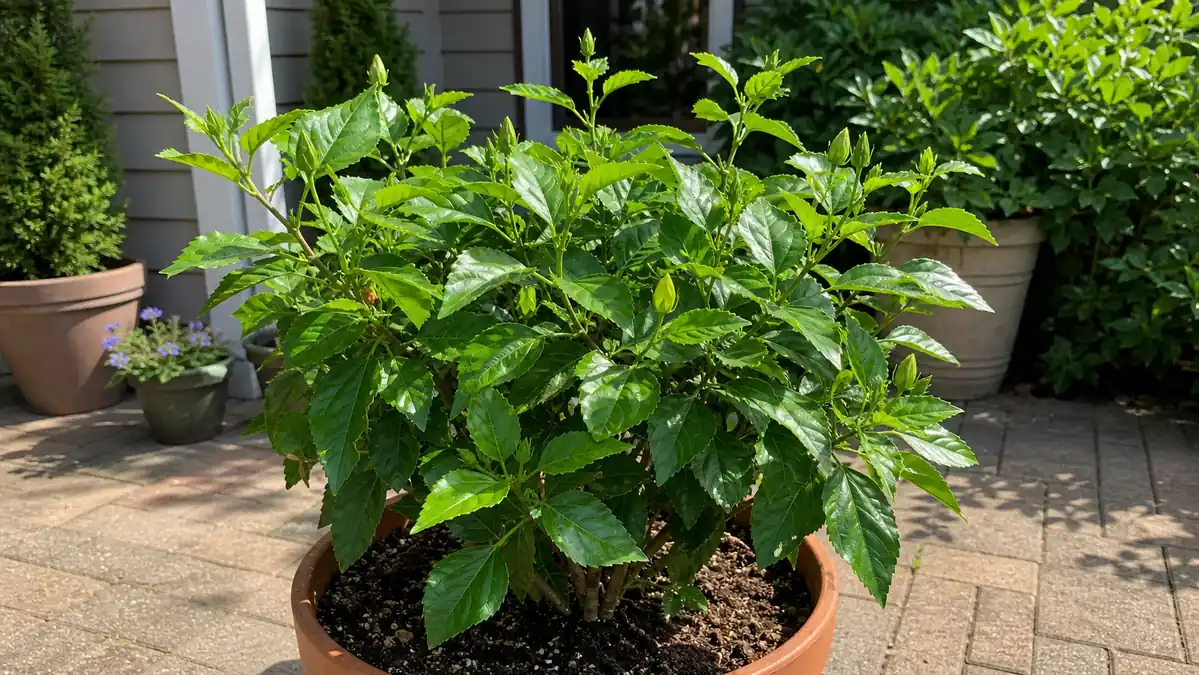
Lots of leaves, no buds
Check sun hours first, then fertilizer nitrogen, recent pruning, and whether new shoots are old enough to flower.
Buds form, then stall or drop
Check temperature swings, dry roots, wet roots, container heat, thrips, aphids, and hibiscus bud weevil in warm regions.
Dark green growth, few flowers
Too much nitrogen can push leaves ahead of blooms. Shift toward balanced feeding and stronger light.
New growth is weak or yellow
Do not force bloom. Fix roots, moisture, drainage, and pests before asking the plant to spend energy on flowers.
Key Takeaways
- No buds usually means the plant lacks enough light, mature new growth, or balanced nutrition.
- Buds that fail to open often point to water stress, temperature shifts, or pest damage.
- High-nitrogen feeding can create glossy leaves with fewer flowers.
- Heavy pruning removes potential bloom wood until new shoots mature.
- Bloom improves fastest when sun, roots, and feeding are corrected in that order.
Table of Contents
Sunlight and Temperature Requirements
Hibiscus needs strong light to build flower buds. A tropical hibiscus on a shaded porch may look green and healthy, and the plant may spend its energy on leaves because the light is too weak for reliable bud production. Move the plant only after checking how many hours of direct sun it actually receives, not how bright the patio feels to you.
For most outdoor tropical hibiscus, aim for at least 6 hours of direct sun, with some afternoon protection in very hot inland climates. Hardy hibiscus grown in the ground also flowers best with high light. If the plant stretches, leans, or produces large leaves with long spaces between leaf nodes, light is probably shaping the problem.
Full sun advice still needs climate judgment. A potted hibiscus on concrete can overheat even with enough light, and hot roots can cause bud drop. A plant in morning sun with bright afternoon shade may bloom better than a plant that bakes beside a wall all day. Container sunlight should be judged by usable light, reflected heat, and how fast the pot dries.
Tropical hibiscus also slows when nights are cool. Plants moved outdoors too early can hold leaves and still refuse to bloom because the new growth is not growing fast enough. Buds may yellow or drop after a cold night, a strong wind, or a quick move from indoor shade to outdoor sun. Acclimate slowly, then judge flowering after the plant has had time to make new growth under the new conditions.
Hibiscus care recommendations vary by type, and a hibiscus care fact sheet separates tropical hibiscus from hardy hibiscus in climate and culture. That distinction matters for bloom expectations. A hardy hibiscus can die back and bloom from new shoots in season. A tropical hibiscus kept in a pot may respond to overwintering, pruning, and root space very differently.
| What you see | Most likely lane | First check | Best next move |
|---|---|---|---|
| Many leaves, no buds | Light or nitrogen | Direct sun hours and fertilizer label | Increase morning sun and reduce high-nitrogen feeding |
| Buds yellow before opening | Stress or pests | Root moisture, night temperature, bud inspection | Stabilize watering and inspect buds closely |
| Long stems, wide leaf spacing | Low light | Distance from sun and shade pattern | Move gradually into brighter exposure |
| Leaves scorch, buds drop | Heat and root stress | Pot temperature and dry edges | Protect roots and water deeply |
Excess Nitrogen and Fertilizer Balance
A hibiscus with lush dark leaves and few flowers often has a feeding imbalance. Nitrogen pushes leafy growth. Flowers need enough stored plant energy, adequate potassium, and healthy roots that can move nutrients into new shoots. More fertilizer can push the plant farther into foliage growth.
Read the fertilizer label before changing the schedule. A lawn-type or foliage-heavy feed can drive green growth on a hibiscus that already has enough leaves. A flowering plant formula with a lower nitrogen load and adequate potassium is usually a better fit during active growth. Slow, consistent feeding is safer than a strong rescue dose after weeks of no flowers.
Container hibiscus complicates feeding because water moves nutrients out of the pot and salts can also build near roots. If water runs straight through a dry root ball, fertilizer may never hydrate the center well. If the pot drains poorly, roots can lose oxygen and stop taking up nutrients. Fertilizer basics matter when the label numbers, release speed, and plant stage need to match the actual problem.
Coffee grounds are a weak bloom fix. They add small amounts of organic material over time, and they do not reliably correct light, root stress, nitrogen excess, bud pests, or pruning mistakes. Used heavily in a pot, they can mat on the surface and interfere with water movement. If the hibiscus is not blooming, fix sun and fertilizer balance before adding kitchen scraps to the root zone.
Epsom salt has the same limitation. Magnesium can matter when a real deficiency pattern exists, especially yellowing between green veins on older leaves. It does not create buds on a shaded plant or repair roots in wet soil. If yellowing is the larger symptom, diagnose the color pattern first through yellowing leaves before treating lack of flowers as a simple nutrient shortage.
Pruning Timing and New Growth
Pruning can delay flowers because hibiscus blooms from active growth. If a plant is cut back hard, it must rebuild shoots before it can set many buds. That delay can be normal, especially after winter storage, transplant stress, or a spring shaping cut.
The timing depends on the plant type and climate. Tropical hibiscus can be shaped before strong spring growth, then allowed to build flowering shoots. Hardy hibiscus often regrows from the base and blooms later in the season on fresh stems. Prune dead wood, crossing stems, and weak growth, then give the plant light and time to replace flowering wood.
A light pinch can create branching, and more branches can eventually carry more buds. Heavy repeated trimming can keep removing the newest growth before flower buds mature. If every shoot tip is clipped whenever it lengthens, the plant may stay neat and leafy with few flowers.
Pruning basics matter most when a cut removes the same young growth that would have carried flowers. For hibiscus, the practical rule is simple: prune for structure, then stop long enough for new shoots to mature and bud.
Watering, Root Space, and Container Stress
Hibiscus buds are expensive for the plant to finish. A root zone that swings from dry to wet can cause buds to yellow, stall, or drop before opening. This is common in containers because a pot can dry around the edge, stay damp in the middle, or heat up quickly on stone and concrete.
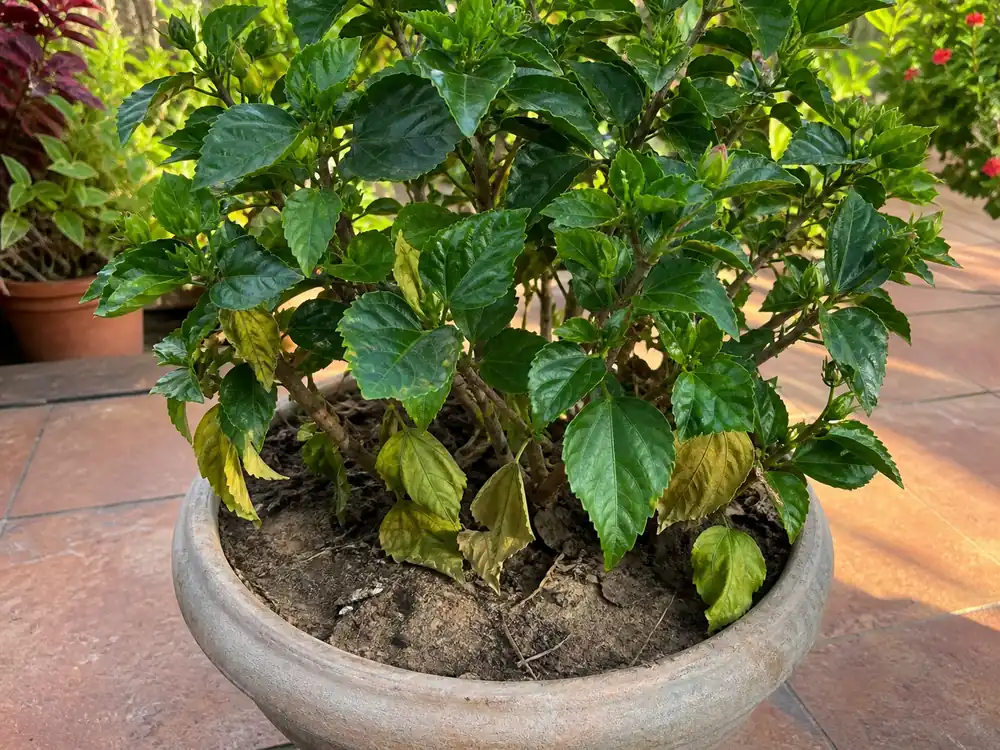
Check moisture below the surface. A dry top crust can hide damp soil below, and a damp top can hide a dry center if water runs down the pot wall. Push a finger or narrow trowel 2 inches into the mix. Water deeply when the root zone is ready, then let excess water drain freely. Standing water in a saucer can make roots weak even when the foliage looks thirsty.
Root space also matters. A root-bound hibiscus may grow leaves and set small buds, then stall because the pot cannot hold enough water during hot weather. Roots circling a tight container dry fast and respond poorly to heavy fertilizer. Repot one size up during active growth, use a draining potting mix, and avoid burying the crown deeper than it was growing before.
Overwatering creates a different bloom failure. Leaves may yellow, soften, or drop. New growth can slow, and buds may abort because roots are low on oxygen. Overwatering signs deserve attention when the plant looks tired despite wet soil.
Underwatering can look just as floral at first because buds are sacrificed before the whole plant collapses. A hibiscus may wilt in afternoon heat, recover at night, and still drop buds because the stress repeats daily. Deep watering and mulch for in-ground plants, or a larger, cooler container for potted plants, gives the plant a better chance to carry buds to opening.
Pests That Damage Buds
Bud pests belong in the diagnosis when buds form, then fail. Thrips can scar petals before they open. Aphids cluster on tender tips and buds, drawing sap from new growth. Hibiscus bud weevil is a regional pest concern in warm climates and can damage flower buds before they open.
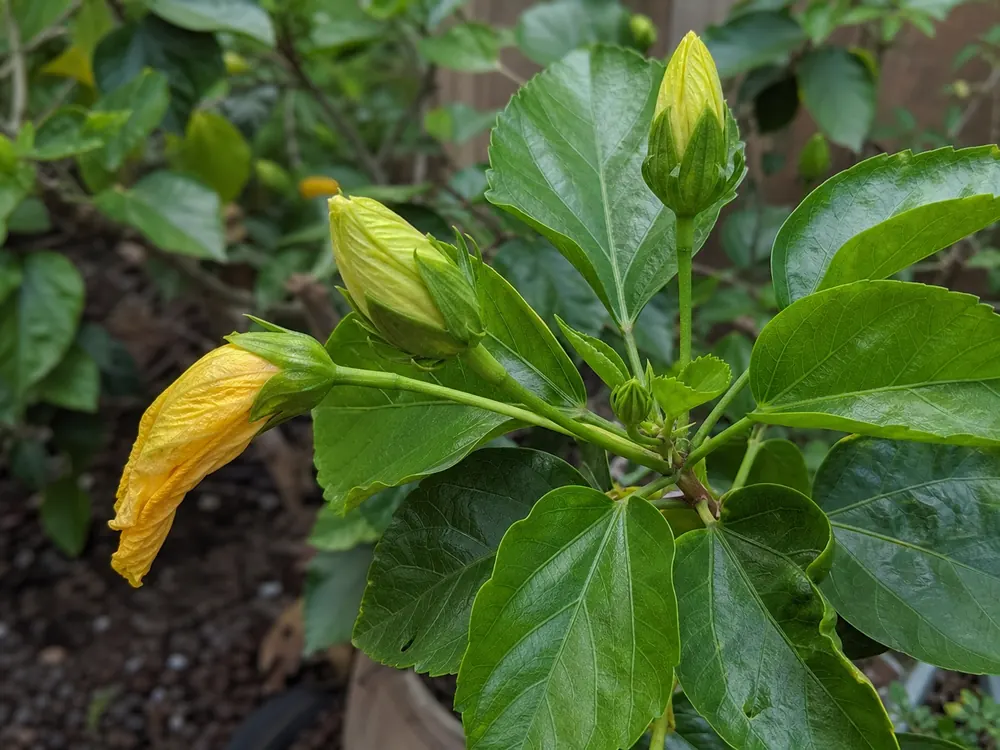
Inspect buds closely before spraying. Look for tiny insects, dark specks, distorted buds, sticky residue, or buds that drop with a small hole or damaged base. Open one fallen bud over white paper and tap it gently. Movement, specks, or feeding marks tell you this is no longer a simple light or fertilizer problem.
Bud drop in hibiscus can come from stress as well as pests, and a hibiscus bud drop resource connects dropped buds with environmental shifts and plant stress. If buds drop right after a move, cold night, dry spell, or repotting, stabilize care before reaching for pesticide.
Hibiscus bud weevil adds another layer in affected areas. UF/IFAS scientists have advised scouting non-flowering hibiscus for this pest, and a hibiscus bud weevil alert explains why unopened or dropped buds need inspection before fertilizer gets blamed. Regional pest pressure matters, so local extension guidance should control any pesticide decision.
For aphids and soft-bodied pests, direct contact control and repeated monitoring matter more than one heavy spray. Avoid treating open flowers when pollinators are active. Organic aphid control fits hibiscus buds when tender tips carry visible colonies.
How to Encourage Bloom Without Overfeeding
The best bloom plan starts with conditions, not products. Give the plant more usable sun if it is shaded. Stabilize watering if buds drop. Reduce high-nitrogen feeding if the plant is dark green and leafy. Stop pruning long enough for new shoots to mature. Inspect buds if they form and fail.
Make one change at a time, then watch the next flush of growth. Hibiscus leaves and old buds do not always recover after stress. New buds are the better test. If the next growth opens cleanly and the plant holds buds longer, the correction is working.
A reasonable flowering routine during active growth looks like this: strong morning sun, evenly moist draining soil, a container that does not overheat, a flowering-plant fertilizer used at label rate, and light pruning only when shape requires it. Flowers by sun and shade make site exposure easier to compare before blaming the plant.
Do not chase every bloom booster at once. Extra fertilizer, Epsom salt, coffee grounds, and heavy pruning can all add stress when the real problem is shade, roots, or bud pests. A hibiscus that has strong light, warm conditions, working roots, and balanced feeding usually needs patience more than another additive.
| Situation | Likely blocker | Do first | Wait for this sign |
|---|---|---|---|
| Leafy plant with no buds | Low sun or high nitrogen | Increase usable light and review fertilizer | Shorter internodes and new buds |
| Buds yellow and drop | Water stress, temperature shift, pests | Stabilize moisture and inspect buds | Buds hold for longer before opening |
| Recently pruned plant | New growth not mature enough | Pause trimming and support new shoots | Bud clusters form on fresh growth |
| Potted plant dries daily | Root-bound or overheated container | Repot, shade the pot, or water deeper | Less midday wilt and fewer dropped buds |
Conclusion
Hibiscus not blooming is easier to fix after the plant is sorted into the right lane. No buds points first to light, fertilizer balance, pruning timing, and new growth maturity. Buds that fail to open point toward water stress, temperature shifts, container stress, or pests inside the buds.
Start with the condition that affects flowering most: stronger usable sun, a stable root zone, balanced feeding, and enough time for new shoots to carry buds. A hibiscus responds best when bloom pressure is removed from weak roots and placed back on healthy new growth.
Frequently Asked Questions
What to do if hibiscus plant is not flowering?
Separate no buds from buds that fail to open. No buds usually need more usable sun, less high-nitrogen feeding, or more time after pruning. Buds that drop need a moisture, temperature, root, or pest check.
Why does my hibiscus have lots of leaves but no flowers?
Lots of leaves with no flowers often means the plant has enough nitrogen for foliage and not enough light, mature new growth, or balanced nutrition for blooms. Check direct sun hours and the fertilizer label before adding more feed.
How do I get my hibiscus to bloom?
Give hibiscus strong light, warm conditions, evenly moist draining soil, balanced fertilizer during active growth, and enough time after pruning for new shoots to mature. If buds form and drop, inspect for pests and water swings.
Are coffee grounds good for hibiscus?
Coffee grounds are not a reliable fix for a hibiscus that is not blooming. Small amounts can add organic material over time, and they do not correct low sun, nitrogen imbalance, poor drainage, root stress, or bud pests.