
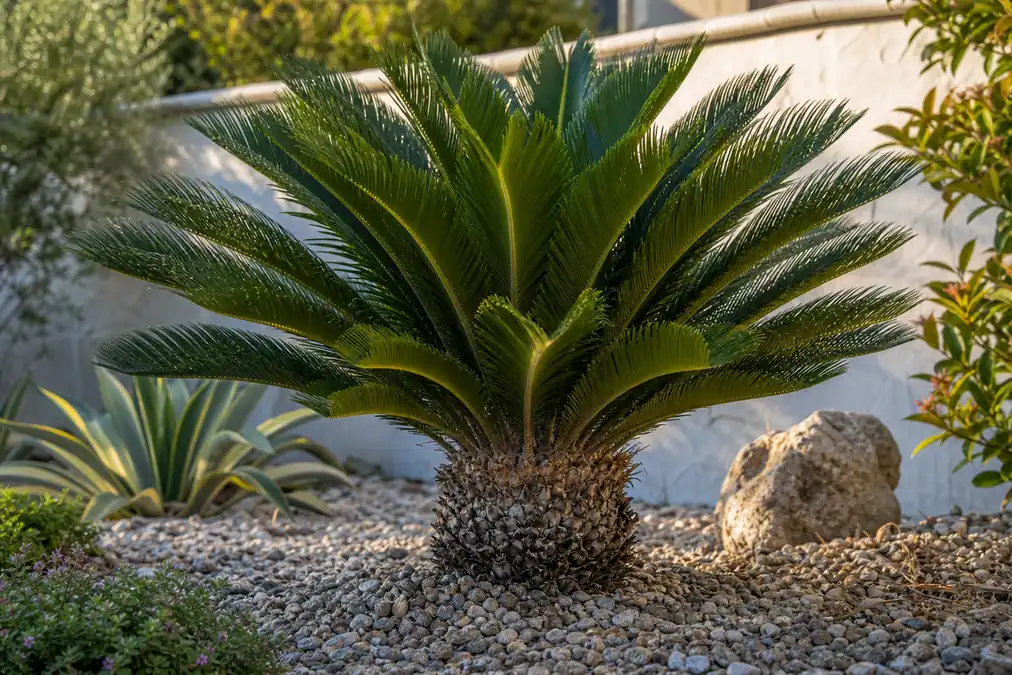
A sago palm (Cycas revoluta) is a cycad, not a true palm. It is a slow-growing gymnosperm with stiff, glossy fronds that emerge in a rosette from a rough central crown. The short, shaggy trunk keeps old leaf bases, and mature plants produce male or female reproductive structures instead of palm flowers and fruits.
Those features make the plant easier to identify than its common name suggests. Look for rigid pinnate fronds, a compact crown, slow flushes of new leaves, and a trunk that stays thick and textured rather than developing the clean ringed look common to many palms. Mature plants are usually broad as well as tall, and their roots include both ordinary anchoring roots and specialized shallow coralloid roots.
Key Takeaways
- Identify sago palms by stiff fronds and a rough crown.
- Treat Cycas revoluta as a cycad, not a palm.
- Expect slow growth, usually in distinct flushes of fronds.
- Keep the crown high and roots in well-drained soil.
- Keep all plant parts away from pets and children.
Table of Contents
What Is a Sago Palm? Cycas revoluta Is a Cycad
The common name is misleading. Cycas revoluta belongs to the cycad family Cycadaceae, not the palm family. Cycads are gymnosperms: they reproduce with exposed seeds rather than flowers and fruits. The North Carolina State Extension profile for Cycas revoluta lists sago palm, Japanese sago palm, and king sago palm as common names for the same species.
The plant is also dioecious, meaning individual plants are male or female. Mature male plants produce an upright pollen cone. Female plants form a rounded central reproductive structure that can carry orange-red seeds after pollination. A single plant can grow for years without showing either structure, especially indoors.
How to Identify Cycas revoluta
Start with the foliage. Sago palm fronds are pinnate, with many narrow leaflets arranged along a central stalk. The leaflets are dark green, leathery, glossy, and pointed. Mature fronds can reach several feet long and radiate from the crown in a dense circular rosette.
Then check the center and trunk. New fronds emerge from one rough crown, often as a synchronized flush. Below it, the trunk is thick, brown, and shaggy with persistent leaf-base scars. That combination of stiff fronds, a compact crown, and a rough trunk is more diagnostic than the palm-like silhouette alone.
Sago Palm vs True Palm: How to Tell Them Apart
The clearest difference is botanical. Sago palm is a cycad and does not flower. True palms are flowering plants that eventually produce flowers and fruits. If you are comparing it with true indoor palm species, the reproductive structures, crown, and leaf texture are more reliable than overall shape.
The foliage also behaves differently. Sago fronds are rigid and prickly, and new leaves commonly emerge in a concentrated flush from the central crown. Palm leaves vary widely by species, but many are more flexible and are produced from a palm growing point rather than from the armored cycad crown seen on Cycas revoluta.
| Feature | Sago palm cycad | True palm |
|---|---|---|
| Plant group | Cycad, a gymnosperm | Flowering monocot |
| Reproduction | Male and female reproductive structures with exposed seeds | Flowers followed by fruits |
| Fronds | Stiff, glossy, leathery, often prickly | Variable by species, often more flexible |
| Growth point | Rough central crown | Terminal growing point typical of palms |
| Growth rhythm | Very slow, often in distinct leaf flushes | Varies widely by palm species |
The distinction matters in a garden because a sago palm will not quickly become a shade tree or screening plant. Its value is its low, architectural form and its ability to hold a dense crown for years with very little vertical growth.
Sago Palm Structure: Crown, Fronds, Trunk, and Roots
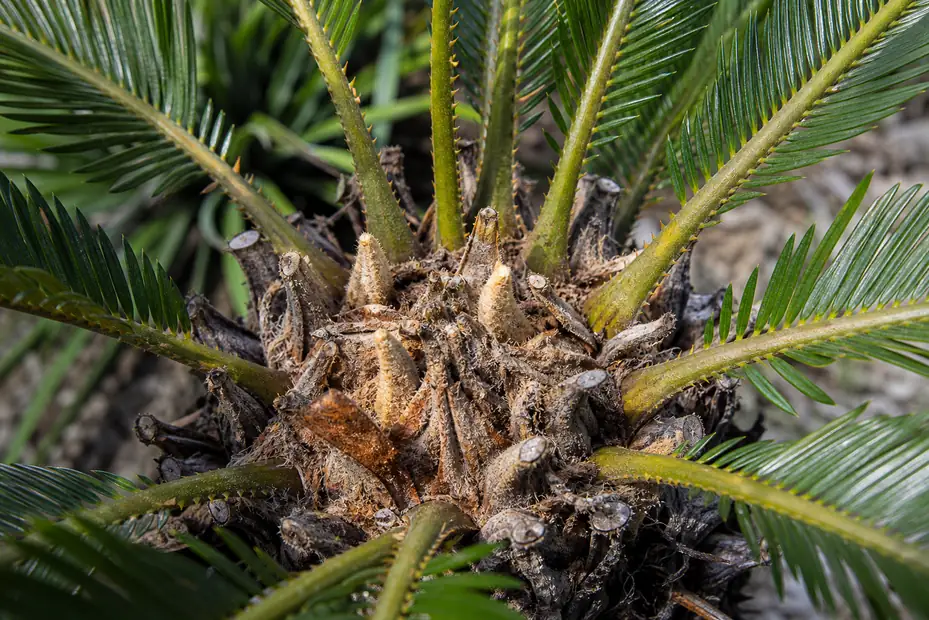
The crown is the plant’s central growing point. New fronds emerge from it in a circular pattern, initially soft and lighter in color before hardening into the stiff dark-green leaves associated with mature sago palms. Damage to the crown matters more than cosmetic damage to an individual old frond because future leaf growth starts there.
Fronds and trunk
Mature fronds commonly reach several feet long. Each frond carries many narrow leaflets with rolled-under margins, which is the feature behind the species name revoluta. The trunk remains thick and rough, with old leaf bases creating a shaggy or armored surface below the crown.
Sago palms grow extremely slowly. A young specimen may change little in height for years while the trunk thickens and the crown widens. Mature landscape plants commonly reach about 3 to 10 feet tall and wide, while very old plants in warm climates can become larger.
Mature plants may eventually reveal their sex. Male plants produce an upright cone, while female plants form a broader central seed-bearing structure rather than a true female cone. The orange-red seeds are highly toxic and should never be treated as edible fruit.
Sago palm roots: depth and spread
There is no reliable universal depth figure for the entire root system of a mature sago palm. Root depth and spread vary with soil, moisture, available space, plant age, and whether the plant was container-grown. Cycas revoluta also produces specialized coralloid roots near the soil surface, but those shallow roots do not represent the full root system.
Sago palm roots are not woody like the roots of many landscape trees, but a mature root system can become extensive and continue increasing in length. University of Florida IFAS advises against planting sago palms close to septic systems because expanding roots can create conflicts with underground infrastructure. Give an in-ground plant room to develop instead of treating it like a permanently compact root ball. See the UF/IFAS guidance on sago palm root systems.
Leaf flush timing
A sago palm may appear inactive for months and then push a full ring of new fronds. New leaves are soft while expanding and become rigid as they mature. Avoid cutting healthy new fronds during that stage.
Old lower fronds yellow naturally. Remove only dead or fully brown leaves unless a green frond is damaged or obstructing access. Repeatedly stripping healthy foliage weakens the plant’s photosynthetic capacity and leaves the crown with less stored energy for the next flush.
Sago Palm vs True Palm Check
Basic Growing Conditions for Sago Palms
Sago palm grows best with bright light and well-drained soil. Outdoor plants tolerate full sun to partial shade, while indoor plants need a bright position. Constantly wet soil is a bigger problem than brief dryness once the plant is established.
Keep the crown and trunk base above the soil line and let excess water drain away from the root zone. In containers, use a pot with a drainage hole and avoid moving a small plant into an oversized container that stays wet for long periods.
Outdoor use is most reliable in warm climates because sago palm is not freeze tolerant. Frost can damage the foliage, so container growing is safer where winter freezes are expected and the plant can be moved under protection.
Sago Palm Safety: Toxic Seeds, Pets, and Placement
Every part of Cycas revoluta is toxic if eaten, and the seeds contain the highest concentration of cycasin. North Carolina State Extension classifies the plant as highly poisonous and lists risks to people, dogs, cats, and children. Placement should account for animals or children that can reach leaves, seeds, or dropped plant material.
The risk is easy to underestimate because a container specimen can look like ordinary patio decor. Do not place it beside feeding areas, dog runs, children’s play spaces, or narrow paths where seeds and cut material may be left within reach.
Wear gloves when handling old fronds or working around the crown because the stiff leaflets and cut bases can scratch or puncture skin. Bag removed seeds and plant debris rather than leaving them on the ground.
Sago Palm Size and Landscape Fit
A mature sago palm is usually a low, broad specimen rather than a tall canopy plant. Many landscape plants finish around 3 to 10 feet tall and wide, although very old specimens in warm climates can exceed that range. Indoor and container-grown plants usually remain smaller.
Allow enough room for the crown to widen without pushing stiff fronds into a walkway. Entry beds, open courtyard corners, rock gardens, and large containers fit the plant better than narrow paths or locations chosen for quick shade and screening.
For containers, stability and drainage matter more than decorative size alone. A widening crown can become top-heavy, so use a substantial pot with a real drainage hole. Set the location before the plant becomes difficult to move; container garden placement should account for light, wind, heat, and winter protection.
Conclusion
A sago palm is easiest to understand by reading its structure, not its common name. Cycas revoluta is a slow-growing cycad with a rough crown, stiff pinnate fronds, a thick textured trunk, separate male and female reproductive structures, and a root system that includes distinctive shallow coralloid roots. Those traits separate it from true palms and explain why it behaves as a low architectural specimen rather than a fast-growing palm tree.
Before planting or buying one, confirm that the site has adequate light, fast drainage, enough room for the crown to widen, and no pet or child access to the toxic plant material.
Frequently Asked Questions
Is a sago palm really a palm?
No. A sago palm is a cycad. Cycas revoluta is a gymnosperm that produces exposed seeds on male or female reproductive structures rather than flowers and fruits like a true palm.
What does a sago palm look like?
Look for stiff, glossy pinnate fronds radiating from a rough central crown, plus a thick shaggy trunk marked by old leaf bases. New fronds often appear together in a circular flush rather than emerging continuously.
How big does a sago palm get?
Many mature landscape plants reach about 3 to 10 feet tall and wide, although very old specimens in warm climates can become larger. Indoor and container-grown plants usually stay smaller because growth is extremely slow.
How deep are sago palm roots, and are they invasive?
There is no universal depth for the entire root system. Sago palms develop deeper anchoring and absorbing roots as well as specialized coralloid roots near the soil surface. Mature root systems can become extensive, so avoid planting close to septic systems or other underground infrastructure where expanding roots could create a conflict.
Can sago palms grow indoors?
Yes, but they need a bright position and a container that drains freely. Indoor plants grow slowly and usually remain smaller than outdoor specimens. Avoid oversized pots and constantly wet soil.
Are sago palms safe around pets?
No. Every part of the plant is toxic if eaten, and the seeds contain the highest toxin concentration. Keep sago palms away from dogs, cats, children, and any area where dropped seeds or cut plant material can be reached.