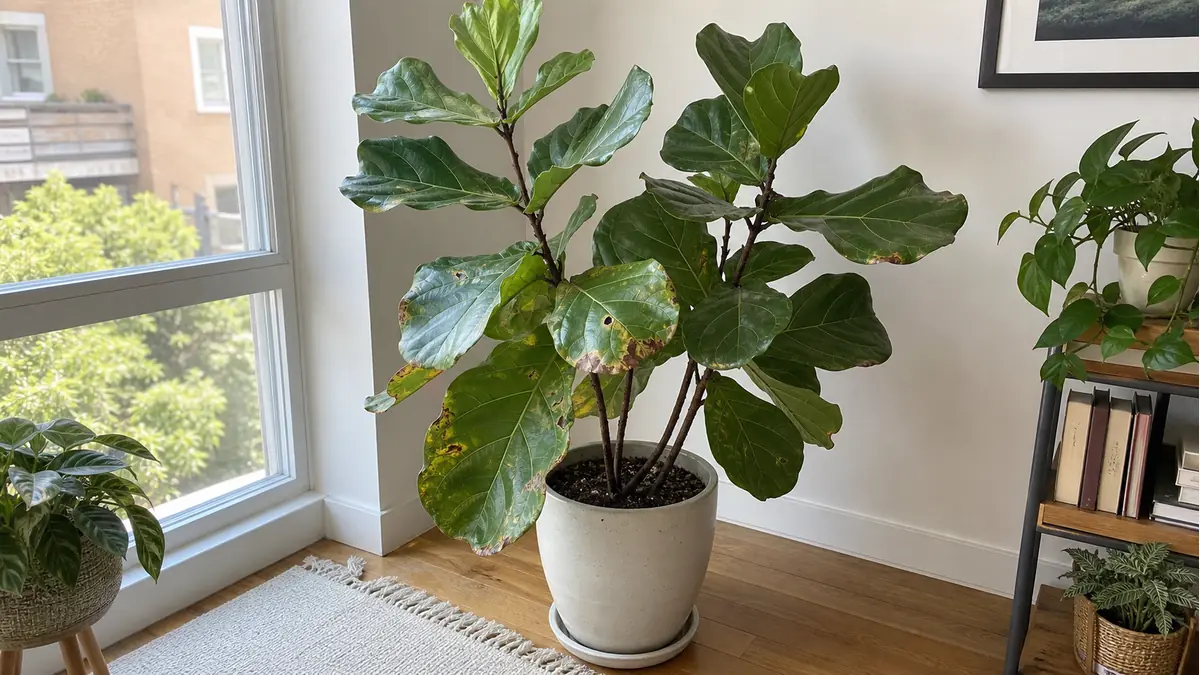
Brown spot on fiddle leaf fig leaves is easiest to diagnose by where the mark starts, how it feels, and whether it spreads after watering and light are corrected. A dark soft blotch near the base of a leaf points in a different direction than a dry tan edge or a pale sunburn patch on the side facing glass. The leaf is giving you a timeline: roots, water, light, disease pressure, or simple old damage.
Do not start by cutting every marked leaf. First decide whether the spots are active. Active damage expands, darkens, softens, spreads to new leaves, or appears soon after watering. Old scars stay the same size and only look worse as the leaf ages.
Fiddle Leaf Fig Brown Spot Fast Diagnosis
Dark, soft, spreading spots
Check roots, drainage, and recent watering first. Wet brown spots often start low or near the center of leaves.
Crispy brown edges
Look for dry mix, missed deep watering, low humidity, or repeated drought-recovery cycles.
Pale tan patches
Check the side facing a window or grow light. Sunburn looks dry, bleached, and sharply exposed.
Stable old marks
Watch for two weeks. Old scars do not need treatment if new leaves are clean and firm.
Key Takeaways
- Diagnose spots by texture, position, and spread first.
- Check drainage before treating dark wet leaf marks.
- Water deeply after the mix partly dries.
- Move sunburned leaves back from hot glass.
- Cut only leaves that are mostly damaged or infectious.
Table of Contents
Brown Spot on Fiddle Leaf Fig: Location-and-Texture Matrix
A useful diagnosis starts with the leaf surface. Touch the brown area gently. Wet-looking spots feel softer and darker, often with a yellow halo or dull tissue around them. Crispy damage feels dry, papery, and thin. Sunburn is usually tan, beige, or pale brown, with a flat bleached look. Physical scars have a fixed edge and no new halo.
| Spot pattern | Common cause | Where it shows first | First check |
|---|---|---|---|
| Dark brown, soft, spreading patches | Wet roots or root rot stress | Lower leaves, leaf centers, or near veins | Pot weight, drainage, root smell |
| Crispy brown edges or tips | Underwatering or uneven watering | Leaf margins, older leaves, exposed edges | Dry root ball, watering depth |
| Tan, bleached, dry patches | Sunburn or light shock | Window-facing side or upper leaves | Recent move, hot direct sun |
| Small spots with yellow halos | Possible bacterial or fungal issue | Several leaves, often after wet foliage | Spread pattern and airflow |
| Raised corky marks or old tears | Edema or physical damage | Random leaves, rubbed areas, old growth | Whether new marks are forming |
Fiddle leaf fig, Ficus lyrata, is a large-leaved ficus with stiff, glossy foliage. Those big leaves make every scar obvious. The same damage that might disappear on a small-leaved plant can look dramatic on a fiddle leaf fig for months.
Read the leaf age before choosing a fix. Older lower leaves often reveal stress from the pot because they have lived through the longest watering swings. New leaves at the top reveal current conditions more quickly. Clean new growth after a correction is a stronger recovery sign than cosmetic improvement on a damaged old leaf.
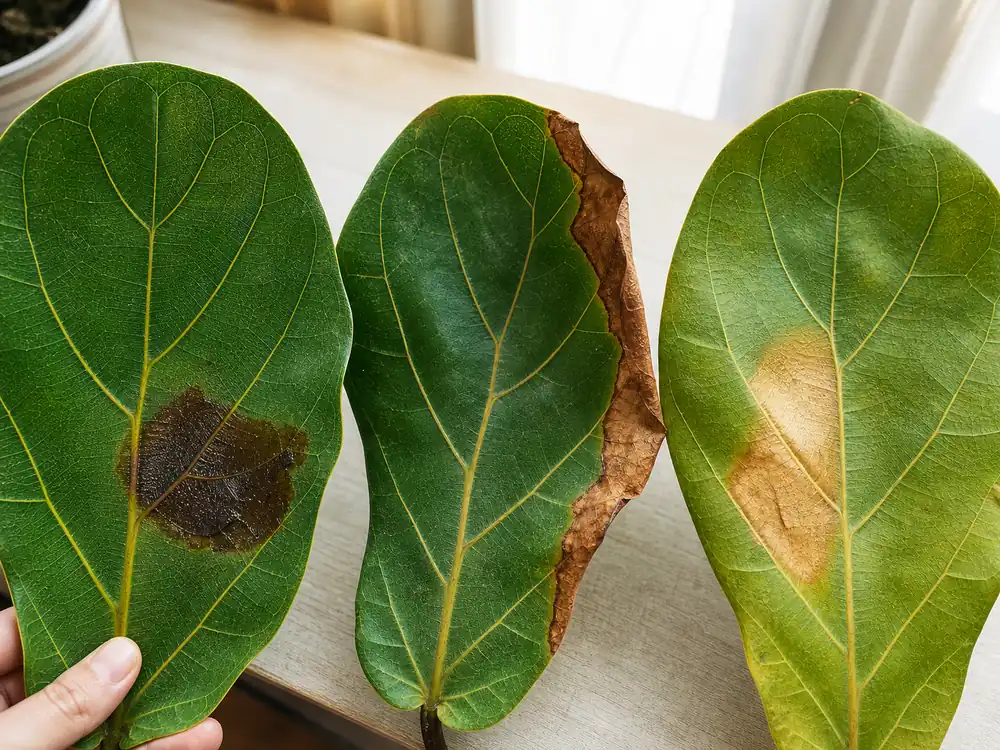
Mark the edge of a suspect spot with a small photo. Take one clear picture today, then another in 7-10 days under the same light. A fixed edge usually means old scarring. A widening edge, or new spotting on clean leaves, means the root, water, light, or disease trigger is still active.
Root Rot and Wet Brown Spots
Root rot damage often appears as dark brown or blackish spots that look water-soaked before they dry. The spots may start low on the plant because lower leaves are older and closer to root stress. A yellow halo can form around dark tissue. Leaves may droop even when the pot feels wet.
The pot is the main evidence. Lift it. A pot that stays heavy for many days after watering is a warning. Check the drainage hole, saucer, cachepot, and soil smell. Sour, swampy mix points to low oxygen around roots. Fine roots die first, then leaves show the shortage above the soil.
Indoor watering works as a system: drainage, light, pot size, and potting medium decide how long the root zone stays wet, a relationship reflected in the University of Georgia indoor plant growing guide. That relationship is critical with fiddle leaf fig. A plant in dimmer light uses less water, so the same schedule that worked in summer can keep the root zone wet in winter.
Start by removing standing water and letting the mix dry partway. A pot with no drainage hole needs a draining inner pot or a new container. Sour soil, a soft stem base, or continued spotting in a wet pot points to a root inspection. Healthy roots are firm and pale to tan. Rotting roots are dark, mushy, and may slip apart when touched.
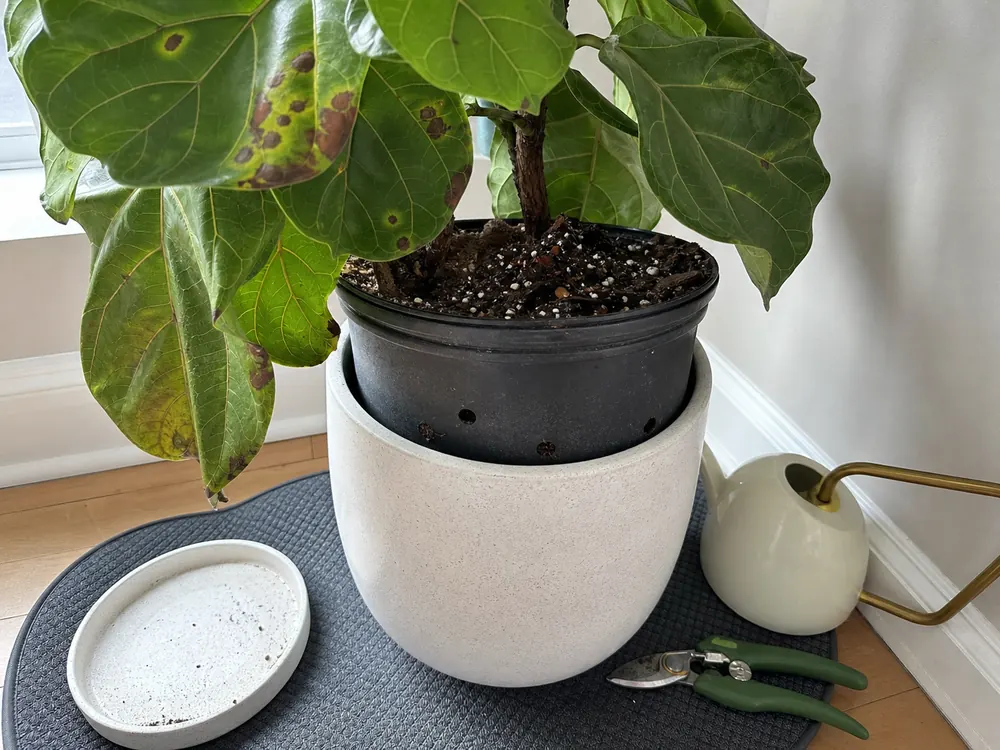
Repot only when the root zone gives you a reason. Removing a wet, airless mix can save a plant. Repotting a mildly stressed plant into a huge new pot can keep it wet longer. Use a chunky indoor mix, a pot with drainage, and a container only one size larger if the roots still fill the old pot.
After a root-zone correction, hold fertilizer until the plant stabilizes. Fertilizer cannot repair damaged roots, and salts can add stress to a plant already trying to replace fine feeder roots. Keep the plant warm, bright, and evenly managed. Judge the fix by whether new spots stop forming, not by whether old dark areas look better.
Underwatering and Crispy Brown Edges
Dry damage looks different. Brown edges feel crisp, thin, and papery. The leaf margin may curl slightly. Older leaves often show the first signs because they lose water faster and have already carried months of stress. New leaves may emerge smaller when the plant is repeatedly drying too far.
Underwatering includes timing and water penetration. A dry, peat-heavy mix can pull away from the pot wall and let water run down the sides. The surface looks wet for a minute, then the inner root ball stays dry. The plant still browns because roots never rehydrated.
Water slowly until the entire mix is moistened and excess drains out. If the root ball is extremely dry, bottom-soak the nursery pot for 20-30 minutes, then let it drain fully. The pot should feel heavier after a real watering. It should not sit in the drained water afterward.
Recovery is measured in new growth, not repaired brown edges. A crispy edge will not turn green again. The goal is to stop new edges from browning. Keep the plant on a more even schedule: water when the upper mix has dried and the lower root zone still has slight moisture, not after the whole pot becomes hard and shrunken.
Sunburn and Bleached or Tan Patches
Sunburn usually appears as pale tan, beige, or light brown patches on the side that faced strong light. The tissue is dry, flat, and papery. The pattern often follows exposure: upper leaves, window-facing leaves, or a leaf that pressed close to hot glass.
Recent movement is the clue. A fiddle leaf fig moved from a nursery, shaded corner, delivery box, or lower-light room into direct afternoon sun can burn before it adjusts. A grow light placed too close can make a similar patch. The leaf does not need to be wet for this damage to happen.
Move the plant back from harsh direct sun and keep bright indirect light. Morning sun through a gentle window may be tolerated after acclimation. Hot western glass is riskier. Do not move the plant into deep shade as a reaction. Lowering light too far can slow recovery and increase wet-soil risk.
Cutting sunburned leaves is optional. A leaf with one dry patch can still photosynthesize. Remove it when more than half the leaf is damaged, when it bothers you visually, or when the petiole is failing. Trim at the stem with clean pruners and avoid tearing the bark.
Bacterial or Fungal Infection
Infection is harder to diagnose from one leaf. Suspect it when small spots multiply across several leaves, spots develop yellow halos, new growth spots quickly, or marks continue spreading after watering and light are corrected. Wet foliage, poor airflow, crowded leaves, and contaminated tools raise the risk.
Do not mist a spotted fiddle leaf fig. Misting leaves humidity on the surface without fixing root moisture or room humidity. Water the soil, keep leaves dry, and improve airflow around the canopy. Keep the plant separated from nearby houseplants during the observation window.
Remove the worst infected leaves when they are heavily spotted or dropping. Clean pruners between cuts. Bag discarded leaves in household trash. A single old leaf with a few stable spots can stay during observation. Over-pruning can remove the leaf area the plant needs to recover.
Fungal and bacterial problems can overlap with root stress. Wet roots weaken the plant, then leaf spots spread faster. Correct a wet, heavy, or sour root zone first. Leaf treatment rarely stops the cycle when the root condition stays wrong.
Watch the newest leaves most closely. Active infection often announces itself on fresh tissue, across several leaves, or around previous spots that keep enlarging. A stable mark on one old lower leaf is weaker evidence. Multiple new halos, repeated leaf drop, and spotting that continues after root and light corrections deserve a stricter sanitation routine and longer isolation.
Edema, Physical Damage, and Old Scars
Edema happens when roots take up water faster than leaves can release it. On fiddle leaf fig, it can show as small reddish, brown, or corky marks, often on newer leaves after a watering swing. It is more common when light is low, the mix is wet, and the plant suddenly receives more water than it can use.
Edema marks are not contagious. They are a water-balance signal. Give the plant brighter indirect light, steadier watering, and better airflow. New leaves should emerge cleaner once the root-zone rhythm improves. Existing marks stay on the leaf.
Physical damage has a story. Leaves rub against a wall, scrape during moving, crease during shipping, or crack when dusted roughly. Those scars often have sharp edges and do not spread. A fiddle leaf fig leaf can also tear along a vein when it is bumped or bent.
Old scars are easiest to confirm with time. No new marks for two weeks, plus an old spot that stays the same size, points to stable care, not active treatment. Cross-plant pattern clues matter when several species show the same symptom; brown spots on plant leaves separates shared water, light, pest, and disease causes outside fiddle leaf fig.
What to Cut, Repot, or Change First
Start with the least disruptive fix that matches the evidence. A wet pot with dark spots calls for watering and drainage changes before heavy pruning. Crispy edges with a dry root ball call for deep rehydration and a steadier schedule. Tan window-facing patches call for bright indirect light away from hot glass.
| Evidence | First action | Wait before judging |
|---|---|---|
| Wet pot, dark soft spots, drooping | Dry partially, check drainage, inspect roots if decline continues | 7-14 days for spread to slow |
| Dry pot, crispy edges, curled margins | Water deeply and reset schedule | 2-3 watering cycles |
| Tan patch on window-facing leaf | Move to bright indirect light | New leaves after acclimation |
| Small spreading spots on multiple leaves | Isolate, keep leaves dry, remove worst leaves | 10-14 days |
| Stable old scar | Leave it or prune for appearance | No action if unchanged |
Cut leaves when they are mostly brown, soft, infected-looking, or no longer helping the plant. Keep leaves with small dry marks if they still look mostly green. Fiddle leaf figs need leaf area to rebuild energy. Removing every imperfect leaf can leave a thin plant with less recovery capacity.
Repot when the root condition calls for it: sour mix, poor drainage, circling roots packed tight, or confirmed rot. Use a stable pot, drainage holes, and a mix that holds moisture with air pockets. The pot drainage setup matters because fiddle leaf fig roots decline quickly when water sits below the root ball.
Once the emergency fix is handled, return the plant to a normal houseplant routine. Consistent watering checks, leaf cleaning, pest inspection, and light placement prevent a small mark from becoming a repeated diagnosis cycle. A consistent houseplant care routine keeps watering checks, leaf cleaning, pest inspection, and light placement consistent after this specific spot problem has stopped. That matters because fiddle leaf figs tend to repeat the same stress pattern when placement or watering drifts again.
Placement still matters after the spots stop spreading. Fiddle leaf figs are large-leaf houseplants that show every swing in light and water. For long-term placement, the large leaf house plants guide separates leaf scale, room footprint, and light needs.
Expect damaged leaves to remain marked. Success looks like clean new growth, a pot that dries on a predictable rhythm, and no expansion around the old spots. The old leaf is a record. The next leaf is the test.
Conclusion
A brown spot on fiddle leaf fig leaves is not one diagnosis. Dark soft spots send you to the root zone. Crispy edges point toward dry stress. Tan patches trace back to sun exposure. Small spreading spots raise infection concern, and stable scars often need only observation.
Fix the cause before pruning for appearance. Photograph the marks, correct the matched condition, and watch new growth. A recovering fiddle leaf fig usually announces progress with firm leaves, cleaner new growth, and brown spots that stop moving.