

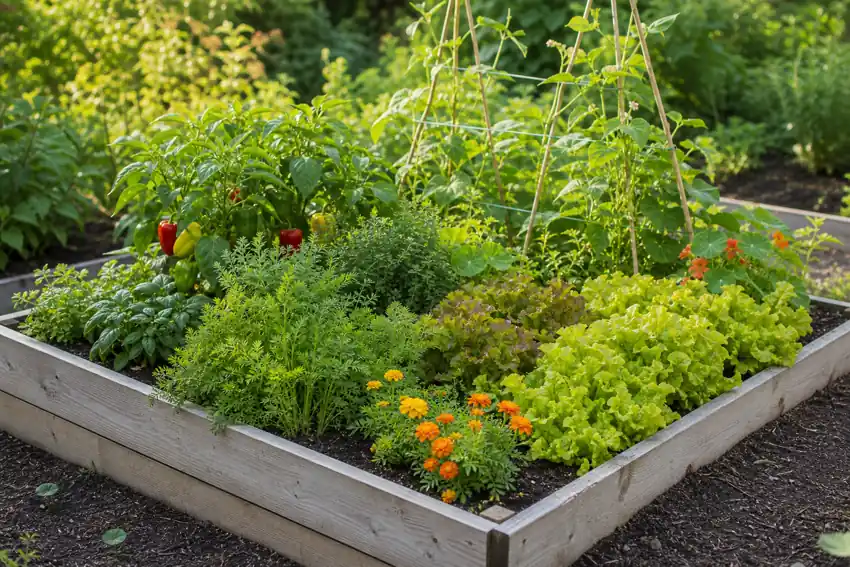
What to plant in a raised garden bed depends on root depth, heat, and how much room each crop needs after it stops looking small. A 4-by-8 bed can look roomy in April and feel crowded by June, when tomato stems thicken, squash leaves shade the path, and mint starts pushing sideways through every loose pocket. Raised beds reward crops that use the managed soil volume well: fast greens, clean root crops, compact herbs, trellised beans and peas, peppers, bush tomatoes, strawberries, and flowers that bring pollinators without swallowing the bed. The best choices earn their footprint twice, first by fitting the bed depth and then by producing heavily in a small, reachable space.
Raised Bed Plant Selector
Start with bed depth, then choose the crop role. Shallow beds favor fast leaves and herbs. Deeper beds can carry roots, fruiting crops, and trellised plants without constant stress.
Key Takeaways
- Choose crops by root depth before buying seedlings.
- Reserve the deepest soil for fruiting vegetables.
- Plant fast greens where shallow beds dry quickly.
- Avoid sprawling crops unless trellis space already exists.
- Recheck spacing weekly once leaves begin touching.
Table of Contents
What To Plant In A Raised Garden Bed When Depth Is Limited
Shallow raised beds can produce well when the crop finishes before heat and root stress build. Loose soil near the surface warms quickly, drains faster than ground soil, and lets small seedlings establish without pushing through a compacted layer. That same shallow volume dries quickly, so the crop needs either a short harvest window or a modest root system.
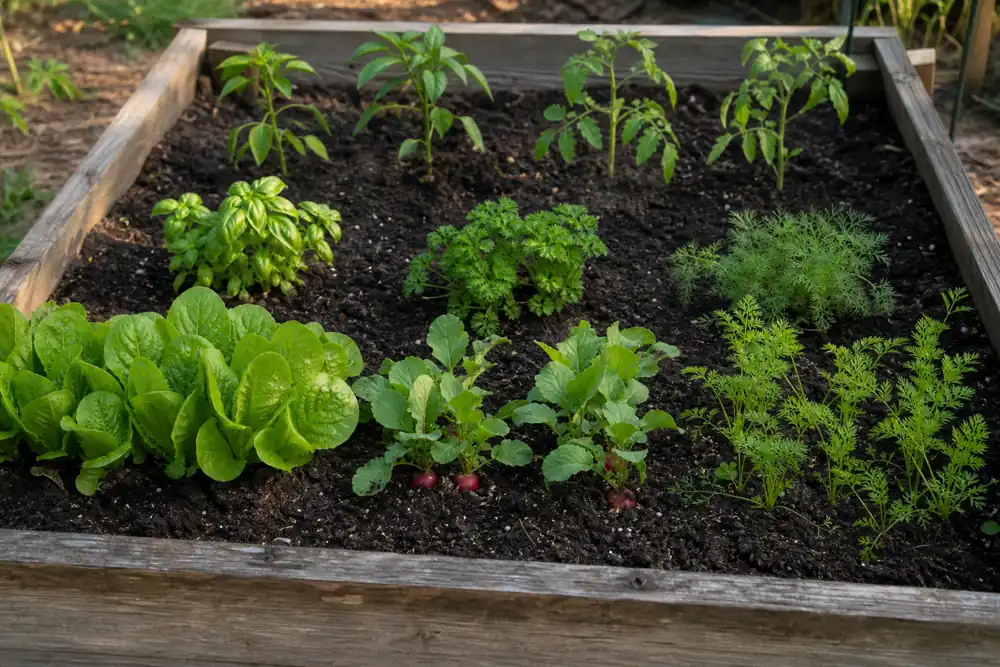
Lettuce, spinach, arugula, baby kale, mustard greens, radishes, cilantro, dill, basil, chives, pansies, calendula, and nasturtiums make the most sense in 6 to 8 inches of workable mix. These plants do not need a deep season-long root zone to pay back the space. They also let a gardener harvest early, clear tired plants, and replant before one crop owns the bed for months.
Raised beds still need sun. Most vegetables produce best with long direct light; leafy greens tolerate more afternoon shade than tomatoes or peppers. The vegetable garden planting guidance from University of Minnesota Extension connects crop timing with sun exposure, season, and planting space.
Fast leaves earn shallow space
Leaf crops give the quickest return because the edible part is above ground. A bed can lose a spring lettuce crop to heat, yet still deliver several cuttings before bolting if the plants are close enough to shade the soil and loose enough to keep air moving. The leaves should feel cool and crisp at harvest. Warm, rubbery leaves usually mean the bed is past its best lettuce window.
For gardeners already growing salad crops, the timing and moisture rhythm in how to grow lettuce from seed to salad carries over well to raised beds. Warm spring soil helps lettuce start quickly. Heat, drought, and long days still push it toward bitter leaves and flowering stems.
Small roots need loose soil, not extra nitrogen
Radishes, small carrots, baby beets, and scallions fit raised beds because loose soil reduces forking and lets harvest happen cleanly. A carrot pulled from a raised bed should slide out with a faint dry-soil squeak. Twisted roots usually point to hard clods, stones, or uneven moisture. Heavy feeding makes leafy tops before it fixes compaction, so texture matters more than fertilizer strength for root crops.
Best Vegetables For Raised Beds By Crop Behavior
The best vegetables for raised beds usually give a high return from limited surface area. A raised bed has edges, paths, warmer soil, and a fixed root volume. The winning crops use that structure well.
| Crop group | Strong choices | Why they fit raised beds | Main caution |
|---|---|---|---|
| Leafy greens | Lettuce, spinach, arugula, chard, kale | Fast harvests, shallow roots, easy repeat sowing | Heat and dry soil trigger bitterness or bolting |
| Root crops | Carrots, radishes, beets, turnips, scallions | Loose mix gives straighter roots and cleaner harvests | Rocky fill and fresh manure cause forked roots |
| Fruiting vegetables | Peppers, eggplant, bush tomatoes, cucumbers on trellis | Warm soil and close care improve early growth | Need deeper soil and even moisture |
| Legumes | Bush beans, pole beans, snap peas | Vertical growth saves bed surface | Trellises must be set before roots spread |
| Herbs | Basil, parsley, thyme, oregano, chives, cilantro | Small footprints fill edges and gaps | Mint should stay contained outside the bed |
| Flowers | Calendula, nasturtium, alyssum, marigold, borage | Pollinator traffic and pest confusion without much space | Self-seeders need thinning before they crowd crops |
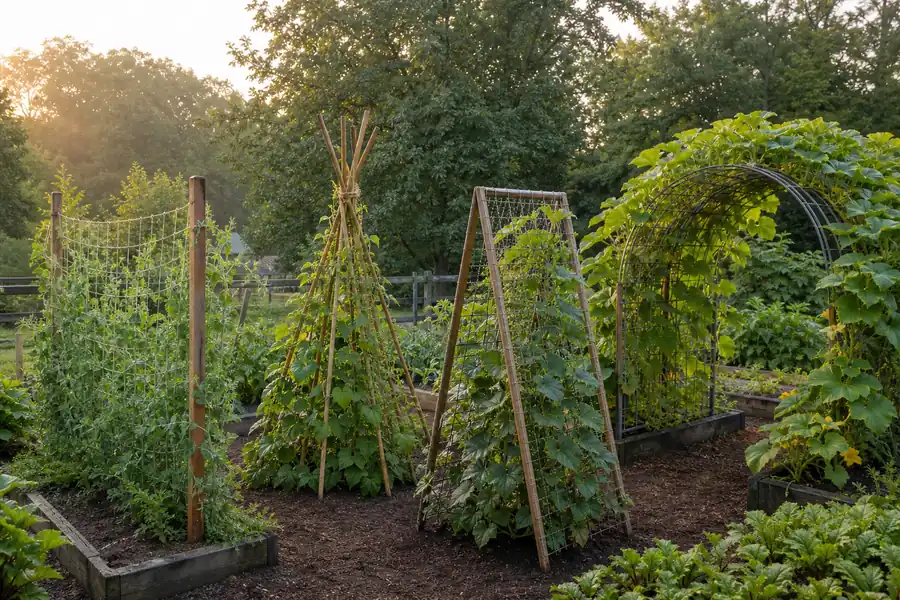
Peas and beans often fit raised beds better than sprawling crops because vertical growth converts airspace into production. Peas finish early enough to free space for warm-season transplants. Beans can carry summer harvests when the trellis sits where it does not shade shorter crops. When peas are part of the plan, pea plant growth stages help set expectations for vines, flowers, pods, and the moment the row begins declining.
The vegetable garden planting guidance from University of Minnesota Extension separates cool-season and warm-season crops, which matters in raised beds because the soil warms early but also dries faster. That early warmth helps peas, greens, radishes, and transplants in spring. It also means summer crops may need closer watering once leaf area expands.
Raised Garden Bed Plants That Use Space Twice
A raised bed earns its keep when one square foot does more than one job. The best combinations stack time, height, and function without turning the bed into a tangle. Fast spring greens can leave before peppers need elbow room. Nasturtiums can trail over an edge and leave the center open. Basil can sit near tomatoes if both receive enough light and air.
Companion planting helps only when the plants share space honestly. A flower that draws pollinators is useful if it stays low or sits at an edge. A fragrant herb is useful if it does not become a woody shrub by midsummer. Pairings should match root depth, water demand, and mature size before pest folklore enters the decision. The same logic behind companion plants for vegetables works in raised beds only when crowding stays under control.
Strawberries deserve special judgment. They fit raised beds because the fruit stays cleaner, runners are easy to see, and the crown sits above wet ground. They also spread. A few plants can become a mat that steals the bed from annual vegetables, so runners need pinning into a planned row or cutting after the planting fills its space.
Use edges for herbs and flowers
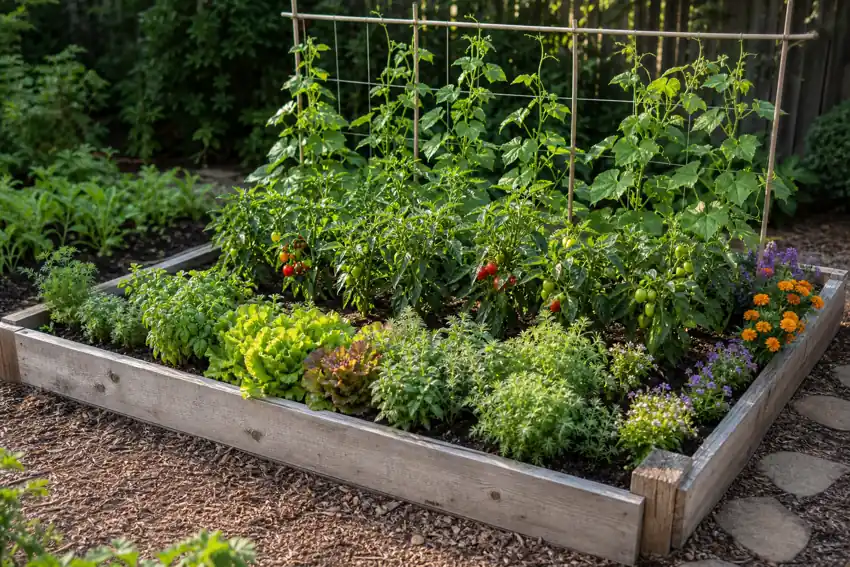
Edges are valuable because they give plants light and airflow without taking the bed center. Thyme, oregano, chives, parsley, calendula, alyssum, and nasturtiums can soften the edge, attract insects, and still leave the middle for food crops. Basil prefers more warmth and moisture, so it fits near peppers or tomatoes once nights are warm.
Mint is the exception. It smells useful and looks innocent in a small nursery pot, then roots sideways through loose soil. Keep it in a separate container where the runners can be seen and cut. A raised bed full of good soil gives mint exactly the loose, moist run it uses to take over.
What Not To Grow In Raised Beds Unless The Bed Is Built For It
Some productive crops make poor raised-bed tenants. The problem is usually footprint, root permanence, shade, or harvest mess. A crop can produce well and still cost too much space for the return.
| Usually skip or limit | Why it wastes raised-bed space | Better raised-bed move |
|---|---|---|
| Sweet corn | Needs blocks for pollination and uses a lot of surface area | Grow bush beans, peppers, or compact tomatoes instead |
| Large pumpkins and melons | Vines sprawl over paths and shade smaller crops | Use a separate mound, large ground bed, or strong trellis for small-fruited types |
| Mint | Running roots spread quickly through loose raised-bed soil | Keep mint in its own container |
| Full-size indeterminate tomatoes | Deep roots, heavy canopy, and long season dominate the bed | Choose determinate or dwarf types unless the bed is deep and trellised |
| Potatoes in shallow beds | Need depth for hilling and tuber protection | Use a deeper bed, grow bag, or dedicated potato box |
| Permanent asparagus | Occupies the bed for years before full production | Plant only in a dedicated permanent bed |
Sweet corn is the common trap. A small block in a raised bed may look charming. Corn pollinates by wind and performs best in blocks with enough plants to shed pollen across the silks. The bed surface disappears quickly, and the harvest may still be thin. Use that space for crops with repeated picking or higher yield per square foot.
Melons and pumpkins can work only when the support and variety are chosen first. Small-fruited melons on a strong trellis behave very differently from a full-size watermelon sprawled over the path. If the bed is narrow, the vine should be trained from the start or planted somewhere else.
Depth, Soil Mix, And Water Decide Which Plants Keep Producing
Raised beds change the root zone. The soil warms sooner, drains faster, and sits above surrounding grade. Spring growth and storm drainage often improve. Hot weather can also make water and fertility swings sharper. A plant list that ignores depth will fail even when every crop name sounds reasonable.
Shallow-rooted greens need consistent surface moisture. Fruiting crops need deeper wetting and a bed that does not dry to dust between waterings. Root crops need a loose, stone-free profile. If the fill mix is new, sift out chunks, avoid uncomposted manure, and settle the bed before sowing small seeds. Raised-bed soil should crumble when squeezed, then fall apart with a light tap. If it packs into a sticky ball, fine roots will have a harder time using the space.
The container vegetable depth guidance from University of Maryland Extension is useful for raised beds because root volume limits behave similarly in pots and shallow boxes. A bed gives more horizontal room than a container. The plant still responds to usable depth, drainage, heat, and watering rhythm.
For new beds, construction affects crop choice as much as the seed packet does. Bed width controls reach, board height controls soil volume, and drainage controls whether roots have oxygen after storms. The physical setup in building raised beds for poor soil and drainage is the part to settle before choosing long-season plants that will live there all summer.
Seasonal Planting Keeps Raised Beds From Sitting Empty
A raised bed should rarely sit idle during the growing season. Its small footprint becomes more productive when crops rotate by temperature. Cool-season crops use spring and fall. Warm-season crops take the center months. Fast fillers close short gaps after a harvest.
Spring belongs to lettuce, spinach, peas, radishes, carrots, scallions, cilantro, dill, calendula, and pansies. Summer belongs to peppers, bush beans, cucumbers on a trellis, basil, eggplant, cherry tomatoes, okra in hot regions, and compact zinnias or marigolds where flowers earn their space. Fall returns the bed to lettuce, spinach, arugula, kale, turnips, radishes, beets, parsley, and cilantro.
The USDA Plant Hardiness Zone Map helps with winter survival expectations for perennial herbs and strawberries. Annual vegetable timing still depends on frost dates, soil temperature, and local heat. A Zone 7 garden in a humid valley and a Zone 7 garden on a dry windy slope can behave differently in the same month.
One useful question before planting is simple: what will this square foot be doing six weeks from now? If the answer is “waiting,” plant a faster crop. If the answer is “buried under squash leaves,” move that crop to a larger space. Raised beds punish loose spacing because every slow or oversized plant blocks another harvest.
Raised Bed Gardening Mistakes That Start With Plant Choice
Most raised-bed failures begin before watering or feeding. The wrong crop uses the wrong kind of space. Deep-rooted plants stall in shallow boxes. Slow carrots lose light beside sprawling vines. A trellis placed on the wrong side can shade lettuce by noon. Permanent herbs can take over a bed meant for annual vegetables.
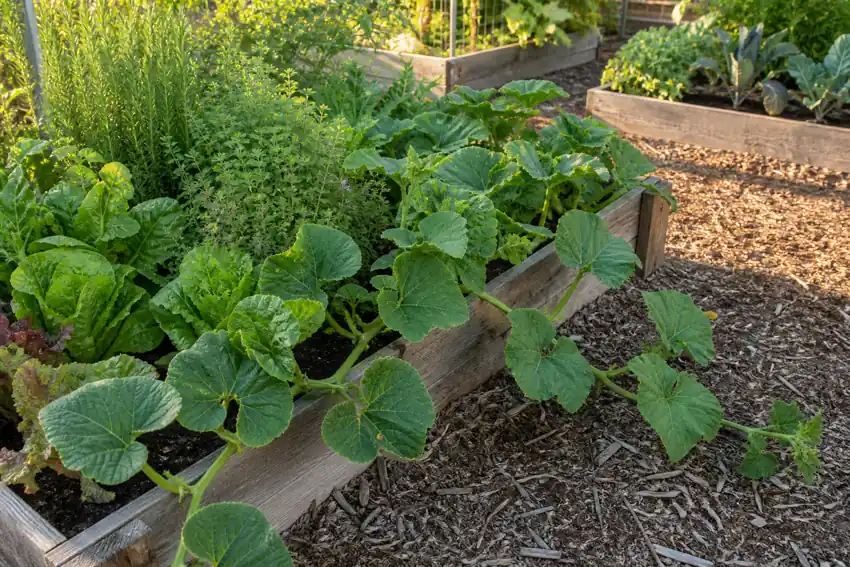
Fix the mistake at the planning layer. Put the tallest trellis where it shades the least. Keep aggressive plants in containers. Leave enough room to reach the center without stepping into the soil. Pair crops by harvest timing so one leaves before another expands. Raised beds work because the soil stays loose; stepping into the bed, overplanting it, and letting runners mat the surface remove that advantage quickly.
A simple first-year bed can produce more food than an ambitious one. Try lettuce, radishes, carrots, bush beans, basil, peppers, a few flowers, and one trellised crop. That mix teaches depth, spacing, watering, shade, and harvest timing without letting any single plant dominate the bed.
Conclusion
The strongest raised-bed plant list starts with depth, then season, then mature size. Use shallow beds for fast greens, small roots, herbs, and flowers. Save deeper beds for peppers, tomatoes, trellised cucumbers, beans, peas, strawberries, and crops that need even moisture through a longer season.
If one crop will shade half the bed, run through the path, or occupy the soil for years, give it a dedicated space. A well-planted raised bed should feel reachable, loose under a trowel, and busy without becoming a thicket.
Frequently Asked Questions
What plants grow best in a raised garden?
Lettuce, spinach, radishes, carrots, beets, peppers, bush beans, peas, basil, parsley, strawberries, calendula, and nasturtiums grow well in raised gardens when the bed depth matches the crop. Shallow beds favor greens and herbs. Deeper beds handle fruiting vegetables and longer-season crops.
What should you not grow in a raised garden bed?
Sweet corn, large pumpkins, full-size melons, running mint, shallow-planted potatoes, and permanent asparagus usually perform poorly in general raised beds. They need too much space, special depth, long-term commitment, or containment. Grow them only when the bed is designed for that crop.
What are the best vegetables to put in raised beds?
The best vegetables for raised beds are lettuce, spinach, radishes, carrots, beets, bush beans, peas, peppers, cucumbers on a trellis, and compact tomatoes. These crops use loose soil well and can be harvested without wasting much bed surface.
What is the 70 30 rule in gardening?
Gardeners often use 70 30 as a rough planting mix, such as 70 percent food crops and 30 percent flowers, herbs, or support plants. In a raised bed, the ratio matters less than function. Every plant should earn its space through harvest, pollination, pest confusion, edging, or soil cover.