

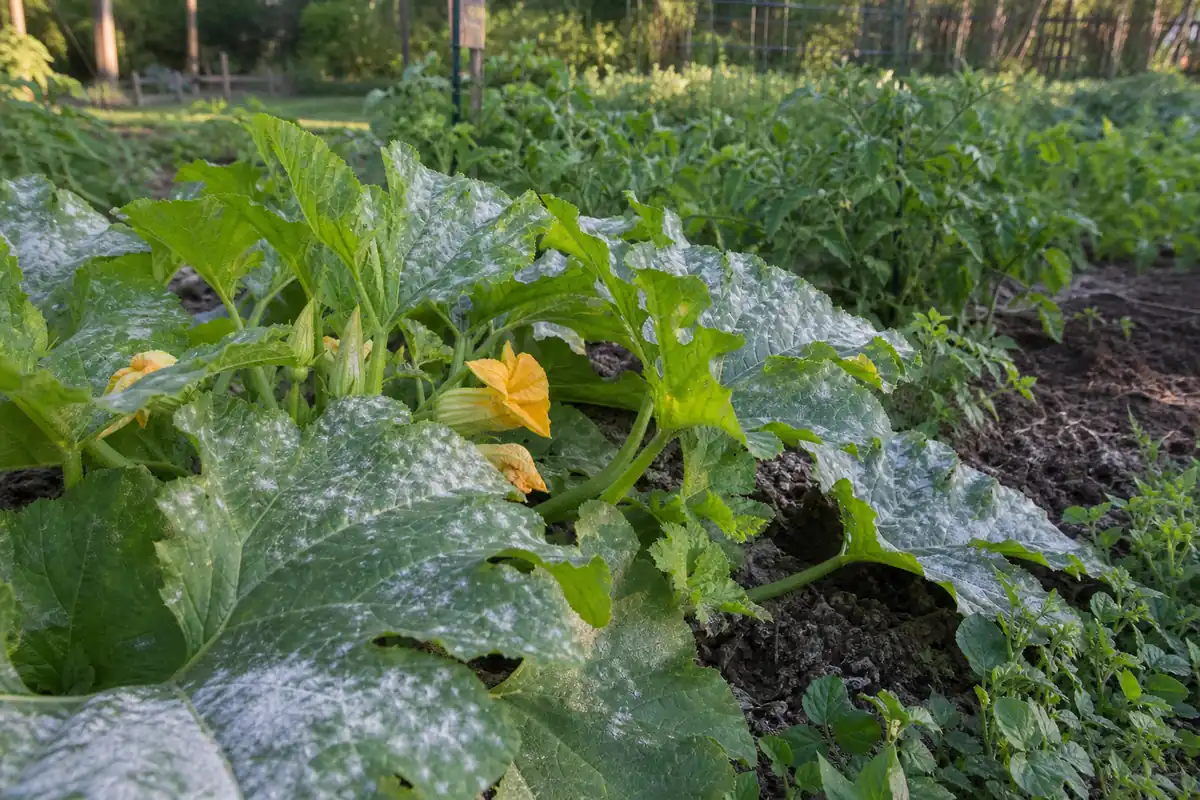
Powdery mildew on squash starts as pale dusty patches that sit on the leaf surface, then spreads across zucchini, yellow squash, pattypan, and other summer squash when warm days and humid nights keep leaves under pressure. A few white markings do not always mean disease. Rub one patch, check whether new spots are expanding, and look at the whole canopy before cutting leaves or spraying anything that can scorch tender foliage.
The best response depends on how much clean leaf area remains. A plant with a few infected old leaves can often keep producing after careful pruning and early spray coverage. A plant with a gray-white canopy, weak vines, and small fruit needs a harvest-first plan because damaged leaves cannot rebuild their photosynthetic surface.
Fast Squash Mildew Check
White dust wipes off
Active mildew is likely. Start with leaf removal and protective spray timing.
Silvery marks stay fixed
Natural squash variegation is more likely when the pattern follows veins and does not spread.
Only lower old leaves show it
Prune the worst leaves if enough healthy canopy remains to shade fruit.
New leaves keep getting coated
Shift to a repeated protective treatment and harvest ripe fruit often.
Key Takeaways
- Confirm mildew with a wipe test before spraying.
- Keep enough healthy leaves to shade developing fruit.
- Avoid oil and sulfur overlaps on hot squash leaves.
- Repeat safe sprays before new patches expand.
- Judge recovery by clean new growth and harvest pace.
Table of Contents
Powdery Mildew On Squash Starts With A Wipe Test
Powdery mildew looks like flour, talcum powder, or pale dust scattered on the upper leaf surface. Early spots are round or irregular, then merge into a gray-white film. The coating may appear first on older shaded leaves where air movement is lower and humidity lingers overnight.
The simple test is tactile. Rub a small patch with a damp finger or cloth. Active mildew often smears or lifts slightly, leaving a duller green patch underneath. Natural silvering in squash leaves stays inside the leaf tissue and follows a repeated vein pattern. It will not brush away.
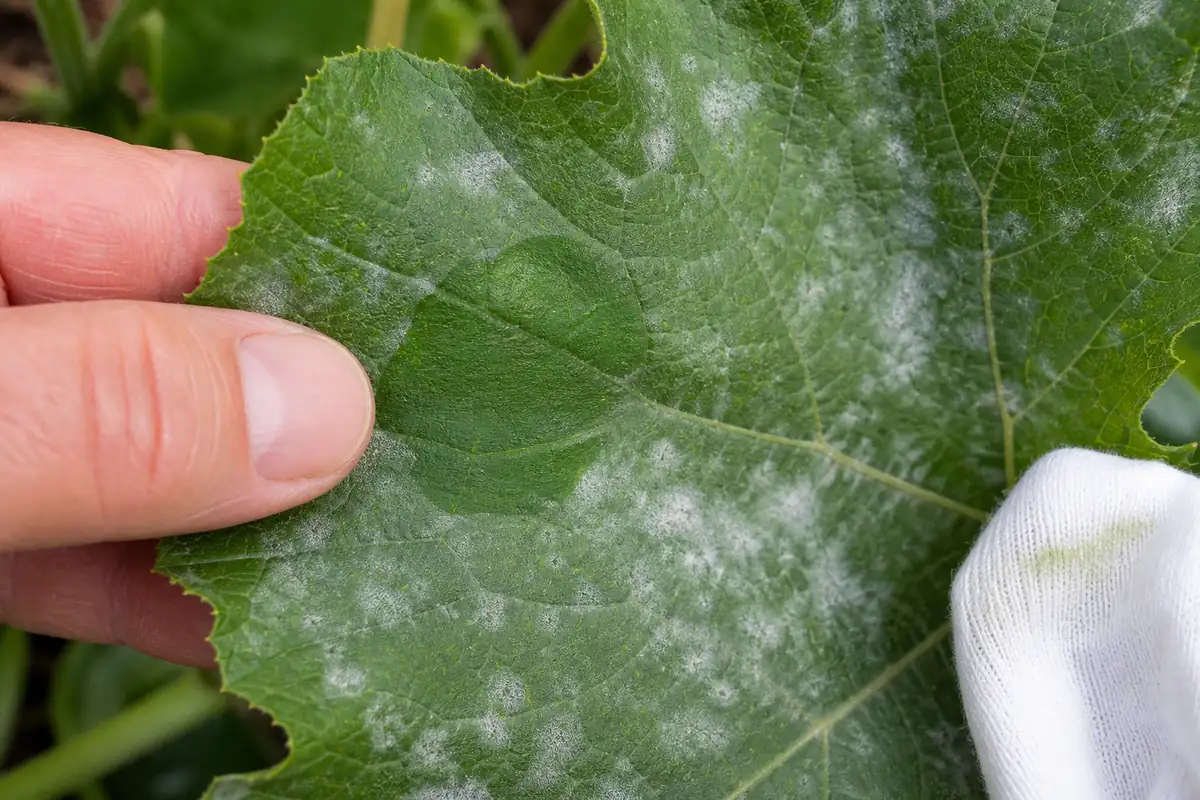
Leaf age matters. Powdery mildew usually starts where leaves are older, crowded, or shaded by the plant’s own canopy. Newer leaves may stay green at first. Natural markings appear on healthy new leaves from the start, and the plant keeps growing normally.
Powdery mildew fungi grow mainly on leaf surfaces, so early patches can look cosmetic. The damage becomes practical when the coating reduces light capture, weakens leaves, and speeds decline on plants that are still filling fruit. That is why a zucchini can keep setting fruit during a mild infection and still collapse quickly when half the canopy turns white.
Do not confuse this with broad plant disease scouting. Brown lesions, water-soaked patches, black centers, and collapsing stems belong in a different diagnostic lane. Wider plant disease identification helps when the white coating appears with rots, spots, wilting, or stem damage.
Natural Squash Leaf Markings Can Look Like Mildew
Many zucchini and summer squash cultivars carry pale silver markings that look alarming in bright sun. These marks often follow the veins in a consistent pattern, sit flat inside the leaf, and appear on otherwise vigorous growth. The surface feels like normal leaf tissue, with no powdery lift.
Active mildew behaves differently. It begins in scattered patches, expands across leaf sections, and can cross over veins without respecting the plant’s normal pattern. The underside may also show pale growth as the infection advances, especially when the canopy stays dense.
Watch the same leaf for two or three days. Natural variegation stays the same size. Mildew spreads outward, appears on neighboring leaves, and may turn the leaf surface dull or gray. The edge between green tissue and white growth becomes less crisp as more spores form.
Growth stage also changes the response. A young squash plant needs leaf area for root and vine expansion, so unnecessary pruning can slow the whole plant. A mature plant with fruit already setting can lose several old infected leaves and still finish a crop when the remaining canopy is strong. The sequence of seed to squash growth changes how much leaf loss the plant can absorb.
| White leaf pattern | Likely meaning | First move | Mistake to avoid |
|---|---|---|---|
| Flat silver marks following veins | Natural leaf marking | Watch for spread before treating | Pruning healthy leaves |
| Powder that smears or lifts | Active powdery mildew | Remove worst leaves and protect clean growth | Waiting until the whole canopy is white |
| White patches plus brown dead tissue | Mixed disease or old damaged tissue | Check moisture, stems, and other symptoms | Treating every spot as mildew |
| White coating on old lower leaves only | Early canopy infection | Improve airflow and prune selectively | Stripping fruit-shading leaves |
When To Prune Infected Squash Leaves
Pruning helps when the infected leaf is old, heavily coated, or buried inside a crowded canopy. Removing that leaf reduces spore load and opens air movement around the stems. The plant also dries faster after dew, which slows the conditions that favor repeated infection.
Pruning hurts when it removes too much photosynthetic surface. Squash fruit depends on broad leaves for sugar production and shade. Sudden canopy loss can expose fruit to sunscald, slow sizing, and stress a plant that is already fighting disease.
Start with the worst lower leaves. Cut the petiole near the main stem with clean pruners and carry the leaf out of the bed. Do not shake a white leaf over the plant. Remove leaves that are more white than green, leaves touching soil, and leaves that block airflow in the center of the crown.
Leave mildly infected leaves when the plant has limited canopy. A green leaf with a few spots still feeds the plant. If every leaf has some mildew, remove only the oldest collapsed leaves and shift attention to protecting the next flush. Pruning cannot erase a disease that is already active across the whole canopy.
Put removed leaves in the trash when the infection is heavy. Home compost piles often do not hold uniform high heat long enough to be a dependable disease kill step. Cleaning pruners after a heavy session also keeps sticky sap, spores, and plant residue from moving through the bed.
Milk, Bicarbonate, Sulfur, Oils, And Fungicides Work Differently
No spray turns a white, damaged squash leaf back into a strong green leaf. Treatments work by slowing new fungal growth and protecting cleaner leaves. That distinction matters because gardeners often keep changing products when the old patches remain visible.
Protective timing beats rescue timing. The powdery mildew on vegetables guidance from UC IPM treats prevention, early removal, resistant varieties, and careful fungicide use as a combined approach, especially when susceptible crops are planted in mildew-prone weather.
| Treatment | Best fit | Main risk | Use with care when |
|---|---|---|---|
| Milk sprays | Early, mild mildew and low-risk home trials | Odor, residue, inconsistent results | Leaves stay wet or heat is high |
| Potassium bicarbonate | Contact suppression on early patches | Leaf burn if mixed too strong | Plants are drought-stressed or in hot sun |
| Sulfur | Preventive protection before severe spread | Phytotoxicity in heat or near oil sprays | Temperatures are high or oil was used recently |
| Horticultural or neem oil | Coating exposed mildew and protecting leaves | Leaf scorch in heat or drought stress | Plants are wilted or sun is direct |
| Labeled fungicide | Persistent mildew on valuable plants | Resistance and label limits | Harvest interval or crop label is unclear |
Milk is popular because it is accessible and usually less harsh than many improvised mixes. It is not magic. It works best as an early, repeated coating on leaves that still have useful green area. Thick milk residue can smell sour, attract grime, or leave leaves sticky when sprays are heavy.
Bicarbonate products change the leaf-surface environment and can suppress early growth on contact. Household baking soda recipes are easy to make too strong. Early management works best when cultural steps and labeled products stay crop-specific; the cucurbit powdery mildew management resource from NC State Extension keeps those controls tied to crop labels and disease stage.
Sulfur and oils are more serious tools. They can injure leaves if applied in heat, on drought-stressed plants, or too close together. The squash powdery mildew handbook entry from the Pacific Northwest Plant Disease Management Handbook lists sulfur and other controls with crop and timing cautions, which is the right way to treat them: useful, bounded, and label-dependent.
Dish detergent belongs outside the main treatment plan. Products sold as insecticidal soap are formulated for plants and pests; household dish soap is built for dishes, grease, and sinks. On squash leaves, strong detergent mixes can strip surface protection and create burn that looks like a new disease problem.
Spray Timing Matters More Than Stronger Spray
Squash leaves are easy to injure. Broad, thin leaves heat quickly, lose water fast, and show spray burn as yellow patches, brown edges, or collapsed tissue. A treatment that is safe on a cool cloudy morning can damage the same plant in afternoon sun.
Spray early in the day after dew begins to lift, or in calm evening weather when leaves will dry before night. Coat upper and lower surfaces lightly. Dripping leaves waste product and raise burn risk. Good coverage looks like a fine wet film, not runoff.
Test first when the plant is young, heat-stressed, or already yellowing. Spray one or two leaves, wait 24 hours, then decide whether the canopy can handle the product. That delay can save the plant from a full-bed scorch event.
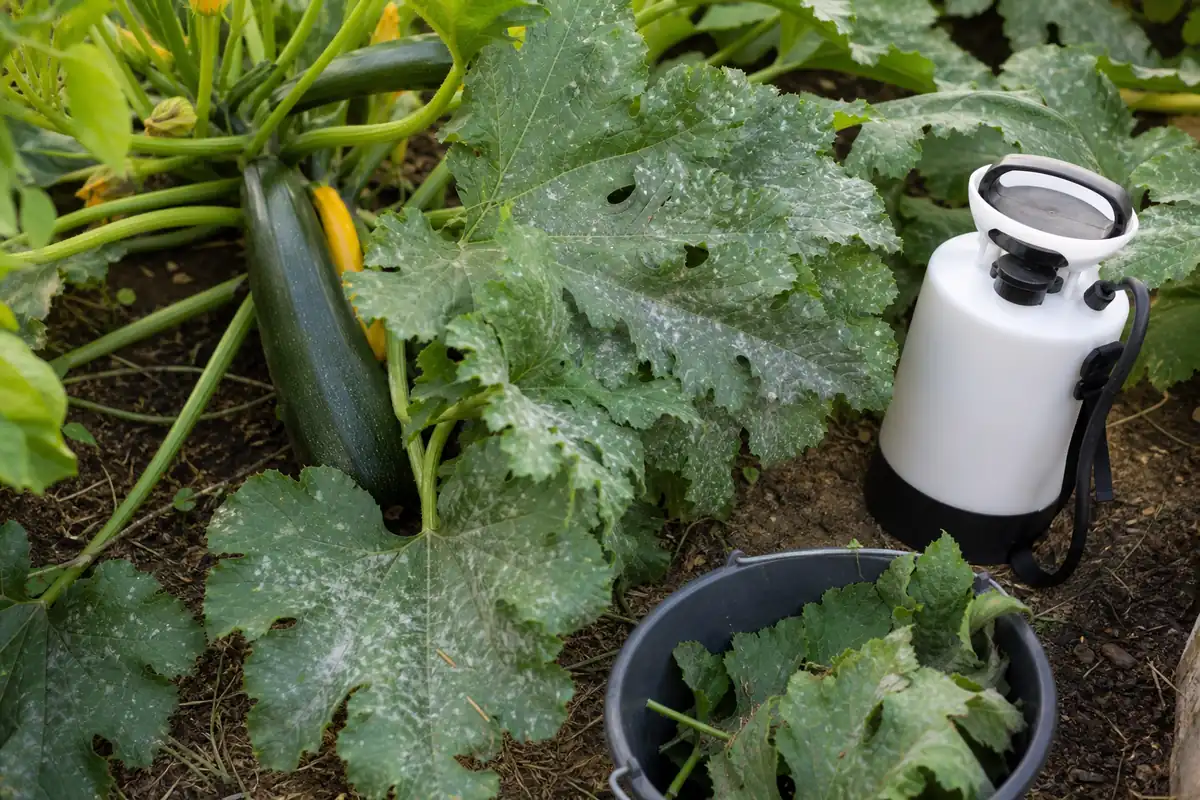
Repeat intervals matter because new leaf growth is unprotected. Many labeled products require repeat use during favorable weather, and home remedies usually need the same early-repeat logic. Rain, overhead watering, rapid new growth, and active spores all shorten the useful protection window.
Do not stack products out of frustration. Oil followed closely by sulfur is a classic leaf-injury risk, and strong bicarbonate mixes layered over stressed leaves can scorch. If a treatment causes yellowing, bronzing, or edge burn, stop and let new growth show whether the plant can recover.
Powdery mildew does not need soaked leaves the way many leaf spots do. Root-zone watering still keeps plants from wilting under a thinning canopy. Better spacing, pruned lower leaves, and dry pathways reduce the dense, humid pocket around the crown. Zucchini plants already move fast through flowering and harvest, so disease timing should be judged against zucchini plant stages, not only against the first white spot.
Fruit Safety And Harvest Decisions Need A Different Check
Powdery mildew mostly attacks leaves and stems, not the inside of firm squash fruit. A zucchini or yellow squash from a mildewed plant can usually be harvested if the fruit is firm, normally colored, washed well, and free of soft rot, cracks, or fuzzy mold on the fruit itself.
The bigger question is plant performance. Once mildew removes too much leaf area, fruit may size slowly, taste bland, or stay small because the plant cannot feed it well. Pick mature fruit promptly. Leaving oversized zucchini on a weakened vine pulls energy from newer fruit and shaded leaves.
Check the fruit surface separately. White residue on a fruit can come from dust, dried spray, soil splash, or mildew spores sitting on the outside. Wash the fruit under running water and discard any fruit that is soft, leaking, sunken, moldy, or smells fermented. Do not use a diseased leaf as proof that every fruit is unsafe.
Harvest intervals matter after sprays. Any commercial product, oil, sulfur product, or bicarbonate product used on edible crops must be labeled for the crop and followed for harvest timing. A home mixture can still leave residue. Wash fruit, keep sprays off flowers when pollinators are active, and stop treating if the plant is nearly finished.
Late-season squash often reaches a practical endpoint. If nights are cooling, the vine is mostly white, and fruit set has slowed, removing the plant may be better than repeated spraying. A young plant in early summer deserves more rescue effort because clean new leaves can still support weeks of harvest.
Prevention For Squash And Zucchini Starts Before Spots Spread
Prevention starts with varieties, spacing, and canopy airflow. Some squash and zucchini cultivars tolerate powdery mildew better than others, and seed descriptions often name that resistance. Resistance does not make plants immune; it can delay the point where white leaves stop production.
Give vines enough room for air to move between leaves. Crowded hills, narrow walkways, and volunteer vines trap humidity under the canopy. Trellising is optional for many squash plantings; training zucchini or vining types to open the center can make scouting and pruning easier.
Water at the soil, not over the canopy. Morning watering gives roots moisture before heat rises and leaves time to dry after dew. Mulch can reduce soil splash and keep moisture more even. Keep mulch pulled slightly away from the crown so the main stem does not sit in damp debris.
Scout twice weekly once warm days and humid nights settle in. Lift older leaves, check both sides, and look at the shaded interior first. The first powdery patch is the cheapest moment to act. The fifth white leaf usually means spores are already moving through the planting.
Rotate cucurbit placement when space allows. Squash, pumpkins, cucumbers, and melons share several disease pressures, and dense cucurbit beds can become a repeating disease lane in late summer. Related problems on cucumbers often show why leaf texture, spotting, and canopy decline need separate checks; cucumber planting choices also change airflow, watering access, and disease pressure.
Keep crop boundaries clear. Pumpkin mildew decisions can involve ripening fruit, end-of-season vine decline, and harvest timing that do not match a fast summer squash bed. The general disease pattern overlaps; crop timing changes the rescue value. Pumpkin growth timing belongs with pumpkin growth stages when the plant is being managed for mature fall fruit.
Treatment Order When The Plant Is Already Infected
Start with harvest and pruning. Pick market-size fruit, remove the worst old leaves, and open the crown enough to see the next infection points. This gives the plant light and airflow before any spray touches the leaf surface.
Choose one treatment lane for the next seven to ten days. Mild early infection can be managed with careful pruning plus a lower-risk spray. Fast-moving infection on a valuable plant may justify a labeled fungicide. Nearly spent plants often deserve harvest, removal, and cleanup more than another week of residue and leaf burn risk.
Ask one thinking question before spraying: will this plant have enough clean leaf area left to use the treatment? If the answer is yes, protect the clean growth. If the answer is no, harvest what is usable and clear the bed before the disease becomes a nursery for nearby cucurbits.
Conclusion
Powdery mildew on squash is manageable when the plant still has green leaf area, firm fruit, and clean new growth. Confirm the white patches first, prune only the leaves that no longer earn their space, and treat early enough to protect the next leaves before old damage becomes the focus.
The strongest recovery signal is a squash plant that opens cleaner leaves, holds blossoms, and keeps firm fruit sizing under a canopy that still shades the bed.
Frequently Asked Questions
Can you eat squash with powdery mildew?
Yes, firm squash fruit from a plant with powdery mildew is usually usable after washing if the fruit itself is not soft, cracked, moldy, or rotten. Follow any harvest interval on products sprayed on edible crops.
Should I cut off squash leaves with powdery mildew?
Cut off the oldest, most heavily coated leaves when enough healthy canopy remains to shade fruit and feed the plant. Leave lightly spotted green leaves on a weak plant until new growth can replace them.
Is Dawn dish soap good for powdery mildew?
Household dish soap is a poor powdery mildew treatment because it is not formulated as a plant fungicide and can burn squash leaves. Use labeled plant products or cautious low-risk options.
What actually kills powdery mildew?
Contact sprays such as oils, bicarbonate products, sulfur products, and labeled fungicides can suppress active powdery mildew, especially early. None of them repair badly damaged leaves, so repeated protection of clean growth matters most.