




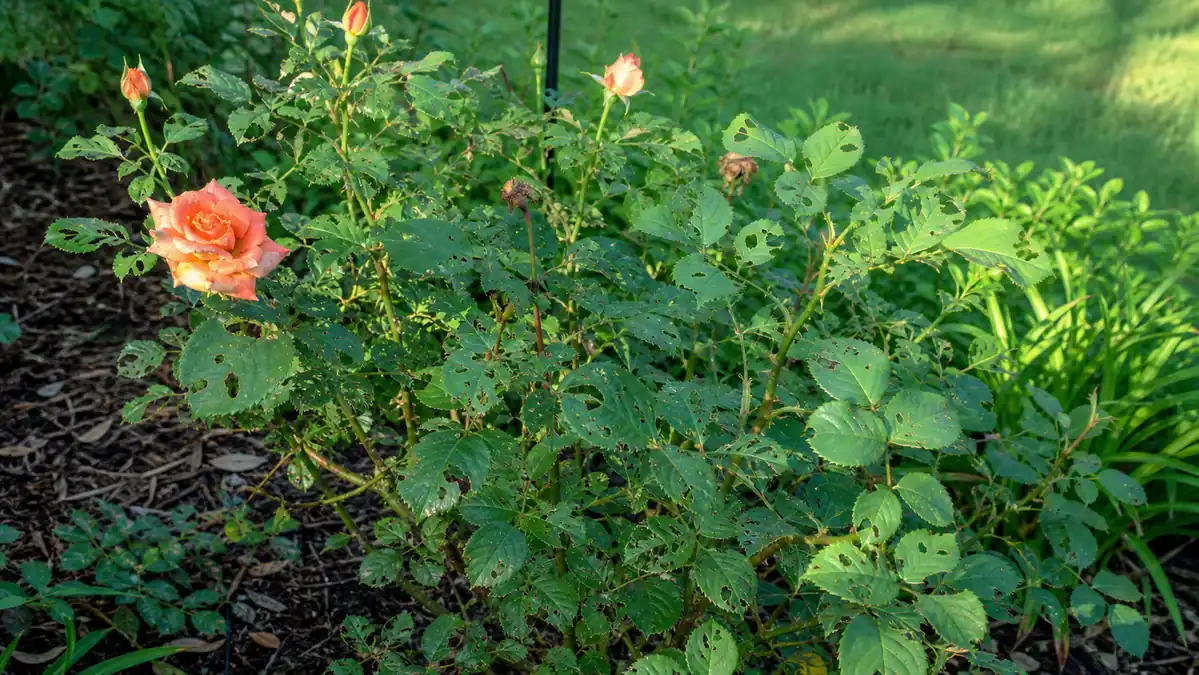
Holes in leaves of rose bush usually point to chewing or scraping pests, and the shape of the damage tells you which control makes sense. Rose sawfly larvae leave pale windowpanes and skeletonized tissue before holes break through. Leafcutter bees take clean half-moon pieces from leaf edges. Beetles, caterpillars, weevils, and slugs leave rougher chewing patterns.
The fastest mistake is treating every rose leaf hole like a caterpillar problem. Rose sawflies are not caterpillars, so a caterpillar-specific Bt spray can leave the real pest feeding. Start by turning leaves over, checking the age of the damage, and separating smooth cuts from scraped tissue before mixing any spray.
Holes in Leaves of Rose Bush: Damage-Pattern Matrix
Pale windowpanes or skeletonized leaves
Look underneath for small green rose sawfly larvae. Hand removal or insecticidal soap works best during active larval feeding.
Clean round cuts along leaf edges
Leafcutter bees are likely. They use leaf pieces for nests and rarely need control on roses.
Ragged holes through the leaf blade
Check beetles, caterpillars, weevils, and slugs. Match the pest before choosing a spray.
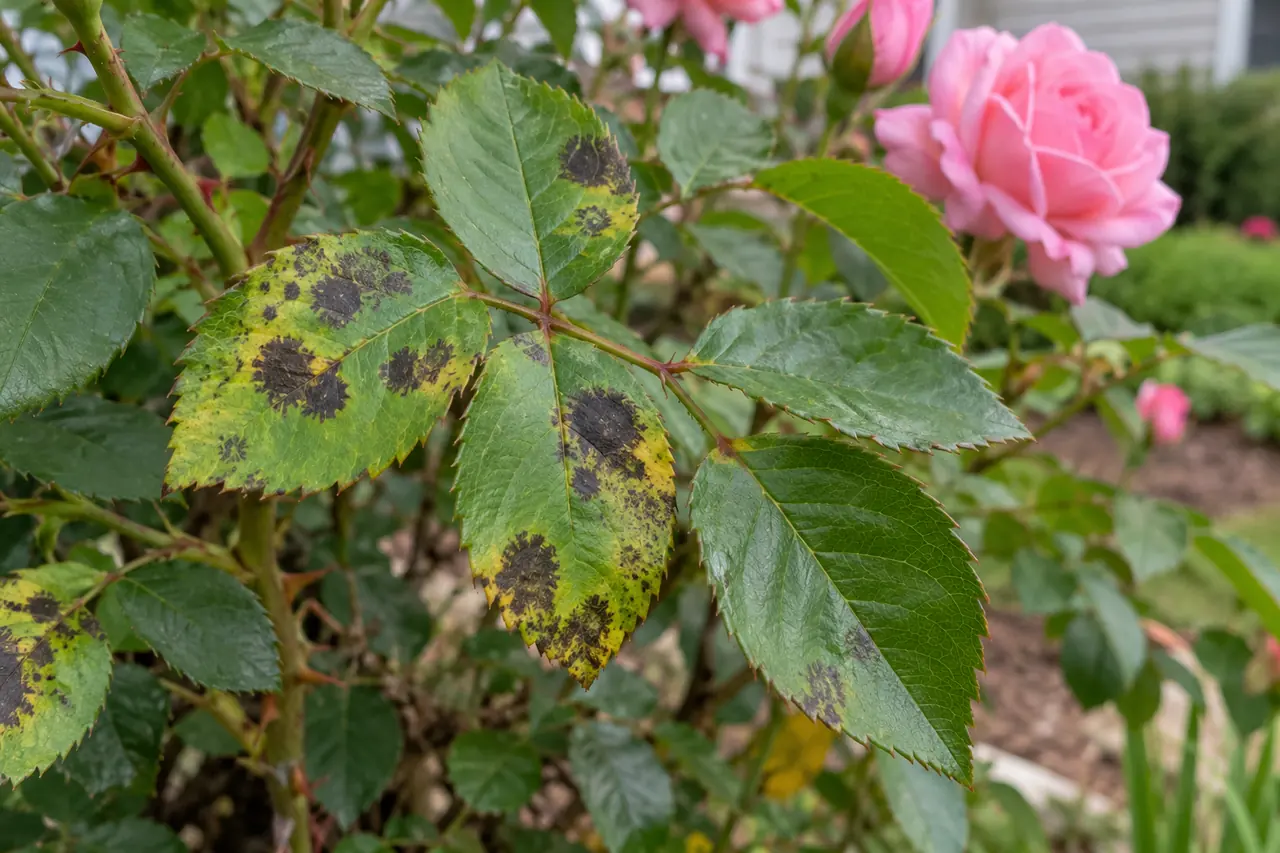
Yellowing, curling, or spots with holes
Broaden the diagnosis. Water stress, disease, and sucking insects can appear with chewing damage.
Key Takeaways
- Windowpane damage on roses usually points to rose sawfly larvae.
- Clean circular edge cuts usually point to leafcutter bees, not a harmful rose pest.
- Bt products made for caterpillars do not control rose sawfly larvae.
- Sprays work only when the pest is still present on the plant.
- Keep working green rose leaves unless they are dead, diseased, or heavily damaged.
Table of Contents
Rose Sawfly and Windowpane Damage
Rose sawfly damage often begins as pale, translucent patches before open holes appear. The larvae scrape the soft tissue from one side of the leaf, leaving the thin opposite surface behind. Those patches look like little windows. As the damaged tissue dries and tears, the leaf turns ragged or skeletonized, and the problem starts to look like ordinary chewing.
The underside check is the deciding step. Rose sawfly larvae are small, green, and easy to miss because they sit along the underside or edge of rose leaflets. They can look caterpillar-like at a glance, yet they belong to a different insect group. That difference matters because the treatment options do not line up with true caterpillar controls.
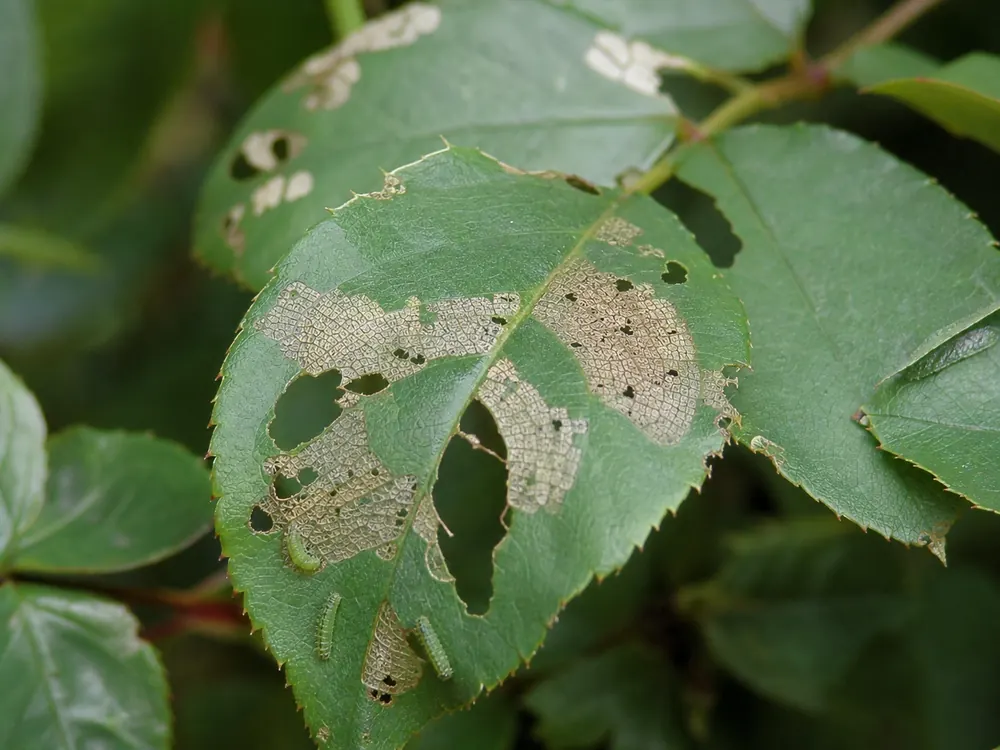
The University of Minnesota rose diagnostic tool separates holes, skeletonization, and other rose leaf damage by visible pattern. That visual split is more useful than asking only what bug is eating the rose, since old sawfly damage can remain after the larvae are gone.
Early sawfly damage often appears in spring or early summer on fresh rose growth. A few leaves may show pale scraped areas first, then more of the shrub looks tattered as feeding continues. If you inspect at midday and find nothing, check again in the morning or evening and turn over several damaged leaflets. Larvae can hide along veins and serrated edges.
Control is easiest during the young, exposed larval stage. Pinch off a few heavily infested leaflets, knock larvae into soapy water, or use a labeled insecticidal soap or horticultural oil spray that contacts the insects directly. Once the larvae stop feeding or pupate, sprays aimed at visible foliage give little payoff.
| Damage pattern | Most likely cause | Where to inspect | First action |
|---|---|---|---|
| Pale windowpane patches | Rose sawfly larvae | Undersides of leaflets | Remove larvae or spray only when larvae are present |
| Skeletonized leaflets | Older sawfly feeding or beetle feeding | Undersides, leaf edges, nearby buds | Look for active insects before treating |
| Smooth half-moon edge cuts | Leafcutter bee | Leaf margins | Leave it alone unless damage is extreme |
| Ragged holes and notches | Beetles, weevils, caterpillars, slugs | Leaves, soil surface, night inspection | Identify the pest, then choose control |
Leafcutter Bee and Clean Circular Cuts
Leafcutter bee damage looks almost too neat. The cuts are smooth, round, or half-moon shaped, usually taken from the edge of a rose leaflet. The leaf remains green and healthy around the missing piece. There is no scraping, slime, frass, or ragged chewing edge.
That clean edge is a useful stop sign. Leafcutter bees are solitary pollinators that use leaf pieces to line nesting cells. They are not eating the rose leaf the way beetles or larvae do. A rose bush can lose many small circles and still keep enough leaf area to grow normally.
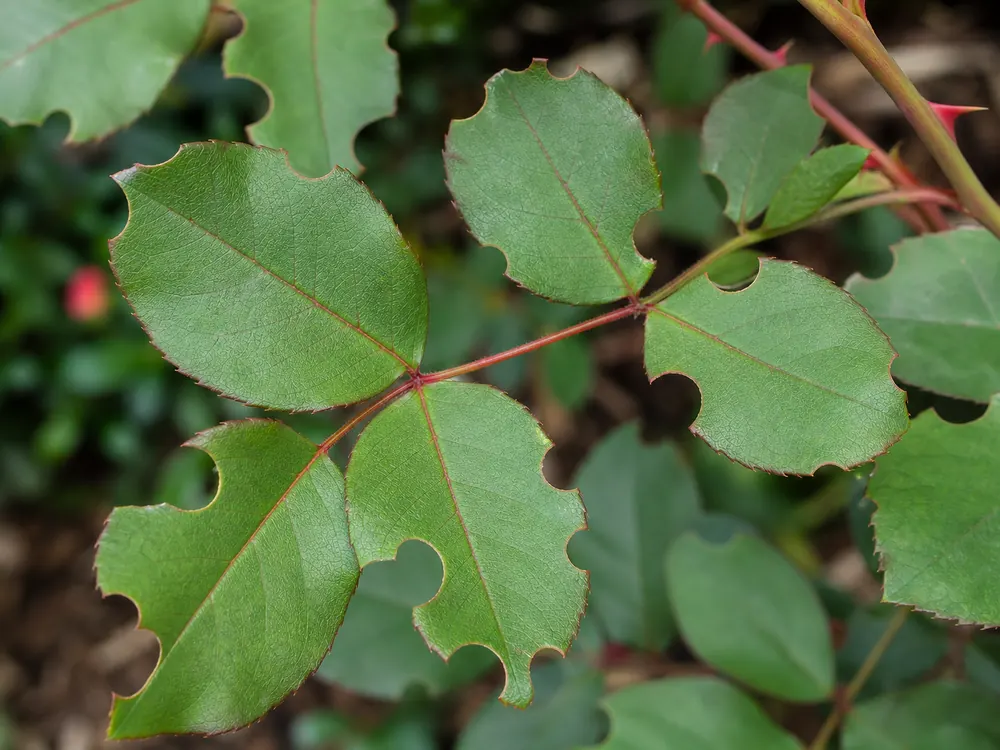
Round holes inside the middle of a leaf are a different clue from round bites along the edge. Edge circles point toward leafcutter bees. Holes through the blade with torn margins point toward chewing insects or older scraped damage. When the damage is mostly cosmetic, protecting pollinators matters more than chasing a perfect leaf.
Do not spray leafcutter bee damage just because the pattern is visible. Insecticides can harm bees and other beneficial insects that visit roses and nearby flowers. If a small newly planted rose loses too much leaf area, a temporary physical barrier may protect growth until the plant is stronger. On established roses, the best response is usually tolerance.
Beetles, Weevils, Caterpillars, and Slugs
Ragged holes need a wider pest search. Japanese beetles can skeletonize leaves between veins and often feed openly during the day. Weevils may leave edge notches and feed at night. Caterpillars can chew larger irregular holes and leave droppings nearby. Slugs often feed in damp, shaded conditions and may leave slime trails.
Japanese beetle feeding can become obvious quickly because adults group on foliage and flowers. A Japanese beetle management resource describes adult feeding on flowers and leaves, including skeletonized foliage. Hand-picking early in the day can reduce feeding on small rose plantings before the beetles become active and fly readily.
Weevil and slug checks work better after dark. Take a flashlight and inspect leaf edges, stems, mulch, and the soil surface. If damage appears overnight and no pest is visible during the day, a night inspection can save you from spraying the wrong target. Slug damage is more likely near dense mulch, damp leaf litter, and low foliage that touches the ground.
Caterpillars deserve a separate confirmation because they respond to different products than sawfly larvae. Look for true caterpillars, frass, rolled leaves, or silk. If the leaf damage is windowpane-like and the larvae are small green sawflies on the underside, do not treat the situation as a caterpillar problem.
Spotted or discolored rose leaves can confuse the diagnosis. Disease spots and insect chewing can appear on the same plant, especially after rainy weather. If the dominant symptom changes from open holes to lesions, halos, or blotches, the broader brown spots on plant leaves diagnosis helps separate disease tissue from missing leaf tissue.
Why Bt Does Not Control Rose Sawfly
Bt is a common wrong turn for holes in rose leaves because rose sawfly larvae look like small caterpillars. Many garden Bt products use Bacillus thuringiensis kurstaki, which targets caterpillars in the moth and butterfly group. Rose sawfly larvae are not in that group, so the product can be applied correctly and still fail.
Rose slug sawflies are sawfly larvae, and a rose slug sawfly resource notes that their caterpillar-like appearance causes control mistakes. That distinction is the reason identification comes before treatment. A product label that says it controls caterpillars does not automatically control every green larva on a rose.
This does not make Bt useless in the garden. It means the pest must match the label. If true caterpillars are chewing the rose, a labeled Bt product may fit. If sawfly larvae are scraping windowpanes, choose hand removal, a forceful water spray, insecticidal soap, horticultural oil, or another product labeled for sawflies or rose slugs.
Product timing also matters. Contact sprays need contact. If old holes remain after the larvae are gone, spraying the leaves treats a symptom with no pest on it. New damage should slow within several days after active larvae are removed. Old holes will stay visible until the leaf drops or the plant is pruned later for normal shape.
Organic and Conventional Control Options
Start with the lowest-disruption control that matches the pest. Hand-picking works for Japanese beetles, visible caterpillars, and sawfly larvae on small shrubs. A strong water spray can dislodge some soft-bodied pests and exposed larvae. Insecticidal soap and horticultural oil can help when the spray reaches the insects directly and the rose is not heat-stressed.
Homemade dish soap sprays deserve caution. Household detergents are made for dishes, not rose leaves, and can burn foliage. Iowa State’s dish soap and insecticidal soap guidance separates household dish soap from products formulated and labeled for plant pest control. With insecticidal soap, follow the label, test a small section first, and avoid spraying during heat or direct sun.
Conventional insecticides should be a last resort for active, confirmed pest pressure. Roses attract bees and other beneficial insects, and broad sprays can make the garden less balanced. Apply any pesticide only according to the label, avoid open blooms, and target the pest stage that is actually feeding. The site’s integrated pest management approach fits rose leaf holes well because it starts with identification, monitoring, and targeted action.
Natural controls work better as a layered plan, not as one magic spray. Clean up damp leaf litter that shelters slugs, reduce dense weeds around the base, water at soil level, and check leaves twice a week during the first flush of damage. The broader natural pest control framework explains why timing and pest behavior matter more than mixing a stronger spray.
Beneficial insects also need protection. Predatory beetles, parasitoid wasps, birds, spiders, and lacewings help suppress pest pressure around ornamental beds. Broad-spectrum sprays can reduce those helpers and leave later pests with fewer checks. When a rose has cosmetic leafcutter bee cuts or old sawfly holes with no active larvae, restraint is part of the control plan.
| Pest or pattern | Good first control | Control to avoid first | Reason |
|---|---|---|---|
| Rose sawfly larvae | Hand removal, water spray, labeled soap or oil | Bt for caterpillars | Sawflies are not caterpillars |
| Leafcutter bee cuts | Tolerance or temporary netting on young plants | Insecticide sprays | Damage is usually cosmetic and bees are beneficial |
| Japanese beetles | Morning hand-picking into soapy water | Trap placement near roses | Traps can pull more beetles into the bed |
| Slugs | Night inspection, habitat cleanup, labeled bait if needed | Daytime leaf spray with no pest visible | Slugs often feed at night near damp mulch |
Should Damaged Rose Leaves Be Removed?
Damaged rose leaves should be removed only when they are mostly dead, diseased, badly skeletonized, or interfering with airflow near the base. A rose leaf with a few holes is still a working leaf. It can photosynthesize, shade canes, and help the plant build energy for more growth.
Remove leaves that are yellowing heavily, drying out, or covered with disease spots. Pick up fallen leaves under the shrub, especially when leaf spots or black spot are also present. If the damage is clean leafcutter bee cuts, leave the foliage unless the plant is very small and losing too much total area.
Do not strip a rose bush bare to make it look tidy. Heavy leaf removal after pest damage can slow recovery more than the pest itself. Keep as much green canopy as you can, then prune for normal rose structure at the right seasonal timing. If pruning timing is the larger question, the seasonal pruning guide gives the timing context without turning pest cleanup into hard pruning.
Yellowing with holes needs a broader check. Sawfly feeding can make damaged leaf tissue yellow and dry, and whole-plant yellowing often points to water, roots, or disease. If an overwatered rose is involved, the leaves may yellow, soften, drop, or show poor new growth in soil that stays wet below the surface. The general yellowing leaves diagnosis is more useful when color change becomes the main signal.
Curling also changes the diagnosis. Aphids and other sucking insects can curl tender rose growth with few or no large holes. Heat, herbicide drift, or water stress can distort new leaves at the same time chewing pests are present. The broader plant leaves curling guide helps when rose leaves are distorted more than chewed.
Conclusion
Holes in leaves of rose bush become manageable when the damage pattern leads the response. Windowpanes and skeletonized leaflets point first to rose sawfly larvae. Clean circular edge cuts point to leafcutter bees. Ragged chewing needs a wider search for beetles, caterpillars, weevils, or slugs.
Turn leaves over before spraying, keep green working foliage when damage is light, and avoid Bt when the pest is rose sawfly. A rose recovers best when the active pest is removed, the leaf area is protected, and broad sprays are saved for confirmed pressure that cannot be handled with cleaner controls.
Frequently Asked Questions
What do you mix Dawn with to spray rose bushes for bugs?
Do not treat Dawn as a standard rose spray. Household dish soaps can injure rose foliage, especially in heat or sun. Use a labeled insecticidal soap if soap is the right control, follow the label rate, and test a small area before spraying the whole plant.
How do you get rid of bugs eating rose leaves?
Identify the damage pattern first, then choose the control. Sawfly larvae need underside inspection and direct contact control. Leafcutter bee cuts usually need no control. Beetles can often be hand-picked early in the morning. Slugs need damp habitat cleanup and night inspection.
What insect eats round holes in rose leaves?
Clean round or half-moon cuts along rose leaf edges usually come from leafcutter bees. Ragged round holes through the middle of the leaf can come from beetles, caterpillars, older sawfly damage, or slugs, so inspect the plant before spraying.
What does an overwatered rose look like?
An overwatered rose may show yellowing leaves, soft growth, leaf drop, poor new shoots, and soil that stays wet below the surface. Overwatering does not usually create clean holes by itself; stressed leaves can make pest and disease damage look worse.