




Leaf curl in lemons usually points to a stress pattern, not one single disease, and the fastest clue is where the curl appears first. Older leaves that roll upward after heat often point toward water loss. Tender new leaves that twist, pucker, or harden send the check toward aphids, mites, thrips, citrus leafminer, salts, or nutrient access. Read the newest growth, soil moisture, and recent weather before pruning or spraying.
Lemon trees react quickly because citrus leaves hold water tightly, roots dislike low oxygen, and tender flush growth attracts pests. A potted Meyer lemon on a hot patio can curl from a dry root ball in one afternoon. The same tree can curl downward after sitting wet for days. The fix changes when the root zone changes.
Fast Lemon Leaf Curl Check
Older leaves curl upward
Check dry roots, reflected heat, wind, and recent underwatering first.
Leaves curl downward and yellow
Check wet soil, blocked drainage, root stress, and cold soil.
New flush twists or puckers
Inspect aphids, mites, thrips, citrus leafminer trails, and tender shoot tips.
Edges burn or tips crisp
Look for salt buildup, fertilizer concentration, dry wind, or water quality problems.
Key Takeaways
- Check soil moisture before adding fertilizer or spray.
- Inspect new flush for pests and leafminer trails.
- Flush potted lemons when salts crust the surface.
- Avoid Epsom salt unless magnesium shortage is likely.
- Judge recovery by clean new growth, not old leaves.
Table of Contents
Leaf Curl In Lemons Starts With Direction And New Growth
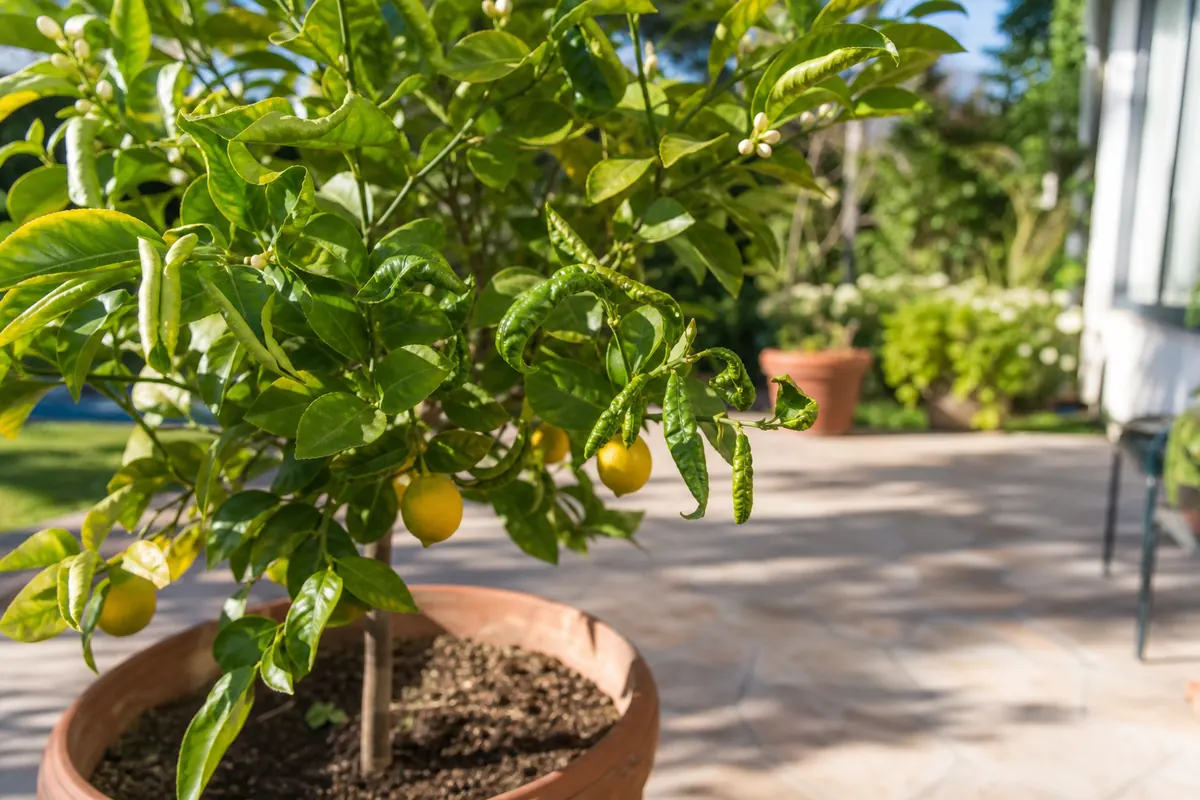
Lemon leaves curl in different ways for different reasons. Upward roll often appears when the tree is losing water faster than roots can replace it. Downward curl with softness or yellowing points more toward wet roots, cold roots, or low oxygen. Twisted new growth points to pests, salt stress, or nutrient access because the leaf was damaged as it formed.
Leaf age is the first divider. Older leaves record heat, drought, wind, salt, or earlier water stress. New leaves show the current condition of the growing point. If old leaves are curled and new leaves are broad, green, and flexible, the tree is already improving. If new leaves keep emerging curled, tiny, or scarred, the problem is still active.
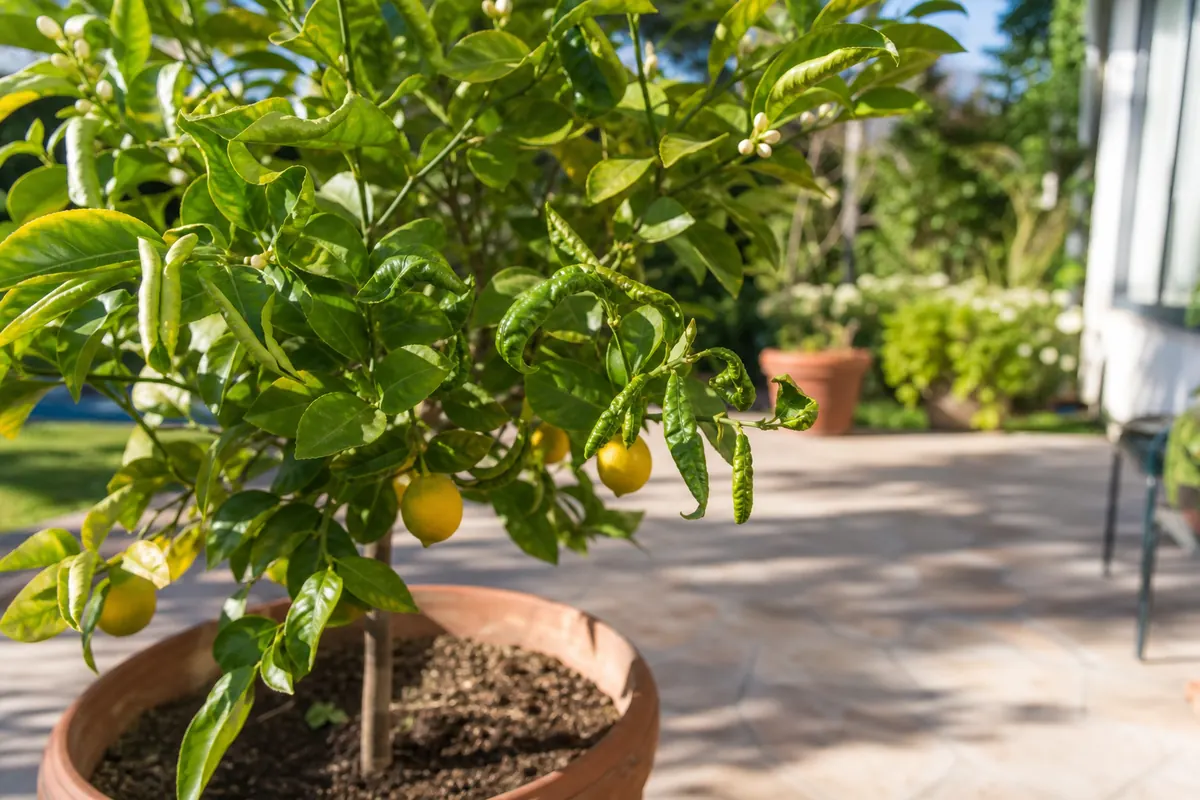
The broader pattern overlaps with plant leaves curling. Lemons need a citrus-specific read because evergreen leaves remain on the tree through older stress events. A curled leaf may be weeks old. The fresh flush tells the more current story.
| Curl pattern | Likely lane | First check | First action |
|---|---|---|---|
| Older leaves roll upward | Dry roots, heat, wind, transplant stress | Soil moisture at root depth | Water deeply and reduce heat stress |
| Leaves curl downward and yellow | Wet roots, cold soil, drainage trouble | Pot weight, drainage holes, root-zone smell | Let oxygen return before watering again |
| New leaves twist or pucker | Aphids, mites, thrips, leafminer, salts | Undersides and shoot tips | Identify the cause before spraying |
| Edges curl with brown tips | Salts, fertilizer concentration, dry wind | White crust, recent feeding, water quality | Flush the pot and pause fertilizer |
Underwatering, Overwatering, Heat, And Cold Curl Lemon Leaves Differently
Dry-root curl usually looks tight, leathery, and upward. A container lemon may feel light, pull slightly from the pot edge, or dry unevenly because the root ball has become hydrophobic. Water can run down the side of the pot and out the drainage holes as the center remains dry.
Deep watering solves that only when water actually enters the root ball. Water slowly until the mix accepts moisture, pause, then water again. A dry container can need two or three passes. The normal schedule for watering citrus trees should still follow pot size, season, temperature, and drainage, not the top inch alone.
Check moisture below the surface before deciding. A wooden skewer, narrow trowel, or finger at the outer root zone can show whether the center is dry, evenly moist, or sour-wet. The surface may dry in one hot afternoon while the lower half of a deep pot stays wet for days.
Overwatered lemon leaves often curl downward, yellow, droop, or feel limp as the soil stays wet. The pot may feel heavy for days. Roots need oxygen as much as moisture, and citrus roots decline quickly in a cold, saturated mix. The general signs of overwatering plants apply strongly to potted lemons because a container can trap water below a dry-looking surface.
Heat and wind create a different timing pattern. Leaves may curl during hot afternoon sun, then relax overnight. Reflected heat from concrete, walls, glass doors, or a dark pot can push a patio lemon into water stress even when the soil is damp. Morning sun with afternoon protection often helps a stressed container tree more than extra fertilizer.
Cold also curls citrus leaves. Lemon leaves may cup, droop, or look dull after chilly nights, especially when wet soil stays cold. Move potted lemons out of cold wind, avoid watering late before a cold night, and wait for new growth before judging damage. Cold-stressed leaves can take several days to reveal whether they will stay green or drop.
Transitions matter for indoor and patio lemons. A tree moved from indoor light to direct outdoor sun can curl before the leaves thicken and adjust. A tree moved indoors for winter can curl from lower light, dry room air, and a root ball that stays damp longer. Change one condition at a time when possible.
Aphids, Mites, Thrips, And Citrus Leafminer Distort Tender Flush
Pest curl usually appears on the newest growth first. Tender lemon leaves are thin, soft, and rich in sap, so aphids cluster at shoot tips and undersides. Their feeding can curl leaves around the colony and leave sticky honeydew. Ant activity often marks the problem before the insects are obvious.
Aphids are easier to manage early. A strong water spray, hand removal on small trees, and conservation of lady beetles, lacewings, and other predators can reduce colonies before the leaves harden. When aphids are the cause, the broader organic aphid control approach fits better than a broad spray that harms beneficial insects first.
Citrus leafminer creates curled, distorted new leaves with pale winding trails inside the leaf tissue. The damage looks like silvery scribbles or tunnels. Once a leaf is mined and curled, it will not become normal again. The useful target is the next flush, because citrus leafminer tunnels are tied to young tender growth, not mature hardened leaves.
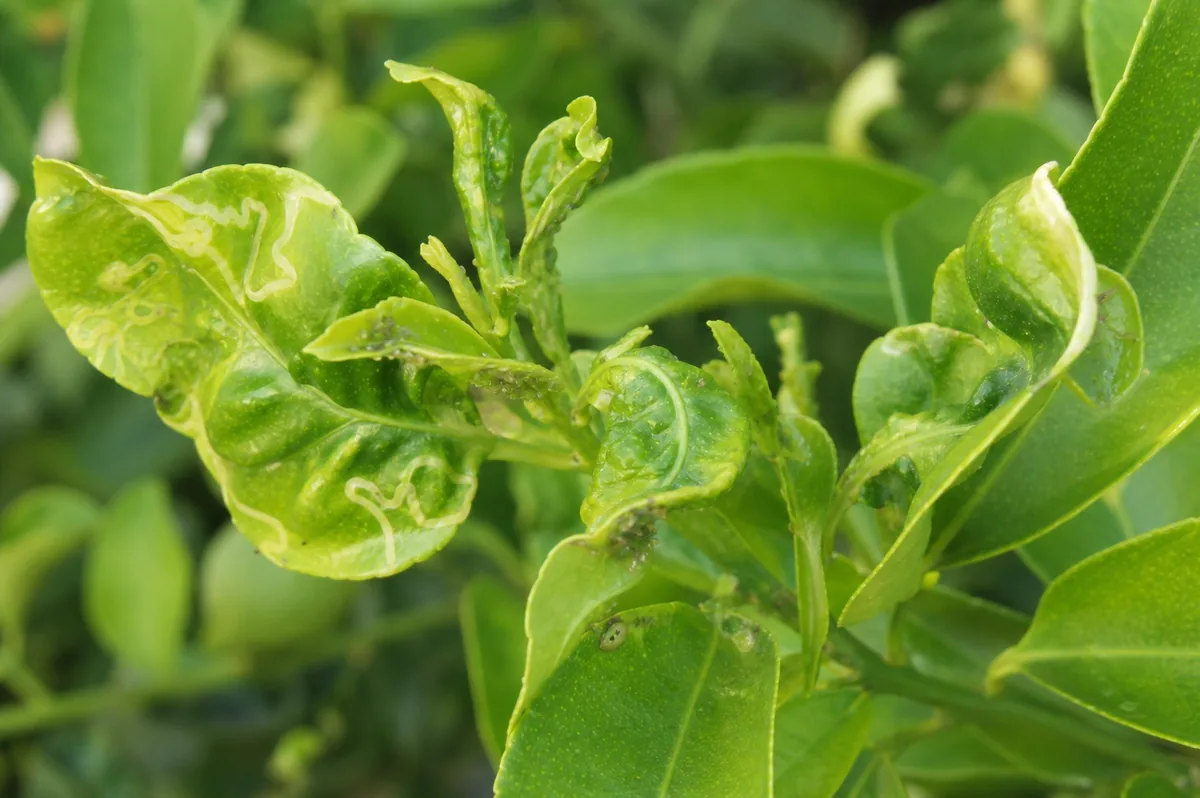
Thrips and mites can also distort new leaves. Thrips scrape tender tissue and may leave silvery scarring, rough texture, or curled margins. Mites often cause fine stippling, dull color, and a dry-looking leaf surface. The citrus thrips damage pattern is easiest to recognize on tender leaves, young fruit, and flush growth, where scarring forms before tissues expand.
Use a hand lens when new leaves keep curling. Check the underside, the midrib, the shoot tip, and the soft folded leaf edges. Spraying without identification can miss leafminer, flare mites, or remove predators that were holding aphids down. Pest damage is often uneven: one branch tip looks twisted as older leaves nearby remain normal.
Flush timing explains many confusing pest cases. Citrus leafminer, aphids, and thrips concentrate on tender growth, so damage often appears in waves. A tree can look normal for weeks, push a soft flush after feeding or warm weather, then show curled new leaves on the newest tips only. Protecting or monitoring the next flush is more useful than trying to flatten the damaged leaves.
Nutrient And Salt Problems In Potted Lemons Need Root-Zone Checks
Potted lemons can curl from salt buildup long before the plant looks dramatically sick. Fertilizer salts, hard water, and repeated shallow watering can concentrate near the root zone. The leaf may show curled edges, brown tips, dull color, or marginal burn. A white crust on the pot rim or soil surface is a useful warning sign.
Flush the pot when salts are likely and drainage is good. Water slowly with enough volume to move through the mix and out the bottom, then let the pot drain fully. Do this only in weather warm enough for roots to recover. A cold wet pot after flushing can create a second problem.
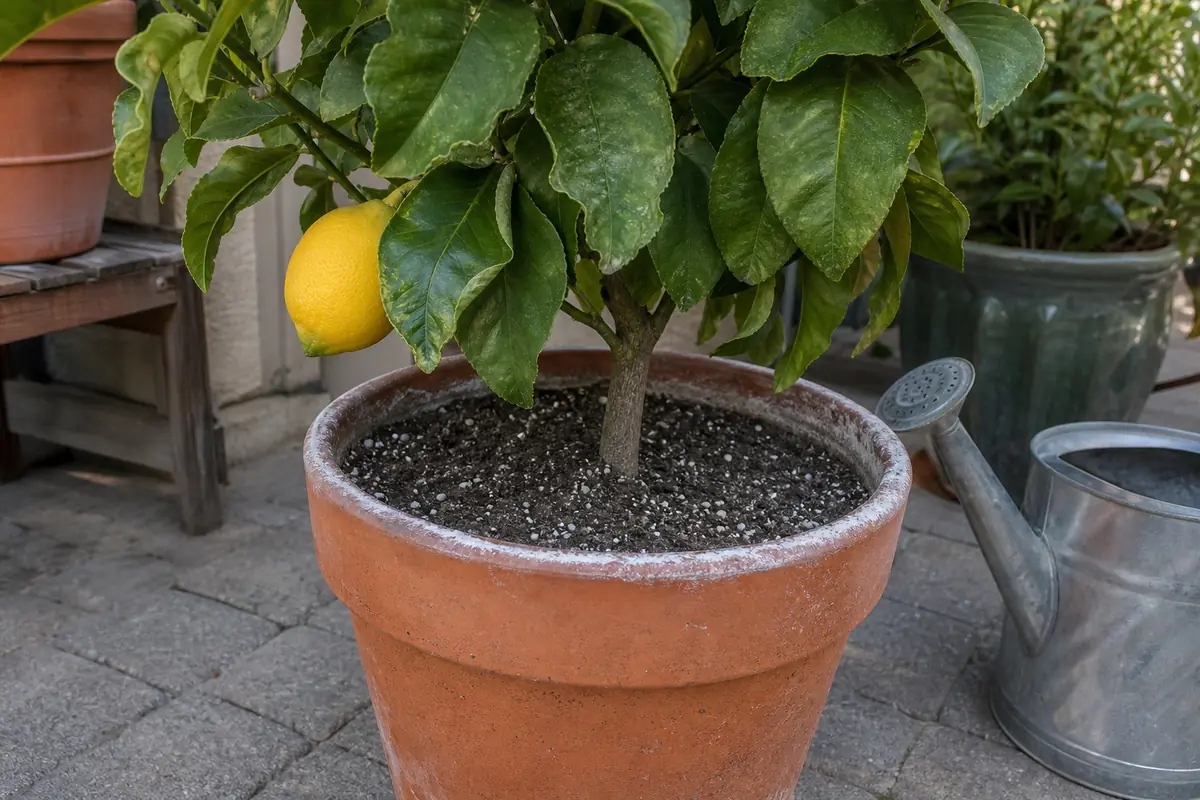
Fertilizer timing matters. Citrus needs regular nutrients during active growth. Feeding a dry, wilted, or salt-stressed tree can intensify burn. Water first, correct drainage, then resume a measured citrus fertilizer program once new growth is active. Soil pH and nutrient availability are linked; soil conditions for citrus trees shape how well roots can use iron, magnesium, nitrogen, and other nutrients.
Epsom salt deserves caution. Magnesium shortage can cause yellowing patterns on older citrus leaves. Leaf curl by itself is not a magnesium diagnosis. Adding magnesium when the real problem is dry roots, wet roots, salt buildup, or pests wastes time and can add more dissolved salts to a container. Treat Epsom salt as a specific correction, not a general lemon leaf curl fix.
Pot size can create a hidden cycle. A small pot dries fast, then receives frequent quick watering, then accumulates salts because water never flushes the full profile. A pot that is too large can stay wet around a modest root system. Both situations can curl leaves through opposite root-zone stresses.
Repotting is worth considering when water runs straight through, roots circle tightly at the pot wall, or salt crust returns soon after flushing. Move up one pot size with a fast-draining citrus mix. A sudden jump into a much larger pot can keep the lower mix wet and restart downward curl.
Disease And Serious Warning Signs Need Faster Separation
Most lemon leaf curl comes from water stress, weather, pests, or root-zone chemistry. Disease becomes more likely when curling appears with dieback, sticky lesions, oozing bark, blackened stems, root rot smell, sudden leaf drop, or a whole branch declining as the rest of the tree looks different.
Yellowing plus curl needs pattern reading. Lower yellow leaves on a wet tree point toward root stress. Yellow new leaves with green veins can point toward nutrient access. Curl with sticky honeydew points toward sap-sucking insects. A separate yellowing leaves diagnosis can help when color pattern matters more than curl direction.
Wilting changes the urgency. A curled lemon leaf that also hangs limp in wet soil needs a root and stem check. Root rot, girdling roots, trunk injury, or severe drought can interrupt water movement. Curl alone can be temporary. Persistent wilt means water is not moving through the tree normally.
Some citrus pest pages also matter because pests can carry disease or weaken the tree before disease signs are clear. The general citrus insect and related pest descriptions from Clemson Extension show why scale insects, aphids, mites, and other pests should be separated by visible sign before treatment.
What To Treat And What To Leave Alone
Start with the safest correction that matches the evidence. Dry soil gets a deep watering and heat relief. Wet soil gets drainage, air, and a pause in watering. Pests get identification before product choice. Salt buildup gets flushing and fertilizer restraint. This order prevents a common failure: spraying a water-stressed lemon that needed root correction first.
Leave old curled leaves alone when they are still green and feeding the tree. Citrus holds leaves for a long time, and old stress marks may remain visible after the cause has passed. Removing too many leaves reduces stored energy and exposes young stems or fruit to sun.
Remove only leaves that are dead, heavily pest-loaded, or clearly diseased. Prune dead twigs after the tree shows where live wood remains. On a small container lemon, heavy pruning after leaf curl can remove the exact canopy the tree needs for recovery.
Spray timing matters for citrus. Oils and soaps can injure leaves in heat, drought, or direct sun. Apply only labeled products, test a small area, and avoid spraying flowers when pollinators are active. Leafminer damage inside a leaf is already protected from surface sprays, so the next flush matters more than the mined leaf.
| Evidence | Do first | Delay |
|---|---|---|
| Light pot, upward curl, hot patio | Rewet the root ball slowly | Fertilizer until leaves recover |
| Heavy pot, yellow drooping leaves | Improve drainage and pause watering | Repotting during cold wet stress |
| Curled tender tips with insects | Remove or reduce the identified pest | Broad sprays during bloom |
| Brown tips with white crust | Flush salts if drainage is good | Epsom salt as a blind fix |
Will Curled Lemon Leaves Uncurl?
Curled lemon leaves can relax when the curl came from temporary heat, dry wind, or short-term water stress. They may look better the next morning or after the root ball is evenly moist. Leaves that were physically distorted during expansion usually stay distorted.
Leafminer trails, thrips scarring, mite damage, and aphid-distorted new growth do not disappear from the old leaf. Recovery appears as clean new flush: larger leaves, flexible petioles, smoother margins, and normal green color. That is the growth to watch.
Give a corrected lemon tree time. Water and heat stress may show improvement within days. Salt flushing or drainage correction can take one or two new growth cycles. Pest-damaged flush may look poor until the next flush opens under lower pressure.
Do not keep changing treatments every few days. Citrus responds slowly compared with vegetables. A rushed sequence of fertilizer, Epsom salt, oil, soap, and pruning can create new damage that hides the original cause.
Track one branch tip and one older leaf cluster after each correction. The older leaves show whether decline is spreading. The branch tip shows whether the next flush is forming normally. When both improve, the tree is recovering even if the oldest curled leaves never flatten.
A lemon tree often looks worse in old leaves before it looks better in new leaves. The first clean flush after a correction is usually more useful than the oldest curled leaf on the branch.
Conclusion
Leaf curl in lemons becomes easier to solve when old leaves, new flush, soil moisture, and pest signs are read together. Water and heat problems usually affect older leaves first. Pest and leafminer problems usually mark the tender new growth.
Correct the root zone before adding products, protect new flush after pest pressure, and judge the tree by the next clean leaves that open glossy, flexible, and flat.
Frequently Asked Questions
How do you treat leaf curl on lemon trees?
Treat leaf curl on lemon trees by matching the cause first. Check soil moisture, drainage, recent heat or cold, new-growth pests, and salt buildup before using fertilizer or spray.
What do overwatered lemon tree leaves look like?
Overwatered lemon tree leaves often curl downward, yellow, droop, or feel soft as the pot stays heavy and damp. Roots may smell sour if the mix has stayed wet too long.
What does Epsom salt do to citrus trees?
Epsom salt supplies magnesium, which helps only when magnesium deficiency is part of the problem. It does not fix dry roots, wet roots, pests, leafminer damage, or salt-stressed containers.
Can curled leaves go back to normal?
Heat- or drought-curled lemon leaves may relax after stress improves. Leaves distorted by pests, leafminer tunnels, salt burn, or expanding-growth damage often stay curled, so clean new leaves are the recovery sign.