


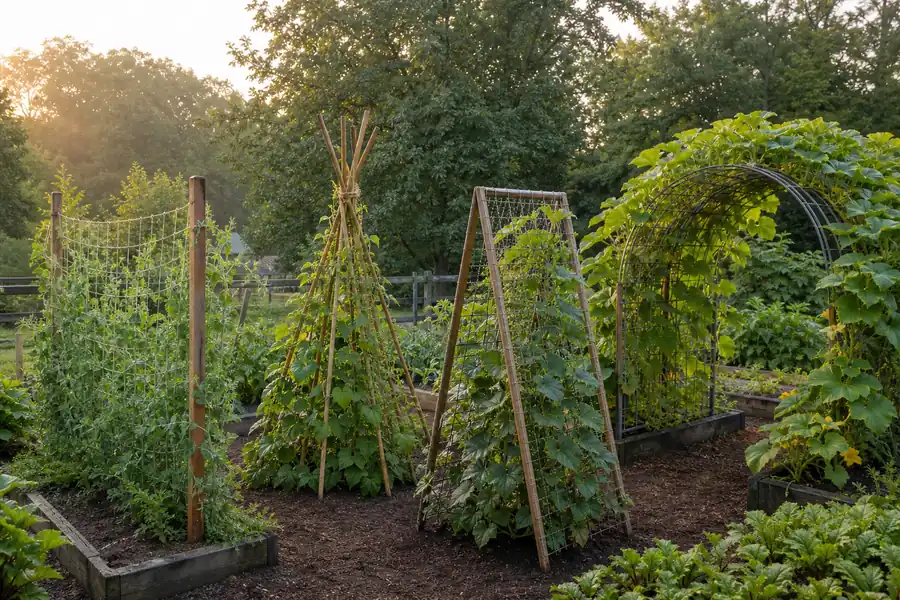
Garden trellis ideas work best when the support matches how the crop climbs, how heavy the fruit gets, and how often you need to reach through the vines. A pretty panel can still fail by July if pea tendrils cannot grab it, pole beans cannot spiral around it, or a squash vine loads one side with heavy fruit after a thunderstorm. The strongest vegetable trellis is rarely the fanciest one. It is the support that fits the plant’s grip, root zone, harvest rhythm, and mature weight before the first tendril starts searching.
Vegetable Trellis Match In 30 Seconds
Choose the trellis by grip first, then by fruit weight. Tendrils need thin wire or netting. Twining beans need poles or strings. Heavy squash and melons need rigid arches with fruit support.
| Crop | Best trellis | Avoid |
|---|---|---|
| Peas | Chicken wire, pea netting, string panel, short A-frame | Wide lattice with too few grip points |
| Pole beans | Bamboo teepee, string trellis, cattle panel, tall pole frame | Short tomato cages and loose netting |
| Cucumbers | A-frame, angled panel, 3- to 6-foot trellis | Flat ground for vining types in tight beds |
| Tomatoes | Sturdy cage, stake-and-weave row, cattle panel | Light cone cages for large indeterminate plants |
| Squash and melons | Cattle panel arch, hog panel tunnel, rigid T-post frame | String-only frames without fruit slings |
Key Takeaways
- Match each trellis to the crop’s climbing habit.
- Install supports before roots spread into the row.
- Use thin mesh for peas and stronger arches for squash.
- Avoid short cages for tall twining or vining crops.
- Check ties and fruit load after every summer storm.
Table of Contents
Garden Trellis Ideas By Crop And Climbing Style
A trellis fails in two ways: the plant cannot climb it, or the structure cannot hold what the plant becomes. Peas may reach only a few feet, and their tendrils still need many thin contact points. Pole beans can climb six feet or more and want something they can wrap around. Cucumbers grab lightly and carry fruit along a softer vine. Squash vines can climb, then suddenly ask the frame to hold a hanging fruit that feels heavier every morning.
That is why a crop-matched trellis beats a photo-gallery trellis. A vegetable row needs grip, height, airflow, harvest access, and load path. Load path means the weight travels into posts, panels, ground stakes, or an arch without twisting the frame sideways. A cattle panel arch handles that better than a decorative folding screen because the pressure moves down both sides into the soil.
Think about the garden you have right now. Which crops need to be lifted for cleaner fruit, and which ones only need a small nudge so they stop smothering the path?
If a bed is still being planned, pair trellised crops with the deeper, sunnier planting spaces. Small-space vertical gardening systems use the same height logic: tall supports usually sit on the north side of a bed so they do not shade shorter crops through the afternoon.
Peas And Beans Need Thin Grips Before They Need Beauty
Peas climb by tendrils, so the best pea trellis gives them many small things to catch. Chicken wire, pea netting, jute string, and narrow mesh work better than a wide decorative lattice. A pea tendril that touches a thin wire curls quickly; a tendril that reaches a wide board often keeps searching as the stem leans, kinks, and drags nearby plants with it.
Tall pea varieties can reach about five feet and need a trellis; shorter bush types may stand together in a row, according to University of Minnesota Extension’s home garden pea guidance. That detail matters because a short pea row does not need a permanent arch. Two stakes with netting between them can be enough if the row is cool, watered, and harvested before heat shuts the crop down.
Pole beans climb differently. The stem itself twines, so the support should be vertical, round enough to wrap, and tall enough that the vine does not pile at the top. A bamboo teepee, string trellis, cattle panel, or tall pole frame fits that habit. A flat, floppy net often sags under wet leaves and late-season pods.
Pole beans are twining vines that grow up to six feet or taller, and the support should be installed at planting time. University of Minnesota Extension makes both points in its bean growing guidance. Put the poles in first, then sow around them. Driving stakes through a young bean row after germination risks slicing roots and compacting the exact soil the seedlings need.
For a dedicated bean article, the spacing and height choices in pole bean trellis designs go deeper than this selector. The broader green bean growing rhythm still matters because support, flowering, and harvest timing all move together. Here, the working rule is simpler: beans need a tall path up, peas need many fine grip points, and both crops punish late trellis installation.
Cucumbers Need Airflow, Reach, And A Gentle Angle
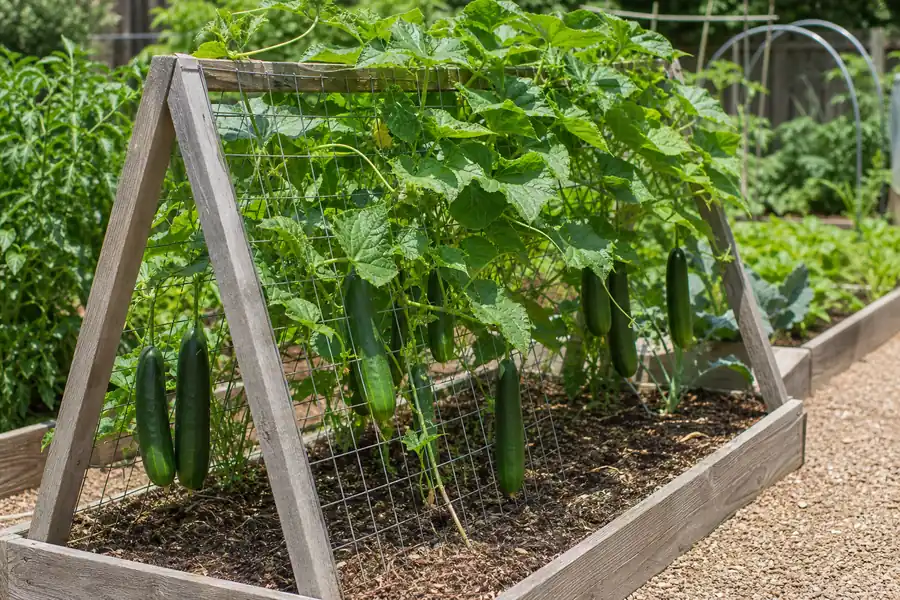
Cucumber vines grab lightly and bruise easily, so a good cucumber trellis should lift the foliage without forcing hard bends in the stem. A-frame trellises, angled cattle panels, wire panels, and sturdy netting all work when they are set before the vines run. The best shape depends on reach. A trellis is too dense or too steep when the gardener cannot see the underside of the leaves or reach the fruit without crushing stems.
Vining cucumbers can be trained to climb a three- to four-foot trellis, which lets rows sit closer together and helps fruit grow straighter, according to University of Minnesota Extension’s cucumber planting guidance. In a home garden, that height is a starting point for compact rows. Many vigorous varieties will use five or six feet when the season is warm and the soil stays evenly moist.
An A-frame often suits cucumbers better than a flat fence because the fruit hangs inside the frame where shade and airflow are more balanced. The leaves still get sun, and the cucumbers are easier to spot before they swell past picking size. The fruit should hang clean and slightly cool to the touch, away from hot mulch.
For tight beds, cucumber trellis ideas can carry the crop-specific spacing and pruning decisions. The broad trellis decision is this: use a structure with enough openings for harvest hands, enough angle to shed weight, and enough airflow to dry leaves after irrigation or rain.
Tomatoes Need Containment Before The First Heavy Truss
Tomatoes do not climb like peas or beans. They lean, sprawl, and load side branches with fruit. That makes the best tomato support a containment system more than a true climbing trellis. Cages, stake-and-weave rows, vertical string systems, and cattle panels all work when the structure holds stems without strangling them.
Bush-type tomatoes usually stay around 24 to 30 inches and do not need pruning, staking, or trellising. Vining tomatoes need support such as cages, stakes, or trellises and may grow three to five feet or more, according to University of Minnesota Extension’s tomato growth-habit guidance. That difference should decide the support before the seedling leaves the pot.
Small cone cages look tidy in May and often look embarrassed by August. Large indeterminate tomatoes need a wider base, stronger wire, and a way to hold side branches as fruit sets. A cattle panel behind the row can work well when the main stems are tied loosely with soft cloth or garden twine. The tie should hold the stem near the panel without biting into it as the stem thickens.
Tomato supports also change airflow. Dense cages keep fruit accessible and can trap leaves in the center when suckers are never thinned. A panel or stake-and-weave row leaves the plant flatter and easier to inspect. The tradeoff is labor. Panels and strings need regular tying; cages need less attention and require more strength upfront.
Squash And Melons Need Weight-Bearing Arches
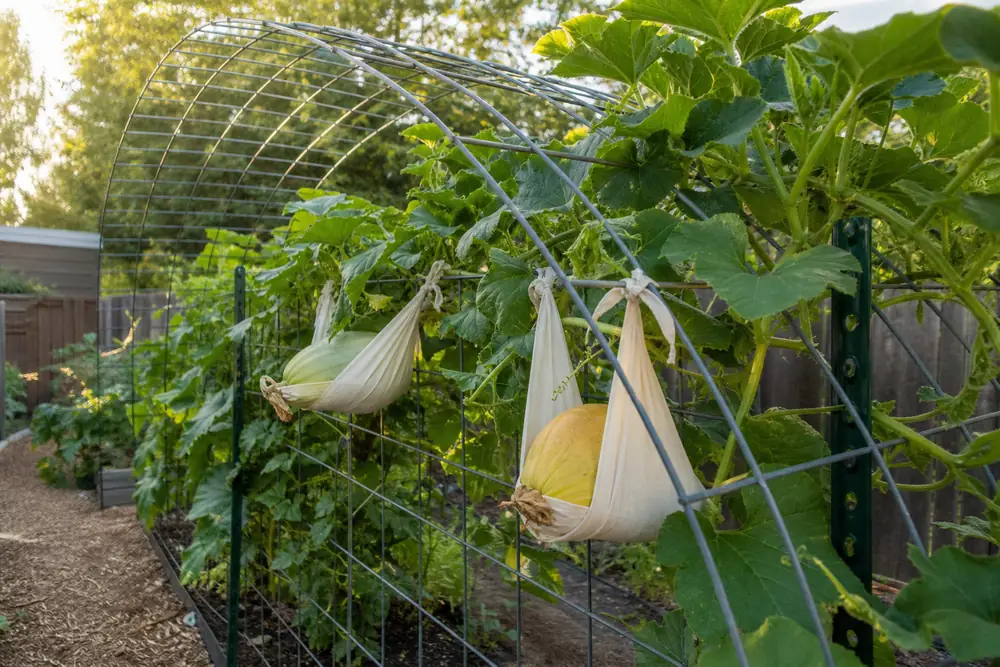
Squash and melons expose weak trellis choices quickly. The vine may climb with little help, then the fruit becomes the real load. A lightweight string frame can hold leaves and still fail when a butternut squash hangs six inches from the panel after rain. The stronger choice is usually a cattle panel arch, hog panel tunnel, or rigid frame tied to T-posts.
Vine crops such as cucumbers, squash, melons, and pumpkins share warm-season growth habits, and University of Minnesota Extension groups cucumbers with those vine crops in its summer vine crop guidance. The support decision changes with fruit weight. Cucumbers need lift. Melons need lift plus a sling. Winter squash needs a frame that can take both vine pull and hanging fruit.
Cattle panels work because the wire is rigid, the openings are large enough for tying and harvesting, and the arch shape sends weight down both sides. T-posts matter. A panel pushed into soil without firm posts can spring back, twist in wind, or lean after the first heavy fruit forms on one side.
Use slings for melons, larger squash, and any fruit that makes the vine bow sharply. Old T-shirts, soft net bags, or strips of pantyhose can cradle fruit without cutting the skin. Tie the sling to the trellis, not to the vine. The vine should guide the fruit; the frame should carry the weight.
Cheap Trellis Ideas That Still Hold Under Load
The cheapest trellis is the one that survives the crop it is assigned to. Reused branches, bamboo, baling twine, concrete reinforcing mesh, scrap lumber, salvaged fencing, and livestock panels can all work. The weak point is usually the joint, the anchor, or the mismatch between crop and support.
| Budget material | Best use | Failure signal | Fast fix |
|---|---|---|---|
| Jute or cotton string | Peas, beans, light cucumber vines | String stretches after rain | Add a top rail and re-tension weekly |
| Bamboo poles | Bean teepees, small cucumber frames | Legs spread or sink unevenly | Cross-brace near the base |
| Chicken wire | Peas and light vining crops | Panel bows between stakes | Add a center stake every 3 to 4 feet |
| Concrete reinforcing mesh | Tomatoes, cucumbers, beans | Rusty cut ends snag stems | Fold or cap exposed wire |
| Cattle panel | Squash, melons, tomatoes, beans | Arch shifts after wind | Fasten to T-posts on both sides |
Cheap trellis ideas work best when they are built in layers: ground anchor, upright support, cross-brace, climbing surface, and harvest access. Bamboo teepees can twist without a lower cross-brace. String trellises can sag without a top rail. Wire panels can bow in the middle when only two stakes hold the row. Each small failure bends stems before the gardener notices the frame.
The cheapest substitute for a trellis is often an existing fence that receives enough sun and can be reached from at least one side. Chain link works well for beans and cucumbers. A privacy fence may cast too much shade, and wood slats may make harvest awkward. Do not train edible vines onto treated or painted surfaces that shed flakes into the bed.
Trellis Placement And Maintenance Prevent Midseason Collapse
A trellis should be placed for roots, sun, wind, and hands. Roots come first because posts are easiest to drive before planting. Sun comes next because tall supports cast shade. Wind decides whether a flat panel needs bracing. Hands decide whether harvest will be calm or damaging.
Install permanent or heavy supports before sowing. Install lighter netting before seedlings begin to reach. Once stems start wrapping, every correction becomes more stressful because the plant has already committed to that direction. Pulling a bean vine off one pole and moving it to another can snap tender growth even when the stem looks flexible.
Check trellises after the first strong rain, after the first week of fast vine growth, and when fruit begins to size up. Loose knots, leaning posts, and rubbing stems are easier to fix early. By the time a mature cucumber row smells green and humid after watering, the vine mass may be too dense for clean repairs.
Harvest access is part of maintenance. A trellis that looks full and beautiful can hide overgrown cucumbers, beans, or peas in the back. Leave enough room to reach both sides when possible. If only one side is reachable, angle the trellis toward the path and plant in a single row so fruit does not disappear inside the foliage.
Conclusion
Start with the crop that will carry the most weight, then work backward to the lightest climbers. If squash or melons are in the plan, build the rigid arch first. If beans and peas are the only climbers, a simpler pole, string, or netting system can do the job with less cost and less storage.
A good trellis disappears into the season because the plants use it cleanly. Tendrils hold, stems rise, fruit hangs where you can see it, and the row stays open enough that a morning harvest feels like lifting leaves instead of untangling a knot.
Frequently Asked Questions
What are some creative trellis ideas for vegetables?
Cattle panel arches, bamboo teepees, A-frame cucumber supports, string panels, and repurposed fence sections all work when they match the crop. The creative part should keep the load path visible. Heavy crops need rigid posts, and light tendril crops need many thin grip points.
What is the cheapest way to make a trellis?
The cheapest reliable trellis is usually string or netting tied between two firm posts for peas, beans, or light cucumbers. For heavy squash and melons, a reused cattle panel costs more upfront and often becomes cheaper over several seasons because it does not need rebuilding.
What can I use instead of a trellis?
A sunny chain-link fence, livestock panel, pruned branch frame, tomato cage, or teepee of poles can replace a bought trellis. The substitute must be clean, stable, reachable, and safe for edible crops. Avoid painted scraps that flake, weak decorative screens, and surfaces that trap vines where you cannot harvest.
Which trellis should I use for each vegetable?
Use netting or chicken wire for peas, poles or strings for beans, an A-frame or angled panel for cucumbers, a strong cage or panel for tomatoes, and a cattle panel arch for squash or melons. The crop’s climbing habit should decide the support before style does.