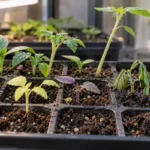
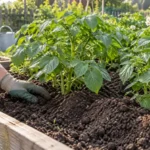
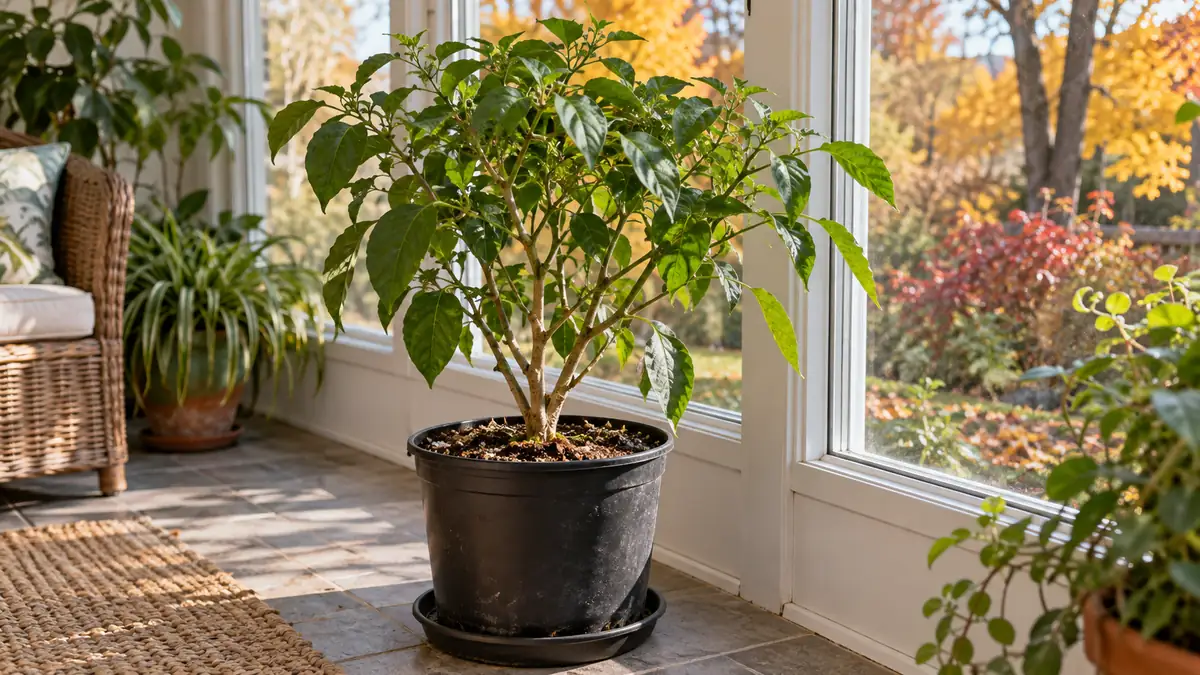
How to overwinter pepper plants depends on whether you want to keep an established plant alive until spring or keep it growing indoors through winter. Bring a healthy plant into protection before frost, inspect it for pests, and match its light and watering to that goal. A pepper kept cool with little new growth needs different care from a leafy plant growing under lights.
The mistake is treating both plants as if they were still on a sunny summer patio. After an indoor move, a pot may stay damp much longer, flowers may stop forming, and some leaves may fall. Those changes call for checks before more water or fertilizer. Start with a plant worth saving and a space you can actually maintain; heavy pruning cannot compensate for freezing temperatures, persistent darkness, or an infestation spreading to your other plants.
Choose a winter home before pruning
Keep it alive
Use a cool, frost-free place with a window or grow light. Allow growth to slow, check pot moisture, and pause feeding when growth is minimal.
Keep it growing
Provide strong light and warmth. Retain healthy foliage, water as the mix dries, and feed according to active growth.
No suitable indoor space
A freezing garage or heavily infested plant is a poor starting point. Improve the space or start fresh plants next season.
Complete darkness and a fixed watering calendar are unreliable defaults. Healthy roots and firm stems matter more than winter flowers.
Key Takeaways
- Move valuable plants before frost damages their tender growth.
- Inspect leaf undersides and isolate peppers from indoor plants.
- Preserve healthy roots and avoid trimming them by habit.
- Check pot weight and moisture before adding more water.
- Reintroduce outdoor sun gradually as spring conditions become suitable.
Table of Contents
How to Overwinter Pepper Plants With Slower or Active Growth
Peppers are tender perennials commonly grown as annuals because frost ends the outdoor season. Overwintering preserves the existing plant and its roots for another growing season. That can be worthwhile for a favorite cultivar or a healthy plant that needed a longer first season. It does not guarantee an earlier harvest.
Winter survival and winter fruit production require different conditions, a distinction made in the Ask Extension response on overwintering peppers and herbs. A plant can survive with little growth; continued flowering and fruiting demand more light and warmth.
Choose a plant you can maintain
A clean patio pepper in a movable pot is usually an easier project than a large in-ground plant whose roots must be disturbed. Check the condition of the whole plant. Firm branches, manageable pests, and a root zone that drains are better reasons to keep it than one remaining fruit.
For overwintering hot pepper plants, cultivar matters as much as the broad label. Jalapenos, habaneros, and other peppers differ in growth habit and response to growing conditions. Bell peppers can also be attempted. There is no useful promise that every hot pepper will survive better than every sweet pepper.
Decide what counts as success
If you only want a living plant for spring, accept a sparse canopy and a pause in production. Gardeners often call this dormancy, but reduced growth describes the practical goal more accurately than a fixed biological state.
If you want fresh growth or fruit all winter, plan for an illuminated growing space. A warm room alone cannot supply the light a pepper received outdoors. In a heated greenhouse or a genuinely frost-free warm climate, the plant may keep growing throughout winter. Check actual overnight conditions; a mild climate label does not protect a pot during a cold snap.
Move Before Frost, Then Keep Hidden Pests Separate
Prepare before cold damage weakens the plant. Frost injures pepper top growth, and cool weather already slows growth before a freeze, as described in University of Maryland Extension’s Growing Peppers in a Home Garden. Use your local forecast to time the move; first-frost dates vary across the country.
Harvest usable peppers before moving a survival plant. Remove fallen leaves from the pot surface and check that drainage holes are open. Have its indoor position ready before a cold night forces you to squeeze an unchecked plant between houseplants.
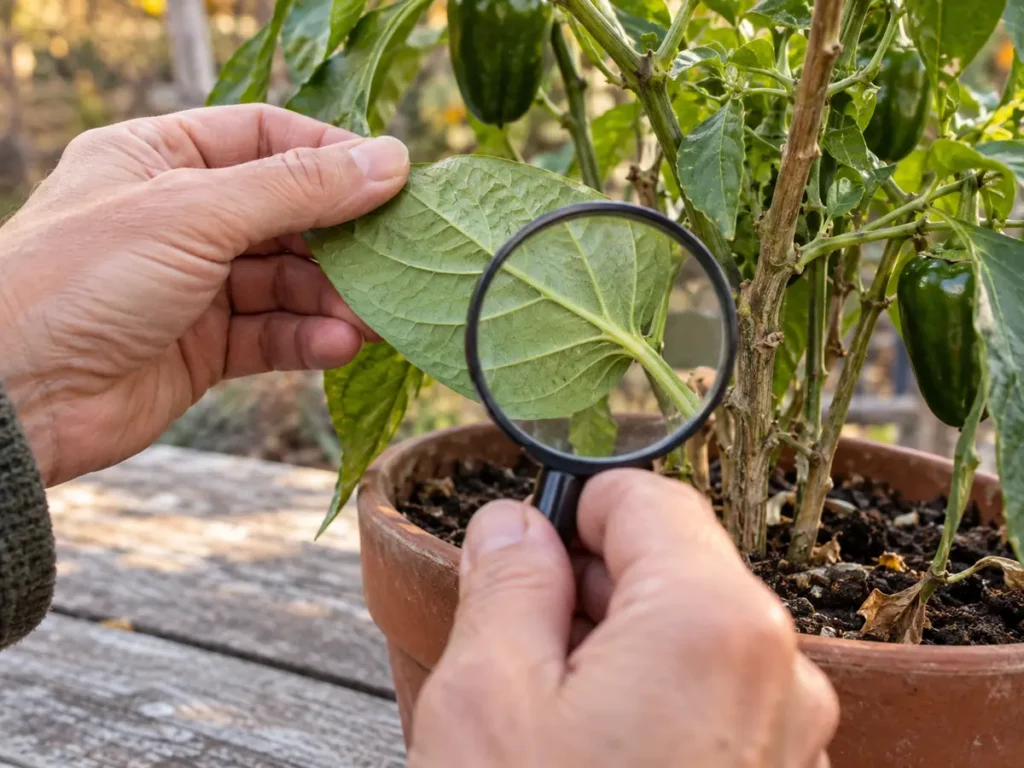
Lift leaves and examine soft growing tips, stem junctions, pot rims, and the underside of the container. Aphids can cluster around new shoots; sticky, shiny residue may accompany their feeding. Pale speckling with fine webbing raises concern about mites. A clean-looking upper leaf surface does not rule out either.
A gentle water rinse can remove some exposed pests. Support the branches, reach leaf undersides, and let the pot drain. Reinspect afterward. One rinse does not prove the plant is pest-free, especially where insects remain tucked into crevices.
Keep returning plants separated for several weeks. Horticulture educator Ken Johnson’s Illinois Extension guidance uses three to four weeks of isolation and inspection before moving them near established houseplants. Use a separate position without touching foliage or shared drainage water, and extend separation if pests appear.
For aphid control, start with an identified pest and repeated checks of new growth. Outdoor predators may help in summer; bringing a pepper inside does not bring that whole control system with it. Repeated fresh colonies during isolation mean the problem remains active.
Before using a pesticide: Read the actual product label for indoor use and edible peppers, including application and harvest restrictions. A systemic product sold for ornamental houseplants cannot be assumed suitable for a food crop. Illinois Extension’s indoor pest management guidance makes this food-crop limitation explicit.
A heavily infested pepper that you cannot isolate or manage may cost more than it saves. Protecting the indoor collection can justify discarding it and growing a replacement next season.
Preserve Roots and Reduce the Canopy Only as Needed
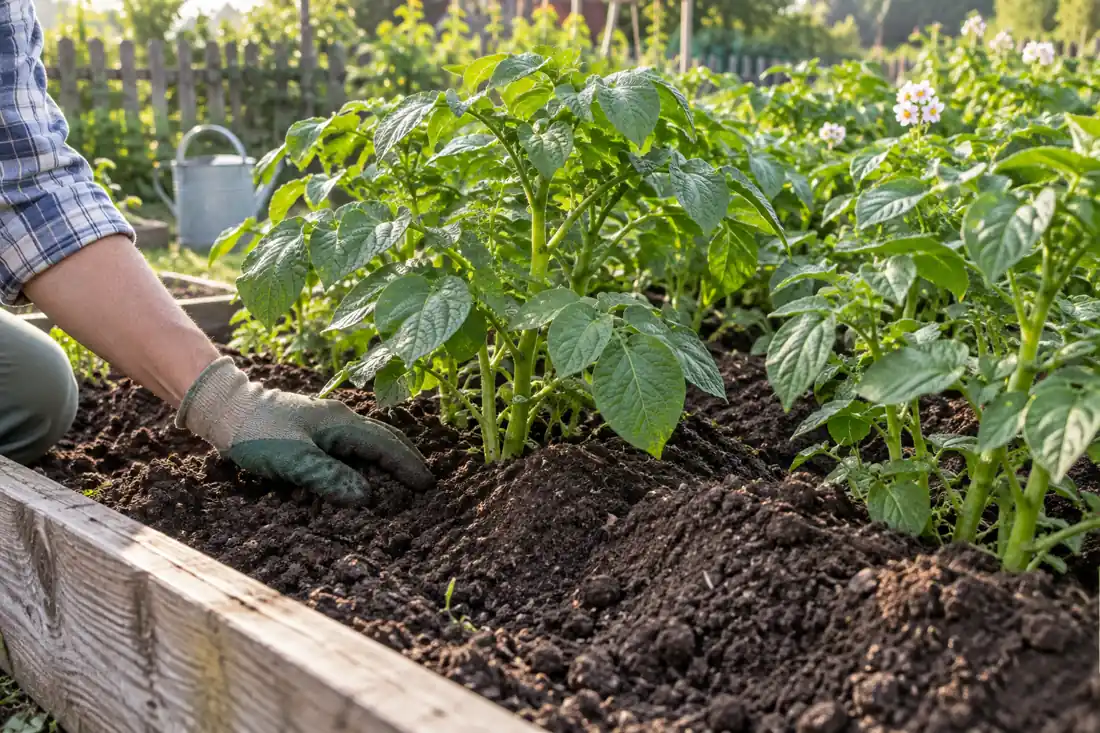
An established container plant does not need to be stripped, repotted, and root-pruned simply because winter is coming. If the pot drains, the plant is healthy, and it fits the space, keeping the existing root system avoids another disturbance during the light transition.
In-ground peppers require more work. Dig around the root mass and lift a manageable root ball with as much functional root tissue as practical. Support the root ball as you lift; pulling the stem can tear roots. Choose a container that accommodates it and has working drainage holes.
Use a well-drained potting mix around the retained roots. Oregon State University’s Grow Your Own Peppers distinguishes container media from garden soil, which can drain slowly in a pot. Avoid filling a container with heavy yard soil. After potting, settle the mix with water, allow excess water to drain, and check moisture again before repeating.
Prune for space, health, and the chosen goal
Trim damaged growth and reduce awkward branches if the plant will not fit its winter position. For a survival plant, reducing the canopy can make storage more manageable. Keep sound branches with nodes that can produce new shoots; there is no single cut height that fits every mature pepper.
For active indoor growth, retain healthy foliage you can illuminate. Cutting it all away removes leaf area before the plant has to recover indoors. Some Extension overwintering methods use cutback, while Maryland’s Home and Garden Information Center response on ornamental peppers questions whether stem reduction is necessary and advises against root pruning in that case.
Assess the need for each cut against space, plant health, and the winter goal. If roots cannot fit a suitable pot, reconsider the container or which plant to save before cutting them down. Do not make root reduction a routine companion to every branch cut.
After digging or pruning, watch for worsening wilt in mix that remains wet. More water will not repair roots that are damaged or poorly aerated. Correct drainage and give the plant stable protection before adding another major intervention.
Match Light, Water, and Feeding to Actual Winter Growth
Indoor conditions change how quickly the plant uses water. Less leaf area and slower growth can leave the root ball wet long after its old patio watering day. Meanwhile, a leafy pepper under strong lights may dry faster. Check the plant and pot together.
| Care decision | Low-growth survival | Active indoor growth |
|---|---|---|
| Winter position | Cool, frost-free room with available light or supplemental lighting | Warm growing space with strong light across the canopy |
| Plant response | Little growth; sparse foliage can be acceptable | New leaves and shoots; flowers require further conditions |
| Water | Check moisture before watering; slower dry-down is common | Check more often as leaves and growth increase water use |
| Feeding | Pause when growth is minimal | Use a suitable fertilizer according to growth and label directions |
| Expected harvest | No winter crop needed for success | Possible, with enough light, warmth, and flower pollination |
Keep survival storage cool, illuminated, and frost-free
A cool room with a window or grow light is a better starting point than an unchecked garage corner. Use a thermometer at the plant’s position to see what happens overnight. A garage that freezes cannot protect tender pepper tissue, and insulation around a pot is not a substitute for a reliably protected space.
Place remaining foliage where it receives light. Keep leaves away from icy window glass and avoid a heat vent blowing directly across them. Do not add warmth solely to force growth if the space lacks enough light to sustain that growth.
Pause routine feeding when the plant is barely growing. Continue moisture and pest checks even if growth is minimal and the plant looks unchanged.
Let Root-Zone Moisture Control Watering
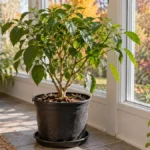
For a leafy pepper, let the top inch or two of mix become slightly dry before watering, and also check the pot’s weight. This is the approach in Maryland HGIC’s ornamental-pepper response. A dry surface over a heavy, wet root ball is a reason to wait and check deeper, not an instruction to soak it again.
When watering is needed, wet the root zone thoroughly and let excess water escape. Empty the saucer. Avoid repeated small splashes that wet only the surface, and do not let a lightly watered storage plant’s roots remain completely dry for long periods.
A drying pot becomes lighter, and the surface mix may turn paler and crumbly. Waterlogged mix remains dark and heavy. These checks also underpin indoor watering and drainage. Use your pepper’s growth and container as the reference.
Pro Tip: Lift the pot after watering and draining, then compare its weight at later moisture checks. If it remains heavy and damp, skip the old watering appointment. Gently tilt a large pot if lifting it would be difficult.
For active indoor growth, illuminate the whole canopy, including lower foliage. Follow the fixture’s instructions for distance and adjust if leaves scorch or new shoots elongate weakly. Fertilizer cannot replace insufficient light.
For winter fruit production, a Michigan Ask Extension example pairs daytime temperatures around 70 degrees F and nights above 50 degrees F with artificial lighting. Those are conditions for attempting winter fruit, not a guaranteed fruit-set range or a universal storage temperature. Cultivar and actual light still affect the result.
If healthy flowers develop indoors, gentle shaking can help release pollen. Peppers are largely self-fertile; assistance can be useful without pollinator activity. Persistent flower loss calls for a check of light and growing conditions before more feeding.
Read Leaf Drop Alongside Stem and Root Condition
A sharp reduction in light can trigger some yellowing and leaf drop after an indoor move, an acclimation response documented in Illinois Extension’s returning-plant guidance. Check whether loss is slowing and the remaining growth stays sound before deciding that the plant is dying.
Rough, brown bark on a firm branch can also be normal maturation. The Ask Extension response Pepper Plant Stem Brown but New Leaves describes this woody change in an overwintered plant. A firm, woody stem with emerging leaves is different from soft tissue that continues collapsing.
| Visible pattern | Check first | Next action |
|---|---|---|
| Some leaves fall after moving indoors | Light change, pot moisture, pests, and remaining stem firmness | Stabilize conditions; avoid automatic feeding or extra watering |
| Wilt continues in a heavy, wet pot | Blocked drainage, standing water, and root condition | Stop adding water; address saturation and inspect worsening decline |
| Sticky tips, speckling, or webbing | Leaf undersides and new shoots with a hand lens | Keep isolated; identify the pest and use crop-appropriate control |
| Sparse growth with firm woody branches | Whether the goal is survival and the root zone remains functional | Maintain checks; do not force flowers to prove the plant is alive |
| Soft collapse after a freezing night | Extent of cold injury and whether sound tissue remains | Move to protection; reconsider saving a badly damaged plant |
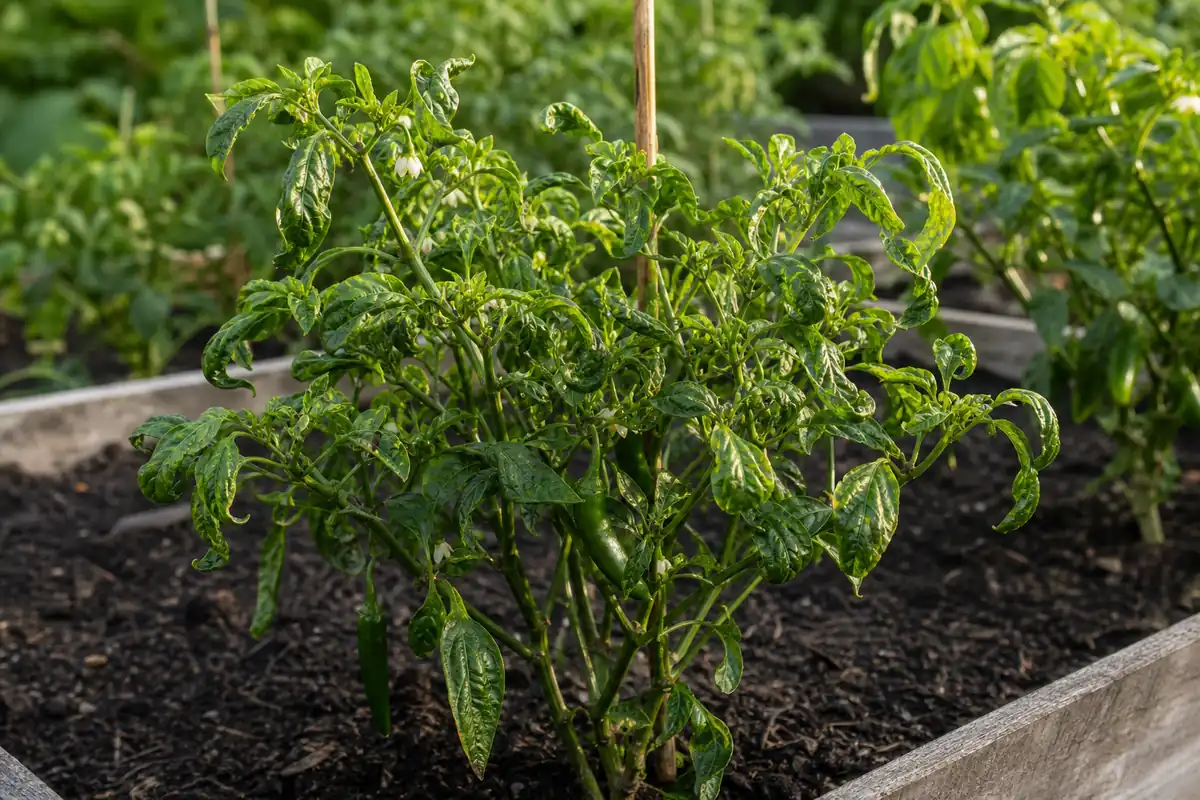
For curled leaves on pepper plants, compare older leaves with new growth and inspect for feeding pests. Persistent distortion in fresh shoots deserves investigation even if older leaves dropped during the move. Do not combine several treatments before identifying what changed.
Inspect roots when the plant keeps declining despite corrected moisture and drainage. Soft, dark roots and a sour smell from persistently wet mix warrant concern; they are not normal signs of winter rest. A damaged root system can leave a plant wilting even with plenty of water around it.
If collapse progresses, pests keep returning, or healthy tissue is disappearing, stop treating winter survival as an obligation. Discarding one failing plant may protect the rest of the collection. A pepper that is simply not producing fruit can still be kept; a worsening health problem needs a different decision.
Restart Growth Before Gradually Returning the Plant Outdoors
Begin spring recovery with the plant’s response and your local weather. Move a survival plant toward stronger light and suitable warmth as outdoor planting conditions approach. Check for pests again before new growth becomes dense.
Increase watering checks as new leaves expand and the pot starts drying faster. Resume appropriate feeding once growth is active, following the fertilizer label. Do not soak a nearly leafless plant on a spring calendar date; its roots may still be using little water.
The return of buds and leaves marks renewed pepper growth. It does not mean the plant is ready for a full day of outdoor sun. Leaves developed indoors have grown under a different light and air environment.
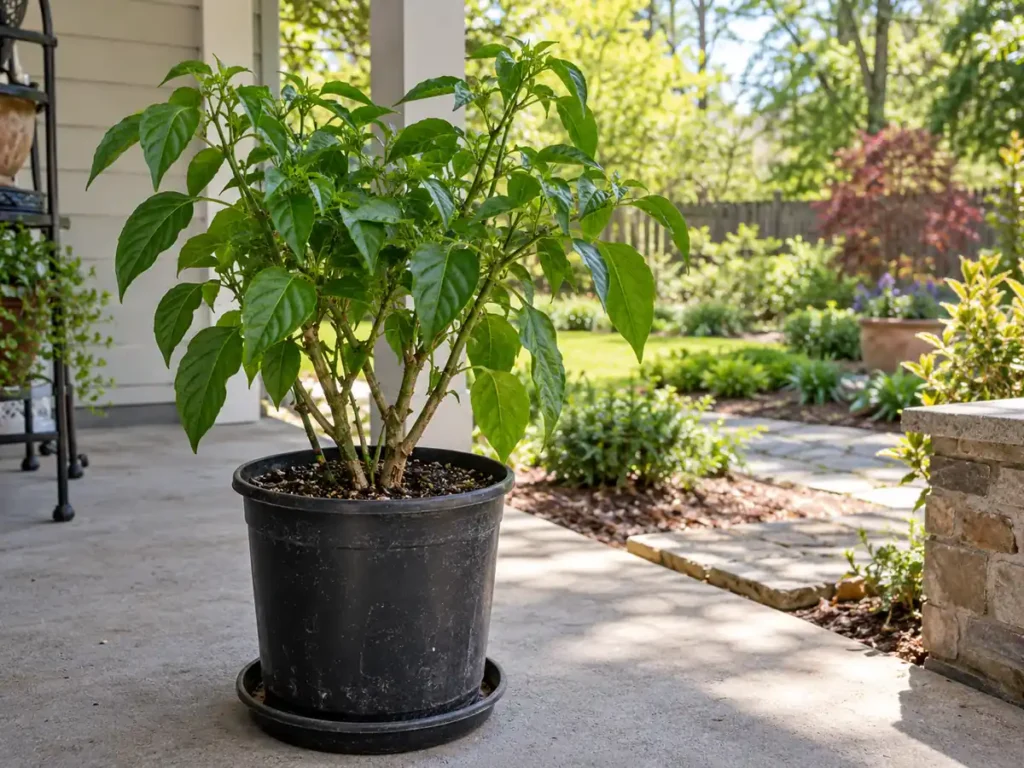
Harden off the new foliage
Start with short periods outdoors in sheltered shade on mild days. Gradually increase exposure, including morning sun. Bring the plant back into protection when nights are too cold. Utah State University Extension’s Seedling Culture and Transplanting explains this incremental hardening-off principle. The same transition matters for tender indoor-grown pepper foliage.
Watch for pale, papery patches after increased sun or drooping during wind exposure. Reduce exposure if damage appears, and increase it more slowly as fresh growth adapts. A retained woody stem does not make its new leaves sun-hardened.
Return it permanently when damaging cold has passed and growing conditions are suitable. Keep the root ball intact when planting out, water to settle it, and monitor establishment. Leaving it in a suitable container is also an option. The winter effort has succeeded when the plant resumes healthy outdoor growth, whether or not it beats a new seedling to the first pepper.
Conclusion
Save a healthy pepper before frost, then give it conditions that match your goal. For winter survival, allow growth to slow and let moisture checks determine when to water. For active indoor growth, supply the light and warmth before increasing feeding.
Keep pests separate, preserve functional roots, and adjust care when the plant’s condition changes. In spring, harden the new foliage off gradually. Firm branches carrying fresh, undamaged leaves are a better result to watch for than a promised early harvest.
Frequently Asked Questions
Can mulch keep a potted pepper alive outside through a freezing winter?
Mulch does not make pepper top growth frost-hardy or guarantee that exposed container roots stay protected. In a climate with freezing winter conditions, use a reliably protected space. A heated greenhouse and an unheated porch offer very different protection; check actual temperatures.
Can I overwinter a pepper plant for more than one winter?
It can be attempted if the plant remains healthy and protected from damaging cold. Peppers can grow as perennials in suitable conditions. Reassess root space, pest pressure, and vigor each season before committing to another winter.
Will seeds from my favorite pepper preserve exactly the same plant?
Seeds do not always reproduce the parent, particularly when the variety is a hybrid or flowers cross-pollinated. Overwintering retains the living plant itself. Saving it still depends on its health and your winter space; cultivar identity alone does not justify bringing in a serious infestation.