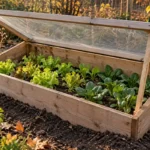

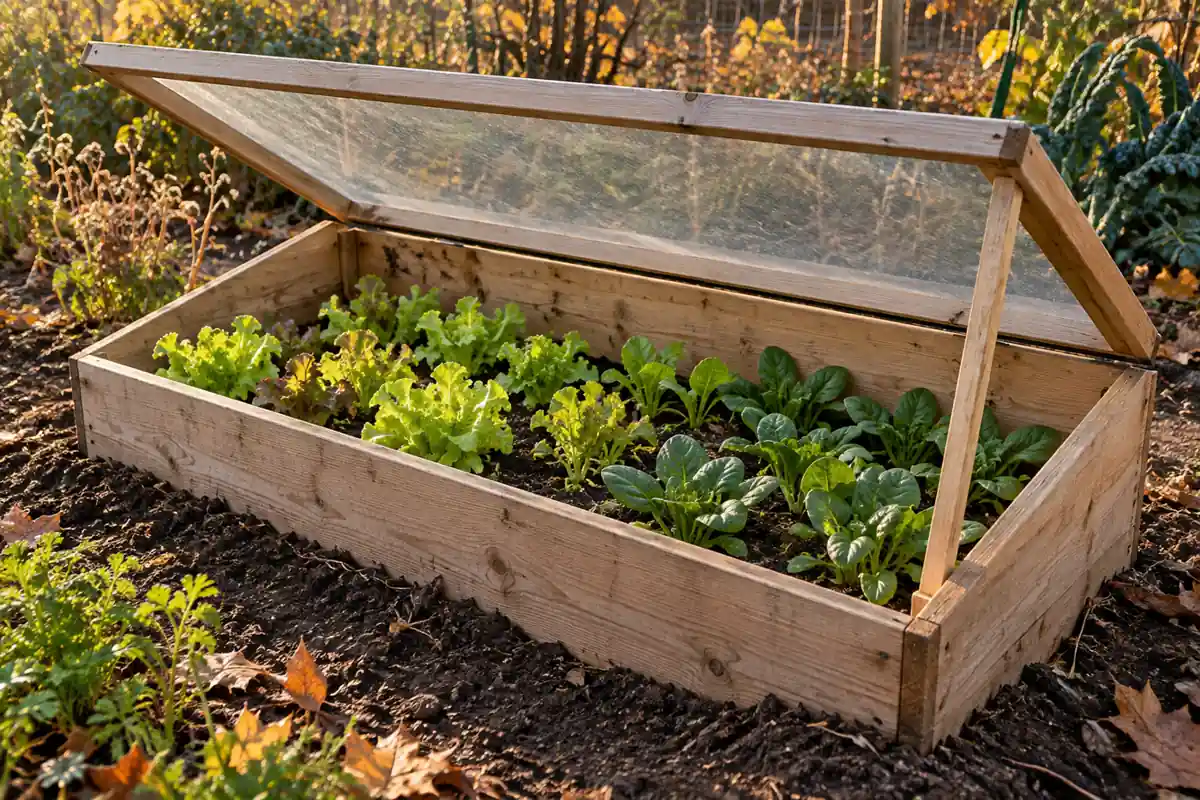
Cold frame gardening uses a low, clear-lidded enclosure to shelter plants and capture daytime solar warmth. It suits cool-season greens, early sowing and the gradual move from indoor seedlings to an outdoor bed. The cover still needs attention: a bright morning can overheat a closed box long before the garden feels warm.
The soil stores some of that daytime heat, and the lid slows its escape after sunset. Neither works like a heater with a thermostat. Lettuce rooted in the bed, newly sprouted radishes and a tray of tender tomatoes bring different needs into the same small space. Choose the crop first, then measure what happens around it. A useful setup lets you reach every plant, secure the lid at different openings and check the temperature without disturbing seedlings. Plan the daytime checks before filling the frame with plants.
How to use a cold frame today
- Morning: remove any opaque night cover. Read the overnight minimum, inspect the soil and check the forecast.
- As sun warms the box: vent according to the crop and measured inside temperature. Open farther if heat keeps building.
- Before dusk: close before useful warmth escapes, once excessive daytime heat has eased.
- Before a cold night: compare the expected minimum with the crop’s tolerance. Move frost-tender trays indoors when protection is uncertain.
Best first crops: lettuce, spinach, radishes and other compact cool-season plants. A closed lid does not guarantee frost-free nights.
Key Takeaways
- Measure inside air and soil temperatures as separate conditions.
- Vent before sunshine pushes temperatures beyond the crop’s needs.
- Choose low cool-season crops that fit beneath the lid.
- Start fall crops early enough to grow before winter.
- Bring tender trays indoors when nighttime protection is uncertain.
Table of Contents
Cold Frame Gardening Follows the Sun and Stored Soil Heat
Sunlight enters the clear cover and warms the bed. With the lid down, less warm air escapes into the surrounding garden. The soil then releases stored heat as the day cools. A cold frame is usually bottomless and unheated; adding an active heat source makes it a hotbed with different management needs.
A sheltered box can feel surprisingly warm at noon and become cold by dawn. That swing matters more than a single comfortable afternoon reading. Set a minimum-maximum thermometer inside before trusting the frame with valuable seedlings. Reset it after recording each day’s readings so an old warm maximum does not hide what happened overnight.
Expect performance to change with cloud cover, wind, soil conditions and the fit of the lid. A 5-10°F difference appears in a University of Vermont season-extension example. That is not a fixed allowance to add to a forecast low. A long night without incoming sunlight can exhaust the warmth that made the box useful earlier.
Begin learning the site with a small trial planting. Keep a note of the crop, outside forecast, frame minimum and any visible damage. Several mild nights do not prove protection during the next hard freeze.
Put Winter Sun, Drainage and Reach Ahead of Size
Place the sloping lid toward useful southern or southeastern sun. Check the actual winter shadow from fences, walls and evergreen plants. A windbreak can reduce exposure; a windbreak that shades the lid also reduces the heat you are trying to collect.
The bed must drain. After rain, a lingering puddle or slick, saturated soil calls for a better location or a drainage correction before planting. A cover may exclude new rainfall, yet it cannot release roots from water already trapped beneath them. A frame fitted over a raised garden bed still needs sound soil and safe access around its sides.
Test the reach with the lid open. Can you thin seedlings against the back wall without leaning on the cover or stepping into the soil? Iowa State’s one-sided design stays within about 3 feet of depth. Wider designs need access from both sides. The usable reach of the person doing the work decides whether either arrangement fits.
Choose a transparent cover with dependable hinges and a secure support. Wind can slam an unsupported sash onto hands or plants. Anchor the frame according to its construction and inspect fixings after strong weather. Glazing, hinges and a homemade prop do not acquire a snow-load rating simply because they fit together.
Keep enough clearance for the crop at harvest size. A low lid that brushes tender leaves limits both growth and ventilation. Avoid unknown preservative-treated lumber and old painted salvage with uncertain coatings around edible crops; do not turn sanding an unidentified old finish into part of a garden project.
Use Inside Readings to Decide How Far to Open
Measure air near plant height, with the sensor shielded from direct sun according to its instructions. A thermometer heated directly by a sunbeam is not measuring the same condition as the air around shaded leaves. Use a separate probe for soil, at the depth relevant to the seed or roots you are checking.
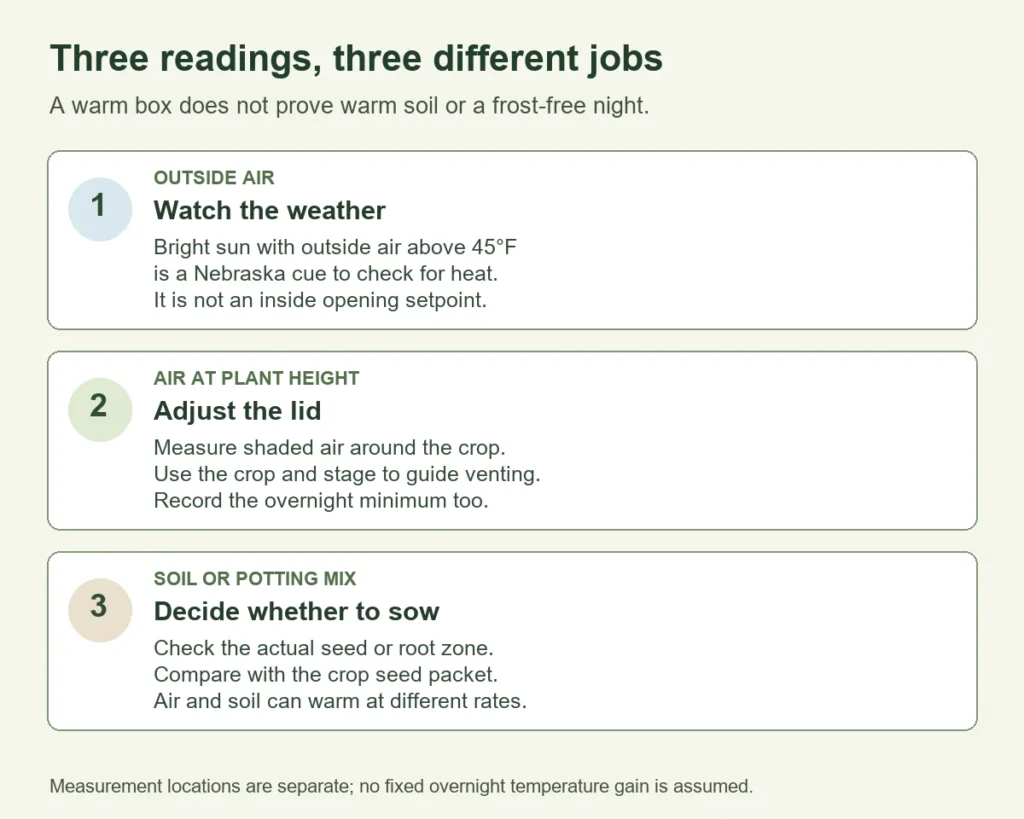
Different temperature figures answer different questions. Sunny outdoor weather above 45°F is a cue to anticipate ventilation in Nebraska Extension’s cold-frame management guidance. A separate example there places cool-season seedlings at 60-65°F at plant level after germination. Iowa State’s warning to raise the sash above 85°F inside addresses overheating. Waiting for that higher number can leave tender greens far warmer than their preferred growing conditions.
| Measurement | Source condition | Action | What changes the decision |
|---|---|---|---|
| Outside air above 45°F | Nebraska: clear, sunny weather | Check for rapid warming and anticipate venting. | Inside readings and sunshine can call for earlier action. |
| Inside air around 60-65°F | Nebraska: cool-season seedlings after germination | Use as a source-guided example for that crop stage. | Species, stage and local guidance determine the target. |
| Inside air above 85°F | Iowa State: overheating warning | Raise the cover and check that heat falls. | Vent earlier for a crop that needs cooler conditions. |
| Soil temperature | Actual sowing bed or seed tray | Compare with the seed packet and crop guidance. | Warm air does not establish that cold soil is ready. |
Start with an opening that releases heat without a damaging gust across newly exposed seedlings. Check the response. If the inside keeps warming, enlarge the opening or lift off a safely removable cover. A finger-width crack is not a reliable all-day setting for every frame.
Keep the prop secure whenever the lid is raised. In warm weather, a frame may function as an open bed for much of the day. Closing it by a fixed clock time can trap unwanted heat; aim to retain useful afternoon warmth after the excessive heat has eased and before the bed cools into evening.
Automatic openers can help when their cylinder, mounting and lid are compatible. Test opening and closing under actual conditions, following the device instructions. They react to their own temperature; they do not read the seed packet, the soil moisture or tomorrow’s frost forecast. If nobody can make daytime checks and the opener is untested, start during milder weather with expendable cool-season plants.
Sow Compact Cool Crops Into a Ready Root Zone
Lettuce, spinach and radishes make manageable first plantings. Kale, Asian greens and other cool-season vegetables also appear in South Dakota State’s cold-frame guidance. Match mature height and leaf spread to the available space. A cabbage seedling fits easily; a developed head can crowd its neighbors and the cover.
Choose whether the crop will stay in the bed or move out as a transplant. Roots planted directly into the garden soil can continue growing there after a portable frame is removed. Trays offer mobility, including the option to bring vulnerable plants indoors, but their small volume of mix needs its own moisture checks.
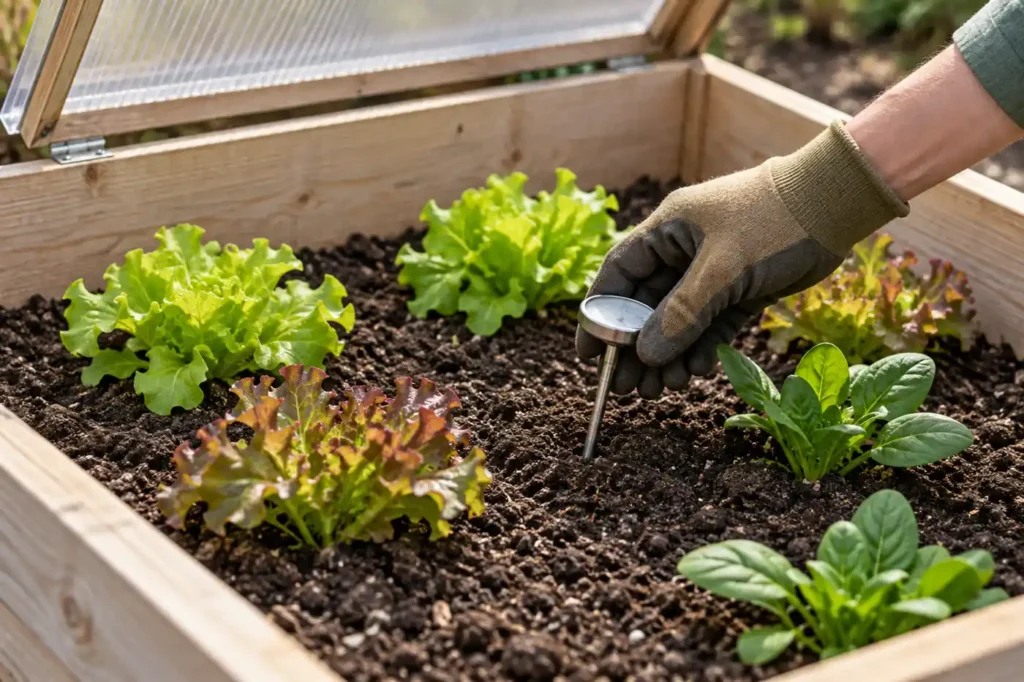
Read the seed packet for depth, spacing and germination requirements. Press fine seed into suitable contact with the prepared surface without burying it beyond the crop’s directions. Water gently enough to leave it in place. Through germination, inspect the seed layer as well as the deeper soil; a damp bed underneath does not keep an exposed fine seed moist.
Thin seedlings to the intended harvest spacing. Dense emergence can hide weak, shaded plants beneath a productive-looking canopy. Decide whether you want baby leaves or full-sized plants before choosing the final density. For spinach, the transition through its leaf-growth and flowering stages changes what remains useful to harvest.
A warm enclosure is not a reason to sow everything early. Frost-tender tomatoes and peppers may need more reliable warmth for germination and nighttime growth than an unheated box supplies. Keep those requirements separate from the needs of hardy greens.
Increase Outdoor Exposure Without Freezing Indoor Starts
Leaves formed indoors have experienced less wind, direct sun and temperature fluctuation. Moving them straight into full exposure can cause pale scorched patches, drying or wilting even when the soil contains water. The protective lid can soften that transition, provided you progressively change the exposure.
Begin hardening about two weeks before planting out, following the University of Minnesota’s seedling hardening sequence. Start with short periods in sheltered shade during a mild part of the day. Increase time outdoors and direct sun gradually; with a cold frame, widen the lid opening as plants adjust. A hot sealed box is not a substitute for that progression.
Inspect leaves and the mix after each change. Strong sun on unfamiliar foliage calls for less exposure the next time; a dry root ball calls for a moisture correction. Give damaged plants time to recover before adding another stress. Diagnose broader seedling problems from their stems, roots and growing conditions before increasing fertilizer.
At night, consider the plant’s tolerance and the actual forecast. Hardened tomato plants remain frost-tender. When the frame’s protection is uncertain, bring portable trays indoors before cold arrives. Acclimation helps leaves handle outdoor conditions; it does not turn a tender species into a frost-hardy crop.
Plan Fall Growth Before Short Days Limit the Harvest
For an autumn crop, start with the local first-frost period and work backward using the cultivar’s days to maturity. Add room for slower cool-weather development and a useful harvest period. Check whether the packet counts from sowing or transplanting; confusing those starting points can leave weeks missing from the plan.
Radishes take 25-40 days and leaf lettuce or spinach 45-60 days to maturity in Iowa State’s regional fall-planting examples. Those figures help compare crop speed; they are not national cold-frame sowing dates. Use the selected cultivar and local extension calendar for the actual planting decision.
Early fall can still bring hot afternoons. Sow and establish the crop with the cover open as conditions require, then use nighttime closure as temperatures fall. Starting an autumn bed by sealing newly sown soil under a clear lid can create the same overheating problem as a bright spring day.
Separate growing a crop from holding an established one
A bed of developed spinach can offer leaves to pick after growth slows. A tray of tiny late-sown seedlings may survive without producing much harvest. Sunlight and temperature still constrain growth inside the frame. Protection cannot restore the long, warm days that a delayed sowing missed.
Before a cold spell, close the lid and consider secure exterior nighttime insulation. Remove opaque coverings when daylight returns. Choose further frost protection according to the plants and weather, without assuming that an extra blanket guarantees survival.
Keep the transparent surface clear enough to admit light. Remove loose snow only when the frame and footing are safe. A heavy frozen lid, cracked pane or distorted support needs a safety assessment before handling. Do not force an iced hinge open over plants.
Read the Soil Before Watering a Steamy Box
Condensation on the cover shows moisture in the enclosed air. It does not tell you whether the seed layer or root ball needs water. Feel the growing medium and check below the surface. Cool, dark soil may remain damp long after the uncovered garden has dried.
The close cover slows evaporation and makes overwatering easy, a caution in NC State’s season-extension guidance. Water early enough for foliage to dry before night, then manage ventilation. During brighter spring weather, check again as leaves expand and the mix begins losing water faster. A fixed weekly amount ignores both changes.
| What you notice | Check next | First correction |
|---|---|---|
| Wilting in afternoon sun | Inside maximum and moisture in the root zone | Release excess heat; water only if the medium needs it. |
| Poor emergence in a warm-looking frame | Actual soil temperature, seed depth and seed-layer moisture | Correct the sowing condition rather than closing the lid longer. |
| Collapsed seedlings near the soil line | Wetness, crowding, stem condition and drainage | Reduce prolonged wetness and seek a diagnosis if losses continue. |
| Leaves injured after a cold night | Minimum temperature, crop tolerance and exposure | Protect remaining plants; use safer indoor nights for tender trays. |
Keep a clean path to the plants and remove dead material that is decaying against seedlings. A sour smell from saturated mix or a stem that has narrowed at soil level calls for inspection, not an automatic feeding. Similar-looking losses can follow heat, freezing, drought or disease. The maximum-minimum record and the condition of the roots help separate them.
Conclusion
Begin with one reachable frame and a crop that tolerates cool weather. Before sowing the whole space, record a sunny day’s maximum and the following night’s minimum. Use those readings to adjust ventilation, choose a sowing date and decide which plants can remain overnight. The next useful harvest depends on that daily care as much as the clear lid above it.