Updated April 10, 2026
Pepper plants do not fail evenly across the season. Most problems trace back to one missed window – a soil temperature too low at germination, a fertilizer switch that came too late, a first flush of flowers the plant was not ready to support. Understanding pepper plant growth stages means you stop reacting and start anticipating. Each phase has a specific vulnerability and a specific lever. Pull the right one at the right time, and the rest of the season takes care of itself.
The range of outcomes is wide. A pepper plant that moves through each stage without disruption can carry 30 to 60 peppers across a good season, with smaller-fruited varieties like jalapeños producing even more when managed for continuous harvest.
The stages below are not a calendar – they are the decision points that separate a plant that limps to October from one that produces through it.
Key Takeaways:
- Start seeds in soil warmed to 80-85°F; germination below 65°F stalls and often fails entirely
- Remove the first 2-3 flower buds after transplanting to redirect energy into root and branch development
- Switch from nitrogen-forward to phosphorus-potassium fertilizer the moment flower buds first appear
- Blossom drop above 90°F or below 55°F is a temperature failure – shade cloth or relocating the pot fixes it; more water does not
- Pick peppers at full size before full color to keep the plant setting new fruit through late summer
Table of Contents
Pepper Seed Germination – Why Soil Temperature Matters More Than Air
Pepper seeds are among the most temperature-sensitive vegetables you will start indoors. The seed contains everything it needs to sprout, but it requires heat to activate the enzymes that break down the seed coat and trigger root emergence. Air temperature matters far less than what the growing medium actually registers at root depth.
According to Purdue Extension’s vegetable production guidelines, pepper germination rates drop sharply below 65°F, and optimal germination requires soil temperatures between 80 and 90°F. At 85°F, most pepper varieties germinate in 7 to 10 days. At 65°F, the same seeds may take 25 days or more – and many will rot in the medium before they sprout. The difference is not minor, and most gardeners who struggle with pepper germination are measuring air temperature, not soil temperature.
| Soil Temperature | Expected Germination Time | Notes |
|---|---|---|
| Below 60°F | 25+ days or failure | High rot risk, seeds may not germinate at all |
| 65°F | 14-25 days | Unreliable germination rate |
| 75°F | 10-14 days | Acceptable but not optimal |
| 80-85°F | 7-10 days | Target range for reliable germination |
| 90°F+ | 5-8 days | Speed gain marginal; some reduction in germination rate |
A seedling heat mat under the tray is the most reliable fix. Place a probe thermometer directly in the growing medium, not in the air above it. Once 50 to 75 percent of seeds have sprouted, remove the mat – continued bottom heat at that point pushes stem elongation at the expense of root development.
One thing that surprises most first-time pepper growers: the seed coat does not split cleanly the way a tomato seed does. Pepper sprouts emerge still wearing part of the shell like a small helmet over the first leaves. This is normal and typically falls off within 24 hours without any help. Pulling it off early risks damaging the cotyledons beneath.
The Seedling Window – What True Leaves Tell You About Root Development
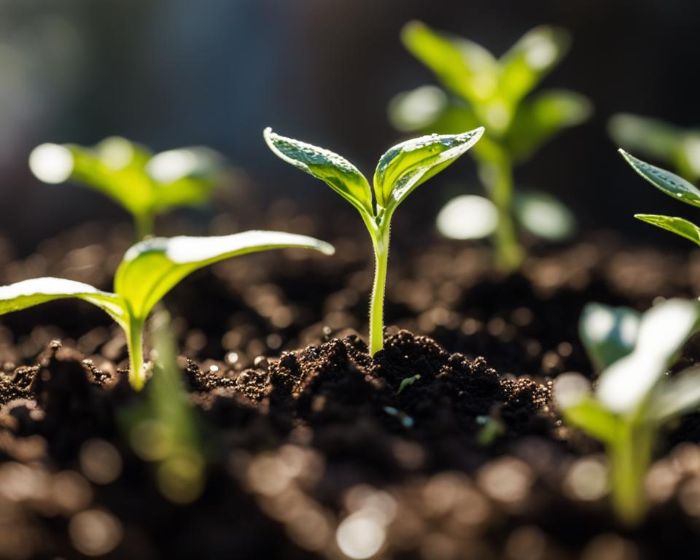
The first two leaves that emerge after germination are cotyledons – energy stores packed into the seed itself. They look rounded and slightly paler than what comes after. When the first set of true leaves appears – smaller, distinctly veined, shaped like the pepper variety – the plant has made the transition from seed reserves to photosynthesis. This is the first real milestone in pepper plant growth.
True leaves signal that the root system is established enough to begin absorbing nutrients from the medium. At this point, begin fertilizing at a quarter-strength balanced formula, once per week. Full-strength feeding on pepper seedlings causes root burn and slows the growth you are trying to encourage.
Light is the bottleneck at this stage
Pepper seedlings need 14 to 16 hours of light per day to produce compact, structurally sound stems. Under natural window light, most seedlings stretch toward the brightest point and become leggy – long gaps between leaf nodes, stems that cannot support their own weight. This is not a death sentence, but it creates a weaker plant at transplant time.
If using grow lights, keep them 2 to 3 inches above the canopy and raise them as the plants grow. A compact stem at 3 inches will carry a pepper-loaded branch at 18 inches. A stretched stem will not.
Observation: Seedlings grown under supplemental lighting with a small oscillating fan running a few hours per day develop noticeably thicker stems within two weeks. The gentle movement mimics outdoor wind load, and the plant responds by reinforcing stem tissue – the same mechanism that makes outdoor-grown seedlings sturdier than greenhouse-started ones.
The sharp, faintly resinous scent that pepper foliage carries from this stage onward – that clean green smell that lingers on your fingers after thinning seedlings – is actually a mild deterrent to some soft-bodied insects. It is one reason peppers are a reasonable companion in mixed plantings from early in the season.
Vegetative Growth – The Stage That Sets Your Season’s Ceiling
Between the seedling stage and first flower buds, the plant is building everything it will need to carry a crop. Root expansion, lateral branching, leaf area development. This is the vegetative phase, and most gardeners underestimate how much what happens here determines final yield.
A pepper plant that enters flowering with shallow roots, few lateral branches, or low leaf mass will produce fewer peppers regardless of care afterward. The vegetative period is not the waiting period. It is the investment period.
Fertilizer at this stage should be nitrogen-forward. Nitrogen drives leaf and stem growth, and that is exactly what you want right now. A 10-5-5 or similar ratio applied every two weeks produces the compact, branching canopy that becomes a productive plant. The principles behind choosing the right fertilizer ratio matter more during these weeks than at any other point in the season.
The case for topping your pepper plants
Topping – pinching or cutting the main growing tip when the plant reaches 8 to 12 inches – triggers a strong lateral branching response. Instead of one dominant stem, the plant develops 4 to 6 main branches, each capable of carrying flower clusters. The result is more total fruit sites and a lower, more stable plant structure.
The tradeoff is a 1 to 2 week delay before flowering begins. In a long growing season (zones 7-10), this is almost always worth it. In short-season zones (3-5) with fewer than 90 frost-free days available, the delay may cost more than the branching gains. Know your season before you top.
Pro Tip: When you top the plant, do not discard the cutting. Pepper cuttings root readily in moist perlite under a humidity dome. A cutting taken in late spring becomes a rooted backup plant by midsummer – useful insurance if your main plant develops crown rot or takes disease damage late in the season.
Transplanting from indoor starts to the garden falls within this phase. Hardening off – gradually exposing seedlings to outdoor conditions over 7 to 10 days – is not negotiable. Direct transplant without hardening causes shock that sets plants back 2 to 3 weeks. Soil preparation before transplanting is equally critical. Peppers want well-draining, slightly acidic soil (pH 6.2 to 6.8) with good organic matter. Compact or clay-heavy ground slows the root expansion that defines this entire stage.
Flowering and Pollination – When Temperature Becomes the Enemy
Pepper plants begin producing flower buds as they reach a threshold canopy size and day length shifts. Unlike tomatoes, peppers are largely self-pollinating – wind and vibration move pollen within the same flower. You do not need pollinators present for fruit set, though they improve it.
The variable that controls whether those flowers become fruit is temperature, and the window is narrower than most gardeners expect. Alabama Cooperative Extension research on pepper production documents that flowers abort – the buds drop before setting fruit – when daytime temperatures exceed 90°F or when night temperatures fall below 55°F. Both extremes disrupt pollen viability inside the flower. Above 95°F, pollen becomes sterile entirely.
If the plants are dropping flowers during a heat wave, that is a temperature problem. Increasing irrigation will not fix it. Afternoon shade cloth or moving potted plants to a slightly cooler position are the only interventions. The plant will resume setting fruit once temperatures stabilize. This raises a question worth thinking through: if blossom drop is a siting problem as much as a care problem, where in the garden do peppers actually belong – and does the east-facing spot that gets shade from 2 p.m. onward outperform the full-sun bed in a zone with hot summers?
Consistent soil moisture during flowering does support fruit set, but it works in concert with temperature – not as a substitute for it. Irregular watering that stresses the plant during bud development compounds temperature-related blossom drop without being the root cause.
The first flowers – remove or keep
Standard advice: remove the first 2 to 3 flower buds from a recently transplanted pepper. The logic is that the plant is still establishing roots in unfamiliar soil, and diverting energy to fruit at that moment produces small peppers and creates stress on a plant not yet ready to carry a crop. Those first buds off means more energy into lateral growth and root depth.
The honest tradeoff: this delays your first harvest by 2 to 3 weeks. In a zone with a long season, that is clearly worth it. In a zone where frost arrives before most peppers would ripen anyway, the delay has a real cost. Make the call based on your season length, not on general advice.
Switch your fertilizer at this point regardless of what you decide about first flowers. The nitrogen-forward formula that built the vegetative canopy will now push leaf growth at the expense of fruit set. Move to a phosphorus-potassium formula (5-10-10 or similar) to support flower development and fruit fill.
Fruit Development and Ripening – The Strategic Case for Picking Early
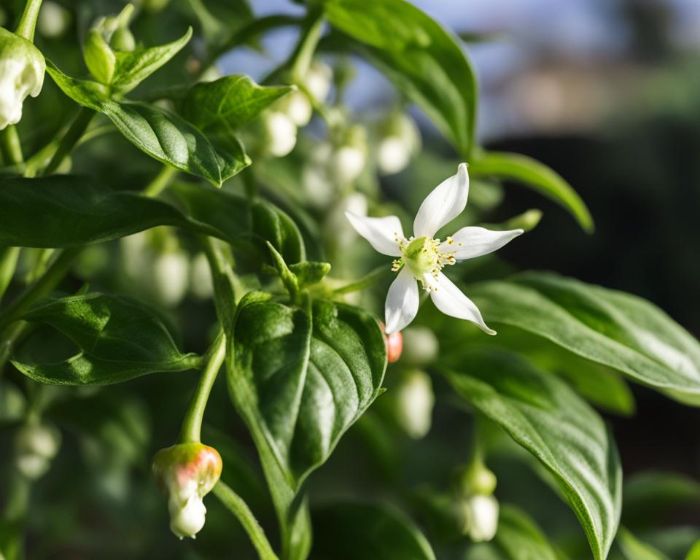
Once a flower is successfully pollinated, the petals drop and a small green nub appears where the blossom was attached – the beginning of fruit development. This is the longest phase of the season, and the most variety-dependent.
Bell peppers reach full green size in approximately 60 to 70 days from transplant, but color change does not begin until 2 to 3 weeks after that, with full red requiring another week or two. Jalapeños are ready to pick green in 65 to 80 days; they develop more capsaicin heat when allowed to ripen to red. Habaneros sit at the far end – 100 to 120 days from transplant to full orange or red, meaning total time from seed can exceed 150 days.
| Variety | Days to Green Harvest | Days to Full Color | Heat Level |
|---|---|---|---|
| Bell Pepper | 60-70 days | 75-90 days | None |
| Jalapeño | 65-80 days | 85-100 days | Medium |
| Cayenne | 70-85 days | 90-110 days | Hot |
| Habanero | 90-100 days | 100-120 days | Very hot |
| Thai Chili | 75-90 days | 85-105 days | Very hot |
The strategic question is when to pick. Leaving peppers on the plant to reach full color is satisfying, but each fruit that remains sends a signal to the plant to reduce new flower production. The plant’s priority shifts from generating more fruit to ripening what it already carries.
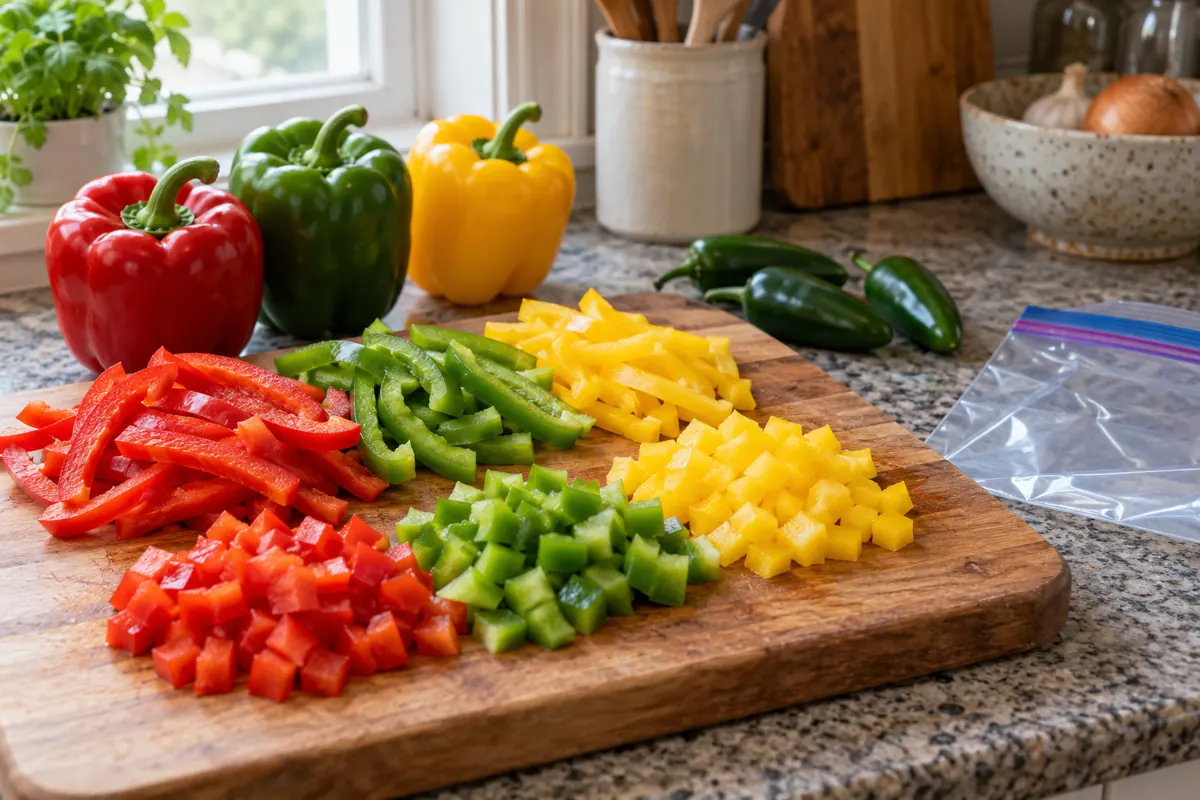
If your goal is maximum total yield across the season, picking peppers at full size – but before full color change – encourages the plant to continue setting new flowers. This is how commercial growers manage continuous production, and it works at the home garden scale too. A ripe green pepper picked a week before it would turn red is still a functional vegetable. Two more fruit sites that open up because of that pick are the point of the tradeoff.
The ripe pepper has a slight give when pressed firmly – not soft, but not hard like unripe fruit either. That tactile test, after a season of watching the plant, becomes a reliable guide without needing to track days.
Basil planted near pepper plants adds more than culinary convenience at harvest. The companion relationship has documented effects on aphid deterrence and on pollinator visit frequency during the flowering stage.
Reading Stage Problems – What the Plant Is Telling You
Pepper problems do not announce their cause. They announce their symptom. A wilting plant in midsummer looks the same whether the issue is drought stress, root rot, or verticillium wilt. The growth stage the plant is in narrows the diagnosis considerably.
| Growth Stage | Symptom | Most Likely Cause | First Action |
|---|---|---|---|
| Germination | No sprout after 21 days | Soil temperature below 65°F | Add heat mat; verify medium temp with probe thermometer |
| Seedling | Stretched, pale stems | Insufficient light | Move closer to grow light or reduce distance to canopy |
| Vegetative | Stalled leaf growth | Nitrogen deficiency or cold soil | Apply nitrogen-forward fertilizer; check soil temperature |
| Flowering | Flowers dropping | Temperature above 90°F or below 55°F at night | Provide afternoon shade; stop adjusting irrigation |
| Flowering | No flowers forming | Plant too young or excessive nitrogen | Stop nitrogen feeding; allow plant to mature |
| Fruiting | Yellow leaves between veins | Magnesium deficiency | Foliar spray: 1 tbsp Epsom salt per gallon of water |
| Any stage | Wilting despite wet soil | Root rot or stem damage | Reduce watering; check drainage; inspect stem base |
The magnesium row is worth a longer explanation. Pepper plants are high magnesium users, and the deficiency surfaces most often during heavy fruiting – when the plant is drawing stored nutrients from its oldest leaves to support the crop. Leaves yellow from the center outward, between the veins, in a pattern called interveinal chlorosis. The leaf edges stay green while the interior fades. A foliar application of Epsom salt (magnesium sulfate) at 1 tablespoon per gallon reaches the deficiency faster than soil application because it bypasses root uptake entirely. Two or three applications a week apart usually resolves it visibly.
For growers dealing with more complex soil nutrition or disease identification issues by growth stage, the NC State Extension pepper production guide covers root development windows, disease vulnerability by stage, and variety-specific temperature tolerances in more technical depth than most home gardening resources.
Conclusion
Growing peppers well is mostly a timing problem.
The soil warming that makes germination reliable, the fertilizer switch at first bud, the fruit picked before it signals the plant to stop producing – each depends on reading the stage accurately and responding in the right window. Miss the window and the season recovers slowly, if at all. A pepper plant does not punish neglect dramatically. It just quietly produces less than it could have.
A plant that moves cleanly through germination, builds real root mass through the vegetative stage, and enters flowering with an established canopy will produce more than most gardens can reasonably use. By the time you are watching a fully loaded plant sag under the weight of a second flush of fruit in late summer – the branches bending, peppers clustered three and four together at each node – the work that made it happen was mostly done in April and May. The season rewards preparation more than it rewards effort in the middle of it.
FAQ
How long does it take for a pepper plant to go from seed to harvest?
From seed to first harvest takes approximately 90 to 120 days for most bell pepper varieties and 110 to 150 days for hot peppers – accounting for 8 to 10 weeks of indoor starting before transplant. Habaneros sit at the far end of that range; they need 100 to 120 days from transplant alone, meaning total time from seed can exceed 160 days. Season length and temperature consistency affect this more than any single care decision.
What happens if pepper seedlings do not get enough light during the early stages?
They etiolate – stems stretch rapidly toward whatever light is available, producing long gaps between leaf nodes and stems too thin to support a productive plant. Etiolated seedlings can be buried deeper at transplant to compensate for some of the stretch, but the stem structure is already set. The better intervention is supplemental lighting from germination onward, keeping the light source 2 to 3 inches above the canopy and raising it as plants grow.
Can you grow pepper plants in containers through all growth stages?
Yes, but container size determines how far the plant develops. A 3-gallon pot supports germination and seedling stages adequately. Vegetative growth and full fruiting require at least 5 gallons, with 7 to 10 gallons producing noticeably larger canopy and higher yields. The problem in undersized containers is not nutrient deficiency – it is that roots hit the container wall, restrict water uptake even in well-irrigated soil, and trigger early stress responses during the fruiting stage.
Why do pepper plant flowers drop without setting fruit?
Temperature is the primary cause in most home gardens. Daytime temperatures above 90°F or night temperatures below 55°F make pollen non-viable inside the flower, and the plant drops the bud rather than attempt to set a fruit it cannot complete. This is not a watering or fertility problem. The counter-intuitive fix is to do less – stop adjusting irrigation, stop feeding more fertilizer – and address the temperature environment instead: afternoon shade cloth, relocating pots, or simply waiting for the weather to moderate.
How many peppers can one plant realistically produce in a home garden?
Bell peppers typically produce 6 to 12 full-sized fruits per plant in average conditions. Jalapeños, smaller-fruited and more prolific, can produce 30 to 50 peppers. Thai chilies and other small-fruited hot varieties can carry 100 or more in a season. The highest yields in any variety come from plants that were topped during vegetative growth, received phosphorus-potassium fertilizer during fruiting, and were harvested regularly rather than left to fully ripen on the plant – each fruit held to full ripeness slows new fruit set on the whole plant.
What is the most common mistake made during the flowering stage of pepper growth?
Continuing nitrogen fertilizer. Nitrogen drives vegetative growth and is essential during seedling and early vegetative stages. During flowering and fruit development, high nitrogen levels shift the plant’s energy toward producing more leaves rather than setting and filling fruit. The result is a lush, dark green, dense plant with very few peppers – which looks healthy but is not producing what it could. Switching to a low-nitrogen, high-phosphorus-potassium formula when flower buds first appear is the single most impactful fertilizer adjustment of the whole season.