
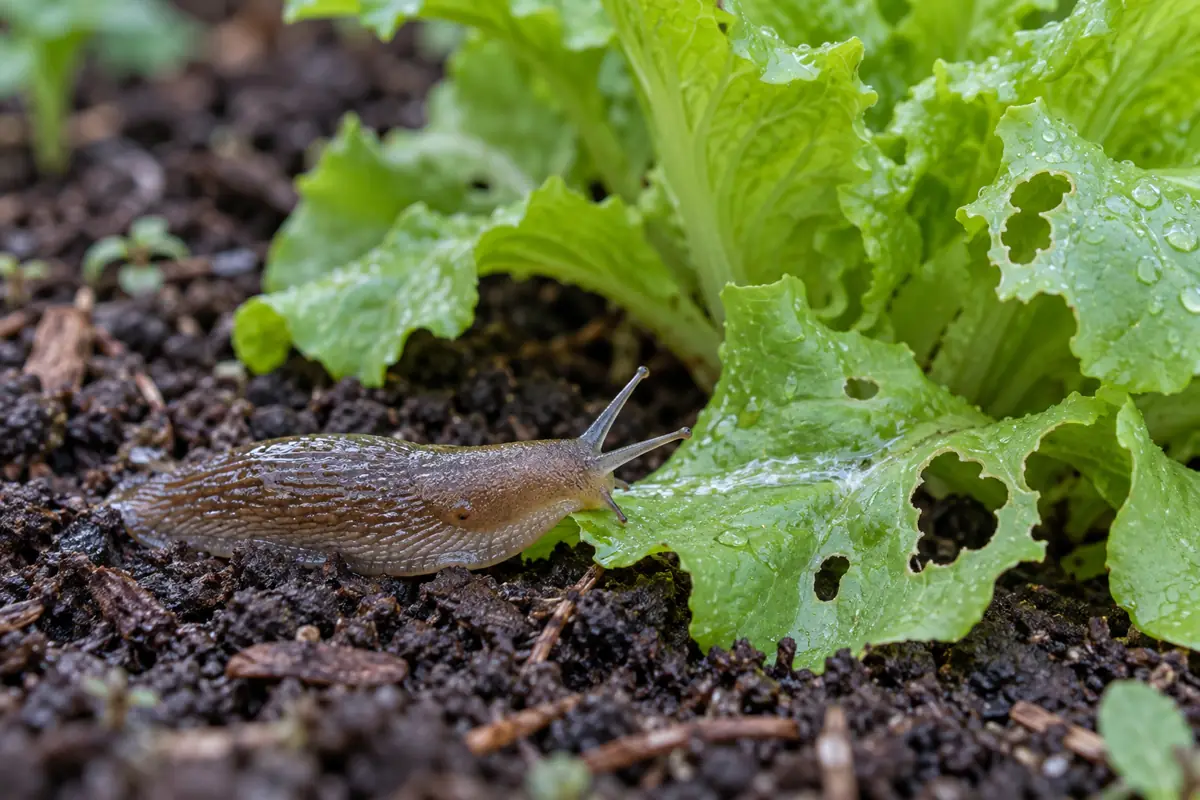
How to get rid of slugs starts with confirming that they are eating the plants, then combining collection with fewer damp hiding places. Irregular holes in lettuce and disappearing seedlings are clues. A shiny trail or a slug found feeding after dark gives you a firmer reason to act.
The first useful change is usually close to the injured plant: lift a wet board, inspect beneath a pot or pull sodden litter away from a seedling. Keep watering the roots as needed. Drying the crop to make the bed less inviting can exchange feeding damage for drought injury. Traps, copper barriers and pesticide baits each have limits, especially after rain or where pets roam. Match the method to the source of new feeding, and check the next leaves before deciding that another treatment is necessary.
Protect tonight’s seedlings
- Confirm: inspect damaged plants after dark or lift a temporary refuge board next morning. Holes alone do not identify slugs.
- Collect and tidy: remove feeding slugs and unnecessary wet shelters immediately beside vulnerable plants.
- Recheck: compare fresh leaves and seedlings during subsequent damp nights. Old holes remain.
- Escalate if needed: use an unbridged barrier or crop-labeled bait for continuing injury, with label precautions and pet access checked first.
Green larvae on rose leaves? They may be sawflies, not true slugs. Slug bait is the wrong starting point.
Key Takeaways
- Confirm feeding slugs before choosing a slug-specific treatment.
- Inspect damp shelters and vulnerable plants after darkness falls.
- Water roots adequately and reduce unnecessary overnight surface wetness.
- Keep copper continuous and clear slugs from inside barriers.
- Read every bait ingredient and prevent pet access first.
Table of Contents
How to Get Rid of Slugs Begins With the Right Culprit
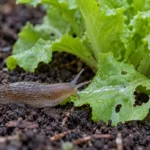
A land slug has a soft, shellless body and glides on a mucus-secreting foot. The wet surface looks glossy under a flashlight; dried mucus can leave a silvery line across a pot, leaf or stone. Slugs are mollusks. They are not insects, and a garden insect treatment does not automatically control them.
Look for irregular holes within tender leaves, missing portions of small seedlings or rasped areas on fruit touching the ground. Caterpillars, beetles and earwigs can also make these holes. A trail establishes that a slug or snail passed through; it does not assign every old hole to that animal.
Rose slugs require a different diagnosis
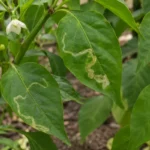
Green caterpillar-like larvae beneath rose leaves can be roseslug sawflies. Early feeding often leaves thin translucent windows that later turn brown or lacy. Larger larvae of some kinds chew full holes, so shape alone does not settle the identification. These sawfly signs are distinguished from other rose chewers in the University of Minnesota’s rose diagnostic.
Turn the leaves over and examine the animal. For those green insect larvae, investigate holes in rose leaves before using a mollusk bait. A true slug found at the base and a sawfly on the foliage can even occur in the same garden; treat the damage you have actually confirmed.
Search During Feeding Time and Compare New Damage
Take a flashlight to the injured plants after dark. Check the undersides of low leaves, the soil beside stems, pot rims and damp objects nearby. Cool wet weather can also bring slugs out on overcast days. A dry afternoon inspection often finds only the places they might shelter.
Begin around two hours after sunset if that suits local conditions, a scouting example from Oregon State. Use it as a starting point for an active evening, not an exact nationwide appointment. Rainfall, humidity and local temperatures change when animals are easiest to find.
Place an easy-to-lift board beside a patch with fresh injury. Leave access underneath, then turn it over the following morning and inspect both the underside and soil. Folded damp newspaper is another temporary refuge. Keep the location consistent during repeated checks so you can connect the catches with the crop nearby.
Photograph an injured leaf and mark which seedlings are intact. On the next check, look for additional missing tissue, newly cut seedlings and fresh feeding on previously sound leaves. Old holes do not close after successful control. If slugs remain absent across suitable checks, investigate other causes of seedling loss before adding bait.
How to Get Rid of Slugs in the Garden With Fewer Wet Refuges
Moist shade lets slugs shelter through the day and return to tender foliage at night. Start with objects close to recent damage: unused pots, forgotten boards, weeds and thick decaying litter touching seedlings. Lift and inspect them before moving them. A permanently neglected trap board becomes another refuge.
Pull excessive wet mulch away from vulnerable crowns and keep low leaves from resting on a damp mat. This is a targeted adjustment, not a reason to strip every protective layer from the garden. Check the roots’ growing medium before reducing irrigation; young plants still need enough water to establish.
Water near the roots in the morning where practical, allowing exposed surfaces more time to dry before night. Drip or soaker irrigation can reduce the area repeatedly wetted by sprinklers. The moist-shelter connection and these irrigation changes are part of Maryland Extension’s vegetable slug monitoring and prevention guidance.
A special handpicking session has a different aim from routine prevention. Late-afternoon wetting can draw slugs out for collection after dark, a tactic described by UC IPM. Use that only as a deliberate collection tactic; adding evening water without returning to collect can maintain the very conditions you meant to reduce.
Expect local weather to matter. Cool rainy spring and fall are common pressure periods in Oregon. Mild coastal climates can have activity through winter. Inspect fresh injury after wet weather; slug seasons vary across the country.
Collect Feeding Slugs and Empty Temporary Traps
Use gloves to collect confirmed slugs from foliage and refuges. Follow a consistent route through the injured bed, checking low leaves and hidden surfaces. Collection into a container of soapy water is one extension-described method; keep it away from children and pets and dispose of the contents appropriately. Do not pour salt onto the planting soil.
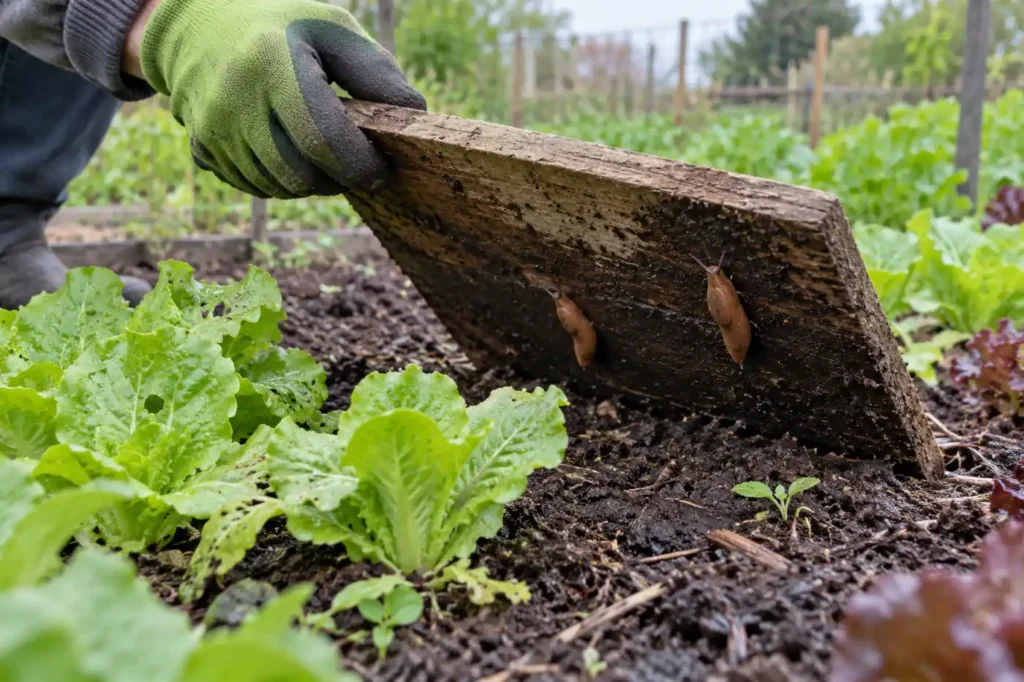
Check boards each morning during the initial effort and remove the occupants. UC IPM’s optional raised-board example permits entry beneath the board; Minnesota also describes simple flat boards and damp papers. No single board dimension guarantees a catch. Use a size you can lift and inspect safely.
Beer traps attract locally, not across the whole garden
Fermentation odors attract slugs to beer or yeast traps. The range is only a few feet in UC IPM’s account, so a cup at the far end of the yard does not protect every seedling. Place a suitable trap near confirmed feeding and inspect it regularly.
Use a design with enough liquid depth and sides that discourage escape, following the trap’s instructions. Protect the lure from unnecessary dilution or drying and keep animals from accessing it. A shallow open dish that pets can drink from is a poor trade for a few catches.
Begin with daily checks so you can see whether rain, evaporation or accumulated catches require attention. Refresh as needed for the design and conditions. Counting animals in one trap does not establish that the surrounding bed is protected; compare the crop’s fresh injury too.
Yeast or bread-dough lures are optional alternatives, not proven upgrades for every bed. Keep dogs away from raw dough lures, an explicit warning in Oregon State’s dough-slurry instructions. Where animal access cannot be prevented, use supervised collection or refuge boards.
Check the Whole Barrier for Gaps and Hidden Slugs
A copper band around a pot or raised garden bed can deter crossing when it forms a continuous obstacle. Clear slugs from the protected area first. A perfect outer band still leaves an enclosed slug beside the crop it is eating.
Inspect joins, dirty sections and leaves that bridge the strip. Keep adjoining pots and objects from creating a bypass. Attach flashing securely and protect sharp edges. A narrow decorative line is not equivalent to every copper installation described by extension sources.
Published widths differ. Oregon State’s garden pamphlet uses a 3-inch band; UC IPM’s quick tips describe a 4-6-inch band with its installation directions. These are design examples, not one guaranteed minimum for every slug and bed. Follow the chosen design, then check whether animals are crossing or were already inside.
| Method | Useful condition | Common limitation |
|---|---|---|
| Copper band | Complete, clean barrier around an inspected pot or bed | Gaps, leaf bridges and slugs already inside bypass it. |
| Diatomaceous earth | Dry conditions may permit a deterrent effect | Rain and irrigation undermine it where slugs are often active. |
| Coffee grounds or crushed eggshells | No reliable slug barrier established in UC IPM guidance | Do not rely on kitchen-waste rings to protect new seedlings. |
| Salt | Avoid applying it to garden soil | Salinity can harm roots and soil; collect the animals. |
Diatomaceous earth illustrates why the conditions matter. A possible dry barrier effect is described by UC and Oregon State; moisture undermines that effect, making the method generally unreliable in Minnesota garden guidance. Repeatedly wet soil is a poor place to expect a dry powder ring to remain effective.
Keep the barrier in a broader garden pest-management routine. Existing ground beetles, birds and other predators may eat slugs, but their presence does not prove the crop is protected. Avoid releasing purchased predators as a substitute for identifying the problem and checking local ecological restrictions.
Read the Full Slug-Bait Label Before Applying It
Consider bait when confirmed new feeding threatens the crop and physical measures are not protecting it adequately. Keep collecting and correcting wet shelters as appropriate. A pesticide does not remove a nearby refuge or prevent repeated arrivals from it.
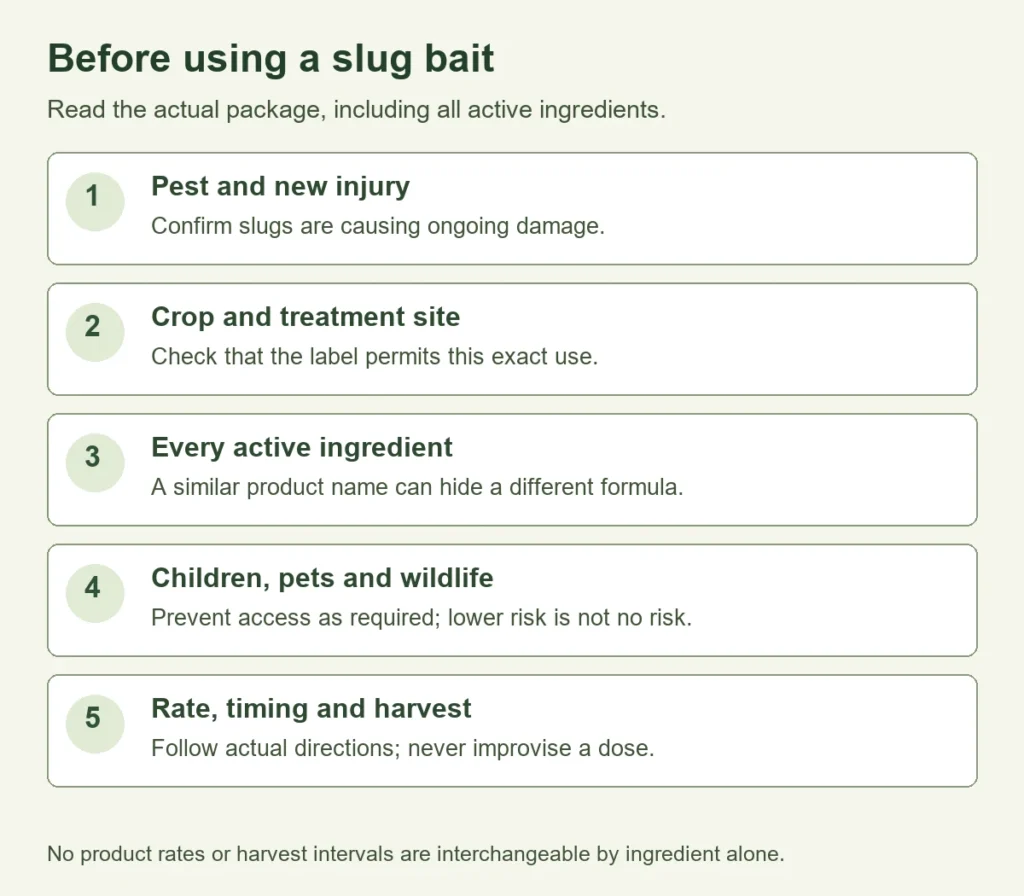
Identify the active ingredient and every additional active ingredient. Similar front labels can conceal different formulations. Check that the product permits the intended crop and site, then read animal precautions, application directions and any harvest restrictions. An older extension page naming a brand is not confirmation of its current registration or directions.
| Ingredient | What to understand | Precaution |
|---|---|---|
| Iron phosphate | Feeding can stop before slugs die out of sight. | Lower toxicity does not mean harmless if a pet eats enough; check all ingredients. |
| Ferric sodium EDTA | An iron-chelate bait that can act faster. | It is not identical to iron phosphate; do not infer organic approval from its name. |
| Metaldehyde | A mollusk bait with substantial ingestion hazards. | Avoid use where pets can access it; follow all current product precautions. |
Lower-toxicity iron phosphate is distinguished from a blanket safety promise in Oregon State’s bait precautions for garden slugs. Quantity still matters if an animal eats it. Some iron-phosphate products also include another pesticide such as spinosad, changing which other organisms may be affected.
Apply only the labeled amount and placement. Where the label directs scattering on soil, distribute it as directed along relevant travel areas; do not make piles beside every seedling. Keep pellets off edible foliage unless the actual directions explicitly authorize that use. More bait is not a correction for uncertain identification.
Follow the current label for timing, repeat applications, protective measures and crop harvest. Rain tolerance varies by formulation. Heavy rain after an application is a reason to check the directions and crop, not to double the dose automatically. If you cannot prevent children or animals from accessing the product as required, choose another method.
Use New Feeding to Decide Whether Control Is Working
Check the same plants during subsequent damp nights. Compare new leaf edges, surviving seedlings and animals found along the same route. A hot dry spell can hide activity without showing that the population has disappeared. Resume checks when conditions become favorable again.
If a beer trap catches slugs but seedlings keep disappearing, inspect closer to the plants and beyond the trap’s small attraction area. For an ineffective copper barrier, search inside the enclosure and check for bridges. A wet powder barrier no longer has the dry conditions its performance depends on.
After an iron-phosphate application, the absence of visible dead slugs does not by itself establish failure. Slugs can stop feeding and retreat before dying. Look for less new injury; an old perforated leaf will remain perforated.
Stop escalating when the vulnerable crop is no longer losing new tissue. An occasional slug beneath a board is not a validated numerical reason to keep baiting. Continue occasional checks around new plantings and after rain, with the aim of protecting the crop rather than removing every mollusk from the garden.
Conclusion
Start tonight beside the freshest damage, with a flashlight and a plan to inspect the nearby refuges. Collect the confirmed feeders, correct unnecessary wet shelter and check the next leaves. Use a barrier or labeled bait only when the remaining injury warrants it. A healthy new seedling is a better outcome to watch than the number of old holes still visible.