

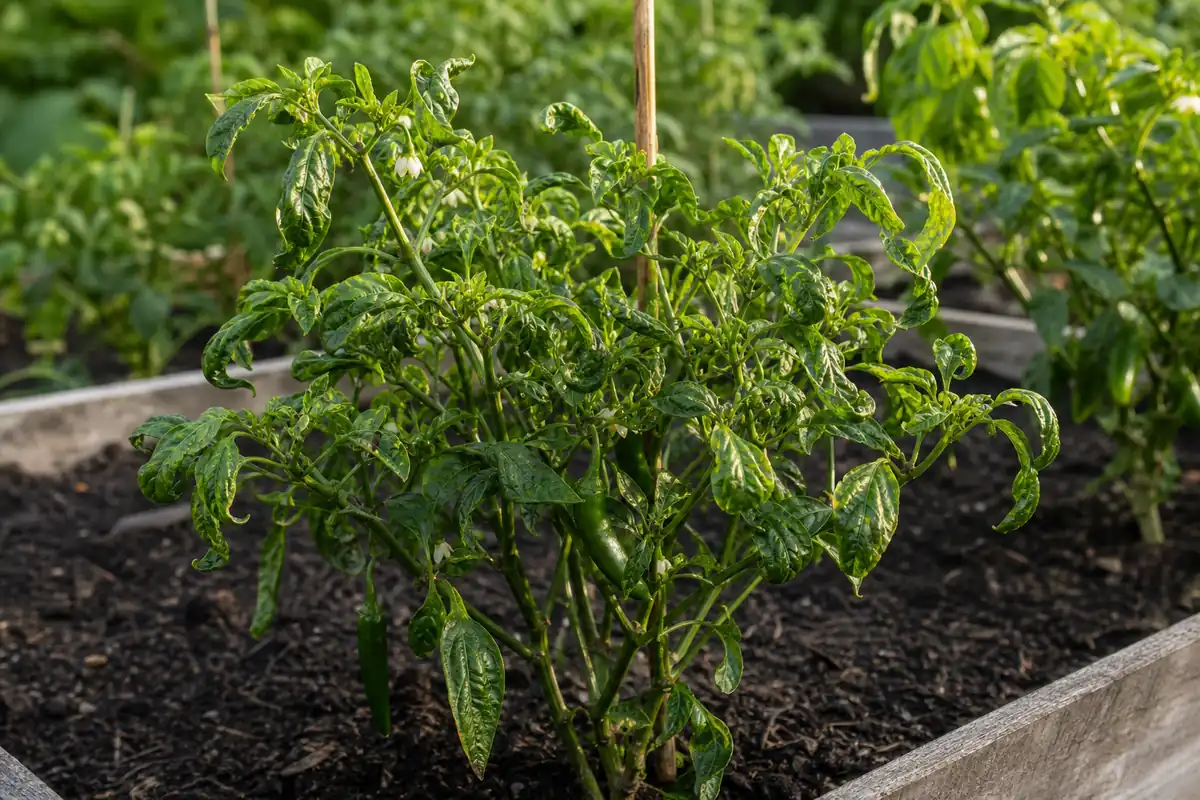
Curled leaves on pepper plants can mean ordinary heat stress, uneven watering, transplant shock, pests, herbicide exposure, nutrient trouble, or a virus, and the first clue is the direction of the curl. An older bell pepper leaf that cups upward after a hot windy afternoon does not carry the same warning as twisted, thick, downward-curled new growth on a chilli plant. Read leaf age, curl direction, texture, and pest evidence before adding fertilizer or spray.
Pepper plants react quickly because their leaves are thin, their roots dislike sudden wet-dry swings, and their tender growing tips show damage early. One curled leaf alone does not explain the cause. A pattern across new growth, lower leaves, flower tips, and nearby plants tells you which fix should happen first.
Fast Pepper Leaf Curl Check
Older leaves cup upward
Check heat, wind, dry root zones, bright light, and recent transplanting. Stabilize water before feeding.
Leaves curl downward with droop
Check wet soil, root stress, edema, and overwatering. Roots short on oxygen can look thirsty.
New growth twists or puckers
Inspect aphids, mites, thrips, whiteflies, herbicide exposure, and virus signs. New tissue carries the warning.
Curling comes with yellowing or stunting
Escalate to pest, nutrient, herbicide, or virus checks. Watch whether the next leaves open clean.
Key Takeaways
- Read curl direction before changing care.
- Check new growth for pests, drift, or virus.
- Correct moisture before adding fertilizer.
- Inspect leaf undersides twice weekly in heat.
- Judge recovery by clean new leaves.
Table of Contents
Curled Leaves On Pepper Plants: Start With Direction And Leaf Age
Curled pepper leaves become easier to read when you separate older leaves from the newest growing tips. Older leaves usually show environmental stress first. New leaves show damage from pests, herbicide exposure, nutrient access, and virus more clearly because they are still expanding.
Upward cup on older leaves often follows heat, wind, bright light, underwatering, or transplant stress. The leaf curls to reduce exposed surface area. The plant may still flower, hold fruit, and open normal new leaves after the root zone steadies.
Downward curl needs a root and pest check. Wet soil can cause roots to lose oxygen, and the canopy can droop or curl even though the pot or bed is damp. Broad mites can also make young pepper leaves curl downward, stiffen, and look bronzed or puckered. The same direction can point to two very different problems, so texture and leaf age matter.
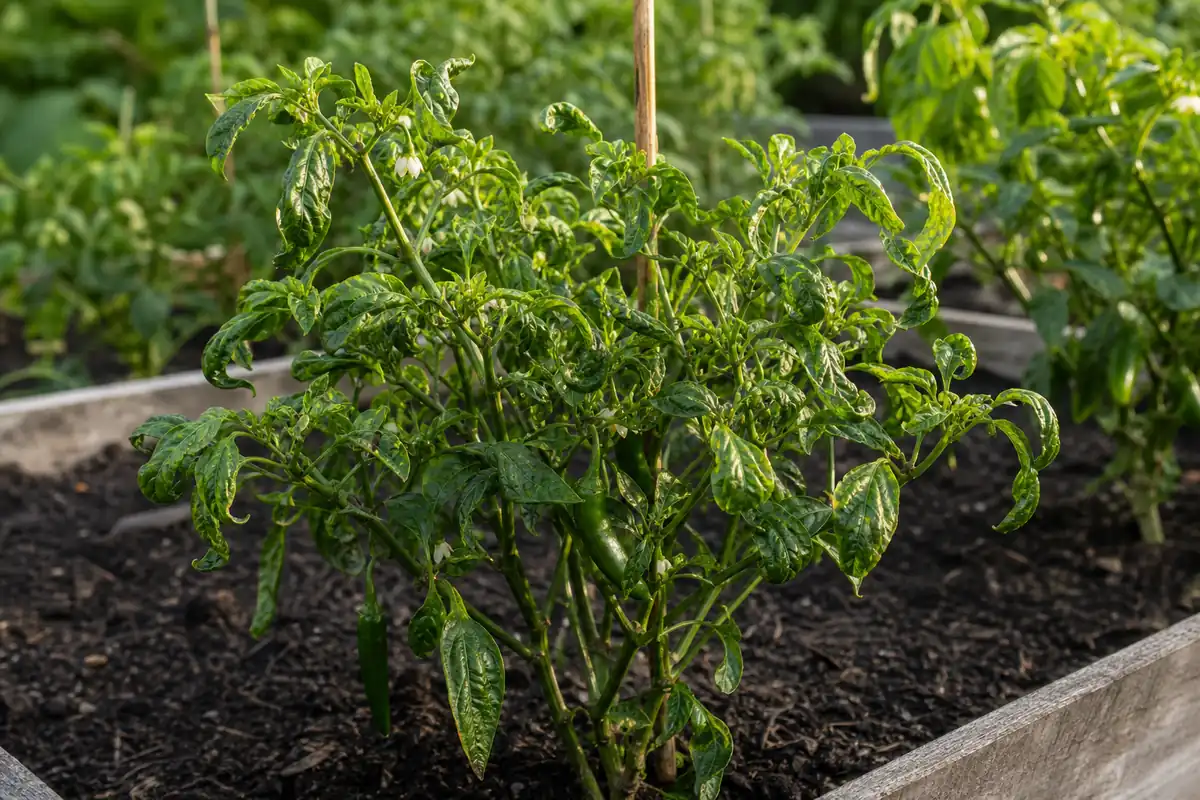
The broad pattern overlaps with plant leaves curling. Peppers need a tighter Capsicum read because bell peppers, hot peppers, and chilli plants react similarly, and thin-walled container peppers often show water and heat stress faster than larger in-ground plants.
| Curl pattern | Most likely lane | First check | First action |
|---|---|---|---|
| Older leaves curl upward | Heat, wind, dry roots, transplant stress | Soil moisture at depth, recent weather | Water deeply, shade temporarily, avoid pruning |
| Leaves curl downward and droop | Wet roots, root damage, edema | Pot weight, drainage, leaf bumps | Let oxygen return and adjust watering |
| New leaves twist, pucker, or harden | Mites, thrips, herbicide, virus | Undersides, growing tip, nearby spraying | Isolate the cause before spraying or feeding |
| Curling with yellowing and stunting | Pests, nutrient access, virus | Whiteflies, aphids, new leaf color | Inspect pests and monitor new growth |
Upward Curl, Downward Curl, And Twisted New Growth Mean Different Things
Upward curl usually starts as a water-balance problem. Hot air, dry wind, strong light, root restriction, and a fruit load can make pepper leaves curl to reduce water loss. The plant often looks worse in midafternoon and better the next morning. Clean new growth and normal flowers make this lane less alarming.
Downward curl is more diagnostic when it appears on tender growth. Broad mite feeding can make pepper leaves curl, point downward, and distort at the growing tip. Broad mite damage on pepper leaves is shown as curled, distorted, downward-pointed foliage, which is why it is often mistaken for herbicide injury or virus.
Side-to-side curling or canoe-shaped leaves often appear after a sudden environmental change. A seedling moved from indoor light to full sun may curl along the edges before it thickens its cuticle. Black containers can curl the leaves on the side facing afternoon heat. Plants near walls or fences can show stronger curl on the reflected-heat side.
Leaf age keeps the diagnosis grounded. Old leaves record what happened days ago. New leaves show what the growing point is experiencing now. A pepper with old curled leaves and clean new growth is already improving. A pepper with normal older leaves and distorted new growth is still under active pressure.
Twisted new growth asks for a slower inspection. Aphids and thrips feed on tender tissue. Whiteflies can build on undersides. Herbicide drift often hits the most actively growing leaves. Virus symptoms can continue into each new flush. The newest leaves tell you whether the problem has stopped or is still active.
Texture matters as much as direction. Soft curled leaves with wet soil suggest roots. Thick, leathery, or rigid leaves suggest herbicide-type distortion or mite injury. Puckered leaves with sticky residue or tiny insects suggest pests. Yellow curled new leaves with stunting raise the virus concern.
Heat, Water, Wind, And Transplant Stress Usually Come First
Peppers curl readily after a move from a protected tray to open garden weather. The roots are still rebuilding, the leaves suddenly face more sun and wind, and the potting mix or bed may dry unevenly. A transplant can cup leaves for several days without being diseased.
Water rhythm is the first correction because both dry roots and wet roots can curl leaves. A dry pepper plant often feels light in a container, wilts in heat, and recovers after a deep watering. An overwatered pepper often sits in heavy soil, grows slowly, and may show drooping, yellowing, edema bumps, or downward curl. The broader signs of overwatering plants help separate wet-root stress from ordinary thirst.
Edema can appear when roots take up water faster than leaves can release it. Pepper leaves may show small bumps, corky patches, or rough texture, often after cool cloudy weather, overwatering, or poor airflow. Leaf removal rarely fixes edema; a calmer dry-down cycle, better light, and more air around the plant matter more.
Wind and direct afternoon sun can curl leaves even when soil moisture is acceptable. Young peppers hardened off too fast may curl, bleach, or stall. Temporary shade cloth, wind protection, and deep morning watering usually help more than a quick fertilizer dose. Pepper stages matter here; a young transplant, flowering plant, and fruit-loaded plant have different water demands through pepper plant growth stages.
Wilting changes the curl diagnosis. A curled pepper leaf that also hangs limp in wet soil should be checked against plant wilting symptoms because root oxygen, stem damage, heat, and soil moisture can all interrupt water movement. Curl without wilt usually gives you more time. Curl with persistent wilt needs faster root and stem inspection.
Mulch can help or hurt. A light mulch layer cools soil and slows moisture swings. Thick wet mulch packed against a pepper stem can keep the crown damp and invite lower-stem trouble. Keep the stem base visible, water the root zone rather than the foliage, and let the upper soil breathe between irrigations.
Aphids, Mites, Thrips, And Whiteflies Hide In New Growth
Pest-driven curl usually begins where the plant is most tender. Turn over the newest leaves and look into the growing tip. Aphids cluster along stems and undersides and leave sticky honeydew. Thrips scrape tender tissue and can make leaves curl, pucker, or look silvery. Whiteflies lift off as tiny pale adults when leaves are disturbed.
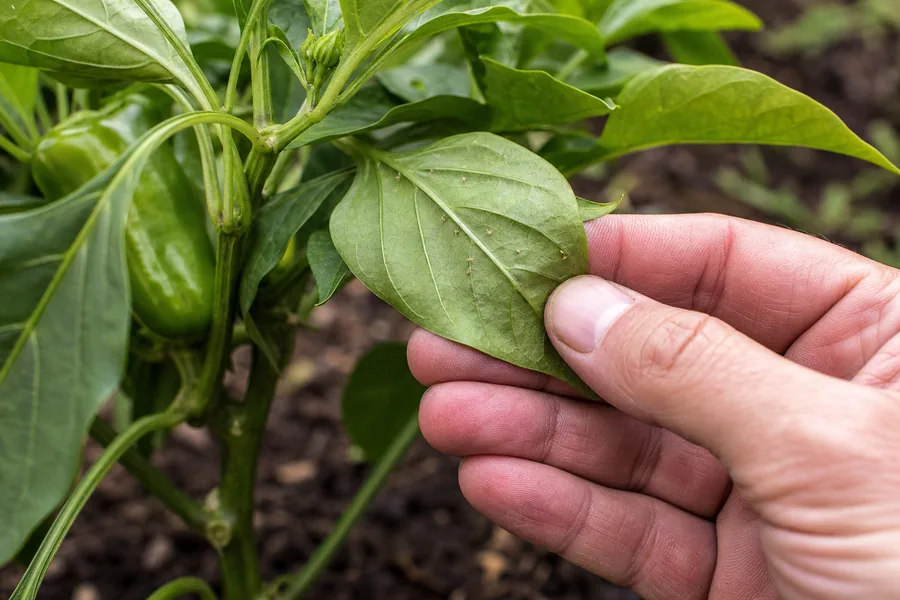
Thrips feeding on pepper foliage can distort leaves and cause curling or puckering. Thrips are small, fast, and easy to miss without tapping leaves over white paper. Damage may remain after the insect pressure drops, so judge control by the next growth point more than old scarred leaves.
Whiteflies deserve attention when curling comes with yellowing, sticky residue, or viral-looking growth. Whitefly monitoring in peppers focuses on checking margins and using sticky traps to detect movement. Home gardeners can adapt the same idea with underside inspections, yellow cards, and early removal of heavily infested leaves.
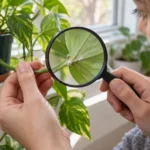
Broad mites are the hidden pest that makes pepper curl diagnosis harder. They are too small for a normal field check, and their feeding can harden, bronze, and distort new leaves. A hand lens helps; symptoms often appear before the mite is seen. Suspect broad mites when new growth curls downward, looks tight or glossy, and no visible aphid or whitefly colony explains the damage.
Inspect the growing tip before the whole plant. Aphids and whiteflies often sit on the underside of tender leaves. Thrips hide in flowers and folded tissue. Broad mite damage concentrates where new leaves unfold. A clean older leaf does not rule out pests when the top of the pepper is puckered, sticky, bronzed, or crowded with tiny moving specks.
Beneficial insects can keep small pest populations from becoming a curl problem. Lady beetle larvae, lacewing larvae, minute pirate bugs, and predatory mites may already be working in the canopy. Broad sprays can remove those allies and leave the pepper more exposed to the next pest wave. Identify the pest first, then choose the narrowest correction that fits the plant and the label.
Nutrient Problems And Herbicide Exposure Change The Shape Of New Leaves
Nutrient stress usually changes color and growth before it creates severe curl. Nitrogen shortage can pale older leaves. Calcium and boron problems can distort growing tips under some conditions. Magnesium shortage may show between veins on older leaves. These patterns matter; fertilizing before moisture and roots are stable can make a stressed pepper worse.
Container peppers run into nutrient swings faster than in-ground peppers. Repeated watering flushes nutrients out of small pots, and hot containers dry in layers. A plant with pale leaves, curled edges, and a dry root ball may need a consistent watering rhythm and a measured feed. A plant with dark green leaves, wet soil, and curled new growth needs a root and pest check first.
Herbicide exposure often shows in new growth because growth-regulator herbicides affect expanding tissue. Herbicide injury in garden plants can include leaf cupping, petiole twisting, color change, severe distortion, and low vigor. Peppers, tomatoes, grapes, and other broadleaf crops can be sensitive to drift or contaminated organic materials.
Map the plant before blaming disease. Drift may affect the side facing a sprayed lawn, field, road edge, or fence line. Contaminated compost, hay, manure, or grass clippings may affect several unrelated broadleaf plants at once. Do not compost suspicious pepper foliage, and do not harvest from potentially exposed plants until the herbicide, timing, and local guidance are clear.
Fertilizer salt can add another curl layer in containers. White crust on the soil surface, burned leaf edges, and curling after repeated feeding point toward salt buildup around fine roots. Flush only when the pot drains freely. A container with poor drainage needs repotting or better outlets before extra water can help.
Calcium deficiency is often blamed for curled pepper leaves because peppers also suffer blossom-end rot. Calcium movement depends on water movement, so irregular moisture can create fruit problems without making leaf curl the main symptom. Treat blossom-end rot as a fruit and water-movement problem unless the newest leaves are also distorted, pale, or dying at the tip.
Physiological Curl And Viral Disease Need Different Decisions
Physiological curl is a stress response. The plant is alive, the growing point may still look healthy, and new leaves can return to normal after water, light, wind, or root stress improves. Old curled leaves may never flatten fully. That does not mean the plant is still failing.
Virus symptoms keep moving into new tissue. Pepper leaf curl virus and related viral problems often bring stunting, yellowing, vein clearing, puckered growth, and distorted new leaves. Fruit may be small, misshapen, or poorly set. Whiteflies, aphids, and thrips can raise virus concern because some viruses move through insect vectors.
Use the pattern, not one curled leaf. A pepper that curls on hot afternoons, then opens clean new leaves, is usually responding to stress. A pepper that keeps producing small twisted leaves, stays stunted, shows mottling, and carries pest pressure needs isolation and local diagnostic help. There is no home spray that cures a systemic virus already inside the plant.
Virus suspicion rises when several warning signs travel together. Curl plus yellowing, vein clearing, short internodes, stunting, poor flowers, and distorted fruit carries more weight than curl alone. Compare nearby peppers, tomatoes, weeds, and ornamentals. A one-plant problem after transplanting points one way; multiple plants showing new-growth distortion after pest pressure or drift point another.
What To Correct First And Whether Leaves Recover
Start with the correction that cannot hurt the plant. Check soil moisture at root depth, not only the surface. Improve drainage if the pot stays heavy. Water deeply if the root zone is dry. Move containers away from reflected heat. Add temporary shade after transplanting. Stop fertilizing until roots are taking up water normally.
Inspect pests before spraying. A blast of water can reduce aphids on sturdy plants. Sticky traps can show whitefly or thrips movement. Remove the worst pest-loaded leaves only when enough healthy foliage remains. Use pesticide products only according to the label and only after the pest is identified. Broad mites, thrips, aphids, and whiteflies do not all respond to the same approach.
Document herbicide suspicion. Take photos, note dates, record wind direction, and mark which side of the plant is worst. New leaves that emerge clean after one or two weeks suggest the exposure stopped. New leaves that keep twisting suggest ongoing exposure, pests, virus, or severe growing-point damage.
Curled pepper leaves recover when the tissue was only temporarily stressed. Leaves deformed by mites, herbicide exposure, or virus usually do not become normal again. Recovery shows in fresh growth: broad leaf blades, normal veins, straight petioles, new buds, and fruit that starts sizing without distortion.
Remove leaves only when they are clearly dead, pest-loaded, rubbing the soil, or blocking airflow. A curled leaf that remains green can still feed the plant during recovery. Heavy pruning on a stressed pepper exposes fruit and stems to sunscald, then creates another stress signal that looks like a new problem.
Give the plant a short recovery window after a low-risk correction. Stabilize water, reduce heat stress, and remove visible pests, then watch the next two leaves. Clean new growth over seven to fourteen days is a stronger success sign than old curled leaves flattening out.
Conclusion
Curled pepper leaves are a pattern, not a final diagnosis. Upward cup on older leaves usually starts with heat, water, wind, or transplant stress. Twisted new growth sends the check toward pests, herbicide exposure, nutrients, or virus.
Start with root moisture, leaf age, and the newest growing tip. A recovering pepper opens cleaner leaves, holds buds, and carries a canopy that looks flexible and green in morning light.
Frequently Asked Questions
What do overwatered pepper plants look like?
Overwatered pepper plants often look droopy, slow, and dull with leaves that curl downward or yellow near the lower canopy. The soil stays wet below the surface and the pot may feel heavy.
Why are my pepper leaves deformed?
Deformed pepper leaves usually point toward damage while the leaf was expanding. Common causes include broad mites, thrips, aphids, herbicide exposure, edema, nutrient access problems, or virus symptoms.
Are curled leaves on chilli plants treated like bell pepper leaf curl?
Chilli plants and bell peppers are both Capsicum crops, so the diagnostic pattern is similar. Read curl direction, new growth, pests, water stress, and virus signs before choosing a correction.
Can curled pepper leaves turn flat again?
Stress-curled pepper leaves may relax after water, heat, wind, or root stress improves. Leaves distorted by mites, herbicide injury, or virus often stay misshapen, so clean new growth is the better recovery sign.