
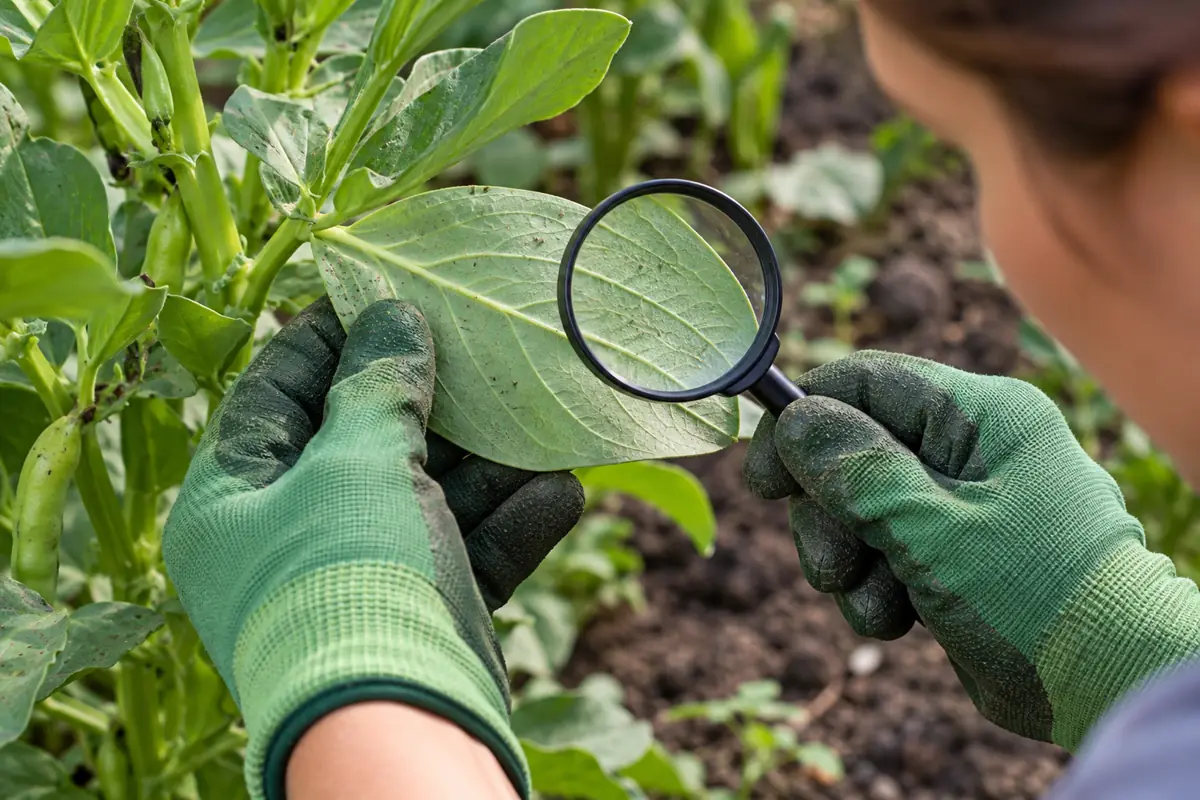
Insecticidal soap works by directly wetting susceptible pests, including exposed aphids, whiteflies and spider mites. The dried spray does not leave a protective insect-killing coating. Before reaching for a bottle, turn over the affected leaves and find out whether a living pest is present and reachable.
That check prevents two common mistakes: spraying old damage and soaking the wrong side of a leaf. A registered potassium-fatty-acid soap is also different from dishwashing detergent, even if both make suds. Choose the product for its actual plant, pest and site directions. Then check leaf sensitivity, weather, helpful insects and water nearby. A few aphids on a vigorous plant may need only monitoring or a suitable water spray. If treatment is warranted, careful contact with the pest matters more than a stronger mixture or an automatic repeat schedule.
Before you spray, pass these four checks
- Find the target: confirm living, exposed pests; old spots and empty scale covers are not enough.
- Read the product: check active ingredients, permitted plant and site, mixing, protection and harvest directions.
- Check the plant: postpone on stressed foliage or unsafe weather; test a small permitted area first.
- Check the route: reach the pests without wetting helpful insects, flowers or nearby water.
After treatment, inspect living pests and new leaf injury before considering a label-permitted repeat.
Key Takeaways
- Confirm living pests and their exposed stage before spraying.
- Choose labeled potassium soap rather than household dishwashing detergent.
- Test permitted foliage and avoid stressed plants or unsafe weather.
- Wet the actual pests without drenching flowers or beneficial insects.
- Recheck live populations and leaf health before repeating treatment.
Table of Contents
Insecticidal Soap Needs Wet Contact With a Susceptible Pest
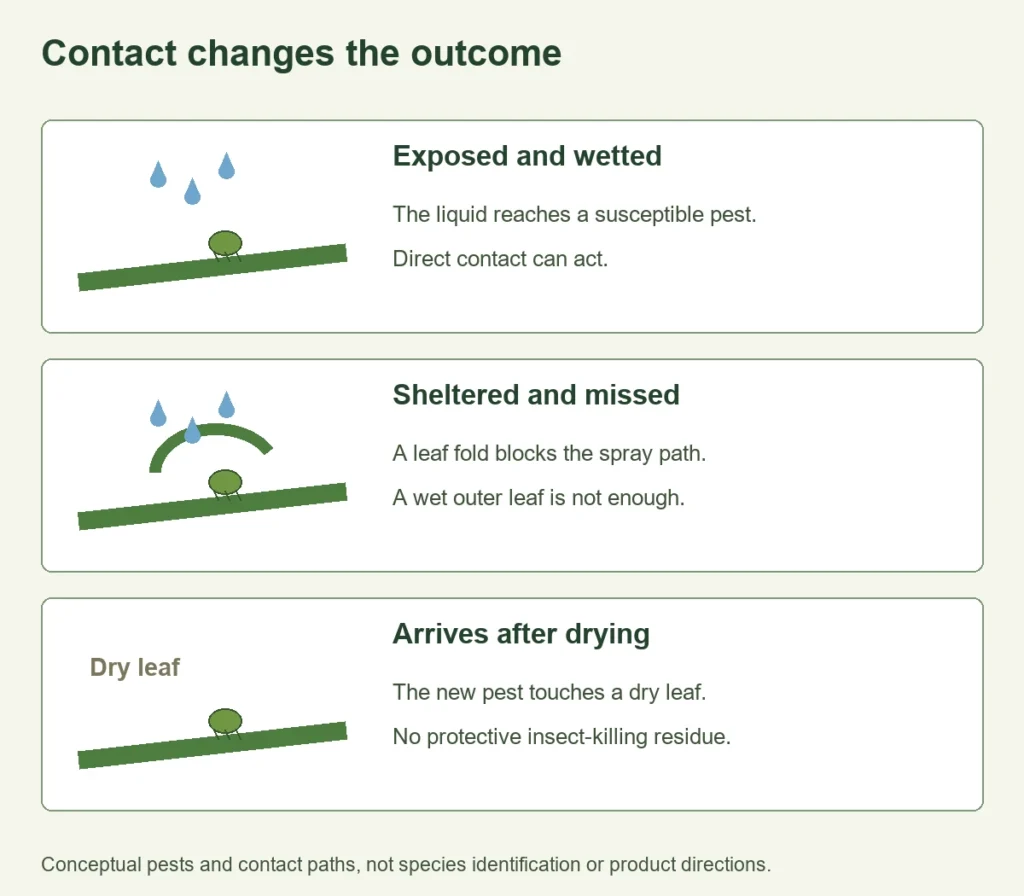
The active ingredients in true insecticidal soaps are potassium salts of fatty acids. They disrupt susceptible pests’ cell membranes and can affect their protective outer surfaces. Direct contact is the useful practical distinction: the liquid must reach the animal. It does not work as a systemic treatment absorbed through the plant.
A shiny upper leaf can conceal a completely missed colony below it. Aphids within a tightly curled leaf can also remain sheltered. Once the application dries, a new insect arriving on the leaf is not controlled by walking across the old residue. These contact and coverage limits are central to Colorado State’s soap guidance.
Keep the treatment within a broader garden pest-control strategy. Low populations on a strong plant can be tolerated, and accessible pests may respond to hand removal or a water jet the plant can withstand. Inspect for predators before disturbing a colony that is already declining.
Pest Stage and Shelter Matter as Much as the Pest’s Name
Small, soft-bodied exposed stages are the usual candidates. Size, wax, hard coverings and hiding places limit contact. Confirm the organism and check that the product permits the intended use; the word insecticide does not mean every insect is a suitable target.
| What you find | Why contact may work or fail | What to check |
|---|---|---|
| Exposed aphids on shoots or leaf undersides | Bodies can be wetted; tightly curled leaves shelter colonies. | Check new growth and predators; try suitable physical removal first. |
| Whiteflies on foliage | Stationary nymphs are often under leaves; flying adults are only part of the population. | Lift leaves and inspect the attached immature stages. |
| Spider mites with stippling or webbing | Directly wetted mites may be affected; eggs and missed mites can remain. | Use a hand lens or a gentle tap over white paper to confirm moving mites. |
| Mealybugs or scale | Young crawlers are more exposed than waxed mealybugs or shielded adult scales. | Identify the stage and location, including hidden joints or roots. |
| Thrips in buds or flowers | Shelter can keep the spray from reaching them; blooms can also be injured. | Confirm the pest and consider a different plant-specific approach. |
| Large beetles or chewing larvae | Many are poor soap-spray targets. | Identify the organism; do not compensate by increasing concentration. |
Inspect aphid colonies and their natural enemies before choosing the next step. UC IPM distinguishes exposed aphids from those protected inside curled foliage. The curled tissue will not straighten simply because the insects are gone.
For cottony mealybugs on houseplants, inspect the leaf joints and pot separately. A foliar contact spray cannot be assumed to reach root-feeding mealybugs. Isolate an infested pot and select management for the actual location.
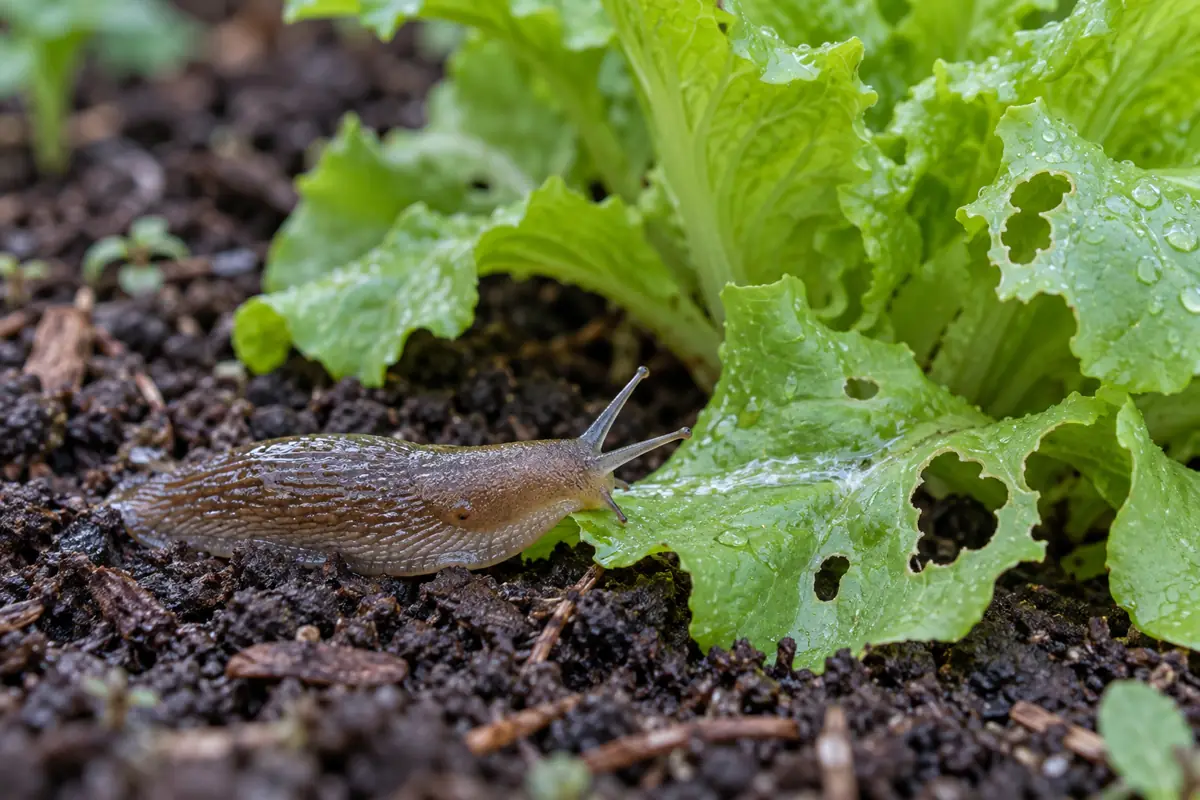
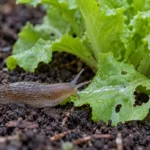
Some young exposed sawfly larvae are a qualified exception to the poor fit of larger chewing insects. Exposed young rose and hibiscus sawflies can respond to contact treatment in Connecticut guidance; larger larvae are less responsive in Colorado State’s advice. If you find holes in rose leaves, identify the feeder first. A rose sawfly larva, a caterpillar and a terrestrial slug require different decisions.
Read the Active Ingredient and Directions Before Mixing Anything
Look for potassium salts of fatty acids in the active-ingredient panel. Read every other active ingredient too. A product carrying the word soap may also contain another pesticide. Horticultural oils, neem-derived ingredients and spinosad are distinct materials in UC IPM’s pesticide guidance; their directions and precautions are not interchangeable.
A ready-to-use bottle and a concentrate also require different handling. Apply the ready-to-use product as directed. Measure a concentrate only according to its own mixing instructions, using dedicated measuring equipment and the required protective clothing. Do not borrow another bottle’s dilution or add household ingredients to improve it.
Check the plant or crop group, application site, permitted uses, rate, repeat limits and environmental precautions. On food crops, check harvest restrictions and any washing directions. Do not infer harvest-day use from another soap product or from the word organic. The specific pesticide labeling governs permitted use, as the EPA explains.
Why homemade insecticidal soap is not a dependable substitute
Dishwashing detergents are formulated for cleaning, with ingredients that can damage plant leaf surfaces. Suds do not show that a mixture has the same selectivity or crop directions as an insecticidal product. A more concentrated homemade mix can increase injury without creating lasting protection.
Extension advice is not uniform: a University of Georgia county article offers a dish-soap mixture, and Colorado State, Connecticut and Minnesota advise against household substitutes. For general garden use, choose a properly labeled product or a suitable nonchemical method. A recipe that affected aphids on one plant does not establish tolerance on another cultivar.
Plant Stress, Leaf Sensitivity and Mixing Water Change the Result
Read the sensitive-plant and prohibited-use directions before a patch test. A test cannot authorize a plant or site the label excludes. Delicate ferns, jade plants, begonias and cucumbers are among the potentially sensitive plants identified by Connecticut. Cultivar, tender growth, water stress and the number of applications can change the plant’s sensitivity to soap.
Test a small representative permitted area at the correct rate and compare it with an untreated leaf. Mark or photograph the patch so later spotting can be placed in time. Inspect for yellow or brown spots, scorched margins and damaged tips before treating more foliage.
Observe the test for at least 24 hours in Connecticut’s guidance; Colorado State uses a day or two. Follow the actual product’s instructions, including a longer test period when specified. A clear patch does not guarantee tolerance after repeated treatment or a change in weather.
Check conditions, not a universal clock time
Do not spray a wilted, drought-stressed plant simply because pests are visible. Assess the root-zone water supply and let the plant recover under suitable conditions. Heat and intense sun raise injury risk. Temperatures above 90°F, humid conditions and vulnerable growth are among the concerns in Connecticut’s guidance. The product can impose additional limits.
Cooler conditions can slow drying and improve contact, but evening alone is not permission to spray. A hot humid evening, active bees or a sensitive windowsill plant can still be unsuitable. Use the actual weather, plant condition and label rather than a fixed hour.
For concentrates, follow the mixing-water guidance. Minerals in hard water can combine with soap and form a visible precipitate, reducing activity. Curds or scum call for checking the manufacturer’s directions. Do not add vinegar, extra concentrate or a guessed water conditioner to correct the mixture.
How to Use Insecticidal Soap Where the Pests Are Feeding
- Reinspect the selected plant. Locate living susceptible pests and helpful insects immediately before application. Do not spray empty foliage for future protection.
- Prepare the correct product. Follow format, dilution, protective equipment and application instructions. Keep people and animals clear as directed.
- Position the leaf without damaging it. Make the infestation visible. Undersides, shoot tips and accessible joints need deliberate attention; fragile growth may not tolerate forceful handling.
- Wet the target pests. Direct the application to the infested surfaces according to the label. Avoid excessive runoff and drift. A wet upper leaf does not confirm contact below.
- Leave a record and recheck. Note the plant, product, rate, date and treated area. Follow the label for equipment cleanup, storage, reentry and any further treatment.
On a food crop with whiteflies, inspect the attached nymphs under leaves before treating. If bees are visiting flowers that cannot be kept out of the spray route, change the plan. On a sensitive houseplant with waxed mealybugs, isolation and careful physical removal may be more useful than repeatedly soaking the plant.
Living Pests and New Leaf Injury Decide Whether to Repeat
Return to the marked infestation and inspect comparable leaves or growing points. Note living pests, newly exposed stages and any fresh scorch. Old stippling, scars and curled leaves will remain; they are poor measures of whether a contact treatment reached its target.
New pests can appear because eggs hatched, sheltered stages survived or insects arrived later. That does not mean yesterday’s dried spray should have protected the plant. Consider another application only when scouting justifies it and the current label permits the interval and total use.
| Observation | Possible explanation | Changed action |
|---|---|---|
| Underside colonies remain; upper leaves were wetted | The spray missed the target. | Improve permitted contact if the plant tolerates treatment. |
| Waxed adults, hidden buds or curled leaves remain infested | The susceptible stage is not reachable. | Choose a pest-specific alternative; do not strengthen the mix. |
| New pests appear after the spray dried | New arrivals or previously protected stages are present. | Identify the live stage and consult the label before repeating. |
| New brown spots follow the treated pattern | Spray injury may overlap with pest damage. | Stop further applications and compare untreated foliage. |
| A concentrate leaves scum or curds | Mixing water or formulation may be unsuitable. | Check product water instructions before continuing. |
| Few pests remain and predators are active | Biological control may be reducing the population. | Monitor and avoid disrupting effective natural enemies. |
More frequent spraying can accumulate leaf injury. If the plant looks worse after each application, stop and reassess the diagnosis, exposure and product fit. Changing to another pesticide also requires a fresh label and pest check; it is not an automatic next step.
Direct Contact Can Harm Helpful Animals and Aquatic Life
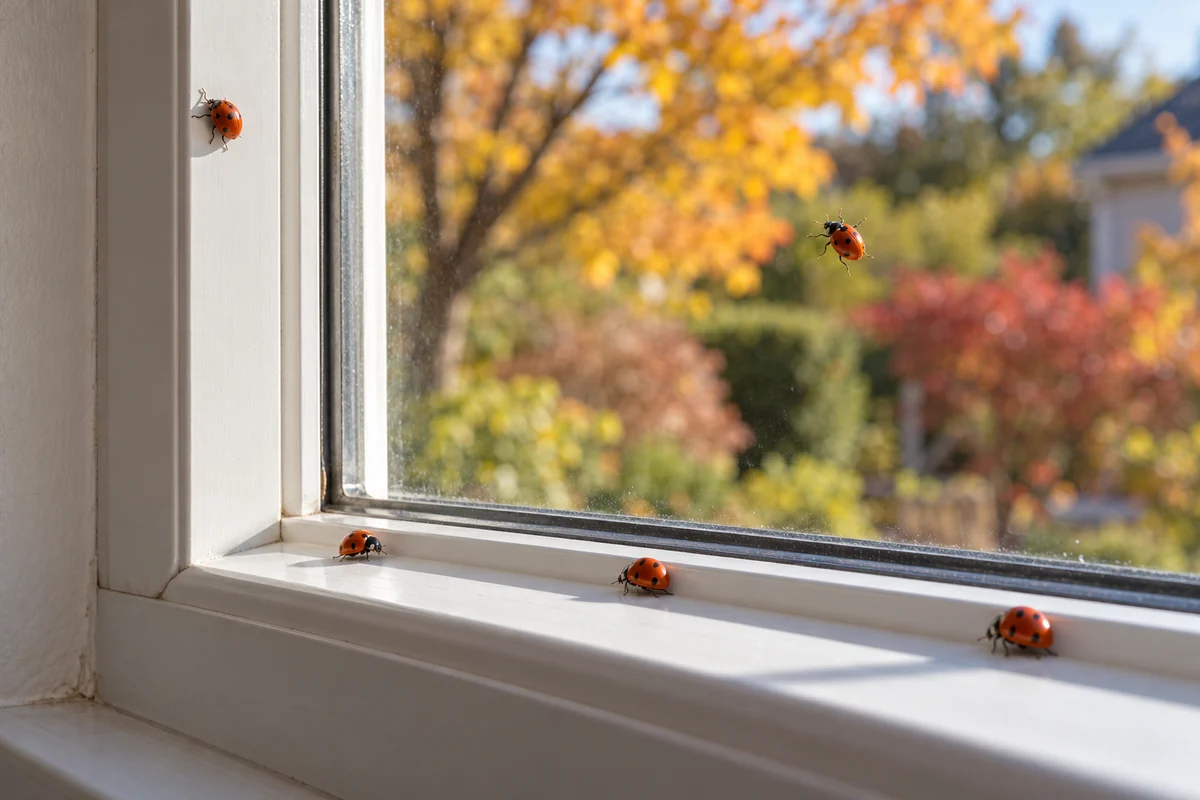
Short-lived residues do not make direct spraying harmless. Beneficial mites and other natural enemies can be affected when wetted. Avoid spraying visible pollinators, predators and open flowers, and preserve populations already controlling the pests. A fixed evening hour does not establish their absence.
Keep the spray and cleanup water away from ponds, drains and waterways. Insecticidal soaps can harm fish and aquatic organisms. If drift or runoff cannot be avoided at the site, use a suitable physical control and obtain local plant-specific advice. Biodegradability does not remove the hazard of immediate exposure.
Store the product in its original labeled container and follow its disposal directions. Keep the label available for later checks. An unexplained reaction in a plant or an unintended exposure needs the product’s own instructions, not a general soap recipe.
Conclusion
Turn the leaf over before choosing a spray. Confirm the living target, its exposed stage and the product’s permitted use. Test suitable foliage, check the conditions and reach the pest carefully. Then judge the result by live populations and leaf health, stopping when the plant needs a different approach.