
How to grow artichokes depends first on whether you can keep the crown alive through winter or need flower buds in a single growing season. In a mild, well-drained coastal garden, established crowns can return for several years. In a cold-winter garden, start an annual-suited cultivar early and plan the cool exposure that helps seedlings produce buds during their first year.
The edible globe is an unopened flower head. A healthy plant can make an impressive rosette of silver-green leaves without producing that harvest, especially when its cold treatment or season is inadequate. Good soil and extra feeding cannot replace the missing conditions for flowering. Check your cultivar, local frost window, available growing space and chilling method before sowing. Then keep the root zone evenly moist and watch the developing buds closely; once the purple flowers open, the preferred eating stage has passed.
Choose your growing route
Hard winter: grow an annual-suited cultivar such as Imperial Star from early starts. Plan and monitor seedling chilling; a cool night alone is not a reliable program.
Mild winter: consider healthy rooted divisions or transplants for a perennial bed. Confirm local crown survival, drainage and room for mature plants.
Harvest goal: cut full, firm heads while the bracts remain closed. Keep smaller side buds to develop after the main head.
Cold exposure for living seedlings must stay above freezing. It is a different operation from storing a dormant crown.
Key Takeaways
- Choose the annual or perennial route before buying plants.
- Record seedling temperatures when planning a first-year bud harvest.
- Protect young starts from freezing and overheated cold frames.
- Allow room for broad foliage and safe harvesting access.
- Harvest firm unopened heads and preserve the smaller side buds.
Table of Contents
How to Grow Artichokes for Your Climate
Globe artichoke is Cynara cardunculus Scolymus Group, also sold under the older name Cynara scolymus. Jerusalem artichoke, or sunchoke, is Helianthus tuberosus, a sunflower grown for underground tubers. Check the botanical name before buying; seedling and flower-head instructions belong to the globe crop.
The globe plant is botanically perennial. Growing it as an annual means managing it for one season because keeping the crown through winter is unreliable or inconvenient. It does not change the plant into a short-lived species.
| Your conditions | Practical starting route | Check before committing |
|---|---|---|
| Hard winter, limited crown survival | Early annual-suited transplants | Chill treatment, length of season and room to grow |
| Mild winter and moderate summers | Healthy crown division or transplant for a perennial bed | Winter drainage, local survival and long-term canopy space |
| Very hot interior or exposed patio | A locally tested cultivar and protected root zone | Summer bud quality, container heat and realistic harvest timing |
Choose a cultivar for the harvest year
‘Imperial Star’ is bred for annual production. Utah State University Extension contrasts it with ‘Green Globe’, which generally performs better when maintained over several years. An annual-suited seed label helps select the route; it does not mean that cooling, establishment and a suitable season no longer matter.
Other cultivars differ in spines, bud shape and sensitivity to heat after chilling. Buy seed or plants identified for your intended growing method and region. A purple bud is a color trait, not proof that the plant will crop earlier or survive a colder winter.
Separate Warm Germination From Cool Flower Induction
Seed germination and flower induction need different conditions. Start seeds in clean seed-starting mix at the packet’s depth, keeping it moist and draining freely. Warm germination near 70-80 F is used in Extension production guidance. After emergence, give the seedlings strong light and room for roots to develop.
Work backward from your local spring frost period and chosen chilling method. A planning range of roughly 6-12 weeks before the expected last frost accommodates different production systems. A tray started late may grow leaves successfully and still run out of time to make an edible crop.
Plan vernalization before spring temperatures rise
Vernalization is cool exposure that helps a responsive young artichoke switch toward flowering. It is not the same as germinating seed or acclimating leaves to outdoor sun. Oregon State University’s globe-artichoke guidance emphasizes that the required treatment varies with cultivar and location.
The current University of Maine seedling vernalization program uses about 500 hours at 35-50 F for many cultivars, with controlled chilling for at least three weeks. It describes field-ready plants with four to six true leaves and also allows controlled treatment of younger starts. This is a documented reliability approach, not a universal biological minimum.
A shorter program is not equivalent evidence. In Maine’s 2021 trial, plants spent 14 days at 40 F and bud formation still varied among treatment groups. The report also discusses a ten-day practice. Neither establishes that every cultivar will crop after ten cool days.
Keep a cooling record
- Cultivar and seed source.
- Date of emergence and true-leaf stage.
- Temperature measured beside the seedling trays.
- Dates and duration within the intended cool range.
- Any freezing, drying, saturation or overheating during treatment.
Three weeks in an unsuitable room is not three weeks of verified chilling.
Protect living seedlings during the treatment
Use a monitored cool space that can maintain suitable conditions, with light and moisture checks. A household refrigerator is not automatically a suitable growing chamber: darkness, drying and limited room can damage starts. Check the actual setup before placing an entire crop inside it.
Natural outdoor chilling can work in a long cool spring, with more uncertainty. Protect starts when temperatures threaten to fall below 35 F, and ventilate a cold frame before sunshine overheats it. Freezing seedlings is not a stronger version of vernalization.
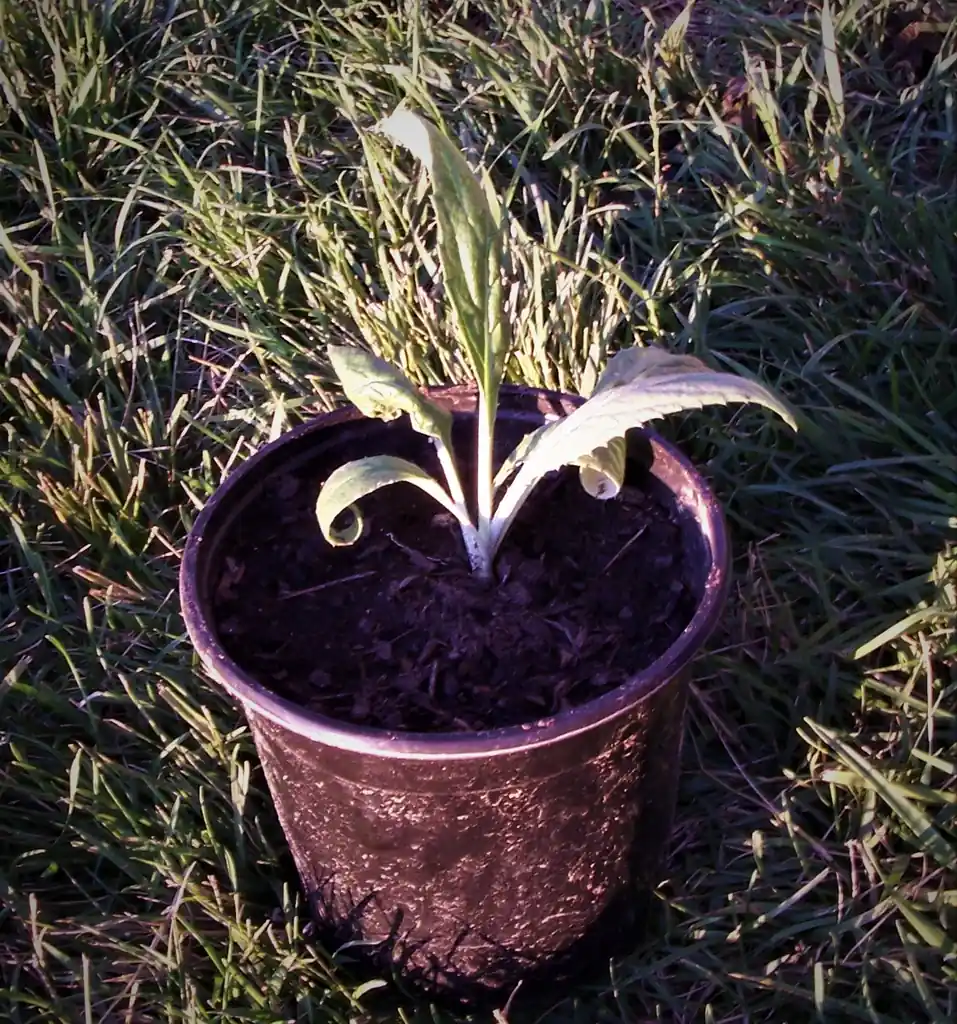
Keep a pale, stretched, wilting or collapsing start out of the next production step until its cause is understood. A seedling symptom check separates weak light, moisture trouble and stem damage. More time in the cold cannot compensate for a plant already losing its growing point or roots.
Transplant With Space for Broad Leaves and Bud Stalks
Acclimate greenhouse-grown seedlings gradually to outdoor light and wind, then choose a planting window that suits the forecast and your completed cold treatment. Regional instructions to plant early for natural chill do not authorize unprotected planting into a hard freeze.
Water a dry root ball before planting. Slide it from the pot with support underneath, keep the roots together and place the transplant at its established growing level. Firm soil gently around it, water the root zone and check afterward that the plant has not settled into a water-collecting hollow.
Choose one spacing system, not the smallest numbers
Spacing differs with regional growth and annual versus perennial management. Maine’s annual example uses about 2 feet between plants and at least 4 feet between rows. Utah gives a tighter regional arrangement. California’s perennial crown plantings allow about 4 feet between plants.
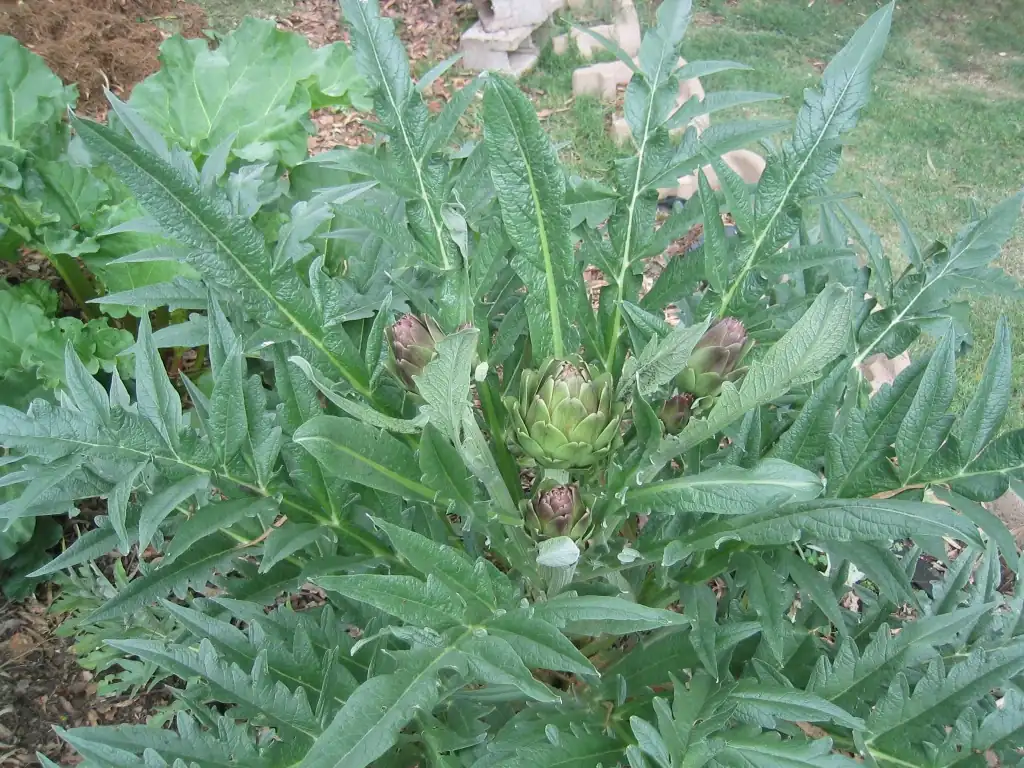
Mark the mature canopy and your access path before setting out a row. The large clump of deeply divided leaves in NC State Extension’s plant description needs clearance; jagged edges and broad reach make a narrow walkway awkward. A small spring transplant is a poor guide to the space needed around a bud-bearing plant.
For purchased crowns or rooted offshoots, follow instructions for that planting material. Trench depth and soil cover over a crown are different measurements. Obtain healthy stock from an identified edible globe artichoke and avoid propagating a crown with unexplained decline or rot.
Keep Roots Moist Without Saturating the Crown
Choose a sunny site with deep, workable soil and reliable drainage. Soil that stays glossy, sticky and waterlogged after rain needs correction before planting. Good vegetable-bed preparation starts with the condition of the actual root zone.
Artichokes need adequate moisture during active growth and bud development. Check soil beneath the surface and account for rainfall before irrigating. A dry surface crust can hide moist soil; a wilted leaf above saturated soil can signal roots unable to function, not a request for more water.
Use a soil test with useful amendment recommendations before making broad fertility corrections. Keep fertilizer off the crown and follow the product and test instructions. Field rates per acre or long row cannot be transferred directly to one pot.
Containers change heat and moisture management
A container can make a small trial possible, without giving the roots the buffering of a bed. Use a large pot with open drainage and a suitable container mix; monitor how quickly it dries as leaves expand. The same plant can need a different watering frequency after a hot, windy day.
A dark pot beside hot paving may have a much hotter root zone than the nearby soil. Retain enough light for growth while moderating intense midday container heat. Do not leave the pot standing in its drainage water.
Mulch can reduce weeds and moisture loss, with results affected by the site. Keep the crown clear and inspect beneath the mulch before watering. Avoid assuming that a particular mulch guarantees cooler plants, more buds or less work in every climate.
Harvest Firm Buds Before Bracts Spread Open
The main terminal head usually develops ahead of the smaller heads on side branches. Watch each head separately. A full, compact bud with closely held bracts is the target; a bud opening into a purple flower has moved beyond the preferred vegetable stage.
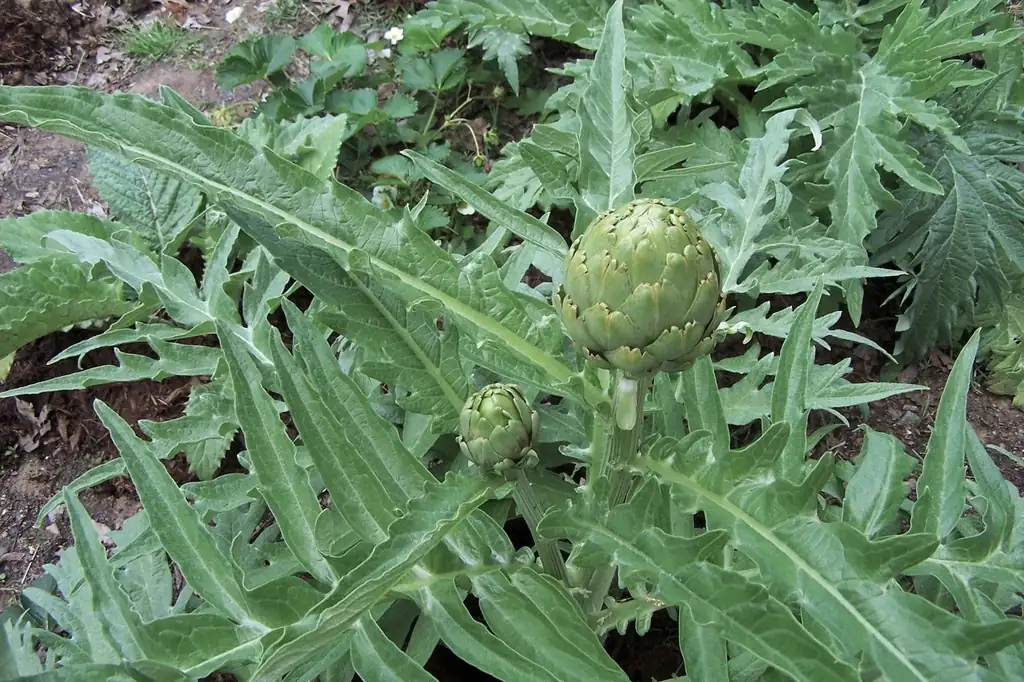
Check the head gently with gloves on. Closely packed bracts feel firm; loosening scales and a softer, spreading head signal advancing maturity. Shape varies among cultivars, so a supermarket-sized globe is not a required minimum for a useful home harvest.
Cut with clean, sharp snips and keep about 2-3 inches of stem attached, a handling length used in Extension recommendations. Choose cutting tools suited to the stem and support the head so it does not tear away. Leave neighboring lateral buds intact.
Spiny bract tips can prick through careless handling, and the cut stem may release sticky sap. Gloves and a controlled cut make the job easier. Continue checking the side heads after the primary harvest; smaller buds are not automatically failed buds.
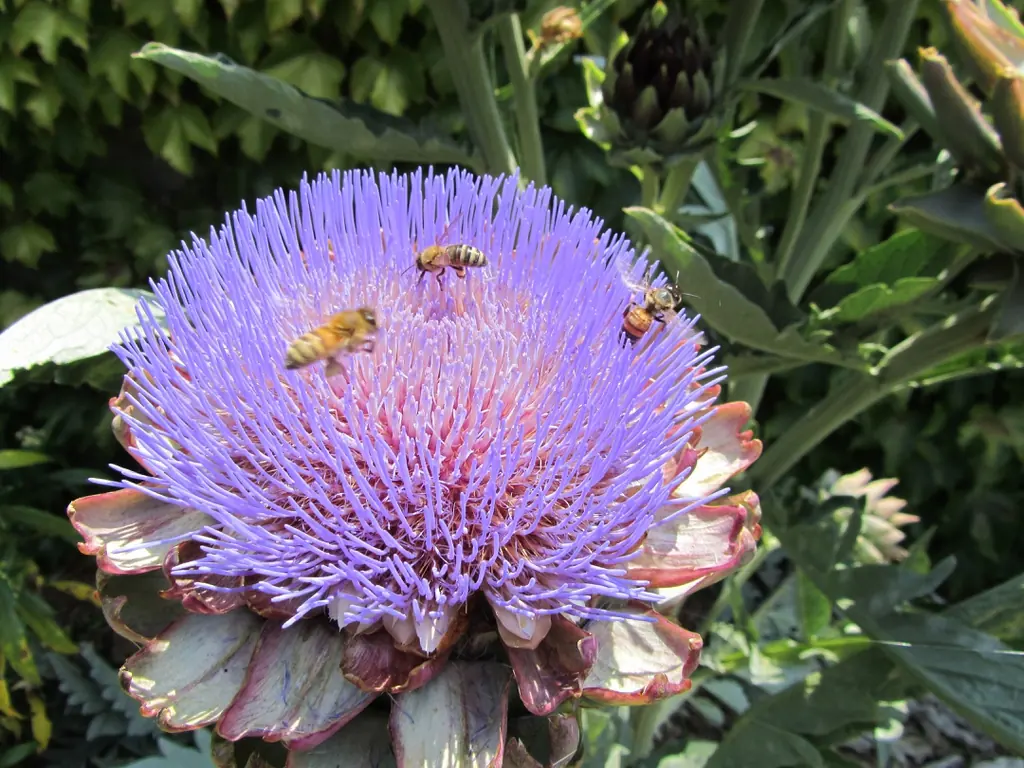
Leaving a head to flower is a valid ornamental choice. It does not mean every remaining head must also be left. Decide which buds to harvest and which to keep for bloom, knowing that an opened flower will not close back into a tender globe.
Separate Annual Cleanup From Perennial Crown Care
In a hard-winter annual system, plan on starting another crop unless crown survival has been demonstrated locally. Saving a plant can be an experiment, but winter cover is not a guarantee against severe cold or saturated soil.
In milder areas, established crowns can be managed across seasons. University of California IPM’s annual and perennial artichoke care distinguishes maintained perennial cutback from annual crops. Do not repeatedly shear a first-year plant to copy a California multi-season production schedule.
Check what your winter protection actually controls
Utah’s heavy winter-cover method is described for its milder winter areas, not every northern garden. The cover may moderate cold; it cannot correct a crown sitting in water. Inspect drainage and consider whether local growers successfully carry the same cultivar through winter.
Cold storage of a dormant crown is another managed operation, with different conditions from seedling chilling. If trying it, obtain a regional storage protocol and monitor temperature and moisture. A garage that freezes hard one week and heats in sunshine the next is not automatically safe storage.
Check Induction, Moisture and Injury Before Treating
Large leaves without buds deserve a review of the plant’s history. Confirm the cultivar, seedling stage during chilling, actual temperatures and length of season. Heat around the induction period can affect flowering response, and heat during bud development can reduce head quality; these are different points of failure.
| What you see | Check first | Initial response and limit |
|---|---|---|
| Large leafy plant, no stalk or buds | Cultivar, chilling record, later heat and available season | Correct next-season timing; extra fertilizer is not a proven instant rescue |
| Loose or rapidly opening heads | Harvest stage, heat and moisture during bud development | Harvest remaining tight heads promptly; opened heads do not reverse |
| Wilt above wet soil | Standing water, poor drainage and root condition | Stop automatic watering; seek diagnosis if decline spreads |
| Brown bracts or soft gray mold | Recent frost, injury, wet conditions and internal mold | Remove infected heads; color alone cannot identify a fungus |
| Distorted leaves or bracts | Live insects, feeding injury and the affected tissue | Identify the pest before choosing treatment; do not copy a farm spray program |
Botrytis can colonize damaged tissue in wet conditions. The combination of soft decay, gray fungal growth and recent moisture points toward a different problem from a firm head with superficial frost damage. One brown patch does not settle the diagnosis.
Persistent or one-sided yellowing and wilt can also involve vascular disease. Photograph the whole plant, affected leaves and crown, record moisture and weather, and ask local Extension for help when the cause is unclear. Avoid dividing a suspect perennial crown into next year’s planting stock.
Conclusion
Plan the crop from winter survival and first-year flowering backward: choose the cultivar, prepare healthy starts, monitor the right cool exposure and provide enough growing season. Then protect the root zone and harvest compact heads before they open. The same climate decisions that determine your starting route also determine whether keeping the crown is worthwhile.
Photo credits
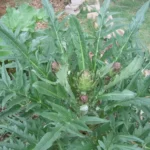
Featured plant: Lucy Bradley, CC0, https://creativecommons.org/publicdomain/zero/1.0/ Seedling and developing buds: Girish Bhatt, CC BY-SA 4.0, https://creativecommons.org/licenses/by-sa/4.0/ Open flower: sfbaywalk, CC BY 4.0, https://creativecommons.org/licenses/by/4.0/
Source for each photograph: https://plants.ces.ncsu.edu/plants/cynara-cardunculus-scolymus-group/common-name/artichoke/ Converted to WebP and proportionally reduced where needed; no change to plant identity or color. Each photograph retains its stated license.